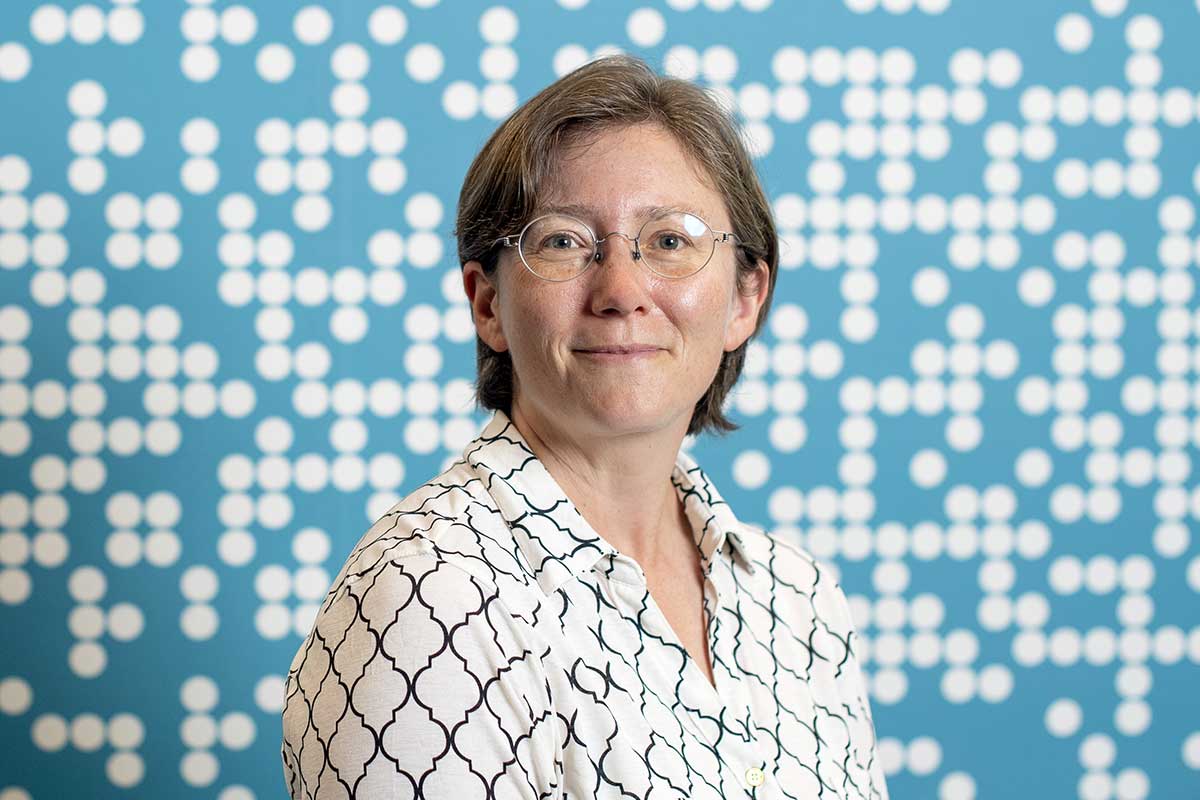
Melanie Tory is a Professor at Northeastern University's Khoury College of Computer Sciences, serving as Professor of the Practice and Director of Data Visualization. Her research focuses on data visualization and human-centered computing, with interdisciplinary applications in healthcare, energy systems, and natural language processing. Her recent work explores the intersection of machine learning and visualization in domains like cardiothoracic care and wind farm optimization. She also investigates conversational interfaces for data visualization, focusing on intent recognition and pragmatic language use in analytical workflows. Key projects include the HEART initiative for real-time medical analytics and schema design for dynamic visualizations. Melanie advises PhD students Carey Barry, Shani Spivak, and Timothy Yim, and contributes to visualization education through research faculty roles. She actively publishes in venues like IEEE PacificVis, addressing challenges in visual utility evaluation, vague command modifiers, and collaborative analysis.
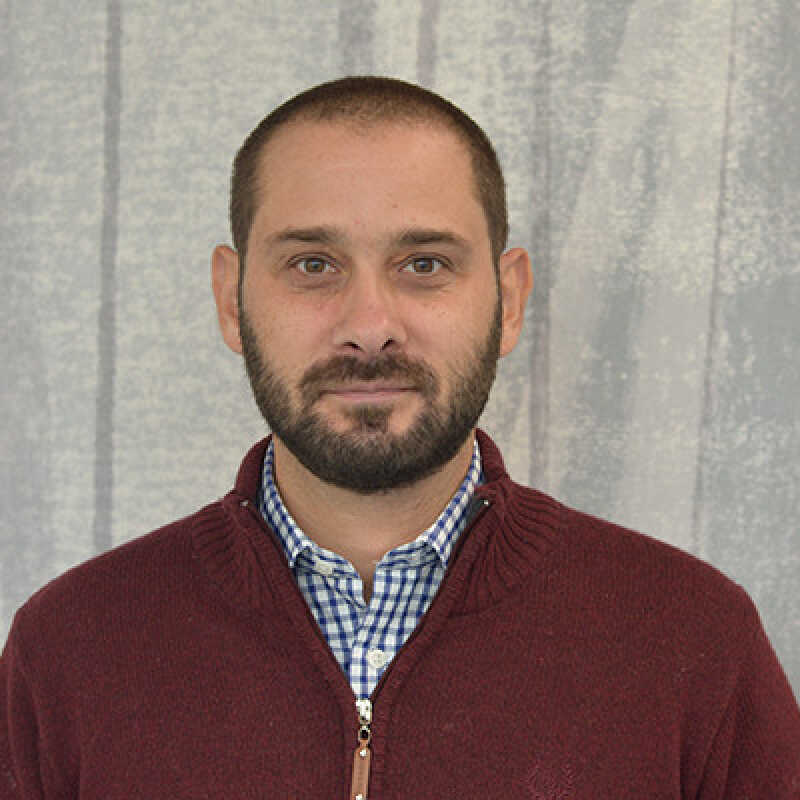
Michael Johansson serves as a Research Professor at Northeastern University's Roux Institute, maintaining offices in London, UK and Portland, ME. His work bridges public health research and operational response through advanced statistical and mathematical modeling of infectious diseases, with primary focus on vector-borne pathogens including dengue, Zika, chikungunya, and West Nile virus. Previously with the CDC in Puerto Rico for over a decade, he co-founded the Epidemic Prediction Initiative and led modeling efforts during Zika, COVID-19, and dengue emergencies. His research integrates biological, ecological, climatic, socioeconomic, and behavioral factors to understand disease emergence and transmission dynamics. Key methodologies include network-based forecasting models, climate-disease interaction analysis, and development of early warning systems. Current work emphasizes improving surveillance, burden estimation, and control strategy evaluation for arboviral diseases through quantitative tools. Recent publications demonstrate expertise in dengue synchronization across the Americas, West Nile virus forecasting, and addressing biases in mobility data for outbreak modeling. His work spans from molecular-level antibody response analysis to global risk mapping, consistently emphasizing operational implementation of research findings. Johansson actively contributes to public health practice through conference presentations including the 2025 American Mosquito Control Association Annual Meeting. His modeling frameworks have directly informed CDC emergency responses and the development of collaborative forecasting initiatives that pioneer open, transparent disease prediction.
University of North Carolina at Chapel HillUnited States
Katherine Newhall is a Professor in the Department of Mathematics at the University of North Carolina at Chapel Hill, where she maintains an active research program in stochastic modeling and dynamical systems. Her office is located in Phillips Hall 308, and she can be reached at knewhall@unc.edu. She serves as a member at large of the GSNP (Group on Statistical and Nonlinear Physics) board, a position she assumed in April 2024. Dr. Newhall earned her educational credentials from Rensselaer Polytechnic Institute, including a B.S. in Applied Physics and Applied Mathematics (2004), an M.S. in Mechanical Engineering (2006) with thesis entitled 'Turbulent Boundary Layers: A look at Skin Friction, Pressure Gradient and Surface Roughness,' and a Ph.D. in Mathematics (2011) with dissertation 'Synchrony in Stochastically-Driven Neuronal Network Models.' Following her doctoral work, she completed postdoctoral research at New York University's Courant Institute of Mathematical Sciences from 2011 to 2014. Her research focuses on developing new tools for analyzing large and infinite dimensional stochastic systems to understand large-scale and long-time dynamics of physical and biological systems. Rather than relying on traditional Fokker-Planck formulations that become intractable with increasing complexity, her work builds on concepts of statistical mechanics to create macroscopic descriptions from individual unit statistics. This approach extends the usefulness of energy landscapes even in non-gradient systems, enabling explanations of experimentally observable phenomena while exposing fundamental mechanisms responsible for system behavior. Her work spans applications from granular materials and chromosome dynamics to biological systems and metamaterials. Dr. Newhall's publications demonstrate consistent advancement in stochastic modeling techniques, with recent work (2023-2025) focusing on hyperuniformity in biological structures, energy landscape sampling methods, and the role of weak transient interactions in biological systems. Her research shows a clear trajectory from fundamental mathematical developments toward increasingly sophisticated biological applications. Outstanding Referee of the Physical Review journals (2019) NSF grant DMS-1816394 DMREF grant ($2M NSF Grant to Revolutionize Materials, 2023) Member at large of the GSNP board (2024) Dr. Newhall has successfully mentored numerous PhD students to completion, including Anna Coletti (2024), Daftari (2023), Moakler (2021), Ben Walker (2021), and Yuan Gao (2019). Her research is consistently supported by competitive grants, most notably the $2M NSF DMREF grant awarded in 2023. She maintains active collaborations across disciplines, particularly in applying mathematical techniques to biological problems such as chromatin organization and organ transplantation risk assessment. Her laboratory work focuses on developing computational methods for analyzing complex stochastic systems, with particular emphasis on the hydra string method for exploring high-dimensional potential energy surfaces. The research group maintains strong connections with both theoretical and experimental collaborators working on granular materials, chromosome dynamics, and biological systems.
Siobhán Clarke is a Professor at the School of Computer Science and Statistics, Trinity College Dublin, specializing in software systems for smart urban environments . Her work addresses dynamic software adaptation in large-scale, mobile IoT ecosystems , with a focus on QoS optimization and collaborative agent models . Director, Enable : National SFI IoT Research Programme Director, Future Cities Centre for Smart & Sustainable Cities Co-Lead, ADVANCE : SFI Centre for Advanced Networks Co-PI, CONNECT (Future Networks) and Lero (Software Research) Her research spans smart city infrastructure , edge computing , and multi-agent coordination , informed by 15+ years of publications on service-oriented architectures , QoS prediction , and self-adaptive systems . Key project contributions include DIVERSIFY (2016) and TRANSFoRm (2015). Scientific awards include election to the Royal Irish Academy (2023) and a Best Student Paper at IEEE ICWS 2011. She has supervised 20+ PhD/MSc students, including Fan Li (2020: SLA Negotiation Systems), Gary White (2020: IoT QoS Forecasting), and Andrei Palade (2019: Stigmergic Optimization).
Dr. Nikolaos Voukelatos is a Senior Lecturer in Finance and Director of the MSc Finance Suite at the University of Kent's Kent Business School. He holds a PhD in Finance from Lancaster University (2009). His academic responsibilities include teaching modules such as Quantitative Methods, Fixed Income Markets, and Research Methods, alongside extensive PhD supervision. Research Focus Dr. Voukelatos's research explores the intersection of option markets, empirical finance, and predictive modeling. Core themes include: Extracting predictive signals from option-implied data Hedge fund strategy distinctiveness and performance Cross-sectional asset pricing anomalies Market microstructure dynamics in derivatives Publication Trends His scholarly output demonstrates consistent focus on option markets, volatility modeling, and hedge fund performance. Recent works (2022-2025) emphasize predictive analytics using options data and MIDAS econometrics, while earlier contributions (2010-2016) established foundations in market microstructure and behavioral aspects of derivatives trading. Student Advising Actively supervises doctoral candidates researching: Decomposition of option-implied information (Xiaohang Sun) Volatility forecasting applications (Eirini Bersimi) Industry default correlations (Alexander Lancaster) Policy uncertainty impacts (Andromachi Papachristopoulou, graduated)
Bülent Haznedar is an Associate Professor in the Department of Computer Engineering at Gaziantep University's Faculty of Engineering, a position he has held since 2024. Previously, he served as Doctor Lecturer at Gaziantep University (2021-2024) and held academic positions at Hasan Kalyoncu University (2013-2021) and Erciyes University (2011-2013), where he progressed from Lecturer to Department Head. His educational qualifications include: Doctorate in Computer Engineering from Erciyes University (2011-2017) Master's degree in Computer Engineering from Erciyes University (2007-2010, with thesis) Licence degree in Computer Engineering from Erciyes University (2003-2007) Dr. Haznedar's research centers on Artificial Intelligence and Machine Learning applications, with significant contributions in hydrological modeling (streamflow forecasting using hybrid ANFIS algorithms), renewable energy (solar radiation optimization), medical diagnostics (thyroid nodule classification and cancer detection), and cultural heritage informatics (3D point cloud segmentation for historical buildings). His work consistently integrates fuzzy logic systems with metaheuristic optimization techniques to solve complex prediction problems. Analysis of his 29 journal articles (2016-2024) reveals a dominant focus on Adaptive Neuro-Fuzzy Inference Systems enhanced by evolutionary algorithms (PSO, GA, ABC) across hydrology and medical domains, with recent expansion into sustainable energy and heritage preservation. His publications show increasing interdisciplinary collaboration, particularly in TUBITAK-funded projects. His scientific recognition includes: TUBITAK Publication Encouragement Awards (2018, 2023) TUBITAK PhD Scholarship (2011) TUBITAK Master's Scholarship (2008) Dr. Haznedar has supervised eight master's theses on AI applications in streamflow forecasting, energy prediction, cancer classification, and heritage modeling. His research is supported by seven projects, most notably the TUBITAK 1001 project (2019-2023) developing Heritage Building Information Modeling for Turkey's cultural heritage restoration. He also contributed to TUBITAK's Digital Prosthesis Workshop initiative. While specific laboratory affiliations aren't detailed, his leadership in the TUBITAK cultural heritage project indicates active collaboration with multidisciplinary teams spanning engineering, computer science, and heritage conservation disciplines.
Dr. Edmund Spencer is an Associate Professor in the Department of Electrical and Computer Engineering at the University of South Alabama , with research focused on space plasma physics and space weather . He designs advanced instruments for space science, develops theoretical frameworks for plasma characterization, and applies stochastic optimization algorithms to complex systems. Ph.D. Electrical and Computer Engineering, University of Texas at Austin M.S. Electrical and Computer Engineering, University of Texas at Austin B.S. Electrical and Electronics Engineering, University of Leicester, UK His work bridges space instrumentation with nonlinear magnetospheric dynamics , particularly in geomagnetic substorms and solar wind-earth magnetosphere interactions . Current projects include onboard space weather modules for satellites and advanced antenna systems for CubeSats . Recent research trends from his 15 most recent publications (2019-2025) include: Development of time-domain impedance probes for ionospheric electron density measurements Applications of machine learning in substorm prediction Hybrid physics-black-box modeling for Dst index forecasting Advanced antenna designs for small satellites 3D Particle-in-Cell simulations for RF instruments Collisional effects in plasma probe measurements Scientific contributions include: NSF CAREER Award (2013) for RF impedance probe development Key role in NASA's USIP CubeSat missions (e.g., JAGSAT I) Leveraging WINDMI model for substorm dynamics analysis He teaches graduate and undergraduate courses in electromagnetics and stochastic processes , contributing to the department's space science integration in engineering education.
Woo-Young Kang is an Honorary Lecturer in Finance at Brunel Business School, Brunel University London, holding this position since completing his PhD in 2017. His academic journey spans institutions across three countries, combining rigorous theoretical training with practical finance industry experience. His educational qualifications include: PhD in Finance, Cranfield University (2017) MSc in Mathematical Finance, Boston University (2009) MBA in Finance, Sogang University (2008) BA in Economics, Boston University (2006) Dr. Kang's research centers on Asset Pricing, Banking, Fintech (particularly Cryptocurrency), and Financial Markets, with emphasis on cultural influences, cyber security implications, and quantitative modeling. His methodology integrates stochastic calculus and advanced statistical techniques to analyze complex financial phenomena, bridging theoretical frameworks with real-world market dynamics. Analysis of his 2020-2025 publications reveals dominant themes: cryptocurrency market behavior (examining cultural arbitrage effects and cyber attack vulnerabilities), banking system interconnectedness, and pandemic-era policy impacts on global markets. His work consistently appears in high-impact finance journals and major conference proceedings. His professional recognition includes: Fellow of the Higher Education Academy (FHEA) As an educator, Dr. Kang serves as Departmental Research Ethics Coordinator and previously held leadership roles including Programme Leader for BSc Banking and Finance. He actively supervises PhD candidates requiring strong quantitative skills, focusing on his core research areas. His research is disseminated through premier finance associations including Southern, Eastern, and Southwestern Finance Associations. He maintains an active research network with collaborators including Prof. Guglielmo Maria Caporale, evidenced by frequent co-authored publications on cyber security in cryptocurrency markets and cultural dimensions of banking.
Aprile D. Benner is a Professor in the Department of Human Development and Family Sciences at the University of Texas at Austin , where she has been since completing her Ph.D. at UCLA. Her research examines developmental processes among marginalized youth, focusing on Discrimination experiences School transitions Biopsychosocial health pathways Ecological contexts Her methodological expertise combines quantitative longitudinal analysis with mixed-method designs , as evidenced by her NIH, NSF, and Spencer Foundation grants. Notable awards include Association for Psychological Science Fellow (2020) National Academy of Education/Spencer Postdoctoral Fellowship Ruth L. Kirchstein NRSA Fellowship A key contributor to developmental demography , she leads UT Austin's Mosaic Lab while mentoring students like *Harrington, M.K.* and *Chen, S.*. Her 2025 meta-analytic work on pandemic impacts and 2024 epigenetic studies on structural racism demonstrate her commitment to equity-focused developmental science .
Laura Kudrna is an Associate Professor in Applied Health Sciences, focusing on behavioral change programs and workplace wellbeing. She supervises PhD students in areas such as COM-B and Mindspace frameworks, subjective wellbeing, and time-use tracking. Affiliation: Applied Health Sciences Key Projects: Springboard (cultural survey design), PRE-EMPT (cervical screening), Rwanda912 (emergency transport algorithms) Research Interests: Her work bridges behavioral science with public health, emphasizing structured interventions to improve wellbeing in workplaces, post-cancer care, and low-income settings. She employs mixed-methods evaluations and cluster trials to assess health initiatives. Recent Trends: Analysis of pandemic impacts on mental health (type 2 diabetes), workplace incentive structures, and socioeconomic determinants of wellbeing dominate her publications. Collaborations span the UK, Rwanda, and Mali, with funding from NIHR and the Academy of Medical Sciences. Advising: Currently accepts PhD students but no named advisees are listed. She leads major cross-regional studies and contributes to policy frameworks for health programs.
University of Illinois Urbana-ChampaignUnited States
Chris Wiley serves as the Physical Sciences and Engineering Research and Data Services Librarian and Associate Professor at the University of Illinois at Urbana-Champaign. Based at the Grainger Engineering Library, he focuses on data management, research practices, and digital accessibility across scientific disciplines. Research Interests: Specializing in data governance and stewardship across engineering and physical sciences Advancing FAIR data principles and open repository systems Developing accessible data visualization tools Researching data privacy frameworks for scientific contexts Exploring cloud storage limitations for academic institutions Creating educational resources for data management transitions Contact: Email: cawiley@illinois.edu Phone: 217-300-5801 Location: Grainger Engineering Library, 1301 W. Springfield Ave., Urbana, IL 61801
Prof. Dr. Martina Steul-Fischer holds the Chair of Business Administration, with a specialized focus on Insurance Marketing, at Friedrich-Alexander University Erlangen-Nuremberg (FAU). She is affiliated with the Institute of Marketing and the FACT Institute, and serves as founding director of the Experimental Lab for Business Insights Nuremberg (ELAN). Additionally, she acts as the women's representative for both the Business, Economics and Social Sciences Department and the Faculty of Law and Economics. She is a board member of Forum V, the North Bavarian Institute for Insurance Science and Economics at FAU, and participates in the 'Consumption and Behavior' research group. Prof. Steul-Fischer earned her doctorate from Goethe University Frankfurt and completed her habilitation at the University of Wuppertal. Her academic journey includes teaching and research stays at the European Business School, Université Lumière Lyon II in France, and the University of Maryland in the USA. She serves on the Editorial Review Board of 'Marketing ZFP – Journal of Research and Management' and co-edits the Gabler series 'Consumption and Behavior.' Her research primarily focuses on financial services marketing and consumer behavior within the insurance sector. She investigates how digital transformation affects customer experience management, examines consumer decision-making processes across different devices, and explores psychological factors influencing health risk perception. Her work bridges theoretical insights with practical applications, often collaborating with industry partners to address real-world challenges in insurance marketing. Analysis of her recent publications reveals a strong emphasis on omnichannel behavior, device effects on customer decisions, referral programs, and health-related insurance products. Her research employs diverse methodologies including experimental designs, systematic literature reviews, and clickstream data analysis, demonstrating methodological versatility in addressing complex consumer behavior questions. Prof. Steul-Fischer is actively involved in multiple interdisciplinary research focuses at FAU, particularly in Customer Insights, Health, and sustainability-related research. Her contributions to these areas reflect her commitment to addressing contemporary challenges at the intersection of marketing theory and insurance industry practice.
Satoru Hayamizu is a Professor at Waseda University 's Green Computing Systems Research Organization , with a career spanning over four decades. His research focuses on Audio-Visual Speech Recognition , Machine Learning , and Medical Informatics , as evidenced by 126 publications and an h-index of 18. Education: The University of Tokyo (PhD in Mechanical Engineering) Prior affiliations: Gifu University (2002-), National Institute of Advanced Industrial Science and Technology (1981-2001) Research Interests include: Audio-visual speech recognition with sparse representation and DNN techniques Development of low-cost CNN-based road condition detection systems Swallowing function evaluation using acoustic and image processing Human behavior analysis for service operation estimation Research Trends reveal consistent work in multimodal signal processing (2006-2024), deep learning applications (2012-2024), and medical diagnostic systems (2006-2017). His publications show integration of sparsity modeling (2012-2021), industrial equipment diagnostics (2018-2021), and social impact technologies (2013-2024). Research Projects funded by Japan Society for the Promotion of Science include: Swallowing timing estimation (2018-2021) Multimodal silent speech recognition (2016-2020) ICT-based piano learning systems (2013-2016) Keyword display mechanisms (2010-2012) Labs & Collaborations include partnerships with Satoshi Tamura (co-author on 12+ papers), Hidekazu Fukai , and Chiyomi Miyajima . His work bridges academic research and industrial applications , particularly in manufacturing AI (2024 book) and Timor-Leste infrastructure monitoring.
Daniele Toninelli is an Associate Professor of Economic Statistics (SECS-S/03) at the University of Bergamo's Department of Economics, where he also serves as Director of the 'Data Analyst for Strategic Decisions' program, Internship Manager for the department, and member of the School of Economics and Management's Joint Teacher-Student Commission. His educational background includes a PhD in Marketing for Business Strategies (University of Bergamo, 2009), Master's in Statistics for Market Research (University of Milan-Bicocca, 2004), and Degree in Statistical and Economic Sciences (University of Milan-Bicocca, 2003). Toninelli's research focuses on: Survey and web survey methodology design and optimization Integration of big data for economic and social indicators Development of price indexes and composite indicators Social media analytics for economic measurement His work bridges statistical theory with applications in labor markets, sustainability metrics, and environmental data analysis. Teaching activities encompass undergraduate and graduate courses including Economic Statistics, Quantitative Methods for Business Data Analysis, Advanced Business Statistics, and specialized 'Data Skills' modules covering visualization, survey methods, and SAS certification preparation. International research collaborations include visiting positions at Statistics Canada (2008-2013), University of Ottawa (2012-2013), VŠB-Technical University of Ostrava (2012-2013), RECSM at Universitat Pompeu Fabra (2014), and guest lectures at University of Ljubljana (2018). He previously served on the management committee of the WEBDATANET network (COST Action IS1004). Professional experience includes roles at PiTre Milan, IBM Semea/Celestica, and Multiplex Arcadia, applying statistical expertise in industrial settings.
Dr. Marc A. Adams serves as the Assistant Dean of Education and Interim Program Director of the MPH in the School of Technology for Public Health at Arizona State University, while also holding a Professor position in the College of Health Solutions. He maintains additional affiliations with the Institute for Social Science Research as both a faculty member and Affiliated Faculty, and serves as a Senior Global Futures Scientist within the Global Futures Scientists and Scholars program. His academic leadership spans multiple institutional units focused on public health innovation and research. Dr. Adams' educational background includes a PhD in Public Health from the University of California, San Diego and San Diego State University (2009), an MPH in Public Health from San Diego State University (2003), a BA in Psychology from San Diego State University (2001), and postdoctoral training in Cardiovascular Epidemiology and Prevention at the University of California, San Diego (2011). As a behavioral scientist and epidemiologist, Dr. Adams' research spans the intersection of digital health interventions, physical activity promotion, and behavioral nutrition within diverse neighborhood contexts. His work integrates advanced AI and deep learning techniques to map pedestrian environment features across thousands of US neighborhoods, revealing critical inequities in built environments. He develops and tests interventions that consider how urban planning features interact with behavior change strategies to increase physical activity and healthy eating, particularly among underserved populations. His methodological expertise includes epidemiologic methodology, clinical trial design, and the development of ecological models for understanding behavior-environment interactions. Dr. Adams is an active member of the International Physical Activity and Environment Network (IPEN), contributing to international comparative research on how city design influences physical activity levels across 14 global cities. Dr. Adams' recent publications reveal a strong focus on neighborhood walkability, digital health interventions, and the use of AI to analyze built environments for public health purposes. His research consistently examines how environmental features moderate the effectiveness of physical activity interventions, with particular attention to socioeconomic disparities. The methodological approaches in his work span from traditional epidemiological studies to cutting-edge computer vision applications for analyzing street-level imagery at scale. Dr. Adams has secured substantial research funding from multiple sources including NIH, American Heart Association, and Robert Wood Johnson Foundation. His current projects include "Developing AI-measures of Pedestrian Environment Features for Physical Activity and Cancer Prevention in Rural Communities" (NIH/NCI, $413,673), "PED-PHAM: An Automated and Scalable Spatial Tool" (NIH/NHLBI SBIR, $275,000), and "WalkIT Arizona: Neighborhood walkability and moderation of adaptive interventions for physical activity" (NIH/NCI, $2,620,000). He serves as Principal Investigator on multiple projects while also collaborating as Co-Investigator on large-scale international studies through IPEN. His grant portfolio demonstrates expertise in both intervention development and environmental measurement, with a consistent focus on translating research findings into practical applications for public health practice. Dr. Adams leads research teams focused on developing and validating AI tools for assessing pedestrian environments and testing how these environmental features interact with digital health interventions. His work with the International Physical Activity and Environment Network connects him to a global consortium of researchers examining built environment influences on physical activity across diverse cultural contexts. His laboratory work bridges computer science, public health, and urban planning disciplines to create innovative approaches for measuring and improving neighborhood environments that support healthy behaviors.