Prof. Dr.-Ing. André Borrmann is an academic leader at the Technical University of Munich (TUM) , where he has headed the Chair of Computing in Civil and Building Engineering since 2011 (formerly Computational Modeling and Simulation). He serves as Director of the TUM Georg Nemetschek Institute - AI for the Built World since 2025 and Spokesperson for the Leonhard Obermeyer Center since 2013. Research Interests Artificial Intelligence in Civil Engineering Digital Twinning Building Information Modeling (BIM) Pedestrian Dynamics Knowledge Representation Construction Simulation His work focuses on AI application across the built environment lifecycle - from generative design to maintenance prediction - with significant contributions to BIM standardization and buildingSMART International IFC extensions. He co-authored the German Ministry of Transport BIM Roadmap and led the BIM4INFRA2020 project. Awards include the 2024 Konrad Zuse Medal and multiple best paper awards at international conferences.
Catherine Faron is a Full Professor at Université Côte d'Azur , affiliated with the I3S laboratory and Inria center . She serves as vice-head of the Wimmics joint research team and leads the Artificial Intelligence and Data Engineering (IAID) program at Polytech Nice Sophia engineer school. Habilitation à diriger les recherches (HDR) in Computer Science, UCA (2017) PhD in Computer Science, Univ. Paris 6 (1997) Her research focuses on Artificial Intelligence , particularly in Knowledge Representation and Reasoning (KRR) and Semantic Web technologies. She develops hybrid intelligent systems combining KRR with machine learning for knowledge extraction, integration, and exploitation across education, health, and digital humanities. Recent publications highlight her work on: 2025 : Knowledge graphs for historical zoological data 2024 : Semantic annotation frameworks in agronomy 2023 : Agricultural data mapping and medical record enrichment 2022 : Visual exploration of big linked data Scientific recognitions include: 2023: Best Paper Award, ESWC 2017: Scientific Excellence Award, UCA 2016: Best Demo Award, ISWC 2015: Best Paper Award, IC 2008: Best PhD Paper Award, ECPPM She has supervised 19 PhD/Master's students and leads/has led projects like D2KAB , DEKALOG , and ZOOMATHIA , with partnerships across academic and industrial institutions.
Alberto Giovanni Biuso is a Full Professor of Theoretical Philosophy in the Department of Humanities at the University of Catania, where he teaches advanced courses in Theoretical Philosophy, Metaphysics, and Philosophy of Artificial Minds. He has also taught Epistemology, Sociology of Culture, and History of Aesthetics. Full Professor of Theoretical Philosophy (PHIL-01/A) Department of Humanities, University of Catania Office: 259 | Email: agbiuso@unict.it | Website: www.biuso.eu Office Hours: Tuesday and Friday, 10:00 AM – 12:00 PM His research centers on metaphysics, ontology, cosmology, the philosophy of time, the mind as a semantic device, the vitality of classical Greek and Roman thought, the ontological and political foundations of artificial intelligence, animal studies as a challenge to humanism, and anti-natalism. He is the author of significant works such as Ždanov. Sul politicamente corretto (2024) and Logos. Scritti di estetica e letteratura (2025), which critically examine contemporary ideological trends like political correctness and cancel culture. The most recent publications reflect a consistent philosophical engagement with cultural decline, intellectual freedom, and the erosion of academic and artistic autonomy. His writings often draw historical parallels between Soviet-era ideological control (Ždanovism) and modern forms of cultural censorship in universities, media, and public discourse. Themes of truth, language, identity, and the role of classics in education recur throughout his work. Scientific Recognition and Activities: President of the Commission for National Scientific Qualification (ASN) in Theoretical Philosophy (M-FIL/01), 2021–2023 Member of the Italian Society of Theoretical Philosophy (SiFit) Contributor to the 'School for Saving Classics', an interdisciplinary research center dedicated to preserving and promoting classical heritage Biuso actively mentors students, with thesis supervision evident in topics ranging from anxiety to temporal philosophy. His publications are widely reviewed in journals such as Discipline Filosofiche , Il Pensiero Storico , and ACrO-Pólis . He maintains a robust public intellectual presence through essays, interviews, and critical commentary on educational policy, freedom of expression, and the role of humanities in society.
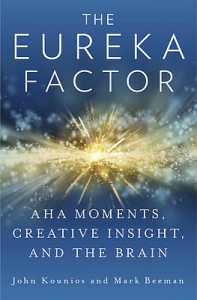
Mark Beeman is a Professor in the Department of Psychology at Northwestern University and director of The Creative Brain Lab. His research focuses on studying the component processes and behaviors that relate to creative problem solving, with particular emphasis on 'high-level cognition' and how the brain thinks when solving complex problems. Beeman seeks to link the brain's wetware to the mind's software, using evidence from both domains to constrain theories and provide novel insights. Beeman's primary research area is creative cognition, particularly insight problem solving exemplified by 'Aha' or 'Eureka' experiences. His work combines behavioral and neuroimaging approaches to investigate the neural correlates of insight. Key findings include the identification of right hemisphere involvement, particularly the anterior Superior Temporal Gyrus, in insight problem solving. He discovered that insight solutions are associated with sudden bursts of gamma activity in this region, along with alpha wave activity that may represent 'gating' of visual input to facilitate solution processing. His research spans multiple dimensions of creativity including intuition, problem solving under performance pressure, the relationship between sleep and incubation effects, and how attentional patterns relate to creative cognition. Beeman's work has been published in top journals including NeuroImage, Psychological Science, and Annual Review of Psychology, with his 2014 review paper with John Kounios becoming a seminal work in the field. Among his notable achievements is the Memory & Cognition Best Paper award in 2016. His lab continues to explore the neural dynamics of creative thought through various ongoing projects examining how different cognitive processes contribute to creative problem solving. Beeman has established The Creative Brain Lab as an interdisciplinary research hub that brings together cognitive neuroscience, psychology, and behavioral science to uncover the mechanisms underlying creative thought, with implications for education, innovation, and understanding human cognition more broadly.
Piotr Gmytrasiewicz is an Associate Professor at the Department of Computer Science, University of Illinois at Chicago (UIC). He leads the Multiagent Systems Group within the Artificial Intelligence Laboratory at UIC. His research focuses on rationality in artificial agents , particularly in environments with multiple interacting agents. Key areas include Interactive Decision-Making Bayesian Modeling for Agent Communication Recursive Belief Frameworks Time Pressure and Computational Trade-offs Evolution of Agent Communication Languages Dynamic Resource Allocation His recent work examines the rationality of insincere communication and methods to discount potentially insincere information. Past projects include modeling emotions in agent design and developing decision-theoretic approaches to game theory. He has secured funding from prestigious institutions such as the National Science Foundation (NSF) , Office of Naval Research (ONR) , and DARPA . Current and past projects emphasize Automated Linguistic Competence Evolution Emergent Communication Protocols Scalable Multiagent Learning Strategic Coordination under Uncertainty He earned his Ph.D. from the University of Michigan, Ann Arbor (1992) and has previously collaborated with the Department of Computer Science and Engineering (CSE) at the University of Texas at Arlington on DARPA-funded research.
Prof. Dr. Anne Böckler-Raettig is a Professor for Research Methods & Social Cognition at the University of Würzburg's Faculty of Human Sciences. She leads an Emmy Noether Research Group and is involved in DFG projects like ContextualEYEze . Her roles include Deputy Chair of the local Ethics Committee, Co-Chair of the Diversity-AG, and Vertrauensdozentin of the Studienstiftung des deutschen Volkes. Primary Affiliation: Institute of Psychology, University of Würzburg Research Leadership: Emmy Noether Research Group (2018–2025) DFG Project: ContextualEYEze (2024–2025) Academic Roles: Professor (2021–present), Juniorprofessorin (2015–2020) Her research spans social cognition, empathy, theory of mind, prosocial behavior, gaze processing, and the psychological effects of meditation. Recent articles highlight gaze direction's role in attention capture, emotion perception, and prosociality, alongside neural correlates of mental training. She explores clinical and developmental contexts, including trauma responses and cross-cultural stigma studies. Scientific awards include the prestigious Emmy Noether Fellowship (DFG). Her work appears in journals like Neuroscience & Biobehavioral Reviews , Human Brain Mapping , and Emotion , reflecting interdisciplinary impact. Collaborations span institutions including Max-Planck Institutes and Princeton University.
Rada Mihalcea is a Professor at the University of Michigan in the Computer Science and Engineering department. She actively promotes Natural Language Processing (NLP) applications for social good and founded the ACL Year Round Mentorship program. University: University of Michigan School: College of Engineering Department: Computer Science and Engineering Academic Rank: Professor Research Interests include: Natural Language Processing for social good applications Text Mining and Sentiment Analysis Deception Detection and Multimodal Analysis Cross-Cultural Computational Linguistics Educational Technology and Gender Studies Recent research trends focus on: Fake news detection using multimodal features Lexicon-based cross-cultural value analysis Thermal imaging for affective computing Deception detection through linguistic and physiological cues Applications in healthcare and counseling analysis Scientific Awards : Sarah Goddard Power Award (2019) Best Paper Award at CICLING (2019) Best Paper Award at SocInfo (2018) Additional Contributions : Co-authored textbooks on Text Mining and Graph-based NLP Developed FunPython tutorial for children Collaborative work with the School of Music on the Ada Lovelace Opera Active in diversity initiatives in computing
Robert Klemmensen is Professor and Assistant Head of Department at Lund University's Department of Political Science, where he coordinates research activities. He is a member of the LU Profile Area: Natural and Artificial Cognition, an interdisciplinary initiative exploring cognition from biological and computational perspectives. His work examines how genetic and psychological factors shape political behavior using advanced quantitative methods. Klemmensen's research focuses on: Voter opinion formation and behavioral alignment with stated preferences Genetic influences on political attitudes through twin studies Quantitative text analysis of political rhetoric Machine learning applications in political ideology detection Normative implications of empirical findings in democratic systems His publications demonstrate consistent focus on genetic-behavioral interactions in politics, with recent work incorporating computational methods like deep learning for facial analysis and natural language processing. Article clusters examine: (1) heritability of political traits, (2) methodological innovations in text analysis, and (3) cross-disciplinary connections between political science and genetics. He currently co-edits Political Psychology and Research and Politics , and serves on the Independent Research Fund Denmark. Klemmensen leads the research project 'Divided Parliaments? Polarization, Moralization, and the Risk of Gridlock' (2024-2027), funded by the Bank of Sweden Tercentenary Foundation, examining governance challenges in polarized environments. Within Lund University's Natural and Artificial Cognition profile area, he collaborates with computer scientists and cognitive researchers to develop interdisciplinary approaches to political behavior analysis.
Raquel Hill is a Professor and Chair of the Department of Computer and Information Sciences at Spelman College since 2019. She holds a Ph.D. from Harvard University and B.S. and M.S. degrees from Georgia Institute of Technology. Education Ph.D., Harvard University B.S., Georgia Institute of Technology M.S., Georgia Institute of Technology Her research focuses on trust, security, and data privacy , with emphasis on semantic analysis of text data to develop privacy-preserving frameworks. She has explored re-identification risks in behavioral science data and created bias-free hiring evaluation systems. Her interdisciplinary work was featured in Forbes Magazine .
Dr. Richard J. Addante is a Research Fellow in Neuroscience with expertise in cognitive neuroscience, neuroimaging, and memory research. He earned a BA in Psychology from The College of New Jersey and a PhD in Neuroscience at UC Davis as a Diversity Fellow of the American Psychological Association, followed by a Post-doctoral Fellowship in Neuroimaging at UT-Southwestern Medical School. Currently, he is an NIH Loan Repayment Program (LRP) Fellow. Education: BA in Psychology (The College of New Jersey), PhD in Neuroscience (UC Davis) His research focuses on implicit memory, recognition processes, and neural oscillations, particularly theta waves. He uses electrophysiological methods (ERPs, EEG) and neuroimaging to study metacognition, semantic priming, and hippocampal contributions to memory. His work often involves developing automated pipelines for cognitive data analysis. Dr. Addante has received notable fellowships, including the American Psychological Association Diversity Fellowship and the NIH LRP Fellowship. His network includes collaborations with researchers from institutions like Stanford University, UC Berkeley, UC Davis, and UT-Southwestern Medical School.
Dr. Roy E. Welsch is the Eastman Kodak Leaders for Global Operations Professor of Management and a Professor of Statistics and Data Science at the MIT Sloan School of Management and the MIT Center for Statistics and Data Science . He currently serves as Director of the MIT Center for Computational Research in Economics and Management Science . Education : AB in Mathematics from Princeton University (1969), MS and PhD in Mathematics from Stanford University Dr. Welsch's research spans advanced statistical methodologies and their interdisciplinary applications. His work focuses on: Robust statistical methods for regression and covariance modeling Applications in financial markets, biomedical imaging, and drug repurposing Machine learning algorithms for high-dimensional data analysis Statistical computing and computational finance Uncertainty quantification in experimental design His recent publications emphasize cross-domain applications of machine learning, particularly in financial forecasting, biomedical diagnostics, and network behavior modeling. Notable trends include: Development of robust statistical frameworks Integration of NLP techniques in financial analysis Biomedical image processing algorithms for disease quantification Time-series and high-content analysis Portfolio optimization under uncertainty Scientific Recognition : Fellow of the Institute of Mathematical Statistics Fellow of the American Statistical Association Fellow of the American Association for the Advancement of Science Eastman Kodak Leaders for Global Operations Professorship As a dedicated educator, Dr. Welsch teaches Data Analysis and Applied Statistics courses focusing on regression modeling, experimental design, and quality control with applications in finance and marketing.
Katarzyna Jankowiak serves as an Assistant Professor at Adam Mickiewicz University in Poznań's Faculty of English, specializing in psycholinguistics and neurolinguistics with expertise in bilingual language processing. Her research integrates electrophysiological methods (EEG/ERP) with behavioral measures to investigate cognitive mechanisms underlying metaphor comprehension, emotional language processing, and stereotype activation in bilingual contexts. Her research interests focus on psycholinguistics, neurolinguistics, bilingualism and cognition, event-related potentials, figurative language processing, emotional language processing, clinical linguistics, metaphor comprehension, gender stereotypes in language, and neurophysiological measures . She employs sophisticated methodologies including EEG, galvanic skin response, and eye-tracking to examine how language proficiency, mood states, and modality affect cognitive processing in bilingual speakers. Analysis of her recent publications (2021-2025) reveals consistent focus on bilingual metaphor processing, emotional language comprehension across languages, and neural correlates of stereotype activation. Her work demonstrates that emotional reactivity is reduced in non-native languages, that mood states differentially affect semantic processing in L1 versus L2, and that bilinguals show decreased sensitivity to gender stereotypes in their foreign language. Methodologically, she bridges behavioral and neurophysiological approaches to provide comprehensive insights into bilingual cognition. Scientific Awards and Recognition: START scholarship from Foundation for Polish Science (2019/2020) Multiple AMU Rector's Prizes for research and organizational achievements (2021-2023) Minister of Education and Science scholarship for outstanding young researchers (2022) Adam Mickiewicz University Vice-Chancellor's scholarships for outstanding PhD work (2014-2018) Dr. Jankowiak actively contributes to academic service as project/grant reviewer for international organizations (SSHRC, NSF, Fulbright Commission, NAWA) and as peer reviewer for over 20 journals including Bilingualism: Language and Cognition , NeuroImage , and International Journal of Psychophysiology . She has organized numerous international conferences including Young Linguists' Meetings and Cognitive Neuroscience of Language Embodiment events, demonstrating strong leadership in her field.
Joseph Heath is a Professor in the Department of Philosophy at the University of Toronto and a Sessional Lecturer at the Munk School of Global Affairs & Public Policy. His academic work spans critical social theory, political philosophy, business ethics, rational choice theory, and action theory, rooted in the Frankfurt School tradition. Education: Bachelor of Arts (1990), McGill University, studying under Charles Taylor Master of Arts and Doctor of Philosophy (1995), Northwestern University, under Thomas A. McCarthy and Jürgen Habermas Heath’s research focuses on critical theory, moral philosophy, and institutional design. His books, including The Rebel Sell and Enlightenment 2.0 , address consumerism and modern democratic challenges. His recent op-ed in the Globe and Mail (2021) critiques the BIPOC acronym in the Canadian context. Scientific Awards: Pierre Elliott Trudeau Foundation Fellowship (2012) Royal Society of Canada Fellowship (2013) Shaughnessy Cohen Prize for Political Writing (2014) Heath’s publications, such as The Efficient Society and Morality, Competition, and the Firm , reflect interdisciplinary engagement with ethics, economics, and policy. He teaches PPG2011H Ethics and the Public Interest at the Munk School.
René Vidal is the Rachleff & Penn Integrates Knowledge (PIK) University Professor at the University of Pennsylvania, with appointments in the Departments of Electrical and Systems Engineering, Radiology, Computer and Information Science, and Statistics and Data Science. He also serves as Director of the Center for Innovation in Data Engineering and Science (IDEAS) and the NSF-Simons Collaboration on the Mathematical Foundations of Deep Learning (THEORINET). A dual faculty member at Johns Hopkins University in Biomedical Engineering, Computer Science, and other departments, Vidal is an Amazon Scholar and Affiliated Chief Scientist at NORCE. PhD, Electrical Engineering and Computer Sciences, University of California, Berkeley (2003) M.S., Electrical Engineering, University of California, Berkeley (2000) B.S. (valedictorian), Electrical Engineering, Pontificia Universidad Catolica de Chile (1997) His research spans the mathematical foundations of deep learning, focusing on non-convex optimization , learning dynamics , and overparametrization . Key contributions include Sparse Subspace Clustering , Kernel GPCA , and Low-Rank Matrix Factorization , with applications in autism diagnosis , robotic surgery , and cardiac imaging . Recent work explores continual learning , adversarial robustness , and trustworthy AI in biomedical contexts. His 15 most recent publications highlight advances in medical imaging , language models , and robust computer vision , spanning topics from chest X-ray analysis to motor imitation tasks in autism . Articles like Geometric Analysis of Nonlinear Manifold Clustering underscore his theoretical contributions, while works on KDA: Knowledge-Distilled Attacker and Conformal Information Pursuit address practical AI safety and interpretability. Scientific accolades include: 2022 ACM Fellow 2021 IEEE McCluskey Technical Achievement Award 2017 Jean D’Alembert Fellowship 2012 J.K. Aggarwal Prize 2009 Sloan Research Fellow 2005 NSF CAREER Award His lab mentors 11 current PhD students across Johns Hopkins and University of Pennsylvania , with alumni contributing to institutions like Meta , Amazon , and GE Research . Vidal’s interdisciplinary work bridges mathematics , engineering , and healthcare , supported by grants from the DoD , NSF , and ONR .
Iosif-Viorel Onut is an Adjunct Professor at the School of Electrical Engineering and Computer Science, University of Ottawa, and Senior Manager of R&D Strategy at IBM's Center for Advanced Studies. He co-directs the UOttawa Cyber Range, focusing on cybersecurity innovation. Doctor of Philosophy in Computer Science, University of New Brunswick (2008) Master of Science in Computer Science, Technical University of Cluj-Napoca (2003) Bachelor of Engineering in Computer Science, Technical University of Cluj-Napoca (2002) His research spans Cryptography , Computer and Network Security , Privacy Technologies , and Vulnerability Research , with emphasis on phishing detection, malware analysis, and threat intelligence generation. Recent publications highlight trends in semantic-based phishing detection and cryptocurrency scam analysis. Onut has led over 150 research projects involving 35 universities, 90 professors, 360 students, and 330 IBM staff. His work bridges academic research with industry applications in cybersecurity.