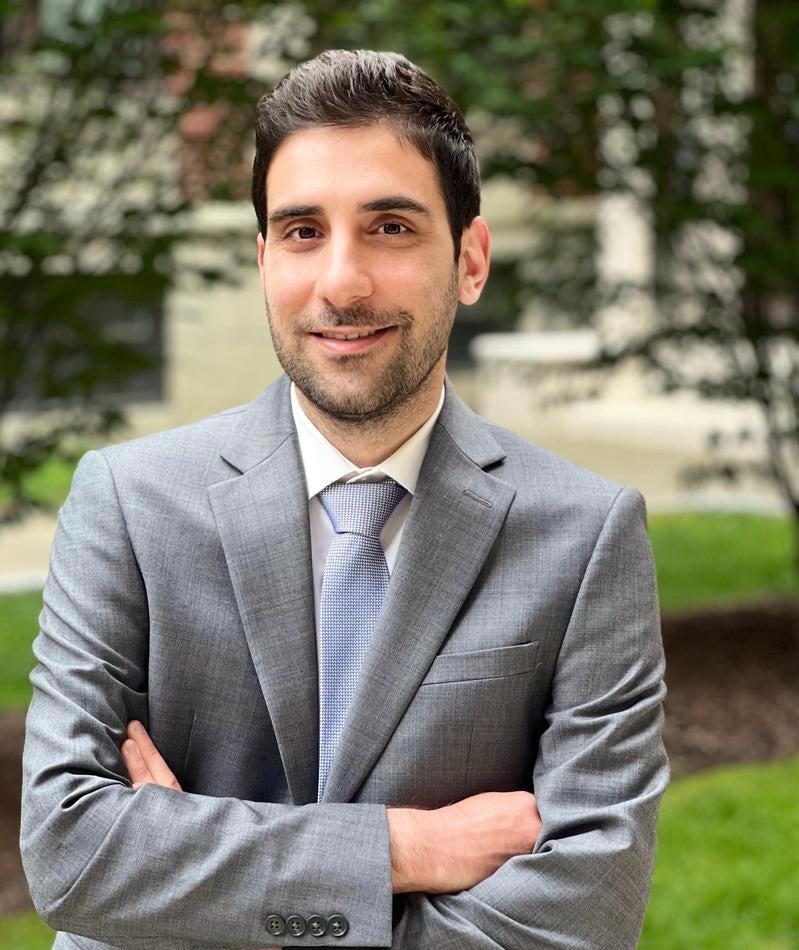
Jan Eeckhout is an ICREA Research Professor at Pompeu Fabra University (UPF) in Barcelona, specializing in macroeconomic theory, labor markets, and urban economics. His work focuses on market power dynamics, wage inequality, and technological impacts on labor and urban systems. He holds a PhD from the London School of Economics (LSE). Eeckhout has received a prestigious ERC Advanced Grant (€2.45M) for research on 'Macro Market Power and Distribution.' He authored the influential book The Profit Paradox (2021), exploring how dominant firms reshape labor markets and economies, translated into multiple languages. His research frequently appears in top journals like the Quarterly Journal of Economics and Review of Economic Studies. Research Interests: Macro-Labor Theory, Labor Markets, Urban Economics, Market Power, and Economic Inequality. Recent work examines technological origins of labor market stagnation, IT-driven urban polarization, and wealth effects on worker productivity. Advising and Grants: Supervises PhD students (e.g., Milena Djourelova, David Puig) and collaborates with institutions globally (CEMFI, EUI, Sciences Po). His team includes co-authors like Jan De Loecker and Philipp Kircher. Active in policy discussions via think tanks and media outlets like VoxEU and the NYT. Labs/Teams: Leads a diverse research group at UPF, with projects on market power, urban economics, and labor dynamics.
Akshay R. Rao is a Professor and General Mills Chair in Marketing at the University of Minnesota's Carlson School of Management . He holds a PhD in Marketing from Virginia Tech and has served as founding Director of the Institute for Research in Marketing (2005-2010) and Chairman of the Marketing & Logistics Management Department (2003-2006). Rao has also held visiting positions at MIT and Hong Kong University of Science & Technology. Bachelor of Arts in Economics (Honors), Madras University (1978) Master of Business Administration in Marketing, XLRI - Xavier School of Management (1980) Doctor of Philosophy in Marketing, Virginia Polytechnic Institute and State University (1986) Rao's research spans consumer behavior, pricing strategy, brand management , and political marketplace segmentation , with recent work examining vaccine hesitancy , political ideology effects on consumer behavior , and fake news dynamics . His work appears in top journals including Journal of Consumer Research , Journal of Marketing , and Harvard Business Review , covering topics from neuromarketing to information economics . Scientific recognition includes: Robert Ferber Award (1987) Harold Maynard Award (2000) Distinguished Alumnus, XLRI (2011) He has testified before the Federal Trade Commission and served on editorial boards of Journal of Consumer Research and Journal of Marketing . Beyond academia, Rao consults for global firms like 3M and Medtronic, and has conducted the Minnesota Orchestra twice in 2024-2025.
Filip Johnsson is a Full Professor in Energy Technology at Chalmers University of Technology, where he leads research on measures to reduce the climate impact of the energy system. His work addresses both technical issues regarding electricity and heat production and how the entire energy system can be transformed by 2050 through technical-economic studies. Professor Johnsson's research spans multiple critical areas in the transition to sustainable energy systems: Energy Systems Analysis: Comprehensive modeling of energy systems to identify cost-effective pathways for decarbonization Industrial Decarbonization: Electrification of energy-intensive industries and carbon capture technologies Renewable Energy Integration: Grid stability, storage needs, and system flexibility with high shares of variable renewables Transportation Electrification: Real-world EV usage patterns and infrastructure requirements Fluidized Bed Technology: Advanced combustion and carbon capture processes Energy Policy: Critical analysis of Swedish and European climate policies and implementation strategies Johnsson's extensive publication record demonstrates a consistent focus on practical, implementable solutions for deep decarbonization across multiple sectors. His recent work shows increasing emphasis on industrial decarbonization pathways, grid integration challenges with high renewable shares, and critical evaluation of policy mechanisms. The research often employs technical-economic modeling approaches, combining engineering analysis with economic evaluation to identify cost-optimal pathways for climate mitigation. Professor Johnsson actively engages with Swedish energy policy debates, contributing to public discourse through newspaper articles and government reports. His work frequently addresses the practical implementation challenges of Sweden's ambitious climate goals, particularly regarding industrial decarbonization and grid infrastructure requirements.
Luis Botella Garcia Del Cid is a Full Professor at the Department of Psychology and Speech Therapy, Faculty of Psychology, Educational Sciences and Sports, Ramon Llull University. His work focuses on therapeutic alliance, constructivism, and clinical psychology. University: Ramon Llull University School: Faculty of Psychology, Educational Sciences and Sports Department: Psychology and Speech Therapy Email: lluisbg@blanquerna.url.edu His research spans therapeutic alliance, psychometrics, constructivist approaches, and clinical psychology. He investigates therapist personal style, team solutions in psychotherapy, and adolescent interactions with social media influencers. His recent projects include ACM Psicopersona and Proceso Terapéutico funded by AGAUR. Key publications (2022-2023) address dyadic coping during the pandemic, fuzzy cognitive mapping in clinical supervision, and teamwork in psychotherapy. Articles span interdisciplinary collaborations across 27 countries with a focus on psychological distress and relationship quality. He collaborates with the Psicopersona research group and participates in systems-thinking-based clinical models. His work integrates constructivist theory with practical applications in therapeutic contexts and adolescent digital behavior.
Lisa B. Limeri is an Assistant Professor at the Department of Biological Sciences, Texas Tech University. Her work bridges social psychology, educational psychology, and STEM education to address retention and success in biology education. She leads the Limeri Lab, focusing on social-psychological factors affecting student persistence and instructor-student dynamics. Ph.D., Biological Sciences, University of Pittsburgh (2012–2017) Postdoctoral Research, Biology Education Research, University of Georgia (2017–2021) Her research examines how students' and instructors’ beliefs about abilities influence academic outcomes. She develops classroom interventions to reduce stressors and improve educational experiences. The lab’s recent work spans mindset measurement, community cultural wealth, disability frameworks, and mentoring surveys. Scientific awards include the STEP Program Fellow (2021–Present) and Scholar Certification from the Center for Integrated Research on Teaching and Learning (2017). She mentors doctoral students Anastasia Chouvalova and Mason Tedeschi and collaborates with postdoctoral researchers. The Limeri Lab has received recognition for its contributions to undergraduate research at Texas Tech symposia.
Nuri Yazdani is a Lecturer at the Department of Information Technology and Electrical Engineering at ETH Zürich, Switzerland. Based at the Institute for Electronics (Institut für Elektronik) in Zurich, Dr. Yazdani contributes to both teaching and research in advanced materials and nanotechnology. His work spans multiple interdisciplinary areas connecting physics, chemistry, and electrical engineering, with particular emphasis on nanocrystal-based materials and their applications in electronics and optoelectronics. Dr. Yazdani's research focuses on the synthesis, characterization, and application of nanomaterials, particularly semiconductor nanocrystals and quantum dots. His work explores the fundamental physical properties of these materials, including exciton-phonon interactions, structural ordering in multicomponent systems, and charge transport mechanisms in nanocrystal assemblies. He investigates how nanoscale phenomena affect macroscopic material properties, with applications ranging from catalysis to optoelectronic devices. His approach combines experimental techniques like small-angle X-ray scattering with theoretical modeling to understand structure-property relationships in nanomaterials. Analysis of Dr. Yazdani's recent publications reveals a strong emphasis on perovskite and chalcogenide nanocrystals, with particular interest in how structural features like cation distribution, octahedral tilting, and surface chemistry affect optical and electronic properties. His work bridges fundamental physics with practical applications, spanning from quantum optics to energy conversion technologies. A recurring theme is the investigation of size-dependent phenomena and the role of phonons in determining material behavior at the nanoscale. Dr. Yazdani collaborates extensively with researchers across multiple institutions and disciplines, as evidenced by his authorship on numerous multi-investigator publications. His work appears in high-impact journals including Nature Communications, Journal of the American Chemical Society, and Nature Physics, reflecting the significance and interdisciplinary nature of his contributions to nanoscience and nanotechnology.
Peter Gordon is an Associate Professor of Neuroscience and Education and Cognitive Science in Education at Teachers College, Columbia University. He directs the Language and Cognitive Neuroscience Lab and holds affiliations with Biobehavioral Sciences, Human Development, and other departments. His research focuses on language acquisition, developmental neuroscience, cross-cultural numerical cognition, and MRI-based studies of language processing. Dr. Gordon earned a B.A. (Hons) in Psychology from the University of Stirling (Scotland) and a Ph.D. in Psychology from MIT. His fieldwork includes extensive studies with the Piraha in Amazonia, Brazil, and the Kadiweu in Mato Grosso do Sul, Brazil. His research interests span infant event representations, behavioral genetics of language, and the interplay between language structure and cognitive development. Notable contributions include work on anumeric cultures and the linguistic relativity hypothesis. Publications highlight cross-cultural studies, morphological processing, and cognitive neuroscience of language. He has conducted influential research on numerical cognition in Amazonian cultures and the genetic influences on language acquisition. Contact: pg328@tc.columbia.edu | Office: 1152 Building 528 | Lab: [Link Provided].
Mohammad Mohammadi Amiri serves as an Assistant Professor in the Department of Computer Science at Rensselaer Polytechnic Institute (RPI), appointed in Fall 2023. His research focuses on advancing artificial intelligence through strategic data utilization, with emphasis on large language models, data valuation, federated learning, and deep learning. Previously, he held postdoctoral appointments at Princeton University and MIT Media Lab, building on his strong educational foundation from Imperial College London, University of Tehran, and Iran University of Science and Technology. Education: Ph.D. in Electrical and Electronic Engineering, Imperial College London (2019) - Best Ph.D. Thesis Award recipient M.Sc. in Electrical and Computer Engineering, University of Tehran (2014) - Ranked 1st among all M.Sc. students B.Sc. in Electrical Engineering, Iran University of Science and Technology (2011) - Ranked 1st among all B.Sc. students Dr. Amiri's research centers on optimizing artificial intelligence systems through innovative data strategies. His work addresses critical challenges in large language models including efficiency, memory usage, alignment, and reasoning capabilities. In data valuation, he develops principled methods to quantify data worth for fair trading platforms. His federated learning research tackles privacy concerns, heterogeneous data distribution, and communication overhead in decentralized environments. The deep learning component explores theoretical foundations to improve model interpretability and robustness. Analysis of his recent publications reveals a strong focus on making AI systems more efficient and accessible, with particular emphasis on large language model optimization, federated learning advancements, and data valuation frameworks. His work bridges theoretical foundations with practical applications in wireless communications and distributed computing environments. Scientific Awards: IEEE Communications Society Young Author Best Paper Award (2022) Best PhD Thesis Award from IEEE Information Theory Chapter of UK and Ireland (2019) Eryl Cadwallader Davies Prize for Outstanding PhD Thesis (2019) EEE Departmental Scholarship at Imperial College London (2015-2019) Ranked 1st among M.Sc. students at University of Tehran (2014) Ranked 1st among B.Sc. students at Iran University of Science and Technology (2011) Dr. Amiri actively mentors graduate students, currently supervising five Ph.D. candidates and one M.Sc. student working on efficient LLM fine-tuning, inference, and storage. His research has attracted significant attention, evidenced by numerous keynote invitations at prestigious institutions including Bell Labs, MIT, King's College London, and various IEEE conferences. He serves on program committees for major conferences including IEEE Globecom and ICC, demonstrating his growing influence in the academic community. His research group operates at the intersection of machine learning and wireless communications, developing innovative solutions for resource-constrained environments while addressing fundamental theoretical challenges in AI systems. Current projects focus on making advanced AI more scalable and accessible through efficiency improvements in model training and inference.
Xiaojiang Du is the Anson Wood Burchard Endowed Professor at Stevens Institute of Technology, directing research in IoT security, AI security, and wireless networks. An IEEE Fellow and ACM Distinguished Member, he leads NSF-funded projects on secure IoT systems and cross-platform security vulnerabilities. Education PhD in Electrical Engineering, University of Maryland MS in Electrical Engineering, Tsinghua University BE in Electrical Engineering, Tsinghua University Research Focus: Develops security frameworks for IoT ecosystems and adversarial machine learning, with recent breakthroughs in smart home security anomaly detection. Honors: IEEE Fellow, ACM Distinguished Member, multiple best paper awards at IEEE conferences. Graduated PhD students hold faculty positions at UNC Charlotte, UL Lafayette, and ShanXi University. Professional Service: IEEE ComSoc Distinguished Lecturer, Associate Editor for IEEE Transactions, and General Co-Chair for IEEE/ACM IWQoS 2023. Secured $9M+ in research funding from NSF, NSA, and DOD.
Dr. Muhammad Imran is a Reader and Lecturer in Mechanical, Biomedical & Design Engineering at Aston University, UK. He is affiliated with the Energy and Bioproducts Research Institute (EBRI) and the College of Engineering and Physical Sciences. His research focuses on energy efficiency, waste heat recovery, and low-temperature power cycles such as Organic Rankine Cycle (ORC) and Supercritical CO₂ systems. He has contributed to the commercialization of ORC systems and collaborates internationally on hybrid energy systems, solar-thermal integration, and district heating networks. Dr. Imran holds a PhD in Energy System Engineering (2016), MSc in Thermal Power Engineering (2012), and BEng in Mechanical Engineering (2009). He has held academic roles at institutions in Pakistan, South Korea, and Denmark, including a Marie Curie Fellowship at the Technical University of Denmark. His awards include the Marie Curie Fellowship (EU), Innovation Award (South Asia Triple Helix), and multiple Research Excellence Awards from South Korea. He leads funded projects on hybrid energy systems for agriculture, waste heat recovery in industries, and sustainable energy solutions in developing countries. His editorial roles include associate editorships in Frontiers in Thermal Engineering and Resources, Environment and Sustainability . He supervises PhD students in renewable energy and low-temperature thermodynamic systems, with ongoing projects on solid-state heat pumps and advanced ORC control strategies. Dr. Imran’s work bridges engineering, data science, and environmental science to address energy challenges. Notable collaborations include projects in Ethiopia, Kenya, Nigeria, and Sudan, focusing on off-grid cold storage, smart irrigation, and biomass energy systems. His research outputs include over 130 peer-reviewed articles, patents, and contributions to international conferences.
Dr. Konstantin Bauman is an Associate Professor in the Department of Management Information Systems at Temple University's Fox School of Business. He holds a PhD in Mathematics (Geometry and Topology) from Moscow State University and dual Master’s degrees in Mathematics and Machine Learning from prestigious Russian institutions. His research focuses on machine learning, data science, and context-aware recommender systems, emphasizing novel methods for predicting customer preferences and designing personalized recommendation frameworks. Education: PhD in Mathematics (Geometry and Topology), Moscow State University MS in Mathematics, Moscow State University MS in Machine Learning, Moscow Institute of Physics and Technology/Yandex School of Data Analysis Research Interests: Data Science and Analytics Machine Learning and Recommender Systems Context-Aware Systems and Text Mining Technology-Enhanced Learning Recent Work Trends: His publications emphasize context-aware recommendation algorithms, privacy concerns in personalized systems, and applications of hyperbolic embeddings. He also explores device impact on employee feedback and cryptocurrency investor behavior using multimodal data analysis. Awards: None explicitly listed in the provided materials. Advising/Grants: No formal advisees listed; his work at Yandex and NYU involved leading machine learning teams and tackling large-scale data science challenges. Labs/Teams: Active in the MIS department at Temple, contributing to research on adaptive learning systems and enterprise machine learning applications.
Dr. Shanna Williams is an Assistant Professor in the Department of Educational and Counselling Psychology at McGill University's Faculty of Education. She holds clinical licensure in Quebec and Ontario, with expertise in forensic child psychology and maltreatment-related research. Her work focuses on child lie-telling, commercial sexual exploitation, moral development, and eyewitness testimony. Prior roles include a postdoctoral fellowship at the University of Southern California’s Gould School of Law and forensic law enforcement collaboration in Los Angeles. Education: Ph.D., McGill University: School/Applied Child Psychology M.A., McGill University: Educational Psychology B.A., McGill University: Psychology Postdoctoral Visiting Fellow, University of Southern California Research Interests: Lie-Telling Dynamics: Investigating how cognitive and social factors influence children's deception across contexts. Child Maltreatment: Developing trauma-informed forensic interview protocols and assessing maltreatment impacts on memory and disclosure. Legal Systems: Enhancing child-witness support through improved questioning techniques and cross-cultural legal practices. Publications Trends: Her recent work emphasizes pandemic-era challenges in child protection, digital exploitation, and legal system adaptations. Over 20 peer-reviewed articles address topics like forensic interviewing methods, maltreatment detection, and interdisciplinary collaboration. Awards: SSHRC Postdoctoral Fellowship (2016-2017) SSHRC Joseph-Armand Bombardier CGS Doctoral Fellowship (2010-2013) Advising & Grants: Supervises graduate students in child psychology and maltreatment studies. Research funded by SSHRC, NSF, and NIH grants focusing on forensic child development. Labs/Teams: Child Interviewing & Witness Lab Canadian Child Interviewing Research Team
Jens Kreitewolf is a Faculty Lecturer in the Departments of Psychology and Mathematics and Statistics at McGill University. He teaches courses in statistics, research methodology, and psychophysics. His research focuses on auditory cognition, speech comprehension, and the neural mechanisms underlying voice perception. Dr. Kreitewolf holds a Ph.D. (Dr. rer. nat.) from Humboldt University of Berlin and completed postdoctoral fellowships at BRAMS and the University of Lübeck. His work combines experimental psychology, neuroimaging, and psychophysics to explore auditory processing challenges in adverse listening conditions. Key interests include how familiarity with a talker’s voice aids comprehension and the impact of hearing impairment on speech perception. Education: M.Sc. in Psychology (Ruhr University Bochum, 2009); Ph.D. in Psychology (Humboldt University of Berlin, 2014). Research Interests: Auditory scene analysis and speech-in-noise processing Voice recognition and familiarity effects Neural correlates of perceptual decision-making Circadian rhythms and perceptual sensitivity Cognitive neuroscience of auditory attention Publications highlight contributions to understanding: Risk factors for depression symptom progression Self-concept clarity in romantic evaluations Neurobiological mechanisms of working memory vulnerability Vestibular symptoms in migraine patients His interdisciplinary approach bridges psychology, statistics, and neuroscience, with applications to clinical populations and sensory processing disorders.
France Bouthillier is an Associate Professor and Associate Dean of Graduate and Postdoctoral Studies at McGill University's School of Information Studies. She holds a PhD from the University of Toronto and multiple advanced degrees in library science, administration, and education from Quebec institutions. Her research focuses on competitive intelligence, healthcare information systems, and small business information needs. She has led major grants including a SSHRC-funded study on children’s cyber-safety and CIHR projects on evidence dissemination in healthcare. Education: PhD, Faculty of Information Studies, University of Toronto MBSI, École de bibliothéconomie et des sciences de l'information, Université de Montréal C. Admin, Département des sciences de l'administration, UQAM BEd, Département des sciences de l'éducation, UQAM Research Interests: Dr. Bouthillier investigates digital resource assessment in healthcare, cross-cultural competitive intelligence practices, and information needs of marginalized communities. She emphasizes collaborative information monitoring and user-centered design in information systems. Her work bridges theory and practice, addressing gaps in evidence-based decision-making. Grants & Awards: Competia Award (2003) for co-authored book on CI software assessment SSHRC Standard Research Grant (2005-2008) on CI technology use CIHR grants for healthcare evidence dissemination (2006, 2008) Professional Involvement: Editorial Board member of the Journal of Information Science Theory and Practice, ASIST member, and SSHRC grant reviewer. She co-developed the eSRAP system for patient-oriented research monitoring. Her lab focuses on interdisciplinary projects in information visualization and collaborative tools.
Chris De Sa is an Associate Professor in the Department of Computer Science at Cornell University, affiliated with the Cornell Machine Learning Group and leading the Relax ML Lab. His research focuses on algorithmic, software, and hardware techniques for high-performance machine learning, particularly relaxed-consistency stochastic algorithms like asynchronous and low-precision stochastic gradient descent (SGD). He earned his Ph.D. from Stanford University under advisors Kunle Olukotun and Chris Ré. His work emphasizes constructing efficient, parallel, and distributed machine learning frameworks for deep learning and data analytics. Education: Ph.D. in Computer Science, Stanford University (2017) Research Interests: Algorithmic techniques for scalable ML, quantization, distributed optimization, hyperbolic geometry in ML, and reliable measurement of ML systems. His group develops frameworks for efficient inference/training and explores the intersection of ML with domains like agriculture and plant science through courses like PLSCI 7202. Recent Highlights: DARPA YFA Grant (2024), NSF CAREER Award, Google Research Scholar Award, and multiple best paper recognitions. Key contributions include QuIP quantization methods, Coneheads attention mechanisms, and theoretical advances in decentralized training. Awards: NSF CAREER Award DARPA YFA Grant (2024) Google Research Scholar Award Mr. & Mrs. Richard F. Tucker Teaching Award Grants & Advising: Advises 8 Ph.D. students (including Ruqi Zhang, Yucheng Lu, A. Feder Cooper) and holds leadership roles in MLSys conferences. Active in grant-funded research (e.g., NSF Robust Intelligence). Labs/Teams: Leads the Relax ML Lab and participates in Cornell’s Institute for Digital Agriculture (CIDA).