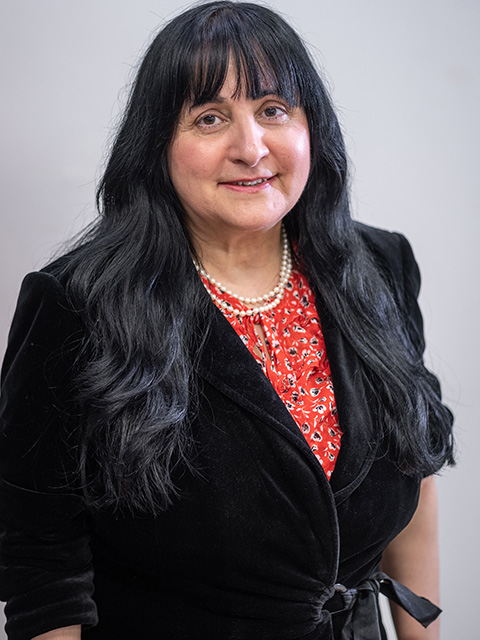
Jacqui Webster is a Professor of Public Health at the University of Technology Sydney (UTS), leading the WHO Collaborating Centre on Nursing, Midwifery and Health Development. She serves as the Secretariat for the South Pacific Chief Nursing and Midwifery Officers Alliance (SPCNMOA) and continues collaborating with The George Institute for Global Health on salt reduction research. Key Grants: NHMRC Investigator Grant (Leadership 2), NHMRC IDEAS Grant, Global Alliance for Chronic Diseases grants Collaborations: Fiji National University, Deakin University, University of Sydney, UNSW, Northwestern University Her research focuses on reducing cardio-metabolic diseases through food/water security programs and salt reduction policies. Recent articles analyze potassium-enriched salt adoption barriers, global water sodium standards, ultra-processed food impacts in Fiji, and pandemic-related dietary shifts in Australia. She authored the public health-themed book Two Bugs on Bikes (Hembury Books 2025) based on her cycling journey across Europe and Africa. At UTS, she mentors early-career researchers and supports strategic operations for the WHO Collaborating Centre.
Heikki Remes serves as Associate Professor in the Department of Energy and Mechanical Engineering at Aalto University's School of Engineering, where he investigates high-performance steel structures for marine environments with emphasis on lightweight ship designs using advanced materials and manufacturing techniques. His research integrates fundamental fatigue and fracture mechanics with practical structural challenges, spanning from crystal-level material behavior to continuum-scale modeling. Key focus areas include welded joint integrity, additive manufacturing defects, and computational analysis of marine structures under extreme conditions. Recent publications reveal strong trends in fatigue assessment methodologies for complex welded geometries, experimental validation of distortion effects, and AI-enhanced damage prediction systems, reflecting his commitment to bridging theoretical mechanics with shipbuilding applications. Scientific Awards: Aalto Education Impact Award (2018) for establishing Marine Technology study programs SNAME Honorable Mention for 2018 Vice Admiral E. L. Cochrane Award Teaching Award of Aalto School of Engineering (2012) for educational tools No specific student advising or grant information appears in available sources, though his active publication record indicates ongoing research leadership. He contributes significantly to the Marine and Arctic Technology research group, driving projects on structural integrity assessment and advanced manufacturing solutions for next-generation marine vessels.
Jean Laurens is a Group Leader at the Ernst Strüngmann Institute (ESI) for Neuroscience in Cooperation with Max Planck Society in Frankfurt, Germany, where he heads the Laurens Lab. His research focuses on understanding how we sense our own motion and orient ourselves in three-dimensional space through neural mechanisms. His research interests include: Three-dimensional navigation and the neural basis of the 'brain compass' through head-direction cells in the limbic system Sensory signals for spatial navigation and how the brain integrates self-motion signals with visual landmarks Self-motion sensation and how the brain merges multiple sensory signals from the inner ear, vision, and proprioception with motor commands Laurens employs a multidisciplinary approach combining mathematical modeling and extracellular neuronal recordings in behaving Marmoset monkeys. His work spans computational neuroscience, systems neuroscience, and vestibular research, with significant contributions to understanding 3D orientation coding, gravity sensing in neural circuits, and spatial cognition. Recent publications demonstrate his focus on neural attractor networks, multisensory integration, and the representation of spatial orientation relative to gravity. His laboratory team includes researchers Francesca Lanzarini, Farzad Ziaie Nezhad, and Deepak Surendran, with Sogand Ghiasi managing laboratory operations. The Laurens Lab has been featured in media outlets including Süddeutsche Zeitung, with coverage of their work on balance mechanisms published in November 2020 and an article titled 'Du kannst mich Affe nennen' published on August 30, 2024.
Tony Ingesson is a Senior Lecturer in the Department of Political Science at Lund University, specializing in intelligence analysis, counter-espionage, and military decision-making. With a background in the Swedish Armed Forces where he worked with technical data acquisition for airborne weapons systems and communications, he brings practical military experience to his academic work. His research interests span intelligence analysis methodologies, counterintelligence operations, deception and manipulation at tactical levels, clandestine communications, and industrial espionage. Ingesson has developed a particular expertise in how psychological mechanisms and biases influence intelligence analysis, as well as the historical connections between military conscription and democratization. His work bridges theoretical political science with practical security applications. Analysis of his recent publications reveals a strong focus on contemporary security challenges, particularly the intersection of traditional and emerging technologies in intelligence operations. His work examines how historical communication methods persist in modern conflicts, the evolving nature of espionage in high-trust societies like Sweden, and the application of intelligence analysis techniques to non-traditional fields such as precision oncology. Ingesson demonstrates consistent scholarly output across both academic journals and public-facing platforms like The Conversation, indicating his commitment to making complex security issues accessible to broader audiences. Ingesson actively participates in interdisciplinary research projects, including 'Clandestine Communications: Old Technologies, New Opportunities' and 'Greyzone genomics' at the Pufendorf IAS. His teaching portfolio encompasses political science methods, intelligence analysis techniques, counterterrorism, and deception studies, reflecting the breadth of his expertise. While specific details about student advising aren't provided in the available information, his role as Senior Lecturer indicates involvement in mentoring students through his teaching responsibilities. His research team involvement includes collaboration with researchers like Magnus Andersson on clandestine communications and David Gisselsson Nord on the intersection of genomics and security. These collaborations demonstrate his ability to bridge disciplinary boundaries while maintaining focus on core intelligence and security issues.
Susan E. Burns is a Professor at the School of Civil and Environmental Engineering , Georgia Institute of Technology. She holds multiple administrative roles, including Interim Associate Vice President for Research Operations and Infrastructure and Associate Chair for Administration and Finance. Burns earned all her degrees (B.C.E., M.S., Ph.D.) in civil engineering from Georgia Tech. NSF CAREER Award (2000) Arthur Casagrande Professional Development Award (ASCE) Edmund Friedman Young Engineer Award (ASCE) Class of 1969 Teaching Scholar (Georgia Tech) Fellow, American Society of Civil Engineers (2013) Her research focuses on geoenvironmental engineering , emphasizing waste material reuse (dredged sediments, fly ash), stormwater treatment , soil erosion control , and microbially induced calcite precipitation (MICP) . Recent publications analyze microplastic transport, arsenic speciation in fly ash, and LCA of dredged sediment reuse. Funding sources include NSF, DOE, US Army Corps of Engineers, and state departments of transportation. Professor Burns has led major conference proceedings (e.g., IS Atlanta 2008, ICSE-5) and served on editorial boards like ASCE's Journal of Geotechnical and Geoenvironmental Engineering. Her administrative roles include chairing graduate committees, overseeing curriculum changes, and managing geosystems group operations.
Fred Feinberg is the Joseph and Sally Handleman Professor of Marketing and Professor of Statistics (by courtesy) at the University of Michigan, where he is also an Affiliated Faculty member of the Center for the Study of Complex Systems. His work integrates advanced Bayesian methods with large-scale marketing data to illuminate how people make choices under uncertainty. Education Ph.D., Sloan School of Management, Massachusetts Institute of Technology (1989) Doctoral program in Mathematics, Cornell University (1983–84) S.B. Mathematics & S.B. Philosophy, Massachusetts Institute of Technology (1983) Research Focus Feinberg’s scholarship centers on discrete choice models that leverage real-world decisions to infer latent attributes such as demographics, product appeal, and socioeconomic status. Methodologically, he employs Hierarchical Bayes (HB) models and cutting-edge MCMC algorithms to handle massive data sets, while theoretically he advances dyadic utility theory and optimal search under uncertainty. Applications span click-through behavior, menu-based choice, online dating preferences, spatial marketing, and consumer reactions to intangible or aesthetic product features. Recent empirical studies explore the wearout versus weariness effects of online advertising, the impact of data breaches on consumer behavior, and dynamic pricing for digital media subscriptions. Across these projects, Feinberg couples rigorous statistical innovation with actionable managerial insights, bridging marketing science, operations, and engineering. Scientific Awards & Leadership Joseph and Sally Handleman Endowed Professorship Past President, INFORMS Society for Marketing Science Departmental Editor, Production and Operations Management Former Co-Editor, Marketing Science Co-author (with T. Kinnear & J. Taylor) of the textbook Modern Marketing Research: Concepts, Methods, and Cases Grants & Collaborations While explicit grant lists are not provided, Feinberg’s prolific publication record in top-tier journals (e.g., Journal of Marketing Research , Marketing Science , Management Science ) and editorial board service imply sustained external funding and interdisciplinary partnerships, particularly with operations, engineering, and computer-science groups. Laboratories & Teams Feinberg is formally affiliated with the Center for the Study of Complex Systems (CSCS) at the University of Michigan, where he collaborates on network-based choice frameworks and large-scale behavioral data analytics. He maintains active ties to the Ross Marketing faculty and the Department of Statistics, fostering joint workshops and doctoral training initiatives.
Tālis Laizāns serves as a practical assistant professor and researcher at the Institute of Economics and Entrepreneurship, Riga Technical University (RTU), leveraging dual master's qualifications in economics and engineering to bridge academic theory with real-world business applications. His work significantly advances RTU's research in entrepreneurship, innovation, and economic policy development. His educational credentials include: Master of Economics (Mg.oec.) Master of Engineering (Mg.ing.) Laizāns specializes in venture capital, SME development, and social innovation financing, with strong emphasis on artificial intelligence applications and EU research frameworks. His interdisciplinary approach integrates economic analysis with engineering principles to address contemporary challenges in Latvian and European business ecosystems, particularly focusing on practical implementation pathways for startups and established enterprises. His 2019 publications analyze social innovation through multiple lenses: societal participation dynamics, international financing models, EU research project structures, and critical success factors. These works synthesize Latvia-specific case studies with broader European experiences, highlighting actionable insights for policymakers and business stakeholders in scaling social innovation initiatives. Professional recognition stems from substantial project leadership rather than formal awards, evidenced by his selection as Latvia's representative in high-impact EU initiatives. Laizāns actively secures and executes research funding across diverse domains: Latvia-Cambridge Venture Camp (2024) : Cultivating next-generation entrepreneurship through experiential learning in the UK. Shadow Economy Assessment in Construction (2024-2025) : Quantifying informal economic activities to inform regulatory frameworks. OpenFin Hackathon (2024) : Driving fintech innovation through international competition platforms. Learning and Research Academic Group (2024) : Advancing pedagogical methodologies and collaborative research practices. Post-Pandemic Economic Framework Project (2020) : Designing resilience strategies for Latvia's economic recovery. Climate Knowledge and Innovation Community (2016-2023) : Leading EIT-funded climate action through knowledge transfer. His earlier Horizon 2020 contributions include Bio-Based Industries JIT representation (2013-2017) and COPA-COGECA working group leadership on agricultural innovation (2010-2017). At RTU, Laizāns operates within the Innovation Economic Research Center while co-founding the 'Learning and Research' academic collective. His project portfolio demonstrates consistent engagement with interdisciplinary teams tackling societal challenges through evidence-based innovation, particularly in economic policy design and sustainable business model development.
Mikail Rubinov serves as Assistant Professor of Biomedical Engineering (primary appointment), Computer Science, Psychiatry, and Psychology at Vanderbilt University's School of Engineering. His interdisciplinary work bridges computational neuroscience, network science, and clinical applications. His research focuses on integrative statistical models of large-scale neural data , exploring brain network organization across species and scales. Key interests include evolutionary principles of brain networks, transcriptomic basis of neural individuality, information transfer in neural systems, and neuropsychiatric connectivity phenotypes. The Rubinov Lab develops computational frameworks for analyzing complex neural systems and integrates neuroscientific knowledge with multi-omics data. Recent publications reveal strong trends in network neuroscience methodology development (circular analysis frameworks, unbiased sampling techniques) and translational applications (epilepsy networks, autism spectrum connectomics, gut-brain axis interrogation). His work increasingly incorporates transcriptomic data with neuroimaging at biobank scale. NIH Grant Writing Workshop (June 2022) NIH Workshop Short Talks (April 2023) Rubinov actively mentors graduate and undergraduate students across Biomedical Engineering and Computer Science. His lab maintains collaborations with UCSF, HHMI Janelia Research Campus, Weizmann Institute, and international neuroscience consortia. Current projects include integrative models of large-scale neural data and transcriptomic basis of neural individuality. The Rubinov Lab operates within Vanderbilt's Department of Biomedical Engineering with extensive cross-school collaborations. Technical resources include GitHub repositories for constraint network models (cnm-code), volumetric segmentation (voluseg), and brain connectivity toolboxes.
Greg Distelhorst is an Associate Professor at the University of Toronto, holding appointments in the Rotman School of Management and the Centre for Industrial Relations and Human Resources. Previously, he taught at MIT Sloan School of Management and Saïd Business School, Oxford. He holds a BA in Cognitive Science from Yale University and a PhD in Political Science from MIT. His research focuses on global trade and worker rights, as well as politics and policy in contemporary China. Key areas include multinational management, industrial relations, and the intersection of political economy with Chinese governance. His work explores how corporate practices in global supply chains affect labour standards, and how authoritarian regimes manage public discourse and accountability. Distelhorst has published in leading journals including Management Science , Organization Science , and American Journal of Political Science . His research has been recognized with awards such as the 2018 Responsible Research in Management Award and the American Political Science Association Dorothy Day Award. His research on Chinese governance examines mechanisms of public accountability under authoritarian rule, including how social media activism and grassroots participation influence policy outcomes. He has conducted fieldwork in China, including fellowships with the U.S. Fulbright Program and the Yale-China Association. Distelhorst’s work bridges management studies, political science, and labour economics, with a focus on systemic challenges in global supply chains and the socio-political dynamics of emerging markets.
Tijay Chung is an Associate Professor at the College of Engineering , Virginia Tech , specializing in Internet Security and Internet Measurement . His work bridges theoretical and applied aspects of cybersecurity, focusing on secure communication protocols and infrastructure. Education Ph.D., Computer Science and Engineering, Seoul National University (2015) B.S., Computer Science and Engineering, Pohang University of Science and Technology (2009) Research Interests Chung's research centers on improving certificate revocation mechanisms, DNSSEC, and TLS security. He explores vulnerabilities in web encryption, develops decentralized cryptographic solutions, and analyzes internet governance protocols like BGP and RPKI. His work also extends to privacy in contact-tracing technologies and understanding content distribution dynamics in peer-to-peer systems. Recent publications highlight trends in : Enhancing TLS and DNSSEC operational security Decentralized cryptographic accumulators for revocation Longitudinal studies of PKI and certificate ecosystems Privacy guarantees in Bluetooth Low Energy (BLE) systems Advising No student names were explicitly listed in the provided materials.
Professor Mahroo Eftekhari is a Professor in Building Services Engineering at Loughborough University, leading the Low Energy Building Services Engineering MSc programme. Her research focuses on energy-efficient building systems, thermal comfort, HVAC optimization, and renewable integration. She has pioneered control systems for airports and buildings, including MPC-based strategies to reduce energy use while enhancing occupant well-being. Notable contributions include the development of BISPA (Building & Industrial Services Pipework Academy), a national center for BIM and pipework training. Education: Holds qualifications including CEng (Chartered Engineer), DPhil (Doctor of Philosophy), FCIBSE (Fellow of Chartered Institution of Building Services Engineers), and SFHEA (Senior Fellow of the Higher Education Academy). Her academic career is marked by collaborations with Tata Steel, Mitsubishi R&D, and Vexo, yielding applied research in sustainable building technologies. Research Interests: Indoor Air Quality, Thermal Comfort Modeling, Zero Energy Buildings, Digital Twins, and Advanced Control Systems. She has developed innovative solutions like AI-driven thermal management for Building Energy Management Systems (BEMS) and interfaces to synchronize airport operations with energy systems. Awards & Grants: Secured funding from diverse bodies for projects such as adaptive thermal comfort models, BISPA infrastructure, and energy-efficient HVAC strategies. Her work emphasizes practical applications, including reducing CO₂ emissions via airport terminal optimization and improving renewable energy use in buildings. Lab & Teams: Leads the Building Energy Research Group, managing projects in closed-loop heating systems, IEQ monitoring, and hydronic system efficiency. The Civil Engineering labs house interactive BIM rigs launched with institutional and industry support.
Peter Newman, Ph.D., serves as Dean of the Rubenstein School of Environment and Natural Resources at the University of Vermont since July 1, 2024, and holds the Suzie and Allen Martin Professor title. With a career spanning decades, he has conducted extensive research on visitor management in protected areas, soundscape management, and transportation planning, partnering with the National Park Service's Natural Sounds and Night Sky Division since 2012. Education Ph.D. in Natural Resources, University of Vermont M.S. in Forest Resource Management, SUNY College of Environmental Science and Forestry B.A. in Political Science, University of Rochester His research focuses on social carrying capacity decision-making in protected area management, with fieldwork across major U.S. parks including Denali, Grand Canyon, and Great Smokies. He has developed frameworks for acoustic management and Leave No Trace efficacy, contributing to sustainable outdoor recreation practices. Scientific Awards: Cooperative Ecosystem Studies Unit National Award (2012) George Wright Society National Award for Achievement in Social Sciences (2013) Throughout his career, Newman has led high-quality teaching at Penn State's Graduate Degree Program in Acoustics and mentored numerous students through research projects on wildlife approach norms, pandemic recreation shifts, and waste management strategies in national parks. He previously served as a Park Ranger in Yosemite and Backcountry Patrol member in Idaho.
Marcelo Javier Cardenas Toledo is a Research Assistant at the University of Agder (Norway) and a PhD candidate under a Cotutelle agreement with RMIT University (Australia). His research focuses on circular economy practices and their impact on consumer food waste engagement, sustainable consumer behavior, and organizational sustainability transitions. Education: Master of Environment from the University of Melbourne and a Bachelor’s in Marketing from Universidad San Francisco de Quito (Magna Cum Laude). He has taught in Australia and Ecuador, including as a sessional lecturer at RMIT’s School of Media and Communication. Research Interests: Circular Economy applications, sustainable business practices, and CSR. His work has been published in journals like Journal of Cleaner Production and Psychology & Marketing , earning a Best Paper Award at INEKA 2019. Labs/Teams: Affiliated with research groups at UiA. No grants or specific labs mentioned, but collaborates across institutions under Cotutelle.
Professor Lola Dada is the Head of Department and Professor of Entrepreneurship at Lancaster University Management School's Department of Entrepreneurship and Strategy. She holds a BSc in Economics, MSc in Corporate Finance, and PhD in Management. Her research focuses on entrepreneurship, innovation, franchising, and strategy, with notable projects like the GCRF-funded RECIRCULATE initiative addressing eco-innovation in Africa. She has received numerous awards, including Best Paper Awards at international conferences and the Emerald Literati Network commendation. Lola teaches at both undergraduate and postgraduate levels and has supervised PhD students exploring topics like AI-driven innovation and gender equality. She has held leadership roles such as Director of Undergraduate Programmes and has been a Visiting Professor internationally. Her work emphasizes sustainable practices, gender equity, and cross-cultural entrepreneurship. Education: BSc (First Class), MSc (Distinction), PhD (No Corrections) Affiliations: Senior Fellow of the Higher Education Academy, Co-Investigator on RECIRCULATE Grants: ESRC, British Academy, GCRF funding Her research bridges theoretical frameworks with practical applications in franchising systems, corporate venturing, and gender dynamics. Recent articles explore pro-environmental behaviors in franchises, symbolic violence in academia, and strategic human capital in entrepreneurship. Lola actively reviews for top journals and conferences globally, contributing to academic discourse on innovation and organizational behavior.
Dr. Rameeza Moideen is a Researcher at the University of Edinburgh's School of Engineering, affiliated with the Energy Systems Research Institute. Her work focuses on offshore renewable energy infrastructure, coastal structural resilience, and fluid-structure interaction dynamics. Research Interests Her research spans vortex-induced vibrations in marine power cables, extreme wave impacts on coastal decks, and climate change adaptation for port infrastructure. She applies advanced numerical simulations to analyze hydrodynamic forces, structural stresses, and material degradation mechanisms. Key Research Trends Recent work emphasizes lazy wave dynamic cables under varying currents (2025), focused wave impacts on bridge decks (2023-2021), and marine growth effects on tubular structures (2021). These studies combine computational modeling with real-world climate scenarios to improve offshore energy systems and coastal infrastructure durability. Awards & Grants No specific awards or grants mentioned in available texts. Research is likely funded through institutional and collaborative projects within the Energy Systems Institute. Labs & Teams Active within the Energy Systems Research Institute at Edinburgh, collaborating on offshore renewable energy projects and coastal engineering initiatives.