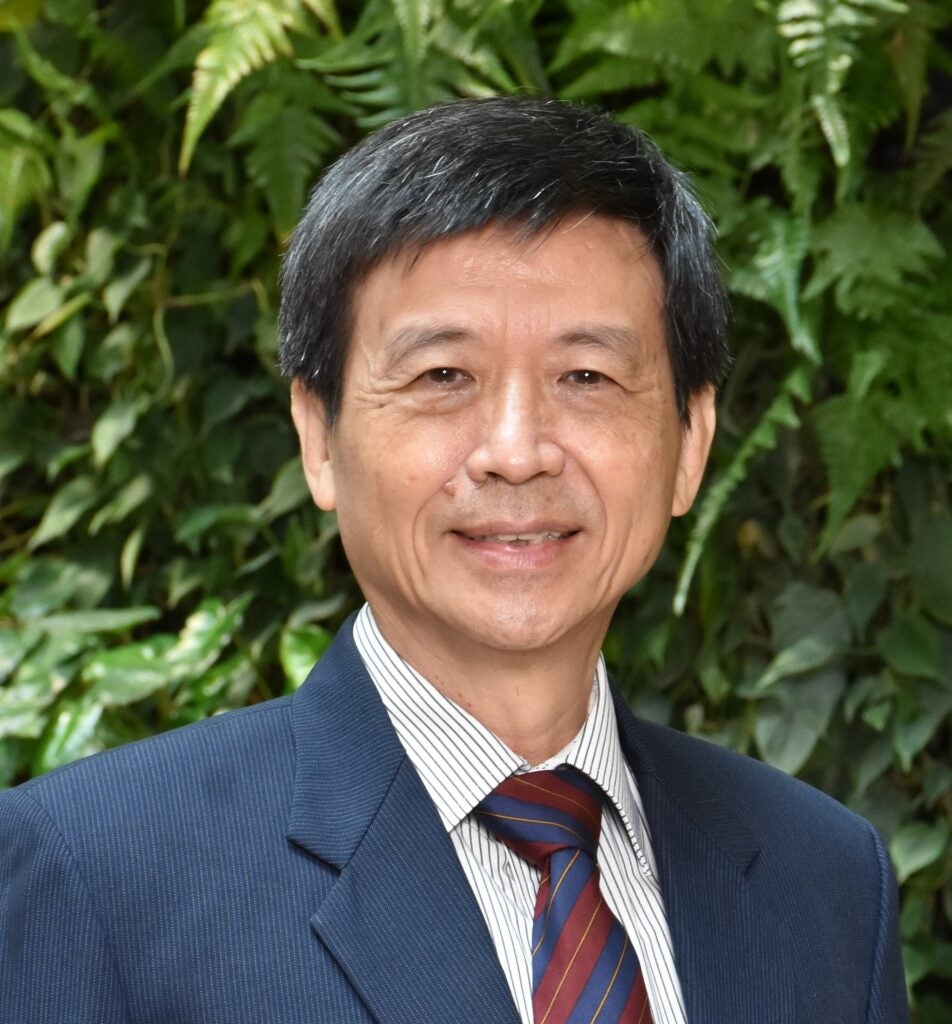
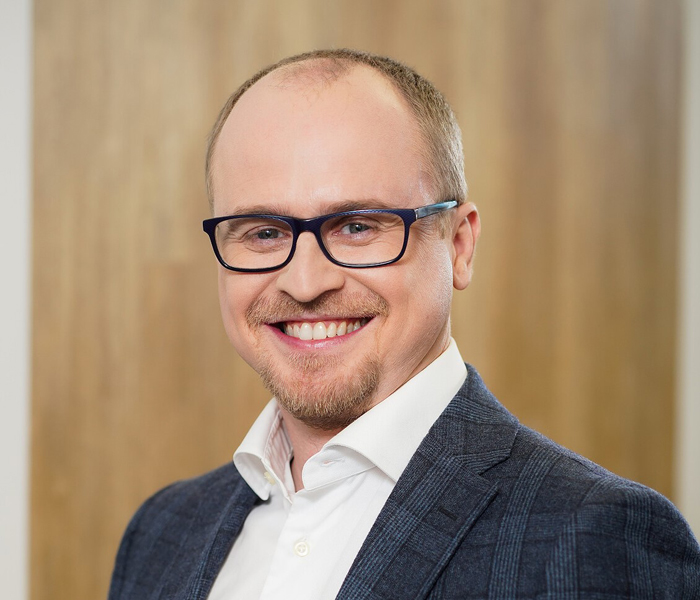
Alan Marco is an Associate Professor at the Jimmy and Rosalynn Carter School of Public Policy within Georgia Tech's Ivan Allen College of Liberal Arts. His research focuses on innovation policy, patent economics, and intellectual property strategy. Previously, he served as Chief Economist at the U.S. Patent and Trademark Office (USPTO), where he co-created PatentsView.org and led the Cancer Moonshot Patent Challenge. Research interests span antitrust regulation, patent valuation, technology markets, and empirical legal studies. Marco holds a Ph.D. in economics from UC Berkeley and a B.A. from Skidmore College. Publications demonstrate expertise in patent analytics, with recent work examining strategic citation behaviors, FRAND royalty calculations, and links between antitrust enforcement and innovation. Research methodologies emphasize large-scale data analysis of USPTO records, litigation outcomes, and market transactions.
Maria T. Schultheis is a Professor in Drexel University's Department of Psychological and Brain Sciences and holds a joint appointment in the School of Biomedical Engineering, Science and Health Systems. As Interim Director of Clinical Training, she oversees clinical psychology education. She earned her PhD in Clinical Psychology from Drexel University in 1998. Her research focuses on neurorehabilitation, particularly applying virtual reality (VR) technology to assess and improve driving capacity and everyday functioning in individuals with neurological disorders like traumatic brain injury, stroke, and multiple sclerosis. She has pioneered VR-based driving simulators for clinical evaluation and rehabilitation. Her work integrates clinical psychology, engineering, and transportation science, addressing cognitive, physical, and behavioral demands of driving post-neurological injury. Key projects include developing driving assessment protocols for disabled populations and investigating fatigue management in MS patients. Her interdisciplinary approach has been funded by NIH, NIDRR, and the NMSS. Notable awards include the 2007 APA Early Career Award (Division 40) and recognition from the National Academy of Neuropsychology. Schultheis leads the Applied Neuro-Technologies Lab, emphasizing ecologically valid methodologies. Over 35 peer-reviewed publications and presentations at international forums highlight her contributions. She serves on the National Research Council’s Transportation Research Board, influencing policy on neurological disorders and mobility. Grants have supported projects like VR-based financial competency assessments and understanding dual-task demands in post-concussion driving. Her research also explores decision-making competency in young adults and the neurocognitive correlates of risky driving behaviors. Collaborations with biomedical engineers and transportation specialists reflect her commitment to bridging clinical practice and technological innovation for functional recovery.
LU Wen Feng is an Adjunct Associate Professor in the Department of Mechanical Engineering at the National University of Singapore (NUS), affiliated with the College of Design and Engineering. His research focuses on advanced manufacturing technologies, including additive manufacturing, robotics, and AI-driven systems. He explores sustainable design methodologies, smart manufacturing innovations, and bioprinting applications. Key areas include optimizing material processes, enhancing mechanical properties of printed materials, and developing autonomous robotic solutions for industrial tasks. Contact: mpelwf@nus.edu.sg , located at E3-02-07. Research Interests : His work bridges AI and manufacturing, emphasizing Knowledge graph integration for additive manufacturing, Autonomous robotic systems in industrial settings, Bioprinting for tissue repair with smart bioinks, Topology optimization for lightweight and sustainable structures, Material characterization and process engineering for 3D-printed composites. Recent Article Trends : LU Wen Feng's 2025 articles highlight advancements in AI-augmented manufacturing systems (e.g., MaViLa, AutoMEX) and sustainable design workflows. His 2024 studies address material anisotropy, corrosion behavior, and topology optimization strategies for lattice structures. These trends reflect his interdisciplinary approach to solving challenges in additive manufacturing, robotics, and biomedical applications. Awards : No scientific awards explicitly mentioned. Advising & Grants : No current graduate students or grants listed. His research likely integrates industry-academia collaborations given the focus on applied manufacturing technologies. Labs/Teams : Not explicitly detailed, but his work suggests involvement in advanced manufacturing labs and AI-robotics teams at NUS.
Professor Ryan Ko is a leading academic in Cyber Security at the University of Queensland (UQ), serving as Chair and Director of the UQ Cyber Research Centre, Director of Research at the School of Electrical Engineering and Computer Science, and a member of UQ's Academic Board. He holds a BEng (Computer Engineering) and PhD from Nanyang Technological University, Singapore. His research focuses on data provenance, industrial control systems (ICS) security, privacy-preserving technologies, and AI-driven cybersecurity solutions. Ko has pioneered initiatives such as the UQ Cyber Centre, interdisciplinary cybersecurity education programs (MCyber, PGDipCyber), and the Oceania Cybersecurity Challenge. He has attracted over AUD 20 million in competitive grants as lead investigator, including the NZ$12.2M STRATUS project. Ko’s work spans industry and policy, including advisory roles with INTERPOL, governments, and NGOs. He has authored over 100 publications, contributed to ISO standards (e.g., ISO/IEC 21878), and co-founded cybersecurity startups. Awards include Fellowships from the Australian Computer Society and Queensland Academy of Arts and Sciences, and the CSA Ron Knode Service Award. Education: Bachelor of Engineering (Computer Engineering) (Hons.), Nanyang Technological University (2005) PhD in Computer Science, Nanyang Technological University (2011) Awards: Fellow, Australian Computer Society (2016) Fellow, Queensland Academy of Arts and Sciences (2020) Young Professional Award, Singapore Government (2018) Grants & Leadership: AUD 20M+ lead investigator grants; NZ$12.2M STRATUS project (2014–2018) Established UQ Cyber Centre (2019) and NZ’s first cybersecurity graduate program (2012) His research emphasizes returning data control to users, with applications in agriculture, energy, and critical infrastructure. Ko’s contributions include patents, open-source tools (e.g., Kali Linux), and frameworks like TrustCloud for cloud accountability.
Wojciech Czakon is a Full Professor and chair of the Strategic Management Department at Jagiellonian University in Poland. He has held leadership roles as Head of the Management Theory Department (University of Economics in Katowice) and Professor at the Higher Schools of Banking in Poznan. His academic career spans multiple institutions, including visiting positions at Universita delli Studi di Roma 2 Tor Vergata. Education: PhD in Management (2002) Habilitation in Management (2007) Professor title in Economics (2013) His research focuses on organizational behavior, strategic management, coopetition, family business dynamics, and qualitative research methodologies. Recent work explores digital transformation, strategic myopia, and the behavioral antecedents of coopetition. Publication Trends: His 2014-2022 papers on coopetition strategies—covering trust, behavioral factors, and performance metrics—have received significant citations. Recent projects analyze innovation ecosystems and entrepreneurial failure. Scientific Awards: 2022 Best book award (Organization and Management Committee of the Polish Academy of Sciences) 2021 Outstanding research achievement award (Prime Minister of Poland) Honoris causa doctor (Wroclaw University of Business and Economics) Top 5 global scholar in coopetition research Community Service: He has served as Vice-president of the European Academy of Management, co-chair of EURAM doctoral colloquium, and organizer for conferences like EURAM, EIASM, and IFERA. He also co-edits anthologies and special issues in journals such as Long Range Planning and Industrial Marketing Management.
Marcel Lubbers is a Professor of Interdisciplinary Social Science: Relations between groups and cultures at Utrecht University's Faculty of Social and Behavioural Sciences. He leads the European Research Centre on Migration and Ethnic Relations (ERCOMER) and serves as a board member of the Interuniversity Center for Social Science Theory and Methodology (ICS). As associate editor of the European Sociological Review (ESR), he significantly influences academic discourse in migration and political sociology. His work represents Utrecht University in the focus area Migration and Societal Change, connecting research with broader societal implications. Professor Lubbers' research program centers on migration's societal impacts, particularly examining how immigration influences nationalism, Euroscepticism, and voting behavior. His work adopts both macro-level perspectives on societal cohesion and micro-level analyses of immigrant integration processes. Recent publications reveal his focus on political extremism, interethnic relations, and the psychological mechanisms behind public attitudes toward migration. His methodology combines large-scale survey analysis, comparative European studies, and longitudinal approaches to track attitude changes over time. Lubbers' scholarly output shows consistent engagement with contemporary political challenges, including analyses of radical right voting patterns, the workplace as a setting for interethnic contact, and the impact of national nostalgia on political attitudes. His research demonstrates methodological sophistication through meta-analyses, mixed-methods approaches, and innovative survey designs like the Dutch Parliamentary Election Study and Dutch Ethnic Minority Election Study. Through web publications on platforms like Stukroodvlees.nl and contributions to the Migration Advisory Council, Lubbers actively bridges academic research and public policy debates. His work provides evidence-based insights on migration policy, electoral behavior, and societal integration that inform both scholarly and policy discussions in the Netherlands and beyond.
Sveva Vitellozzi is a Research Fellow at the Department of Economics and a Teaching Tutor in the Departments of Management and Political and Social Sciences at the University of Bologna. She holds a PhD in Development Economics from the Universities of Trento and Florence. Her research focuses on behavioral development economics, applied microeconomics, and mental health economics with a strong emphasis on gendered perspectives. Her work examines themes such as gender earnings gaps in Kenya, the impact of natural shocks on women’s empowerment in Bangladesh, and mental load disparities in Italy. Collaborative projects include studies on masculinity norms and mental health in Italy, and gender differences in time use and mental health in Ghana. She also investigates the effects of climate stress on intimate-partner violence in sub-Saharan Africa and depression’s economic implications in Mexico. Her publications appear in journals like European Economic Review and World Development , with working papers exploring policy framing for gender equality and breadwinner strain effects on economic decisions in Kenya. She actively contributes to interdisciplinary research teams and is affiliated with the CEPR.
Dr. Vincent Homburg is an Associate Professor in Public Administration at Erasmus University Rotterdam and holds the ERA Chair in 'e-Governance and Digital Public Services' at the University of Tartu, Estonia. He holds a Master’s degree from Twente University and a PhD from Groningen University. His research focuses on e-government, public management theory, and information systems. He has co-authored/co-edited influential books such as Understanding E-Government and The Information Ecology of E-Government . He has supervised multiple PhD students and received the 2010 Best PhD Supervisor Award from NIG. His research interests include e-government in the Netherlands and globally, digital public services, and the role of social media in citizen-government interactions. He has published over 112 peer-reviewed articles and actively contributes to academic journals as an editor and reviewer. His recent work explores institutional trust in digital governance, cross-border digital services in the EU, and social media adoption in China and Canada. Education: PhD in Organisation Studies/Information Systems (Groningen University) Master’s in Public Administration (Twente University) Awards: Best PhD Supervisor Award (2010) His research bridges theoretical and practical aspects of governance, emphasizing institutional dynamics and technology’s role in public administration. He collaborates internationally, contributing to policy discussions on digital transformation and citizen engagement.
Associate Professor Sam Kirshner is a faculty member at the University of New South Wales within the School of Information Systems and Technology Management . His research focuses on behavioral decision making , algorithmic impact on operations , and artificial intelligence applications in business contexts. PhD in Management Science from Queen’s University, Canada Teaching expertise in data visualization, predictive analytics, and AI ethics Co-author of Business Analytics: A Management Approach Member of the Ethical AI Advisory His research explores how psychological distance and construal level theory influence decisions in supply chains, technology management, and consumer behavior. Recent work examines ChatGPT's decision biases , algorithm aversion , and sustainable operations under financial constraints. Key publication trends show focus areas: AI ethics and human-AI collaboration Behavioral supply chain analysis Temporal/spatial psychological distance effects CO2 forecasting with sparse data Consumer behavior in digital platforms Virtual reality and cognitive processing Supervision roles include mentoring 2 PhD students and 6 honors students, contributing to the next generation of scholars in business analytics and technology management.
Simon Dobson is a Professor of Computer Science and Deputy Head of the School of Computer Science at the University of St Andrews. His research focuses on complex systems, sensor analytics, computational tools for simulation, and data analytics. He leads grants exceeding EUR30M, including a £5M EPSRC-funded programme in Sensor Systems Software. He is a Fellow of the Royal Society of Edinburgh (2020) and advises the Scottish government. Education: BSc (University of Newcastle), DPhil (University of York), both in Computer Science. Professional: Chartered Engineer, Fellow of the British Computer Society. Research Interests: Complex systems, network science, higher-order networks, epidemiological modeling, and sensor data integration. Teaching: CS4203 (Computer Security), CS5728 (Complex Systems Modelling). Supervises PhD/MSc projects. Awards: Includes RSE Fellowship, BCS Fellowship, and multiple leadership roles in conferences and committees.
Reiko Heckel is a Professor of Software Engineering at the University of Leicester, serving as Director of Postgraduate Teaching for Computing degrees and Data Analytics Lead at the Leicester Innovation Hub. She previously held academic roles at the Technical Universities of Dresden and Berlin before joining Leicester in 2004. Her research focuses on graph transformation systems, model-based development, stochastic modeling, and formal methods in software engineering. She earned her PhD (Dr.-Ing.) in Computer Science from TU Berlin in 1998. Her research interests span software engineering pedagogy, formal specification techniques, and applications of graph grammars in system modeling. Recent work explores stochastic graph transformations for social networks, transparency engineering in AI systems, and blockchain-based smart contract frameworks. Her contributions bridge theoretical foundations with practical applications in cybersecurity, data integration, and human-centric systems design. Key contributions include advancements in automated test case generation via graph transformations, visual contracts for software reverse engineering, and formal methods for complex system analysis. Her work frequently intersects with industry through collaborations via the Leicester Innovation Hub, emphasizing data analytics and technology transfer. Education: MSc Computer Science, Technical University of Dresden PhD (Dr.-Ing.), Computer Science, TU Berlin (1998) Leadership Roles: Head of Department (2014-2018) Director of Postgraduate Teaching (Ongoing) Research Themes: Model-Based Development Stochastic Systems Analysis Graph Neural Networks Trustworthy AI Her publications reflect a focus on formal methods, with recent trends in applying graph transformation techniques to social network modeling, blockchain smart contracts, and educational pedagogy.
Dr. Jennifer Dahne is a Professor of Psychiatry and Behavioral Sciences and the Melvyn Berlinsky Distinguished Endowed Chair in Cancer Research at the Medical University of South Carolina (MUSC). She holds leadership roles in MUSC’s Innovation Sciences Unit and the South Carolina Clinical & Translational Research Institute. Her research focuses on leveraging digital health technologies to address behavioral health disorders, particularly depression and substance use, with an emphasis on vulnerable populations. She also pioneers decentralized clinical trials and co-founded two digital health startups. Dr. Dahne’s work is supported by NIH grants (R01, R21, R41, R42, K23) and emphasizes translational research and commercialization of academic innovations. Education: Ph.D. in Clinical Psychology, University of Maryland, College Park (2016) Predoc Internship: MUSC/Ralph H. Johnson VA Medical Center Postdoc Fellowship: NIDA T32 Training Program (MUSC) Research Interests: Dr. Dahne’s work centers on digital health solutions to improve mental health care accessibility and efficacy. Key areas include: Decentralized clinical trials (remote/virtual trials) Telehealth and mobile health interventions for depression and substance use Health equity in digital health adoption Innovative clinical trial methodologies Awards & Leadership: Melvyn Berlinsky Distinguished Endowed Chair (2023) Inaugural Director, MUSC Innovation Sciences Unit (2022) Leadership roles in the SC Clinical & Translational Research Institute and Telehealth Center of Excellence Grants & Advising: Over 15 NIH grants awarded, including R01 and K-series. Her lab focuses on scalable interventions and has mentored students in digital health R&D. Collaborations span academia and industry through her startups and innovation initiatives. Labs & Teams: Research lab details available via MUSC’s Research Profile link. Active in cross-disciplinary teams advancing digital health and clinical trial innovation.
Yves Wautelet serves as an Associate Professor at the Faculty of Economics and Business at KU Leuven, where he conducts research in conceptual modeling, business process management, and digital transformation. His work addresses critical challenges at the intersection of information systems engineering and business strategy, with particular focus on sustainability-driven modeling approaches and IT governance frameworks. His primary research interests include: Conceptual modeling methodologies and frameworks Business process management and information systems design Digital transformation strategies and implementation IT governance and business-IT alignment Sustainability-driven modeling for circular economy Agile software development practices and methods Requirements engineering with user stories Wautelet's recent publication record demonstrates significant scholarly productivity with numerous 2024-2025 publications spanning conceptual modeling frameworks for sustainability (Circulise), tools for identifying ambiguity in user stories (AmbiTRUS), and approaches to align strategic and operational agility. His work bridges theoretical foundations with practical applications across diverse domains including healthcare, circular economy, software development, and organizational transformation. His research consistently applies model-driven approaches to solve complex real-world problems, often integrating sustainability considerations into information systems engineering. As a promotor and co-promotor, Wautelet currently supervises multiple doctoral research projects including: Automatic generation of conceptual models from textual descriptions (2024-2028) Sustainability-Driven Modeling Assistant for Twin Transition in Vietnam (2024-2028) Home Care Business Process Management using Distributed Ledger Technologies (2024-2028) Teaching Modeling Skills in BPMN formalism (2021-2025) His research is conducted through the Information Systems Engineering Research Group (LIRIS) at KU Leuven's Brussels campus, where he contributes to advancing model-driven approaches for addressing contemporary business and technological challenges.
Dr. Jacinta C. Beehner is an Associate Professor in the Department of Anthropology & Psychology at the University of Michigan. Her research focuses on sexual conflict theory, reproductive strategies in primates, and the physiological and behavioral mechanisms underlying these dynamics. She directs the Core Assay Facility/Beehner Endocrine Laboratory and co-directs the Simien Mountains Gelada Research Project, Capuchins at Taboga, and the Evolution and Human Adaptations Program. Her work examines non-human primates like geladas, capuchins, and baboons in natural African and American habitats. Key themes include infanticide avoidance, hormonal responses to environmental stress, and the evolutionary implications of reproductive trade-offs. Recent studies highlight the impact of climate change on primate health, the role of social status in parasite resistance, and hormonal adaptations to high-altitude environments. Beehner has contributed to over 60 peer-reviewed articles since 2015, spanning topics from primate social networks to genomic adaptations. Her fieldwork emphasizes integrative methods combining endocrinology, genetics, and behavioral observation. She has presented at international forums like the National Geographic Explorer’s Festival and collaborates across disciplines to advance primate conservation and evolutionary biology.
Emmanuel Stamatakis is a Professor of Physical Activity, Lifestyle, and Population Health at the University of Sydney's School of Health Sciences (Faculty of Medicine and Health). He holds NHMRC Leadership Fellowships (2021-2025 and 2026-2030) and leads the Charles Perkins Centre's Physical Activity & Exercise Theme. His research focuses on lifestyle behaviors' impacts on cardiometabolic conditions, cancer, and cardiovascular health, using large-scale cohort studies and wearable device data. Key roles include directing the Mackenzie Wearables Research Hub and co-chairing WHO's Physical Activity Guidelines Development Group. Education: PhD from University of Bristol (2003), post-doctoral training at University College London. He leads the ProPASS consortium, involving 45 cohorts with wearable data. Over 460 peer-reviewed publications, including Clarivate's Highly Cited list since 2019. Research interests integrate physical activity, sedentary behavior, and sleep analytics with clinical outcomes. Current projects explore wearables-based measurement innovations, SPAN (sleep-physical activity-nutrition) synergies, and intervention designs for GLP-1 receptor agonist users. Recent articles emphasize VILPA (vigorous intermittent lifestyle physical activity) benefits, sleep-cardiovascular links, and multimodal lifestyle optimization. Awards include Australia's Top Researcher in Sports Medicine and multiple NHMRC grants. Supervises PhD projects on physical activity measurement and intervention design. Active in 50+ peer-reviewed journals and national/international funding bodies.