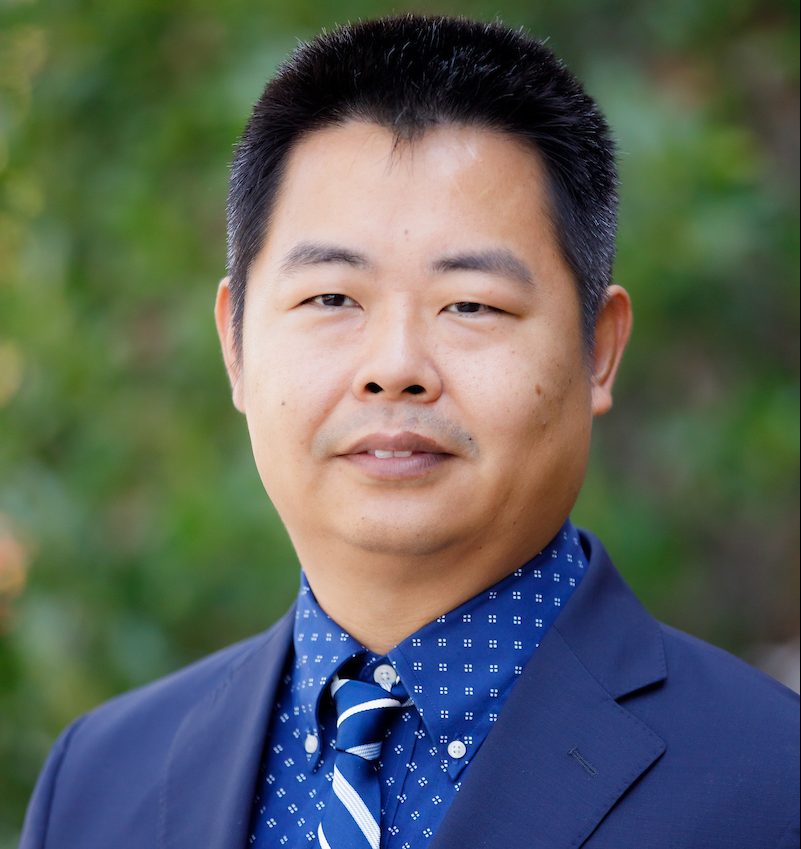
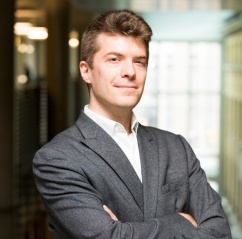
Stefan Bechtold is a Full Professor of Intellectual Property at ETH Zurich since 2013 and Associate Vice President IP Policy (2023–2026). He is affiliated with the ETH AI Center and serves on global advisory boards including the Academic Advisory Board of the German Federal Ministry for Economic Affairs and Climate Action. His interdisciplinary research bridges law, economics, and computer science.
Noorbakhsh Amiri Golilarz is an Assistant Professor in the Department of Computer Science at The University of Alabama, College of Engineering. He has established himself as a prominent researcher in artificial intelligence, particularly in computer vision, deep learning, and image processing. His educational background includes: Postdoctoral Research Fellow, Computer Science, Boston College (2023) Ph.D., Electrical and Computer Engineering, Southern Illinois University Carbondale (2023) D. Eng., Computer Science and Technology, University of Electronic Science and Technology of China (2021) M.S., Electrical and Electronic Engineering, Eastern Mediterranean University (2017) B.S., Electrical Engineering, University of Guilan (2012) Dr. Golilarz's research spans multiple domains of artificial intelligence with a particular focus on computer vision, deep learning, and image processing applications. His work addresses challenges in medical imaging, satellite imagery, and cognitive neuroscience. He has made significant contributions to image denoising techniques, control chart pattern recognition, and AI applications in healthcare. His recent work has expanded into generative AI, large language models, and secure machine learning operations. His publication portfolio demonstrates consistent productivity with over 2500 citations and an h-index of 25. His most impactful work includes applications of blockchain and federated learning for COVID-19 detection, optimized support vector machines for medical diagnosis, and innovative image denoising techniques using metaheuristic optimization algorithms. Among his professional achievements: Co-founded AI Letters journal in 2024, serving as Associate Editor-in-Chief Served as Lead Guest Editor and Topic Editor for several SCI-indexed journals Held the role of Conference Program Chair Dr. Golilarz has supervised numerous graduate students and research projects, with his work spanning theoretical advancements in AI algorithms to practical applications in healthcare, energy systems, and cybersecurity. His research group has established collaborations with institutions including Boston College and Mississippi State University.
Dr. Kenneth Joseph is an Associate Professor in the Department of Computer Science and Engineering at the University at Buffalo , part of the School of Engineering and Applied Sciences . He serves as Associate Director of the Institute for Artificial Intelligence and Data Science and leads the Computation and Equity Lab (cubelab) , focusing on social inequality through computational measures and models. Education: PhD, MS, and BS in Societal Computing from Carnegie Mellon University (2016, 2012, 2010) Research Interests: Computational Social Science, Network Science, Gender Studies, and AI for Social Good Notable Work: Gender disparities in academia, predictive modeling for foster care and urban policy, and social media rumor analysis Awards: UB Exceptional Scholar—Young Investigator Award (2021) Advising: Mentored students like Yuhao Du, Jason Yan, Arjunil Pathak, and Navid Madani on projects spanning Twitter bios, foster youth services, and algorithmic fairness.
Huining Li is an Assistant Professor in the Department of Computer Science at North Carolina State University . Her research focuses on Internet of Things (IoT) , cybersecurity , and mobile computing , with a specialized emphasis on mobile health (mHealth) technologies. Education: Ph.D. in Computer Science and Engineering from University at Buffalo (2024). Her work addresses privacy-preserving sensing mechanisms , biomarker measurement , and fairness in dynamic mobile environments , developing systems for chronic wound care, Parkinson’s disease management, and mental health therapy. Recent publications highlight innovations in mmWave biometrics , machine learning for health diagnostics , and non-contact monitoring . Scientific Awards: Best Paper Awards (SenSys 2019, BodyNet 2021, ICHI 2022) Best Paper Candidate (SenSys 2022) Harold O. Wolf Achievement Award (2024) EECS Rising Star (2023) NIH mHealth Training Institute Scholar (2025) She teaches courses in Mobile Health Systems and Applications and Computer Networks , and actively serves on NSF panels , TPC committees (ACM MobiSys, IEEE-EMBS BSN), and as Associate Editor for journals like Elsevier Smart Health.
Deborah Richards is a Professor in the School of Computing at Macquarie University, affiliated with the Ethics and Agency Research Centre, Performance and Expertise Research Centre, and Frontier AI Research Centre. She holds roles as Industry and External Relations Director for the School and Director of the Virtual Reality Lab. Her research focuses on Intelligent Virtual Agents, Virtual Reality applications in education and health, knowledge acquisition, and cybersecurity ethics. She has authored over 425 publications and led 19 research projects, including studies on AI in healthcare and ethical AI design. Education: PhD (Artificial Intelligence, Macquarie University), MAppSc (Information Studies), BBus (Computing and MIS), and a Postgraduate Certificate in Higher Education (Leadership and Management). She advises on PhD and MRes students in Intelligent Virtual Agents research. Research interests include virtual agents for health behavior change, AI ethics, and educational technology. Notable projects include the eADVICE web-based management system for urinary incontinence and the development of embodied conversational agents for wellbeing support. Awards include the ABC Science Media Fellowship (2005) and Vice-Chancellor’s Citations for Outstanding Contributions to Student Learning (2017). Grants and collaborations span health informatics, cybersecurity, and AI ethics. She co-leads initiatives like the Respectful Maternity Care study and the Virtual Reality Lab’s immersive learning environments. Future work emphasizes ethical AI integration in education and healthcare.
Prof. Dr. André Bardow is a Full Professor in Energy and Process Systems Engineering at ETH Zurich , leading research at the intersection of thermodynamics, machine learning, and sustainable energy systems. Previously, he held professorships at RWTH Aachen University (2010-2020) and TU Delft (2007-2010). He also served as part-time director at Forschungszentrum Jülich (2017-2022) and visiting professor at UC Santa Barbara (2015/16). His work focuses on energy systems optimization , computer-aided molecular design , and CO2 capture & utilization . PhD from RWTH Aachen University Current ETH Zurich affiliation Former roles at RWTH Aachen, TU Delft, Jülich Research Center His research integrates machine learning with thermodynamic modeling to optimize processes like crystallization and electrochemical cooling . Recent publications demonstrate advancements in solvent design, CO2 transport LCA, and ORC working fluid optimization. He chairs the VDI Technical Committee for Thermodynamics (2016-2024) and has received multiple awards including the Covestro Science Award and Arnold-Eucken-Award . Current projects address carbon circular economies , electrified chemical production , and AI-driven process optimization . His lab at ETH Zurich develops cutting-edge technologies like ML-CAMPD frameworks for sustainable separation processes and photoacid-based CO2 capture systems. Funding from the H2020 Systemic Expansion of Circular Ecosystems (grant 101036854) supports these initiatives. 2024 Clarivate Highly Cited Researcher 2022 Inaugural Lecture: "To sustainability and beyond: A computer-animated story on energy & chemicals" Recipient of multiple teaching and research excellence awards
Maher Elshakankiri is an Assistant Professor, Teaching Stream at the University of Toronto's Faculty of Information. He holds a Ph.D. in Computer Engineering from Ain Shams University (Egypt), followed by a postdoctoral fellowship at the University of Regina. His research focuses on IoT, Wireless Sensor Networks (WSN), and pedagogical integration of technology and gaming. He has supervised over 100 student projects and authored a book on WSNs. Education: Ph.D. in Computer Engineering, Ain Shams University, Egypt M.Eng., B.Eng. in Engineering, Ain Shams University, Egypt Postdoctoral Fellowship, University of Regina, Canada Research Interests: IoT in healthcare, agriculture, and sports Active learning classrooms and technology in education Wireless communication protocols (V2V, UAV, RFID) Leadership & Grants: Director, Bachelor of Information (BI) Program (2024–present) Coordinator, Information Systems and Design (ISD) Concentration (2023) SSHRC Grant: 'Gaming in teaching towards a more inclusive class' (2022–2023) Professional Activities: Member, SCC IoT & Digital Twins Standards Committee Reviewer for journals including Wireless Networks , Telematics and Informatics , and Computational Intelligence Technical Program Committee member at multiple conferences Teaching: Courses include INF1340 (Programming for Data Science), INF1005/1006 (IoT Workshops), and INF452 (Information Design Coding).
Jana Diesner is a Professor at the Technical University of Munich (TUM), leading the Human Centered Computing group within the School of Social Science and Technology. Previously, she held a tenured position at the University of Illinois Urbana Champaign (UIUC) School of Information Sciences. She earned her PhD in Computation, Organizations, and Society from Carnegie Mellon University's School of Computer Science. Her research focuses on human-centered data science, computational social science, network science, and ethical AI. She integrates methods from natural language processing, machine learning, and social science theories to study societal systems and responsible computing. Key areas include crisis informatics, data regulations, and impact assessment of media and research. Leadership Academy Fellow for underrepresented STEM leaders (2020) R.C. Evans Data Analytics Fellow (2018) NCSA Faculty Fellow (2015) Siebel Scholarship (2011) Recent work addresses stereotypes in large language models, reliability of crisis data extraction, and societal impact assessment of research. She advises on projects like the NCSA Faculty Fellowship and collaborates with organizations globally. Her teaching includes independent studies at TUM. Her research has been presented at venues like the International Conference on Computational Social Science (IC2S2), European Computational Social Science Symposium, and conferences on ethics in AI. She actively engages in initiatives promoting inclusive STEM leadership and responsible data science practices.
Jonathan H. Cantor is a Policy Researcher and Professor of Policy Analysis at the RAND School of Public Policy . His research focuses on health policies related to substance use disorder , mental health , and health behaviors , integrating frameworks from health economics , policy analysis , and public health . He leads the Mental Health and Addiction Treatment Tracking Repository , a national longitudinal database for substance use and mental health treatment facilities. His work examines treatment availability for older adults (funded by the National Institute on Aging) and telehealth services in mental health (funded by the National Institute of Mental Health). Recent NIMH grants aim to quantify mental health crisis services supply and its impact on population health. His recent publications (e.g., JAMA , Health Affairs ) address topics like opioid treatment accessibility , telehealth disparities , and food insecurity in higher education . His research spans health equity , preventive healthcare , and modeling/simulation approaches.
Ashli Owen-Smith is a behavioral scientist affiliated with the School of Public Health at Georgia State University , where her research focuses on mental health disparities, suicide prevention, and integrative/complementary approaches for complex mental-physical health conditions. She works with underserved populations including refugees/immigrants, incarcerated individuals, and LGBTQ+ communities through community-based participatory research and mixed-methods frameworks. Her current projects are funded by CDC , DBHDD , and DPH . Education: Ph.D. in Behavioral Sciences (Emory, 2009), S.M. in Public Health (Harvard, 2005), B.A. in Psychology (Smith College, 2001) Her research spans mental health , trauma , suicide prevention , and mindfulness-based interventions . Recent work examines telehealth adaptations for chronic pain and mental health, vaccine hesitancy in refugee communities, and social determinants of suicide . She leads studies on gender-affirming care and health disparities in LGBTQ+ populations. Key article trends include epidemiological analysis of suicide risk factors, COVID-19 impacts on mental health, ICD-10 coding for autism, and complementary medicine in trauma recovery. Subfields span telehealth , health equity , mental-physical comorbidity , and community engagement . Students she has mentored include C.A. Scarlett , T. Griner , and M.M. Sesay . Her work integrates public health policy , clinical research , and health systems analysis .
Thomas Pape is a Professor at The Natural History Museum of the University of Copenhagen, specializing in the systematics, taxonomy, phylogeny, biogeography and evolution of Diptera (two-winged insects), with special emphasis on Calyptratae families including Sarcophagidae, Oestridae, and Calliphoridae. He has been a professor since 2025 after serving as an Associate Professor from 2004-2024. PhD from Copenhagen University (1990) Docent at Stockholm University (1998) Associate Professor at Danish Bilharziasis Laboratory (1990-1992) Research Entomologist at Naturhistoriska Riksmuseet, Stockholm (1994-2004) His research spans taxonomy, systematics, phylogeny, biogeography and evolution of Diptera with special emphasis on calyptrate families. He collaborates on Systema Dipterorum, conducts comparative larval morphology studies, and investigates the phylogeny of Calyptrata. His work includes Diptera nomenclature and large-scale biodiversity inventories. Analysis of his recent publications reveals a strong trend toward molecular phylogenetics (using RAD-seq and anchored phylogenomics), forensic entomology applications, and biodiversity informatics. His research spans entomology, systematics, evolutionary biology, and increasingly intersects with bioinformatics and conservation science, with significant contributions to understanding flesh flies, bot flies, and blow flies. President of the International Council of Zoological Nomenclature (since 2016) Chair of the Council for the International Congresses of Dipterology (2010-2018) Member of editorial boards for Entomotropica, Studia dipterologica, Stuttgarter Beiträge zur Naturkunde, and Tijdschrift voor Entomologie Dr. Pape teaches courses in Entomology (structure, phylogeny and biology of terrestrial arthropods), Field Biology II - Zoology, and Ecology and Evolution of East Africa (a 2-week field course in Tanzania with Nikolaj Scharff). He has served on scientific panels for SYNTHESYS and as chair of the scientific advisory committee for Museum Koenig in Bonn (2006-2009). His research group employs both morphological and molecular approaches to address evolutionary questions in Diptera, with particular expertise in calyptrate families. The laboratory maintains active international collaborations across multiple continents, as evidenced by his extensive publication record and research network.
Professor Michael C.L. CHAU serves as Professor and Deputy Area Head of Innovation and Information Management at The University of Hong Kong's Faculty of Business and Economics. He also holds the position of Associate Director at the HKU HKJC Centre for Suicide Research and Prevention, and serves on the HKU Senate and Court. His academic journey includes a Ph.D. in Management Information Systems from the University of Arizona and a B.Sc. in Computer Science (Information Systems) from the University of Hong Kong. Dr. Chau's research spans business analytics, artificial intelligence, web mining, fintech, smart health, and security informatics. His work focuses on applying data/text/web mining techniques to business, education, and social domains. He leads the Artificial Intelligence Research Group at HKU Business School, which has secured significant funding from the Hong Kong Research Grants Council, Food and Health Bureau, and other agencies for projects including 'The Invisible Hand in Crowdfunding' and 'Factors Moderating the Predictive Power of Social Media Sentiment on Stock Returns'. His publication portfolio includes over 150 articles in premier journals like MIS Quarterly, JMIS, and IEEE Transactions, with recent work exploring large language models, hate speech detection, and disaster-related social media analysis. His research demonstrates strong interdisciplinary connections across computer science, information systems, and business applications. INFORMS ISS Design Science Award (2020) IEEE ITSS Leadership Award in Intelligence and Security Informatics (2020) AIS Sandra Slaughter Service Award (2016) HKU Outstanding Young Researcher Award (2014) Faculty Research Postgraduate Supervision Award (2020 & 2025) Cited over 9,400 times (h-index = 47) Dr. Chau actively mentors doctoral students and has supervised numerous PhD graduates who now hold academic positions at institutions including Fudan University, Xi'an Jiaotong-Liverpool University, and the University of Maryland. His research grants portfolio demonstrates sustained funding success across diverse areas including blockchain, mental health applications, and social media analytics. The Artificial Intelligence Research Group he leads maintains strong industry connections through projects with Hong Kong Red Cross and the Hospital Authority.
James J. Gross is the Ernest R. Hilgard Professor of Psychology at Stanford University, directing the Stanford Psychophysiology Laboratory. He specializes in emotion regulation, with affiliations in Philosophy (courtesy). His education includes a Ph.D. in Clinical Psychology from UC Berkeley (1993), a B.A. in Philosophy and Psychology from Yale (1987), and a visiting graduate year at Oxford (1988). Research focuses on emotion regulation mechanisms, psychopathology, neuroimaging, and cultural influences. His work bridges clinical, cognitive, and social psychology, examining how individuals manage emotions to influence mental health and behavior. Notable contributions include the Process Model of Emotion Regulation and interventions targeting emotion regulation deficits. Publications (~650, 250k citations) highlight studies on emotion regulation strategies, clinical applications, and neural underpinnings. Recent work explores transdiagnostic treatments, digital health interventions, and the interplay between beliefs and emotion regulation. Awards: Stanford Dean’s Teaching Award, Walter J. Gores Award (highest teaching honor), multiple mentoring awards, and honorary doctorates from UC Louvain and Tilburg. Professional Roles: Co-founding President of the Society for Affective Science, Founding Co-Editor-in-Chief of Affective Science , and Fellow of major psychological and scientific societies. Labs/Teams: Directs the Stanford Psychophysiology Lab, collaborating on projects involving neuroimaging, psychophysiological assessment, and computational modeling of emotion processes.
Dr. Jiaqi Gong serves as Associate Professor in Computer Science and Adjunct Associate Professor in Mechanical Engineering at The University of Alabama's College of Engineering, while directing the Alabama Center for the Advancement of Artificial Intelligence. His academic foundation includes: B.S. in Engineering, China University of Geoscience (2004) Ph.D. in Engineering, Huazhong University of Science and Technology (2010) Dr. Gong's research pioneers human-AI convergence through cyber-physical systems and smart health technologies, developing mobile/wearable platforms to enhance human perceptual, cognitive, and physical capabilities. His work spans artificial intelligence, machine learning, computer vision, and IoT with applications in healthcare, environmental monitoring, and education. The Sensor-Accelerated Intelligent Learning (SAIL) laboratory he founded drives innovation in behavior change interventions, human movement modeling, and educational data mining. Recent publications reveal strong interdisciplinary trends: healthcare AI dominates with medication adherence prediction and surgical classification systems, while environmental applications feature flood-risk communication and drought analysis. His work increasingly integrates generative AI and LLMs across domains, demonstrating methodological innovation in federated learning, knowledge graphs, and explainable storytelling frameworks. Notable recognitions include: Best Student Paper Award, IEEE/ACM Connected Health Conference (2022) Best Student Paper Award, Body Sensor Networks Conference (2019) Data Challenge Win, IEEE Biomedical Health Informatics (2018) Best Paper Award, Body Area Networks Conference (2014) Best Demonstration Award, IEEE Wireless Health Conference (2014) Dr. Gong leads significant funded projects including a $2M CDC/NIOSH grant for first responder safety and $3M NSF funding for hydrologic research. As SAIL laboratory director, he mentors students in developing clinically deployed technologies for multiple sclerosis, dementia, and mental health. Future work focuses on scaling AI applications in chronic disease management and climate resilience through the Alabama AI Center. The SAIL laboratory (founded 2017) operates as a multidisciplinary hub developing wearable/mobile systems for health applications, with active collaborations across medical clinics and engineering departments for real-world deployment of behavior change interventions and movement analysis tools.
Dr. Frank Rudzicz is an Associate Professor in the Faculty of Computer Science at Dalhousie University. His research lies at the intersection of artificial intelligence, natural language processing, and healthcare, with a focus on developing machine learning systems that improve clinical decision-making, patient outcomes, and accessibility in medicine. He holds a BSc from Concordia University (2004), an MEng from McGill University (2006), and a PhD from the University of Toronto (2011). His research interests include Natural Language Processing, Machine Learning, Healthcare, Speech Technologies, Explainable AI, and Fairness in ML. Dr. Rudzicz's recent publications span a wide range of topics, including Alzheimer's detection through speech analysis, surgical outcome prediction, mental health monitoring, privacy in AI, and the application of large language models in clinical settings. His work consistently emphasizes ethical AI, patient privacy, and real-world clinical integration. He has received several awards, including a Best Paper award at EMNLP 2020, a Best Student Paper award at ICASSP 2021, and the ISCA Best Student Paper award in 2013. His research has been published in top-tier journals such as Nature Scientific Reports , JAMA Network Open , IEEE Access , and Frontiers in Human Neuroscience , as well as leading conferences including NeurIPS, ACL, ICML, and Interspeech. Dr. Rudzicz supervises a dynamic research group working on AI for health, with active projects in voice-based diagnostics, ambient clinical documentation, explainable AI for surgery, and wearable-based monitoring for chronic diseases. He collaborates widely across disciplines, including with clinicians, neuroscientists, ethicists, and public health experts. He is also involved in major initiatives such as the Genetics Navigator study and Bridge2AI-Voice, aiming to build ethically sourced, diverse biomedical datasets. His lab actively explores the societal implications of AI in healthcare, including fairness, trust, and resistance to malicious fine-tuning.