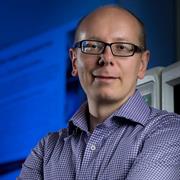
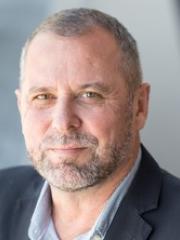
Professor Donald Wlodkowic is a faculty member at RMIT University's School of Science (Biosciences), leading the Neurotox Laboratory. His research focuses on aquatic ecotoxicology, behavioral ecotoxicology, and eco-neurotoxicology, with expertise in neurotoxins, industrial pollutants, and neuroactive drugs' effects on central nervous systems. He innovates biomicrofluidic technologies and digital video-based analysis for high-throughput behavioral studies in toxicology. Research Interests: Aquatic toxicology, neurotoxicology, water quality, and eco-neurotoxicology. His lab develops real-time biomonitoring systems and early-warning tools for water quality assessment. Current projects include neurotoxicity studies of pollutants, high-throughput behavioral assays, and embryo-based risk assessment. Teaching: Coordinates courses in cell biology, biochemistry (BIOL2146/2333/2420, PROC2048) and supervises honors projects (ONPS2313). He integrates digital tools into bioscience curricula for innovative teaching. Advising & Leadership: Supervises Masters and PhD students in projects such as 'Emerging Pollutants on Aquatic Animal Behavior' and 'Nanotoxicology.' He has led international academic-industry collaborations in Australia, New Zealand, and Europe, fostering motivated research teams. Labs & Teams: NeuroTox Lab pioneers interdisciplinary research in ecotoxicology and neurotoxicology, combining microfluidics, digital analytics, and behavioral assays to address environmental and health challenges.
Associate Professor Ben Gilby is a coastal and marine ecologist at the University of the Sunshine Coast (UniSC), specializing in ecological restoration, conservation biology, and spatial ecology. He holds an Associate Professor position in Animal Ecology within the School of Science, Technology and Engineering. His research focuses on optimizing ecosystem management through systematic planning, spatial ecology, and ecological indicators, with expertise in coastal fish habitats and shellfish reef restoration. He collaborates extensively with government agencies, NGOs, and industries to address ecological monitoring, restoration, and environmental planning challenges. Ben Gilby's education includes a PhD and BSc(Hons) from Griffith University (Griff) and the University of Queensland (Qld). His teaching includes courses on endangered animals, coastal and marine ecology, and restoration ecology. His research has been published widely in journals like Ecology , Conservation Biology , and Restoration Ecology , with a focus on seascape connectivity, urbanization impacts, and the ecological functions of coastal habitats. Key research topics include shellfish reef restoration, nutrient offsetting using coastal wetlands, and the integration of spatial ecology into conservation planning. He coordinates postgraduate research on coastal fish ecology, ecological restoration hotspots, and the ecological roles of coastal habitats. His work emphasizes maximizing ecological, social, and economic outcomes through evidence-based approaches.
Dr. Gordon O'Brien serves as a Senior Fellow in Water at the Gulbali Institute, Charles Sturt University (Australia), bringing over 20 years of expertise in African freshwater systems since 2004. A South African Council for Natural Scientific Professionals registered scientist and NRF (C2) rated researcher, he bridges academic research with practical water management solutions across continental scales. Education: Doctor of Philosophy (Ph.D.) from University of Johannesburg (2012) His research integrates sustainable water resource management, freshwater ecology, and fish/ fisheries sciences through probabilistic modeling of multiple stressors at regional scales. Specializing in environmental flows, ecosystem services, and ecotoxicology, he develops holistic frameworks for vulnerable socio-ecological systems facing climate change and anthropogenic pressures. Current work emphasizes digital innovation in water security through real-time monitoring and risk assessment. Recent publications reveal a strategic shift toward digital water management, featuring tools like FISHTRAC for fish monitoring and PROBFLO for environmental flow implementation. His research increasingly focuses on African river basins (particularly Limpopo and Incomati), addressing invasive species impacts, fish community dynamics, and AI-driven decision support systems while maintaining strong policy relevance for water-scarce regions. Scientific Recognition: South African National Research Foundation (C2) rating Dr. O'Brien has supervised over 12 PhD and 20 MSc students to completion while securing more than US$2.5 million in research funding from governmental, NGO, and international sources. His projects directly inform water policy development across Africa, with documented contributions to legislation and management frameworks. Current grant portfolios emphasize digital water security tools and transboundary river basin management. As leader of the Rivers of Life applied research program in South Africa and member of CSU's Inland Freshwater Fisheries Research Group, he directs field teams across Kruger National Park and the Limpopo Basin. His collaborative network spans 12 African nations and includes partnerships with the International Water Management Institute for basin-scale digital twin development.
Professor Craig Franklin is a faculty member at the University of Queensland (UQ), serving as a Professor in the School of the Environment (Faculty of Science) and concurrently as President of the Academic Board. His research focuses on Conservation Physiology, investigating how fish, frogs, and reptiles respond to environmental changes, particularly climate-induced shifts. He employs interdisciplinary methods, including biotelemetry and genomic techniques, to study physiological and behavioral adaptations in ectotherms. Education: Bachelor (Honours) of Science (Advanced) and Doctor of Philosophy from the University of Canterbury. Research Interests: Climate change impacts on ectotherms, physiological responses to environmental stressors (e.g., UV radiation, temperature), and conservation strategies for threatened species. Collaborations include Australia Zoo and NSW Fisheries. He leads the Franklin Eco-Laboratory, which emphasizes training in ecological and evolutionary physiology. Grants and Funding: Supported by the Australian Research Council (ARC) and the National Environmental Science Program (NESP). His work addresses applied conservation challenges, such as mitigating dam-related cold water pollution and assessing wildfire impacts on aquatic systems. Labs/Teams: Franklin Eco-Laboratory at UQ, focusing on integrative physiology and conservation biology.
Dr. Cindy Gunawan is an Associate Professor at the University of Technology Sydney (UTS), leading the Biofunctional Nanomaterials Research Group within the ithree Institute. Her work focuses on antimicrobial resistance mechanisms, particularly bacterial adaptation to nanoparticles, and the development of novel antimicrobial technologies. She holds adjunct roles at the University of Sydney and UNSW. Gunawan earned her BEng (Honours Class I & University Medal) and PhD in Biotechnology from UNSW Sydney, followed by postdoctoral research at UNSW's Particle and Catalysis Research Group. Her research has attracted over AUD 1.6M in grants, including ARC and Australian Academy of Science funding. Key contributions include discovering bacterial resistance to nanosilver and pioneering studies on nanoparticle environmental impacts. Education: Bachelor of Engineering (Bioprocess Engineering, Honours Class I & University Medal), UNSW Sydney (2002) PhD in Biotechnology, UNSW Sydney (2006) Research Interests: Her interdisciplinary research spans nanobiotechnology, microbial adaptation to nanomaterials, and the development of smart antimicrobials. She investigates how nanoparticles interact with bacterial biofilms and their broader implications for public health and the environment. Recent work explores nanosilver resistance mechanisms, sonocatalytic bacteria eradication, and the neurodegenerative effects of air pollutants. Grants & Awards: ARC Discovery Project Fellowship Australian Academy of Science Fellowship Chancellor’s Postdoctoral Research Fellowship (UTS) International Postgraduate Research Scholarship (IPRS) Service & Media: Gunawan actively reviews for journals like Small , ACS Nano , and Environmental Science and Technology . Her work has been featured in Nature Nanotechnology and media outlets such as the Australian Research Council. She advocates for responsible nanoparticle regulation to mitigate resistance risks. Labs & Teams: Her lab at UTS integrates nanomaterial engineering, microbiology, and toxicology to address global challenges in antimicrobial resistance and environmental health.
Dr. Kimberly Maute is an Honorary Fellow at the School of Earth, Atmospheric and Life Sciences (SEALS) at the University of Wollongong, Australia, a position she has held since 2023. She also maintains a professional affiliation with the New South Wales Government Environment Department, as indicated by her work email address. Her research spans multiple ecological disciplines with a particular focus on wildlife conservation and the impacts of human activities on native fauna. Dr. Maute's research interests encompass a diverse range of topics critical to contemporary conservation biology. She specializes in bird conservation and ecophysiology , with particular attention to the impacts of pesticides on native fauna . Her work includes significant research on how locust control practices affect Australian wildlife, investigations into disease ecology in urban environments, and studies of animal responses to environmental stressors including drought. Her research often bridges fundamental ecological research with practical conservation management applications. Analysis of Dr. Maute's publication record reveals a consistent focus on the intersection of human activities and wildlife conservation. Her work spans avian ecology, ecotoxicology, disease ecology, and conservation physiology, with particular emphasis on Australian native species. She frequently employs field-based approaches to study how wildlife responds to anthropogenic stressors including pesticides, urbanization, and climate-related challenges such as drought. Her research has direct policy implications, particularly regarding pesticide use and wildlife management practices. Dr. Maute has received funding for several significant research projects: AI/IoT-powered Dashboard for Environmental Management at Tram Chim National Park (2021) Assessing the impact of reducing food waste on antimicrobial resistance in scavenging wildlife (2021) Impact of Bacterial Pathogens on Breeding Success of Silver Gulls on Five Islands, NSW (2017) Conservation management of granivorous birds in the tropical savannas (2009) Dr. Maute is actively involved in research supervision, currently mentoring PhD students and having previously supervised both PhD and Master's research projects. Her supervision topics align with her research interests, focusing on bird conservation, disease ecology, pesticide impacts on reptiles and invertebrates, and conservation of threatened species. She has supervised research on topics including the impact of sublethal pesticide exposure on bearded dragons, scavenging behavior in silver gulls, and disease transmission in wombat populations.
Paul Lant is a Professor at the School of Chemical Engineering, University of Queensland. He served as Head of School (2009-2013), leading major teaching and research initiatives. His career includes founding Wastewater Futures Pty Ltd (20-year directorship) and extensive industry consultation, including expert witness roles. He co-founded the UQ Energy and Poverty Research Group (2014) and UQ R!SK (2015), focusing on hazardous industry risk management. Research interests span biodegradable plastics (17+ years leading UQ's PHA group), urban water-energy systems, and sustainable energy solutions for impoverished communities. His work integrates engineering with social science, policy, and business perspectives to address global sustainability challenges. Publications demonstrate consistent focus on polymer sustainability, urban resource management, and energy transitions. Recent articles emphasize bioplastic environmental behavior, water-energy nexus optimization, and socioeconomic dimensions of energy access. Scientific Awards & Honors: Fellow, Institution of Chemical Engineers (IChemE) Registered Professional Engineer Qld (RPEQ) Fellow, Australian Institute of Company Directors (1998-2019) National Teaching Awards for undergraduate/postgraduate education (2005, 2006) Supervised 50+ PhD students and secured >$21M in research funding, including 19 ARC projects. Led establishment of the Dow Centre for Sustainable Engineering Innovation ($10M gift) and ARC ITCC for Bioplastics ($6.5M). Founded IWES, Australia's leading environmental short-course provider. Directs the PHA Research Group and co-leads interdisciplinary initiatives including UQ R!SK (risk management) and the Energy and Poverty Research Group. Maintains global industry partnerships with Veolia, Norske Skog, and others.
Dr. Megan Huggett is a Senior Lecturer in Marine Science at the University of Newcastle's School of Environmental and Life Sciences. Her research focuses on microbial ecology in marine and coastal ecosystems, particularly the role of microbes in fish health, larval settlement, and responses to environmental stressors like climate change and pollution. She holds a PhD and BSc from the University of New South Wales. Her work bridges fundamental science and applied solutions, collaborating with government agencies (e.g., NSW Department of Planning, Hunter Water) to address estuarine water quality and contamination issues. Key projects include investigating microplastic impacts, microbial community shifts under warming, and the ecological role of fish gut microbiomes. Recent studies highlight her focus on climate-driven microbial dysbiosis in fish, the ecological consequences of urchin barrens, and the application of eDNA for biomonitoring. She has secured ~$447k in grants since 2021, supporting projects on seagrass resilience, microbial source tracking, and urban estuary management. Dr. Huggett emphasizes training future marine scientists, with over 36 journal articles and two conference papers. Her future research aims to develop microbial probiotics for ecosystem resilience and improve understanding of microbial responses to anthropogenic pressures.
Christine Eriksen is a Research Professor at the Institute of Geography , University of Bern (Switzerland), leading the Geographies of Disasters research group focused on wildfire resilience. She holds an Honorary Associate Professor title at the School of Geography and Sustainable Communities , University of Wollongong (Australia). Her academic journey includes a PhD in Human Geography (University of Wollongong, 2010), an MA from King's College London (2004), and a BA from SOAS (2003). Research Interests: Eriksen specializes in the social dimensions of disasters, particularly wildfire coexistence, gendered vulnerability, and climate adaptation. Her work bridges cultural norms, political agendas, and environmental history to enhance community resilience. She has authored two books and over 100 publications. Recent Research Trends: Her articles (2022–2025) emphasize wildfire resilience in Europe, cyber security social dimensions, and marginalized groups' inclusion in disaster policies. Key themes include policy reform, interdisciplinary frameworks, and equity in risk management. Awards: Resilient Australia Awards (2013, 2018), Women of Impact (2016), and World Social Science Fellow (2013). Grants: SNSF Consolidator Grant (2023–2028) for the FiRES project, ARC Discovery grants for bushfire and underinsurance studies. Teaching: Coordinated courses on disaster geographies and guest-lectured on wildfire hazards and Indigenous fire knowledge. Labs/Teams: Leads the FiRES project team at the University of Bern, collaborating internationally on wildfire resilience strategies.
Senior Professor Kristine French is affiliated with the School of Earth, Atmospheric and Life Sciences (SEALS) at the University of Wollongong. She holds the position of Senior Professor since 2023 and previously served as Director of the Janet Cosh Herbarium from 1993 to 2023. Her research focuses on invasion ecology, urban ecology, and conservation biology, with a strong emphasis on invasive species management, biosecurity, and biodiversity conservation. Her work spans diverse ecosystems, including arid zones, rainforests, and urban environments. Key themes in her research include plant-invasive species interactions, restoration ecology, and the impacts of pesticides and climate change on biodiversity. She has supervised numerous postgraduate students, contributing to advanced studies in ecological processes and conservation strategies. Professor French has secured significant funding for projects addressing weed invasions, urban greenspace dynamics, and pesticide effects on fauna. Her publications reflect a commitment to interdisciplinary approaches, integrating ecology, microbiology, and evolutionary biology to solve real-world conservation challenges. Her contributions include advancing understanding of seed bank dynamics, microbial interactions in restoration, and the ecological consequences of urbanization. Despite no explicit mention of awards, her extensive grants and high-impact publications underscore her academic influence.
Tim Langlois is an Associate Professor at the School of Biological Sciences and a member of the UWA Oceans Institute at The University of Western Australia. He holds a BSc from Wales and a PhD from the University of Auckland. His research focuses on marine ecosystems, particularly the impacts of environmental and anthropogenic disturbances, continental-scale ecological patterns, and macroecological processes. He actively collaborates internationally to synthesize global perspectives on marine conservation. Langlois has contributed to over 118 research outputs, including seminal works on marine reserves and fisheries management. He has secured 64 grants and led projects on topics ranging from offshore wind farm impacts to Indigenous research partnerships. In 2023, he received the Vice Chancellor's Award for Collaborative Indigenous Research Partnerships. His expertise spans marine diversity conservation, experimental ecology, and multivariate analysis. Langlois is a leader in developing methods like the Benthic Observation Survey System (BOSS) for marine habitat assessment. He also investigates fishery-shark conflicts, microplastic effects, and the role of marine reserves in biodiversity protection. His work aligns with UN Sustainable Development Goals related to life below water and climate action. Langlois supervises PhD students and teaches undergraduate courses on macroecology and marine systems. Education: BSc (Wales), PhD (Auckland) Affiliations: School of Biological Sciences, UWA Oceans Institute Key Projects: Wadandi Ancient Coastlines, Artificial Habitat Effects of Offshore Wind Farms Public Engagement: Media contributions on marine sanctuaries and tropical fish migration
Professor Raylene Cooke is a distinguished academic at Deakin University, serving in the School of Life and Environmental Sciences within the Faculty of Science Engineering and Built Environment. As Course Director for the Bachelor of Environmental Science (Wildlife and Conservation Biology), she champions experiential learning through field studies, work-integrated opportunities, and global mobility programs. Her leadership extends to faculty working groups focused on enhancing work-integrated learning and student global engagement. Doctor of Philosophy, Deakin University Bachelor of Education, Deakin University Bachelor of Science, Deakin University Professor Cooke's research passion centers on wildlife conservation, particularly focusing on how disturbance processes like urbanization, rodenticides, fire, and invasive species impact ecosystems and wildlife. Her pioneering work with powerful owls has transformed understanding of how apex predators adapt to urban environments. She employs spatial modeling and GPS tracking technologies to study predator movements and habitat use across urban-forest gradients. Her recent research investigates rodenticide prevalence in native wildlife across Australia and the Asia-Pacific, and she contributes to long-term studies on fire and climate change impacts on small mammals in the Grampians National Park. Professor Cooke's publication record reveals a strong focus on apex predator ecology, particularly powerful owls, across urbanizing landscapes. Her work integrates spatial ecology, toxicology, and conservation biology to address pressing environmental challenges. Recent publications highlight increasing concern about rodenticide exposure in native wildlife, urban habitat fragmentation effects on predators, and climate change impacts on small mammal communities. Her research consistently bridges theoretical ecology with practical conservation applications, often involving multi-institutional collaborations and field-based approaches. 2020 Australian Award for University Teaching - National Programs Award for Programs that Enhance Learning 2017 Vice Chancellors Award for Teaching Excellence 2016 Nancy Millis Award for Science in Parks 2015 Vice Chancellors Award for Outstanding Contributions to Global Experiences 2007 Carrick Citation for Outstanding Contributions to Student Learning (National award) 2005 Vice-Chancellors Award for Distinguished Teaching 2005 Deakin University Award for Teaching Excellence Professor Cooke maintains an active supervision portfolio with multiple current doctoral and masters students investigating topics ranging from rodenticide impacts to climate change refugia. Her extensive grant portfolio demonstrates strong industry and government partnerships, with recent projects funded by Parks Victoria, Melbourne Water Corporation, and various local councils. These grants support field research on powerful owl ecology, post-fire small mammal recovery, and rodenticide exposure across diverse Australian landscapes. Her research team includes honors students and postgraduates working collaboratively on urban processes, raptor ecology, invasive species, and conservation ecology. Professor Cooke leads a dynamic research group focused on wildlife conservation biology, with particular emphasis on apex predators in changing landscapes. Her team collaborates with Parks Victoria, local councils, and environmental organizations to translate research into practical conservation management. The group maintains long-term monitoring programs in the Grampians National Park and across Melbourne's urban fringe, employing cutting-edge technologies including GPS tracking, spatial modeling, and ecotoxicology to address contemporary conservation challenges.
Myles H.M. Menz is a researcher at James Cook University (JCU) with a focus on insect ecology, conservation biology, and technological applications in ecological monitoring. His work spans diverse topics including insect migration patterns, pollination dynamics, and the impacts of environmental stressors like pesticides and light pollution. He collaborates internationally on projects involving radar entomology, animal-borne sensors, and ecological genetics. Key research interests include the migration strategies of insects such as hoverflies, moths, and dragonflies, as well as conservation challenges facing endangered species like the orchid Caladenia xanthochila. His studies often integrate cutting-edge technologies (e.g., radar tracking, genomic analysis) to understand ecological processes at both individual and community levels. Notable contributions include demonstrating how hoverflies use sun compass navigation during autumn migration and revealing how insecticide exposure alters gene expression in honeybees. Menz also emphasizes interdisciplinary approaches, such as developing global databases for metacommunity ecology and advocating for landscape-scale ecosystem restoration frameworks. His work bridges applied and theoretical ecology, addressing critical issues like pollinator decline, urban biodiversity, and the ecological consequences of human activities.
Kim Colyvas is a Casual Senior Research Assistant at the School of Engineering (Statistics) , University of Newcastle. Since 2003, he has specialized in statistical consulting for interdisciplinary research, with primary expertise in Psychology, Ecology, Biology, Health, and Engineering. His work focuses on study design, data analysis visualization, and industrial applications including process improvement and statistical quality control. Key Research Areas: Statistics (methodology and application) Ecology and Environmental Science Psychology and Behavioral Health Biostatistics and Medical Research Education and Linguistics Industry Expertise: Steel industry process optimization Statistical Process Control Quality Management Systems Data-driven industrial sampling Academic Background: Master of Statistics, University of Newcastle Bachelor of Science (Honours), University of Newcastle Master of Science, University of Newcastle
Dr Anithadevi Kenday Sivaram is a Researcher at the University of Newcastle , affiliated with the School of Environmental and Life Sciences . Her research focuses on environmental toxicology, bioremediation, and soil health, particularly addressing the impacts of per- and polyfluoroalkyl substances (PFAS) and polycyclic aromatic hydrocarbons (PAHs). Contact: anitha.kendaysivaram@newcastle.edu.au Location: Callaghan campus, University Drive, Callaghan, NSW 2308, Australia Research Interests : Dr Anithadevi explores the ecotoxicity of PFAS and firefighting foams, particularly their effects on aquatic organisms and plants. She investigates bioremediation strategies using plants and microbes to degrade pollutants like PAHs, with a focus on rhizosphere interactions and organic amendments. Her work also examines the fate of PFAS during thermal treatments and microbial viability in sustainable agriculture. Recent Publications Trends : Her studies span PFAS contamination in commercial composts, pyrolysis-based remediation of biosolids, and transgenerational toxicity in nematodes. Key themes include pollutant fate, plant-microbe interactions, and innovative methods for environmental cleanup.