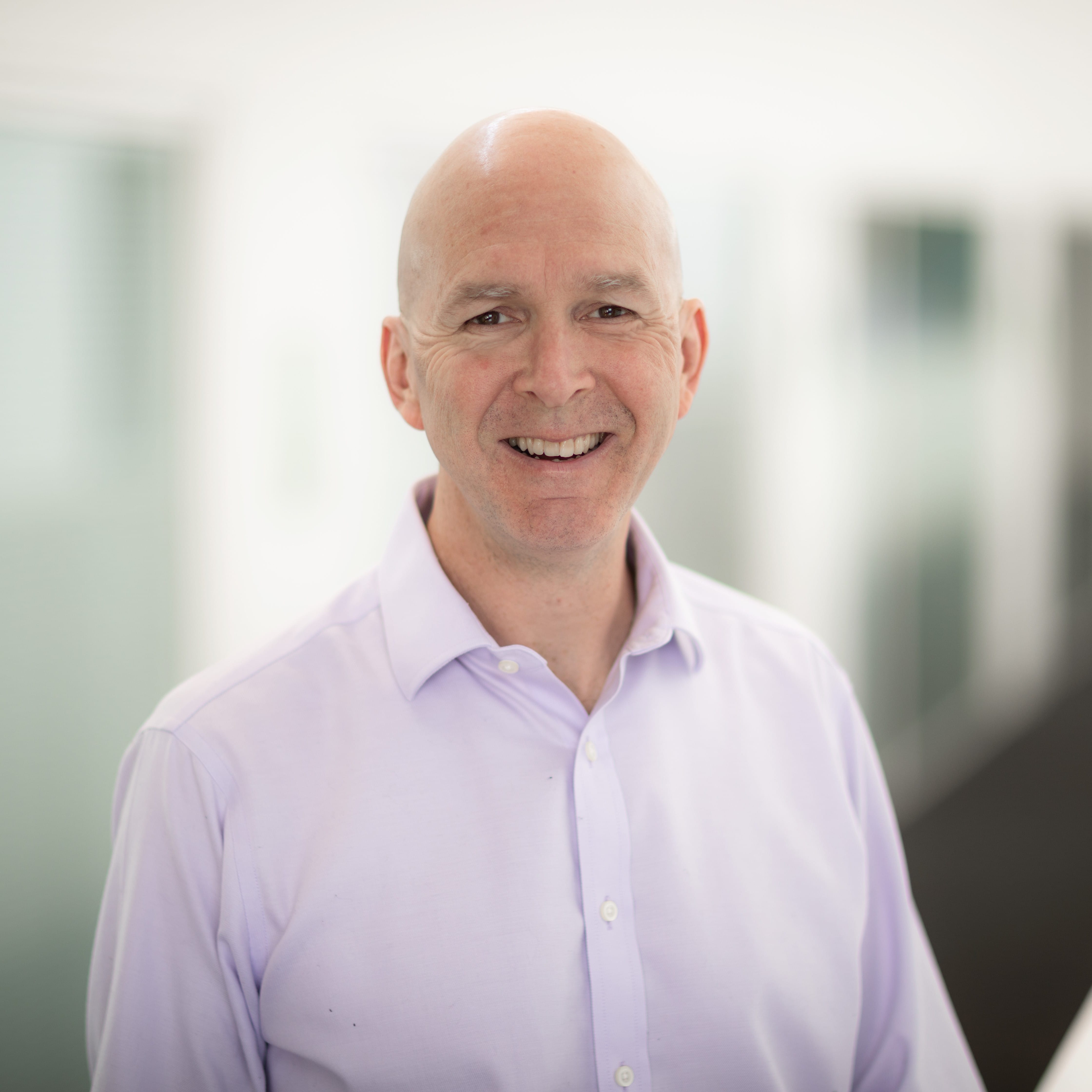
Jukka Tuhkuri is a Professor at Aalto University's Department of Energy and Mechanical Engineering, specializing in ice mechanics and arctic marine technology . He serves as Editor-in-Chief of Cold Regions Science and Technology and became an Honorary Professor at University College London (Department of Earth Sciences) in 2023. His work spans numerical simulations using the Discrete Element Method (DEM) and experimental research in the Aalto Ice and Wave Tank, with fieldwork in both Arctic and Antarctic regions. Research Focus : Understanding ice fracture mechanics, sea ice ridge formation, and ice-structure interaction processes. He investigates how global warming alters ice conditions and affects loads on ships/marine structures, addressing risks from increased Arctic shipping activity. Scientific Awards 2023 POAC Founders Lifetime Achievement Award Teacher of the Year 2003 Espoo Ambassador 2012 1996 Best Dissertation Stipend from Helsinki University of Technology Collaborative Impact : His research directly informs offshore wind engineering and Arctic risk management frameworks through publications like Challenges with sea ice action on structures for Offshore wind (2023) and A comprehensive approach to scenario-based risk management for Arctic waters (2022).
Sophie Isaksson Hallstedt is a Full Professor at Chalmers University of Technology, conducting research in Sustainable Product Development (SPD) with a focus on strategic sustainability integration in product innovation. She holds appointments at both Chalmers and Blekinge Institute of Technology, and serves on international Design Society committees. Key Research Areas: Strategic socio-ecological sustainability, digital decision support tools, circular value chains, and sustainability in emerging technologies. Notable Projects: SUSTAIN (aerospace sustainability), Circular Design Nexus (user behavior analysis), and Digital Materials Ecosystems. Awards & Recognition: Featured in Royal Swedish Academy of Engineering Sciences (IVA) 100-list (2020, 2023). Publications: Over 80 peer-reviewed works demonstrating methods for sustainability maturity assessment, impact evaluation, and progress visualization. Teaching & Education: Developed master's programs and PhD courses in sustainability-driven product development. Collaborates extensively with industry partners like GKN Aerospace and VINNOVA. Current work examines predictive models for user behavior and sustainability implications of additive manufacturing.
Mikael Johansson is a Professor in the Department of Psychology at Lund University, where he leads research on the cognitive and neural bases of memory and cognitive control. His academic appointments include membership in eSSENCE: The e-Science Collaboration, LAMiNATE (Language Acquisition, Multilingualism, and Teaching), LU Profile Area: Proactive Ageing, and LU Profile Area: Natural and Artificial Cognition. With 159 research outputs and leadership in 18 projects (8 active), he maintains a prominent position in cognitive neuroscience research. His research focuses on the neural mechanisms of memory using behavioral, electrophysiological (EEG/ERP), and functional magnetic resonance imaging (fMRI) methods. Key interests include interactions between memory systems, formation and retrieval of episodic memories, emotion regulation and emotional memory, mechanisms underlying incidental and intentional forgetting, and the relationship between eye-movements, mental imagery and memory. His work has significant implications for understanding memory functions in psychiatric conditions such as depression and post-traumatic stress disorder. Analyzing his extensive publication record spanning from 2012-2025 reveals a consistent focus on memory mechanisms with increasing integration of eye-tracking methodologies and clinical applications. His research demonstrates an evolving trajectory from basic memory processes toward understanding memory in real-world contexts and clinical populations, with recent work emphasizing the role of eye movements in memory construction and the neural dynamics of memory integration. Mikael Johansson serves as a member of The Swedish National Committee for Psychological Sciences at the Royal Swedish Academy of Sciences since 2011 and has received significant research funding including from The Bank of Sweden Tercentenary Foundation, Swedish Research Council, and Stiftelsen Marcus och Amalia Wallenbergs Minnesfond. His current major projects include TEAM: Transdisciplinary Approaches to Learning, Acquisition, Multilingualism (2024-2029), Tracking cognitive change as a function of normal ageing and different types of degenerative disease, and How the brain constructs the present and reconstructs the past via sequences of eye movements. He leads the Lund Memory Lab where his team investigates how the brain constructs and maintains coherent episodic memories through eye movements. His research group actively collaborates with international partners across multiple disciplines, bridging cognitive psychology, neuroscience, and clinical applications. The lab's work has gained significant attention, with several publications being highlighted in news outlets and academic discussions.
Assoc. Prof. Dr. Ali Şükrü Özbay currently serves as an Associate Professor at Karadeniz Technical University's Faculty of Arts, Department of English Language and Literature. He earned his PhD and MA in Applied Linguistics from Karadeniz Technical University and holds a BA in English Language and Literature from Ankara University. Education : PhD (2015) and MA (2004) from Karadeniz Technical University; BA (1996) from Ankara University Dr. Özbay's research focuses on Corpus Linguistics , Learner Corpora , Academic Writing , Translation Studies , and Language Pedagogy . His work investigates lexical bundles, support verb constructions, and pragmatic markers through computational corpus analysis. Recent publications analyze four-word recurrent expressions in educational technology contexts, collocational priming in Turkish EFL learners' mental lexicon, and semantic prosody of intensifiers in academic corpora. He supervises theses on data-driven learning applications and corpus-based teaching materials. Dr. Özbay has held managerial roles including Deputy Head of Department (2019–present) and Assistant Coordinator for Erasmus+ programs (2017–2021). He actively participates in international conferences and has published in journals like Turkish Studies , Australian Journal of Applied Linguistics , and Hacettepe Eğitim Dergisi .
Martin Carlsson-Wall is a Full Professor at Stockholm School of Economics (SSE) in the Department of Accounting within the House of Governance and Public Policy. He serves as Center Director for both the Center for Municipality Governance and the Center for Security and Resilience. In 2024, he was named "The Linder Chair in Sports and Business," the first Chair at SSE on Sports and Business topics. Since 2017, he has been Program Director for the MSc in Accounting, Valuation and Financial Management, and in 2015, he founded the Center for Sports and Business, which now includes 40 faculty members and has strategic partnerships with major Swedish sports organizations across football, hockey, golf, and skiing. Martin Carlsson-Wall's research focuses on accounting in sports organizations and accounting in inter-organisational relationships across both private and public sectors. His work extensively examines management control systems , particularly in contexts of innovation , growth companies , and risk management . His research often takes a qualitative approach, investigating how accounting practices function in extreme situations (such as the Swedish migrant crisis), high-intensity organizations (like football clubs), and during organizational change processes. Analysis of Professor Carlsson-Wall's recent publications reveals a strong thematic focus on the intersection of accounting practices with sports management and public sector administration. His work demonstrates how management control systems adapt to different organizational contexts, from football clubs to technology firms and public administration during crises. A recurring theme is how accounting practices mediate tensions between different stakeholder interests and how they evolve in response to organizational challenges. His research methodology typically employs in-depth case studies that examine accounting as a social practice rather than merely a technical function. Professor Carlsson-Wall has received significant recognition through his appointment as "The Linder Chair in Sports and Business" in 2024, establishing the first dedicated research position at SSE focusing on the business aspects of sports. As an educator, Professor Carlsson-Wall serves as Program Director for the MSc in Accounting, Valuation and Financial Management and teaches several key courses including BE901 Hybrid Organizations: Value Creation and Strategy at the bachelor's level, and course 3313 Investments and Value Creation in Global Sports (which he directs) and course 3302 Management Control at the master's level. He also supervises master's theses in Accounting and Financial Management. In Executive Education, he teaches on management control, costing, performance management, transfer pricing, investment management, and financial analysis through both open programs and customized corporate offerings. Professor Carlsson-Wall founded and directs the Center for Sports and Business, which has grown to include 40 faculty members and established partnerships with major Swedish sports organizations. He also leads the Center for Municipality Governance and the Center for Security and Resilience, demonstrating his commitment to applying accounting and management control research to practical governance challenges in both public and private sectors.
Thorsten Faas is a Professor and Head of the Department of Political Sociology Office of the Federal Republic of Germany at the Otto Suhr Institute for Political Science, Freie Universität Berlin. He has held this position since October 1, 2017, after serving as Professor of Political Science in Empirical Political Research at Johannes Gutenberg-University Mainz (2012-2017) and Junior Professor of Political Science at the University of Mannheim (2009-2012). His educational background includes a PhD from the University of Duisburg-Essen (2008) with a dissertation on "Direct and indirect experiences of unemployment and their political consequences in East and West Germany," a Master's in European Politics and Policy from the London School of Economics (2001), and a Diplom in Political Science from Otto-Friedrich-University Bamberg (2000). Professor Faas's research focuses on political sociology, electoral behavior, political communication, and political methodology . His work examines voting behavior, political polarization, media consumption in politics, and experimental methods in political science. He has conducted extensive research on German federal elections, youth voting, and the impact of media on political perceptions. His recent scholarly output reveals a strong emphasis on voting age reform, political polarization, electoral methodology, and open science practices . Faas has been particularly active in studying youth voting patterns, the effects of lowering the voting age, and the reliability of survey methods in electoral research. His work often combines theoretical insights with methodological innovation, particularly in the areas of experimental design and data transparency. Professor Faas leads several major research projects including RAPID-COVID (examining information reception during the pandemic), the Comparative National Elections Project (CNEP) 2017-2025, youth studies on federal elections, and CliWaC (Climate and Water under Change). He has received research funding for these projects from various academic and governmental institutions. His research group at the Otto Suhr Institute functions as a hub for electoral studies in Germany, collaborating with national and international partners on large-scale election studies. The Center for Political Sociology of the Federal Republic of Germany, where he serves as a key figure, provides consultation hours and resources for students and researchers interested in political sociology and electoral behavior.
Lucy Arendt serves as Professor of Business Administration – Management and Co-Director of the Center for Exceptional Leadership at St. Norbert College's Schneider Business School, where she teaches organizational behavior, leadership, and strategic management at undergraduate and graduate levels. Her global teaching initiatives include leading student cohorts to Europe for leadership studies and Mexico for international business immersion since joining the institution in 2016 after 26 years at UW-Green Bay. Her educational credentials include a B.S. and M.S. from the University of Wisconsin-Green Bay and a Ph.D. from the University of Wisconsin-Milwaukee. B.S., University of Wisconsin-Green Bay M.S., University of Wisconsin-Green Bay Ph.D., University of Wisconsin-Milwaukee Dr. Arendt's research centers on decision-making dynamics within disaster contexts, spanning mitigation through recovery phases. Her fieldwork across 15+ disaster zones—from New Orleans post-Katrina to Nepal's earthquake aftermath—examines how formal and informal leaders drive organizational and community resilience. This interdisciplinary work bridges business strategy with emergency management, emphasizing leadership's role in crisis navigation and long-term recovery. Her publication trajectory reveals evolving focus from early humor studies in organizational behavior toward comprehensive disaster resilience frameworks. Recent works analyze transformational leadership failures (2024), tornado recovery systems (2023), and engineered resilience metrics like the PEOPLES framework (2016), demonstrating consistent integration of organizational theory with real-world disaster response challenges across healthcare, infrastructure, and community systems. Notable recognition includes the UW-Green Bay Founders Association Award for Excellence in Teaching (2008-09) and a University Award for Collaborative Achievement (2013-14) for innovative international education programming. UW-Green Bay Founders Association Award for Excellence in Teaching (2008-09) UW-Green Bay Teaching Award for Experienced Teacher (2010) University Award for Excellence in Collaborative Achievement (2013-14) Her advisory impact extends through FEMA and NIST consultations, federal earthquake hazards committee leadership, and the Housner Fellows Leadership Development Program. She has directed disaster-reconnaissance teams for EERI across four continents, translating field insights into policy recommendations for governmental and nonprofit entities including Procter & Gamble and the U.S. Chamber of Commerce. As EERI board secretary/treasurer and federal Advisory Committee chair, she drives cross-sector collaboration on seismic safety standards. Her Center for Exceptional Leadership initiatives foster student development through experiential learning, while ongoing research partnerships with international agencies advance community resilience metrics for global disaster-prone regions.
Lianne Lefsrud serves as Associate Professor and Risk, Innovation, and Sustainability Chair (RISC) in the Department of Chemical and Materials Engineering at the University of Alberta's Faculty of Engineering. Her interdisciplinary research bridges engineering, social sciences, and policy to transform risk management practices across energy, mining, construction, and railroading industries, directly influencing regulations, building codes, and industry operations for sustainable development. Her academic credentials include: BSc in Civil Engineering (Cooperative Program), University of Alberta (1994) MSc in Interdisciplinary Civil & Environmental Engineering and Sociology, University of Alberta (1996) PhD in Strategic Management and Organization, Alberta School of Business (2014) Dr. Lefsrud's research centers on risk management frameworks for sustainability challenges. She examines hazard identification, social license to operate, and technology adoption drivers in high-hazard industries, with emphasis on prospective risk assessment (e.g., hydrogen infrastructure design) and retrospective analysis (e.g., microplastic pollution impacts). Her work integrates circular economy principles into energy systems while addressing unintended consequences across UN Sustainable Development Goals. Recent publications (2024-2025) demonstrate heavy focus on machine learning applications for rail and construction safety, hydrogen infrastructure risk analysis, and science denial mitigation. Key patterns show cross-industry adaptation of AI for incident prediction, regulatory gap analysis for emerging energy systems, and socio-technical approaches to reconcile sustainability goals with operational realities. Scientific recognition includes: Erb Post-Doctoral Fellowship (University of Michigan) Dow Sustainability Research Fellowship (Ross School of Business) Dr. Lefsrud mentors graduate students through industry-integrated projects like her Sustainable Design course where teams generated patents and city solutions. Her research secures Alberta Innovates funding with 1:4 industrial-to-federal matching, collaborating with Suncor, Transport Canada, and Canadian Standards Association. Grants target practical implementations including railcar inspection systems and hydrogen safety protocols. She co-founded Insight Risk Systems and leads the Lefsrud Lab, prioritizing inclusive teams with under-represented groups (women, Indigenous, LGBTQ2S+, neurodiverse) to tackle 'wicked problems' in sustainability. The lab leverages interdisciplinary partnerships across engineering, computer science, psychology, and environmental sociology for real-world risk management solutions.
Gabriele Gratton is a Professor in the Department of Psychology and Neuroscience Program at the University of Illinois Urbana-Champaign, and serves as a Theme Lead at the Beckman Institute for Advanced Science and Technology. With over 178 research outputs, Gratton has established a distinguished career in cognitive neuroscience with a focus on brain function, aging, and neuroimaging techniques. Gratton's research interests center around brain function and activity , particularly using Event-related Optical Signal (EROS) and other neuroimaging methods. Key areas include optical imaging , aging effects on cognition , event-related brain potentials , and cerebrovascular health . Much of their work investigates how vascular health, fitness, and aging interact to affect brain structure and cognitive performance across the lifespan. The research portfolio shows a strong trend toward multimodal neuroimaging approaches, with recent work focusing on trimodal brain imaging techniques that simultaneously investigate human brain function. There's also significant emphasis on understanding how physical activity and fitness impact cognitive aging, white matter integrity, and cerebrovascular health. Association for Psychological Science Fellow (2006) Foundation of Augmented Cognition Award (2005) President of Society for Psychophysiological Research (2009) SPR Award for Distinguished Contributions to Psychophysiology (2019) SPR Early Career Award (1997) Gratton has received extensive recognition for their work, with publications being picked up by news outlets and shared across social media platforms. Their research has been referenced by numerous scholars, with several papers accumulating significant reader attention on academic platforms like Mendeley. Much of this work is conducted through the Beckman Institute, where Gratton leads research themes focused on advanced brain imaging and cognitive neuroscience.
Tom Lawrence is a Professor of Strategic Management at Saïd Business School, University of Oxford. He previously held the W. J. VanDusen Chair at the Beedie School of Business, Simon Fraser University, and has held academic roles at institutions including Cambridge University and McGill University. He earned his PhD and BComm in Finance from the University of Alberta. His research focuses on strategic management, organizational change, social innovation, and institutional theory, examining how organizations and individuals drive change in contested domains like healthcare, environmental sustainability, addiction treatment, and homelessness. His work emphasizes the interplay of power, language, social networks, and institutions in enabling or constraining social innovation. Lawrence has published in leading journals such as Administrative Science Quarterly and Academy of Management Review, and co-edited major works like the Sage Handbook of Organizational Institutionalism. His teaching spans MBA, Executive MBA, and PhD programs, emphasizing strategic thinking and decision-making. He previously directed the CMA Centre for Innovation at Simon Fraser University, which advanced social innovation research and curriculum development. Currently, he serves on the board of the Mindset Foundation.
Professor Michael Lewis holds the rank of Professor at the University of Bath’s School of Management, Department of Information, Decisions & Operations. His academic career began at the University of Cambridge (PhD, 1995), followed by roles at Warwick Business School (1995–2004) and visiting positions at Harvard Business School and Georgetown University. His research focuses on operations strategy, complex business relationships (including PFI/PPP contracts), and efficiency in public/private service sectors. He co-authored the influential textbook Operations Strategy and leads initiatives like the Cabinet Office/IPA Project Excellence Initiative and Cornell’s Healthy Futures program. His current projects include UKRI’s Secure & Resilient World Hub and green transition research. He advises government on industrial measurement and contributes to policy frameworks through roles like the Chartered Management Institute Advisory Council. Education: PhD in Competence Analysis and Strategy Process from University of Cambridge (1995). Research interests span operations management, supply chain governance, project scale dynamics, and sustainable systems. Recent work examines drone adoption methodologies, conflict resolution in supply chains, and post-crisis trauma recovery in uniformed services. He has supervised 9 students and holds grants totaling £multi-million across 13 projects, emphasizing governance, healthcare innovation, and project delivery excellence. Key affiliations include the Centre for Sustainable Chemical Technologies, Institute of Sustainability & Climate Change, and Institute for Digital Security & Behaviour. His work aligns with UN SDGs related to industry, innovation, and infrastructure. Professional activities include policy fellowships and participation in global expert groups shaping industrial and project management practices.
Professor M. Grae Worster is a renowned academic in fluid dynamics and geophysics, affiliated with the University of Cambridge's Department of Applied Mathematics and Theoretical Physics (DAMTP) within the Faculty of Mathematics. He holds the title of Professor and specializes in fluid mechanics, solidification processes, and geophysical flows. His research focuses on buoyancy-driven flows, magma dynamics, sea ice evolution, and phase-change phenomena in porous media. Worster earned his Ph.D. in 1983 from Cambridge University with a thesis on "Convective Flow Problems in Geological Fluid Mechanics." His work bridges theoretical and experimental approaches, addressing complex fluid dynamics in natural systems like magma chambers, lava lakes, and sea ice formation. Key areas of expertise include mushy-layer convection, premelting dynamics, and viscous gravity currents. His research interests span fluid mechanics, solidification physics, and environmental fluid dynamics, with a strong emphasis on geophysical applications. Recent studies explore hydrogel mechanics, grounding-line dynamics in ice sheets, and thermal regelation in colloidal systems. He has authored over 140 peer-reviewed articles and co-edited influential works like Perspectives in Fluid Dynamics and Understanding Fluid Flow . Worster's contributions to fluid dynamics include groundbreaking studies on sea ice dynamics, where he developed models for brine drainage and ice growth mechanisms. His work on solidification processes in alloys and colloidal suspensions has advanced materials science and geophysics. Collaborations with experimentalists ensure his theoretical models are grounded in empirical validation.
Associate Professor Nadine Andrew is an Associate Professor (Research) in the Department of Medicine at Monash University's School of Translational Medicine. She leads the National Centre for Healthy Ageing Data Platform and chairs the Monash HELIX data linkage committee. With expertise in data linkage and health services research, her work focuses on chronic diseases of aging, stroke, and dementia. She has secured over $12M in grants and leads projects like the NHMRC-funded PRECISE stroke study and a MRFF digital health initiative for aged care transfers. Her team includes experts in epidemiology, data science, and bioinformatics. Education: PhD in Epidemiology, Master’s in Public Health, clinical background in Physiotherapy. Research Interests: Data linkage methodologies, stroke epidemiology, chronic disease management, digital health solutions for aging populations. She pioneers national data platforms and co-designs patient-centered care systems. Grants & Projects: $2M MRFF grant for digital health in aged care, NHMRC PRECISE project, boosting dementia grant. Active in 20+ collaborative initiatives including national stroke data integration and vulnerable population cohort studies. Awards: 2024 Australian Epidemiological Association Award, 2021 American Heart Association Reviewer Award, NHMRC Early Career Fellowship (2014). Labs/Teams: Directs the National Centre for Healthy Ageing Data Platform and oversees multidisciplinary research teams advancing EHR data utilization.
Mahmoud Zarepour is a Full Professor in the Department of Mathematics and Statistics at the University of Ottawa, affiliated with the Faculty of Science. He holds an MSc from Shiraz University (Iran) and a PhD from the University of Toronto. His research focuses on advanced statistical methodologies including Time Series Analysis, Nonparametric Bayesian Inference, and Analysis of Random Variables with Infinite Variance. He has supervised numerous graduate students and postdoctoral researchers, including Nada Habli, Reyhaneh Hosseini, and Sicheng Huang, among others. Education: MSc (Shiraz University, Iran) PhD (University of Toronto) Dr. Zarepour's research interests emphasize Bayesian nonparametric techniques, stochastic processes, and robust statistical methods. His work bridges theoretical developments with practical applications in areas such as change point detection, multivariate analysis, and resampling schemes. Notable contributions include advancements in Dirichlet process-based methods, bootstrap techniques for complex distributions, and asymptotic theory for unstable time series. His publications span over two decades, with recent works addressing Bayesian bootstrapping, quasi-Bayesian change point detection, and nonparametric inference for spherically symmetric distributions. His research group is part of the Statistics and Probability cluster at the University of Ottawa. Dr. Zarepour has advised multiple students and contributed to collaborative projects in statistical theory and methodology. His work often explores the intersection of probability theory and applied statistics, with an emphasis on rigorous mathematical foundations.
Dale T. Miller is the Class of 1968 / Ed Zschau Professor of Organizational Behavior and Professor of Psychology at Stanford University's Graduate School of Business, with joint appointment in the School of Humanities and Sciences. He serves as Director of the Executive Program for Nonprofit Leaders. Education: PhD, University of Waterloo, 1975 MA, York University, 1972 BA, University of Victoria, 1971 Miller's research examines social norms development and transmission, moral self-perception, and behavioral change strategies. His work focuses on how group norms emerge and persist without broad support, how moral self-concepts shape behavior, and effective behavioral interventions. His publications demonstrate consistent focus on social psychology and organizational behavior, with recent work examining group norm perception mechanisms and moral decision-making processes under risk conditions. Awards and Honors: BP Faculty Fellow in Global Management (2023-24) Endowed Professorship (2009) Fellow, Center for Advanced Study in the Behavioral Sciences (2008-2009, 1980-81) As Director of the Executive Program for Nonprofit Leaders, Miller oversees leadership development for nonprofit executives and advises graduate students in organizational behavior research. He leads research on organizational norms and moral psychology through the Stanford GSB Behavioral Lab, collaborating with interdisciplinary teams examining social influence processes in organizational contexts.