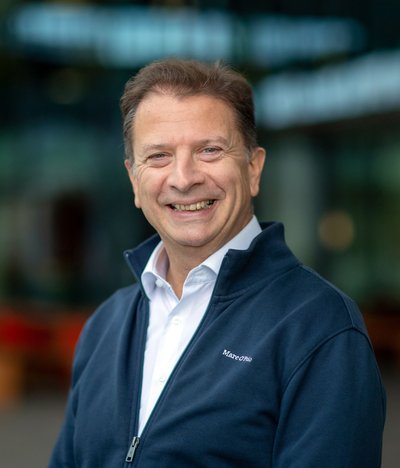
Rik Crutzen is a Full Professor at the Faculty of Health, Medicine and Life Sciences, Maastricht University, specializing in health promotion and digital interventions. His research focuses on leveraging technology to improve health behaviors across diverse populations, including adolescents, older adults, and immigrant communities. He leads projects in the CAPHRI research group for Promoting Health & Personalised Care. Research trends include: Digital health innovations (e.g., helplines, apps, algorithms) Chronic disease management (post-COVID-19, dementia risk) Health equity in immigrant populations (cervical cancer, maternal care) Behavioral interventions (physical activity, sleep, STI prevention) Systematic reviews and mixed-methods studies He has supervised 22 academic works and contributed to datasets on activity patterns and sleep-activity correlations. His work spans public health policy, health education, and technology integration.
Anna Grigolon is an Assistant Professor at the University of Twente , Netherlands, affiliated with the Transport Engineering and Management Research Group . Her research focuses on sustainable urban mobility , user-centric transport solutions , and travel behavior analysis using tools like discrete choice modeling , spatial analysis , and social psychology theories . Research Interests : Sustainable Urban Mobility Accessibility Modeling Travel Behavior Discrete Choice and Latent Class Modeling Spatial Analysis and GIS Shared Micromobility and Mobility Hubs Equity in Transport Planning Article Trends : Anna’s recent work (2025–2024) emphasizes mobility justice , 15-minute city transitions, and equity in transport access , particularly for marginalized communities like São Paulo favelas. She integrates digital tools (e.g., serious games, kiosks) and space-time metrics to evaluate mobility solutions. Projects : She currently leads the SmartHubs project and contributes to DREAMS and R-map , focusing on smart, equitable mobility systems in Europe and Saudi Arabia.
Prof. Dr. Fabian Sting is a Full Professor and Director of the Department of Supply Chain Management – Strategy and Innovation at the University of Cologne, Faculty of Management, Economics and Social Sciences. He also holds a part-time Chaired Professorship of Digital Supply Chain Innovation at Rotterdam School of Management (RSM), Erasmus University, where he previously served as Associate and Assistant Professor. He has been a visiting professor at Singapore Management University and IESE Business School, and held a postdoctoral fellowship at INSEAD. Education: Doctorate in Production Management (Dr. rer. pol., summa cum laude), WHU-Otto Beisheim School of Management M.Sc. in Mathematics - Methods and Models, University of Hagen Diploma in Management Science, Catholic University of Eichstätt-Ingolstadt Exchange studies at University of Melbourne His research centers on digital innovation, Industry 4.0, strategy implementation, and employee-driven innovation in operations and supply chains. He investigates how organizations innovate processes, manage change, and harness front-line employee ideas. His work integrates behavioral and strategic perspectives in operations management. His recent publications in MIS Quarterly , Management Science , Academy of Management Journal , and Harvard Business Review reflect a strong trend toward digital transformation, idea evaluation biases, and collaborative innovation mechanisms. The articles emphasize knowledge transfer, learning-by-doing, and the behavioral aspects of digital change. Scientific Awards: Richard Beckhard Memorial Prize, MIT Sloan Management Review Jürgen Hausschildt Award for Innovation Management, VHB Top Academic Article Award, ERIM Fabian Sting serves as Associate Editor for Management Science and Senior Editor for Production and Operations Management . He has received multiple teaching awards for courses such as "Operations Management" and "Primaire Processen." He is Academic Director of the Industrial Excellence Award in Europe, in collaboration with IESE, INSEAD, and WHU. His work contributes to UN Sustainable Development Goals related to innovation and sustainable industrialization. There is no mention of specific labs or research teams in the provided texts.
Dr. Peter Fokker is a Researcher at Utrecht University's Faculty of Geosciences, specifically within the Department of Earth Sciences and the Experimental Rock Deformation/HPT group. He is affiliated with the Research Programme in Earth Sciences Utrecht (DES/IVAU) and has been actively publishing in geomechanics, subsidence modeling, and induced seismicity for over three decades. His work primarily focuses on the application of geomechanical principles to understand and model subsurface processes related to resource extraction and geothermal energy. Dr. Fokker's research interests span several interconnected domains in geomechanics and subsurface engineering. His primary focus is on experimental rock deformation , studying how rocks behave under various stress conditions. He has made significant contributions to subsidence modeling , particularly in the context of gas field depletion in the Netherlands. His work on induced seismicity has helped understand the relationship between subsurface operations and seismic events. Additional interests include geothermal energy systems , reservoir engineering , and the application of data assimilation techniques to improve subsurface characterization. His research often bridges theoretical models with practical applications in energy resource management. An analysis of Dr. Fokker's recent publications (2020-2025) reveals a strong focus on practical applications of geomechanics to real-world challenges. His work increasingly integrates InSAR technology and data assimilation methods to monitor and model subsidence processes. There's a clear emphasis on geothermal energy applications , reflecting growing interest in sustainable energy solutions. His research also demonstrates a sophisticated approach to modeling complex reservoir behaviors across multiple scales, from laboratory experiments to field-scale operations. The interdisciplinary nature of his work is evident in collaborations spanning geology, engineering, and environmental science. Dr. Fokker has supervised multiple research projects and students throughout his career, as indicated by the "Supervised Work (4)" reference in his profile. His research has been supported by various grants focused on subsidence modeling, geomechanics of energy resources, and induced seismicity. He has been involved in significant collaborative efforts, including the Dutch National Scientific Research Program on Land Subsidence. Dr. Fokker is part of the Experimental Rock Deformation/HPT group at Utrecht University, which conducts laboratory experiments and develops theoretical models to understand rock behavior under various conditions. His work contributes to the broader research ecosystem focused on sustainable resource management and understanding subsurface processes, with particular relevance to the Dutch context of gas extraction and land subsidence.
Gamze Z. Dane is a tenured Assistant Professor at the Department of Built Environment of Eindhoven University of Technology (TU/e), affiliated with EAISI Mobility and EAISI Health. She leads the Digital City Program (2020-2024) and specializes in decision-support systems, GIS, urban informatics, and data analytics for sustainable urban development. Her research integrates citizens into urban decision-making using digital tools like VR twins and data-driven approaches. Education: PhD in Urban Planning, MSc in Geographical Information Systems (GIS) and Decision Making. Research Interests: Focuses on human-environment interaction, transdisciplinary urban projects, and the impact of digitalization on cities. She develops tools for public participation and uses big data to analyze citizen behavior and urban experiences. Projects: Principal Investigator for EU/national projects involving cities like Eindhoven, Bologna, and Lisbon. Notable projects include UBeX Urban Behavior eXtended reality lab (2024-2026) and ROCK (2017-2020). Awards: Cuperusprijs 2020 (2nd place for student thesis) Drivers of Change Exhibition 2021 ISPRS International Journal Cover Story (2020) Teaching & Innovation: Coordinates courses like Smart Cities and Urban Redevelopment. Developed online teaching materials using VR, drones, and mobile apps. Guest lectures at Istanbul Technical University and visiting scholar at National University of Singapore. Labs & Networks: Leads the UBeX lab exploring immersive technologies for urban analysis. Active in academic networks including Urban Planning journals and international conferences.
Prof. Tammo H.A. Bijmolt is a Full Professor of Marketing Research and Chairman of the Department of Marketing at the University of Groningen's Faculty of Economics and Business. He holds additional roles such as Director of the Groningen Digital Business Center and former Director of the SOM Research Institute. His expertise spans consumer decision making, e-commerce, advertising, retailing, loyalty programs, and meta-analysis. Education: PhD in Marketing (cum laude, 1996) and MSc in Quantitative Business Economics (cum laude, 1991), both from the University of Groningen. Research focuses on marketing methodology, consumer behavior in digital contexts, and loyalty programs. Notable awards include the 2022 Best Paper Award (Journal of Interactive Marketing) and the 2017 Emerald Literati Award. Advising over 20 PhD students and overseeing grants such as NPG funding for digitalization projects. Active in leadership roles with EMAC and EIASM, and consulting with firms like DVJ Insights and Unilever. Labs/Teams: Leads the Groningen Digital Business Center and collaborates with the SOM Research Institute.
Panos Markopoulos is a Professor of Design for Behavior Change at Eindhoven University of Technology (TU/e), affiliated with the Industrial Design department. He also serves as an Adjunct Professor at the University of Technology Sydney (UTS) and a Visiting Scientist at Kemphenhaeghe Expertise Center for Epileptology, Sleep Medicine, and Neurocognition. Academic Background: Electrical Engineering (NTUA), Computer Science (Queen Mary, University of London), and Human-Computer Interaction (PhD, Queen Mary) Research Focus: Ambient Intelligence, Behavior Change Support Systems, Wearable Technology, and Child-Computer Interaction Editorial Roles: Founding Editor of Elsevier’s Journal on Child Computer Interaction, Chief Editor of Taylor & Francis’ Behavior and Information Technology His research explores adaptive persuasive systems, family-aware technologies, and user-centered design methodologies. Key publications include work on persuasion profiling, collaborative design, and evaluation frameworks for children’s interactive products. He has contributed extensively to academic literature, with notable works spanning from 2004 to 2016, emphasizing personalized user experiences, ambient intelligence, and rehabilitation technologies. His expertise bridges interaction design, behavioral science, and technological innovation for societal impact. Professional Activities: European Commission evaluator, editorial leadership in HCI Teaching: Design for Behavioral Change, Final Master Project guidance
Dr. Stella Boess is a Researcher at the Department of Industrial Design Engineering, Faculty of Industrial Design Engineering at Delft University of Technology. She focuses on interdisciplinary research bridging social sciences and engineering, particularly in sustainable renovation, accessibility, and health technology. Her work emphasizes user-centered design in residential environments, addressing challenges such as heat pump adoption and inclusivity for visually impaired individuals. She teaches courses like Inclusive Design and Prototyping for Interaction , and has collaborated on projects including the HiPP initiative for optimized patient experiences and the NWO usability project. She appeared in media such as NPO's Programme Reference Man in 2022. Her research interests include human-technology relations, sustainable building practices, and co-creation methodologies. She explores how design interventions impact occupant behavior and satisfaction, advocating for holistic approaches to integrate technology with human practices. Recent projects also address mobility design improvements for automotive interiors and inclusive medical solutions for the Global South. Research Projects: HiPP: Optimizing orthopedic patient care pathways NWO design for usability project REIL project: Enhancing rehabilitation interactions AAL project MyGuardian: Supporting aging populations Stella’s publications from 2022 to 2025 reflect a trend toward analyzing socio-technical dynamics in sustainable housing and mobility systems. She highlights the importance of stakeholder collaboration and participatory frameworks to ensure equitable outcomes. No scientific awards are listed, but her contributions to inclusive design and zero-energy renovation are notable.
Alfons Oude Lansink is a Professor and Chairholder in Business Economics at Wageningen University, Netherlands. He holds adjunct professorships at Universitas Padjadjaran (Indonesia) and the University of Florida (USA), and serves on the Dutch Ministry of Agriculture's CDM committee and Rabobank's scientific advisory board. His academic career spans roles as director of Wageningen School of Social Sciences (WASS) and Secretary-General of the European Association of Agricultural Economists. Education: MSc and PhD in Agricultural Economics from Wageningen University Leadership: Head of Business Economics group since 2003 His research focuses on dynamic technical and economic efficiency , sustainable performance of food supply chains , and economics of plant health . Recent work examines climate adaptation strategies, circular economy applications, and cross-border agri-food innovation dynamics using advanced econometric models. Key projects include MINDSTEP (modeling farm decisions), Closing the Loop (insect-based agriculture), and Food Pro-tec-ts (transboundary food technologies). Publications address topics like: Technical efficiency in dairy and arable farming Economic impacts of climate change on agriculture Corporate social responsibility in food manufacturing Policy evaluation for biogas and organic farming He serves as: Secretary/Treasurer of agricultural economics journal foundation Advisor to Universitas Padjadjaran (Indonesia) on policy and PhD supervision Editorial board member of Agronomy Journal and European Review of Agricultural Economics
Maria C.W. Peeters serves as a Full Professor at Eindhoven University of Technology (TU/e) within the Department of Industrial Engineering and Innovation Sciences, specifically the Human Performance Management Group. She concurrently holds an Associate Professor position at Utrecht University in the Department of Social, Health and Organizational Psychology, reflecting her dual institutional engagement in Work and Organizational Psychology. Her educational background includes: MSc in Health Sciences from Maastricht University PhD from Radboud Universiteit Nijmegen (dissertation: effect of social support on work stress) Peeters' research investigates sustainable workforce performance through the critical lens of worker diversity in high-tech environments. She specializes in worker (ill)health and well-being, work engagement, sustainable employability, job crafting interventions, work-life balance dynamics, and tailored technological innovation implementation. Her work emphasizes adapting technologies to accommodate older workers, those with lower educational levels, and disabilities to extend labor market participation. Recent publications (2025) analyze psychosocial safety climate and the DISC model for office workers, while earlier studies (2018-2015) focused on job crafting transmission and intervention efficacy. Her research consistently employs quantitative methodologies like regression analysis within the Job Demands-Resources framework, addressing sustainable performance threats from rapid technological implementation. No specific scientific awards or prizes are documented in the provided text. Peeters has published over 100 national and international articles and book chapters, with 75 research outputs listed in TU/e's repository. She co-edited the textbook "An Introduction to Contemporary Work Psychology" (Wiley Blackwell, 2014) and serves on editorial boards for Work & Stress and Gedrag en Organisatie (Dutch Journal of Behaviour in Organizations). Her academic leadership includes presidency of the Dutch Association of Work & Organizational Psychology since 2018. She operates within the Human Performance Management Group at TU/e, which studies workforce optimization through health, engagement, and sustainable employability metrics in digitized workplaces.
Amsterdam University of Applied SciencesNetherlands
Miguel Mujica Mota is a Senior Lecturer at the Faculty of Technology, National Autonomous University of Mexico (UNAM), and a member of the Centre of Applied Research Technology. His research focuses on airport operations, multimodal transport systems, and simulation modeling. He has expertise in analyzing capacity challenges in multi-airport systems, particularly in Mexico City, and developing decision support systems for airport security and resource allocation. His work integrates sustainability and efficiency, addressing topics like environmental reporting in airlines and post-pandemic airport recovery strategies. Research Contributions: Dr. Mujica Mota has published extensively on airport capacity optimization, multimodal transport integration, and simulation-based methodologies. Key projects include the X-TEAM D2D initiative for door-to-door travel and the IMHOTEP project for smart passenger flow management. His work often involves collaboration with institutions like Schiphol Airport and the H2020 EU framework. Research Interests: Airport terminal design, air traffic management, simulation modeling, multimodal logistics, and sustainable aviation. Awards: A-BOOST Research Fund (2020) Beste paper award EMM2018 X-TEAM D2D Project Recognition (2020) Activities: Organized conferences like the 2023 EUROSIM Simulation Seminar and served on committees for events such as the 2024 Multilog Conference. Grants & Projects: Involved in EU-funded initiatives like H2020, focusing on multimodal integration and sustainable transport solutions. His research also explores climate change impacts on infrastructure and simulation-based validation approaches.
Geke Dina Simone Ludden serves as Full Professor of Interaction Design at the University of Twente's TechMed Centre within the Faculty of Electrical Engineering, Mathematics and Computer Science. Her interdisciplinary work bridges human-computer interaction, health technology, and behavioral design. Her research focuses on behavior change through digital interventions , particularly in health contexts. Key areas include cognitive health for aging populations , wearable stress management technologies , and human-building-technology interactions in healthcare environments. She employs co-design methodologies and user-centered approaches to develop tools supporting wellbeing and aging-in-place solutions. Recent publications reveal strong trends in applied health informatics (62% of 2023-2025 output), with significant emphasis on Dutch aging populations and cross-cultural healthcare comparisons . Her work consistently integrates mediation theory and socio-technical frameworks to analyze technology adoption barriers. Ludden actively supervises academic work, having examined 6 doctoral theses since 2020 on topics ranging from hand rehabilitation devices to biodiversity UX implementations. She directs the TechMed Centre's research initiatives focused on translating interaction design principles into clinical applications, particularly through the MattPod sensory dining project and cognitive health toolkits.
Dr. Rong-Hao Liang is an Assistant Professor at Eindhoven University of Technology (TU/e), affiliated with both the Future Everyday Group (Department of Industrial Design) and the Signal Processing Systems Group (Department of Electrical Engineering). His research bridges intelligent sensing systems and user interface technology for ubiquitous computing and embodied human-computer interaction . He co-organized international ACM conferences (CHI, UIST, DIS) and has over 70 peer-reviewed publications and 10 patents. PhD in Computer Science (2014) and MSc in Electrical Engineering (2010) from National Taiwan University Founded GaussToys Inc. in 2015, focusing on magnetic-field sensors Cross-appointed to Electrical Engineering in 2021 His research explores intelligent sensing systems , tangible user interfaces , and physiological sensors for real-world challenges. Key trends in his work include ubiquitous health monitoring (e.g., preterm infants), wearable technology , and innovative interaction design . Articles like GaussBits and NFCStack demonstrate his focus on magnetic and RFID-based tangible systems . Scientific awards include the ACM CHI 2013 Best Paper Award , 2014 Honorable Mentions , and the ACM SIGGRAPH Asia 2012 Emerging Technologies Prize . He mentors passion-driven projects in user interface design and embedded systems , emphasizing technical rigor and creativity. His STRAP project (2020–2025) addresses heart disease prevention via big data and AI . Labs and teams include the Future Everyday Group and Signal Processing Systems Group , with collaborations across healthcare , education , and technology startups . His work aligns with UN Sustainable Development Goals , particularly good health and well-being .
Maarten Renkema is an Assistant Professor at the University of Twente, specializing in Artificial Intelligence (AI) and its intersection with Human Resource Management (HRM) , Healthcare , and Organizational Innovation . His research explores how AI transforms work design, employee autonomy, and HRM practices in formalized contexts. Key Research Themes: Algorithmic HRM and Digitalization Human-AI Collaboration in Healthcare Self-Managing Teams and Organizational Structures AI Literacy in Education Scientific Awards: Best Dissertation Award (2019) from the Dutch HRM Network Research Trends: His recent work focuses on AI adoption in HRM, ethical implications of algorithmic management, and redefining professional roles in AI-integrated environments. Articles from 2024-2025 highlight practical applications of AI in healthcare workflows, employee-driven innovation, and the evolving responsibilities of HR professionals. Collaborations: Active in cross-sector partnerships, including projects on AI literacy frameworks and talent management in sports. Regularly contributes to professional discourse through invited talks and media commentary on AI's societal impact.
Evangelia Demerouti is a Full Professor at Eindhoven University of Technology (TU/e) and Distinguished Visiting Professor at the University of Johannesburg. Her research focuses on work characteristics, job crafting, occupational wellbeing, and work-life balance. She holds a PhD in Work and Organizational Psychology from Carl von Ossietzky Universität Oldenburg. Prior roles include assistant/associate professorships at Utrecht University and postdoctoral positions at Erasmus University Rotterdam and Radboud University Nijmegen. She has published over 200 papers and serves as associate editor for Journal of Occupational Health Psychology and European Journal of Work and Organizational Psychology . Key projects include LLEAD (logistics innovation), SHAREHOUSE (robotics impact), and supplier sustainability initiatives. Her work aligns with UN SDGs for sustainable development and health. Research interests span burnout prevention, job demands-resources theory, proactive behavior in diverse workplaces, and interventions for employee well-being. Recent studies address hybrid work dynamics, burnout in healthcare, and the impact of automation on employee experience. Notable achievements include the 2017 IAMC Article-of-the-Year Award and 2016 Best Paper Award. She has advised 79 students and contributed to 5 active/recent projects. Her labs focus on human performance management and EAISI Health initiatives.