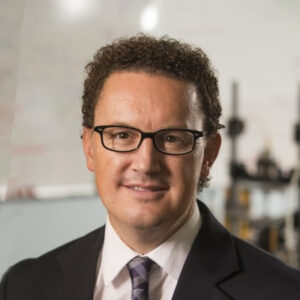
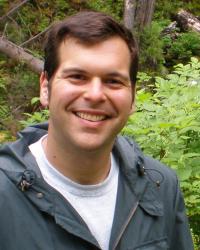
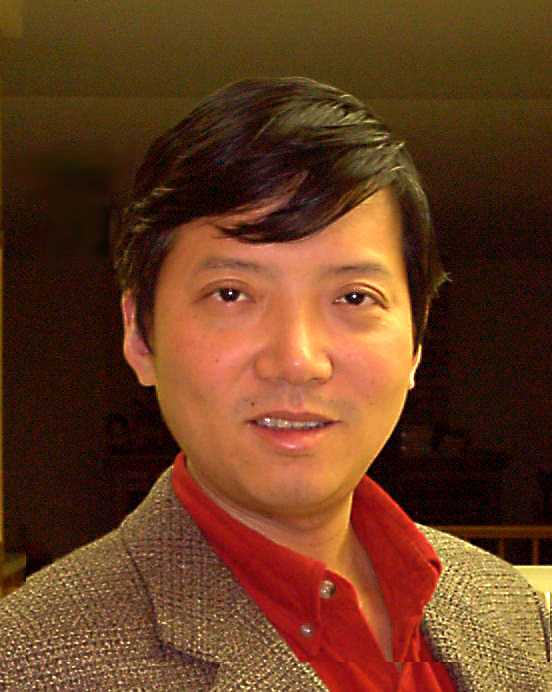
Eric P. Xing is a Professor at the Language Technologies Institute of Carnegie Mellon University , and currently serves as President of the Mohamed bin Zayed University of Artificial Intelligence . His work bridges machine learning methodology with computational biology and large-scale AI systems . Research Focus: Developing machine learning theory for high-dimensional, dynamic data Building foundation models for biology (AIDO, scLong, ProteinAligner) Designing scalable AI architectures (Pollux, LLM360, PAN) Advancing interpretable and controllable NLP systems Scientific Leadership: Founded the SAILING Lab at CMU Co-chaired ICML 2014 and ICML 2019 Recipient of the Jay Lepreau Best Paper Award (OSDI 2021) Education & Mentorship: Advises PhD students across machine learning and computational biology Alumni include faculty at ETH Zurich, University of Chicago, and UC San Diego
Matt Koslovsky is an Assistant Professor of Statistics at Colorado State University. He completed his PhD in Biostatistics at The University of Texas Health Science Center School of Public Health (UTHealth) in 2016 and served as a Post-Doctoral Research Associate at Rice University's Marina Vannucci lab from 2018-2020. Prior to joining CSU in 2020, he worked as a statistical consultant at Johnson Space Center's Biostatistics Lab. PhD, Biostatistics (2016), UTHealth School of Public Health Post-Doctoral Research Associate (2018-2020), Rice University Assistant Professor (2020-Present), Colorado State University His research spans Bayesian methodology and its applications across diverse domains: Theory: Bayesian modeling, variable selection, graphical models, nonparametric Bayes Applications: Cancer prevention, mental health, microbiome analysis, space health, ecological momentary assessment Recent publications demonstrate methodological advancements in: Bayesian variable selection for rare variants Integrated population modeling Compositional data analysis Continuous-time hidden Markov models mHealth data processing Microbiome mediation effects Current advisees include: Hyungjoon Kim (PhD candidate) Brody Erlandson (PhD candidate) Suppapat Korsurat (PhD candidate)
Thomas Daubler is an Assistant Professor at University College Dublin's School of Politics and International Relations, specializing in Comparative Politics, Electoral Systems, and Political Behavior with a focus on European democracies. He holds a PhD from Trinity College Dublin and a Postgraduate Certificate in Higher Education from the London School of Economics. His research integrates applied statistical modeling to analyze parliamentary behavior, candidate selection, and policy representation. University College Dublin: Assistant Professor (2020–present), Director of Research (2021–2023) University of Mannheim: Postdoctoral Researcher (2012–2019) London School of Economics: Fellow in European Politics (2011–2012) His work spans electoral systems' impact on political accountability, gender equality in candidate selection, and voter behavior in preferential-list systems. Articles highlight trends in Electoral Reform , Party Politics , and Policy Representation across Belgium, Czech Republic, Germany, Ireland, Sweden, and Switzerland. Grants include the Ad Astra Start-Up and DFG-funded research on personalized vote dynamics. Professional roles involve extensive journal reviewing and grant assessment .
Eric Barth is Professor of Mechanical Engineering and Professor of Neurological Surgery at Vanderbilt University's School of Engineering. He serves as Director of the C* Control laboratory (also known as the Laboratory for the Design and Control of Energetic Systems) and is affiliated with the Vanderbilt Institute for Surgery and Engineering (VISE), an interdisciplinary entity bringing engineers and physicians together to impact healthcare. His educational background includes: Ph.D. in Mechanical Engineering from Georgia Institute of Technology M.S. in Mechanical Engineering from Georgia Institute of Technology B.S. in Engineering Physics from University of California - Berkeley Professor Barth's research focuses on dynamic systems and control with applications spanning multiple domains. His primary interests include the design, modeling and control of mechatronic and fluid power systems, free-piston internal combustion and free-piston Stirling engines, energy storage and harvesting systems, and MRI compatible pneumatic robots for medical applications. His work applies a system dynamics and control perspective to problems involving the control and transduction of energy, encompassing multi-physics modeling, control methodologies formulation, and model-based design. His recent publications reveal a strong trajectory connecting mechanical engineering principles with medical applications, particularly in neurosurgery. The research spans energy systems (especially Stirling engines and novel energy storage approaches) and advanced medical robotics for MRI-guided interventions. This dual focus demonstrates his ability to bridge theoretical control systems with practical applications in both energy and healthcare domains. Professor Barth actively advises several doctoral students including David Comber, Joshua J Cummins, Alexander V. Pedchenko, and E. Bryn Pitt. His research is supported by significant funding, notably from the Center for Compact and Efficient Fluid Power, an NSF Engineering Research Center. The C* Control laboratory he directs occupies approximately 1000 square feet and contains specialized equipment including an 8-camera high-bandwidth optical tracking system, mechanical breadboard tables, pneumatic equipment with high-bandwidth servo-valves, specialized pressure sensors, a thermographic camera, high-speed video equipment, 3D printers, and a 2D laser cutter. Computational facilities include a network of approximately 20 machines running MATLAB/Simulink and SolidWorks, with access to additional CNC machining resources through the School of Engineering and the University.
Jay Barney is the Presidential Professor of Strategic Management and Pierre Lassonde Chair of Social Entrepreneurship in the Department of Entrepreneurship & Strategy at the University of Utah's David Eccles School of Business. Previously holding the Chase Chair for Excellence in Corporate Strategy at Ohio State University, he is a foundational scholar in strategic management renowned for developing the resource-based view of the firm. Education: Doctor of Philosophy, Yale University Master of Arts, Yale University Bachelor of Science, Brigham Young University Barney's research revolutionized strategic management through his seminal work on how costly-to-copy firm resources create sustained competitive advantage, establishing the VRIN (Valuable, Rare, Inimitable, Non-substitutable) framework. His scholarship bridges strategic management and entrepreneurship, examining opportunity formation processes, social entrepreneurship for poverty alleviation, and the philosophical foundations of entrepreneurial research. Current work increasingly focuses on integrating social impact with strategic advantage, particularly through industrialization solutions to poverty and stakeholder engagement under uncertainty. Analysis of his 2012-2016 publications reveals three dominant research streams: (1) theoretical extensions of resource-based theory into human capital, IT capabilities, and multinational contexts; (2) philosophical and methodological foundations of entrepreneurship research; and (3) social entrepreneurship applications addressing poverty and public interest. These works consistently appear in top-tier journals including Strategic Management Journal and Academy of Management Review, demonstrating rigorous theoretical development coupled with practical implications for organizational strategy. Scientific Awards: SMS Fellow Fellow of the Academy of Management Honorary Doctorate from University of Lund Honorary Doctorate from Copenhagen Business School Honorary Doctorate from Universidad Pontificia Comillas As a dedicated educator, Barney teaches doctoral seminars and strategy courses while mentoring PhD students in strategic management and entrepreneurship. His professional impact extends through executive training programs across North America and Europe, and strategic consulting engagements focused on organizational transformation. He has significantly shaped the field through editorial leadership as associate editor of Journal of Management, senior editor of Organization Science, and co-editor of Strategic Entrepreneurship Journal, while serving in officer roles for both the Strategic Management Society and Academy of Management's Business Policy and Strategy Division. Barney's research activities are closely integrated with the Lassonde Entrepreneur Institute at the University of Utah, where his social entrepreneurship chair supports initiatives connecting strategic management principles with poverty alleviation efforts and opportunity creation in resource-constrained environments.
Tyler McCormick is a Professor in the Departments of Statistics and Sociology at the University of Washington . He also holds core faculty positions at the Center for Statistics and the Social Sciences (CSSS), is a Senior Data Science Fellow at the eScience Institute, and a research affiliate at the Center for Studies in Demography and Ecology (CSDE). McCormick earned his Ph.D. in Statistics from Columbia University in 2011. His research focuses on statistical methodology for social and health sciences, including network analysis, causal inference, and uncertainty quantification in predictive models. Research interests include: Modeling social networks and peer influence Estimating causes of death using verbal autopsy data Improving global health decision-making through better uncertainty communication Methodological advancements in causal inference and experimental design under network interference He has received significant recognition, including the NIH Director’s New Innovator Award (2019) and election as a Fellow of the American Statistical Association (2023) . McCormick has contributed to influential projects such as the OpenVA toolkit for verbal autopsy analysis and has published widely in Journal of Computational and Graphical Statistics and other top venues. Grants and funding include support from the Simons Foundation. Current research includes postdoctoral openings focusing on spillover effects in networks and robust statistical methods for factorial data. His work has been featured in the Wall Street Journal and Washington Post .
Michael Daniels is a Professor and Chair of the Department of Statistics at the University of Florida, holding the Andrew Banks Family Endowed Chair. He previously held faculty positions at the University of Texas at Austin, Iowa State University, and Carnegie Mellon University. He earned his Sc.D. in Biostatistics from Harvard University (1995) and A.B. in Applied Mathematics from Brown University (1991). University: University of Florida College: College of Liberal Arts and Sciences (CLAS) Department: Department of Statistics His research focuses on Biostatistics , Bayesian methodology , and methodologies for longitudinal and causal inference , with applications in cardiovascular health, muscular dystrophy, and healthcare analytics. He has authored influential books like Bayesian Nonparametrics for Causal Inference and Missing Data (2023) and Missing Data in Longitudinal Studies (2008). Key awards include the Lagakos Distinguished Alumni Award (Harvard) and L. Adrienne Cupples Award (Boston University). He has been funded by NIH grants since 2001 and leads collaborative research in chronic disease management, including studies on opioid use in elderly populations and Duchenne muscular dystrophy progression modeling. Grants & Collaborations: NIH-funded studies on muscle degeneration biomarkers Telemedicine and chronic pain management trials Development of clinical trial simulation tools for neuromuscular diseases His work emphasizes Bayesian approaches to handle missing data and causal inference, with applied focus on improving healthcare outcomes through rigorous statistical methods.
Aleksandra Slavković is a Professor of Statistics and Associate Dean for Graduate Education at Pennsylvania State University's Eberly College of Science. She holds a PhD in Statistics from Carnegie Mellon University (2004) and has held academic roles since 2004, including appointments at the Institute for Computational and Data Sciences and Penn State College of Medicine. Her research focuses on statistical data privacy, differential privacy, algebraic statistics, and applications in social and health sciences. She has authored over 50 peer-reviewed publications and serves on editorial boards of top journals like Journal of Privacy and Confidentiality and Annals of Applied Statistics . Slavković has received major honors including Fellowships from the Institute of Mathematical Statistics (2021) and American Statistical Association (2018). She leads initiatives to enhance graduate education, including the Science Achievement Graduate Fellows Program, and actively promotes diversity in STEM through her leadership roles. Her recent work emphasizes privacy-preserving techniques for genomic, healthcare, and network data, with contributions to synthetic data generation and secure multiparty computation protocols. Her academic service includes chairing ASA committees and advising at the National Academy of Sciences. She maintains collaborative ties with institutions like Cornell University and UC Berkeley through visiting scholar programs, and her research bridges statistics, computer science, and applied mathematics.
Anandamayee Majumdar is an Assistant Professor in the Department of Mathematics at San Francisco State University (SFSU), part of the College of Science & Engineering. She holds a Ph.D. and M.S. in Statistics from the University of Connecticut and Michigan State University, respectively, and earlier degrees from the Indian Statistical Institute (I.S.I.). Her research focuses on spatial and spatio-temporal processes, Bayesian computation, and their applications in biology, health, environmental sustainability, ecology, economics, finance, and industry. She has developed robust statistical models for handling missing data, multivariate processes, and expert-informed modeling, particularly in contexts like tuna catch estimation during the pandemic and financial risk analysis. She is currently exploring expert-integrated spatio-temporal models and public health trends. Professional experience includes roles as Senior Statistician at the Inter-American Tropical Tuna Commission (2021–2023), Professorial positions at universities in Bangladesh and China, and visiting research at UC Davis. She serves as Associate Editor for Applied Stochastic Modeling in Business and Industry and reviews for journals like Computational Statistics and Data Analysis and Biostatistics . Majumdar has contributed to interdisciplinary collaborations, including soil property modeling in urban ecosystems, and has held leadership roles in academic committees, such as the Interdisciplinary M.S./Ph.D. programs at Arizona State University. She actively mentors students and seeks to involve undergraduates and graduates in research projects.
Gaetano Montelione is a Professor and Constellation Endowed Chair in the Department of Chemistry and Chemical Biology at Rensselaer Polytechnic Institute (RPI), directing the Center for Biotechnology and Interdisciplinary Studies (CBIS). His laboratory pioneers NMR methodology development for protein structure and dynamics analysis, with extensive expertise in high-throughput structural genomics from leading the NIGMS-funded Northeast Structural Genomics Consortium (NESG) for 16 years. His research spans Protein Structure and Dynamics , NMR Spectroscopy , and Structural Bioinformatics , with critical applications in Membrane Proteins , Virology , and Drug Design . The lab integrates X-ray crystallography, SAXS, and computational modeling to tackle challenging targets like integral membrane proteins and viral systems, emphasizing hybrid approaches where sparse experimental data guides AI-driven structure prediction. Analysis of 2024-2025 publications reveals dominant trends in AI-structural biology integration, particularly AlphaFold2 applications for membrane proteins and protein complexes. Virology research focuses intensely on SARS-CoV-2 protease inhibitors and host-pathogen interactions, while de novo protein design and structural validation methods drive innovation in therapeutic development and fundamental biophysics. The Montelione Laboratory maintains a global collaborative network with experts in evolutionary coupling (Sander, Marks), Rosetta modeling (Baker), and biophysical methods (Luchinat, Tainer). As a central node in structural biology consortia like CASP and wwPDB, the lab develops rigorous quality assessment frameworks while advancing biomedical projects on influenza, DNA repair, and cancer biology through partnerships with Rutgers, Mt. Sinai, and international institutions.
Dr. Milos Hauskrecht is a Professor of Computer Science at the University of Pittsburgh's School of Computing and Information. He holds a PhD from MIT (1997) and an M.Sc. from Slovak Technical University (1988). His research focuses on AI, machine learning, and data mining, with applications in medicine and finance. He leads projects in real-time clinical monitoring, anomaly detection, and time-series analysis of EHR data. He has advised numerous PhD and MS students, including notable alumni now at Amazon, DeepMind, and Microsoft. Research interests include reasoning under uncertainty, optimization, and AI-driven medical decision support. Current grants include NIH funding for AI in renal therapy and clinical monitoring. He has published widely in top venues like ICML, NeurIPS, and journals such as Artificial Intelligence in Medicine. His work on conditional outlier detection earned the Homer Warner Award (AMIA 2010). He teaches machine learning and advises on interdisciplinary AI projects.
Gaofeng Jia is Associate Professor in Civil and Environmental Engineering at Colorado State University's Walter Scott, Jr. College of Engineering. He specializes in natural hazard risk assessment, infrastructure resilience, and uncertainty quantification. Research integrates simulation-based approaches with high-performance computing for assessing complex engineering systems. Core areas include infrastructure deterioration modeling, wave energy converter optimization, tsunami evacuation planning, and surrogate modeling techniques. Recent work emphasizes physics-informed machine learning for engineering applications. Publications demonstrate consistent methodological innovation in uncertainty quantification across domains including seismic engineering, coastal hazards, renewable energy systems, and structural reliability. Articles employ advanced computational statistics, Bayesian methods, and multi-fidelity modeling. Young Researcher Best Paper Award Best Student Paper Award
Dr. Gloria Crisp is a Professor of Adult and Higher Education at Oregon State University and currently serves as Associate Dean in the College of Education. With 25 years of experience in community colleges and bachelor’s granting institutions, her work focuses on equity in higher education , particularly for Latinx students and other minoritized populations. Research Focus : Transfer pathways, mentoring frameworks, and policies reducing educational inequities Key Contributions : Created the College Student Mentoring Scale (CSMS), used globally to assess mentoring effectiveness Awards : ASHE 2020 Mentoring Award Leadership : Former Editor-in-Chief of New Directions for Institutional Research , President of Council for the Study of Community Colleges (2022-23) Publications include over 60 articles in journals like American Educational Research Journal and Research in Higher Education , with citations exceeding 10,000. Her co-edited book Unlocking Opportunity through Broadly Accessible Institutions (2022) challenges deficit narratives about broad-access universities.
Charles Ling is a Professor of Computer Science at Western University, holding the title of Science Distinguished Research Professor. He also serves as Director of the Data Mining and Business Intelligence Lab and Associate Scientist at the Lawson Health Research Institute. His academic background includes a B.Eng. (CS and EE) from Shanghai Jiao Tong University and MSc/PhD from the University of Pennsylvania (UPenn). Research interests span machine learning, deep learning, AI, and healthcare informatics, with notable contributions to the GlucoGuide diabetes management system. He has authored over 220 peer-reviewed papers and a book titled Crafting Your Research Future , focusing on academic career development. Awarded Fellow of the Canadian Academy of Engineering (CAE) and recipient of the First Prize for Best Clinical Research Presentation (2011). Active in grants (NSERC, FedDev, Mitacs) and organizational roles in top conferences (KDD, ICDM). Supervises 5 PhD and 4 MSc students, with notable advisees including Harry Zhang and Victor Sheng. Leverages AI in education to enhance children's cognitive abilities through video-based programs like Power Thinking , approved by Curriculum Services Canada. His work integrates machine learning with healthcare, finance, and software engineering.
Chiara Sabatti is a Professor of Biomedical Data Science and Statistics at Stanford University, with affiliations to the Stanford Center for Computational, Evolutionary and Human Genomics (CEHG), Bio-X, and the Stanford Cancer Institute. She serves as Associate Director for Stanford Data Science and has led the development of the Data Science Major curriculum since 2012. Research Focus: Statistical models for high-throughput genomics data, causal inference in genetic studies, false discovery rate control, and knockoff methods for variable selection. Key Leadership: Associate Chair for Education and Training (2020-present), Vice Chair of Biomedical Data Science (2018-2019). Her work bridges statistical genetics with data science education, emphasizing robustness and interpretability in scientific findings. Recent publications highlight innovations in genome-wide association studies (GWAS), causal variant localization, and cost-effective sequencing techniques for underrepresented populations. Current projects include developing knockoff-based methods to address population structure and multi-resolution hypothesis testing. Scientific Awards: Institute of Mathematical Statistics (IMS) Fellow (2022) NSF CAREER Award (2003-2008) She mentors doctoral and graduate students in Biomedical Data Science, collaborates with the Data Studio on interdisciplinary projects, and actively recruits curious researchers to her lab. Her outreach efforts focus on expanding data science education and increasing research participation from underrepresented groups.