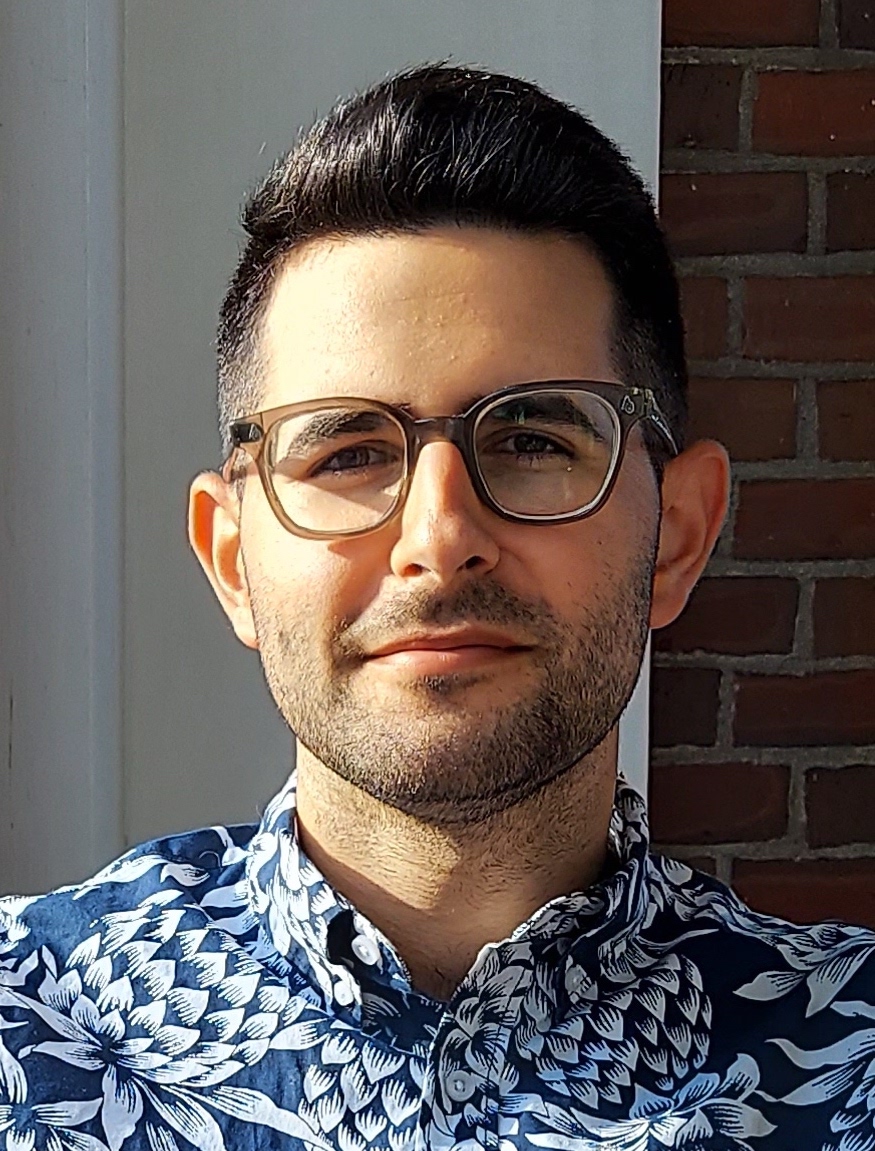
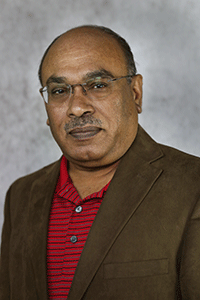
Dr. Wenhui Sheng is an Assistant Professor in the Department of Mathematical and Statistical Sciences at Marquette University. His research focuses on dimension reduction techniques, variable selection, multivariate analysis, and data mining. He teaches courses in statistical methods and has published extensively in statistical theory and applications. Dr. Sheng's work bridges statistical methodology with computational challenges in high-dimensional data. His recent research includes developing novel dimension reduction approaches using distance covariance and exploring distributional properties in applied contexts. Collaborations span bioinformatics and genomics, as evidenced by contributions to epigenetic analysis via next-generation sequencing techniques. He currently holds no listed grants or awards in the provided materials. No specific lab affiliations or student advising records are mentioned here.
Stephan Hartmann is Chair of Philosophy of Science and Alexander von Humboldt Professor at Ludwig-Maximilians-Universität München (LMU Munich), where he also serves as Head of the Munich Center for Mathematical Philosophy. His academic journey spans multiple prestigious institutions across Europe, establishing him as a leading figure in contemporary philosophy of science. Hartmann received his academic training at Justus-Liebig University Giessen, where he completed a Diploma in Physics (1991), a Master in Philosophy (1991), and a PhD in Philosophy (1995). Prior to joining LMU Munich in 2012, he taught at Tilburg University, the London School of Economics, and the University of Konstanz, with visiting appointments at the University of California at Irvine, Lund University, and the Center for Philosophy of Science at the University of Pittsburgh. Hartmann's research program centers on the application of formal methods to philosophical problems, particularly through Bayesian frameworks. His work bridges philosophy of science, philosophy of physics, formal epistemology, social epistemology, and cognitive science. He has developed influential models for understanding reasoning, argumentation, deliberation, and scientific explanation using probabilistic and mathematical approaches. His current research focuses on the philosophy and psychology of reasoning and argumentation, the philosophy of physics (especially open quantum systems), and formal social epistemology (particularly models of deliberation). His extensive publication record reveals a consistent trajectory of applying formal methods to philosophical questions, with increasing emphasis on Bayesian approaches across multiple domains. Hartmann's work demonstrates remarkable integration of mathematical precision with philosophical depth, particularly in addressing traditional problems in epistemology and philosophy of science through computational and probabilistic frameworks. His research shows strong continuity in exploring how formal models can illuminate fundamental questions about scientific reasoning, evidence, and rationality. Alexander von Humboldt Professor President of the European Philosophy of Science Association (2013-2017) President of the European Society for Analytical Philosophy (2014-2017) Hartmann leads the Munich Center for Mathematical Philosophy, which serves as a hub for interdisciplinary research at the intersection of philosophy, mathematics, and formal methods. Under his direction, the center has become a prominent institution for advancing mathematical approaches to philosophical problems, fostering collaborations between philosophers, mathematicians, physicists, and cognitive scientists. His work has significantly influenced how formal methods are applied to traditional philosophical questions, particularly in epistemology and philosophy of science.
Sonja D. Winter is an Assistant Professor in the Statistics, Measurement, and Evaluation in Education program at the University of Missouri’s College of Education and Human Development. She holds a Ph.D. in Quantitative Methods, Measurement, and Statistics from the University of California-Merced and completed a postdoctoral fellowship at the Missouri Prevention Science Institute. Her research focuses on advancing Bayesian statistical methods, particularly structural equation modeling (SEM), with an emphasis on prior sensitivity analysis, longitudinal data analysis, and addressing challenges in educational research such as small samples and missing data. Key areas of expertise include Bayesian methods, psychometrics, and the application of advanced quantitative techniques to educational and developmental psychology data. She leads the Winter Lab, which explores Bayesian SEM, measurement invariance, and the integration of prior knowledge through frameworks like prior predictive checks. Her work emphasizes methodological rigor, including evaluating model fit indices and addressing overfitting/underfitting issues. She collaborates on projects involving LGBTQ+ community inequities, school discipline equity, and teacher stress measurement. Active in both research and education, Winter teaches graduate courses on measurement and Bayesian methods while advocating for transparent and reproducible statistical practices.
Wes Bonifay is an Associate Professor in the Educational, School & Counseling Psychology department at the University of Missouri's College of Education & Human Development. His research focuses on psychometrics, measurement theory, and statistical modeling in educational contexts. Research areas include: Item Response Theory methodologies Bayesian statistical approaches Psychometric model evaluation Measurement precision in assessments Meta-analytic techniques for educational research His recent publications examine innovative approaches to psychometric modeling, including Bayesian applications, parsimonious model development, and methodological critiques. Research spans educational measurement, clinical assessment, and methodological innovation in psychological research.
Erik Bollt is the W. Jon Harrington Professor of Mathematics and Professor of Electrical & Computer Engineering at Clarkson University. He directs the Clarkson Center for Complex Systems Science (C3S2). His research focuses on chaos theory, dynamical systems, machine learning, and network science, with applications in neuroscience, oceanography, and engineering. Bollt holds appointments in multiple departments and has led numerous grants totaling millions in funding. He has advised over 30 graduate students and postdoctoral researchers. Education: PhD in Applied Mathematics (University of Colorado Boulder, 1995), with a focus on Controlling Chaos. Academic career spans roles at Clarkson since 2002, including tenure as Associate Professor (2002-2006) and Professor (2006-present). Research Interests: Data-driven analysis of complex systems, transfer operators, information theory, and causal inference. Recent work includes reservoir computing, neural network dynamics, and climate modeling. Notable Awards: NSF Graduate Traineeship, Project Next Fellow, Davies Research Fellow, and Superior Civilian Service Medal (DoD). Over 200 peer-reviewed publications and multiple patents. Grants: Major funding from ARO, ONR, DARPA, NIH, and NSF. Recent projects include 'Reduced Models for Complex Systems' (ARO, $479K) and 'Functional Brain Networks' (NSF-NIH CRCNS, $1.29M). Labs/Teams: Leads the C3S2 lab, collaborating on interdisciplinary projects. Engages in global conferences and editorial roles for journals like Chaos and Entropy .
Prof Sunil Vadera is a Professor of Computer Science at the University of Salford, affiliated with the School of Science, Engineering & Environment. He holds fellowships from the British Computer Society (FBCS) and is a Chartered Engineer (CEng) and Chartered IT Professional (CITP). His leadership roles include former Dean of the School of Computing, Science and Engineering, and Director of the Informatics Research Institute. He received the UK BDO Best Indian Scientist and Engineer award in 2014 and the Amity Award for AI contributions in 2018. His research focuses on bridging theory and practice in AI, with projects like the GM AI Foundry supporting SMEs, EU-funded energy-efficient building systems, and smart meter data analysis for British Gas. His work spans AI applications in healthcare, cybersecurity, IoT, and energy systems. He leads the Deep Learning module in the MSc in AI program and has supervised multiple PhD students, including Dr Salem Ameen. Key research interests include cost-sensitive machine learning, explainable AI, phishing detection, and medical imaging. Recent publications address AI-driven solutions in healthcare (e.g., breast arterial calcification detection), cybersecurity (Arabic phishing emails), and livestock behavior analysis using vision transformers. He has pioneered algorithms like CSNL and EECSDT, advancing decision tree and Bayesian network methodologies. Prof Vadera’s contributions extend to academic leadership, including chairing the BCS Accreditations Committee. His interdisciplinary projects often involve collaborations with industry and government, emphasizing real-world impact. The Informatics Research Institute under his direction fosters innovative AI applications across sectors.
Dr. Xuan Cao is an Associate Professor in Statistics at the University of Cincinnati, specializing in high-dimensional Bayesian inference and statistical applications in neuroscience. Her research develops novel methods for model selection in regression and graphical models, with applications in brain connectivity analysis and disease prediction. Research Programs: NIH-funded work on neuroimaging biomarkers for Parkinson's disease Development of network-based diagnostic tools for cognitive disorders Bayesian sparsity selection for Gaussian DAG models
Florian Huber is a Professor of Economics and Vice-Head of the Department of Economics at the University of Salzburg. His research focuses on Bayesian macroeconometrics, particularly large-scale non-linear multivariate time series modeling. He has published in top journals such as the Journal of Econometrics and the Journal of Applied Econometrics. His work integrates machine learning and nonlinear methods to analyze macroeconomic dynamics and uncertainty. Huber serves as a Scientific Consultant to the Oesterreichische Nationalbank (OeNB), European Central Bank (ECB), and European Commission. He holds roles as Associate Editor of Macroeconomic Dynamics, Senior Scientist at the International Institute for Applied Systems Analysis (IIASA), and Research Fellow of Bocconi University’s Baffi Center. His accolades include the 2024 Kurt-Zopf-Förderpreis and Fellow status in the Society for Economic Measurement. Research interests span Bayesian econometrics, state space modeling, forecasting, and financial spillovers. His recent work addresses topics like growth-at-risk, nonlinear VAR models, and real-time inflation forecasting. Huber’s contributions bridge theoretical econometrics with policy-relevant analysis, emphasizing the integration of big data and structural models.
Dr. Daniel Ahelegbey is a Lecturer at the University of Essex’s School of Mathematics, Statistics and Actuarial Science (SMSAS). He holds a PhD from Ca’ Foscari University of Venice (2015), a Master’s from the University of Paris (2011), and a Bachelor’s from the University of Ghana (2007). His roles include Adjunct Professor at the African School of Economics and prior appointments at the University of Pavia and Boston University. Research focuses on Bayesian Econometrics, Financial Networks, Systemic Risk Analysis, and Climate Finance. His work explores financial contagion dynamics, climate-economic linkages, and credit risk modeling using network-based and Bayesian methodologies. Key contributions include the NetVIX volatility index and studies on pandemic impacts on financial systems. He has published extensively in top journals such as the Journal of International Financial Markets, Institutions & Money. No scientific awards are listed. His advising and grants involve supervision of students (no names provided) and collaborations across institutions. His research integrates statistical techniques with real-world policy applications in sustainable development and financial stability.
Ben Sherwood is an Associate Professor and Jack and Shirley Howard Mid-Career Professor in the Analytics, Information, Operations academic area at the University of Kansas School of Business. His research focuses on developing advanced statistical methodologies with applications across various domains including healthcare, finance, and business analytics. Ph.D. in Statistics, University of Minnesota, 2014 B.A. in Mathematics and Computer Science, Macalester College, 2003 Post Doctoral Fellow at Johns Hopkins Biostatistics Department, 2014-2016 Sherwood's research primarily centers on quantile regression methodologies, with special emphasis on penalized approaches for high-dimensional data. His work extends to semiparametric regression, multivariate regression models, and addressing challenges with missing data. He develops statistical methods with practical applications in business problems, healthcare analytics, and genomic studies. His approach often involves creating new statistical techniques, implementing them in software, and providing theoretical foundations through mathematical proofs. His publication record shows a consistent trajectory of impactful research, with recent work focusing on quantile regression for equity premium prediction, Bayesian network applications for PTSD screening, and advanced techniques for model selection in high-dimensional settings. His research bridges theoretical statistics with practical applications, particularly in business analytics contexts. Sherwood actively mentors PhD students, encouraging them to develop novel statistical methods while maintaining flexibility in their research direction. He frequently co-advises students with faculty from related disciplines including Professors Prakash Shenoy, Karthik Srinivasan, and Shaobo Li. His students have worked on diverse projects including beta regression for model selection uncertainty, Bayesian networks for PTSD prediction in veterans, bankruptcy prediction for firms, and analyzing crowdfunding platform dynamics. Complementing his theoretical work, Sherwood has developed multiple software packages to implement his methodologies, including rqPen for penalized quantile regression, hrqglas for group variable selection, and mcen for multivariate cluster elastic net models. These tools make advanced statistical methods accessible to practitioners across various fields.
Victor Churchill is an Assistant Professor of Mathematics at Trinity College since 2023. He holds a Ph.D. and A.M. from Dartmouth College, an M.S. from New York University's Courant Institute, and a B.A. from Boston College. His research focuses on computational mathematics, scientific machine learning, and image reconstruction, particularly in Bayesian uncertainty quantification for synthetic aperture radar imaging and learning unknown dynamical systems using neural networks. He has held a postdoctoral position at The Ohio State University under Dr. Dongbin Xiu and previously worked at Dartmouth under Dr. Anne Gelb. Research Highlights: His work includes deep learning of PDEs, ensemble prediction for robust neural network training, and chaotic system learning from partial observations. Recent contributions address coarse time-scale observations and uncertainty quantification in SAR imaging. He was awarded the SIAM Science Policy Fellowship (2023-2024) to engage with federal science policy advocacy. Teaching: He teaches computational science courses at both undergraduate and graduate levels, integrating his research into lectures through case studies and data-driven examples. His pedagogical approach emphasizes applied computational mathematics and real-world problem-solving. Affiliations: Previously affiliated with The Ohio State University as a Visiting Assistant Professor of Scientific Computation. Active in computational math communities, including SIAM policy engagement. Personal Interests: An avid runner with marathon personal bests, he also enjoys bonsai cultivation, architectural design, and animal care. His unconventional hobbies include experimenting with hair color transformations.
Professor Kalimuthu Krishnamoorthy holds the Philip and Jean Piccione Endowed Chair in Statistics at the University of Louisiana at Lafayette. His research focuses on statistical methodologies for occupational exposure analysis, missing data, and tolerance regions, with contributions to censored data analysis and calibration techniques. He has advised over 30 Ph.D. students and led NIOSH-funded projects on exposure assessment. His work includes developing statistical software tools like StatCalc and over 200 peer-reviewed articles. Education: Ph.D. (Statistics, 1985) Indian Institute of Technology-Kanpur; M.Sc. & B.Sc. (Statistics) Madras University. Grants: Multiple NIOSH grants (R01-OH series) totaling $2.6M, focusing on exposure data analysis methodologies. Labs/Teams: Leads statistical research groups at the University of Louisiana, collaborating on occupational health and environmental statistics.
Michael Steinbach is a Researcher in the Department of Computer Science and Engineering at the University of Minnesota, Twin Cities, working in the research group of Prof. Vipin Kumar. He holds B.S. in Mathematics, M.S. in Statistics, and M.S./Ph.D. in Computer Science from the University of Minnesota. His research focuses on data mining, machine learning, biomedical informatics, and statistics, with applications in environmental science, healthcare, and engineering. He co-authored the widely used textbook Introduction to Data Mining , translated internationally. Previously, he held software engineering roles at Silicon Biology, Racotek, and NCR. Research interests emphasize integrating scientific knowledge with machine learning for real-world systems, such as climate modeling, flood forecasting, and healthcare analytics. His work spans causal inference, physics-guided AI, and interpretable predictive models. Collaborations include environmental monitoring, wildfire management, and clinical decision support systems in healthcare. Publications highlight innovations in knowledge-guided learning, multi-scale modeling, and causal discovery. His contributions bridge theory and practice, advancing AI applications in complex systems. The lab engages in interdisciplinary projects, combining computational methods with domain expertise to address societal challenges.
Saman Muthukumarana is a Professor and Head of the Department of Statistics at the University of Manitoba. He joined the department in 2010 as an Assistant Professor, was promoted to Associate Professor in 2016, and became a full Professor in 2022. He holds a BSc (Honours Special) in Statistics from the University of Sri Jayewardenepura, an MSc from Simon Fraser University, and a PhD from Simon Fraser University under Dr. Tim Swartz, focusing on Bayesian methods and applications. His research emphasizes Bayesian methodologies for complex models, with applications in social networks, health studies, sports analytics, environmental science, and machine learning. He has secured over $8.4M in research funding from NSERC, Mitacs, CIHR, and other organizations. His work has been published in journals such as the Canadian Journal of Statistics, Machine Learning with Applications, and IEEE Open Journal of Instrumentation & Measurement. Dr. Muthukumarana’s research spans Bayesian computation, biostatistics, data science, and environmental statistics. He has contributed to anomaly detection in buildings, predictive modeling for public health (e.g., Long COVID), and ecological studies like salmon stock recruitment. His collaborative projects include developing statistical tools for microbiome analysis and improving machine learning approaches for imbalanced datasets. He also leads the Data Science Nexus, fostering interdisciplinary research. His grants and collaborations highlight his role in advancing statistical methodologies for real-world challenges, including health, energy efficiency, and ecological conservation. While no specific awards are listed, his extensive funding and publication record reflect his scholarly impact. He currently supervises graduate students and actively participates in academic leadership roles.
Professor Michael Wheatland is affiliated with the School of Physics at The University of Sydney , serving as Associate Dean (Education) in the Faculty of Science. He is a leading researcher in solar astrophysics , solar flares , coronal magnetic fields , and Bayesian probability , with significant contributions to computational modeling. Research Interests : Solar flares and activity Coronal magnetic field modeling Bayesian data analysis Space weather Stellar flare dynamics Recent Projects : Ensemble modeling of space-weather drivers (2023) Magnetic skeletons and solar flares (2022) Relativistic light sail propulsion (2020-2022) Grants : Australian Research Council Discovery Projects (2023, 2022, 2018, 2015, 2007, 2003, 2002, 2000) Education Innovation Grants (2019, 2017) Students : Research student: Abhinav IYER (2021)