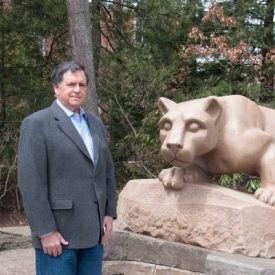
Ronald Gallant is the Liberal Arts Professor of Economics at Pennsylvania State University. He earned his PhD from Iowa State University in 1971. His research specializes in econometric theory, Bayesian methods, and financial econometrics, with applications to asset pricing, industrial organization, and computational statistics. Gallant develops novel estimation techniques for complex economic models, including Bayesian nonparametrics, Markov chain Monte Carlo methods, and dynamic game theory. His recent work examines asset pricing under ambiguity aversion and high-frequency financial data analysis. He has extensive editorial experience in leading econometrics journals.
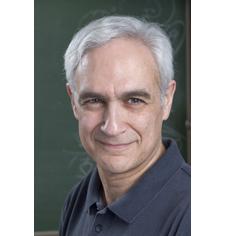
Prof. Dr. Simone Frintrop is the Head of the Computer Vision Group at the Department of Informatics, University of Hamburg. His research focuses on computationally modeling human visual system principles to enhance machine vision systems, emphasizing robustness, flexibility, and intuitive interaction. Key interests include object discovery, visual attention, saliency detection, and SLAM. He leads a research group exploring topics such as visual tracking, robot localization, and multi-sensor systems. His work bridges theoretical models with applications in robotics and cultural heritage analysis (e.g., CT scan-based cuneiform inscription analysis). Research Themes : Object Discovery & Tracking Visual Attention Systems 3D Scene Understanding Autonomous Robot Perception Publications from 2017–2021 highlight advancements in deep learning, point cloud processing, and attention-driven systems. His team's work on 6D object pose estimation and reinforcement learning in visual search demonstrates cutting-edge contributions to robotics and computer vision. No awards or grants are explicitly listed, but his extensive publication record reflects sustained academic impact. He oversees the CV Research Group at the university’s Informatics Department.
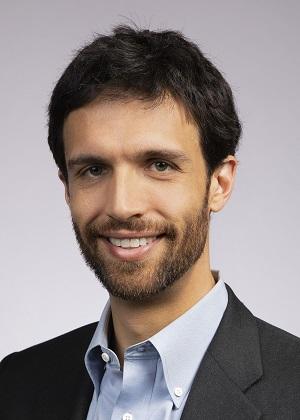
Matthew T Harrison is an Associate Professor in the Division of Applied Mathematics at Brown University. He is affiliated with the Carney Institute for Brain Sciences, Data Science Institute, Center for Computational Brain Science, and Center for Statistical Sciences. Education : PhD (2005) and ScM (2000) from Brown University, BA (1998) from University of Virginia. Research interests : His work spans Statistics (conditional inference, multiple hypothesis testing), Neuroscience (multi-neuronal spiking data, exploratory analysis), Information theory (rate distortion theory, model selection), and Computer vision (structured models, perceptual organization). Collaborations extend to brain-computer interfaces and ecological modeling. Publication trends : Recent articles focus on Bayesian filtering, statistical neuroscience methods, mixture models, and computational approaches to neural data. Themes include handling high-dimensional data, robust inference, and applications to biological and machine intelligence. Scientific awards : Phi Beta Kappa (1997) Jefferson Scholarship (1994-1998) Howard Hughes Medical Institute Predoctoral Fellowship (1998) National Defense Science and Engineering Graduate Fellowship (1998-2001) IBM Watson Research Award (2014) Philip J. Bray Teaching Award (2014) Advising : Mentors current PhD student Sicheng Liu and has advised former students including Jeffrey Miller (Harvard), Dahlia Nadkarni (Akamai), and Mona Khoshnevis. Collaborates with institutions like Carney Institute and Data Science Institute.
Stuart Geman is the James Manning Professor of Applied Mathematics at Brown University's Division of Applied Mathematics. He holds a Ph.D. from MIT (1977), focusing on stochastic differential equations. His research spans machine and natural vision, statistical theory, neuroscience, financial modeling, and computational linguistics. He has advised numerous students, including Asohan Amarasingham, Lo-Bin Chang, and Ya Jin. His work explores hierarchical models for visual recognition, neural spike train analysis, market dynamics, and generative image modeling. Key contributions include the 'compositionality' framework for efficient learning in biological systems, probabilistic image models with hierarchical structure, and statistical methods for neurophysiological data. He co-developed the Gibbs sampling method for image restoration and pioneered nonparametric statistical estimation via sieves. His recent work addresses scale invariance in natural images and transsaccadic neural coding in macaque V1. Publications span journals like Journal of Neuroscience , Neural Computation , and Proceedings of the National Academy of Sciences . His research integrates computational, statistical, and biological perspectives to address challenges in vision, neuroscience, and financial systems.
Dao Nguyen is an Associate Professor of Mathematics and Assistant Professor of Statistics at the University of Mississippi, affiliated with the Department of Mathematics within the College of Liberal Arts. He holds a Ph.D. in Statistics from the University of Michigan (2016) and served as a postdoctoral scholar at the University of California, Berkeley. His research focuses on computational statistics, simulation-based inference, stochastic optimization, and machine learning, with specific interests in Langevin Monte Carlo methods, blackbox sampling, and applications in infectious disease modeling. He teaches courses ranging from introductory statistics to advanced statistical computing. Research Interests: Computational Statistics Stochastic Optimization Monte Carlo Methods (e.g., Langevin Algorithms) Machine Learning Applications Mechanistic Modeling for Infectious Diseases Statistical Software Development (e.g., R packages) Publications Trends: Nguyen’s recent work emphasizes methodological advancements in sampling algorithms, non-convex optimization, and interdisciplinary applications in environmental health and global ecology. His articles frequently address challenges in high-dimensional data analysis, algorithmic efficiency, and bridging theory with practical implementations. Education: Ph.D. in Statistics, University of Michigan-Ann Arbor (2016) Postdoctoral Research, University of California, Berkeley (2016–2017) Teaching & Advising: Nguyen instructs courses such as Statistical Computing and Data Analysis and Mathematical Statistics . While no advisees are listed, his research group likely engages in collaborative projects across disciplines.
D. Andrew Brown is a Full Professor of Statistics in the School of Mathematical and Statistical Sciences at Clemson University. He received his PhD and MS in Statistics from the University of Georgia (2013 and 2010, respectively) and his BS in Applied Mathematics from Georgia Tech (2006). His educational background includes: PhD, Statistics, University of Georgia, 2013 MS, Statistics, University of Georgia, 2010 BS, Applied Mathematics, Georgia Tech, 2006 Dr. Brown's research focuses on uncertainty quantification, neuroimaging data analysis, and Bayesian modeling and computation. His work bridges statistical theory with practical applications in neuroscience and engineering. He has made significant contributions to the development of Bayesian methods for analyzing complex-valued fMRI data, spatial binary regression for neuroimaging, and Gaussian process modeling with functional constraints. His research demonstrates exceptional mathematical sophistication in handling complex data structures while maintaining computational feasibility. His recent publications reveal a strong trend toward sophisticated Bayesian approaches for neuroimaging data analysis, particularly focusing on complex-valued fMRI data. His work spans multiple disciplines including neuroscience, materials science, and engineering through statistical modeling and computer model calibration. The consistent publication record across top statistical journals demonstrates both methodological innovation and practical relevance of his work. Dr. Brown has received recognition for his work, including being named a Visiting Research Fellow at the Statistical and Applied Mathematical Sciences Institute in Spring 2016. He is an active member of several professional organizations: American Statistical Association International Society for Bayesian Analysis Society for Industrial and Applied Mathematics As a first-generation college student who was promoted to Full Professor in August 2025, Dr. Brown acknowledges the importance of mentorship and support in academic success. His professional journey reflects dedication to both research excellence and academic service, with particular attention to supporting underrepresented populations in STEM pathways. Dr. Brown maintains active collaborations across disciplines and has contributed to research in neuroscience, materials science, and engineering through his statistical methodology development. His work demonstrates how advanced statistical methods can solve real-world problems across scientific domains.
Christopher McMahan is a Full Professor at Clemson University's School of Mathematical and Statistical Sciences within the College of Science. His academic roles include serving as Associate Director for Graduate Studies and co-leading the Clemson-MUSC AI Hub. McMahan holds a Ph.D. in Statistics from the University of South Carolina (2012), M.S. in Mathematics from Western Kentucky University (2008), and B.S. in Mathematics from Austin Peay State University (2006). His research focuses on developing statistical methodologies for complex data problems, with interdisciplinary applications spanning epidemiology, agriculture, and biomedical sciences. Core research areas include Bayesian modeling, group testing designs, high-dimensional regression, and spatio-temporal analysis. Current projects involve genomic prediction in crop science, infectious disease modeling, and machine learning applications for public health surveillance. McMahan's publication record demonstrates consistent contributions to statistical theory and applied interdisciplinary research. Recent work exhibits strong emphasis on: Bayesian computational methods for large-scale problems Epidemiological modeling of COVID-19 transmission Genomic prediction of agricultural phenotypes Statistical learning approaches for public health data Biomedical applications of group testing designs Environmental risk assessment methodologies His scholarly recognition includes: Fellow of the American Statistical Association (2022) Multiple ASA Outstanding Statistical Application Awards ENAR Distinguished Student Paper Awards College of Science Dean's Associate Professor (2021-2023) McMahan maintains an active research program with substantial grant funding, including NIH R01 awards totaling over $2 million. He currently advises four postdoctoral scholars and has mentored eight doctoral graduates. His collaborative work involves interdisciplinary teams across computational biology, plant genomics, and public health epidemiology. Laboratory and team leadership includes directing graduate research through the Clemson-MUSC AI Hub and coordinating multi-institutional consortia like the NCAA-DoD CARE Consortium. Future research directions emphasize developing computationally efficient statistical methods for high-dimensional biomedical data and expanding applications in precision agriculture.
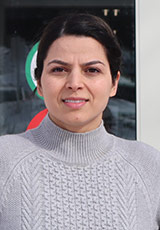
Azam Shamsi Zamenjani is an Associate Professor in the Department of Management at the University of New Brunswick's Faculty of Business Administration. Her research bridges Financial Econometrics and Empirical Finance with applications in Sustainability in Finance, Risk Management, and Portfolio Selection. PhD from McMaster University (DeGroote School of Business) Office: Tilley Hall 308A, Fredericton campus Contact: azam.shamsi@unb.ca Her research focuses on developing Bayesian nonparametric models to analyze financial market behavior, including asset pricing, risk propagation, and sustainability impacts. She has contributed to journals like the Journal of Empirical Finance and Journal of Cleaner Production , exploring topics such as biomass supply chains and dynamic conditional beta models. Recent publications highlight her interdisciplinary approach, combining financial theory with environmental sustainability and optimization algorithms. She teaches financial data analysis in the Master in Quantitative Investment Management (MQIM) program, alongside investments and finance courses in MBA and BBA curricula.
Abhijit Mandal is an Associate Professor in the Department of Mathematical Sciences at the University of Texas at El Paso. He serves as the Director of the Data Analytics Lab and holds multiple coordination roles, including overseeing the Graduate Certificate programs in Applied Statistics and Big Data Analytics. His work focuses on developing robust statistical methods to handle noisy data, particularly in the areas of robust inference, nonparametric statistics, and biostatistics. His research spans robust statistical methodologies, including applications in high-dimensional data analysis, functional regression, and biostatistical modeling of metabolic and inflammatory risks. Key contributions include novel techniques for variable selection, spatial data analysis, and the mitigation of outlier effects in complex datasets. He also explores interdisciplinary applications, such as microglial signaling in metabolic dysfunction and the impact of environmental pollutants on health. Mandal’s recent publications emphasize robust statistical frameworks for functional data, panel data models, and healthcare analytics. His work often integrates computational methods like the Metropolis algorithm and advanced regression techniques to address real-world challenges. He is a UTEP Edge Curriculum Fellow, reflecting his commitment to innovative teaching and curriculum development in data science. While no specific scientific awards are listed, his active roles in directing research labs and coordinating academic programs highlight his leadership in fostering data-driven research and education. In advising, Mandal’s focus is on mentoring students in statistical methodologies applicable to diverse domains. His research teams collaborate across disciplines, including neuroscience and environmental health, as seen in studies linking air pollutants to metabolic disorders through microglial pathways.
Leah Feuerstahler serves as Associate Professor of Psychology and Director of the Psychometrics and Quantitative Psychology Program at Fordham University's College of Arts and Sciences. Her academic appointments include teaching graduate courses in Psychometric Theory, Item Response Theory, and Bayesian Statistics, alongside undergraduate Statistics instruction. Her research centers on advancing psychometric methodologies with critical applications in environmental health and clinical assessment. Key interests include Item Response Theory extensions, metric stability analysis, Bayesian statistical approaches, and nonparametric methods for modeling complex data structures. Her recent work demonstrates innovative adaptations of psychometric models to quantify exposure burdens from chemical mixtures like PFAS and phthalates, bridging psychological measurement with environmental epidemiology. Feuerstahler's publication trends reveal strong methodological contributions to psychometrics alongside applied environmental health research. Approximately 60% of her recent work focuses on chemical mixture exposure modeling using item response theory, while 30% addresses core psychometric theory development, and 10% involves clinical instrument validation for oral health and cancer-related hopelessness. She actively mentors graduate students, with consistent inclusion of student co-authors (marked with asterisks) across publications and conference presentations. Her professional affiliations include the Psychometric Society and National Council on Measurement in Education (NCME), reflecting her commitment to advancing measurement science. Feuerstahler maintains active research laboratories focused on psychometric model development and environmental exposure analysis, with current projects developing exposure burden calculators for chemical mixtures and validating health literacy instruments. Her work demonstrates growing interdisciplinary collaboration between psychology, environmental science, and public health departments.
Dr. Sherry Wang is a Jenkins-Garrett Professor of Mathematics at The University of Texas at Arlington. She holds affiliate professorships at Southern Methodist University. Her research focuses on Bayesian Modeling, Statistical Omics, and Meta-Analysis. She earned her PhD from The University of Texas at Austin (2002) and has held roles at SMU from 2003 to 2022. Her work includes federal grants on deep learning for neoantigen analysis and T-cell receptor binding. Key awards include being an Elected Fellow of the American Statistical Association (2024). She advises numerous PhD students and chairs dissertation committees in Data Science and Biostatistics. Dr. Wang teaches courses like Bayesian Data Analysis and collaborates on projects like infrastructure equity and normalization of genomic data. Her service roles include College Director for Research in Data Science.
Dr. Joshua M. Tebbs is a Professor in the Department of Statistics at the University of South Carolina, affiliated with the McCausland College of Arts and Sciences. He holds a BS in Mathematics, an MS in Statistics, and a PhD in Statistics from the University of Iowa and North Carolina State University, respectively. His research focuses on categorical data analysis, statistical methods for group testing, order-restricted inference, and applications in public health and biostatistics. He is a Fellow of the American Statistical Association and an elected member of the International Statistical Institute. Dr. Tebbs has served as Editor of the American Statistician (2020–2023) and contributed to numerous academic courses, including STAT 513 (Theory of Statistical Inference), STAT 512 (Mathematical Statistics), and STAT 110 (Introduction to Statistical Reasoning). His work emphasizes methodological advancements in group testing for disease prevalence estimation and has been supported by NIH funding. Key awards include recognition from the ASA and ISI, reflecting his scholarly contributions. His research outputs span statistical methodology, computational tools (e.g., binGroup2 ), and applications in infectious disease surveillance and public health decision-making.
David Kaplan is an Associate Professor and Director of Doctoral Studies in the Department of Economics at the University of Missouri, within the College of Arts and Science. His research focuses on Econometrics, particularly in quantile regression, statistical inference, and policy analysis. He holds a Ph.D. (details unspecified) and has advised notable students including Qian Wu, Wei Zhao, Xin Liu, and Longhao Zhuo. His work bridges theoretical econometrics and applied policy evaluation, with a strong emphasis on methodological rigor and real-world applications. Key research themes include auction theory, ordinal data analysis, and health economics. His recent publications explore topics such as consensus ranking of distributions and the impact of robust norming in clinical classification. He has contributed to high-impact journals like the Journal of Econometrics and the Journal of Business & Economic Statistics. Dr. Kaplan’s academic leadership includes directing doctoral studies, ensuring rigorous training in econometric theory and applied methods. His work frequently involves collaborations and methodological innovations, addressing challenges in policy evaluation and statistical modeling. He maintains an active presence in academic communities through Google Scholar and institutional affiliations.
Ruijiang Gao is an Assistant Professor in Information Systems at the Naveen Jindal School of Management, University of Texas at Dallas. He earned his PhD in Information, Risk, and Operations Management from UT Austin (2024), MA in Statistics from the University of Michigan (2018), and BS in Statistics from the School of the Gifted Young at University of Science and Technology of China (2016). His research focuses on human-centered machine learning , emphasizing robustness , interpretability , adaptability , and fairness in ML/AI models, including foundational models. Key contributions include: Human-AI collaboration frameworks with bandit feedback Counterfactual self-training techniques Contextual recourse bandit algorithms Uncertainty-aware domain adaptation Nonparametric discrete choice experiments for product design His work has been accepted at top ML/AI conferences (AISTATS, AAAI, NeurIPS, ICML, IJCAI, ICCV) and journals (Machine Learning, Management Science). Notable achievements include Best Student Paper at CIST 2022 and Best Paper Runner-Up at WITS 2024. Research grants and fellowships include the UT Austin Continuing Fellowship and INFORMS Data Science Workshop Scholarships. Current research trends include: Human-AI collaborative decision-making under confounding Counterfactual-aware model training Adaptive survey design for consumer preferences Uncertainty calibration in regression and domain adaptation Algorithmic fairness in contextual bandits He has previously collaborated with institutions including Netflix Research, Harvard University, IBM Research, Tencent, and Amazon.
Dr. Peter Kramer is a Professor and Department Head in the Department of Mathematical Sciences at Rensselaer Polytechnic Institute. He holds a Ph.D. from Princeton University (1997) and has been at Rensselaer since 2000. His research focuses on applying probability theory, differential equations, and stochastic modeling to study complex systems in biology, environmental science, and neuroscience. Key areas include molecular motor transport, neuronal network analysis, and active matter dynamics. He collaborates with researchers at institutions like Arizona State University and the University of Colorado. Dr. Kramer’s work emphasizes statistical approaches to model unresolved variables in computationally intensive systems. Notable projects address cargo transport in cells, environmental stochastic modeling, and neuronal network topology inference from firing data. He organizes the Mathematical Problems in Industry Workshop and mentors students in modeling competitions like the Mathematical Contest in Modeling. His recent publications (2017–2022) explore topics such as stochastic field theories for active matter, molecular motor cooperation, and Bayesian inference in dynamical systems. His research bridges applied mathematics with interdisciplinary applications, emphasizing both theoretical rigor and practical computational methods.