William KleiberView profile
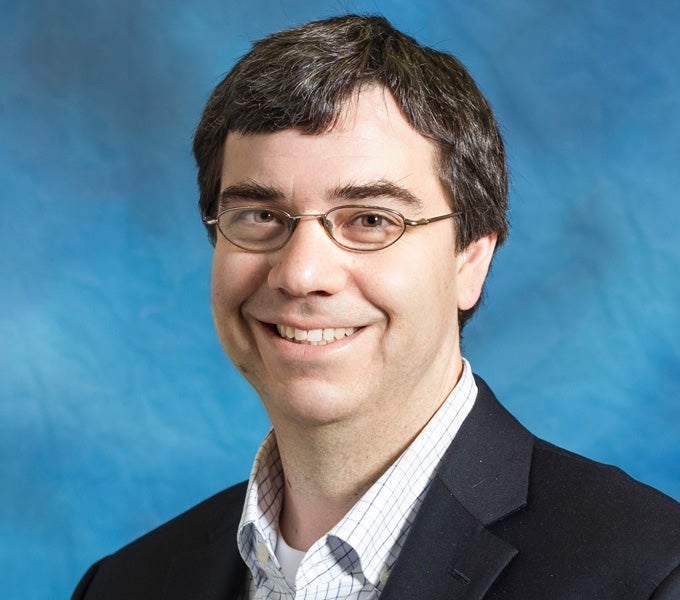
Associate Professor
William Kleiber is an Associate Professor in the Department of Applied Mathematics at the University of Colorado Boulder, specializing in spatial statistics for geophysical applications and renewable energy systems. His work bridges advanced statistical theory with practical environmental challenges, particularly in climate modeling and uncertainty quantification. Education: Ph.D. in Statistics, University of Washington (2010) Dr. Kleiber's research centers on spatial statistics and geostatistics for large-scale nonstationary datasets, with significant contributions to statistical climatology , stochastic weather generators , and uncertainty quantification in geophysical models. His methodologies address critical energy science challenges, including solar irradiance forecasting and renewable resource assessment. Recent work integrates machine learning with spatial statistics to handle massive multivariate environmental data, advancing predictive capabilities for climate extremes and renewable energy systems. His 2023-2025 publications reveal a strong trend toward hybrid statistical-machine learning approaches for environmental data, emphasizing uncertainty-aware predictions in snow hydrology, sea surface temperature reconstruction, and extreme weather events. This work consistently tackles the computational and theoretical challenges of high-dimensional spatial processes. Scientific Awards: American Statistical Association's Section on Statistics and the Environment 2016 Young Investigator Award Dr. Kleiber has served on the Board of Directors for The International Environmetrics Society and the American Statistical Association's Section on Statistics and the Environment, and contributed to editorial boards of leading statistical journals. His research has been supported by collaborative grants including 'Collaborative Research: Theory and Methods for Highly Multivariate Spatial Processes with Applications to Climate Data Science' (2018) and 'Scalable Statistical Validation for Large Spatio-Temporal Datasets' (2014). Current projects focus on integrating deep learning with spatial statistics for renewable energy forecasting and climate risk assessment. He maintains active international collaborations, evidenced by his 2016 Lebesgue Chair visiting professorship at University of Rennes 1, France, and partnerships with the National Center for Atmospheric Research where he previously conducted postdoctoral research.