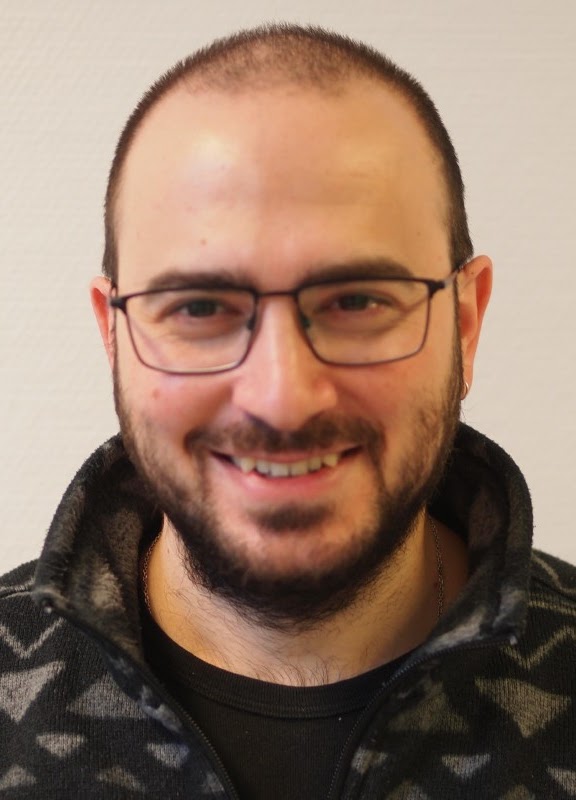
Eric P. Xing is a Professor at the Language Technologies Institute of Carnegie Mellon University , and currently serves as President of the Mohamed bin Zayed University of Artificial Intelligence . His work bridges machine learning methodology with computational biology and large-scale AI systems . Research Focus: Developing machine learning theory for high-dimensional, dynamic data Building foundation models for biology (AIDO, scLong, ProteinAligner) Designing scalable AI architectures (Pollux, LLM360, PAN) Advancing interpretable and controllable NLP systems Scientific Leadership: Founded the SAILING Lab at CMU Co-chaired ICML 2014 and ICML 2019 Recipient of the Jay Lepreau Best Paper Award (OSDI 2021) Education & Mentorship: Advises PhD students across machine learning and computational biology Alumni include faculty at ETH Zurich, University of Chicago, and UC San Diego
Matt Koslovsky is an Assistant Professor of Statistics at Colorado State University. He completed his PhD in Biostatistics at The University of Texas Health Science Center School of Public Health (UTHealth) in 2016 and served as a Post-Doctoral Research Associate at Rice University's Marina Vannucci lab from 2018-2020. Prior to joining CSU in 2020, he worked as a statistical consultant at Johnson Space Center's Biostatistics Lab. PhD, Biostatistics (2016), UTHealth School of Public Health Post-Doctoral Research Associate (2018-2020), Rice University Assistant Professor (2020-Present), Colorado State University His research spans Bayesian methodology and its applications across diverse domains: Theory: Bayesian modeling, variable selection, graphical models, nonparametric Bayes Applications: Cancer prevention, mental health, microbiome analysis, space health, ecological momentary assessment Recent publications demonstrate methodological advancements in: Bayesian variable selection for rare variants Integrated population modeling Compositional data analysis Continuous-time hidden Markov models mHealth data processing Microbiome mediation effects Current advisees include: Hyungjoon Kim (PhD candidate) Brody Erlandson (PhD candidate) Suppapat Korsurat (PhD candidate)
Giorgia Ramponi is an Assistant Professor with Tenure Track at the Faculty of Business, Economics and Informatics at the University of Zurich. She is also an affiliated professor at the ETH AI Center and the Data Science and AI, Computer Science and Engineering department at Chalmers University of Technology. Her educational background includes a Ph.D. in Information Technology from Politecnico di Milano (completed June 2021 with honors), advised by Marcello Restelli, and a Master of Science in Computer Science with Honours Programme (110/110 cum laude) from la Sapienza (July 2017), advised by Flavio Chierichetti and Alessandro Panconesi. Dr. Ramponi's research focuses on machine learning and mathematical modeling, with particular emphasis on reinforcement learning and multiagent learning. Her work bridges theoretical foundations with practical applications, exploring how learning algorithms can make optimal decisions in complex environments. She has made significant contributions to areas including inverse reinforcement learning, multi-agent systems, constrained Markov decision processes, and human-AI interaction through preference learning. Her recent publications demonstrate a strong trend toward addressing fundamental challenges in reinforcement learning, particularly in multi-agent settings, constrained optimization, and learning from human feedback. Her work combines theoretical rigor with practical applications across robotics, economics, and decision-making systems. Hassler Research Grant for "Unified Feedback Integration Framework for Reinforcement Learning" Dr. Ramponi actively contributes to the academic community through conference participation, invited lectures (including at the Mediterranean Machine Learning Summer School), and teaching. She designed and taught the "Data Science and Machine Learning" course for the ETH-Ashesi Master program. She is also a member of the ELLIS community, which connects excellence in AI research across Europe. Her research group focuses on developing frameworks for reinforcement learning with various feedback types, including preferences, rewards, and demonstrations. The group aims to advance the theoretical understanding of learning algorithms while addressing practical challenges in real-world applications.
Eythan Levy serves as Senior Assistant in Digital Archaeology at the University of Zurich's Institute of Classical Archaeology within the Faculty of Arts and Social Sciences. Previously, he led an SNSF SPARK project at the University of Bern (2024) and conducted postdoctoral research on stamp seals from the Southern Levant (2022-2023). His research interests focus on computational approaches to archaeological problems, particularly: Computer applications and quantitative methods in archaeology Ancient chronology of the Iron Age Levant Northwest Semitic epigraphy and paleography Archaeology of the Southern Levant Ancient Egyptian archaeology and epigraphy His work bridges computer science and archaeology through innovative methodological frameworks. Levy's publication trends demonstrate consistent interdisciplinary output combining computational methods with archaeological analysis. Recent work focuses on chronological modeling tools, epigraphic analysis of Hebrew seals, multispectral imaging of ostraca, and computational approaches to ceramic typology. His research shows strong emphasis on developing formalized schemes for synchronizing archaeological data and creating specialized software solutions. Levy has developed several significant archaeological software tools : ChronoLog : For computer-assisted chronological modeling Scrypt : Web application for computer-assisted decipherment of ancient inscriptions TPQ Composer : For displaying stratigraphic termini post quem Artifacts Analyzer : For analyzing archaeological artifact datasets These tools represent his commitment to creating practical computational solutions for archaeological challenges. His academic background uniquely combines computer science and archaeology: PhD in Archaeology (Tel Aviv University, 2017-2021) PhD in Computer Science (Université Libre de Bruxelles, 2003-2009) Multiple MA degrees in Archaeology and Ancient Oriental Languages Teaching certificate for higher education This dual expertise enables his innovative approach to digital archaeology.
Summer Rupper is a Professor at the School of Environment, Society & Sustainability at the University of Utah, where she has held her position since July 2019. Her research focuses on understanding the interactions between climate, glaciers, and water resources, with particular emphasis on high mountain regions including High Mountain Asia, the Himalayas, and polar regions. She leads multiple research projects examining glacier dynamics, hydrological processes, and climate change impacts on water security for downstream populations. BS in Geology from Brigham Young University (2001) MS in Geology from University of Washington (2004) PhD in Earth and Space Sciences from University of Washington (2007) Professor Rupper's research spans physical geography, environmental geoscience, and climate change science, with specific expertise in glaciology, hydrology, and atmospheric sciences. Her work integrates field measurements, remote sensing, and numerical modeling to understand glacier dynamics, snow processes, and water resource availability in mountainous regions. She has particular expertise in High Mountain Asia, where glaciers provide critical water resources for over a billion people. Her research addresses fundamental questions about glacier response to climate change, hydrological partitioning, and the implications for water security in vulnerable regions. Her recent publications demonstrate a consistent focus on understanding glacier dynamics, hydrological processes, and climate interactions in mountainous regions. The work spans multiple methodologies including remote sensing analysis, numerical modeling, statistical approaches, and field-based measurements. Key themes include glacier melt contributions to river systems, precipitation patterns in complex terrain, snow density modeling, and the impacts of climate change on water resources in High Mountain Asia and polar regions. Her research often integrates multiple data sources and approaches to address complex questions about cryospheric processes and their societal implications. Superior Research Award (2024, CSBS, University of Utah) G.K. Gilbert Award for Excellence in Geomorphic Research (2022) Outstanding Utah Higher Education Science Teacher (2021) Top Researcher Award, Celebrate U showcase (2017) Antarctic Service Medal (2010, USAF) Professor Rupper actively mentors graduate students through thesis research courses at both the PhD and Master's levels, as well as individual projects. She has secured significant research funding from multiple federal agencies including NSF, NASA, and USAID, with current projects examining climatic controls on Antarctic ice sheets, glacier dynamics in High Mountain Asia, and historical glacier changes. Her collaborative work extends across international boundaries, working with scientists in Pakistan, Bhutan, and other regions to address shared water security challenges. She also engages in community outreach through workshops with school districts and science teacher associations to communicate climate science to broader audiences. Professor Rupper participates in multiple collaborative research teams including the NASA High Mountain Asia Team (HiMAT), where she contributes expertise in glacier dynamics and hydrology. She serves on several scientific committees including the NSF Ice Core Facility Sample Allocation Committee and the American Geophysical Union Cryosphere Section Fellows Committee. Her research often involves interdisciplinary teams combining expertise in glaciology, hydrology, remote sensing, and climate modeling to address complex questions about mountain water systems under changing climate conditions.
Wolfgang Windl is a Professor in the Department of Materials Science and Engineering at The Ohio State University with a joint appointment in Physics. He co-founded Goniotech LLC and previously worked at Motorola as a Principal Staff Scientist. He holds a doctoral degree in physics from the University of Regensburg and completed postdoctoral research at Los Alamos National Laboratory and Arizona State University. His research specializes in computational materials science, focusing on: Atomistic simulations and density-functional theory Machine learning applications in materials design Semiconductor transport and layered materials (e.g., Dirac semimetals) Atom probe tomography and characterization techniques Analysis of his 15 most recent publications (2023-2025) reveals dominant themes: advanced simulations of field evaporation, topological quantum materials (PtTe 2 , PdTe 2 ), and computational frameworks for materials characterization. His work frequently integrates spectroscopy, tomography, and Bayesian methods to study alloys, 2D materials, and additive manufacturing defects. Awards and Honors Fraunhofer-Bessel Research Award (2006) Four Lumley Research Awards Boyer Award for Teaching Excellence (2015) Faculty Diversity Excellence Award (2020) Two Mars Fontana Best Teacher Awards (2006, 2015) ASEE Best Paper & Diversity Awards (2019) He advises 11+ graduate students (7 alumni, 5 current) and leads the Windl Group research team focused on computational materials modeling. His group develops simulation tools for atomic-scale characterization and collaborates with national laboratories.
Haipeng Luo is an Associate Professor at the Thomas Lord Department of Computer Science, University of Southern California, holding the IBM Early Career Chair. He previously worked as a Postdoctoral Researcher at Microsoft Research, NYC, and has held visiting roles at Google and Amazon. His research focuses on developing practical machine learning algorithms with strong theoretical guarantees, particularly in online learning, bandit problems, reinforcement learning, and game theory. PhD in Computer Science, Princeton University (2011–2016) BSc in Computer Science, Peking University (2007–2011) His work spans adversarial and stochastic environments, addressing challenges in reinforcement learning, game dynamics, calibration, and omniprediction. Recent publications highlight advancements in regret minimization, game equilibrium computation, and robust optimization frameworks. Key contributions include algorithms for zero-sum games, bandit problems with feedback graphs, and theoretical analyses of convergence properties in multi-agent systems. Scientific accolades include Best Paper Awards at COLT 2021, COLT 2018, NeurIPS 2015, and ICML 2015. He has received prestigious grants such as the NSF CAREER Award (2020), Google Faculty Research Award (2020), and NSF CRII Award (2018). His students have secured academic and industry positions, and he actively teaches graduate courses in machine learning and online optimization.
Georgios Arvanitidis is an Associate Professor at the Technical University of Denmark (DTU) in the Department of Applied Mathematics and Computer Science, specifically within the Section for Cognitive Systems (CogSys). He has established himself as a leading researcher in geometric machine learning, focusing on the application of differential geometry principles to enhance machine learning models. His work bridges theoretical mathematics with practical applications in artificial intelligence, with particular emphasis on understanding the geometric structure of data manifolds and latent spaces. Dr. Arvanitidis completed his educational journey with a Bachelor's degree from the Department of Informatics at the Aristotle University of Thessaloniki, followed by a Master's degree in Computer Science from Saarland University supported by the Max Planck Institute for Informatics. He earned his PhD at DTU's Cognitive Systems section under the supervision of Søren Hauberg, with additional research experience at Philipp Hennig's Probabilistic Numerics group. Prior to his current position as associate professor, he was a PostDoc at the Max Planck Institute for Intelligent Systems working with Bernhard Schölkopf. Dr. Arvanitidis's research primarily focuses on differential geometry in machine learning , where he explores how geometric structures can enhance representation learning and statistical modeling. His work in generative models investigates how learning the geometry of data manifolds can improve deep learning architectures. In the domain of deep learning theory , he examines why deep learning models generalize effectively on unseen data, with particular attention to the curvature properties of loss landscapes. His research in approximate Bayesian inference applies geometric principles to improve uncertainty quantification in neural networks. Through his innovative approaches, Dr. Arvanitidis has established himself as a leading researcher in geometric machine learning, contributing to both theoretical foundations and practical applications across various domains including robotics and life sciences. The publication trends of Dr. Arvanitidis reveal a consistent and evolving focus on geometric approaches to machine learning problems. His recent work (2023-2025) demonstrates increasing sophistication in applying Riemannian geometry to deep learning architectures, with particular emphasis on latent space geometry, optimization on manifolds, and geometric interpretations of neural network behavior. A notable pattern is the progression from foundational work on geometric representations to more applied research in areas like robotics and causal inference. His publications span top-tier conferences including NeurIPS, ICML, ICLR, and AISTATS, reflecting the high impact of his research. The interdisciplinary nature of his work is evident in collaborations across mathematics, computer science, and robotics domains, with recent papers addressing challenges in multimodal sampling, safety guarantees for dynamical systems, and counterfactual explanations. Dr. Arvanitidis has received several notable scientific awards and recognitions: Sapere Aude starting grant from the Independent Research Fund Denmark (DFF) GADL funding i-Rase, Pathfinder, and EIC (European Innovation Council) funding Best reviewer award for NeurIPS 2019 Best reviewer award for NeurIPS 2018 Best student paper award at Robotics: Science and Systems (R:SS) 2021 Dr. Arvanitidis actively mentors PhD students and researchers, currently supervising Alejandro Valverde, Johanna Gegenfurtner, and Albert Kjøller Jacobsen. He has previously co-supervised Alison Pouplin's PhD and worked with research assistant Georgios Pantis. His group receives substantial funding through multiple prestigious grants including the Sapere Aude starting grant from the Independent Research Fund Denmark, as well as European Innovation Council funding. He has been instrumental in creating opportunities for students interested in geometric machine learning, offering BSc and MSc thesis projects focused on generative models, deep learning theory, and optimization techniques. Dr. Arvanitidis also contributes significantly to the academic community as a reviewer for top conferences including ICLR and TMLR, and as an area chair for NeurIPS, ICML, AISTATS, and UAI. He co-organized the Machine Learning Summer School 2020 in Tübingen, further demonstrating his commitment to education and community building. Dr. Arvanitidis leads a vibrant research group focused on geometric machine learning within the Cognitive Systems section at DTU. His team includes multiple PhD students working on cutting-edge research at the intersection of differential geometry and artificial intelligence. The group has developed notable software tools, including the "geometric_ml" GitHub repository with over 70 stars, which contains implementations for applying Riemannian geometry in machine learning. His research has practical applications in robotics, where geometric approaches enable more robust motion planning, as evidenced by his work on "Reactive Motion Generation on Learned Riemannian Manifolds" which received a best student paper award. Additionally, his methodologies have found applications in life sciences, as mentioned in his 2022 AISTATS paper. The collaborative nature of his work is evident through extensive partnerships with researchers at institutions including the Max Planck Institute for Intelligent Systems, University of Cambridge, and various European universities. His recent news items indicate active engagement with the academic community through talks, conference presentations, and ongoing supervision of new PhD students joining his group.
Associate Professor Feng Chen is a faculty member at the School of Mathematics & Statistics, University of New South Wales, specializing in statistical methodology development and applications. His research bridges theoretical statistics and practical implementations across financial modeling, spatiotemporal processes, and public health analysis. PhD in Statistics from University of Hong Kong (2008) MSc in Applied Probability & Statistics from Lanzhou University (2004) BSc in Mathematics from Lanzhou University (2001) Research focuses include: Nonparametric and semiparametric statistical methods Point process modeling with emphasis on Hawkes processes Statistical computing and algorithm development Applications to financial data, earthquake analysis, and public health Recent publications demonstrate methodological advances in: Hawkes process estimation with complex data structures Renewal process applications in seismology GARCH modeling with missing data Spatiotemporal clustering analysis Scientific recognition includes: UNSW Science Staff Impact Award (2023) Professional roles: Director of Research Postgraduate Studies (2023--) Associate Editor for multiple journals Statistics Honours Coordinator (2013-2018) Active participant in statistical societies
Christophe Andrieu is a Professor in Statistics within the School of Mathematics at the University of Bristol. His research bridges theoretical probability, computational statistics, and applied mathematics, with significant contributions to Markov Chain Monte Carlo methodologies and Bayesian inference frameworks. He maintains active collaborations across engineering and data science domains. His educational background includes: M.A. from List.Natnl.Scis.App.Lyon Additional M.A. (institution unspecified) Ph.D. from Paris Andrieu's research focuses on Markov Chain Monte Carlo theory , where he develops convergence guarantees and efficiency bounds for complex samplers. His work extends to non-reversible MCMC algorithms , piecewise deterministic processes , and gradient-free optimization techniques. Recent publications demonstrate innovative approaches to state-space models and numerical integration, often addressing high-dimensional statistical challenges through stochastic approximation methods. His fingerprint reveals deep specialization in Markov chain convergence analysis and computational Bayesian statistics. His 15 most recent publications (2021-2025) exhibit consistent focus on theoretical foundations of Monte Carlo methods, particularly convergence analysis of Markov chains and novel sampler designs. Key trends include the application of weak Poincaré inequalities to pseudo-marginal MCMC, development of self-organizing state-space models, and exploration of hypocoercivity in piecewise deterministic processes. The work spans both theoretical advancements and practical implementations for engineering and statistical applications. Andrieu has secured significant research funding including: COmputational Statistical INference for Engineering and Security (COSINES) (2018-2023) New Approaches to Data Science (2018-2023) He has supervised 5 research students and maintains active collaborations in computational statistics and machine learning. His network shows strong connections with probability theory and engineering research groups.
Xin Li is a Professor in the Department of Electrical and Computer Engineering at Duke University and serves as the Associate Vice Chancellor at Duke Kunshan University. He holds a Ph.D. from Carnegie Mellon University (2005) and has held leadership roles in research consortia like the FCRP Focus Research Center and the Center for Silicon System Implementation (CSSI). His research bridges integrated circuits , machine learning , and cyber-physical systems , with applications in autonomous driving, battery lifetime prediction, and smart buildings. Education : Ph.D., Carnegie Mellon University (2005); M.S., Fudan University (2001); B.S., Fudan University (1998) His work emphasizes robust design methodologies for analog/RF circuits, data-driven predictive modeling , and Bayesian inference for high-dimensional variation spaces. Recent publications focus on generative adversarial networks for circuit design, multi-view imputation for incomplete data, and knowledge-driven autonomous systems . He has received numerous accolades, including the NSF CAREER Award (2012) , IEEE Donald O. Pederson Best Paper Awards (2013, 2016) , and IEEE Fellow (2017) . He has served as Editor for journals like IEEE Transactions on Biomedical Engineering and as Chair for conferences including ISVLSI and CAD/Graphics.
Xinyu Jia is currently a Humboldt Research Fellow at the Engineering Risk Analysis Group, Technical University of Munich since June 2024, and concurrently serves as Associate Professor in the Department of Mechanical Engineering at Hebei University of Technology, China since October 2022. Her research focuses on advancing uncertainty quantification, structural reliability, and risk assessment methodologies for engineering systems. Her academic background includes: PhD in Mechanical Engineering, University of Thessaly, Greece (2018-2021) Bachelor of Engineering and Master of Science in Mechanical Engineering, Hunan University, China (2011-2018) Dr. Jia specializes in Bayesian learning frameworks for physics-based models, with particular expertise in uncertainty propagation in structural dynamics and industrial robotics applications. Her work develops hierarchical Bayesian approaches that integrate multi-level data to enhance predictive accuracy for complex engineering systems, addressing critical challenges in structural health monitoring and risk-informed decision making. Analysis of her 2022-2023 publications reveals a concentrated research trajectory in applying Bayesian inference to structural dynamics, with emphasis on hierarchical modeling techniques, variational inference schemes, and nonlinear model updating. These contributions predominantly appear in top-tier mechanical engineering journals, demonstrating methodological innovations that bridge theoretical statistics with practical engineering reliability problems. Her scientific recognition includes: Humboldt Research Fellowship (2023) Marie Curie Early Stage Researcher Fellowship (2018) No specific student advisement records are documented, though her Associate Professor role implies teaching responsibilities. Her fellowship awards represent significant research funding supporting her work in uncertainty quantification. As an active member of TUM's Engineering Risk Analysis Group, she contributes to high-impact projects including digital twins for ships, S3UQDyn, Navigating Risk, and infrastructure resilience initiatives like BIG-ROHU and INFRA.RELEARN, focusing on probabilistic risk modeling across civil and mechanical engineering domains.
Harald Uhlig holds the Bruce Allen and Barbara Ritzenthaler Professorship at the University of Chicago Department of Economics. He is a leading expert in macroeconomics, monetary economics, and financial economics with a focus on dynamic stochastic general equilibrium models, Bayesian econometrics, and economic policy analysis. Ph.D. in Economics, University of Minnesota (1990) Diplom in Mathematics, TU Berlin (1985) His research spans business cycles, growth theory, financial crises, and economic policy, particularly analyzing monetary-fiscal interactions, sovereign debt dynamics, and the impact of financial markets on macroeconomic stability. He has pioneered methods in vector autoregressions and numerical solution techniques for economic models. The 15 most recent articles show a focus on cryptocurrency economics, sovereign debt crises in monetary unions, fiscal stimulus effects, and financial health economics. Subfields include DSGE modeling, asset pricing, and policy analysis under uncertainty. Frank P. Ramsey Prize (2005) Fellow of the Econometric Society (2003) Alfred P. Sloan Fellowship (1989-1990) Fulbright Scholarship (1985-1986) He has advised 21 PhD students across Tilburg University, Humboldt University Berlin, and University of Chicago. Grants include NSF awards for macroeconomic risk analysis and INET funding for research on economic fragility.
Dr Amber Leeson is a Reader in Glaciology at Lancaster Environment Centre , Lancaster University. She serves as Associate Director for Research and leads projects integrating data science , numerical modeling , and remote sensing to study climate change impacts on the Greenland and Antarctic Ice Sheets . Her current research focuses on supraglacial hydrology , digital twinning of ice sheets , and firn evolution . Current Research Themes Ice sheet surface climate representation in models Supraglacial hydrology and ice sheet dynamics Firn evolution (past, present, future) Leadership Roles Associate Director for Research, Lancaster Environment Centre Treasurer and Secretary, International Glaciological Society Theme Lead for Environment, Data Science Institute (DSI) Her teaching includes courses on Glacial Systems, Environmental Processes, and Global Change. She supervises undergraduate and master's dissertations in Polar Science . Recent projects include Arctic Extremes (ARCTEX) , 5D Antarctica (5DAIS) , and AI Forecasting for Ice Shelf Collapse (AI4IS) . Amber's scientific contributions span climate model calibration, firn densification studies, and supraglacial lake dynamics. She has held advisory roles for the UK Polar Network , AGU Cryosphere Committee , and UKNCAR . Her work unites glaciology , data science , and climate modeling to address planetary-scale environmental challenges.
Aaron A. King, Ph.D. , is the Nelson G. Hairston Collegiate Professor of Ecology and Evolutionary Biology, Complex Systems, and Mathematics at the University of Michigan and an External Professor at the Santa Fe Institute . He is a Fellow of the American Association for the Advancement of Science and a Biological Sciences Scholar at the University of Michigan. His research integrates mathematical modeling, statistical inference, and empirical data to study ecological and epidemiological systems. Education: Ph.D. in Applied Mathematics, University of Arizona, 1999 M.A. in Mathematics, University of Hawai'i, 1992 B.A. summa cum laude in Mathematics, Rice University, 1989 Research Interests: Dr. King's lab focuses on the dynamics of ecological, epidemiological, and evolutionary systems . His work includes: Modeling host-pathogen systems (COVID-19, influenza, dengue, pertussis, cholera, malaria) Antibiotic resistance in hospital settings Statistical inference for ecological and epidemiological data Integration of genomic and epidemiological data Mathematical frameworks for understanding parasite infections and immune responses Scientific Awards: Fellow of the American Association for the Advancement of Science Biological Sciences Scholar, University of Michigan Teaching and Mentorship: Dr. King teaches courses in Mathematical Ecology , Adaptive Systems , and Statistical Inference . He mentors graduate students and postdoctoral fellows, including Avinash Subramanian and Madeline Peters , and is affiliated with multiple interdisciplinary centers at the University of Michigan. Lab and Collaborations: He leads the King Laboratory of Theoretical Ecology & Evolution , which emphasizes reproducible research and rigorous theoretical approaches. The lab collaborates with institutions like the Santa Fe Institute and accepts students from programs such as Ecology & Evolutionary Biology , Applied & Interdisciplinary Mathematics , and Data Science .