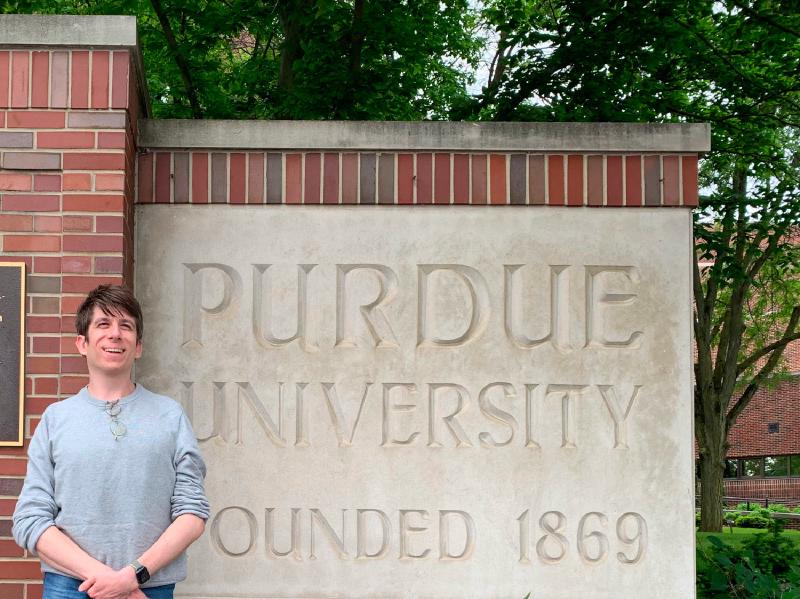
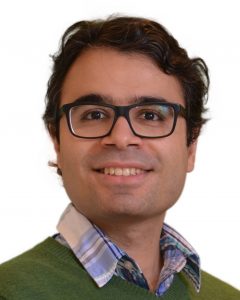
Joseph A. Campbell is an Assistant Professor in the Department of Computer Science at Purdue University, leading the Collaborative AI for Machines and People (CAMP) Lab. He holds a Ph.D., M.S., and B.S. in Computer Science and Computer Engineering from Arizona State University. Before academia, he worked as a software engineer for five years. Prior to Purdue, he was a Postdoctoral Fellow at Carnegie Mellon University's Robotics Institute. His research focuses on explainable machine learning and robotics, particularly how agents use explanations for self-improvement and decision-making. Key areas include theory of mind in multi-agent systems, lifelong learning, and interpretable transfer learning. His work bridges robotics and AI, with applications in human-robot interaction and prosthetic control. Notable publications include advancements in reinforcement learning with language models, multi-agent collaboration frameworks, and methods for enhancing state estimation in robots. His research has been presented at top conferences like NeurIPS, EMNLP, and CoRL. Dr. Campbell maintains an active GitHub profile (joe-campbell) with repositories such as Interaction Primitives for robotics applications. His lab, CAMP, explores AI systems that collaborate effectively with humans and other machines.
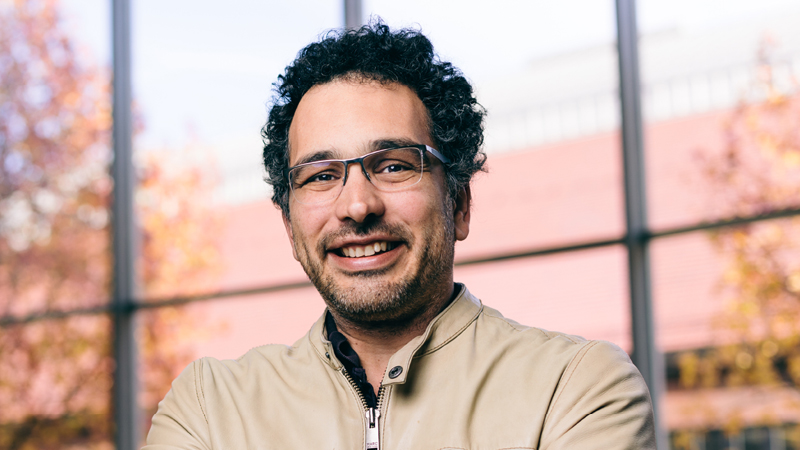
Bruno Felisberto Martins Ribeiro is an Associate Professor of Computer Science at Purdue University, joining the department in Fall 2015. His research focuses on endowing machine learning algorithms with robust invariant representations for relational and temporal data, emphasizing causal and associational tasks. Key research areas include Networking and Operating Systems, Artificial Intelligence, Machine Learning, and Natural Language Processing. He holds a Ph.D. in Computer Science from the University of Massachusetts Amherst (2010). Education: Ph.D., Computer Science, University of Massachusetts Amherst, 2010 Research Interests: Explores invariances in mathematics and machine learning to improve model robustness. Key topics include graph and tensor invariances, causal relationships, adversarial robustness, and applications in recommendation systems, robotics, and drug discovery. His lab’s work has advanced counterfactual task frameworks and causal reasoning in machine learning. Recent Contributions: Recent publications address zero-shot generalization in graph neural networks, causal discovery methods, and defenses against adversarial attacks. His work spans conferences like ICML, NeurIPS, and SIGCOMM. Awards: Best Paper Award at ACM CODASPY 2021 Best Paper Award at SIGMETRICS 2016 Best Paper Award at IEEE NetSciCom 2014 Advising & Students: Supervises current PhD students Beatrice Bevilacqua, Jincheng Zhou, and Yucheng Zhang, along with MSc student Ipsit Mantri. Notable former students include S Chandra Mouli (Meta), Yangze Zhou (Spotify), and Jianfei Gao (Vector Institute). Labs & Teams: Leads research in invariant representations and causal ML, collaborating with institutions like Stanford during his sabbatical. His work bridges theory and practice, impacting areas like network analysis and AI-driven healthcare.
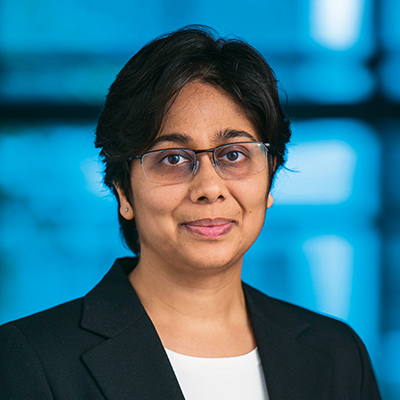
Shivani Agarwal is an Associate Professor of Computer and Information Science and (by courtesy) Statistics and Data Science at the University of Pennsylvania. Her research focuses on computational, mathematical, and statistical foundations of machine learning, including algorithm design, theory, and applications in life sciences. She holds leadership roles in initiatives like the NSF-funded Penn Institute for Foundations of Data Science (PIFODS) and the Penn Research in Machine Learning (PRiML) forum. Previously, she was a Radcliffe Fellow at Harvard, and held academic positions at MIT, Indian Institute of Science, and the University of Illinois at Urbana-Champaign. Education: PhD in Computer Science from the University of Illinois, Urbana-Champaign. Prior roles include Assistant Professor (Ramanujan Fellow) at IISc, postdoctoral lecturer at MIT, and Radcliffe Fellow at Harvard. Research interests span machine learning theory, ranking systems, bandit algorithms, noisy label learning, and interdisciplinary applications in economics, operations research, and psychology. She has organized numerous conferences and workshops, including COLT 2020 and NIPS workshops on ranking and learning. Key professional activities include leadership in Indo-US research collaborations and editorial roles for the Journal of Machine Learning Research and Harvard Data Science Review.
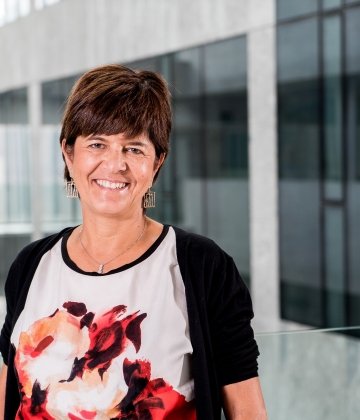
Dr. Sonia Petrone is a Full Professor of Statistics at Bocconi University's Department of Decision Sciences. She earned her PhD in Statistics from Bocconi University and has held academic positions at the University of Pavia and University of Insubria before joining Bocconi. Her extensive international experience includes research visits across North America, Latin America, Europe, India, and Russia. Her research specializes in Bayesian statistics, with contributions to foundational theory, predictive modeling, Bayesian nonparametrics, and stochastic processes. She currently directs the Bocconi Summer School in Advanced Statistics and Probability and previously led the PhD program in Statistics (2011-2018). Her research portfolio demonstrates consistent focus on Bayesian nonparametric methods, predictive modeling, and applications to complex data structures. Recent work explores urn processes, time series analysis, and network modeling using innovative Bayesian approaches. Awards & Honors: IMS Medallion Lecture Award (2018) ISBA Foundational Lecture Award (2016) Fellow of International Society for Bayesian Analysis Fellow of Institute of Mathematical Statistics Fellow of European Laboratory for Intelligent Systems Fellow of Bocconi Institute of Data Science She has held editorial leadership positions as Editor of Statistical Science (2020-2022) and Bayesian Analysis (2010-2014), and served as President of the International Society for Bayesian Analysis (2014).
Prashant Mehta is a Professor of Mechanical Science and Engineering at the University of Illinois at Urbana-Champaign , affiliated with the Coordinated Science Laboratory . His research focuses on controlled interacting particle systems and machine learning applications , particularly in human activity recognition using motion sensors. Education: Ph.D. in Mathematics, Cornell University (2004) M.S. in Electrical & Computer Engineering, University of Massachusetts Amherst (1996) B.E. in Electrical & Electronics Engineering, Birla Institute of Technology & Sciences (1993) Mehta's work has pioneered the feedback particle filter (FPF) algorithm for nonlinear estimation, applied in robotic systems and gesture recognition. His research spans control of combustion instabilities in jet engines, mean-field games , and dynamical systems in aerospace engineering. His publications emphasize nonlinear control theory and stochastic filtering , with recent trends in sensor data pattern recognition and cyber-physical systems . He has received multiple scientific awards , including the MURI award for the Cyberoctopus project and Excellence in Undergraduate Advising Awards . Scientific Honors: MURI Award (2019) for Cyberoctopus Excellence in Undergraduate Advising (2010, 2008) Outstanding Teaching Assistant Award (1994) Senior Member, IEEE Control Systems Society Member, ASME Energy Systems Subcommittee Member, SIAM Dynamical Systems Group Mehta has supervised students like Jin Kim (IEEE CDC Best Student Paper, 2019) and co-founded the startup Rithmio , acquired by Bosch Sensortec . His laboratory develops gesture-detection filters for applications in soft robotics and human-machine interfaces .
Geoff Pleiss is an Assistant Professor in the Department of Statistics at the University of British Columbia (UBC), affiliated with CAIDA's AIM-SI cluster. He is also a Canada CIFAR AI Chair and faculty member at the Vector Institute. His research bridges deep learning and probabilistic modeling, focusing on uncertainty quantification, Bayesian optimization, Gaussian processes, and ensemble methods. Pleiss earned his PhD in Computer Science from Cornell University (2020), followed by a postdoc at Columbia University. He holds multiple awards, including the AISTATS Top Reviewer and NeurIPS recognitions. His work emphasizes scalable algorithms and open-source contributions, such as the GPyTorch library. Pleiss advises students in Computer Science and Statistics, including Donney Fan (PhD), Tim G. Zhou (MSc), and others. He teaches advanced courses like STAT 547U (Deep Learning Theory) and STAT 520P (Bayesian Optimization). Grants include NSERC Discovery and New Frontiers in Research funding. Pleiss collaborates on interdisciplinary projects, such as astrophysical discovery via machine learning, and actively participates in academic service and outreach. Education: PhD in Computer Science, Cornell University (2020) MSc in Computer Science, Cornell University (2018) BSc in Engineering (Computing with Applied Mathematics), Olin College (2013) Key Research Themes: Uncertainty-aware decision-making with neural networks Scalable Gaussian processes and Bayesian optimization Ensemble methods and their theoretical limitations Recent Grants: NSERC Discovery Grant (2024) New Frontiers in Research Fund (2025, co-PI) His publications span foundational theory to applied machine learning, with over 14,500 citations. He actively mentors students through research internships and advises on open-source software development. Pleiss frequently presents at top conferences and collaborates with industry partners like Microsoft and ASAPP.
Hamsa Bastani is an Associate Professor of Operations, Information and Decisions at the Wharton School, University of Pennsylvania, with a secondary appointment in Statistics and Data Science. She co-directs the Wharton Healthcare Analytics Lab and serves as an Associate Editor for Operations Research, M&SOM and OR Letters. Her academic journey began with summa cum laude graduation from Harvard in 2012 with an A.M. in physics and A.B. in physics and mathematics. She completed her PhD in Stanford's Electrical Engineering department under Mohsen Bayati, followed by a Herman Goldstine postdoctoral fellowship at IBM Research. Professor Bastani's research focuses on developing novel machine learning algorithms for data-driven decision-making, with applications spanning healthcare operations, social good, and revenue management. Her work demonstrates particular expertise in sequential decision-making (bandits, reinforcement learning), learning from auxiliary data sources (transfer learning, meta-learning), and designing effective human-AI interfaces (interpretability, fairness). She has made significant contributions to understanding how AI systems affect and augment human behavior, with the goal of designing AI tools that help humans thrive. Her publications reveal a strong trend toward high-impact applications of machine learning in critical societal domains. A significant portion of her recent work focuses on healthcare applications, including optimizing health supply chains in low- and middle-income countries, designing clinical trial protocols, and creating targeted public health interventions. Another major theme examines the complex relationship between humans and AI systems, particularly how AI affects learning outcomes and decision-making processes. Her work frequently bridges theoretical advances with practical implementation, as evidenced by country-scale deployments in Greece and Sierra Leone. Wagner Prize for Excellence in Operations Research Practice (2021) Pierskalla Award for Best Paper in Healthcare (2021, 2019, 2016) Behavioral OM Best Paper Award (2021) Public Sector in OR Best Paper Award (2024) INFORMS Data Mining Best Paper Award (2022) Wharton Teaching Excellence Award (2019, 2020, 2021) Professor Bastani has advised numerous PhD students who have gone on to prominent positions, including Pia Ramchandani (Director of Responsible AI at PwC), Arielle Anderer (Assistant Professor at Cornell Johnson), and Kan Xu (Assistant Professor at ASU Carey). Her research has been supported by collaborations with national governments, including the Greek government where she co-designed Eva, the national-scale reinforcement learning system for targeted COVID-19 testing, and the Government of Sierra Leone where she improved patient access to essential medicines by nearly 20% via decision-aware learning. She has also conducted the first large field study deploying generative AI tutors in high school math classes. She leads the Wharton Healthcare Analytics Lab and serves on the Steering Committee for the Penn Center for Health Incentives and Behavioral Economics and on the statistics advisory committee for the AHA Food is Medicine Initiative. Outside academia, she serves on the Workday AI Advisory Board, demonstrating her commitment to translating academic research into practical applications.
Minsu Kim is a CIFAR AI Safety Post-doc Fellow at KAIST and Mila, collaborating with Prof. Yoshua Bengio, Prof. Sungjin Ahn, and Prof. Sungsoo Ahn. His work bridges System 2 Deep Learning, Bayesian posterior inference, and combinatorial optimization. Ph.D., Industrial Engineering, KAIST (2025) M.S., Electrical Engineering, KAIST (2022) B.S., Mathematics and Computer Science (Dual Degree), KAIST (2020) Kim's research focuses on enabling AI systems to measure uncertainty, represent causality, and perform sequential reasoning for safety-guaranteed planning. His methodology integrates GFlowNets and diffusion models with off-policy amortized inference, targeting applications in scientific discovery , hardware design optimization , and large language model alignment . Recent work explores Bayesian posterior inference through GFlowNets, aiming to unify deep learning with probabilistic reasoning. His 15 most recent publications (2025–2024) reveal a trend of combining combinatorial optimization with generative models for tasks like molecular graph discovery, vehicle routing, and neural architecture search. He also investigates diffusion samplers for Bayesian inverse problems and symmetry-based neural methods (Sym-NCO) to enhance sample efficiency. Jang Yeong Sil Fellowship (2025) KAIST Presidential Best Ph.D. Thesis Award (2025) Qualcomm Innovation Fellowship (2023) DesignCon Best Paper Awards (2021–2022) Kim's collaborations span KAIST's Industrial Engineering department and Mila's AI research groups. He actively contributes to academic peer review for top conferences (NeurIPS, ICML, ICLR) and journals (IEEE TNNLS, TPAMI), emphasizing the intersection of AI safety , uncertainty quantification , and systemic reasoning .
Miroslav Pajic serves as a Professor in the Department of Electrical and Computer Engineering at Duke University's Pratt School of Engineering. He also holds joint appointments as Associate Professor in the Thomas Lord Department of Mechanical Engineering and Materials Science and Associate Professor of Computer Science. As Director of Master's Studies, he oversees the graduate program in Electrical and Computer Engineering and teaches numerous courses spanning embedded systems, cyber-physical systems design, and robotics. Education: Ph.D. in Electrical and Computer Engineering from University of Pennsylvania (2012) Miroslav Pajic's research focuses on the design and analysis of cyber-physical systems (CPS) with varying levels of autonomy and human interaction. His work spans the intersection of embedded systems, artificial intelligence, machine learning, control theory, formal methods, and robotics. He specializes in developing high-assurance autonomous systems with applications in robotics, automotive systems, and medical devices, with particular emphasis on CPS security and resilient autonomy. His research addresses fundamental challenges in creating systems that can operate reliably in uncertain environments while maintaining security against potential cyber attacks. Analysis of Pajic's recent publications reveals a strong interdisciplinary research program bridging theoretical foundations with practical applications. His work spans secure sensor fusion for distributed autonomy, medical applications of CPS (particularly deep brain stimulation for neurological disorders), and innovative sensing technologies for autonomous vehicles. A significant portion of his research addresses security challenges in cyber-physical systems, including stealthy GPS attacks on UAVs and methods for attack-resilient state estimation. His publications increasingly integrate machine learning techniques with traditional control theory to create more adaptive and robust autonomous systems. Pajic actively mentors graduate students and leads research groups focused on cyber-physical systems security and high-assurance autonomy. His research is supported by multiple grants, including the NSF AI Institute for Edge Computing (Athena), which he co-leads. He has received funding from various sources to support his work on secure and resilient cyber-physical systems, medical device security, and autonomous vehicle technologies. Pajic collaborates extensively with medical researchers on applications of cyber-physical systems in healthcare, particularly in deep brain stimulation for neurological disorders. His work bridges the gap between theoretical control systems and practical implementations in safety-critical domains, with a growing emphasis on translating research into real-world applications that improve system security and reliability.
Pekka Marttinen is a tenured Associate Professor of Machine Learning at Aalto University, Department of Computer Science, and leads the Machine Learning for Health (Aalto-ML4H) group within the Helsinki Institute for Information Technology HIIT. Education: M.Sc. in Applied Mathematics, University of Helsinki (2004) Ph.D. in Statistics, University of Helsinki (2008) Title of Docent in Information and Computer Science, Aalto University (2015) Research Focus: His methodological work spans large language models, reinforcement learning, deep learning, probabilistic machine learning, and causal inference . These techniques are applied to critical domains of healthcare, bioinformatics, statistical genetics, epidemiology, and personalized medicine . The group develops novel algorithms, theoretical guarantees, and open-source software that enable data-driven discovery and decision-making in medicine and biology. Publication Trends: Across 2022-2024 the lab has concentrated on (i) rigorous causal reasoning over temporal clinical data, (ii) principled uncertainty quantification in LLMs, (iii) representation learning for neural network comparison, and (iv) translational projects that turn raw EHRs into actionable clinical insights. Earlier work integrated high-dimensional genomics with metabolomics and mapped evolutionary forces in bacterial pathogens. Scientific Awards & Recognition: While no specific awards are listed, his sustained publication record in top-tier venues (NeurIPS, ICML, AISTATS, Nature Genetics, PLOS CB) and his role as responsible professor of the Machine-Learning, Data-Science and AI major signify significant peer recognition. Advising & Grants: Prof. Marttinen currently mentors 8 PhD students as primary supervisor and an additional 7 PhD students as co-supervisor. He has already graduated 8 PhDs since 2014. The group is supported through competitive funding including the Finnish Center for Artificial Intelligence (FCAI) doctoral program. Labs & Teams: He directs the Machine Learning for Health (Aalto-ML4H) research group, comprising postdocs Hans Moen, Ti John, Alexander Nikitin, Negar Safinianaini, Linli Zhang, Zhiyuan Li, and the above-mentioned PhD cohort.
Don Towsley is a Distinguished University Professor in the Department of Computer Science at the University of Massachusetts Amherst, within the College of Information and Computer Sciences. He has held visiting positions at AT&T Labs, IBM Research, INRIA, Microsoft Research Cambridge, and the University of Paris 6. He earned a B.A. in Physics and a Ph.D. in Computer Science from the University of Texas. Prof. Towsley's research spans network science, measurement, modeling, and analysis, with recent emphasis on quantum networking and wireless security. His work addresses foundational challenges in network tomography, entanglement distribution, and quantum communication protocols, contributing to efficient and secure next-generation networks. Analysis of his 2022-2025 publications reveals a dominant focus on quantum networking—including quantum internet architecture, entanglement distribution, and tomography—alongside continued contributions in classical networking areas such as DDoS detection and edge computing. His exceptional contributions have been recognized with numerous prestigious awards: 2007 IEEE Koji Kobayashi Computer and Communications Award 2007 ACM SIGMETRICS Achievement Award 2008 ACM SIGCOMM Award 2011 INFOCOM Achievement Award 1999 IEEE Communications Society William Bennett Award 2008 ACM SIGCOMM Test of Time Paper Award 2012 ACM SIGMETRICS Test of Time Award 2018 ACM MOBICOM Test of Time Award UMass Award for Outstanding Accomplishments in Research and Creative Activity University of Massachusetts Chancellor's Medal UMass Amherst Distinguished Graduate Mentor Award Outstanding Research Award from the College of Natural Science and Mathematics IBM Faculty Fellowship Award (twice) Fellow of the IEEE Fellow of the ACM Corresponding member of the Brazilian Academy of Sciences Prof. Towsley has mentored numerous graduate students, as evidenced by his Distinguished Graduate Mentor Award, and his research has been funded by significant grants including an NSF NeTS grant for quantum network design. He leads the Gaia research group at UMass Amherst, which has evolved from traditional networking research to pioneering quantum networking initiatives.
Daniel M. Wolpert is a Professor of Neuroscience at Columbia University and Principal Investigator at the Zuckerman Institute. His research focuses on computational models of movement, integrating sensory cues and cognitive elements to understand motor control, memory, and rehabilitation strategies for cerebellar disorders. Key Research Areas: Sensorimotor integration, probabilistic inference, reinforcement learning, predictive modeling of movement, and aging effects on motor learning. Selected Awards: Royal Society Fellow (2012), Minerva Golden Brain Award (2010), Fulbright Scholarship (1992-1995). Recent publications highlight his work on contextual learning, motor memory formation, and the computational basis of sensorimotor uncertainty. His lab develops robotic interfaces to study human motor behavior and collaborates on clinical applications for movement disorders. Current opportunities include postdoctoral fellowships in sensorimotor control and decision-making.
Gianni Franchi is an Assistant Professor at ENSTA Paris, part of Institut Polytechnique de Paris. His research focuses on robust computer vision, uncertainty quantification, and explainable AI (XAI). He has been teaching Deep Learning, Computer Vision, and Machine Learning courses since 2020 at ENSTA Paris and Télécom Paris. PhD in Fusion of Information, Machine Learning, and Image Processing (2016) from Mines de Paris Postdoctoral experience at Paris Saclay University (2018-2020) and Seigen University (2016-2018) Current PhD students: Rémi Kazmierczak, Olivier Laurent, Adrien Lafage, Mouïn Ben Ammar Alumni: Xuanlong Yu (2020-2023) Research interests include robust computer vision, anomaly detection, uncertainty quantification, out-of-distribution detection, certifiable AI, and explainable AI. He leads the development of the PyTorch library Torch Uncertainty for uncertainty quantification in deep learning. Recent publications span uncertainty quantification in foundation models, trajectory forecasting, vision-language adaptation, and explainability benchmarks. Gianni actively collaborates on multimodal autonomous driving datasets and uncertainty-aware systems for human-agent interaction.
Dan Lizotte is an Associate Professor jointly appointed to the Department of Computer Science in the Faculty of Science and the Department of Epidemiology and Biostatistics in the Schulich School of Medicine & Dentistry at Western University. Additional affiliations include the Schulich Interfaculty Program in Public Health and a cross-appointment to the Department of Statistics and Actuarial Sciences. Based in Middlesex College, London, Ontario, his contact email is dlizotte@uwo.ca. His research centers on machine learning and biostatistics for health decision support, with emphasis on sequential decision-making in chronic disease management where evolving patient health status and preferences inform adaptive interventions. Core contributions involve adapting reinforcement learning frameworks to model dynamic health decisions in public health and primary care settings, addressing methodological challenges in personalized medicine and risk prediction. Analysis of his publication record reveals consistent focus on healthcare applications of machine learning, particularly in chronic disease risk modeling using electronic medical records, intersectionality frameworks in public health AI, and Bayesian methods for dose personalization. His work bridges reinforcement learning with clinical decision support systems, advancing dynamic treatment regimes and statistical methodologies for evolving patient data. No scientific awards were mentioned in the provided text. The text does not specify any advisees, grant funding, or educational background details. Lizotte leads a research laboratory focused on machine learning applications in health, as evidenced by the dedicated lab site referenced in his contact information. His team likely explores intersections of statistical methodology, AI ethics, and clinical implementation for personalized health interventions.
Amir-massoud Farahmand is an Associate Professor at the Polytechnique Montréal (Department of Computer and Software Engineering) and a Status-Only Associate Professor at the University of Toronto (Department of Computer Science). He is also a Core Academic Member at Mila (Quebec AI Institute). His research focuses on computational and statistical mechanisms for designing efficient reinforcement learning (RL) agents and adaptive algorithms. Dr. Farahmand's research spans reinforcement learning, optimal transport, adversarial robustness, and model-based methods. He has extensively studied regularization in RL, distributional approaches, and algorithm design for stability and convergence. His textbook Lecture Notes on Reinforcement Learning (2021) emphasizes mathematical intuition over algorithmic collections. Recent publications highlight trends in high-update-ratio RL, distributional equivalence, and self-prediction for task understanding. He is actively involved in teaching, having previously instructed courses on machine learning, neural networks, and RL at the University of Toronto. Scientific Awards : Ontario Early Researcher Award (2024) for Accelerated Reinforcement Learning Algorithms Dr. Farahmand has mentored numerous students, including his first PhD graduate Yangchen Pan (now at Oxford) and MSc students like Allen Bao (AMD) and Farnam Mansouri (University of Waterloo). He is currently recruiting graduate students at Polytechnique Montréal and Mila for 2025 admissions.