Niels Richard Hansen is a Professor at the Department of Mathematical Sciences , University of Copenhagen, leading research at the intersection of Artificial Intelligence and Statistics . He co-founded the Copenhagen Causality Lab and focuses on automating causal explanation discovery from data using Bayesian networks, stochastic processes, predictive models, and machine learning. His work emphasizes creating interpretable and robust AI systems capable of generalizing across domains. His research has produced over 56 publications spanning causal inference , graphical modeling , stochastic processes , and machine learning . Recent work includes: Predictive and causal learning (2018 keynote) High-dimensional regression solutions (2016 lecture) Interdisciplinary applications in actuarial science , environmental statistics , and neuroscience He actively contributes to scientific communication through media appearances and public explanations of statistical concepts, including analyses of: Gaussian correlation inequality proofs Daylight saving time and blood clots Mathematical approaches to lotteries Climate change vs lunar effects
Katarina Domijan is an Associate Professor in Statistics at the Department of Mathematics and Statistics, Maynooth University, Ireland. She holds a PhD in Statistics from Trinity College Dublin (2008) and has been affiliated with Maynooth University since 2008, transitioning from Lecturer/Assistant Professor to her current role in 2024. Her academic career includes editorial roles as Associate Editor for The R Journal (2021–present) and the Journal of Computational and Graphical Statistics (2015–2024). Research Interests focus on Bayesian methods for high-dimensional data, particularly in classification problems. She specializes in feature selection and model visualization, with applications spanning agricultural data analysis (e.g., hyperspectral imaging for lactose prediction), medical diagnostics (e.g., sepsis and cancer detection), and space physics (e.g., Saturn Kilometric Radiation classification). Her work bridges theoretical statistics with real-world challenges, including socio-economic studies and forensic science. Key Research Areas Bayesian statistical inference Machine learning for large feature spaces Statistical computing and model interpretability Data visualization and chemometrics Scientific Contributions include leading projects like VistaMilk Phase II (2024–2030, €152,300) and Measuring Carbon Sequestration (2024–2028, €174,788.90). Her 15 most recent publications highlight advancements in ensemble modeling, spatial statistics, and medical diagnostics. Scientific Awards Associate Editor, The R Journal (2021–present) Associate Editor, Journal of Computational and Graphical Statistics (2015–2024) Student Supervision includes PhD and MSc graduates such as Dr. Bruna Wundervald (2024) and Dr. Mark O’Connell (2017). She also collaborates with researchers across disciplines, including Dr. Nadim Akasheh in food hypersensitivity studies.
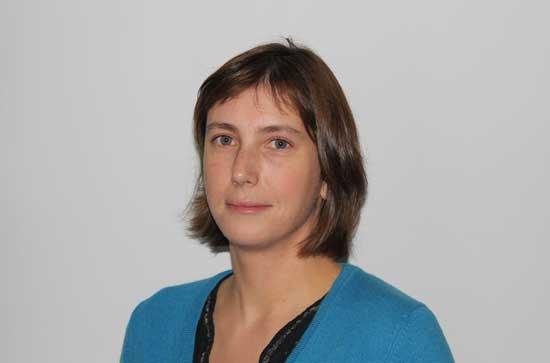
Sara Wade is a Lecturer in Statistics and Machine Learning at the University of Edinburgh , within the School of Mathematics . Her research focuses on Bayesian statistics, machine learning, and their applications in health sciences, particularly in dementia diagnosis and predictive modeling. She holds a PhD from the University of Milan and has held academic positions at the University of Cambridge and University of Warwick before joining Edinburgh. She teaches a popular Machine Learning and Python course for Master’s and final-year undergraduate students, attracting nearly 200 enrollments annually. Her work integrates Bayesian methods with modern machine learning, emphasizing interdisciplinary applications such as scalar-on-image regression and biomarker analysis. Notable contributions include developing hierarchical Dirichlet processes for clustering and uncertainty quantification in RNA velocity studies. She secured a Royal Society of Edinburgh grant for her dementia research project, which aims to improve early diagnosis through statistical modeling. Education: PhD in Statistics, University of Milan Bachelor’s in Mathematics, University of Maryland Wade advocates for diversity in STEM, actively participating in the Women in Machine Learning community. Her research bridges statistical rigor and computational tools, fostering collaborations across academia and healthcare sectors.
Martin Wainwright is a Professor at the University of California at Berkeley with joint appointments in the Department of Statistics and the Department of Electrical Engineering and Computer Sciences (EECS). His research spans high-dimensional statistics , information theory , statistical machine learning , and optimization theory . He has made significant contributions to understanding computational and statistical trade-offs in high-dimensional settings, as well as developing advanced message-passing algorithms for graphical models. His educational background includes a Bachelor's degree in Mathematics from the University of Waterloo and a Ph.D. in EECS from MIT . His work has been recognized with prestigious awards such as the COPSS Presidents' Award (2014) , IEEE Joint Paper Award (2012) , and Sloan Research Fellowship (2005) . He has advised numerous prominent researchers, including Nihar Shah , John Duchi , and Yuchen Zhang . Publications by Wainwright reflect trends in machine learning , high-dimensional data analysis , and graphical model inference . Notable works include advancements in Markov Chain Monte Carlo algorithms , pairwise comparison models , and distributed computation methods . He has also contributed extensively to signal processing and LDPC codes . COPSS Presidents' Award (2014) IEEE Joint Paper Award (2012) Institute of Mathematical Statistics Fellow (2011) NSF CAREER Award (2006) Okawa Research Grant (2005) Sloan Research Fellow (2005)
Professor Emil Lupu is a Professor of Computer Systems at the Department of Computing , Imperial College London. He leads the Resilient Information Systems Security Group and serves as Co-Director of the National Research Institute in Trustworthy Inter-Connected Cyber-Physical Systems (RITICS) . As a Security Science Fellow at Imperial’s Institute for Security Science and Technology, his work bridges academic research with real-world security challenges. Education: PhD in Computing, Imperial College London (1994–1998) His research focuses on security and resilience of cyber-physical systems (CPS) , with emphasis on defending against data spoofing attacks , adversarial machine learning , and IoT vulnerabilities . He pioneered the Ponder policy systems for access control and the Self-Managed Cell framework for autonomic computing, and developed Bayesian Attack Graphs for scalable risk assessment in CPS. Recent publications highlight trends in adversarial robustness (2025–2022), including LIDAR spoofing defense for autonomous vehicles, LLM security , and attack graph analysis for IoT. His work explores the intersection of safety and security , applying model-checking to identify adversarial threats in train control, microgrids, and aviation systems. Scientific Awards: Security Science Fellowship, Imperial College London (2011–present) As co-founder of the PETRAS National Centre of Excellence in IoT Cybersecurity (2016–2021), he advanced security methodologies for interconnected systems. His collaborations with institutions like the Cyber Security Body of Knowledge (CyBoK) demonstrate his leadership in shaping cybersecurity research standards. Current projects include the RITICS Institute , focusing on trustworthy cyber-physical systems, and exploring generative AI for security poisoning with practical defenses against adversarial ML.
Aryeh Kontorovich is a Professor in the Computer Science Department at Ben-Gurion University. His research primarily focuses on theoretical machine learning, with expertise in probability, statistics, Markov chains, and metric spaces. His research interests span theoretical machine learning, with particular emphasis on: Probability theory and concentration inequalities Statistical learning theory Markov chains and mixing time estimation Metric space learning Kernel methods Sample compression schemes Professor Kontorovich's recent publications (2021-2025) demonstrate a continued focus on theoretical foundations of machine learning. His work shows strong trends in statistical estimation for Markov processes, distribution learning, metric space analysis, and sample compression. Many papers explore the intersection of probability theory and machine learning, particularly examining concentration inequalities, minimax optimality, and theoretical guarantees for learning algorithms. His research consistently bridges abstract mathematical theory with practical machine learning applications. Scientific awards and recognitions: Distinguished contribution award at MLG 2007 for "A Universal Kernel for Learning Regular Languages" Professor Kontorovich has advised numerous students and collaborated extensively with researchers in theoretical machine learning. His work spans both theoretical foundations and practical applications, with significant contributions to understanding the mathematical limits of learning algorithms. While specific grant information isn't provided in the source material, his extensive publication record in top venues suggests successful funding for his research programs. He maintains active collaborations with researchers worldwide, including prominent names like L. Gottlieb, D. Berend, and S. Hanneke.
Guang Lin is the Associate Dean for Research and Innovation in the College of Science and a Full Professor in the School of Mechanical Engineering and Department of Mathematics at Purdue University. He leads the Data Science Consulting Services and has dual appointments in Statistics and Earth, Atmospheric, and Planetary Sciences. His research focuses on AI, machine learning, uncertainty quantification, and computational science, with applications in fluid mechanics, materials science, and healthcare. Lin holds a Ph.D. from Brown University (2007) and has received numerous awards, including the NSF CAREER Award and Purdue’s University Faculty Scholar distinction. He has authored over 250 publications and secured grants totaling millions, including DOE and NIH funding. His interdisciplinary work bridges academia and industry, emphasizing AI-driven solutions for complex systems. Education: Ph.D. Applied Mathematics (Brown, 2007), M.S. Applied Mathematics (Brown, 2004), M.S. Mechanics (Peking University, 2000), B.S. Mechanics (Zhejiang University, 1997). Research Grants: Includes DOE-funded projects on machine learning for plasma-wall interactions and NSF grants for multiscale modeling. Service: Editorships in SIAM MMS, ASME Journal, and leadership in Purdue’s AI initiatives. Teaching: Courses on Uncertainty Quantification, Fluid Mechanics, and Data Science.
Guofu Zhou , the Frederick Bierman & James E. Spears Professor of Finance at Washington University's Olin Business School , has been a faculty member since 1990. His academic career includes multiple Reid Teaching Awards (2020, 2019, 2018, 2014, 2010) Best Paper Awards (Institute for Quantitative Investment Research 2019, Chinese Finance Association 2010, Inquire UK/Europe 2019 & 2024) and affiliations with journals like the Journal of Financial Economics and Management Science . Education: PhD, Duke University (1990) MA, Duke University (1987) MS, Academia Sinica (1985) BS, Chengdu University of Technology (1982) His research bridges empirical asset pricing and applied AI/machine learning , with a focus on market efficiency anomaly exploitation Bayesian inference option pricing Chinese financial markets behavioral finance He has contributed to understanding equity risk premium predictability, technical analysis, and portfolio optimization techniques. Key trends in his Journal of Financial Economics , Journal of Finance , and Review of Financial Studies publications include machine learning applications in asset pricing , anomaly-market linkages , and fear sentiment in Treasury markets . Recent work with ChatGPT explores textual analysis of earnings calls. Scientific Awards: Best Paper Award, Institute for Quantitative Investment Research (2019) Finalist for Crowell Memorial Prize (2024) Led multiple Best Paper Awards at conferences like FMA and SIF Contact: zhou@wustl.edu | Office: Simon Hall Room 207
Dr. Bei Jiang is an Associate Professor in the Department of Mathematical and Statistical Sciences at the University of Alberta , Canada. She holds the Canada CIFAR AI Chair and is affiliated with the Alberta Machine Intelligence Institute (Amii) . Her academic journey includes a PhD in Biostatistics (2014) from the University of Michigan, MS (2008) and BS (2004) from the University of Alberta and Beijing University of Technology, respectively. Current Positions : 2021–Present (Associate Professor), 2022–Present (CIFAR AI Chair) Past Appointments : Assistant Professor (2015–2021), Postdoctoral Fellow at Columbia University (2014–2015), Research Assistant at University of Michigan (2009–2013) Research Interests : Dr. Jiang specializes in methods for joint modeling of longitudinal and health outcome data , Bayesian hierarchical modeling , functional and imaging data analysis , and statistical machine learning . Her work integrates kernel machine regression , differential privacy , and synthetic data generation to address challenges in heterogeneous health data and neuroimaging. Scientific Awards : Highlights include the 2015 SAMSI New Research Fellow , multiple Rackham Conference Travel Awards (2013, 2012), and prestigious NSERC scholarships (2009–2012). She has also received the J Gordin Kaplan Graduate Award (2008) and Statistical Society of Canada Travel Award (2008). Grants : $375,000 (CIFAR AI Chairs, 2022–2027), $480,000 (MITACS Accelerate, 2022–2025), and $210,000 (Canadian Statistical Sciences Institute, 2022–2025) Students and Postdocs : She mentors numerous PhD , MSc , and Postdoctoral Fellows , including Junxi Zhang (2023–Present), Enze Shi (2022–Present), and former advisees like Wenxing Guo (now Lecturer at University of Essex) and Yafei Wang (Assistant Professor at University of Alberta).
Florent Krzakala is a Full Professor at École polytechnique fédérale de Lausanne (EPFL) in Switzerland, holding positions across multiple departments including the School of Basic Sciences (SB), School of Engineering (STI), and specifically within the Department of Physics (IPHYS) and Department of Electrical Engineering (IEM). He leads the Information, Learning and Physics Laboratory (IdePHICS) and maintains an office at ELD 239, Station 11, 1015 Lausanne. His research bridges statistical physics and computational disciplines, with significant contributions to understanding the theoretical foundations of machine learning and optimization problems. Dr. Krzakala received his MSc in Physics from Orsay, France in 1999, followed by a PhD in Statistical Physics from Orsay, Paris XI, France in 2002, and completed a postdoctoral position at Roma La Sapienza in 2004. This strong foundation in physics has informed his interdisciplinary approach to computational problems. His research interests span Statistical Physics, Machine Learning, Probability and Statistics, Computer Science, Information Theory, Inference on Graphs, Random Constraint Optimization, and Computational Optics. Krzakala's work focuses on applying methods from statistical physics to problems in theoretical computer science, probability, and machine learning. He investigates how concepts from disordered systems and phase transitions can illuminate computational barriers in optimization and inference tasks. His research has particular relevance for understanding the behavior of neural networks, compressed sensing, and high-dimensional statistical models. Analysis of his recent publications reveals a strong trend toward understanding the fundamental limits of learning in high-dimensional settings, with particular emphasis on phase transitions, statistical-to-computational gaps, and the theoretical properties of deep learning architectures. His work frequently bridges rigorous mathematical analysis with practical machine learning applications, demonstrating how insights from statistical physics can inform algorithm design and theoretical understanding in AI. Krzakala actively mentors the next generation of researchers, supervising numerous PhD students whose work continues to advance these interdisciplinary fields. His laboratory serves as a hub for researchers exploring the intersection of physics and computation, fostering collaborations across traditional disciplinary boundaries. He teaches advanced courses including Fundamentals of Inference and Learning, Statistical Physics, and Statistical Physics for Optimization & Learning, which examine the connections between physical principles and computational methods. His educational materials, including lecture notes on statistical physics methods in optimization and machine learning, have become valuable resources for students and researchers worldwide. As founder and scientific advisor of the startup Lighton, Krzakala has also demonstrated a commitment to translating theoretical insights into practical applications, particularly in the realm of optical computing for machine learning tasks.
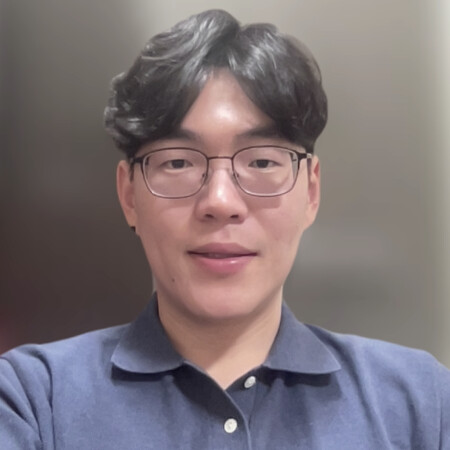
Hyunwoong "Woody" Chang is an Assistant Professor of Statistics in the Department of Mathematical Sciences at The University of Texas at Dallas. He holds a B.S. in Business/Mathematics from Seoul National University (2019) and a Ph.D. in Statistics from Texas A&M University (2024). His research focuses on structure learning of DAG models, convergence of Markov chains, and Bayesian learning methodologies. His work bridges statistical theory and computational methods, with applications in high-dimensional data analysis and model selection. Education: Ph.D. - Statistics, Texas A&M University (2024) B.S. - Business/Mathematics, Seoul National University (2019) Chang's research explores topics such as informed MCMC samplers, complexity analysis of Bayesian models, and Lipschitz continuous autoencoders for anomaly detection. His recent publications emphasize methodological advancements in DAG structure learning, regularization techniques, and rapid convergence algorithms. He currently holds no stated academic awards but actively contributes to statistical theory and computational efficiency in complex models. No advising or grant details are explicitly provided in the text. His affiliation with the School of Natural Sciences and Mathematics suggests involvement in interdisciplinary research teams, though specific lab affiliations are not mentioned.
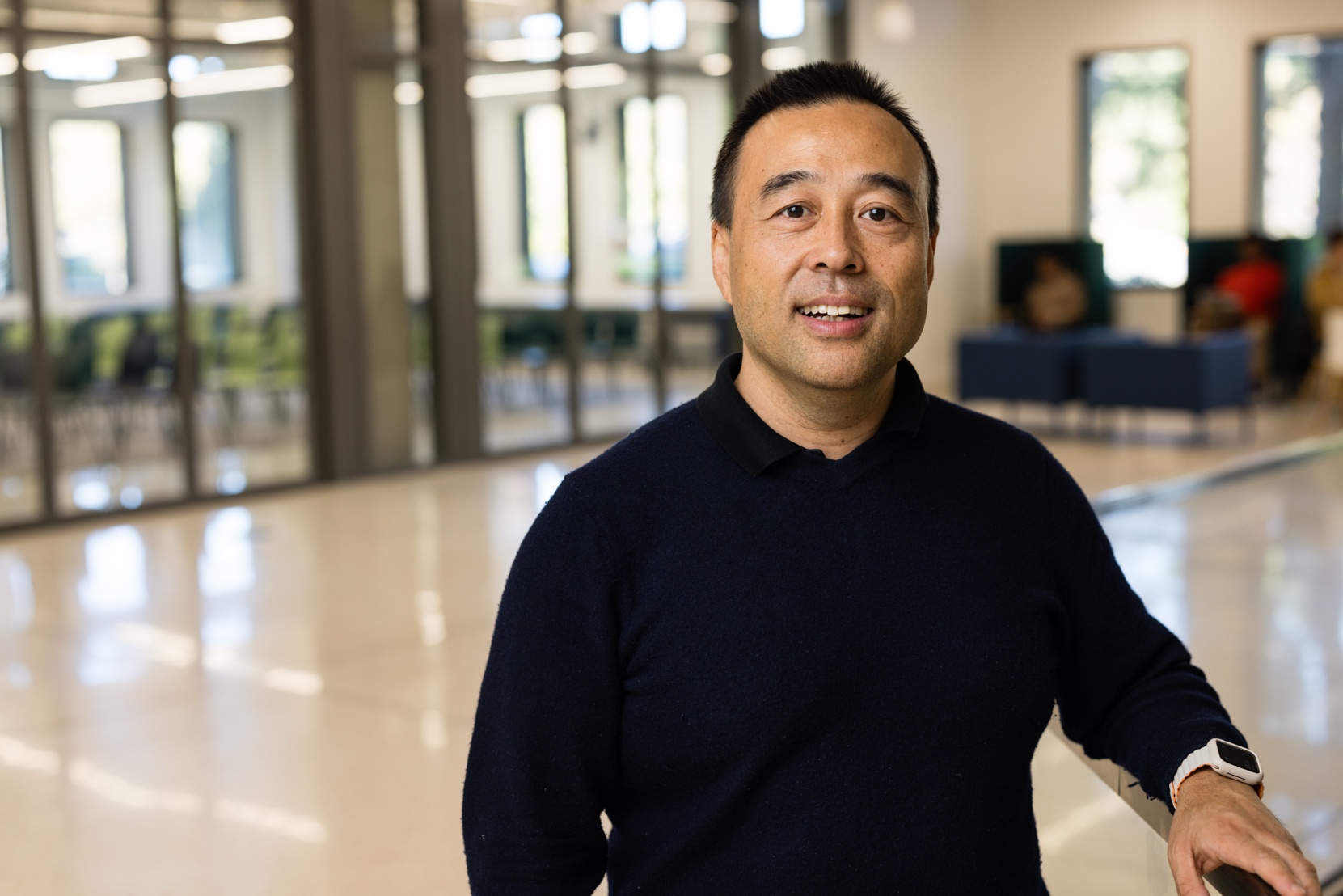
Ed Chien is an Assistant Professor at Boston University's Department of Computer Science within the College of Arts & Sciences. He specializes in applying differential geometry and topology to graphics, computational engineering, and machine learning. Previously, he was a postdoctoral researcher at MIT's CSAIL and Bar-Ilan University. His work focuses on mathematically rigorous solutions to problems in geometric data processing and optimal transport. Education PhD in Mathematics, Rutgers University (2015) A.B. in Mathematics & Physics, Dartmouth College (2009) Research Highlights Dr. Chien's research includes fundamental studies on hexahedral mesh topology for Finite Element Modeling, optimal transport applications in machine learning, and singularity-free geometric algorithms. His work bridges theoretical mathematics with computational tools for engineering and graphics. Publications span top venues like NeurIPS, Eurographics, and SIGGRAPH, reflecting contributions to geometry processing and machine learning intersections. Program committee roles include Eurographics SGP (2019) and AAAI (2020). Awards & Recognition No specific awards listed, but notable service includes program committee memberships and peer-reviewed contributions to leading conferences. Grants & Advising Active in mentoring through academic positions but no explicit grant details provided. Research focuses on advancing geometric algorithms and optimal transport methodologies.
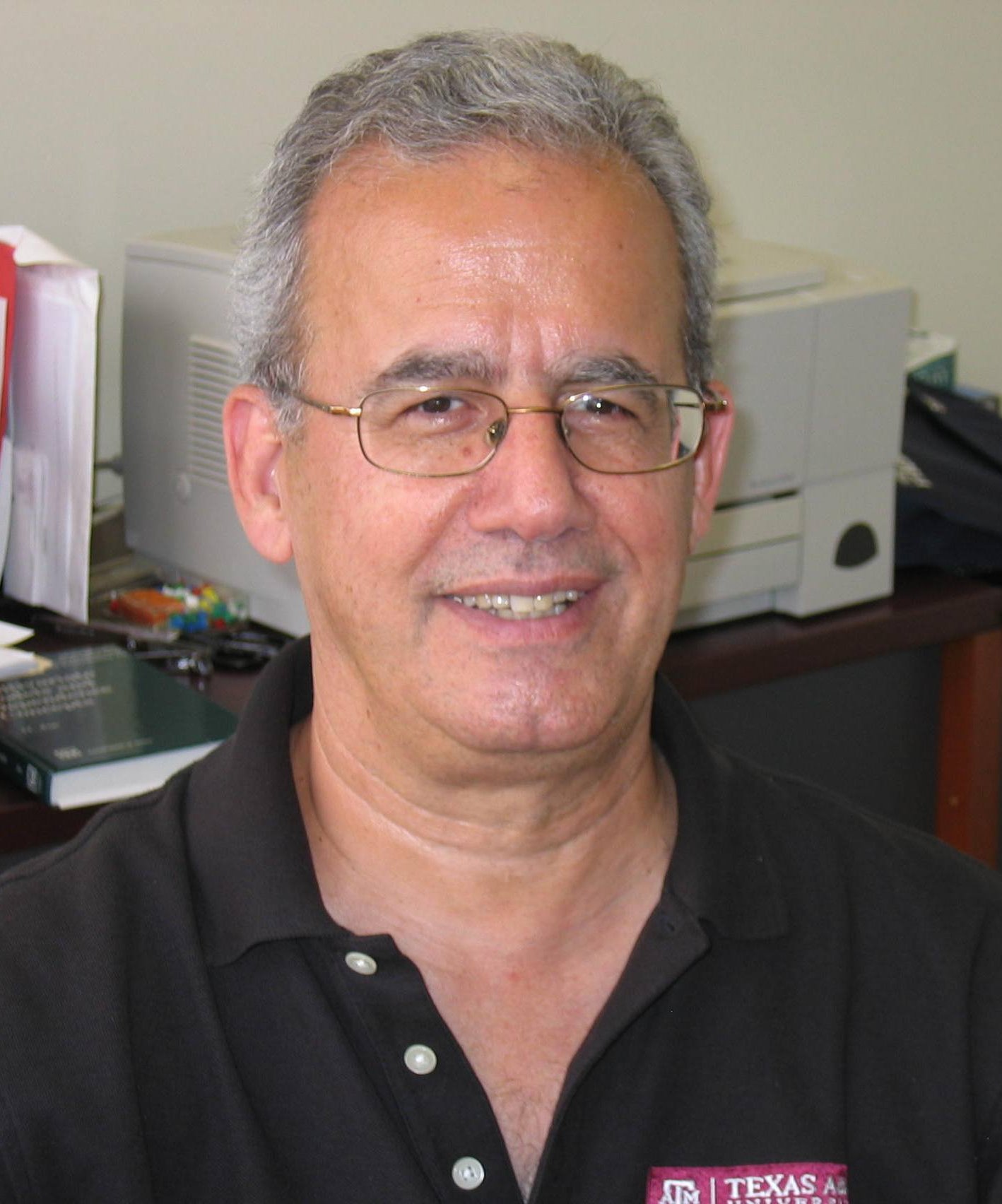
Mohsen Pourahmadi is a Professor in the Department of Statistics at Texas A&M University, part of the College of Arts & Sciences. His research focuses on developing methodologies for modeling covariance matrices in multivariate and time series data, with applications to financial analysis, longitudinal studies, neuroeconomics, and high-dimensional data. Key tools include graphical lasso algorithms, Cholesky decomposition, and Bayesian approaches. He emphasizes extending generalized linear models (GLM) to covariance matrix estimation, leveraging prediction theory and stochastic processes. Education details are not explicitly provided in the text. His work spans theoretical advancements in covariance estimation, such as sparse VAR models, nonstationary process analysis, and regularized multivariate regression. He has contributed to applications like detecting cyber attacks on infrastructure systems and analyzing breast cancer data through Bayesian networks. Research interests include time series graphical models, antedependence models for longitudinal data, and regularization techniques for high-dimensional covariance matrices. His recent work explores fused-lasso penalties, Bayesian correlation matrix estimation, and stationary subspace analysis. Pourahmadi has authored numerous articles on topics ranging from multivariate volatility modeling to nonparametric covariance estimation, emphasizing both computational efficiency and theoretical rigor.
Tianyu Guan is an Assistant Professor in the Department of Mathematics and Statistics at York University, Faculty of Science. He previously served as an Assistant Professor at Brock University and joined York University in 2024. He holds a PhD in Statistics from Simon Fraser University (2020), an MSc in Actuarial Science from the same institution (2014), and a BSc in Statistics from Jilin University (2011). PhD in Statistics, Simon Fraser University, 2020 MSc in Actuarial Science, Simon Fraser University, 2014 BSc in Statistics, Jilin University, 2011 His research centers on sports analytics, functional data analysis, and nonparametric statistics, with strong applications in machine learning and data science. He applies statistical methodologies to understand sports performance, player behavior, and game dynamics. His work also extends to theoretical developments in sparse modeling and functional regression. The recent publications highlight a clear trend toward integrating advanced statistical techniques with real-world sports and entertainment data. His work combines functional data analysis, machine learning, and probabilistic modeling to extract insights from complex longitudinal and high-dimensional datasets. Topics span soccer, rugby, football, and movie reviews, demonstrating interdisciplinary reach. While no formal scientific awards are listed in the provided text, his publications in high-impact journals such as Annals of Applied Statistics and Statistics and Computing reflect strong academic recognition. Tianyu Guan actively advises multiple graduate students at both MSc and PhD levels, primarily at Brock and Simon Fraser Universities. His teaching portfolio includes advanced courses in nonparametric statistics, sampling theory, and experimental design at the undergraduate and graduate levels. He has not received external grant information in the provided text, but his research output suggests active engagement in funded or independent research projects. He leads methodological and applied research in sports analytics, often co-supervising students with colleagues across institutions. His lab or research group appears focused on developing and applying statistical tools for performance analysis and decision-making in sports, supported by computational implementations such as the R package ngr .
Parisa Kordjamshidi is an Associate Professor of Computer Science and Engineering at Michigan State University (MSU), leading the Heterogeneous Learning and Reasoning (HLR) Lab. Her research focuses on Neuro-Symbolic AI, spatial language understanding, and structured learning, with notable contributions to frameworks like Saul for declarative programming. She joined MSU in 2019 after roles at Tulane University and the Florida Institute for Human and Machine Cognition. Education: Ph.D. in Computer Science from KU Leuven (2013), postdoctoral research at UIUC's Cognitive Computation Group, and work in the KnowEng project. Research Interests: Artificial Intelligence, Machine Learning, Natural Language Processing, Neuro-Symbolic systems, spatial semantics extraction, structured output learning, and multimodal reasoning. Key projects include NSF CAREER awards for spatial language understanding and ONR grants for integrating domain knowledge into AI. Awards: NSF CAREER (2019), Amazon Faculty Research Award (2022), Fulbright Scholar (2025), and Rising Stars at MIT EECS (2015). Grants: Active projects on Neuro-Symbolic compositional generalization (ONR), spatial language learning (NSF), and collaborations with the Department of Media and Information for health misinformation management. Professional Activities: Editorial roles at JAIR, TACL, and Frontiers journals; service on program committees for ACL, EMNLP, and AAAI; organization of workshops like Spatial Language Understanding (SpLU) and CLeaR. Lab and Software: HLR Lab develops Saul (declarative learning-based programming framework) and tools for spatial role labeling. Her team emphasizes mentoring, with structured weekly meetings, reading groups, and conference participation for students.