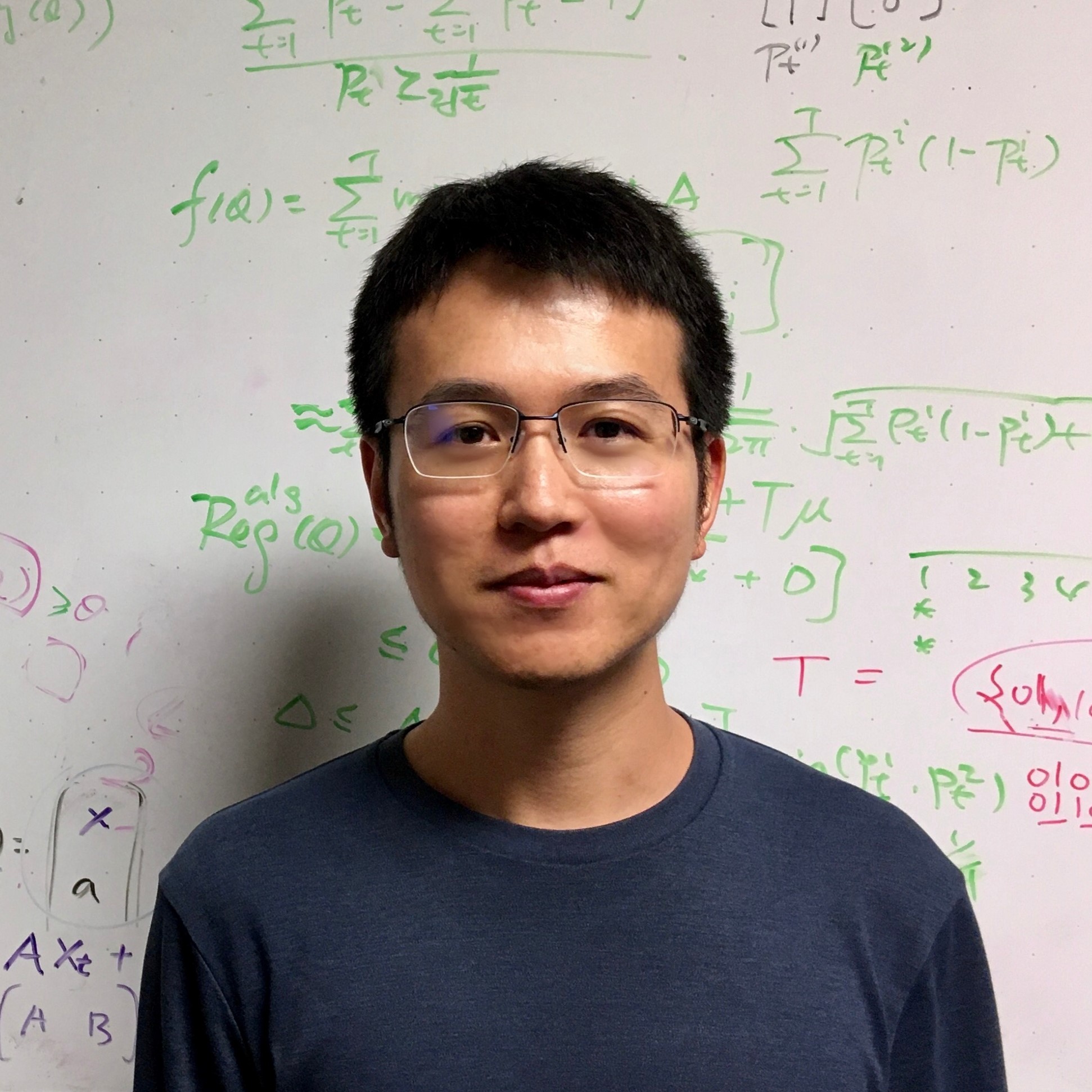
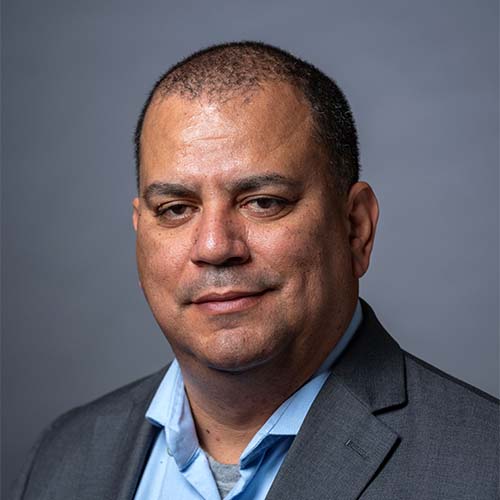
Haipeng Luo is an Associate Professor at the Thomas Lord Department of Computer Science, University of Southern California, holding the IBM Early Career Chair. He previously worked as a Postdoctoral Researcher at Microsoft Research, NYC, and has held visiting roles at Google and Amazon. His research focuses on developing practical machine learning algorithms with strong theoretical guarantees, particularly in online learning, bandit problems, reinforcement learning, and game theory. PhD in Computer Science, Princeton University (2011–2016) BSc in Computer Science, Peking University (2007–2011) His work spans adversarial and stochastic environments, addressing challenges in reinforcement learning, game dynamics, calibration, and omniprediction. Recent publications highlight advancements in regret minimization, game equilibrium computation, and robust optimization frameworks. Key contributions include algorithms for zero-sum games, bandit problems with feedback graphs, and theoretical analyses of convergence properties in multi-agent systems. Scientific accolades include Best Paper Awards at COLT 2021, COLT 2018, NeurIPS 2015, and ICML 2015. He has received prestigious grants such as the NSF CAREER Award (2020), Google Faculty Research Award (2020), and NSF CRII Award (2018). His students have secured academic and industry positions, and he actively teaches graduate courses in machine learning and online optimization.
Lori Graham-Brady is a Professor in the Department of Civil and Systems Engineering at Johns Hopkins University's Whiting School of Engineering. She serves as Vice Dean for Faculty and directs the Center on AI for Materials in Extreme Environments (CAIMEE), while also holding secondary appointments in Mechanical Engineering and Materials Science and Engineering. Her research focuses on stochastic mechanics, multiscale modeling, and machine learning applications for understanding material variability under extreme conditions. Research areas include probabilistic mechanics, AI-driven materials design, and fragmentation modeling. Leadership roles: Director of CAIMEE, former Director of Center for Materials in Extreme Dynamic Environments, founding Director of HT-MAX, and founding Associate Director of HEMI (2012-2024). Education: PhD in Civil Engineering and Operations Research from Princeton University. Her recent work emphasizes AI for multiscale mechanics, error propagation in material characterization, and digital microstructure generation. Publications highlight stochastic modeling of ceramics, composites, and metals under impact and high-strain-rate loading. Scientific awards include the Presidential Early Career Award, Huber Civil Engineering Research Prize, and Fellowships in ASCE EMI and USACM. She led NSF IGERT programs and serves as Associate Editor for the ASCE Journal of Engineering Mechanics.
Ewan Dolier is a Research Fellow in the Department of Physics at the University of Strathclyde, Faculty of Science. He is actively involved in cutting-edge research on laser-driven ion acceleration and plasma physics, working within the SCAPA (Scottish Centre for the Application of Plasma-based Accelerators) facility. His work bridges experimental physics and machine learning techniques to optimize and diagnose high-energy particle beams. His research interests include: Laser-Plasma Interactions Machine Learning for Physics Optimization Proton and Ion Beam Acceleration Synthetic Diagnostics using Neural Networks High Repetition Rate Laser Systems Relativistic Transparency Regime Physics The recent trend in his publications shows a strong focus on integrating artificial intelligence and deep learning models into the control and analysis of laser-driven particle acceleration experiments. His work spans experimental design, data-driven optimization, and advanced diagnostics using scintillating fiber spectrometers and synthetic models. His scientific contributions have been presented at major plasma physics conferences and published in high-impact journals such as Communications Physics and High Power Laser Science and Engineering . Notable projects include: External Experiment at the Gemini High-Power Laser Facility (Deep Learning for Ion Acceleration) Development of High Repetition-Rate Target Systems at SCAPA Doctoral Training Partnership research (2019–2024) He collaborates extensively with leading researchers such as Paul McKenna and Ross Gray, and contributes to multi-investigator datasets and simulations. Ewan Dolier completed his PhD in 2024 with a thesis on advancing laser-driven ion acceleration using machine learning and instability analysis.
Colin Wilson is a Professor in the Department of Cognitive Science at Johns Hopkins University . He is on leave during Fall 2025. His research spans theoretical and experimental phonology, phonetics, cross-language perception/production, and computational modeling. Specialties : Theoretical phonology, phonotactics, constraint learning Techniques : Artificial grammar, probabilistic models, acoustic analysis Research Trends Recent publications focus on interpretable neural networks for morphological learning, phonetic covariation in American English stops, and cross-language speech processing. Key areas include constraint-based grammar, Bayesian inference, and phonotactic probability. Teaching History Colin has taught courses at JHU (2008-2017) and UCLA (2001-2007) including Phonology I/II, Bayesian Inference, and language processing seminars. He co-taught with Donca Steriade, Bruce Hayes, and others.
Matthew A. Franchek is a Professor in the Department of Mechanical and Aerospace Engineering at the University of Houston, where he has served since 2002. His career spans over three decades, including prior roles as Professor and Chair at the University of Houston (2002–2009), Director of the Biomedical Engineering Program (2002–2009), and faculty positions at Purdue University from 1992 to 2002. He earned his Ph.D. (1991), M.S. (1988), and B.S. (1987) in Mechanical Engineering from Texas A&M University and the University of Texas at Arlington, respectively. Dr. Franchek’s research focuses on Dynamic Systems, Measurement and Control , with expertise in linear/nonlinear system identification, multivariable control theory, diagnostics/prognostics, and adaptive control. His engineering applications span internal combustion engines , exhaust after-treatment , noise/vibration control , and health prognostics for cardiovascular/respiratory systems . His recent publications highlight applications in superconductor manufacturing, aeroelastic stability, magnetic actuators, and subsea engineering. 2002 Best Paper Award, ASME Journal of Dynamic Systems, Measurement and Control 2001 ASME Dynamic Systems and Control Division Young Investigator Award 1997 CASA/SME University Lead Award 1997 Feddersen Faculty Fellow, Purdue University Multiple teaching awards at Purdue University (1994–2001) and Texas A&M University (1991) He has served as an Associate Editor for the ASME Journal of Dynamic Systems, Measurement and Control, held leadership roles in ASME and IEEE, and organized symposia on nonlinear control and robust control at international conferences. His professional activities include advisory roles at Cummins Incorporated and reviewing for NSF and numerous journals.
Christophe Andrieu is a Professor in Statistics within the School of Mathematics at the University of Bristol. His research bridges theoretical probability, computational statistics, and applied mathematics, with significant contributions to Markov Chain Monte Carlo methodologies and Bayesian inference frameworks. He maintains active collaborations across engineering and data science domains. His educational background includes: M.A. from List.Natnl.Scis.App.Lyon Additional M.A. (institution unspecified) Ph.D. from Paris Andrieu's research focuses on Markov Chain Monte Carlo theory , where he develops convergence guarantees and efficiency bounds for complex samplers. His work extends to non-reversible MCMC algorithms , piecewise deterministic processes , and gradient-free optimization techniques. Recent publications demonstrate innovative approaches to state-space models and numerical integration, often addressing high-dimensional statistical challenges through stochastic approximation methods. His fingerprint reveals deep specialization in Markov chain convergence analysis and computational Bayesian statistics. His 15 most recent publications (2021-2025) exhibit consistent focus on theoretical foundations of Monte Carlo methods, particularly convergence analysis of Markov chains and novel sampler designs. Key trends include the application of weak Poincaré inequalities to pseudo-marginal MCMC, development of self-organizing state-space models, and exploration of hypocoercivity in piecewise deterministic processes. The work spans both theoretical advancements and practical implementations for engineering and statistical applications. Andrieu has secured significant research funding including: COmputational Statistical INference for Engineering and Security (COSINES) (2018-2023) New Approaches to Data Science (2018-2023) He has supervised 5 research students and maintains active collaborations in computational statistics and machine learning. His network shows strong connections with probability theory and engineering research groups.
Alexandre Barreto serves as an Associate Professor in the Department of Cyber Security Engineering at George Mason University, specializing in cybersecurity applications for transportation systems and critical infrastructure. His work integrates air traffic management expertise with advanced security protocols to address defense and infrastructure vulnerabilities. Education PhD, Instituto Tecnológico de Aeronáutica, Brazil Barreto's research centers on transportation security (particularly aviation), cyber impact assessment, and blockchain applications for critical infrastructure. He develops secure protocols for air traffic systems like ADS-B and creates decision support frameworks for defense scenarios. His methodology combines machine learning, network security, and risk modeling to enhance resilience in smart grids and urban air mobility systems. Analysis of his 15 most recent publications reveals dominant themes in aviation cybersecurity (ADS-Bsec frameworks, Cyber-ARGUS), energy infrastructure protection (SIAD-AERO), and blockchain integration for air traffic management. Over 60% of his work focuses on securing air traffic surveillance systems, while emerging research explores carbon emissions prediction and deep space navigation applications. Advising and Grants No specific student advisement records or grant funding details were documented in the source material, though his classroom activities span graduate and undergraduate cybersecurity education.
Eric P. Xing is a Professor at the Language Technologies Institute of Carnegie Mellon University , and currently serves as President of the Mohamed bin Zayed University of Artificial Intelligence . His work bridges machine learning methodology with computational biology and large-scale AI systems . Research Focus: Developing machine learning theory for high-dimensional, dynamic data Building foundation models for biology (AIDO, scLong, ProteinAligner) Designing scalable AI architectures (Pollux, LLM360, PAN) Advancing interpretable and controllable NLP systems Scientific Leadership: Founded the SAILING Lab at CMU Co-chaired ICML 2014 and ICML 2019 Recipient of the Jay Lepreau Best Paper Award (OSDI 2021) Education & Mentorship: Advises PhD students across machine learning and computational biology Alumni include faculty at ETH Zurich, University of Chicago, and UC San Diego
Eric Barth is Professor of Mechanical Engineering and Professor of Neurological Surgery at Vanderbilt University's School of Engineering. He serves as Director of the C* Control laboratory (also known as the Laboratory for the Design and Control of Energetic Systems) and is affiliated with the Vanderbilt Institute for Surgery and Engineering (VISE), an interdisciplinary entity bringing engineers and physicians together to impact healthcare. His educational background includes: Ph.D. in Mechanical Engineering from Georgia Institute of Technology M.S. in Mechanical Engineering from Georgia Institute of Technology B.S. in Engineering Physics from University of California - Berkeley Professor Barth's research focuses on dynamic systems and control with applications spanning multiple domains. His primary interests include the design, modeling and control of mechatronic and fluid power systems, free-piston internal combustion and free-piston Stirling engines, energy storage and harvesting systems, and MRI compatible pneumatic robots for medical applications. His work applies a system dynamics and control perspective to problems involving the control and transduction of energy, encompassing multi-physics modeling, control methodologies formulation, and model-based design. His recent publications reveal a strong trajectory connecting mechanical engineering principles with medical applications, particularly in neurosurgery. The research spans energy systems (especially Stirling engines and novel energy storage approaches) and advanced medical robotics for MRI-guided interventions. This dual focus demonstrates his ability to bridge theoretical control systems with practical applications in both energy and healthcare domains. Professor Barth actively advises several doctoral students including David Comber, Joshua J Cummins, Alexander V. Pedchenko, and E. Bryn Pitt. His research is supported by significant funding, notably from the Center for Compact and Efficient Fluid Power, an NSF Engineering Research Center. The C* Control laboratory he directs occupies approximately 1000 square feet and contains specialized equipment including an 8-camera high-bandwidth optical tracking system, mechanical breadboard tables, pneumatic equipment with high-bandwidth servo-valves, specialized pressure sensors, a thermographic camera, high-speed video equipment, 3D printers, and a 2D laser cutter. Computational facilities include a network of approximately 20 machines running MATLAB/Simulink and SolidWorks, with access to additional CNC machining resources through the School of Engineering and the University.
Jay Barney is the Presidential Professor of Strategic Management and Pierre Lassonde Chair of Social Entrepreneurship in the Department of Entrepreneurship & Strategy at the University of Utah's David Eccles School of Business. Previously holding the Chase Chair for Excellence in Corporate Strategy at Ohio State University, he is a foundational scholar in strategic management renowned for developing the resource-based view of the firm. Education: Doctor of Philosophy, Yale University Master of Arts, Yale University Bachelor of Science, Brigham Young University Barney's research revolutionized strategic management through his seminal work on how costly-to-copy firm resources create sustained competitive advantage, establishing the VRIN (Valuable, Rare, Inimitable, Non-substitutable) framework. His scholarship bridges strategic management and entrepreneurship, examining opportunity formation processes, social entrepreneurship for poverty alleviation, and the philosophical foundations of entrepreneurial research. Current work increasingly focuses on integrating social impact with strategic advantage, particularly through industrialization solutions to poverty and stakeholder engagement under uncertainty. Analysis of his 2012-2016 publications reveals three dominant research streams: (1) theoretical extensions of resource-based theory into human capital, IT capabilities, and multinational contexts; (2) philosophical and methodological foundations of entrepreneurship research; and (3) social entrepreneurship applications addressing poverty and public interest. These works consistently appear in top-tier journals including Strategic Management Journal and Academy of Management Review, demonstrating rigorous theoretical development coupled with practical implications for organizational strategy. Scientific Awards: SMS Fellow Fellow of the Academy of Management Honorary Doctorate from University of Lund Honorary Doctorate from Copenhagen Business School Honorary Doctorate from Universidad Pontificia Comillas As a dedicated educator, Barney teaches doctoral seminars and strategy courses while mentoring PhD students in strategic management and entrepreneurship. His professional impact extends through executive training programs across North America and Europe, and strategic consulting engagements focused on organizational transformation. He has significantly shaped the field through editorial leadership as associate editor of Journal of Management, senior editor of Organization Science, and co-editor of Strategic Entrepreneurship Journal, while serving in officer roles for both the Strategic Management Society and Academy of Management's Business Policy and Strategy Division. Barney's research activities are closely integrated with the Lassonde Entrepreneur Institute at the University of Utah, where his social entrepreneurship chair supports initiatives connecting strategic management principles with poverty alleviation efforts and opportunity creation in resource-constrained environments.
Michel Gendreau is a Full Professor in the Department of Mathematics and Industrial Engineering at Polytechnique Montréal. He holds a B.Com. from McGill University, and both an M.Sc. and Ph.D. from the University of Montreal. His research focuses on operational research with applications in logistics, transportation, energy systems, and telecommunications. He is affiliated with several prestigious research centers including the Institute for Data Valorization (IVADO), the Trottier Energy Institute (IET), and the Interuniversity Research Center on Enterprise Networks, Logistics and Transport (CIRRELT). Professor Gendreau's research interests span operational research, with particular emphasis on stochastic optimization methods applied to transportation and logistics problems, energy systems management, and telecommunications. His work often addresses real-world challenges through mathematical modeling and algorithm development, with applications ranging from bike-sharing systems to emergency response planning and electricity grid management. The analysis of his recent publications reveals a strong focus on vehicle routing problems under uncertainty, maintenance optimization, and the integration of stochastic programming with machine learning techniques for improved decision making. Professor Gendreau has received numerous prestigious awards recognizing his contributions to the field of operations research. In 2022, he was named a Fellow of the International Federation of Operational Research Societies (IFORS). In 2010, he was awarded Fellow status by INFORMS (Institute for Operations Research and the Management Sciences). Most notably, in November 2015, he received the Robert M. Herman Lifetime Achievement Award from the Transportation Science and Logistics Society of INFORMS, which is considered the most prestigious distinction for operational researchers working in logistics and transportation. Throughout his career, Professor Gendreau has supervised 25 doctoral students and 18 master's students, contributing significantly to the development of the next generation of operations research experts. His research has been supported by numerous grants from organizations including NSERC (Natural Sciences and Engineering Research Council of Canada), with expertise recognized in Operational Research and Management Science (NSERC subject 1601) and Logistics (NSERC subject 1603). Professor Gendreau is actively involved in several research teams and laboratories, particularly those focused on data valorization, energy systems, and transportation logistics. His current work continues to push the boundaries of stochastic optimization and its applications to complex real-world problems, with recent publications addressing challenges in urban transportation, energy management, and emergency response systems.
Sameer Deshpande is an Assistant Professor in the Department of Statistics at the University of Wisconsin–Madison. His research bridges Bayesian methodology development with applications in public health and sports analytics. Prior to joining UW–Madison, he completed a postdoctoral fellowship with Professor Tamara Broderick at MIT and earned his Ph.D. in Statistics from the Wharton School under Professors Ed George and Veronika Rockova. His educational background includes undergraduate studies in mathematics at MIT and a year at Jesus College, Cambridge through the Cambridge-MIT Exchange program. His research focuses on advancing Bayesian hierarchical modeling, treed regression, and causal inference techniques, with particular emphasis on flexible tree-based methods like BART variants for complex data structures. Deshpande's recent publications reveal a strong trend toward developing scalable Bayesian methods for high-dimensional data while maintaining rigorous uncertainty quantification. His work frequently applies these techniques to sports analytics (particularly baseball and football) and public health studies examining long-term effects of adolescent sports participation. The consistent focus on methodological innovation paired with substantive applications demonstrates his dual commitment to statistical theory and real-world impact. He actively mentors graduate students at UW–Madison, requiring STAT 775 as preparation for research collaboration. His Deshpande Lab focuses on Bayesian computation and causal inference, though specific grant details are not publicly listed. Notable projects include the NFL Big Data Bowl submission analyzing quarterback decision-making using Expected Hypothetical Completion Probability. Outside academia, Deshpande maintains interests in cooking, cocktail making, and photography, while remaining a devoted fan of Dallas sports teams – often seen wearing a Texas belt buckle.
Bhushan Gopaluni is a Professor in the Department of Chemical and Biological Engineering at the University of British Columbia, where he also serves as Associate Dean for Education and Professional Development in the Faculty of Applied Science. He holds associate faculty positions in multiple interdisciplinary institutes including the Institute of Applied Mathematics, Institute for Computing, Information and Cognitive Systems, Pulp and Paper Center, and Clean Energy Research Center. He previously held the Elizabeth and Leslie Gould Teaching Professorship from 2014 to 2017. Education: Ph.D. in Chemical Engineering, University of Alberta (2003) Bachelor of Technology in Chemical Engineering, Indian Institute of Technology, Madras (1997) Research Interests: Professor Gopaluni's research spans several critical areas at the intersection of chemical engineering, machine learning, and process control. His primary focus includes the development of advanced process control strategies using reinforcement learning and machine learning techniques. He has made significant contributions to battery technology research, particularly in capacity estimation and remaining useful life prediction for lithium-ion batteries. His work also encompasses sustainable energy systems, industrial process monitoring, fault diagnosis, and the application of digital twin technology in chemical processes. His research methodology emphasizes the integration of data-driven approaches with fundamental process understanding, leading to practical solutions for complex industrial challenges. This includes the development of interpretable machine learning models for industrial applications, real-time optimization strategies, and advanced monitoring systems for process industries. Publications and Research Impact: Professor Gopaluni's recent publications demonstrate a strong focus on cutting-edge applications of machine learning in chemical engineering. His work prominently features battery technology and energy systems, with multiple papers addressing lithium-ion battery capacity estimation and management. He has also contributed significantly to process control applications, including drilling process monitoring, greenhouse gas reduction in marine transport, and renewable carbon tracking in biofuel processing. His research extends to advanced computational methods including deep learning, reinforcement learning, and causal discovery in industrial processes. Awards and Recognition: Killam Teaching Prize (University of British Columbia) Dean's Service Medal (University of British Columbia) D.G. Fisher Award in Process Control (Canadian Society for Chemical Engineers) Elizabeth and Leslie Gould Teaching Professor (2014-2017) Professional Service and Editorial Roles: Professor Gopaluni currently serves as Associate Editor for three prestigious journals: Journal of Process Control, The Journal of Franklin Institute, and Results in Control and Optimization. His service to the academic community extends through his role as Associate Dean for Education and Professional Development, where he oversees educational initiatives across the Faculty of Applied Science. Industry Experience: From 2003 to 2005, Professor Gopaluni worked as an engineering consultant at Matrikon Inc. (now Honeywell Process Solutions), where he designed and commissioned multivariable controllers for British Columbia's pulp and paper industry and implemented controller performance monitoring projects across oil & gas and chemical industries.
Aleksandra Slavković is a Professor of Statistics and Associate Dean for Graduate Education at Pennsylvania State University's Eberly College of Science. She holds a PhD in Statistics from Carnegie Mellon University (2004) and has held academic roles since 2004, including appointments at the Institute for Computational and Data Sciences and Penn State College of Medicine. Her research focuses on statistical data privacy, differential privacy, algebraic statistics, and applications in social and health sciences. She has authored over 50 peer-reviewed publications and serves on editorial boards of top journals like Journal of Privacy and Confidentiality and Annals of Applied Statistics . Slavković has received major honors including Fellowships from the Institute of Mathematical Statistics (2021) and American Statistical Association (2018). She leads initiatives to enhance graduate education, including the Science Achievement Graduate Fellows Program, and actively promotes diversity in STEM through her leadership roles. Her recent work emphasizes privacy-preserving techniques for genomic, healthcare, and network data, with contributions to synthetic data generation and secure multiparty computation protocols. Her academic service includes chairing ASA committees and advising at the National Academy of Sciences. She maintains collaborative ties with institutions like Cornell University and UC Berkeley through visiting scholar programs, and her research bridges statistics, computer science, and applied mathematics.
Marco Donato is an Assistant Professor in both the Department of Electrical and Computer Engineering and the Department of Computer Science at Tufts University. He leads the TECS Lab (Testchip, Embedded Computing Systems) focused on hardware design for emerging applications. Prior to joining Tufts, he was a postdoctoral fellow at Harvard University's John A. Paulson School of Engineering and Applied Sciences. Dr. Donato received his academic training from prestigious institutions: Ph.D. in Electrical Sciences and Computer Engineering from Brown University (2016) M.Sc. in Electrical Engineering from Università di Roma La Sapienza, Rome, Italy (2010) B.Sc. in Electrical Engineering from Università di Roma La Sapienza, Rome, Italy (2008) Dr. Donato's research primarily focuses on designing reliable and energy-efficient hardware systems leveraging emerging technologies. His work centers on co-design methodologies for building specialized architectures for machine learning applications that utilize dense, fault-prone embedded non-volatile memories. He investigates noise modeling and reliability aspects of next-generation memory technologies, with particular emphasis on how these can be effectively integrated into system-on-chip (SoC) designs for edge computing and IoT applications. His research bridges the gap between circuit-level design and system-level architecture to create holistic solutions for hardware acceleration of machine learning workloads. Analysis of Dr. Donato's publication record reveals a strong focus on hardware acceleration for machine learning, particularly through innovative memory system designs. His work spans multiple domains including non-volatile memory technologies, energy-efficient circuit design, and flexible SoC architectures. A notable trend is his exploration of how emerging memory technologies can be leveraged to create more efficient implementations of deep neural networks, with particular attention to the trade-offs between reliability, density, and energy consumption. His research often involves full-stack approaches that consider everything from device physics to system architecture. Dr. Donato is actively involved in mentoring and has indicated he is "looking for Ph.D. students." His work has been supported by significant research grants that have enabled the fabrication of multiple test chips, as evidenced by his extensive publication record in top-tier venues including IEEE Journal of Solid-State Circuits, ISSCC, and MICRO. He leads the TECS Lab at Tufts University, which focuses on testchip development, embedded computing systems, and hardware acceleration. The lab appears to maintain connections with researchers at Harvard University and other institutions, reflecting Dr. Donato's collaborative approach to research. The lab's work emphasizes practical, real-world implementations of novel hardware concepts through actual silicon fabrication, which is relatively rare in academic settings.