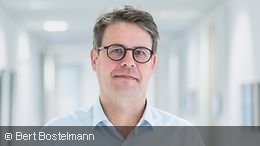
Peter Lelievre is an Associate Professor in the Department of Mathematics and Computer Science at Mount Allison University. His research focuses on advancing geophysical inversion technology to improve subsurface imaging for applications in flood risk management, resource exploration, and environmental monitoring. He emphasizes collaborative, interdisciplinary approaches combining mathematics, computer science, and geophysics. His work addresses computational challenges in geophysical inversion, including unstructured mesh modeling, machine learning integration, and uncertainty quantification. He leads a research group prioritizing diversity and innovation, with current projects involving geophysical imaging of agricultural dykes and seafloor massive sulphide deposits. Recent publications span magnetic surface inversion, transient electromagnetic data analysis, and gravity modeling of crustal systems. Lelievre collaborates on initiatives like the AARMS-CRG Numerical Solution of Geophysical Inverse Problems, fostering discussion on optimization methods and joint inversion strategies. His team includes postdoctoral fellows, undergraduate researchers, and technical staff, with notable contributions to software development for geophysical analysis.
Adrian Law Wing Keung is a Professor in the Department of Civil and Environmental Engineering at the National University of Singapore (NUS), serving since 2024. He holds a PhD and MSc from the University of California, Berkeley, specializing in coastal and hydraulic engineering, and a BEng (Civil) from the University of Hong Kong. His academic roles include Editor-in-Chief of the Journal of Hydro-environment Research and leadership in international committees like the IAHR/IWA Joint Committee on Marine Outfall Systems and ASEAN Hydroinformatics Data Centre. He has extensive consulting experience for water infrastructure projects and focuses on applying research to real-world solutions through his RDTA (Research-Development-Translation-Application) philosophy. Education: PhD in Civil and Environmental Engineering, University of California, Berkeley, USA (1991) MSc in Civil and Environmental Engineering, University of California, Berkeley, USA (1985) BEng (Civil Engineering), University of Hong Kong (1984) Research Interests: Coastal and hydraulic engineering, environmental hydraulics, remote sensing, data-driven process control, machine learning optimization in water systems, and coastal renewable energy. His work emphasizes translating fundamental research into practical applications, such as monitoring coastal environments under climate change and optimizing solar/wind energy systems. Awards: Top-2% Global Scientist by Stanford University (2023) Karl Emil Hilgard Hydraulic Prize (ASCE, 2014) UPS Foundation Visiting Professorship at Stanford (2001-2002) Wesley Horner Award (ASCE, 2000) Professional Activities: Council member of the International Association of Hydro-environment Engineering and Research, editorial board roles in technical journals, and advisory roles for major water infrastructure projects globally. His research outputs span 100+ peer-reviewed articles, with a focus on numerical modeling, remote sensing, and sustainable engineering solutions.
Pramod K. Varshney is a Distinguished Professor at Syracuse University's Department of Electrical Engineering and Computer Science, within the College of Engineering & Computer Science. He also holds adjunct professorships at Upstate Medical University (Radiology) and Xidian University (China). His research focuses on distributed sensor networks, data fusion, machine learning, and signal processing, with applications spanning defense, healthcare, and IoT. Varshney has led over four decades of research funded by major agencies like DoD, NSF, and industry partners. Education: PhD (Electrical Engineering, University of Illinois, 1976), MS (1974), BS (1972). His research interests emphasize foundational aspects of data/information fusion, sensor networks, and AI-driven analytics. Notable contributions include pioneering work in distributed detection theory and secure inference in adversarial environments. Recent publications highlight advancements in federated learning, anomaly detection, and multi-target tracking. Varshney has been honored with prestigious awards such as the IEEE Fellow (1997), Yaakov Bar-Shalom Award (2018), and Syracuse University's Chancellor’s Lifetime Achievement Award (2023). He has advised numerous PhD and Master’s students, contributing to over 350 publications, including seminal books like Distributed Detection and Data Fusion (Springer, 1997). He has directed Syracuse's CASE (Center for Advanced Systems and Engineering) and actively collaborates with global institutions. His work bridges theoretical advancements with real-world applications in healthcare imaging, cybersecurity, and autonomous systems.
Andrew B. Lawson is a Professor in the Department of Public Health Sciences at the Medical University of South Carolina (MUSC), part of the College of Medicine. He holds a PhD in Spatial Statistics from the University of St. Andrews, UK. His research focuses on Bayesian statistics, spatial biostatistics, and hierarchical multilevel modeling, with over 160 journal articles and 10 authored books, including seminal works like *Handbook of Spatial Epidemiology* and *Bayesian Disease Mapping*. He is an MUSC Distinguished Professor and ASA Fellow, and serves as founding editor of *Spatial and Spatio-temporal Epidemiology*. His work includes advising the WHO on disease mapping and risk assessment. Education: PhD in Spatial Statistics (University of St. Andrews, UK). Research interests span spatial epidemiology, statistical methods for disease surveillance, and computational tools like OpenBUGS and INLA. Recent work addresses cancer survival disparities and spatial health policy applications. Notable awards include the MUSC Distinguished Professor title and ASA Fellowship. He has led numerous international short courses on Bayesian disease mapping and spatial epidemiology techniques.
Martin Kliem is an Economist in the Research Centre of the Deutsche Bundesbank since 2009. His work focuses on Macroeconomics, Monetary Policy, Asset Pricing, and Bayesian Econometric methods. He holds a PhD from Humboldt-Universität zu Berlin (2009). His research explores the interaction between fiscal and monetary policies, low-frequency inflation dynamics, and financial repression mechanisms. Education: Dr. rer. pol. in Economics from Humboldt-Universität zu Berlin's Faculty of Economics and Business Administration (2009). Research Interests: Macroeconomics, Asset Pricing, Time Series Analysis, Bayesian Econometrics, and Fiscal-Monetary Policy Interaction. Notable contributions include studies on U.S. financial repression (2024), Euro Area rebalancing (2021), and the historical correlation between public deficits and inflation (2016). Presentations and Engagement: Active participant in global conferences such as the Society for Computational Economics Annual Conference (2013–2017), European Economic Association Congresses (2011–2015), and Bundesbank-hosted workshops. Refereed for journals including the Journal of Monetary Economics and the Review of Economics and Statistics. Labs/Teams: Part of the Bundesbank's Research Centre team, collaborating on projects like the Panel on Household Finances and the Survey on Consumer Expectations (BOP-HH).
MICHENEAU Kevin is a Researcher-Lecturer at CESI LINEACT, affiliated with the Engineering and Numerical Tools Research team. His work spans both applied engineering and fundamental physics research. He holds a PhD in Particle Physics from the University of Nantes (2018) and a Master's in Subatomic Physics from the same institution (2014). His research focuses on energy performance optimization in smart buildings, intelligent building control systems, and data fusion techniques for occupancy modeling. Concurrently, he continues contributions to dark matter detection through advanced analysis of XENON experiment data. Education: PhD in Particle Physics, University of Nantes (2018) Master's in Subatomic Physics, University of Nantes (2014) Research Interests: Developing models for occupancy-aware energy systems Optimizing multi-objective control strategies for building HVAC systems Data-driven approaches for sensor fusion and anomaly detection Continued dark matter research via XENON collaboration experiments Recent Research Trends: Recent work demonstrates a strategic shift toward applied building systems research while maintaining expertise in particle physics. 2024's multi-objective MPC study represents his growing focus on practical energy efficiency solutions, while XENON1T/XENON100 analyses (2017-2019) highlight sustained contributions to dark matter detection methodologies. Grants & Advising: Supervising PhD candidate Adrien BOURGOIN (2023-2026) Laboratory Affiliations: Core member of CESI LINEACT's Engineering and Numerical Tools Research team, collaborating on smart building instrumentation and computational modeling projects.
Emilio Gómez Déniz is a Professor at the University of Las Palmas de Gran Canaria, affiliated with the Department of Quantitative Methods in Economics and Management and the IU of Tourism and Sustainable Economic Development research group. His academic rank is University Professor, and he is actively involved in Bayesian statistical techniques and decision-making methodologies in economics and business. His research focuses on actuarial science, econometrics, Bayesian methods, health economics, tourism economics, and risk analysis. He has contributed to projects funded by national and regional bodies, including studies on health economics Bayesian solutions, tourism sustainability, and risk analysis using actuarial data. Key projects include 'Economic Evaluation and Meta-Analysis: Bayesian Solutions in Health Economics' (2022–2026) and 'Laboratory of Tourism Experiences and Sustainability in the Multimedia Environment' (2019–2022). His publications span topics like distribution modeling, Bayesian credibility theory, and tourism expenditure analysis. Awards and grants are not explicitly mentioned in the provided text.
Clémentine Prieur is a Professor at the University of Grenoble Alpes, affiliated with the Jean Kuntzmann Laboratory (LJK - CNRS / Inria / UGA - Grenoble INP-UGA) and the Inria AIRSEA Project Team. She holds significant leadership positions including Head of the Applied Mathematics specialty at the MSTII Doctoral School, Vice-President of the French Statistical Society, and President of the SAMO (Sensitivity Analysis of Model Output) board. Her educational background includes a Master's degree, teaching qualification, and mathematics thesis. She pursued her academic career after expressing interest in mathematics as early as sixth grade, eventually specializing in probability and statistics after initially being drawn to abstract mathematics. Prieur's research focuses on uncertainty quantification, sensitivity analysis, model and dimension reduction, robust inversion, multivariate risk analysis, and nonparametric estimation for dependent processes. Her work bridges theoretical mathematics with practical applications in climatology, health, energy, and environmental science. She has developed numerous methodologies for analyzing complex systems and extracting meaningful information from data. Her publications demonstrate consistent contributions to uncertainty quantification and sensitivity analysis, with recent work spanning epidemic modeling, climate science, renewable energy systems, and machine learning. Her research shows increasing interdisciplinary applications while maintaining strong mathematical foundations, particularly in developing computational methods for high-dimensional problems. Vice-President of the French Statistical Society President of SAMO (Sensitivity Analysis of Model Output) board Local coordinator of MATH-AmSud project SMILE Coordinator of Inria associate team UNQUESTIONABLE Member of CNRS thematic networks for Uncertainty Quantification and Earth and Energies Prieur actively supervises doctoral students and postdocs, guiding them from master's internships through thesis completion. Her research is supported through multiple national and international projects including CIROQUO (Research and Industry Consortium), MIAI chair BALTEEC, and various CNRS networks. She frequently travels internationally for research collaborations, with recent visits to institutions in Uruguay, Italy, and Chile. She leads the Inria AIRSEA project team and participates in several research groups focusing on uncertainty quantification, including the CNRS thematic network Quantification of Uncertainties RT2172 and the thematic network Earth and Energies RT2166. Her work with CIROQUO connects academic research with industrial applications in uncertainty quantification for expensive data.
Carel Peeters is an Associate Professor in the Mathematical and Statistical Methods (Biometris) department at Wageningen University & Research. His research focuses on statistical methodologies applied to agricultural, biomedical, and genomic data. Key areas include Bayesian modeling of methane emissions in livestock, metabolomic and proteomic profiling in neurodegenerative diseases, and multi-omic data integration using machine learning techniques. He collaborates on projects addressing dairy cow methane production monitoring, preterm infant microbiota dynamics, and genomic prediction in plant breeding. Peeters has co-supervised numerous PhD projects, including studies on adaptive management in agriculture, latent factor representations in plant phenotypes, and causal learning for kwashiorkor etiology. His work integrates statistical innovation with real-world applications, such as developing the cubicle hood sampler for methane measurement and identifying CSF protein biomarkers for Alzheimer’s and Frontotemporal Dementia. He is actively involved in interdisciplinary teams, contributing to open-access datasets on strawberry metabolomics and dementia biomarkers. His research outputs span high-impact journals in bioinformatics, agriculture, and neuroscience, emphasizing precision agriculture and personalized medicine approaches.
Olivier Pinaud is a Researcher at the University of Grenoble Alpes, affiliated with the Grenoble Institute of Technology and the Department of Electrical Engineering. He is a member of the MAGE and ERT CMF teams at G2Elab, specializing in measurement, modeling, and identification of weak electric/magnetic fields. His work spans applications in electric vehicles and marine corrosion analysis. 2014: Doctorate in Electrical Engineering from Grenoble Alpes University Community 2010: Engineering degree from Grenoble-INP ENSE³ 2006: Senior Technician qualification Research focuses on: Magnetostatic field modeling in electric vehicles Bayesian inference for electromagnetic field analysis Marine corrosion electric field characterization Development of contactless current sensors Parametric studies and multipolar analysis His publications highlight expertise in computational electromagnetics, sensor design, and exposure assessment. Key collaborations include GIPSA lab, LEPMI, CEA Grenoble, DGA TN, and Naval Group. Scientific Awards: Co-inventor of "Method for measuring the intensity of a current in a conductor" patent (2017) Current projects involve electric/magnetic field control systems for NMR spectrometers and MRI devices, alongside marine corrosion analysis. His work integrates numerical methods, magnetometer verification, and experimental bench development.
Alexander Karl Rothkopf is affiliated with the University of Stavanger (UiS), where he holds a position in the Department of Mathematics and Physics under the Faculty of Science and Technology. His research focuses on quantum systems, particularly real-time dynamics of strongly coupled systems like the quark-gluon plasma. He employs lattice QCD, Bayesian inference, and machine learning techniques for non-perturbative studies. Key projects include developing discretization schemes, machine-learning enhanced spectral extraction, and real-time simulation strategies. Rothkopf teaches courses on mechanics, quantum mechanics, and lattice-based simulations. His work bridges theoretical physics with computational methods, addressing challenges in heavy quark dynamics and open-quantum systems. Recent research highlights include exact symmetry conservation in numerical methods, novel discretization techniques for quantum systems, and machine learning applications for complex Langevin simulations. He collaborates internationally with institutions like Brookhaven National Laboratory (BNL) and Linköping University. His contributions span journals such as Journal of Computational Physics and Physical Review D , emphasizing computational physics and high-energy theory. Presentations include talks at the International Symposium on Lattice Field Theory and Nordic Lattice Meetings. Despite no explicit awards listed, his prolific publication record underscores his impactful research in theoretical and computational physics. Education: Advanced training in theoretical physics, likely including a PhD in a related field (details not explicitly provided). Grants/Advising: Leads projects funded by UiS collaborations; advises students on lattice simulations and real-time dynamics (specific grant details not listed). Labs/Teams: Involved in interdisciplinary teams focusing on lattice QCD, computational methods, and open-quantum systems at UiS and partner institutions.
Dr. David Melon Fuksman is a researcher at the Planet and Star Formation Department of the Max Planck Institute for Astronomy in Heidelberg, Germany. His work focuses on protoplanetary disks , radiative transfer , planet formation , and numerical fluid dynamics . Contact: +49 6221 528-403, Room 308/2 Research Interests include the study of protoplanetary disk dynamics, radiation hydrodynamics, and numerical simulations of planet formation processes. He also investigates high-energy astrophysical phenomena such as gamma-ray bursts and neutrino production in extreme environments. Publication Trends (15 most recent) span computational astrophysics, radiation hydrodynamics, and multiwavelength analysis of protoplanetary disks. His recent work (2025-2024) emphasizes three-temperature models , spiral structures , and implicit solvers for disk-planet interactions, while earlier studies (2023-2013) explore neutrino astrophysics , binary-driven hypernovae , and observational data analysis . Projects and Tools: Development of the PyPLUTO software package and the MATRICS solver, enabling advanced simulations of astrophysical systems.
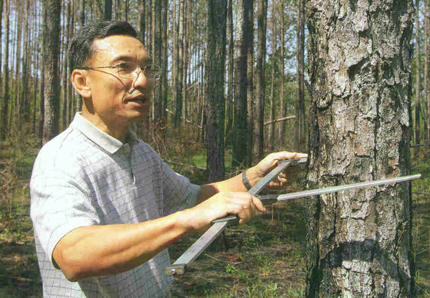
Quang Cao is a Professor in the Department of Forestry at Louisiana State University (LSU), affiliated with the College of Agriculture Renewable Natural Resources. He specializes in growth and yield modeling, applying mathematical and statistical principles to forestry challenges. His research focuses on diameter distribution analysis, stand-level projections, and self-thinning dynamics in forest ecosystems. Cao has extensive experience in developing and validating models for forest inventory, biomass estimation, and tree survival prediction. He earned his Ph.D. in Forest Biometrics from Virginia Tech in 1981, following earlier degrees in Statistics and Forestry. Cao teaches courses such as Natural Resource Measurements and Forest Biometrics, emphasizing quantitative methods in forestry education. Education Ph.D. in Forest Biometrics, Virginia Tech University, 1981 M.S. in Statistics, Virginia Tech University, 1980 M.S. in Forest Biometrics, Virginia Tech University, 1978 B.S. in Forestry, National Agricultural Institute, Saigon, Vietnam, 1973 Research Interests Dr. Cao’s work bridges statistical theory and practical forestry applications. Key areas include: Whole-stand and individual-tree growth modeling Quantile regression for survival analysis Compatibility of stand and tree-level models Self-thinning trajectories in plantation ecosystems Leaf area distribution and biomass estimation Integration of LiDAR data with traditional inventory methods Publications His recent work focuses on advancing methodologies for diameter distribution modeling, stand table projections, and self-thinning rules. Key themes include: Development of unified growth systems Application of Bayesian and quantile regression techniques Compatibility between individual-tree and whole-stand models Modeling forest dynamics in diverse ecosystems Teaching and Academic Contributions Cao contributes to LSU’s forestry curriculum through courses like RNR 2102 (Natural Resource Measurements) and FOR 3036 (Field Studies in Forest Mensuration). He has advised numerous graduate students and collaborates internationally on forestry projects.
Mike Hudson is a Professor in the Department of Physics & Astronomy at the University of Waterloo, affiliated with the Waterloo Centre for Astrophysics and the Perimeter Institute. His research focuses on observational cosmology, galaxy formation/evolution, gravitational lensing, and cosmic flows. He measures dark matter/dark energy properties via these techniques and investigates galaxy star formation mechanisms. Education: PhD (Physics, University of Cambridge, 1993); BSc (Physics, McGill University, 1987). Research Interests: Gravitational lensing, cosmic flows, large-scale structure analysis, astrophysics/gravitation. His work includes satellite payload development and astronomy education initiatives. Recent Work Trends: Over 15+ publications (2020–2023) emphasize UNIONS survey data, weak/strong lensing analysis, dark matter halo modeling, and galaxy cluster dynamics. Key topics include dwarf galaxy discovery, quenching mechanisms, and peculiar velocity studies. Awards: 2005: Outstanding Performance Award (UW) 2003: Premier's Research Excellence Award 2002: CITA Senior Fellowship Teaching: Taught courses like PHYS 239 (Computational Physics), PHYS 349 (Advanced Computational Physics), and specialized astrophysics courses (PHYS 474, 782, 787). Focuses on analytical tools and observational techniques. Labs/Teams: Leads the Hudson Research Group and collaborates with the Thirty Meter Telescope Scientific Advisory Committee. Active in the Waterloo Centre for Astrophysics and Perimeter Institute networks.
Sam Baugh is an Assistant Professor of Statistics at Pennsylvania State University's Department of Statistics since Fall 2023. He holds a PhD from UCLA (2022) and MS/BS degrees from the University of Chicago. His research focuses on developing statistical methods for climate change impacts, spatio-temporal modeling, Bayesian hierarchical approaches, and psychometrics, with collaborations in medicine/public health. Education: Ph.D. in Statistics, UCLA (2022) MS in Statistics, University of Chicago (Advisor: Michael Stein) BS in Mathematics, University of Chicago Research interests emphasize climate science applications, including ocean/atmosphere changes and extreme event probabilities. Methodologically, he specializes in: Bayesian hierarchical models Spatio-temporal statistics Computational approximations Psychometric modeling Recent work spans climate attribution studies, medical AI applications, and latent variable modeling. His publications demonstrate cross-disciplinary impact across climate science, surgery outcomes, and educational measurement. Awards include the NSF Postdoctoral Fellowship (2022-2023) and UCLA's Outstanding Ph.D. Student Award (2022). Collaborates with institutions like Lawrence Berkeley National Lab and medical teams in plastic surgery research. Active in both environmental and health-related statistical method development.