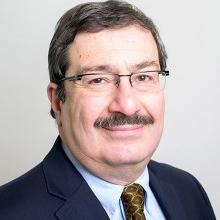
William Roche is a Professor of Philosophy at Texas Christian University (TCU), affiliated with the AddRan College of Liberal Arts. He holds a Ph.D., M.S., and B.S. in Philosophy from The Ohio State University and the University of Utah. His primary research focuses on epistemology, formal epistemology, and philosophy of science, with additional interests in logic, philosophy of language, and philosophy of mind. Roche teaches courses such as Critical Reasoning, Symbolic Logic I, Introduction to Epistemology, and Advanced Issues in Epistemology. His work explores topics like foundationalism, Bayesian confirmation theory, and probabilistic support structures. Recent publications include discussions on the perils of parsimony, evidence screening-off mechanisms, and infinite regresses in epistemological frameworks. His research bridges formal methods with traditional philosophical inquiry, addressing questions in scientific methodology and epistemic justification. Roche’s contributions often engage with debates in cognitive science and the logical underpinnings of knowledge claims.
Maxim Ivanov serves as Associate Professor in the Department of Economics at McMaster University, where he teaches advanced courses including Microeconomic Theory II (ECON 722), Introduction to Game Theory (ECON 3M03), and Industrial Organization (ECON 784/3S03) through 2025. His research centers on strategic information transmission and game-theoretic modeling in economic contexts. His academic credentials include a PhD in Economics from Penn State University, a Master's in Economics from the New Economic School (Moscow), and a Master of Science (Cum laude) in Electrical Engineering from Tomsk State University of Control Systems and Radio Electronics. This interdisciplinary foundation supports his rigorous analytical approach. Ivanov's scholarly work focuses on Microeconomic Theory, Game Theory, and Industrial Organization, with particular emphasis on information design, cheap talk models, and strategic communication mechanisms. His research investigates how private information structures and communication protocols shape economic outcomes in competitive and organizational settings. His 10 journal publications (2010-2024) in outlets like Economic Theory , Games and Economic Behavior , and Journal of Economic Theory reveal a cohesive trajectory: evolving from foundational studies on information revelation (2010-2013) to sophisticated analyses of Bayesian persuasion and private information design (2021-2024). The work consistently addresses equilibrium selection and welfare implications in strategic communication. No scientific awards are documented in the available institutional records. Professor Ivanov maintains an active teaching schedule with no recorded advisees or graduate supervision in the provided data. The VIVO database indicates no active research grants, and co-author networks show exclusively solo publications within McMaster's system since 2015. No laboratory affiliations or research teams are mentioned in the institutional profiles.
Scott W. Linderman is an Assistant Professor of Statistics at Stanford University and a Faculty Scholar at the Wu Tsai Neurosciences Institute. He holds courtesy appointments in Computer Science and is affiliated with Stanford Bio-X and the Stanford AI Lab. His research focuses on developing probabilistic models and statistical methods to analyze neural data, bridging computational neuroscience and machine learning. Linderman earned his PhD in Computer Science from Harvard University, with postdoctoral training at Columbia University under Liam Paninski and David Blei. He previously worked as a software engineer at Microsoft and holds an undergraduate degree in Electrical and Computer Engineering from Cornell University. Research Interests : Machine learning, computational neuroscience, state space models, neural data analysis, and probabilistic modeling. His lab develops tools like the SSM and Dynamax packages, applying methods to problems such as neural decoding, behavioral tracking, and understanding latent neural dynamics. Awards : 2023 McKnight Scholar Award, 2022 Sloan Research Fellowship, Leonard J. Savage Award (2016). Linderman has advised over 20 PhD students and postdocs, contributing to breakthroughs in neuroscience and machine learning. His work includes collaborations with experimental neuroscientists like David Anderson and Sebastian Seung. Labs & Teams : Linderman Lab focuses on advancing statistical methods for neuroscience. Key projects include state space models (e.g., rSLDS, Gaussian Process SLDS) and behavioral analysis tools like Keypoint MoSeq. The lab emphasizes open-source software and interdisciplinary collaboration.
William Parnell is a Professor of Applied Mathematics at the University of Manchester's School of Mathematics. His research focuses on continuum mechanics, metamaterials, and industrial composites, with applications in soft tissue mechanics and acoustic wave manipulation. He leads the Mathematics of Waves and Materials (MWM) group and co-founded the Manchester Materials Modelling Centre (M3C). He has held roles including EPSRC Fellowship 'NEMESIS' (2014-2019) and its extension, contributing to transformative materials science. Education: BSc Mathematics (First Class), University of Bristol (1996-1999) MSc Mathematical Modelling and Scientific Computing (Distinction), University of Oxford (1999-2000) PhD in Applied Mathematics, University of Manchester (2001-2004) His research interests span elastic wave propagation, cloaking, and viscoelastic modeling. He has pioneered hyperelastic cloaking techniques and developed mathematical methods for metamaterials. His work contributes to UN Sustainable Development Goals related to advanced materials and digital innovation. Key achievements include the 2019 Whitehead Prize and over 80 publications. His grants include funding for microstructured material design and collaborations with Thales UK and the National Physical Laboratory. Grants & Awards: EPSRC Fellowships (NEMESIS and extension) Whitehead Prize (2019) Labs/Teams: MWM Group (focusing on waves and materials) M3C (Manchester Materials Modelling Centre)
Nick Heard is a Professor and Chair in Statistics at the Department of Mathematics, Faculty of Natural Sciences, Imperial College London. His research focuses on computational Bayesian inference, clustering, and changepoint analysis applied to dynamic networks (e.g., computer networks, social networks) and bioinformatics. He leads the EPSRC-funded NeST project on Network Stochastic Processes and Time Series, collaborating with universities including Bristol, Oxford, and LSE. His work bridges statistical theory with applied problems in cyber-security and neuroscience. Research Interests - Modelling large dynamic networks - Changepoint analysis and anomaly detection - Statistical methods for cyber-security - Bayesian computation and inference - Spectral clustering and graph embeddings Grants & Collaborations - Co-leads the NeST project on Dynamic graph embeddings: procedures and inference - EPSRC Programme Grant (EP/T004870/1) supporting Network Stochastic Processes and Time Series research Software & Tools - Developed open-source packages for Bayesian changepoint analysis (e.g., changepoints ) - Code for p-value combination methods ( standardised_partial_product )
Professor Cleo Kontoravdi is a Professor of Biological Systems Engineering at the Department of Chemical Engineering, Imperial College London, within the Faculty of Engineering. Her roles include Director of Postgraduate Studies (2021–present) and Postgraduate Admissions Tutor (2018–2021). She holds affiliations with key research centers such as the Centre for Process Systems Engineering, Centre for Synthetic Biology, and Future Vaccine Manufacturing Research Hub. Her research focuses on applying systems engineering principles to bioprocessing, integrating model-based tools like sensitivity analysis and optimization with experimental work on mammalian cell cultures and vaccine production. Key areas include metabolic flux analysis, media optimization, and multiscale modeling. Her recent publications highlight advancements in hybrid modeling frameworks, mRNA vaccine process design, and metabolic engineering of CHO cells. She actively contributes to vaccine manufacturing strategies and sustainable biopharmaceutical supply chains. Education: PhD (2007) and MEng (2002) in Chemical Engineering from Imperial College London. Professional experience spans academic roles (since 2007) and industry R&D at Lonza Biologics (2006–2007). Her work bridges computational biology, bioprocess engineering, and systems biology, addressing challenges in vaccine development and production efficiency. Awards: Not explicitly listed in the provided text. Research grants and collaborations are implied through her involvement in high-impact projects like the Future Vaccine Manufacturing Hub. She advises on bioprocess optimization, glycoengineering, and biomanufacturing sustainability.
Keith J. Holyoak is a Distinguished Professor in the Department of Psychology at the University of California, Los Angeles (UCLA), where he conducts foundational research in cognitive psychology. His work centers on human reasoning, learning, decision making, and problem solving, with a specific focus on the psychological mechanisms of analogy and relational knowledge across diverse domains including law, politics, mathematics, and science. He directs the Reasoning Lab at UCLA, integrating experimental, computational, and neuroimaging approaches to investigate cognitive processes. Education: Ph.D. from Stanford University Research Focus: Holyoak's research program systematically explores how analogy facilitates knowledge transfer and learning, examining the neural underpinnings of complex reasoning with emphasis on prefrontal cortex functions. His work bridges theoretical cognitive science with practical applications, investigating causal learning, deductive processes, and the constraints shaping human inference. Through computational modeling and cross-domain studies, he reveals universal principles governing relational reasoning while addressing domain-specific manifestations in scientific, legal, and social contexts. Publication Trends: His scholarly output demonstrates consistent evolution from foundational work on pragmatic reasoning schemas (1980s) toward integrated models of causal learning and Bayesian inference (2000s-2010s). Recent publications emphasize rational analysis frameworks, cross-species comparisons in causal cognition, and the role of invariance principles in knowledge generalization. The corpus reveals deep methodological pluralism—combining behavioral experiments, computational modeling, and neuroimaging—to address fundamental questions about the architecture of human thought. Research Infrastructure: Holyoak leads the Reasoning Lab (https://reasoninglab.psych.ucla.edu), which maintains a collaborative environment for interdisciplinary research. The lab's infrastructure supports advanced experimental paradigms, computational modeling suites, and neurocognitive investigations, facilitating research on analogical transfer, causal inference, and decision-making under uncertainty across the lifespan.
Peng Ding is an Associate Professor in the Department of Statistics at the University of California, Berkeley. He holds a B.S. in Mathematics and B.A. in Economics from Peking University, followed by an M.S. in Statistics from the same institution. He earned his Ph.D. in Statistics from Harvard University in 2015 and completed a postdoctoral fellowship at Harvard T.H. Chan School of Public Health. His research focuses on causal inference, missing data, Bayesian statistics, and applied statistical methods in biomedical and social sciences. Ding is particularly known for his work on improving the robustness of causal inference in observational studies and randomized experiments through sensitivity analysis and design-based approaches. His research interests include methodologies to address contaminated data (e.g., missing values, measurement errors), factorial experiments, and sensitivity analysis for unmeasured confounding. He has contributed to theoretical advancements in rerandomization, regression adjustment, and instrumental variable techniques. His work emphasizes practical applications in fields such as epidemiology, social sciences, and public health. Peng Ding teaches courses on causal inference, statistical theory, and linear models. His most recent courses include Data, Inference, and Decisions and Linear Models . He actively mentors graduate and undergraduate students through directed study programs. His research has been published in top-tier statistical journals and presented at international conferences.
Zachary E. Ross is a Professor of Geophysics at the California Institute of Technology (Caltech) and holds the William H. Hurt Scholar distinction since 2021. His research integrates machine learning, computational mathematics, and seismology to analyze earthquakes and fault zones using large seismic datasets. Education B.S., University of California, Davis (2009) M.S., California Polytechnic State University, San Luis Obispo (2011) Ph.D., University of Southern California (2016) His research focuses on high-resolution imaging of fault zones, understanding earthquake sequences in space and time, and applying artificial intelligence to seismic data analysis. He develops scalable algorithms for waveform inversion, ground-motion synthesis, and real-time seismic monitoring. Recent publications highlight his work on neural operators for wave propagation, AI-driven seismicity analysis, and induced earthquake dynamics. He teaches advanced courses including Ge 264 – Machine Learning in Geophysics and Ge 271 – Dynamics of Seismicity . Scientific Awards William H. Hurt Scholar (2021–present)
Paul Milgrom is the Shirley and Leonard Ely Professor of Humanities and Sciences in the Department of Economics at Stanford University , with courtesy appointments in the Department of Management Science and Engineering and the Graduate School of Business . As co-founder and chairman of Auctionomics , he applies auction theory to high-stakes bidding scenarios. Co-recipient of the 2020 Nobel Prize in Economic Sciences for auction theory advancements Distinguished Fellow of the American Economic Association (2020) 2018 John J. Carty Award (with Kreps and Wilson) Milgrom's research spans Auction Theory , Market Design , Game Theory , and Industrial Organization . His work on radio spectrum auctions has reshaped global telecommunications policy. Key award trends: 2018 : CME Group-MSRI Prize, John J. Carty Award 2014 : Golden Goose Award 2012 : BBVA Foundation Frontiers of Knowledge Award 2008 : Nemmers Prize His publications reveal expertise in mathematical economics , organizational theory , and telecommunications policy , with recent focus on AI/ML applications to market design and combinatorial auction complexity .
Ed Chien is an Assistant Professor at Boston University's Department of Computer Science within the College of Arts & Sciences. He specializes in applying differential geometry and topology to graphics, computational engineering, and machine learning. Previously, he was a postdoctoral researcher at MIT's CSAIL and Bar-Ilan University. His work focuses on mathematically rigorous solutions to problems in geometric data processing and optimal transport. Education PhD in Mathematics, Rutgers University (2015) A.B. in Mathematics & Physics, Dartmouth College (2009) Research Highlights Dr. Chien's research includes fundamental studies on hexahedral mesh topology for Finite Element Modeling, optimal transport applications in machine learning, and singularity-free geometric algorithms. His work bridges theoretical mathematics with computational tools for engineering and graphics. Publications span top venues like NeurIPS, Eurographics, and SIGGRAPH, reflecting contributions to geometry processing and machine learning intersections. Program committee roles include Eurographics SGP (2019) and AAAI (2020). Awards & Recognition No specific awards listed, but notable service includes program committee memberships and peer-reviewed contributions to leading conferences. Grants & Advising Active in mentoring through academic positions but no explicit grant details provided. Research focuses on advancing geometric algorithms and optimal transport methodologies.
Dr. Alfred Kume is a Senior Lecturer in Statistics at the University of Kent, affiliated with the School of Mathematics, Statistics and Actuarial Science. He has held this position since 2004 and has been involved in examining processes for the Institute of Actuaries. His research focuses on shape analysis, directional statistics, image analysis, and stochastic geometry. Kume obtained his PhD and postdoctoral training at the University of Nottingham after working as an actuary. He has supervised students including Theodoros Gkolias and Justyn Campbell-White. His work spans statistical methodology applied to astronomy (e.g., stellar light observations, HII regions) and computational statistics (e.g., holonomic gradient methods, clustering algorithms). His publications reflect expertise in probability distributions, algorithm development, and interdisciplinary applications. His office is located in Cornwallis South, Canterbury Campus. Research interests emphasize statistical techniques for shape and directional data, with applications in astronomy and biology. Key contributions include saddlepoint approximations for normalizing constants and statistical clustering methods. His work bridges theoretical statistics with practical problems in astrophysics and actuarial science. Publications highlight trends in statistical methodology (e.g., Bingham/Fisher-Bingham distributions), computational algorithms, and interdisciplinary collaborations. While no specific awards are listed, his extensive publication record and academic roles reflect scholarly recognition. Advising focuses on statistical shape analysis and Bayesian methods, with grants possibly tied to collaborative projects. He is part of research teams analyzing molecular clouds and astronomical phenomena. His lab or team activities are integral to interdisciplinary projects, though specific lab names are not mentioned.
Refik Soyer is a Professor of Statistics at The George Washington University. His research focuses on Bayesian statistics, reliability modeling, decision analysis, and time series analysis. He has made significant contributions to the application of Bayesian methods in reliability engineering, queueing systems, and adversarial risk analysis. Education: D. Sc. in Statistics (1985), George Washington University His recent publications highlight advancements in Bayesian reliability analysis, adversarial decision frameworks, and computational methods for time series and queueing systems. Areas of emphasis include dynamic INAR processes, accelerated life testing, and software failure modeling. Soyer's work bridges theoretical statistics with practical applications in call centers, healthcare fraud detection, and risk management.
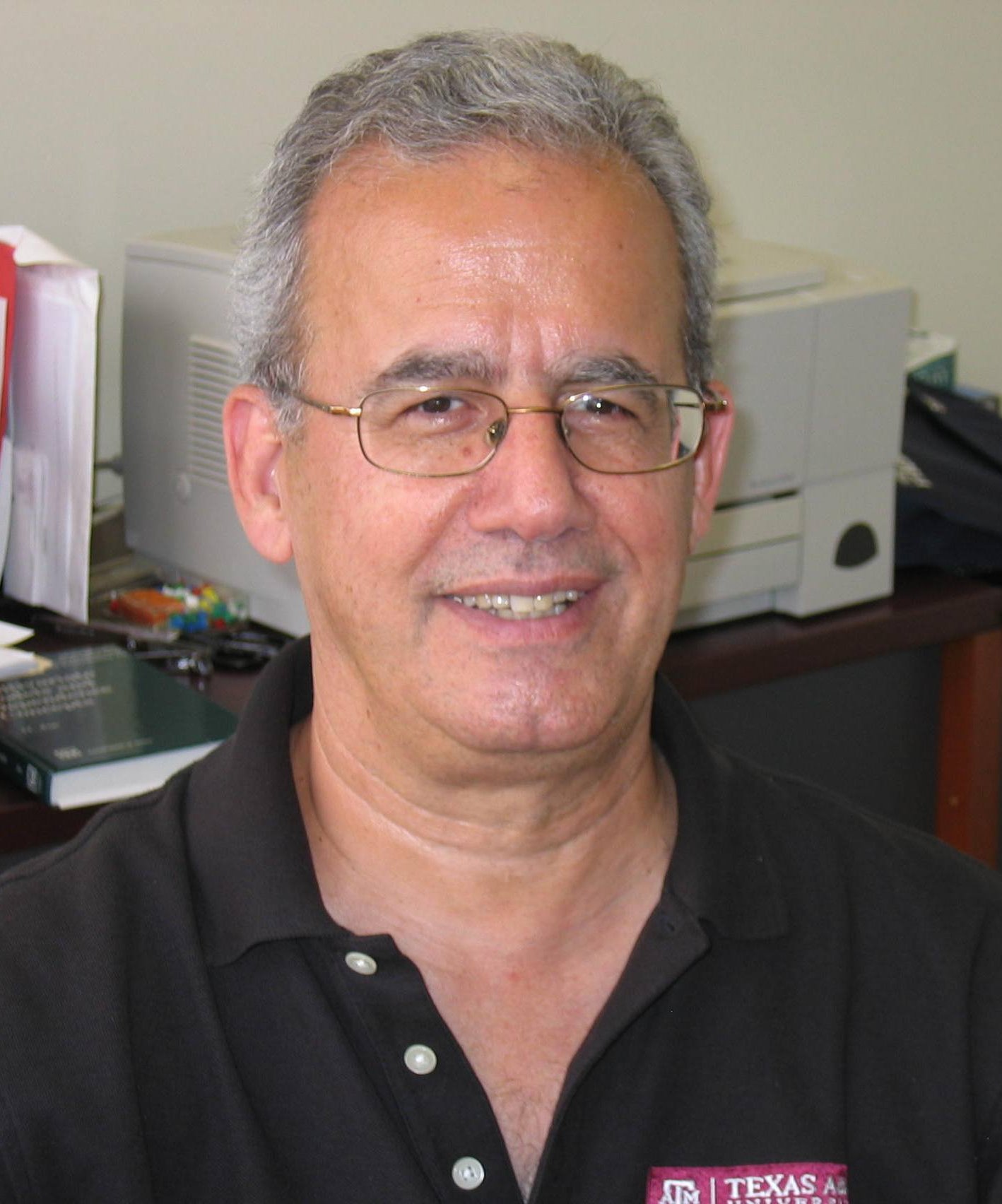
Mohsen Pourahmadi is a Professor in the Department of Statistics at Texas A&M University, part of the College of Arts & Sciences. His research focuses on developing methodologies for modeling covariance matrices in multivariate and time series data, with applications to financial analysis, longitudinal studies, neuroeconomics, and high-dimensional data. Key tools include graphical lasso algorithms, Cholesky decomposition, and Bayesian approaches. He emphasizes extending generalized linear models (GLM) to covariance matrix estimation, leveraging prediction theory and stochastic processes. Education details are not explicitly provided in the text. His work spans theoretical advancements in covariance estimation, such as sparse VAR models, nonstationary process analysis, and regularized multivariate regression. He has contributed to applications like detecting cyber attacks on infrastructure systems and analyzing breast cancer data through Bayesian networks. Research interests include time series graphical models, antedependence models for longitudinal data, and regularization techniques for high-dimensional covariance matrices. His recent work explores fused-lasso penalties, Bayesian correlation matrix estimation, and stationary subspace analysis. Pourahmadi has authored numerous articles on topics ranging from multivariate volatility modeling to nonparametric covariance estimation, emphasizing both computational efficiency and theoretical rigor.
Maryam Aliakbarpour is the Michael B. Yuen and Sandra A. Tsai Assistant Professor in the Department of Computer Science at Rice University, affiliated with the Ken Kennedy Institute. She holds a Ph.D. and M.S. from MIT (2020 and 2015) and a B.S. from Sharif University of Technology (2013). Her research focuses on theoretical computer science, statistical inference, learning theory, differential privacy, and hypothesis testing, with an emphasis on algorithm design under computational and privacy constraints. She has held postdoctoral positions at Boston University, Northeastern University, and UMass Amherst, and participated in the Simons Institute's 2020 program on high-dimensional computation. Her work bridges foundational theory and practical applications, particularly in designing efficient algorithms for distribution testing, privacy-preserving machine learning, and hypothesis selection. Notable contributions include optimal algorithms for distribution testing under memory constraints and advancements in differential privacy for metalearning. She has received the Rising Stars in EECS (2018) and MIT’s Neekeyfar Award. Teaching includes graduate courses on learning theory and probabilistic methods, emphasizing algorithmic tools for modern computational challenges. Her publications span top conferences like COLT, NeurIPS, and ICML, addressing topics such as privacy-aware learning, efficient entropy estimation, and robust statistical methods. She advises on research projects requiring strong algorithmic foundations and mentors students in theoretical computer science and data privacy.