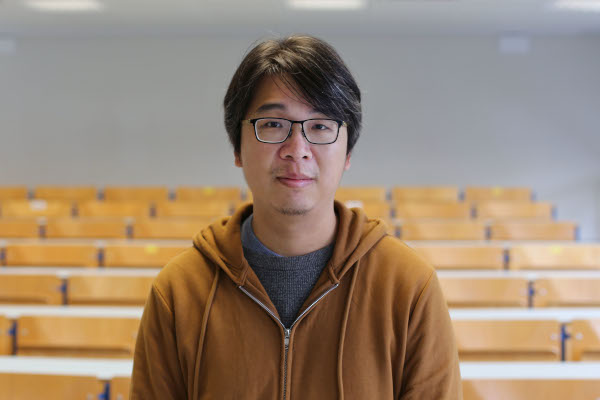
Pekka ParviainenView profile
Associate Professor
Pekka Parviainen is an Associate Professor in the Department of Informatics at the University of Bergen, within the Faculty of Mathematics and Natural Sciences. His research spans machine learning, probabilistic modeling, and AI theory, with a focus on Bayesian and Markov networks, adversarial robustness, fairness, and energy forecasting. He is affiliated with the Center for Data Science (CEDAS), an active research center at the university. His research interests include: Structure learning in graphical models Probabilistic forecasting using graph neural networks Adversarial robustness and defense mechanisms Fairness in clustering and machine learning Optimization and approximation in learning algorithms Applications in renewable energy and quantum sensing His recent publications (2020–2025) reflect a strong theoretical grounding combined with real-world applications, particularly in energy systems and AI safety. The works trend toward scalable and interpretable models, with increasing focus on fairness and robustness. Key themes include Bayesian network learning, metric learning, and causal graph modeling. Scientific contributions include: Development of novel adversaries (e.g., Voronoi-epsilon) for measuring robustness Scalable algorithms for learning large DAGs and Bayesian networks Integration of continuous optimization with combinatorial heuristics Applications in electricity demand forecasting and gas sensing Parviainen advises PhD students, including Hyeongji Kim (2023 thesis on distance in machine learning), and collaborates extensively with researchers in Norway and internationally. He has received computational support via Sigma2 (NN9884K) and is part of the CEDAS project, which fosters interdisciplinary data science research. While no specific grants are detailed, his involvement in funded projects and high-impact publications indicates active grant engagement. He is associated with the Center for Data Science (CEDAS), where he contributes to advancing data-driven methodologies across domains. The team emphasizes scalable, robust, and fair AI systems, aligning with national and international research priorities in trustworthy machine learning.