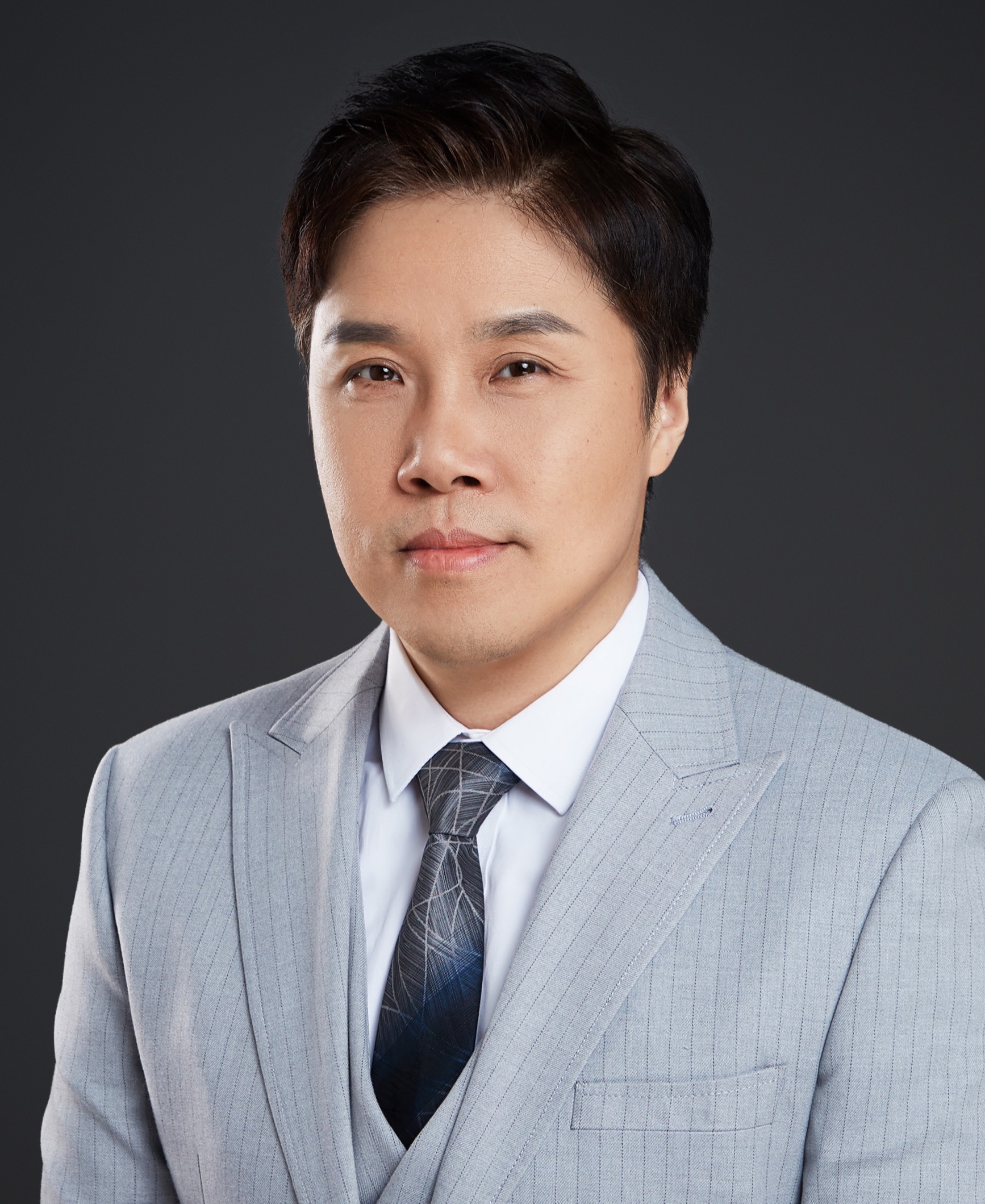
Andrew I. Cooper is a Professor at the University of Liverpool, Director of the Materials Innovation Factory, and Honorary Professor at East China University of Science and Technology (ECUST). He pioneers research in advanced organic functional materials, including conjugated microporous polymers, porous organic cages, and porous liquids, and developed the first autonomous mobile robotic chemist. Fields of Interest: Materials chemistry, robotics, AI-driven synthesis, and computational design of functional materials. Scientific Impact: Over 200 SCI-indexed papers, 52,000+ citations, H-index 117. Key journals: Nature , Science , JACS , Angewandte Chemie . Awards: Royal Society of Chemistry Professorship, Outstanding AI Leader award, Fellow of the Royal Society and European Academy of Sciences. Leadership: Editor-in-Chief of Chemical Science , trained 47 Chinese postdoctoral fellows and PhD students, and leads international collaborations with Chinese universities. Research Trends: Articles focus on robotics, AI, computational materials design, photocatalysis, and dynamic porosity in molecular systems.
Shunxiang Cao is an Assistant Professor at Tsinghua Shenzhen International Graduate School in China, where he has worked since July 2022. He earned his Ph.D. in Aerospace Engineering from Virginia Tech (United States) between August 2014 and August 2020 and completed his B.S. in Aerospace Engineering at Beihang University (China) from September 2010 to May 2014. Prior to his current role, he served as a Postdoctoral Scholar at the California Institute of Technology (United States) from November 2019 to May 2022. Teaches courses such as Advanced Numerical Analysis, Numerical Methods for PDEs, and Fluid-Structure Interaction simulations. Research Interests include fluid-structure interaction, computational fluid dynamics, shock/bubble dynamics, material failure analysis, embedded-boundary methods, resolvent-based optimization, Kalman inversion, high-intensity focused ultrasound, and digital twin technology. His work focuses on numerical modeling, optimization, and fluid-solid coupling mechanisms in diverse applications like underwater propulsion, energy storage membranes, and medical acoustics. Scientific Awards include the USNCCM16 Conference Award (2021), Graduate Fellowship at Virginia Tech (2014-2015), Merit Undergraduate Student in Beijing (2014), and Singapore Technology Engineering Fellowship (2010-2013).
Wang Chun is a tenured Associate Professor in the Department of Management Science and Engineering at the School of Economics and Management, Tsinghua University. He currently serves as Deputy Director of the department and has held academic positions at Tsinghua since 2017. His work bridges stochastic control, reinforcement learning, and machine learning applications in operations management and financial technology. Education: Bachelor's Degree from Tsinghua University (2005) Master's Degree from the University of Wisconsin-Madison (2008) Doctorate in Operations Research from Columbia University (2014) Research Interests: His research focuses on stochastic control and decision-making under uncertainty, particularly in inventory management, revenue management, financial engineering, and sports analysis. He also investigates reinforcement learning algorithms for dynamic optimization and applies machine learning to business data analytics and financial technology. Published Work Trends: Wang’s publications span operations research, financial mathematics, and computational management science. Recent studies address seasonal optimization patterns, robust inventory models, and game-theoretic approaches to sports analytics. His work integrates theoretical advancements in dynamic programming with practical applications in financial engineering and market microstructure. Career History: 2023–Present: Associate Professor, Tsinghua University 2020–2023: Associate Professor, Tsinghua University 2017–2020: Assistant Professor, Tsinghua University Researcher at KCG (New York), leading studies on quantitative investment and asset optimization
Fang Kong is an Assistant Professor in the Department of Statistics and Data Science at the Southern University of Science and Technology (SUSTech). He earned his PhD in Computer Science from Shanghai Jiao Tong University under the supervision of Prof. Shuai Li and received his Bachelor's degree in Software Engineering from Shandong University. Education: PhD in Computer Science, Shanghai Jiao Tong University (2020-2024) Bachelor's Degree in Software Engineering, Shandong University (2016-2020) Dr. Kong is broadly interested in developing theoretically guaranteed algorithms for sequential decision-making problems, with particular focus on multi-armed bandits and reinforcement learning, as well as their applications in online experimentation and recommendation systems. His research spans theoretical foundations of bandit algorithms, matching markets, influence maximization, and online learning under various feedback structures. He has made significant contributions to the understanding of best-of-both-worlds algorithms that perform well in both stochastic and adversarial environments. His publication record shows a strong trajectory of high-impact work in top-tier conferences including NeurIPS, ICML, ICLR, AAAI, WWW, and AAMAS. His research demonstrates expertise in theoretical machine learning with a focus on bandit algorithms, particularly in matching markets and sequential decision-making problems. His work often bridges theoretical guarantees with practical applications in recommendation systems and online experimentation. Scientific Awards: CCF Doctoral Dissertation Award in Agent and Multi-Agent Systems (2025) Baidu Scholarship (2024) National Scholarship for PhD students (2023, 2022) AAMAS Student Scholarship (2023) Microsoft Research Asia Excellence Award (2022) Dr. Kong actively mentors students at various levels, including PhD and Master's students at SUSTech, visiting students from other institutions, and undergraduate researchers. He serves as a reviewer for top machine learning conferences (ICLR, NeurIPS, ICML, WWW) and journals (IEEE PAMI, TMLR). His teaching includes graduate Machine Learning and undergraduate Artificial Intelligence courses at SUSTech.
Guo Xunhua is a Professor in the Department of Management Science and Engineering at Tsinghua University's School of Economics and Management. He serves as Party Branch Secretary and holds significant leadership roles including Executive Director and Secretary-General of the China National Association for Information Technology (CNAIS), Vice President of the China Society of Information Economics, and Secretary-General of the Information Management Committee of the China Management Modernization Research Association. His educational background includes dual bachelor's degrees in Management Information Systems and Computer Science and Technology from Tsinghua University (2000), followed by master's and doctoral degrees in Management Science and Engineering from the same institution (2005). He has been teaching at Tsinghua since 2005 and maintains international academic connections through visiting positions at RWTH Aachen University and MIT Sloan School of Management. Guo's research spans Management Information Systems, E-commerce, Social Networks, and Business Intelligence, with a focus on business intelligence methods in internet environments and behavioral patterns under emerging information technologies. His work integrates both 'technology' and 'behavior' perspectives within information systems research. His recent publications reveal a strong trend toward AI applications in e-commerce, personalized recommendation systems, social commerce dynamics, and the psychological aspects of digital interactions. Ministry of Education Changjiang Scholar Young Scholar (2019) Ministry of Education Outstanding Achievement Award for Scientific Research in Humanities and Social Sciences Beijing Philosophical and Social Sciences Outstanding Achievement Award Beijing Higher Education Teaching Achievement Award Multiple Tsinghua University Teaching Achievement Awards Professor Guo serves as Assistant Editor-in-Chief of the Journal of Information Systems and sits on editorial boards for international journals including Information Technology & People, Electronic Commerce Research, and Journal of Global Information Management. His teaching portfolio includes graduate courses in IT and Organization, and undergraduate courses in Principles of Computer Systems, Management Information Systems, and Introduction to Management Science and Engineering Research.
Liu Qing is a Tenured Associate Professor in the Department of Economics at Tsinghua University's School of Economics and Management. He has been affiliated with Tsinghua University since 2008 and holds a Ph.D. in Economics from the University of Toronto. Education: Ph.D. in Economics, University of Toronto (2008) M.A. in Economics, University of British Columbia (2002) M.A. in Economics, Zhejiang University (1999) His research focuses on international macroeconomics, monetary economics, and China's economy, particularly examining real exchange rates, current account imbalances, monetary policy, industrial policy, and structural transformation. Recent studies analyze labor market flexibility, CO2 emissions decomposition, and the impact of preferential lending policies on earnings inequality. His publications span journals like International Economic Review , Journal of Development Economics , and Journal of International Money and Finance . Research methods emphasize Bayesian DSGE modeling and empirical analysis of macroeconomic structures. Scientific Awards: Tsinghua SEM Teaching Excellence Award (First Prize) Tsinghua University Outstanding Class Teacher (Second Prize) Tsinghua SEM Outstanding Class Teacher Award Liu Qing teaches undergraduate courses in Money and Banking, master's courses in International Finance, and doctoral courses in Advanced Macroeconomics and Open Macroeconomics. His academic contributions include analyzing China's monetary policy frameworks and global welfare implications of oil price stabilization.
Dr. Ke Gao is an Associate Professor in the Department of Earth and Space Sciences at Southern University of Science and Technology (SUSTech) in Shenzhen, China. He joined SUSTech in 2019 after completing postdoctoral research at Los Alamos National Laboratory in the United States. Dr. Gao holds a Ph.D. in Rock Mechanics from the University of Toronto, which he obtained in 2017. His educational background includes: 2021–present: Associate Professor, Department of Earth and Space Sciences, Southern University of Science and Technology 2019–2020: Assistant Professor, Department of Earth and Space Sciences, Southern University of Science and Technology 2017–2019: Post Doc, Solid Earth Geophysics, Los Alamos National Laboratory, USA 2012–2017: Ph.D., Rock Mechanics and Rock Engineering, University of Toronto, Canada Dr. Gao's research primarily focuses on rock mechanics and fault mechanics, with particular emphasis on the development of multiphysics coupling models based on the combined finite-discrete element method (FDEM). His work investigates rock fracturing mechanisms, hydraulic fracturing, and the stick-slip characteristics in sheared granular faults. He has made significant contributions to tensor-based statistical methods for characterizing stress variability and heterogeneity in fractured rock masses. His research bridges computational mechanics with earthquake physics, creating innovative approaches to understanding fundamental geological processes. Analysis of Dr. Gao's recent publications reveals a strong focus on computational geomechanics and earthquake physics. His work consistently applies and advances the combined finite-discrete element method (FDEM) to solve complex rock mechanics problems. There's a clear progression from fundamental method development to applications in earthquake source mechanics and hydraulic fracturing. The integration of machine learning techniques with traditional computational methods represents an emerging trend in his recent work, particularly for predicting slip behavior in granular fault systems. Dr. Gao has received several notable recognitions: Best Paper Award at the 7th International Symposium on In Situ Rock Stress (2016) National Overseas High-level Talent Program (Youth) (2020) Shenzhen 'Peacock Plan' B Talents (2021) Dr. Gao serves as principal investigator for multiple research projects funded by prestigious organizations including the National Natural Science Foundation of China, Ministry of Science and Technology key research and development projects, Guangdong Province general projects, and Shenzhen City general projects. He actively mentors graduate students and postdoctoral researchers, recruiting candidates with backgrounds in solid geophysics, rock mechanics, geological engineering, computational mechanics, and related disciplines. His research group provides comprehensive training in both theoretical and experimental aspects of rock mechanics and earthquake physics. Dr. Gao is affiliated with several professional organizations including the American Rock Mechanics Association, American Geophysical Union, International Society for Rock Mechanics, Canadian Geotechnical Society, Society of American Seismology, and ASCE Engineering Mechanics Institute, reflecting the interdisciplinary nature of his work spanning rock mechanics, geophysics, and computational engineering.
Xiyun Jiao is an Assistant Professor at the Department of Statistics and Data Science, Southern University of Science and Technology (SUSTech). She earned her Ph.D. in Statistics from Imperial College London (2016) and held a postdoctoral research fellowship at University College London (2017–2020). Education : Ph.D. (Imperial College London), Master’s (KU Leuven), Bachelor’s (Tsinghua University) Research Interests : Computational statistics, Bayesian statistics, Markov chain Monte Carlo algorithms, and statistical methods in population genetics Her publications focus on integrating Bayesian frameworks with computational techniques for phylogenetics, cosmology, and statistical modeling. No scientific awards or student advisees are listed in the provided text.
Professor Abolfazl Bayat is a full-time faculty member at the Institute of Fundamental and Frontier Sciences, University of Electronic Science and Technology of China (UESTC). He holds the position of Professor and serves as a Ph.D. supervisor for doctoral candidates. His academic journey includes a PhD in Physics from Sharif University of Technology (2008) followed by postdoctoral research at University College London and University of Ulm. He joined UESTC in 2017 under the prestigious 1000-Talent Youth Professorship and also secured the Sichuan Talent Fellowship in 2018. Education Bachelor of Engineering in Electrical Engineering, Sharif University of Technology Master of Science in Physics, Sharif University of Technology Doctor of Science in Physics, Sharif University of Technology Research Interests Bayat's research focuses on theoretical aspects of strongly correlated many-body systems and their applications in quantum technologies. His work leverages numerical simulations (e.g., Density Matrix Renormalization Group) and machine learning techniques (neural networks, Bayesian estimators). Key areas include: Many-Body Localization Non-Equilibrium Dynamics of Many-Body Systems Quantum Sensing Quantum Simulation Recent Article Trends His publications (2015-2018) emphasize quantum refrigeration, entanglement dynamics, and quantum phase transitions. Notable contributions involve machine-learning-assisted entanglement measurement and experimental protocols for spin arrays. Topics span quantum dots, impurity systems, and coherence in magnetic devices. Awards & Recognition China's 1000-Talent Youth Professorship (2017) Sichuan Talent Fellowship (2018) Advising & Labs Bayat supervises a research group called Physics of Quantum Information Technology , including students Rozha, Utkarsh Mishra, and Victor Montenegro. His team explores quantum technologies through theoretical and computational frameworks. No grant data is explicitly listed, but his work aligns with EPSRC-funded quantum technology initiatives. Labs & Teams His group operates within the Institute of Fundamental and Frontier Sciences, focusing on quantum information, many-body systems, and nanoelectronics applications.
Liu Zhanli is a Full Professor at the Department of Engineering Mechanics, School of Aerospace, Tsinghua University. He holds dual B.S. and Ph.D. degrees in Engineering Mechanics from Tsinghua University (2004 and 2009 respectively), followed by postdoctoral research at Northwestern University, USA (2009-2012). His research focuses on computational mechanics methods for understanding material and structural deformation/failure, particularly in aerospace and biomedical engineering contexts. Key areas include impact loading dynamics, machine learning-driven reverse engineering, lightweight protective structures, and biological tissue mechanics. Professional roles include Regional Editor for the International Journal of Fracture , Editorial Board member of Applied Mathematics and Mechanics , and leadership positions in multiple Chinese mechanical engineering societies. Notable awards include the 2020 Aeronautical Society Science Prize and the National Science Fund for Excellent Young Scholars (2017). Major research initiatives span: Dynamic response modeling under impact loads Machine learning-based inverse design methodologies Biomedical tissue damage and repair Ballistic-resistant composite material design His work bridges computational theory with practical applications in defense, aerospace, and medical engineering domains.
Fuchun SUN is a Full-time Professor at Tsinghua University's Department of Computer Science and Technology, where he has been affiliated since 1998. He holds a Bachelor's (1986) and Master's (1989) in Automation from the Institute of Naval Aeronautical Engineering, and a Ph.D. in Computer Science & Technology from Tsinghua University (1997). Prof. SUN serves as Deputy Director of the State Key Laboratory of Intelligent Technology and Systems and holds editorial positions in IEEE Transactions on Neural Networks and Soft Computing. Research Focus: His work spans Intelligent Control, Robotics, Networked Control Systems, and Artificial Cognitive Systems. He pioneers neuro-fuzzy modeling, adaptive control of nonlinear systems, and Markov jump system filtering, with applications in spacecraft, mobile robots, and flexible manipulators. Research projects include National 863 High-Tech Programs and National Basic Research (973) Programs on hyperspace vehicle control and multi-satellite networking. Publications Trend: His 15 most recent articles (2002–2010) demonstrate consistent focus on neuro-fuzzy adaptive control, robotics, Markov jump systems, and H-infinity filtering. Over 80% involve experimental validation of theoretical frameworks for robotic manipulators and nonlinear systems. Awards: National Natural Science Funds for Distinguished Young Scholars (2006) New Century Talents Award, Ministry of Education (2004) National Science and Technology Progress Award, Second Class (2002) 18th Choon-Gang Academic Award, Korea (2003) Science and Technology Progress Award, Beijing (Second Class, 2004) National Distinguished Doctoral Dissertation (2000) Academic Leadership: Supervised 15 Ph.D. and 20 Master's students. Secured 10+ national grants including NSFC Distinguished Young Scholars funding. Developed experimental platforms: two flexible-link robot test-beds and a space teleoperation system for on-orbit servicing.
Jun Zhu is a Professor in the Computer Science Department at Tsinghua University and serves as Co-Director of the Tsinghua Artificial Intelligence Lab (TSAIL) and Director of the Tsinghua-Bosch Joint Center for Machine Learning. His research focuses on probabilistic machine learning, adversarial robustness, Bayesian methods, deep learning, and reinforcement learning. His recent work includes open-sourcing the Vidu video generator (2024), DPM-Solver for diffusion models (2024), and Tianshou deep RL library, with publications in top venues like ICLR and IEEE CoG. He has received prestigious awards including IEEE Fellow, AAAI Fellow, and MIT TR35 China recognition. Notable Awards: IEEE Fellow AAAI Fellow MIT TR35 China Pioneer (2017) NSFC Excellent Young Scholar (2013) Leadership: Co-Director, TSAIL Group Director, Tsinghua-Bosch Joint Center for ML Associate Editor-in-Chief, IEEE TPAMI
Chen Guoqing is a Professor and Senior Professor of Humanities at Tsinghua University's School of Economics and Management, where he serves as Deputy Director of the Academic Committee. He chairs the National Natural Science Foundation of China's Big Data Major Research Program Guidance Expert Group and directs the Ministry of Education's Higher Education Management Science and Engineering Professional Teaching Guidance Committee, with additional roles on national informatization and New Liberal Arts committees. Education: Bachelor's Degree, Renmin University of China (1982) Master's Degree, University of Leuven, Belgium (1988) Doctorate, University of Leuven, Belgium (1992) Research Focus: Professor Chen pioneers research in Business Intelligence and Big Data Analysis, developing frameworks like PAGE for data-driven decision-making. His work spans E-commerce, IT Strategy, and Fuzzy Logic, with recent emphasis on personalized recommendation systems, online consumer behavior, and AI-human collaboration in business contexts. His publications reveal a trajectory from foundational fuzzy logic research to cutting-edge big data applications, consistently bridging technical innovation with managerial relevance. Awards: AIS Fellow (first from mainland China) IFSA Fellow Fudan Management Outstanding Contribution Award Changjiang Scholar Distinguished Professor National Science Fund for Distinguished Young Scholars National Outstanding Doctoral Dissertation Advisor Leadership: As former Executive Vice Dean of Tsinghua SEM and Vice President of IFSA, he has shaped academic policy globally. He leads major NSFC projects and international collaborations while advising government bodies on informatization strategy. His teaching includes national-level courses like "Management Information Systems" and "Management in the Big Data Era."
Liu Chun is an Associate Professor in the Department of Finance at Tsinghua University's School of Economics and Management. He holds a PhD from the University of Toronto (2002-2007), a Master's (1999-2001) and Bachelor's (1995-1999) in Economics and Management from Tsinghua University. His research focuses on capital markets, financial measurement, and risk management. Professor Liu teaches courses including Intermediate Financial Theory, Financial Data Analysis, and Financial Practice Classes. His research explores diverse aspects of China's financial system including local government financing, SME credit access, investor behavior, and market microstructure. Recent work analyzes policy impacts using advanced econometric methods like Bayesian latent variable models and survival analysis. His publications predominantly appear in finance and economics journals, with thematic concentrations in: Chinese financial market dynamics Behavioral finance and investor decision-making Policy evaluation and regional development Financial econometrics and statistical modeling Market microstructure and volatility analysis Fintech innovations and digital finance Professor Liu maintains research collaborations across departments and supervises projects on financial infrastructure development. His office is located in Room B310 of Tsinghua University's Lihua Building in Beijing.
Professor Qiang Wei is a faculty member at the Department of Management Science and Engineering, Tsinghua University School of Economics and Management. With a PhD in Management from Tsinghua (1999-2003), he has held academic positions including Department Head and Deputy Secretary of the Party Branch. His research focuses on big data analysis, information systems, e-commerce, business intelligence, data mining, and management simulation. Doctor of Management, Tsinghua School of Economics and Management (1999-2003) Master of Tsinghua School of Economics and Management (1997-1999) Bachelor of Science, Tsinghua School of Economics and Management (1992-1997) His recent research explores big data analysis , online review systems , and personalized recommendation through machine learning and neural network frameworks. Articles span topics including monetary incentives in crowdsourcing , temporal consistency in review ranking , and product relationship discovery via embeddings . He has published in top journals like Management World, INFORMS Journal on Computing, and Information Systems Research. Key awards include: 2021 Ten Best Papers Award, Management World 2020 Ministry of Education Second Prize in Philosophy and Social Sciences 2018 Theory Contribution Award, China Society for Information Economics He teaches courses such as Information Technology and Management , Big Data and Business Analysis , and Data Structure and Algorithm . His work bridges computational methods with business applications, including cybersecurity analysis, mobile technology impact studies, and competitive intelligence systems.