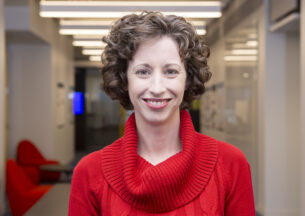
Rebecca Willett is a Professor of Statistics and Computer Science at the University of Chicago and Faculty Director of AI at the Data Science Institute. She holds the Worah Family Professorship and is a member of the Wallman Society of Fellows. Her research focuses on machine learning, signal processing, and scientific computing, with applications in astronomy, climate science, and biochemistry. She has held visiting roles at institutions including UCLA and INRIA. Key roles include Deputy Directorships at the NSF-Simons Institute for Theory and Mathematics in Biology and the SkAI Institute. Education: PhD in Electrical and Computer Engineering from Rice University (2005), followed by faculty roles at Duke University (2005–2013) and the University of Wisconsin-Madison (2013–2018). Awards include the 2024 SIAM Data Science Career Award, NSF CAREER Award (2007), and AFOSR Young Investigator Award (2010). Research interests span inverse problems, optimization theory, and interdisciplinary applications. Her work bridges high-dimensional statistics and imaging science. Recent articles emphasize neural network theory, climate data assimilation, and biophysical modeling. Awards include SIAM Fellowship, IEEE Fellowship, and teaching excellence awards. She leads initiatives in AI ethics, broadening participation in STEM, and serves on key committees like the National Academies' CATS. Labs/Groups: Machine Learning Group at UChicago, CERES Center for Unstoppable Computing. Grants include NSF, DOE, and collaborations with Argonne National Laboratory.
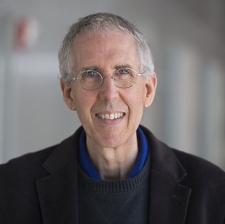
Alfred O. Hero, III is the John H. Holland Distinguished University Professor of Electrical Engineering and Computer Science and the R. Jamison and Betty Williams Professor of Engineering at the University of Michigan, Ann Arbor. He is currently on leave from the University of Michigan as a Program Director in the CISE Directorate at the National Science Foundation. His primary appointment is in the Department of Electrical Engineering and Computer Science (EECS), with secondary appointments in the Department of Biomedical Engineering and the Department of Statistics. He is also affiliated with the UM Center for Computational Medicine and Bioinformatics (CCMB), the UM Graduate Program in Applied and Interdisciplinary Mathematics (AIM), the UM Applied Physics Program, and the Michigan Institute for Data Science (MIDAS), which he co-founded from 2015-2018. Hero's research focuses on data science, developing theory and algorithms for multimodality data collection, fusion, analysis and visualization that use statistical machine learning and distributed optimization. His work has applications in wearable technologies for personalized health and predictive medicine, spatio-temporal networks in biology, climate, and social discourse, anomaly detection, and data analysis for international security. His recent research interests include high dimensional spatio-temporal data analysis, multimodal data integration, statistical signal processing, and machine learning, with particular emphasis on predictive mathematical models for biological and physical sciences, social networks, network security and forensics, and personalized health and disease. His recent publications demonstrate a strong focus on high-dimensional statistical methods, contrastive learning, neural network optimization, change detection in temporal graphs, and applications in microbiome analysis and epidemic modeling. The research spans theoretical foundations in information theory and statistical learning while addressing practical applications across multiple domains. Scientific Awards: IEEE Signal Processing Society Best Paper Award (1998) Best Original Paper Award from Journal of Flow Cytometry (2008) Best Magazine Paper Award from IEEE Signal Processing Society (2010) SPIE Best Student Paper Award (2011) IEEE ICASSP Best Student Paper Award (2011) IEEE Signal Processing Society Technical Achievement Award (2014) IEEE Signal Processing Society Society Award (2015) IEEE Fourier Award (2020) University of Michigan Distinguished Faculty Achievement Award (2011) Hero has advised over 60 PhD students and 30 postdocs in areas including modeling, computation, and inference for large scale time varying data in the biosciences. He has received significant research funding from the Department of Energy, Army Research Office, Air Force Office of Scientific Research, and National Science Foundation. He has held leadership positions including President of the IEEE Signal Processing Society (2006-2007), Director of Division IX (Signals and Applications) on the IEEE Board of Directors (2009-2011), and Chair of the Committee on Applied and Theoretical Statistics of the US National Academies (2018-2020).
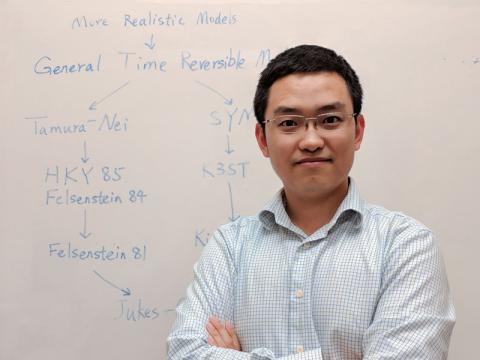
Xiang Ji is an Assistant Professor in the Department of Mathematics at Tulane University, affiliated with the School of Science & Engineering. His research focuses on statistical phylogenetics, computational biology, and bioinformatics, particularly in viral evolution and genomic epidemiology. He collaborates with Dr. Wu-Min Deng on cancer biology research from a bioinformatics perspective. Education: Ph.D., 2017: Bioinformatics and Statistics (Co-Major), North Carolina State University M.S., 2013: Material Science and Engineering, North Carolina State University B.S., 2011: Economics (Double Major) and Physics, Peking University Research Interests: Dr. Ji develops statistical models and computational tools for phylogenetic analysis, including scalable algorithms for large-scale genomic data. His work spans viral evolution, zoonotic disease surveillance, and parallel computing libraries for Bayesian inference. He emphasizes practical implementations such as Torchtree and TreeFlow . Articles Trends: Recent publications emphasize viral evolution dynamics (e.g., SARS-CoV-2, avian influenza), genomic surveillance strategies, and computational methods for phylogenetic inference. His work often bridges statistical theory with real-world applications in public health and epidemiology. Advising & Grants: While specific grant details are not listed, his active research program indicates involvement in funding initiatives related to computational biology and viral evolution. He teaches advanced courses in data analysis, linear models, and probability theory. Labs & Teams: Collaborates with Tulane’s Cancer Biology group and maintains partnerships with institutions globally, focusing on genomic epidemiology and phylogenetic software development.
Michael U. Gutmann is a Senior Lecturer in Machine Learning at the School of Informatics, University of Edinburgh, and a member of the Institute for Adaptive and Neural Computation. His research lies at the intersection of machine learning, statistics, and scientific applications, with a focus on developing inference methods for complex and implicit models. Education: PhD in Computational Neuroscience, University of Tokyo MSc in Engineering and Applied Mathematics, Swiss Federal Institute of Technology (ETH) Zurich MSc, Ecole Centrale Paris His primary research interests include Bayesian inference, likelihood-free inference, optimal experimental design, unsupervised learning, and applications in computational biology and neuroscience. He is best known for introducing Noise-Contrastive Estimation (NCE), a foundational technique for training unnormalized statistical models. His recent work spans variational inference, density ratio estimation, flow models for missing data, and AI-driven experimental design in behavioral and biological sciences. His publications, including in NeurIPS , ICML , JMLR , and eLife , demonstrate a strong emphasis on methodological innovation for scientific discovery. He has contributed to open-source tools such as ELFI (Engine for Likelihood-Free Inference) and developed practical implementations of robust inference algorithms. Scientific Awards: No specific awards listed in the provided texts. Michael Gutmann actively supervises students and collaborates with leading researchers in machine learning and computational biology. He has secured research funding from EPSRC and BBSRC for projects in generative modeling and infectious disease epidemiology. He teaches advanced courses such as Probabilistic Modelling and Reasoning and Data Mining, reflecting his deep engagement with both theoretical and applied aspects of machine learning. Labs and Research Groups: Institute for Adaptive and Neural Computation (ANC), University of Edinburgh Former affiliations with Department of Mathematics and Statistics and Department of Computer Science at the University of Helsinki and Aalto University
Dr. Vincent Fortuin is a tenure-track Assistant Professor at the Technical University of Munich (TUM) and a research group leader at Helmholtz AI in Munich. He leads the Efficient Learning and Probabilistic Inference for Science (ELPIS) group and holds multiple prestigious fellowships including the Branco Weiss Fellowship. His academic affiliations include the TUM School of Computation, Information and Technology, the Konrad Zuse School of Excellence in Reliable AI, and the Munich Center for Machine Learning. Dr. Fortuin earned his BSc in Molecular Life Sciences from the University of Hamburg (2012-2015), followed by an MSc in Computational Biology and Bioinformatics from ETH Zürich (2015-2017), where he received the ETH Excellence Scholarship and the Willi Studer Prize. He completed his PhD in Machine Learning at ETH Zürich (2017-2021) under the supervision of Gunnar Rätsch and Andreas Krause, supported by a Swiss Data Science Center PhD Fellowship. Prior to joining TUM, he was a Research Fellow at St. John's College, University of Cambridge (2022-2023). His research focuses on the intersection of Bayesian statistics and deep learning, specifically developing methods for more robust, data-efficient AI systems with reliable uncertainty estimates. His work addresses critical limitations in standard deep learning approaches, particularly their tendency to be overconfident in predictions and require large datasets for training. He investigates better priors and more efficient inference techniques for Bayesian deep learning, deep generative modeling, meta-learning, and PAC-Bayesian theory, with applications in scientific and biomedical domains. Dr. Fortuin's recent publications demonstrate a consistent focus on improving uncertainty quantification in deep learning systems, with increasing emphasis on practical applications in scientific contexts. His work spans from theoretical foundations of Bayesian deep learning to practical implementations in protein design, materials science, and medical applications. A notable trend is his exploration of how to make Bayesian methods more scalable and applicable to modern large-scale AI systems while maintaining theoretical guarantees. Branco Weiss Fellowship (2023) St John's College Research Fellowship (2022) Swiss National Science Foundation Postdoc.Mobility Fellowship (2022) Swiss Data Science Center PhD Fellowship (2018) ETH Excellence Scholarship (2015) Willi Studer Award (2018) Dr. Fortuin actively supervises PhD and Master's students through his ELPIS research group at Helmholtz AI. He serves as a regular reviewer and area chair for major machine learning conferences and is an action editor for TMLR. He co-organizes the Symposium on Advances in Approximate Bayesian Inference (AABI) and the ICBINB initiative, demonstrating his commitment to advancing the field through community building. His research group receives funding from multiple sources including Helmholtz AI, the Branco Weiss Fellowship, and collaborations with international institutions. Dr. Fortuin leads the Efficient Learning and Probabilistic Inference for Science (ELPIS) group at Helmholtz AI, which focuses on fundamental machine learning research motivated by real-world scientific problems. The group collaborates extensively with researchers across Helmholtz centers and international institutions, particularly in biomedical applications where reliable uncertainty estimates are crucial.
Markus Heinonen is an Academy Research Fellow at Aalto University's Department of Computer Science within the School of Science. His academic position is tied to Harri Lähdesmäki's Professorship, focusing on probabilistic machine learning. He holds a Doctoral degree in Engineering and Technology from the University of Helsinki (2013). His research integrates probabilistic modeling , deep learning , and differential equations , with applications in computational biology, drug discovery, and biophysics. Key themes include Gaussian processes, Bayesian inference, generative models, and their use in understanding complex biological systems like immune cell behavior (e.g., T cell receptor analysis in aplastic anemia) and molecular design. He leads major projects such as the Deep Learning with Differential Equations initiative (2020–2025), exploring continuous-time models and physics-informed neural networks. His work bridges theory and application, evidenced by collaborations in diffusion models , optimal transport , and single-cell analysis . Publications span over 65 peer-reviewed outputs, with recent emphases on robust neural network training, multi-target molecular prediction, and interpretable drug design frameworks. His research contributes to UN Sustainable Development Goal 3 (Good Health) through advancements in disease modeling and therapeutic development. He has undertaken visiting research roles at the University of California, San Francisco (2017) and Telecom ParisTech (2013–2014). Media highlights include recognition for work on TCR-epitope prediction and AI-driven enzyme engineering.
Andrea Montanari is a Professor of Mathematics and Statistics at Stanford University, affiliated with the Department of Mathematics and Statistics. His research focuses on high-dimensional statistics, machine learning theory, optimization algorithms, and statistical physics, with applications to neural networks and complex systems. He has contributed extensively to understanding generalization in overparametrized models, spin glass theory, and algorithmic methods like approximate message passing. His work bridges theoretical computer science and mathematical physics, addressing challenges in data analysis and learning from high-dimensional datasets. Notable themes include analyzing neural network dynamics, optimizing high-dimensional landscapes, and developing efficient algorithms for sparse and low-rank matrix estimation. Montanari’s publications explore topics such as the interplay between statistical and computational limits, the behavior of gradient-based methods, and the theoretical foundations of modern machine learning. His recent research demonstrates a focus on fundamental questions in learning theory, including the study of phase transitions in statistical estimation, the role of overparametrization in generalization, and the mathematical underpinnings of contemporary algorithms. While no specific awards are listed here, his contributions reflect significant impact in interdisciplinary fields.
Rui Li is an Associate Professor in the Ph.D. program at Rochester Institute of Technology's Golisano College of Computing and Information Sciences. She directs the Lab for Use-inspired Computational Intelligence (LUCI), focusing on AI applications in computational biology and medical imaging. Education includes: B.Sc. in Computer Science, Harbin Institute of Technology M.Sc. in Computer Science, Tianjin University of Technology Ph.D. in Computing and Information Sciences, RIT Research integrates statistical machine learning with computational biology, medical image analysis, and human visual attention modeling. Current projects include deep learning for histopathology, multimodal medical image registration, and gene network inference. Publications demonstrate consistent focus on medical AI applications, with recent advances in unsupervised image registration, interactive segmentation, and multimodal fusion techniques. Key trends include self-supervised learning, uncertainty-aware models, and human-AI collaboration frameworks. Awards include the NSF CAREER Award for developing adaptive machine intelligence systems. Advises multiple PhD students on projects spanning deep learning architectures, biomedical image analysis, and biological network modeling. Leads several NSF-funded projects including human-centered image understanding systems and gene-protein network inference tools. Directs LUCI lab investigating machine learning for healthcare applications and teaches graduate courses in Statistical Machine Learning and Deep Learning.
Dr. Igor V. Pivkin is a Full Professor at the Institute of Computing within the Faculty of Informatics at the Università della Svizzera italiana (USI) in Lugano, Switzerland. His academic journey includes degrees from Novosibirsk State University (B.Sc./M.Sc. Mathematics), Brown University (M.Sc. Computer Science and Ph.D. Applied Mathematics), and postdoctoral research at MIT's Department of Materials Science and Engineering. His research focuses on multiscale/multiphysics modeling , numerical methods , and large-scale simulations of biological and physical systems. Key areas include biophysics, cellular/molecular biomechanics, stochastic modeling, and coarse-grained molecular simulations. He leverages high-performance computing (HPC) and particle-based methods to address complex biological phenomena. His work spans diverse applications, from understanding cellular mechanosensitivity and biofilm engineering to modeling cancer cell behavior and red blood cell dynamics in the spleen. His contributions bridge computational science, biotechnology, and biomedical research. He has published extensively in top-tier journals, with recent work advancing automated biofilm analysis, deep learning for microbial classification, and systems biology approaches to metal bioleaching. His lab collaborates on interdisciplinary projects, emphasizing computational innovation for real-world biological challenges.
Yuguo Chen is a Professor in the Department of Statistics at the University of Illinois at Urbana-Champaign (UIUC), serving as Interim Department Chair and Director of the Illinois Statistics Office. He holds affiliations with the Department of Computer Science, Information Trust Institute, Coordinated Science Lab, and Illinois Informatics Institute. Chen earned his PhD in Statistics from Stanford University (2001) and a B.S. in Mathematics from the University of Science and Technology of China (1997). His research focuses on Monte Carlo methods, network data analysis, state space models, bioinformatics, and Bayesian inference. Key interests include scalable network estimation, community detection, and applications in public health, education, and computational biology. Recent work highlights include advancements in dynamic network modeling, Bayesian latent class models for cognitive diagnosis, and statistical methods for analyzing multi-layer networks. His contributions have been recognized through awards such as the American Statistical Association Fellowship (2018) and the Charles Edison Lectureship (2018). Editorial Roles: Associate Editor of Journal of the American Statistical Association , Journal of Computational and Graphical Statistics , and Journal of Algebraic Statistics . Grants & Consulting: Directs the Illinois Statistics Office, providing interdisciplinary research support. Active in collaborative projects involving healthcare, education, and computational infrastructure. Labs & Teams: Leads initiatives at the Coordinated Science Lab and Information Trust Institute, integrating statistical methods with cybersecurity and data-driven decision-making.
Pekka Marttinen is a tenured Associate Professor of Machine Learning at Aalto University, Department of Computer Science, and leads the Machine Learning for Health (Aalto-ML4H) group within the Helsinki Institute for Information Technology HIIT. Education: M.Sc. in Applied Mathematics, University of Helsinki (2004) Ph.D. in Statistics, University of Helsinki (2008) Title of Docent in Information and Computer Science, Aalto University (2015) Research Focus: His methodological work spans large language models, reinforcement learning, deep learning, probabilistic machine learning, and causal inference . These techniques are applied to critical domains of healthcare, bioinformatics, statistical genetics, epidemiology, and personalized medicine . The group develops novel algorithms, theoretical guarantees, and open-source software that enable data-driven discovery and decision-making in medicine and biology. Publication Trends: Across 2022-2024 the lab has concentrated on (i) rigorous causal reasoning over temporal clinical data, (ii) principled uncertainty quantification in LLMs, (iii) representation learning for neural network comparison, and (iv) translational projects that turn raw EHRs into actionable clinical insights. Earlier work integrated high-dimensional genomics with metabolomics and mapped evolutionary forces in bacterial pathogens. Scientific Awards & Recognition: While no specific awards are listed, his sustained publication record in top-tier venues (NeurIPS, ICML, AISTATS, Nature Genetics, PLOS CB) and his role as responsible professor of the Machine-Learning, Data-Science and AI major signify significant peer recognition. Advising & Grants: Prof. Marttinen currently mentors 8 PhD students as primary supervisor and an additional 7 PhD students as co-supervisor. He has already graduated 8 PhDs since 2014. The group is supported through competitive funding including the Finnish Center for Artificial Intelligence (FCAI) doctoral program. Labs & Teams: He directs the Machine Learning for Health (Aalto-ML4H) research group, comprising postdocs Hans Moen, Ti John, Alexander Nikitin, Negar Safinianaini, Linli Zhang, Zhiyuan Li, and the above-mentioned PhD cohort.
Max Lau is an Assistant Professor in the Department of Biostatistics and Bioinformatics and the Department of Epidemiology at Emory University. His research focuses on integrating machine learning and computational methods with epidemiological and genomic data to study infectious disease dynamics. He teaches courses such as BIOS 790R (Advanced Seminar in Biostatistics) and DATA 534 (Applied Machine Learning). Dr. Lau's work emphasizes scalable Bayesian inference, graph neural networks, and stochastic modeling to address challenges in disease transmission, outbreak control, and pathogen evolution. His recent research includes developing tools like ScITree and Epilearn, and he has contributed to understanding measles dynamics, tuberculosis treatment, and livestock disease management. His academic contributions span over 30 publications since 2010, with a particular focus on phylodynamics, epidemic modeling, and vaccine strategy evaluation. His interdisciplinary approach bridges computational methods with public health applications, aiming to enhance disease prediction and intervention efficacy.
Shili Lin is a Professor of Statistics at The Ohio State University's Department of Statistics, within the College of Arts and Sciences. She joined the faculty in 1995 after serving as the Neyman Visiting Assistant Professor at the University of California, Berkeley. Her expertise spans statistical genomics, bioinformatics, high-dimensional data analysis, Bayesian statistics, and Monte Carlo methods. Lin collaborates extensively with medical researchers to address challenges in genomic data such as ultra-high dimensionality, complex dependencies, and sparsity, focusing on diseases like cancer, multiple sclerosis, tuberculosis, and diabetes. She has contributed to developing computational tools for analyzing chromatin interactions, methylation patterns, and metagenomic samples. Lin holds a PhD from the University of Washington (1993). Her professional roles include serving as an Associate Editor for Biometrics , Statistical Applications in Genetics and Molecular Biology , and Statistics in Biosciences , as well as an Editorial Board member for Genetic Epidemiology . She is a standing member of NIH's Biostatistical Methods and Research Design Study Section and has served on multiple NSF and NIH grant review panels. Additionally, she is President Elect of the Caucus for Women in Statistics and has been a member of the ASA Committee on AAAS representation for six years. Her research interests emphasize statistical methodologies tailored to genomic data, including model selection, epigenetic analysis, and integrative approaches for multi-omics data. Lin's work often combines theoretical advancements with practical applications, such as predicting relapse in immune-mediated disorders and improving imputation techniques for single-cell Hi-C analysis. She has pioneered software tools like TopKLists and GrammR to facilitate ranked list aggregation and metagenomic data analysis. Lin's scientific accolades include ASA Fellowship (2004), AAAS Fellowship (2009), and membership in the International Statistical Institute (2014). Her contributions to statistical genetics and epigenomics have been recognized through grants and editorial leadership roles. While her research group focuses on cutting-edge methods, no formal advisees or students are explicitly listed in the provided materials.
Michael Schaub is a tenure-track Assistant Professor in the Department of Computer Science at RWTH Aachen University, specializing in Computational Network Science. His research focuses on analyzing complex systems through network and graph models, integrating dynamical systems, control theory, and machine learning. He leads the Computational Network Science group, advancing methodologies for higher-order network models like simplicial complexes and hypergraphs. Schaub holds a PhD from Imperial College London and has held postdoctoral positions at MIT and Oxford. He is an ERC Starting Grant recipient (2022) and a Marie Curie Fellow, recognized for contributions to network dynamics and topological data analysis. Education: PhD in Mathematics, Imperial College London (2011-2015) MSc in Biomedical Engineering, Imperial College London (2010) BSc in Electrical Engineering, ETH Zurich (2007-2010) Research Interests: Schaub’s work spans interdisciplinary applications of network science, including biological systems, social networks, and technical infrastructures. Key areas include: Higher-order network models (hypergraphs, simplicial complexes) Graph signal processing and dynamics on networks Community detection and dynamical systems analysis Topological data analysis and machine learning Grants & Awards: ERC Starting Grant (2022): HIGH-HOPeS project Marie Skłodowska-Curie Fellowship (2017-2019) Junior Fellow, German Informatics Society (GI) Member of Junges Kolleg (North Rhine-Westphalia Academy) Labs & Teams: Leads the Computational Network Science Lab at RWTH Aachen, collaborating internationally on projects like the ELLIS Society and the European Laboratory for Learning and Intelligent Systems (ELLIS). Active in organizing workshops (e.g., Toponets, SIAM MDS).
Yize Zhao is an Associate Professor in the Department of Biostatistics at Yale School of Public Health and an Associate Professor in the Department of Biomedical Informatics & Data Science at Yale University. She holds affiliations with multiple Yale research centers including the Yale Center for Analytical Sciences, Yale Alzheimer's Disease Research Center, Yale Wu Tsai Institute, Yale Center for Brain and Mind Health, and Yale Computational Biology and Bioinformatics. Dr. Zhao's research focuses on developing statistical and AI methods to analyze large-scale complex biomedical data including medical imaging, genomics, and electronic health records. Her methodological expertise spans Bayesian statistics, feature selection, predictive modeling, data integration, missing data analysis, and network analysis. Her research interests span multiple biomedical domains with a strong focus on mental health, psychiatry, neurodegenerative diseases, and aging. Her recent work includes brain-to-behavior modeling, multi-layer biomedical networks, imaging genetics and genomics, and the integration of multi-modal biomedical data with real-world data. Dr. Zhao's work has resulted in numerous high-impact publications, with recent research focusing on Alzheimer's disease, brain network analysis, and advanced statistical methods for neuroimaging. Her publications show a strong trend toward integrating multi-modal data sources and developing sophisticated statistical approaches to address complex biomedical questions. Thelma and Marvin Zelen Emerging Women Leaders in Data Science Award from the Institute of Mathematical Statistics (IMS) COPSS Emerging Leader Award from the Committee of Presidents of Statistical Societies (COPSS) YSPH Investigator Research Award Yale Alzheimer's Disease Research Center Research Scholar Award Elected member of the International Statistical Institute Dr. Zhao serves as an Associate Editor for Biometrics and is a standing member of the NIH Biodata Management and Analysis (BDMA) study section. Her research is supported by multiple NIH grants, highlighting the significance and impact of her work in biostatistics and biomedical data science.