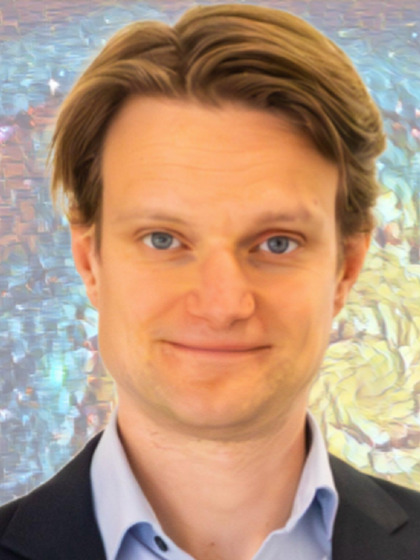
Dr. Jelle Aalbers is an Assistant Professor at the Faculty of Science and Engineering , University of Groningen, affiliated with the Van Swinderen Institute for Particle Physics and Gravitation and the Dark Matter research group. His work focuses on Weakly Interacting Massive Particles (WIMPs) , Neutrino Physics , and Gravitational Lensing . Research Interests: He explores Dark Matter detection via Liquid Xenon Detectors , Neutrinoless Double Beta Decay , and Low-Energy Particle Interactions . His contributions include Signal Reconstruction and Background Modeling in experiments like XENONnT and XLZD. Recent Publications: His 2025 work in Physical Review Letters and European Physical Journal C highlights advancements in Neutrino Fog Analysis , Neutron Veto Systems , and Ionization Signal Discrimination . Earlier studies (2023–2024) address Gravitational Lensing Inference and Dark Matter Constraints .
Dr. G Smid is a Researcher in the Department of Psychology within the Faculty of Social and Behavioural Sciences at Utrecht University, specializing in Clinical Psychology. His expertise centers on advanced statistical methodologies applied to psychological research, with particular emphasis on structural equation modeling under constrained data conditions. His primary research domains include Structural Equation Modeling, Bayesian Statistics, Adolescent Mental Health, Clinical Psychology, Data Synthesis, and Systematic Reviews. He has pioneered critical methodological frameworks for Bayesian SEM applications with small samples, developed interpretable synthetic data techniques, and investigated adolescent mental health determinants including harmful sexual behavior and immigration-related impacts. His work bridges complex statistical theory with clinical psychology applications. Analysis of Dr. Smid's 13 publications (2014-2023) reveals a dominant methodological trajectory focused on overcoming small-sample limitations in psychological research. His most influential contributions address Bayesian prior specification in SEM, measurement equivalence validation, and adolescent mental health risk factors. The publications demonstrate consistent innovation in statistical methodology while maintaining strong clinical relevance, particularly in adolescent psychology and mental health assessment.
Dr. Erik-Jan van Kesteren is an Assistant Professor in the Methodology and Statistics department at Utrecht University , where he leads the ODISSEI Social Data Science (SoDa) team. His work bridges statistical methodology with computational social science, with a focus on synthetic data, Bayesian inference, and open research infrastructure. Current research initiatives include: Developing privacy-preserving synthetic data frameworks Improving computational approaches to structural equation modeling Addressing geospatial sampling bias in volunteer-collected datasets Exploring text-based personality computing and language association tools He maintains the department's compute server infrastructure and contributes to open-source projects like ArtScraper and osmenrich. Contact via e.vankesteren1@uu.nl or erikjanvankesteren@pm.me
Rens van de Schoot is a full professor of Collaborative Methods in AI and Data Science at Utrecht University in the Netherlands and serves as an extra-ordinary professor at North-West University in South Africa. He directs the AI-LAB on AI-aided Knowledge Discovery and coordinates the open-source ASReview project (Active learning for systematic text reviewing), which has become a significant tool for researchers conducting systematic reviews across various disciplines. His research spans multiple domains with a strong focus on Bayesian statistics, artificial intelligence applications in systematic reviews, and psychological methodology. Van de Schoot's work bridges technical AI development with practical applications in social sciences and healthcare research, particularly in PTSD and mental health studies. His methodological contributions include significant work on measurement invariance, small sample size solutions, and the development of the WAMBS checklist for Bayesian statistics. The analysis of his recent publications reveals a clear trajectory toward increasingly sophisticated AI applications in systematic reviewing, with a strong emphasis on Bayesian methodology. His work demonstrates how machine learning can enhance traditional systematic review processes while maintaining methodological rigor. The interdisciplinary nature of his research connects statistics, computer science, psychology, and healthcare research in innovative ways. APA award for best dissertation of division 5 Recipient of prestigious VENI and VIDI research grants from the Netherlands Organization for Scientific Research Member of the Young Academy (Jonge Akademie) of the Royal Netherlands Academy of Arts and Sciences (KNAW) Elected member of the Society of Multivariate Experimental Psychology (SMEP) Van de Schoot has supervised numerous PhD candidates, as evidenced by his research on PhD delays and academic careers. His research program has been supported by multiple competitive grants, including his VENI project on integrating trauma-related background knowledge into statistical models and his VIDI project on expert knowledge and limited data. His work bridges theoretical methodological advances with practical applications across multiple domains. As director of the AI-LAB, he leads a team developing cutting-edge AI tools for knowledge discovery. His coordination of the ASReview project has created an international community of researchers applying active learning to systematic reviewing. He's also actively involved with the Utrecht Platform for Applied Data Science, fostering interdisciplinary collaboration on data-intensive research projects.
Dr. Mahdi Shafiee Kamalabad is an Assistant Professor in the Department of Methodology and Statistics at Utrecht University's Faculty of Social and Behavioural Sciences. His research focuses on developing advanced statistical and machine learning methods for complex data analysis, particularly in social and behavioral sciences, life sciences, and bioinformatics. Applied Data Science Network Analysis Bayesian Statistics Longitudinal Data Analysis He specializes in Dynamic Bayesian Network Models, Relational Event Models, and Change Point Detection algorithms. His work spans interdisciplinary collaborations, combining educational psychology, applied linguistics, and data science to improve understanding of multilingual classroom interactions and epidemic prediction models. He has contributed to R software packages like remify, remstats, and remstimate for relational event history data analysis. Notable projects include "Better Together: A Social Network Analysis of Multilingual Interactions in the Classroom" (2022) and methodological developments for malaria dynamics analysis in Cameroon. His teaching includes Data Wrangling and Data Analysis courses. Funding sources include Utrecht University's Faculty of Social and Behavioural Sciences.
Bella Struminskaya is an Associate Professor at Utrecht University’s Department of Methodology & Statistics, Faculty of Social and Behavioural Sciences. She is also an affiliated researcher at Statistics Netherlands and previously held a senior researcher role at GESIS - Leibniz Institute for the Social Sciences. Her work bridges survey methodology with digital data collection techniques, focusing on smartphone sensors and passive data donation. Education: PhD in Survey Methodology, Utrecht University M.A. in Sociology, University of Mannheim B.A. in Sociology, Novosibirsk State University Her research explores innovative data collection methods, including smartphone surveys, mixed-mode designs, and ethical frameworks for data donation. She investigates how mobile technologies can reduce survey burden while addressing nonresponse bias and measurement errors. Recent work emphasizes integrating digital trace data with traditional surveys to enhance accuracy and scope. Key article trends highlight applications of smartphone sensors in health studies, GDPR compliance for data access, and methodological advancements in smart surveys. Her contributions span technical tools like the Port software and theoretical insights on panel conditioning and ethical data augmentation. Scientific Awards: GOR Thesis Award 2015 She serves as a board member for the German Society for Online Research, Program Chair for the General Online Research Conference (GOR), and holds advisory roles in organizations like the European Social Survey, SHARE ERIC, and ODISSEI. She is an associate editor for multiple journals, including the Journal of Survey Statistics and Methodology and Survey Research Methods.
Mauro Salazar is an Assistant Professor in the Control Systems Technology section of the Department of Mechanical Engineering at Eindhoven University of Technology (TU/e), with co-affiliations at the Eindhoven AI Systems Institute (EAISI) in both Health and Mobility domains. He leads his own research group focused on optimization models and methods for systems and control. His educational background includes: B.Sc. and M.Sc. in Mechanical Engineering from ETH Zürich (2012, 2015) Master thesis conducted at EPFL's Automatic Control Lab Ph.D. in Mechanical Engineering from ETH Zürich (2019) in collaboration with Ferrari Formula 1 Postdoctoral Scholar at Stanford University's Autonomous Systems Lab (2019-2020) Salazar's research centers on optimization models for multi-scale cyber-socio-technical systems with applications spanning mobility systems, pandemic response, and material design. His work bridges theoretical optimization with practical implementation, particularly in sustainable mobility solutions where he develops methods for optimal design and operation of transportation systems from single vehicles to entire networks. He investigates mesoscopic user behavior modeling and designs incentive schemes to align individual and system-level objectives in transportation networks. His recent publications (2025) demonstrate a strong focus on sustainable mobility systems, with recurring themes in electric vehicle fleet management, battery degradation modeling, ride-pooling algorithms, and energy management for transportation electrification. His work spans multiple disciplines including automotive engineering, control systems, energy management, and public health, characterized by rigorous mathematical optimization approaches applied to real-world challenges. His scientific recognitions include: Two ETH Medals (for Master's and PhD theses) Best Student Paper awards at ITS 2018 and ECC 2022 Best Teacher Award (2021) Nomination for TU/e Young Researcher Award (2022) Salazar actively advises research projects and secured funding through the Dutch Research Council's NEON project (Crossover research program, Grant 17628). His teaching portfolio includes Optimal Control and Reinforcement Learning, Engineering Optimization, and Advanced Full-Electric and Hybrid Powertrain Design. He leads the 'Group Salazar' within the Control Systems Technology section and contributes to EAISI Health and Mobility initiatives.
Dr. Marc van der Sluys van der Sluijs is a researcher at Utrecht University's Department of Gravitational and Subatomic Physics (GRASP) and the Dutch National Institute for Nuclear and High Energy Physics (Nikhef) in Amsterdam. His academic focus spans gravitational-wave detection, binary evolution, and computational astrophysics, with active roles in the Virgo, LIGO, and Einstein Telescope collaborations. Research Interests: His work centers on gravitational-wave data analysis, neutron star and black hole coalescences, common-envelope evolution, and multi-messenger astronomy. He employs heavy computing and Bayesian statistics for empirical modeling of astrophysical phenomena. Teaching: He teaches Introduction to Astrophysics and Stellar Evolution in Utrecht University's physics bachelor program. Publications: His recent articles (2019–2025) predominantly explore gravitational-wave detection methodologies, dark matter searches, and solar position algorithms. Key themes include machine learning applications in astrophysics, multi-instrument data analysis, and open-source software development for scientific computation. Ancillary Activities: He founded hemel.waarnemen.com , a popular Dutch astronomy website with 1–2 million annual visits, providing observational guides for celestial phenomena in Belgium and the Netherlands.
Ondrej Rokos is an Assistant Professor in the Mechanics of Materials section at Eindhoven University of Technology (TU/e), Department of Mechanical Engineering. He is actively involved in research and teaching related to multiscale materials modeling, with a focus on computational mechanics, metamaterials, and homogenization techniques. He leads Group Rokos and is affiliated with the Institute for Complex Molecular Systems (ICMS). PhD in Civil Engineering (2014) from Czech Technical University in Prague Postdoctoral positions at CTU Prague and TU/e Visiting researcher at TU/e (2015) and University of Luxembourg (2016) His research centers on understanding multiscale physical phenomena in materials engineering to enable optimal material design. Key areas include: Homogenization and quasicontinuum methods for discrete microstructures Machine learning integration in surrogate modeling Stochastic structural dynamics and experimental-computational frameworks Mechanical metamaterials with pattern transformation capabilities Recent publications emphasize the application of machine learning (e.g., symmetric positive definite convolutional networks) and advanced homogenization techniques (e.g., similarity-equivariant graph neural networks) to optimize metamaterials. Notable trends include: Development of data-driven models for modular structures Geometrical parameterization of elastomeric metamaterials Active stiffness control in pneumatic systems Extended quasicontinuum methodologies for heterogeneous systems He teaches courses in: Computer Aided Engineering Solid Mechanics Machine Learning for Multi-Physics Modeling and Design Research is conducted within the Mechanics of Materials group, with affiliations to ICMS and collaborations across institutions.
Mohsen Kaboli is an Assistant Professor (Part-time) at Eindhoven University of Technology (TU/e) in the Netherlands, affiliated with the Department of Electrical Engineering and the Electronic Systems group. Since 2018, he has served as head of the AI, Robotics & Cognitive Vehicle research lab at BMW Group’s Center of Invention in Munich, Germany. Previously, he held positions at Radboud University’s Institute for Brain and Cognition (2019-2022) and Technical University of Munich (TUM) as a postdoctoral research fellow. His research focuses on Embodied Robotics, Visuo-Tactile Interactive Perception, and Machine Learning, with applications in Robotic Grasping, Human-Robot Collaboration, and Neuromorphic Computing. He leads European-funded projects like PHASTRAC (Oscillatory Neural Networks for AI Edge Computing) and INTUITIVE (Tactile User Interfaces). Keywords: Tactile Intelligence, AI, Robotics Application Domains: Mobile Robotics, Medical Instrumentation, Neuroprosthetics His recent publications (e.g., ViTract, Shared Visuo-Tactile Perception) emphasize robust object pose estimation and shape reconstruction using Bayesian filtering and Graph Neural Networks. He has authored ~40 academic works and contributed to 20 patents. Scientific Awards : IEEE Senior Member (2018) Georges Giralt Ph.D. Award (Finalist) IEEE ICRA Outstanding Paper Award (Finalist, 2023) IEEE FLEPS Outstanding Student Award (Winner, 2022) IEEE ROSE Outstanding Paper Award (Winner, 2024) Mohsen Kaboli serves as Editor/Associate Editor for IEEE ICRA, IROS, R-AL, T-RO, and IJRR. His work bridges tactile perception, AI, and robotics, with impacts in wearables, medical devices, and autonomous systems.
Aleida Braaksma is a Lecturer at the University of Twente, affiliated with the TechMed Centre and Mathematics of Operations Research department. Her work bridges Artificial Intelligence with Health and Well-being , focusing on optimizing healthcare systems through Operations Research methodologies. Key Affiliations: Digital Society Institute, TechMed Centre, Mathematics of Operations Research department Research Themes: Reinforcement Learning, Data Mining, Process Mining, and Queueing Theory applications in healthcare logistics Her recent publications highlight advancements in medical diagnostic scheduling , bed allocation , and adaptive clinical trial designs . She has pioneered dynamic robust optimization frameworks for time-sensitive pharmaceutical workflows and developed sampling-based methods for Gittins index approximation in stochastic environments. Scientific contributions include: Optimization of rheumatology outpatient clinics via patient classification algorithms Response-adaptive procedures in clinical trials using constrained Markov decision processes Real-time forecasting systems for pandemic-related hospital capacity planning Computerized decision support for nurse-to-patient assignment
Agata Leszkiewicz is Assistant Professor of Marketing at the University of Twente, Department of High-tech Business and Entrepreneurship. She specializes in marketing analytics, digital marketing, and customer-relationship management, employing machine-learning and econometric techniques to study customer churn, reacquisition, and marketing-channel optimization. Education: PhD (cum laude) in Business & Quantitative Methods, University Carlos III of Madrid – awarded the King Felipe VI Extraordinary Doctoral Dissertation Prize (2014) MSc in Business & Quantitative Methods, University Carlos III of Madrid MA in Quantitative Methods in Economics & Information Systems, Warsaw School of Economics Research interests centre on the intersection of big-data analytics and substantive marketing problems. She develops new statistical and machine-learning approaches to model customer lifetime value, design optimal experiments, and personalize digital interactions. Current themes include AI-enabled social commerce, cultural drivers of online purchase, and the societal value of AI in business. Her work appears in top-tier journals such as Journal of Marketing Research , Journal of Interactive Marketing , and Statistics and Computing , and has been presented at EMAC, INFORMS Marketing Science, AMA Winter Educators, and leading statistics symposia. Scientific awards: 2023 Emerald Literati Outstanding Author Contribution Award 2023 ISBM Doctoral Award Finalist (supervisor of nominated student) 2014 Premio Extraordinario de Doctorado, Kingdom of Spain Grant & advisory activity: She coordinates multiple marketing courses within the (I)BA bachelor, pre-master and master programmes at Twente, serves as associate editor of BRQ Business Research Quarterly , and reviews for Journal of Marketing , Journal of Marketing Research , European Journal of Marketing , among others. She is chair of the European Marketing Academy (EMAC) network. External collaboration: Since 2018 she is visiting scholar at the Center for Excellence in Brand & Customer Management, Georgia State University, and previously conducted doctoral research at Columbia Business School.
Bojana Rosic is a Full Professor specializing in Applied Mechanics & Data Analysis. Her research spans Artificial Intelligence, Machine Learning, Robotics, and Uncertainty Quantification, with a focus on integrating computational methods into mechanical systems and materials science. Key Research Areas: Machine Learning, Uncertainty Quantification, Robotics, Soft and Compliant Mechanisms, Materials Simulation. Recent Work: Contributions to neural network-based constitutive modeling for anisotropic materials, real-time control systems for robotic manipulators, and uncertainty quantification techniques using Polynomial Chaos Expansion. Collaborations: Active in interdisciplinary research with applications in energy, sustainability, and biomedical engineering. Her work emphasizes practical implementations of AI in mechanical engineering, including autonomous systems and collaborative robots (cobots). While no specific awards or educational background are detailed here, her extensive research output (68 publications) highlights her leadership in computational methods and machine learning integration.
Dr. Michiel Min is a researcher at the Netherlands Institute for Space Research and affiliated with the University of Groningen (RUG). His work focuses on astrophysical phenomena related to protoplanetary disks, exoplanet atmospheres, and machine learning applications in astronomy. Research Themes: Protoplanetary Disk Physics, Extrasolar Planet Analysis, Dust Mineralogy, and Atmospheric Retrieval Instrumentation: Expertise in James Webb Space Telescope (JWST) data analysis and mid-infrared spectrography Michiel’s recent publications emphasize dust-gas separation in disks, exoplanet atmospheric modeling using machine learning, and hydrocarbon chemistry in planet-forming regions. Collaborations span institutions like CDS, ESO, and NASA, with datasets shared on platforms like Mendeley. His research contributes to UN Sustainable Development Goals, particularly those related to planetary protection and scientific innovation.
Dr. Karin Gehring is a Researcher at Tilburg University's Department of Cognitive Neuropsychology within the Tilburg School of Social and Behavioral Sciences. With over 100 publications spanning nearly two decades of research, she specializes in cognitive functioning in patients with brain tumors, particularly examining how conditions like gliomas and meningiomas impact cognitive performance before and after treatment. Her work contributes to Sustainable Development Goals related to health and well-being, focusing on improving quality of life for neuro-oncology patients. Dr. Gehring's research program investigates cognitive impairments across multiple dimensions of brain tumor care. She examines how tumor location affects specific cognitive domains, how surgical intervention and radiotherapy impact cognitive trajectories, and develops prediction models for post-treatment cognitive functioning. Her recent work demonstrates an evolution toward more sophisticated analytical approaches, integrating machine learning, network neuroscience, and voxel-based analysis to understand the complex relationships between brain structure, treatment parameters, and cognitive outcomes. This methodological progression reflects her commitment to translating research findings into clinically useful tools for neuro-oncology care. Analysis of Dr. Gehring's recent publications (2024-2025) reveals a strong focus on predictive modeling of cognitive outcomes, structural connectivity analysis, and advanced imaging techniques. Her work consistently addresses clinically relevant questions about when and why cognitive impairments occur following brain tumor treatment, with the ultimate goal of improving patient care through evidence-based interventions and decision support. Award for excellence in quality of life research from the International Society for Neuro-oncology (2008) Ties Rudolphie stimuleringsprijs recognizing contributions to brain tumor research (2008) Fellowship for Treatment of Cognitive Deficits in Patients with Primary Brain Tumors (2010) Dr. Gehring serves as an editorial board member for Neuro-Oncology Practice since 2013 and is actively involved as a Principal Investigator in the 'De Sterkste Schakel' research project. Beyond her academic roles, she contributes to practical applications of her research through board positions with stichting 't Hoofdgerecht (managing the ReMind app for brain tumor patients) and Stichting Sport Support Arnhem. Her work exemplifies a translational research approach, bridging fundamental neuroscience with clinical applications to improve cognitive outcomes and quality of life for patients undergoing treatment for brain tumors.