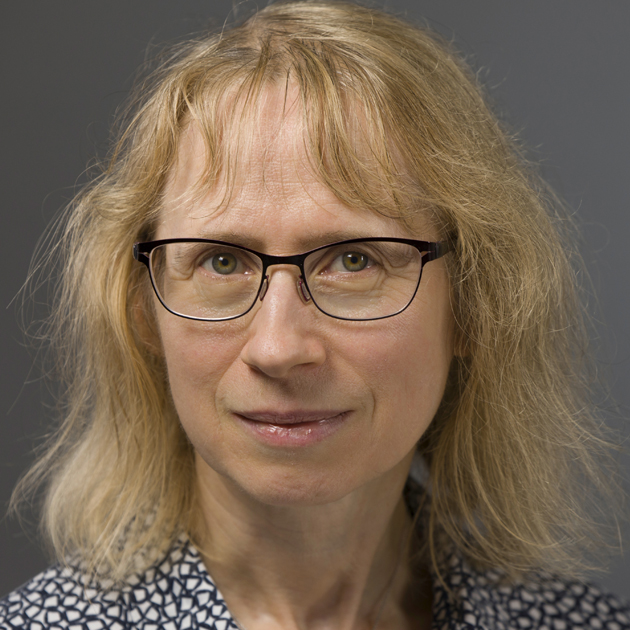
Sylvain Faisan is a permanent Assistant Professor at ICube - MIV (University of Strasbourg, France). His research focuses on image processing, statistical modeling, and geometry, with applications in medical imaging and neuroscience. He works on advanced methodologies integrating machine learning and mathematical frameworks. Key Research Areas: Polarimetric image processing, retinal image registration, 3D statistical model comparison, topology-preserving image deformation, and fMRI brain mapping Technical Expertise: Bayesian inference, non-local means filtering, reversible jump MCMC algorithms, causal modeling, and constrained optimization His publications demonstrate interdisciplinary applications in optics, biomedical imaging, and computational anatomy. He contributes to developing algorithms that maintain physical admissibility and topological integrity in complex imaging problems.
Yohan PETETIN is an Associate Professor at Telecom SudParis (Institut polytechnique de Paris) in the CITI Department. His research focuses on Bayesian filtering, Monte Carlo methods, hidden Markov models, and multi-object tracking. He has authored over 20 peer-reviewed articles since 2011, with notable contributions in IEEE Transactions on Signal Processing and other top venues. His work bridges statistical signal processing with machine learning applications. PhD: Algorithmes de restauration bayésienne mono- et multi-objets dans des modèles Markoviens (2013, Telecom SudParis) HDR: Generative models for time series data (2023, Institut polytechnique de Paris) Research interests emphasize sequential Monte Carlo algorithms, particle filtering optimizations, and deep learning integration for time-series analysis. Recent work explores expressivity comparisons between recurrent neural networks and hidden Markov models. Teaching includes courses on probabilistic graphical models, Bayesian filtering, and deep learning across undergraduate and graduate programs at Telecom SudParis and affiliated institutions.
Mathieu Fontaine is an Associate Professor in Machine Listening at Télécom Paris , affiliated with the LTCI Lab within the IDS Department (Information, Data, Signal). His research focuses on machine listening for speech and audio signal processing. PhD in Informatics (2019), Lorraine University Master in Applied and Fundamental Mathematics (2015), Poitiers University BSc in Fundamental Mathematics (2013), Rennes University Fontaine's research spans speech enhancement , speaker separation , source localization , and music source separation using heavy-tailed probabilistic models and deep Bayesian networks , with applications in augmented reality . He has expertise in Python , signal processing , and machine learning (80% proficiency). His recent publications (2024) include work on diffusion models for speech synthesis , room acoustics estimation from 3D meshes , robust audio scene analysis , and direction-aware speech processing . Earlier publications (2022-2023) explore flow-based NMF , alpha-stable representations , and adaptive beamforming in multiparty environments. Fontaine collaborates with the S2A team and ADASP group at LTCI Lab. His work integrates probabilistic modeling with deep learning to address challenges in real-world audio processing, including reverberation, noise, and complex acoustic environments.
Julyan Arbel is an Associate Researcher (chargé de recherche) at Inria Grenoble in the Statify team and a member of Laboratoire Jean Kuntzmann at Université Grenoble Alpes. He holds a PhD in Applied Mathematics from Université Paris-Dauphine and graduated from École Polytechnique and ENSAE. He defended his Habilitation à Diriger des Recherches (HDR) in 2019. Research Interests His work spans Bayesian Statistics (approximations, computation, nonparametrics, extreme value theory, objective Bayes) and Bayesian Machine Learning (Bayesian neural networks, variational inference), with applications in environmental science and neuroscience. Key focus areas include: Statistical methods for ecological modeling and species distributions Integration of biotic interactions in predictive frameworks Bayesian approaches to machine learning challenges Publications Overview Recent articles (2022-2025) demonstrate a strong focus on statistical ecology, including species distribution modeling, biotic interactions, community ecology, and biodiversity conservation. Methodological innovations center on joint species distribution models and Bayesian computational techniques applied to environmental datasets. Academic Service Associate Editor: Statistics and Computing (2025–present) Associate Editor: Bayesian Analysis (2019–present) Associate Editor: Australian and New Zealand Journal of Statistics (2019–present) Associate Editor: Statistics & Probability Letters (2019–present) Associate Editor: Statistical Methods & Applications (2024–present) Former Associate Editor: Computational Statistics & Data Analysis (2020–2023) Students Supervised PhD students: Giovanni Poggiato Daria Bystrova Minh Tri Lê Théo Moins Teams Statify Research Team, Inria Grenoble Laboratoire Jean Kuntzmann, Université Grenoble Alpes
Tâm Le Minh is a postdoctoral researcher in statistics at Inria Grenoble Rhône-Alpes, focusing on model-based statistical methods and nonparametric models with latent variables. His work bridges statistical theory with applications in life sciences, particularly ecological network analysis. PhD in Applied Mathematics (2023), Université Paris-Saclay Master in Applied Mathematics (2020), Institut Polytechnique de Paris Background in aeronautics and software engineering His research spans U-statistics, row-column exchangeable matrices, and Bayesian nonparametric approaches, with applications to ecological networks and high-throughput sequencing data. Recent publications emphasize bipartite network analysis and variational annealing for optimization. He has presented at major conferences including the International Conference on Bayesian Nonparametrics, Bernoulli-IMS World Congress, and ISBA World Meeting. His work appears in journals like ESAIM: Probability and Statistics and the Electronic Journal of Statistics.
Jeroen ROMBOUTS is a Professor at ESSEC Business School (France) and holds the Full Professor position of the Accenture Strategic Business Analytics Chair since 2017. He joined ESSEC in 2013, previously serving as Associate Professor at HEC Montreal (2004–2012). His research focuses on financial econometrics, volatility modeling, and machine learning applications in financial markets. He holds a Ph.D. in Econometrics from the Catholic University of Louvain (2004) and has held visiting professorships at numerous institutions, including the University of Melbourne, Aarhus University, and Tilburg University. Education: PhD in Econometrics (2004), Catholic University of Louvain; Master's degrees in Statistics (2001), Econometrics (2000), and Economics (1999), all from the same institution. He is also a Researcher at the Finance and Insurance Lab (CREST) since 2014 and serves on editorial boards of journals like Quantitative Finance and International Journal of Forecasting . Research Interests: His work emphasizes volatility modeling, time series analysis, and applications of machine learning to forecast financial markets. Key areas include GARCH models, structural breaks, and cross-temporal forecasting for digital platforms. He has published extensively in top journals such as Journal of Econometrics and International Journal of Forecasting . Articles Overview: Recent contributions include novel methods for cross-temporal forecast reconciliation using machine learning and sparse change-point VAR models. His work bridges econometric theory with practical applications in asset pricing and risk management. Awards: Recipient of the 2024 Risk-Shift award in France. His research has been recognized for advancing methodologies in volatility modeling and financial econometrics. Advising & Grants: While no specific grants are listed, his roles as a researcher and editor highlight significant contributions to the academic community. He advises on policy and industry applications of his models through consulting roles in financial econometrics and macroeconomic forecasting. Labs & Teams: Affiliated with the Finance and Insurance Lab (CREST) and leads the Information Systems, Data Analytics, and Operations department at ESSEC. Collaborates with global institutions on projects involving high-frequency data and platform economics.
José Picheral is a Professor at CentraleSupélec, affiliated with the Laboratory of Signals and Systems (L2S). He holds a PhD (2003) and HDR (2017) in high-resolution signal processing methods and inverse problems. His research focuses on array processing, source localization, acoustic imaging, and vibration analysis, with applications in aeroacoustics, automotive systems, and industrial monitoring. He has supervised multiple PhD students and contributed to projects like Valeo’s smartphone-based car key replacement system. Education: Engineering Degree: Supélec (1999) and Politecnico di Milano (1999, Erasmus-TIME) PhD: Paris Sud University (2003) Habilitation (HDR): Université Paris Sud (2017) Research Interests: High-resolution methods for distributed sources, sparse signal processing, acoustic imaging, asynchronous measurements, and sensor array design. Current projects include spatial source covariance estimation, EEG spectrum analysis, and automotive applications using smartphone localization. Key Contributions: Over 50 publications in top journals/conferences (e.g., IEEE Transactions, ICASSP). Notable work on MUSIC algorithm robustness, DAMAS optimization, and sparse approaches for tip-timing signals. Advising & Collaboration: Supervised 7 PhD students. Collaborations with SAFRAN, Valeo, and academic teams in Bayesian inference and inverse problems. Active in L2S’s Inverse Problems Group and SYCOMORE team. Labs/Teams: Member of L2S’s Signal Processing and Statistics group, leading research in systems and control, telecommunications, and energy systems.
Pierre ALQUIER is a Professor at ESSEC Business School (Singapore) since 2023, specializing in statistical learning and machine learning. Previously, he held professorships at ENSAE Paris (2014–2019) and the University of Dublin (2012–2014). He earned his PhD in Mathematical Statistics from Pierre and Marie Curie University in 2006, with a focus on advanced statistical methodologies. His research centers on Bayesian methods, PAC-Bayes bounds, high-dimensional data analysis, and robust estimation, with applications in quantum computing and time series. He has authored over 60 peer-reviewed articles, including influential works on kernel mean embeddings and meta-learning. Alquier has received the 2019 Best Paper Award at the Asian Conference on Machine Learning. He actively contributes to academic leadership, serving as an associate editor for leading journals like the Journal of Machine Learning Research and organizing international workshops. His educational contributions include co-supervising multiple doctoral theses on topics like robust Bayesian inference and non-negative matrix factorization. Education: PhD in Mathematical Statistics (2006), Pierre and Marie Curie University MSc in Probability Theory and Statistics (2003), Pierre and Marie Curie University Diploma in Statistician-Economist (2003), ENSAE Research Focus: Machine learning theory, PAC-Bayes bounds, Bayesian computation, high-dimensional statistics, quantum tomography, and time series forecasting. Grants & Activities: Member of key academic societies (IMS, SFdS), reviewer for top conferences (NeurIPS, ICML), and organizer of workshops on approximate Bayesian inference and high-dimensional data analysis. His recent work emphasizes robust regression, meta-learning, and the theoretical foundations of deep learning, often addressing challenges in dependent data and model misspecification. He has developed R packages like regMMD for robust statistical estimation.
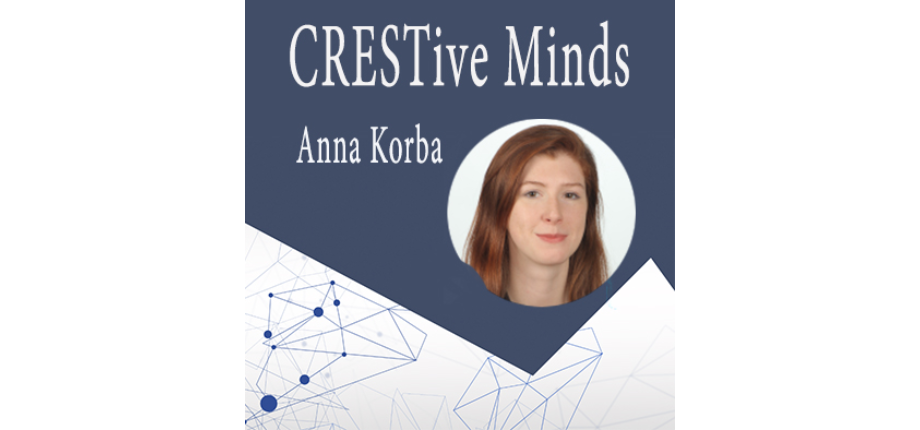
Anna Korba is an Assistant Professor at CREST-ENSAE Paris within the Statistics Department. She holds an ENSAE Engineering degree in Data Science and a Master's in Mathematics, Vision & Learning (MVA) from ENSAE Paris. Her career includes a Ph.D. in Machine Learning at Télécom ParisTech, followed by a postdoctoral position at UCL's Gatsby Unit. Her research focuses on sampling techniques, Bayesian inference, optimal transport, and generative modeling, with recent work on constrained sampling and fairness integration. She contributes to collaborative efforts at the intersection of machine learning, dynamical systems, and PDEs. Notably, she co-presented tutorials on Wasserstein gradient flows at ICML 2022. Her work addresses unsolved challenges in sampling efficiency and fairness constraints. She is actively involved in CREST research initiatives and academic mentorship.
Simon Lacoste-Julien is an Associate Professor at Université de Montréal, affiliated with the Department of Computer Science and Operations Research (DIRO). He also serves as the Associate Scientific Director of Mila – Quebec Institute of Artificial Intelligence and holds the position of Vice President Lab Director at Samsung SAIT AI Lab Montreal (SAIL). His research focuses on machine learning, optimization, and their applications in areas like deep learning, generative models, causality, and computer vision. Lacoste-Julien has held academic positions at INRIA in Paris and has a PhD from UC Berkeley, with postdoctoral work at the University of Cambridge. He teaches advanced graduate courses on probabilistic graphical models and structured prediction. His work includes contributions to optimization algorithms (e.g., Frank-Wolfe methods), causal discovery, and generative models. Lacoste-Julien has supervised numerous students and postdocs, and his awards include being a CIFAR Fellow and Canada CIFAR AI Chair. His research spans theoretical foundations and practical applications, with a strong emphasis on scalable and efficient machine learning techniques.
Pierre-Alexandre Mattei is a research scientist at Inria, affiliated with the Maasai team in Sophia Antipolis and the J.A. Dieudonné Laboratory at Université Côte d'Azur. He holds a chair at the 3IA Côte d'Azur institute and has a strong academic background in applied mathematics, having earned his Ph.D. from Université Paris Descartes (now Université Paris Cité) under Charles Bouveyron and Pierre Latouche, followed by a postdoc at the IT University of Copenhagen with Jes Frellsen. Ph.D. in Applied Mathematics, Université Paris Descartes (2017) Postdoctoral Researcher, IT University of Copenhagen His research lies at the intersection of statistical machine learning, generative modeling, and uncertainty quantification, with a focus on hidden variables, missing data, and model interpretability. He has co-organized major workshops such as Artemiss, GenU, SophI.A Summit, and Statlearn, and teaches at the Generative Modeling Summer School (GeMSS). His recent work spans energy-based models, clustering, semi-supervised learning, and medical AI applications. The 15 most recent publications reflect a consistent trend in developing statistically principled methods for generative modeling, with emphasis on likelihood-based inference, missing data, and information-theoretic approaches to clustering and representation learning. His work frequently appears in top venues like NeurIPS, ICML, ICLR, and AISTATS, as well as in journals such as Statistics and Computing and JACC: Advances. Co-organizer, Generative Modeling Summer School (GeMSS) Co-organizer, Workshop on Generative Models and Uncertainty Quantification (GenU) Co-organizer, SophI.A Summit Co-organizer, Statlearn Mattei has advised several PhD students and postdocs, including Raphaël Razafindralambo, Hugo Senetaire, Louis Ohl, Federico Bergamin, and Hugo Schmutz, many of whom have gone on to research positions in Copenhagen, Grenoble, Linköping, and Marseille. He collaborates extensively with researchers across France and Denmark, particularly with Jes Frellsen, Frédéric Precioso, and Charles Bouveyron. He is actively involved in the development of open-source tools and libraries such as the GemClus Python library for discriminative clustering. He is a key member of the Maasai team at Inria Sophia Antipolis, which focuses on models and algorithms for artificial intelligence, and contributes to the broader 3IA Côte d'Azur initiative aimed at advancing AI research through interdisciplinary collaboration.
Marcelo Pereyra is an Associate Professor in the School of Mathematics and Computer Science at Heriot-Watt University and the Maxwell Institute for Mathematical Sciences. He is a visiting professor at the Physics Laboratory of École Normale Supérieure de Lyon (ENS de Lyon) from April 8–29, 2023, hosted by Julián Tachella. His research focuses on Bayesian analysis, computational imaging, and inverse problems, with applications in signal processing and machine learning. Education: Electronic engineering degrees from universities in Buenos Aires and Toulouse, followed by a PhD in signal processing from the Université de Toulouse (2012). Postdoctoral fellowships included roles at the University of Bristol (2012–2016), funded by Marie Curie, Brunel, and French Ministry of Defense grants. In 2019, he held a visiting professorship at the Institut Henri Poincaré. Current collaboration with ENS de Lyon’s SiSyPh team involves developing Bayesian-deep learning methods for blind/semi-blind inverse imaging problems and uncertainty quantification in pandemic modeling (e.g., COVID-19 reproduction number estimation). His work bridges Bayesian inference, convex optimization, and Monte Carlo sampling techniques. Awards: Marie Curie Fellowship, Brunel Postdoctoral Fellowship, French Ministry of Defense Fellowship. Key Projects: Bayesian imaging with Plug-and-Play priors, empirical Bayesian regularization estimation, sparse Bayesian mass-mapping in astronomy. He delivered a seminar on April 26, 2023, titled “Machine Learning and Signal Processing.”
Jean-Daniel Penot is a Researcher at CESI's Research and Innovation Department , with expertise in additive manufacturing, materials science, and industrial integration. His work bridges advanced manufacturing technologies with environmental sustainability and educational innovation. Doctorate in Materials Physics (2010) Engineering Degree in Physics (2007) Research Master in Optoelectronics (2007) Penot's research spans Additive Manufacturing and its applications in automotive, nuclear, and construction sectors. He focuses on Laser-Material Interaction , Machine Learning for process optimization, and Sustainable Engineering through life cycle assessments and geopolymer applications. His recent publications emphasize BIM , AM Modular Plants , and Defect Analysis in 3D-printed metals. Penot leads France Additive initiatives and contributes to International Standards as a board member. Penot supervises PhD students including Maryam Houhou and Amal Khabouchi , with a focus on Industrial Security and Energy Transitions . His projects integrate Thermal Comfort , Ultrasonic Inspection , and Quality Assurance in additive manufacturing systems.
Laurence Likforman-Sulem is an Associate Professor at Institut Polytechnique de Paris , affiliated with the Signal, Statistics and Learning (S2A) team in the Image, Data, Signal (IDS) department . She has been at Télécom Paris since 1991, where she teaches Pattern Recognition , Signal Processing , and Document Analysis . PhD from ENST-Paris (1989) HDR from Sorbonne University (2008) Her research integrates Markovian methods (HMMs, Bayesian Networks) and deep learning (BLSTMs, CNNs) for: Handwriting recognition in historical documents Character analysis in Byzantine seals Parkinson’s disease detection through multimodal signals Biometric authentication using hand shape Recent work focuses on Byzantine seal character recognition (BHAi project) and multimodal group cohesion analysis (IEEE ICMI 2021 Best Paper). She has supervised 10 PhD students and numerous Master internships. Scientific Awards Winning system at ICDAR 05 Arabic Hand-Written Word Recognition Competition Fondation Telecom Thesis Award 2014 (2nd prize for Olivier Morillot) Best Paper Award, ICMI 2021 Active in conference leadership, she chaired ICDAR 2015 and ICPR 2022 document analysis tracks. Her 15 most recent publications span Byzantine document analysis, Parkinson’s detection, and low-energy neural architectures.
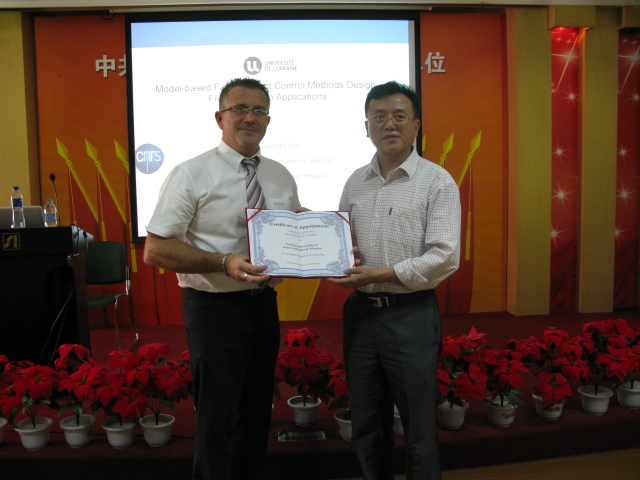
Didier Theilliol is a Professor of Control Engineering at the University of Lorraine, France, since 2004. He holds a Ph.D. in Control Engineering from Nancy-University (1993). He was awarded the CAS Visiting Professorship by the Chinese Academy of Sciences (CAS) in 2012, during which he collaborated with the Shenyang Institute of Automation (SIA) on flight control and fault-tolerant systems. His research focuses on model-based fault diagnosis (FDI), fault-tolerant control (FTC) for complex systems, and reliability analysis, with applications in aerospace, industrial automation, and robotics. Education: Ph.D. in Control Engineering (Nancy-University, 1993). Research interests include advanced control strategies for linear and nonlinear systems, multi-agent coordination, and safety-critical applications. His work integrates theoretical advancements with practical implementations across industries such as steel production, wastewater treatment, and aerospace. Notable contributions include methodologies for degradation management, distributed observer design, and health-aware control. Recent article trends emphasize fault-tolerant control in multi-agent systems, reinforcement learning for safety-critical tasks, and integration of physics-informed neural networks for system modeling. His publications span topics from model-based diagnostics to real-world applications in UAVs and propulsion systems. Awards: CAS Visiting Professorships for Senior International Scientists (2012). Collaborations include co-working with SIA’s rotorcraft UAV project team and leading European R&D initiatives. He serves as Associate Editor for ISA Transactions and Unmanned Systems , and chairs conferences on fault-tolerant control systems. His research also extends to Bayesian networks for system reliability and particle filter-based prognostics in industrial settings. Labs/Teams: Active in the State Key Laboratory of Robotics (visited during his CAS tenure) and coordinates projects within the German-French Institute for Automation and Robotics.