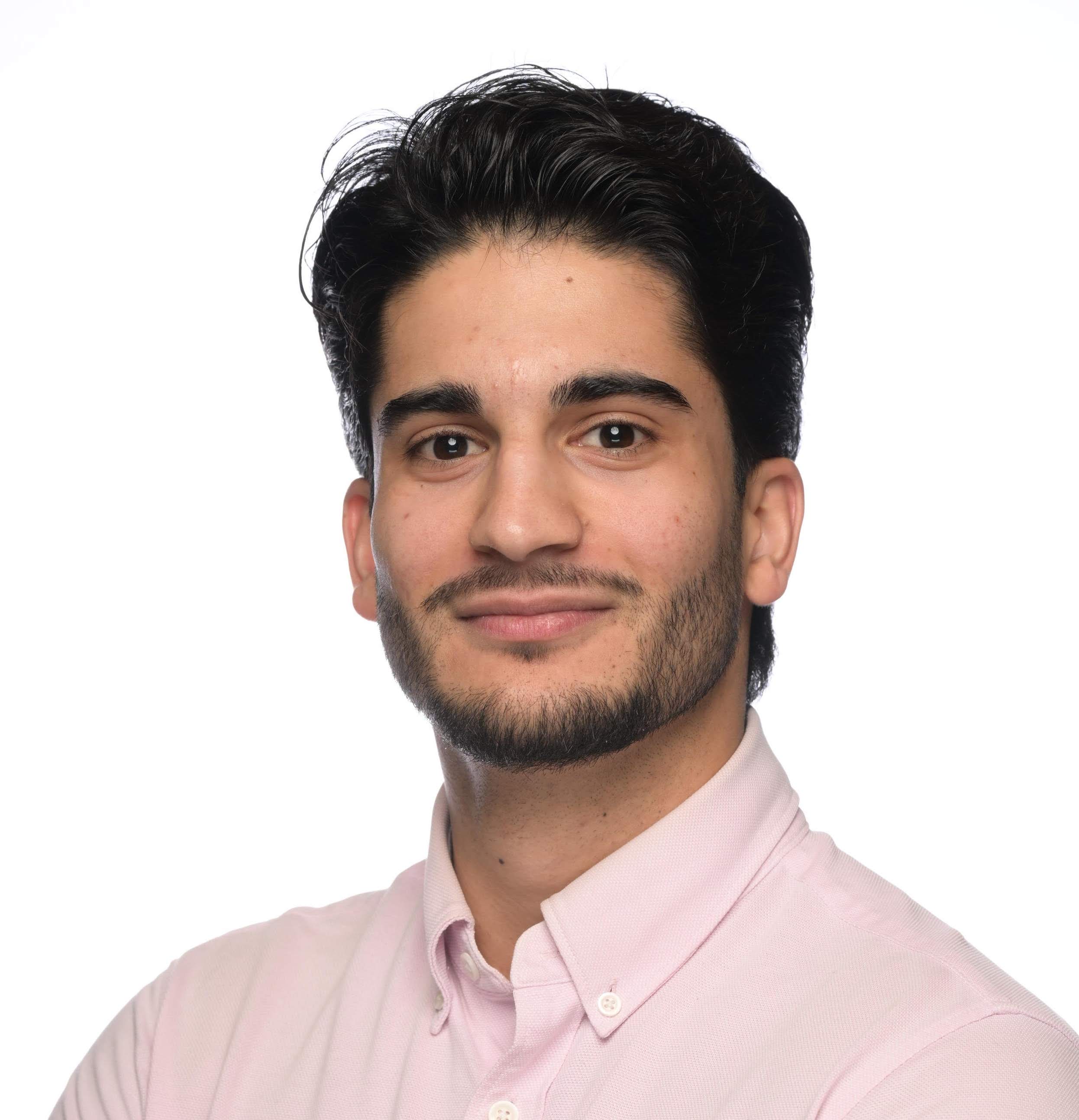
Fatemeh Yaghoobi is a Doctoral Researcher at Aalto University, affiliated with the Department of Electrical Engineering and Automation under the College of Engineering. She actively contributes to Sensor Informatics and Medical Technology research groups. Research Interests: Her work focuses on algorithm development for state estimation in nonlinear systems, leveraging Bayesian statistics and parallel computing. Key areas include probabilistic numerical methods, Kalman smoothers, and optimization techniques for machine learning applications. Publication Trends: Recent research highlights advancements in parallel-in-time computing for ODE solvers, statistical linear regression for state-space models, and iterative Kalman smoother algorithms. These publications reflect interdisciplinary applications in machine learning, signal processing, and computational mathematics. Contact: Email: fatemeh.yaghoobi@aalto.fi
Ali Akbar Khoshvishkaie is a Visiting Professor at Aalto University, affiliated with the School of Science and the Department of Computer Science. His research focuses on probabilistic machine learning and Bayesian optimization, particularly in multi-agent systems contexts. Research interests include: Probabilistic Machine Learning Bayesian Optimization Multi-Agent Systems Collaborative Learning He has published recent work on cooperative Bayesian optimization for imperfect agents, contributing to computational intelligence and uncertainty quantification methodologies.
Victor Bolbot serves as a Postdoctoral Researcher in the Department of Energy and Mechanical Engineering at Aalto University, Finland, affiliated with the Marine and Arctic Technology research group. His work focuses on advancing safety, reliability, and cybersecurity frameworks for autonomous maritime systems through rigorous systems engineering approaches and data-driven methodologies. He maintains active collaborations with international researchers and institutions, evidenced by extensive co-authorship across high-impact publications. Dr. Bolbot's research centers on autonomous ships, marine systems safety, ship propulsion cybersecurity, and risk modeling. He employs systems-theoretic process analysis (STPA), Bayesian networks, and association rule mining to address critical challenges including maritime accident causation, cybersecurity vulnerabilities in dual-fuel engines, safety acceptance criteria for autonomous vessels, and socio-technical implications of maritime automation. His methodological innovations bridge theoretical safety engineering with practical applications in Arctic navigation, inland waterways, and regulatory compliance, emphasizing the integration of cyber-physical risk assessment. Analysis of his 2023-2025 publications reveals three dominant research trajectories: (1) Development of cyber-physical risk frameworks like STPA-Cyber for maritime cybersecurity; (2) Real-time Bayesian modeling for dynamic operations including remote pilotage and ice navigation; and (3) Socio-technical investigations into regulatory frameworks, educational needs, and workforce skill transformations for autonomous shipping. His work consistently addresses the interplay between technological innovation and safety assurance, with growing emphasis on cybersecurity as a critical maritime safety component. As an active member of Aalto University's Marine and Arctic Technology research group, Dr. Bolbot contributes to interdisciplinary projects tackling complex challenges in marine safety engineering, Arctic operations, and sustainable maritime technologies. The group's collaborative environment supports the development of safer, more efficient, and environmentally conscious maritime systems through experimental validation, computational modeling, and industry partnerships.
Sunil Basnet is a Visiting Professor in the Department of Energy and Mechanical Engineering at Aalto University, affiliated with the Marine and Arctic Technology school. His work focuses on system safety, maritime risk management, and AI applications in safety-critical systems. He holds a Doctor of Technology (2023) and a Diploma in Mechanical Engineering (2018) from Aalto University. Research interests include system dynamics modeling for maritime operations, Bayesian risk modeling, cybersecurity frameworks for autonomous ships, and the ethical integration of AI in human resources. His work contributes to UN Sustainable Development Goals related to industry innovation and infrastructure safety. Recent research trends show a focus on: real-time risk monitoring systems using Bayesian networks, cybersecurity frameworks for remote pilotage, and AI-driven predictive analytics in HR management. Collaborations span international maritime safety projects and bibliometric reviews of autonomous ship research. No awards or grants are explicitly listed, though his doctoral thesis (2023) on formal safety assessment in maritime pilotage highlights significant contributions to the field. Advising activities are not detailed in the provided materials.
Koen Van Leemput is a Professor at the Department of Neuroscience and Biomedical Engineering at Aalto University, Finland. His work bridges neuroscience and computer science , focusing on generative models , magnetic resonance imaging (MRI) , and machine learning applications in neurodegenerative diseases like Alzheimer's Disease and Multiple Sclerosis (MS) . Research Highlights: Development of interpretable AI models for subject-level prediction in neuroimaging. Advancements in uncertainty quantification for neuroimage registration. Leadership in the CLAIMS project , creating AI-driven prognostic models for MS progression. Pioneering MRI intensity scaling techniques to improve quantitative imaging reliability. Scientific Contributions: Editorial Roles: Served on the board of IEEE Transactions on Medical Imaging and Medical Image Analysis (2014). Collaborations: Includes affiliations with Harvard Medical School and Technical University of Denmark (DTU).
Martin Trapp is an Academy Postdoctoral Researcher in the Department of Computer Science at Aalto University, specializing in probabilistic machine learning. He is affiliated with Professor Arno Solin's research group, focusing on advancing tractable probabilistic models for real-world applications. His research centers on Probabilistic Circuits , Probabilistic Programming , and Bayesian Nonparametrics , with emphasis on hardware-efficient implementations for edge devices and multimodal systems. Key interests include uncertainty quantification in deep learning, neurosymbolic AI integration, and medical imaging applications. His work bridges theoretical foundations with practical deployment constraints, particularly in resource-limited environments. Analysis of his 15 most recent publications (2022-2025) reveals three dominant trends: (1) hardware-aware probabilistic inference for TinyML applications, (2) scalable Bayesian methods using bitstring representations and probabilistic programming, and (3) multimodal robustness in vision-language systems and medical imaging. His contributions span from theoretical circuit representations to real-world implementations in mammography analysis and vision-language models. Trapp secured a HIIT short-term project grant (November 2022) for "Positive Semi-Definite Circuits" under the Department of Computer Science. No formal advising relationships are documented in available sources. He actively collaborates with researchers including Arno Solin, Rui Li, and Marcus Klasson across institutions like Aalto University and the Helsinki Institute for Information Technology. As a core member of Aalto's Probabilistic Machine Learning group, he contributes to advancing probabilistic AI methodologies with applications in healthcare, edge computing, and multimodal reasoning. His current work emphasizes deployable probabilistic systems that maintain rigorous uncertainty quantification while meeting hardware constraints.
Lappeenranta-Lahti University of Technology LUTFinland
Lassi Roininen is a tenured Professor of Applied Mathematics at LUT University's School of Engineering Sciences, holding this position since September 2022 after serving as Assistant Professor there from 2018 to 2022. He maintains significant adjunct appointments as Associate Professor at University of Oulu, Assistant Professor at Bahir Dar University (Ethiopia), and faculty member at AIMS Rwanda, demonstrating strong international academic engagement. Education: Master of Science (Engineering), Tampere University of Technology Doctorate in Applied Mathematics, University of Oulu (2015) - conducted at Sodankylä Geophysical Observatory His research integrates Statistics, Geophysics, and Applied Mathematics with core expertise in Bayesian inference, uncertainty quantification, and inversion problems. He develops computational frameworks for geophysical imaging, climate modeling, and industrial applications, emphasizing robust statistical methodologies for real-world data challenges. Recent work shows increasing focus on African climate adaptation and medical/industrial tomography. Analysis of his 15 most recent publications reveals dominant trends in Bayesian approaches to climate science (particularly East African adaptation studies), medical/industrial imaging (tomography and fault detection), and geophysical modeling. His work consistently bridges mathematical innovation with practical applications across environmental science, healthcare, and manufacturing sectors. Research support includes Academy of Finland postdoctoral funding. Through AIMS Rwanda, he actively mentors African mathematicians and contributes to capacity building in computational sciences across the continent. His collaborative projects demonstrate commitment to solving region-specific challenges through advanced statistical methods. His work is closely tied to geophysical research networks including Sodankylä Geophysical Observatory, with recent expansions into East African climate resilience initiatives. Current projects integrate multi-instrument atmospheric data with Bayesian frameworks to address pressing environmental challenges in developing regions.
Lappeenranta-Lahti University of Technology LUTFinland
Heikki Haario is a Professor in Computational Engineering at the LUT School of Engineering Sciences, LUT University, Lappeenranta. His research focuses on robust Bayesian inference, parameter estimation, and uncertainty quantification in chaotic and stochastic systems. Broad research areas: Bayesian Statistics, Chaotic Dynamical Systems, Gaussian Processes, Machine Learning The 15 most recent publications (2025-2023) demonstrate expertise in computational modeling, data-driven methods, and interdisciplinary applications spanning finance, biology, and engineering. Articles emphasize Bayesian techniques, kernel flows, and neural network integration for solving inverse problems and optimizing predictions in uncertain environments.
Lappeenranta-Lahti University of Technology LUTFinland
Lassi Aarniovuori serves as an Associate Professor (Tenure Track) in Electrical Engineering at LUT School of Energy Systems, LUT University in Lappeenranta, Finland. His academic career includes a Doctor of Engineering in Electrical Drives Engineering from LUT University (2010) and a Marie Curie Research Fellowship at Aston University (2017-2019). As an IEEE Senior Member, he maintains active contributions to the field of electrical engineering with particular expertise in power electronics and electric drive systems. Master of Science in Electrical Engineering (2005), LUT University Doctor of Engineering in Electrical Drives Engineering (2010), LUT University Marie Curie Research Fellow (2017-2019), Aston University, Birmingham Professor Aarniovuori's research spans electric vehicles, power electronics, modulation methods, electric drives simulation, energy efficiency measurements, and calorimetric measurement systems . His work focuses on improving the efficiency and performance of electrical machines and power conversion systems, with special attention to loss measurement techniques and thermal management. The research has significant implications for sustainable transportation and industrial applications where energy efficiency is paramount. Analysis of his recent publications (2023-2025) reveals a strong focus on next-generation power electronics, particularly silicon carbide technology for high-speed drives, advanced loss measurement techniques, and optimization of electric machines. His work increasingly addresses practical challenges in electric vehicle charging infrastructure, high-power systems, and the transition to electrified heavy-duty transportation, demonstrating both theoretical depth and practical application. IEEE Senior Member Marie Curie Research Fellowship (2017-2019) While specific grant information isn't detailed in the provided text, Professor Aarniovuori's Marie Curie Fellowship indicates successful competitive funding acquisition. His extensive publication record suggests ongoing research projects and collaborations focused on advancing power electronics and electric machine technologies. His work appears to bridge academic research with industrial applications, particularly in the electric vehicle sector. Professor Aarniovuori's research environment at LUT School of Energy Systems likely includes specialized laboratories for electric machine testing, power electronics development, and thermal measurement systems. His focus on calorimetric measurement systems suggests dedicated facilities for precise efficiency determination of electrical machines and power converters, supporting both fundamental research and industry collaboration.
Mikko Alava is a Professor in the Department of Applied Physics at Aalto University, specializing in computational materials science and complex systems. His research focuses on alloy design, nuclear materials, and rheology, with a strong emphasis on atomistic and molecular dynamics simulations. Research areas: High-entropy alloys, metallic glasses, radiation damage, and thermogelation. Key tools: Computational modeling, Bayesian optimization, open-source software development (pyRheo). Scientific Awards: Prize for Teaching Excellence (Aalto School of Science, 2014) Distinguished Referee (Europhysics Letters, 2016) Outstanding Referee (American Physical Society, 2011) Nordita Corresponding Fellow (2001-2004) John S. Bates Prize (2004)
Paul Chang is a Visiting Professor in the Department of Computer Science at Aalto University, associated with the Professorship Solin A. He holds a Doctor of Technology (Tekn. toht.) degree in Computer Science from Aalto University, awarded in December 2024. His research focuses on machine learning, Gaussian processes, Bayesian inference, and sequential learning, with applications in neural networks and optimization. His work contributes to UN Sustainable Development Goals related to education and innovation through advancements in probabilistic modeling and computational methods. Chang's academic background includes a doctoral thesis titled Rethinking Inference in Gaussian Processes: A Dual Parameterization Approach (2024), exploring novel methods for improving efficiency and scalability in Gaussian process models. His research has been published in leading conferences such as ICML and ICLR, with notable contributions to sequential learning algorithms, Bayesian optimization, and memory-based approaches in Gaussian processes. Key research interests include dual parameterization techniques, sparse representations in neural networks, and the integration of simulation-based inference with diffusion models. His work bridges theoretical advancements in machine learning with practical applications in optimization, active learning, and temporal data analysis. Collaborations span international institutions, reflecting his global academic engagement. Chang's publications highlight advancements in function-space parameterization, memory-augmented Gaussian processes, and amortized probabilistic conditioning. These contributions address challenges in scalable Bayesian methods and sequential decision-making systems. His research emphasizes computational efficiency, robustness, and applicability to real-world problems in machine learning.
Abdullah Tokmak is a Doctoral Researcher at the Department of Electrical Engineering and Automation, Aalto University (Finland). His research focuses on cyber-physical systems and safety-critical control algorithms. Current affiliation: Aalto University Department: Electrical Engineering and Automation Email: abdullah.tokmak@aalto.fi Research Interests: Safe exploration in reproducing kernel Hilbert spaces Parameter tuning for multi-agent systems Bayesian optimization with safety guarantees Kernel-based control approximation techniques His publications demonstrate expertise in integrating machine learning with control systems through methods like: Nonlinear MPC approximation Safe Bayesian optimization Distributed multi-agent control Kernel-based modeling
Leo Lahti is a Professor in Data Science at the University of Turku, Finland. His research focuses on computational analysis and modeling of complex natural and social systems, with applications in microbiome science, ecological modeling, and computational humanities. He is actively involved in open science initiatives and leads a dynamic research team. University: University of Turku Role: Professor, Data Science Contact: leo.lahti@utu.fi Lahti holds a Doctor of Science (DSc) from Aalto University (2010), where he developed probabilistic machine learning methods for life science data. He conducted postdoctoral research at EBI/Hinxton (UK), Wageningen University (NL), and VIB/KU Leuven (BE), establishing a strong international research profile. His research interests span Data Science, Artificial Intelligence, Machine Learning, Applied Statistics, Probabilistic Models, Microbial Ecology, Computational Humanities, and Open Science . He applies computational and statistical methods to understand complex systems, particularly in microbiome dynamics, ecological resilience, and historical data analysis. His work integrates interdisciplinary approaches, combining data analytics with domain-specific knowledge in biology, medicine, and humanities. The recent publications (2021–2025) reflect a strong focus on gut microbiome analysis , including maternal-infant health, dietary impacts, disease risk (CKD), and methodological advances in differential abundance and phylogenetic diversity. Other themes include ecological modeling (resilience, early warning signals), infectious disease modeling (COVID-19), and open science education (Bioconductor). The keyword trends show deep engagement with microbiology, bioinformatics, and mathematical modeling, with subfields emphasizing reproducibility, host-microbe interactions, and computational methods. Lahti plays a significant role in open science and academic leadership: Vice Chair, Open Science Finland Member, International Science Council Committee on Data (2023–2025) Member, Bioconductor Community Advisory Board Founder, Open Science Working Group, Open Knowledge Finland He is also active in teaching computational and data science, statistical programming, AI, and open science. His research homepage is available at iki.fi/Leo.Lahti, and his full publication list is accessible via ORCID and bibtex.
Roman Yangarber is a Professor at the Department of Digital Humanities and a Docent at the Department of Computer Science at the University of Helsinki. He serves as a supervisor for doctoral programs in Language Studies and has been actively involved in research projects like DD-LANG and Know-AI, focusing on AI-driven language education and assessment. PhD in Computational Linguistics, New York University (2000) His research spans language technology, computational linguistics, and machine learning. Recent work includes educational NLP applications, grammatical error correction using GPT-3.5, and cross-lingual corpus development for Slavic and Turkic languages. The 2024-2025 articles reflect his focus on educational technology, with topics including text difficulty estimation, Bayesian models for language learning, and intelligent tutoring systems. These works bridge computational methods with language education, emphasizing AI's role in personalized learning. Scientific Awards: Best Paper Award (2018) Outstanding paper award (2023) The Open Science Award (2018) Yangarber supervises doctoral and master’s theses and leads projects funded by the Research Council of Finland and EU programs like DIGITAL-SME. His collaborations span institutions such as Charles University and ACL.
Gleb Tikhonov is a postdoctoral researcher at the University of Helsinki , affiliated with the Faculty of Biological and Environmental Sciences and the Organismal and Evolutionary Biology Research Programme . He also holds a postdoctoral position at Aalto University in the Department of Computer Science . His work bridges statistical ecology, machine learning, and computational biology. Research Interests : Development of joint species distribution modelling (JSDM) for ecological communities Integration of statistical and machine learning methods High-performance computing implementations Phenological and dispersal pattern analysis Publications demonstrate expertise in applying advanced statistical frameworks to ecological questions, including fungal dispersal mechanisms, microbiome variation, and climate change impacts. His LIFEPLAN project (funded by the European Commission Joint Research Centre) focuses on planetary biodiversity synthesis using big data. Education : PhD in Biological and Environmental Sciences, University of Helsinki (2018) MS in Applied Mathematics, Lomonosov Moscow State University (2014)