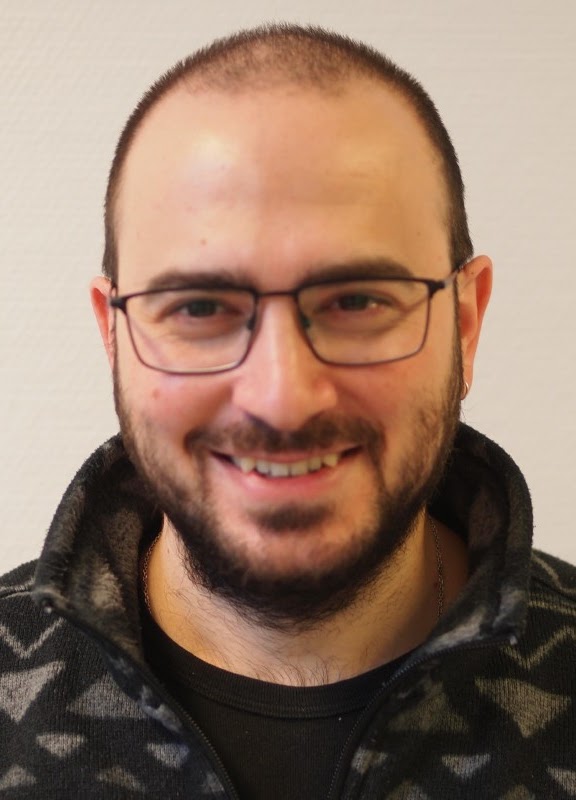
Lesia Mitridati is an Assistant Professor at the Department of Wind and Energy Systems, Technical University of Denmark (DTU). Her research focuses on optimizing energy systems, particularly in renewable energy integration, energy market design, and prosumer behavior modeling. She leads and collaborates on projects involving smart grids, distributed energy resources, and privacy-preserving market mechanisms. Her work contributes to UN Sustainable Development Goals related to affordable and clean energy. Key projects include AI-driven electricity market optimization, hydrogen-wind trading strategies, and risk-aware energy communities. She supervises multiple PhD students in areas like VPP bidding strategies and market-based heat-electricity coordination. Dr. Mitridati has published widely on energy communities, grid services, and reinforcement learning applications. Notable contributions include dynamic pricing frameworks for grid services and privacy-preserving market mechanisms. She co-organizes annual DTU summer schools on future energy systems and AI-driven optimization. Her research integrates machine learning with operational research techniques to address challenges in renewable energy integration, market design, and system resilience. Current initiatives focus on electrolyzer plant bidding strategies and feature-driven trading of renewable resources.
Georgios Arvanitidis is an Associate Professor at the Technical University of Denmark (DTU) in the Department of Applied Mathematics and Computer Science, specifically within the Section for Cognitive Systems (CogSys). He has established himself as a leading researcher in geometric machine learning, focusing on the application of differential geometry principles to enhance machine learning models. His work bridges theoretical mathematics with practical applications in artificial intelligence, with particular emphasis on understanding the geometric structure of data manifolds and latent spaces. Dr. Arvanitidis completed his educational journey with a Bachelor's degree from the Department of Informatics at the Aristotle University of Thessaloniki, followed by a Master's degree in Computer Science from Saarland University supported by the Max Planck Institute for Informatics. He earned his PhD at DTU's Cognitive Systems section under the supervision of Søren Hauberg, with additional research experience at Philipp Hennig's Probabilistic Numerics group. Prior to his current position as associate professor, he was a PostDoc at the Max Planck Institute for Intelligent Systems working with Bernhard Schölkopf. Dr. Arvanitidis's research primarily focuses on differential geometry in machine learning , where he explores how geometric structures can enhance representation learning and statistical modeling. His work in generative models investigates how learning the geometry of data manifolds can improve deep learning architectures. In the domain of deep learning theory , he examines why deep learning models generalize effectively on unseen data, with particular attention to the curvature properties of loss landscapes. His research in approximate Bayesian inference applies geometric principles to improve uncertainty quantification in neural networks. Through his innovative approaches, Dr. Arvanitidis has established himself as a leading researcher in geometric machine learning, contributing to both theoretical foundations and practical applications across various domains including robotics and life sciences. The publication trends of Dr. Arvanitidis reveal a consistent and evolving focus on geometric approaches to machine learning problems. His recent work (2023-2025) demonstrates increasing sophistication in applying Riemannian geometry to deep learning architectures, with particular emphasis on latent space geometry, optimization on manifolds, and geometric interpretations of neural network behavior. A notable pattern is the progression from foundational work on geometric representations to more applied research in areas like robotics and causal inference. His publications span top-tier conferences including NeurIPS, ICML, ICLR, and AISTATS, reflecting the high impact of his research. The interdisciplinary nature of his work is evident in collaborations across mathematics, computer science, and robotics domains, with recent papers addressing challenges in multimodal sampling, safety guarantees for dynamical systems, and counterfactual explanations. Dr. Arvanitidis has received several notable scientific awards and recognitions: Sapere Aude starting grant from the Independent Research Fund Denmark (DFF) GADL funding i-Rase, Pathfinder, and EIC (European Innovation Council) funding Best reviewer award for NeurIPS 2019 Best reviewer award for NeurIPS 2018 Best student paper award at Robotics: Science and Systems (R:SS) 2021 Dr. Arvanitidis actively mentors PhD students and researchers, currently supervising Alejandro Valverde, Johanna Gegenfurtner, and Albert Kjøller Jacobsen. He has previously co-supervised Alison Pouplin's PhD and worked with research assistant Georgios Pantis. His group receives substantial funding through multiple prestigious grants including the Sapere Aude starting grant from the Independent Research Fund Denmark, as well as European Innovation Council funding. He has been instrumental in creating opportunities for students interested in geometric machine learning, offering BSc and MSc thesis projects focused on generative models, deep learning theory, and optimization techniques. Dr. Arvanitidis also contributes significantly to the academic community as a reviewer for top conferences including ICLR and TMLR, and as an area chair for NeurIPS, ICML, AISTATS, and UAI. He co-organized the Machine Learning Summer School 2020 in Tübingen, further demonstrating his commitment to education and community building. Dr. Arvanitidis leads a vibrant research group focused on geometric machine learning within the Cognitive Systems section at DTU. His team includes multiple PhD students working on cutting-edge research at the intersection of differential geometry and artificial intelligence. The group has developed notable software tools, including the "geometric_ml" GitHub repository with over 70 stars, which contains implementations for applying Riemannian geometry in machine learning. His research has practical applications in robotics, where geometric approaches enable more robust motion planning, as evidenced by his work on "Reactive Motion Generation on Learned Riemannian Manifolds" which received a best student paper award. Additionally, his methodologies have found applications in life sciences, as mentioned in his 2022 AISTATS paper. The collaborative nature of his work is evident through extensive partnerships with researchers at institutions including the Max Planck Institute for Intelligent Systems, University of Cambridge, and various European universities. His recent news items indicate active engagement with the academic community through talks, conference presentations, and ongoing supervision of new PhD students joining his group.
Johannes Bjerva is a Full Professor at Aalborg University's Department of Computer Science (Campus Copenhagen), leading the Copenhagen branch and conducting interdisciplinary NLP research integrating linguistic typology. His work focuses on low-resource languages, language model security, and societal AI impact. PhD (University of Groningen, 2017): Thesis on multitask/multilingual lexical modeling M.A. & B.A. in Computational Linguistics (Stockholm University) Research interests span linguistically-informed NLP , language model security , and low-resource language technology . Current projects include the DFF Sapere Aude grant (2025) for language model detection security and the LM2-SEC project (2025–2030). His 2024 ACL paper on embedding inversion security and 2024 EMNLP paper on typological diversity exemplify recent work. Scientific awards include: 2021: Teacher of the Year (AAU Computer Science) 2019: Google Cloud research credits 2022: Carlsberg Semper Ardens (5M DKK) 2024: Novo Nordisk Data Science grant (~10M DKK) Supervision includes 8 PhD students across projects like CreoleVal and HiFi-KPI . He serves on the Industrial Researcher Committee at Innovation Fund Denmark and is a member of Det Unge Akademi (2023–2028).
Emilia Mendes is a Full Professor in the Department of Electrical and Computer Engineering at Aarhus University . Her research focuses on Empirical Software Engineering , particularly human-centric approaches, evidence-based decision-making, and the application of machine learning and statistical techniques in software development. Current research themes: Human-Centric Software Engineering, Evidence-Based Research, Statistical/Machine-Learning Techniques, and Value-Based Software Engineering. Developed tools for team climate forecasting, capability measurement, and value-based decision-making. Research Trends: Her work bridges software engineering with psychology (personality traits, team dynamics), machine learning (effort estimation, dementia prognosis), and value-based frameworks for decision-making. She emphasizes industrial applications, including agile methodologies, cross-company predictions, and Bayesian network modeling. Scientific Impact & Awards: 10,018 citations, h-index 58. Ranked #32 in Empirical Software Engineering Scholars (Google Scholar). Ranked #20 in Top Computer Science Scientists in Sweden (2023). Top 2% scientist in the world (2019, 2020, 2022; only female in Sweden for SE in 2022. Nine best paper awards at international conferences. Editorial board member: Information and Software Technology , ACM Computing Surveys , former roles at IEEE Transactions on Software Engineering and others. Grants & Leadership: Awarded €11.921.603 in research grants. Held leadership roles as General Chair (EASE 2017), PC Co-Chair (EASE 2012, ESEM 2012), and active participant in 200+ academic events.
Jes Frellsen is an Associate Professor at the Department of Applied Mathematics and Computer Science (DTU) since 2016. Previously, he held academic positions at the IT University of Copenhagen (2016-2019), postdoctoral roles at University of Cambridge (2013-2016) and University of Copenhagen (2011-2013). Education: PhD in Bioinformatics (2011), University of Copenhagen MSc in Bioinformatics (2007), University of Copenhagen BSc in Mathematics and Computer Science (2005), University of Copenhagen EAP Exchange at University of California, Santa Cruz (2004-2005) Research Focus Jes Frellsen specializes in statistical machine learning , particularly generative AI and deep generative models with applications in bioinformatics . His work integrates Bayesian inference , directional statistics , and Markov chain Monte Carlo methods to address challenges in macromolecular structure prediction and missing data imputation . Recent efforts explore uncertainty quantification in image segmentation and generative modeling for materials science. Advising & Collaborations He actively supervises PhD students and postdoctoral researchers in projects spanning news recommendation systems , medical imaging , and 3D structure generation . Collaborations include work with Zoubin Ghahramani (Cambridge) and Thomas Hamelryck (Copenhagen), with contributions to protein structure prediction and statistical methods in structural bioinformatics .
Chenjuan Guo is an Associate Professor at the Department of Computer Science, Aalborg University, within The Technical Faculty of IT and Design. She is affiliated with the Data Engineering, Science and Systems group and the AI for the People initiative, and is part of the Daisy - Center for Data-intensive Systems. Her research focuses on machine learning, data engineering, spatio-temporal data analysis, and time series forecasting. Key projects include the Villum Foundation-funded 'Explainable AI for Complex Microbial Community Interactions and Predictions' (2021-2024) and the Astra project on time series analytics in spatial networks (2018-2021). Her research interests span representation learning, autoencoders, path representation, outlier detection, trajectory data analysis, and time series modeling. She has supervised 3 PhD students and contributed to over 60 publications, with a recent emphasis on transformer-based forecasting, neural architecture search, and continuous learning frameworks for spatio-temporal data. Her work bridges theoretical advancements with practical applications in environmental science, cloud computing, and urban mobility systems. Key achievements include developing frameworks like AutoCTS++ for automated time series forecasting and LightGTS for lightweight models. She actively collaborates internationally, contributing to conferences like ECML PKDD and CVPR. Her research is supported by grants from the Villum Foundation and other institutions.
Filipe Rodrigues is an Associate Professor in the Department of Technology, Management and Economics at the Technical University of Denmark (DTU), where he conducts research in intelligent transportation systems and transportation science. His work integrates machine learning, artificial intelligence, and behavioral modeling to improve urban mobility and public transport systems. His research interests lie at the intersection of machine learning , transportation science , and behavioral modeling . He specializes in discrete choice modeling , reinforcement learning , graph neural networks , and smart card data analytics . His work contributes to sustainable urban mobility, leveraging big data and AI for proactive traffic control and public transport optimization. The recent publications highlight a strong trend toward integrating AI and behavioral science in transportation. Key themes include ride-sourcing driver behavior , public transport trip validation , autonomous fleet control , and causal machine learning . These works predominantly employ deep learning , Bayesian modeling , and offline reinforcement learning techniques, often applied to real-world datasets from Denmark and beyond. Scientific Contributions: Active contributor to journals like Transportation Research Part C and Journal of Choice Modelling . Supervises multiple PhD projects on AI in transportation and causal modeling. Regular presenter at major transportation and AI conferences. Advising and Grants: Filipe Rodrigues is the main or co-supervisor of several PhD students including O. B. Lassen, F. M. F. Santos, A. Nguyen, and X. Wu. He leads and participates in funded research projects such as 'Proactive traffic control through AI and Big Data' and 'Causal Graph Neural Networks for machine learning meta-modelling', indicating sustained grant support. His collaborative network spans institutions in Europe and beyond. Labs and Teams: He is part of the Intelligent Transportation Systems research group at DTU, collaborating closely with researchers like F. C. Pereira and C. M. L. Azevedo. The team focuses on data-driven mobility solutions, combining simulation, machine learning, and behavioral insights.
Shuai Zhao is an Assistant Professor at the AAU Energy Department, Faculty of Engineering and Science, Aalborg University. His research focuses on applying machine learning and artificial intelligence techniques to enhance reliability and condition monitoring in power electronic systems, with specific interests in lifetime estimation, fault diagnosis, and health management of critical components like capacitors and semiconductor devices. Institution: Aalborg University School: Faculty of Engineering and Science Department: AAU Energy Email: szh@energy.aau.dk His research spans multiple domains including: Physics-informed machine learning for power converter systems Remaining useful life prediction with hybrid Bayesian deep learning Thermal transient analysis and stress emulation methods IoT-enabled monitoring schemes for semiconductor devices Neural network applications in lithium-ion battery prognostics Recent publications show a strong trend toward integrating domain-specific physics with machine learning frameworks to address real-world challenges in: Power electronics reliability under operational stress Anomaly detection in multivariate time-series data Robust fault diagnosis for railway traction systems Temperature estimation in electric vehicle motors Imbalanced data handling in diagnostic systems Capacitance degradation modeling under environmental factors Current projects demonstrate collaboration with leading institutions on: AI-assisted long-term maintenance strategies Physics-informed neural network architectures Smart agricultural monitoring systems via IoT platforms Advanced particle filter methods for life prediction
Henrik Madsen is a Professor at the Department of Applied Mathematics and Computer Science, Technical University of Denmark (DTU). His work focuses on energy systems, stochastic processes, and mathematical modeling. He leads research in areas such as demand response in district heating, probabilistic forecasting, and integration of renewable energy sources. Madsen has supervised multiple PhD students and contributes to projects like the IEA DHC Annex TS9 and SEEDS initiative. His expertise includes statistical analysis, time series modeling, and data-driven approaches for energy systems. He actively engages in collaborative research on smart grids, thermal energy storage, and sustainable energy solutions. Education: Academic qualifications from DTU, though specific details are not provided in the text. Research Interests: Mathematical modeling of energy systems Probabilistic forecasting methodologies Integration of wind and solar power Dynamic modeling for district heating Data assimilation in hydrological systems Optimization of energy flexibility Publications & Trends: Recent works emphasize demand response strategies, district heating optimization, and machine learning tools like the nabqr Python package and evalprob4cast R package. His research bridges theoretical stochastic methods with practical applications in energy infrastructure. Grants & Projects: IEA DHC Annex TS9: Digitalization of district heating SEEDS: RES-integrated electrified heating systems Data-Driven Methods for Demand-Side Flexibility Labs/Teams: Collaborates with DTU's Dynamical Systems group and participates in interdisciplinary initiatives like the Frigg 2.0 energy system analysis framework.
Martin Skovgaard Andersen is an Associate Professor in the Department of Applied Mathematics and Computer Science at the Technical University of Denmark (DTU), where he specializes in Scientific Computing. His research integrates numerical methods, optimization, and machine learning to solve complex computational problems in engineering and data science. Education: Ph.D., University of California, Los Angeles (2006–2011) M.Sc., Aalborg Universitet (2001–2006) Postdoc, Linköping University, Sweden (2011–2012) His research interests include optimization (particularly conic and stochastic programming), numerical algorithms, signal processing, system identification, and fast solvers for integral equations. He works extensively on matrix analysis, regularization, and low-rank approximations, contributing to both theoretical and applied advancements in computational mathematics. The recent publications highlight a strong trend in developing efficient numerical algorithms for large-scale optimization and solving integral equations. His work emphasizes preconditioning, matrix truncation, and Bayesian inversion, with applications in electromagnetics, structural health monitoring, and network identification. There is a consistent focus on improving computational efficiency and scalability of solvers. Scientific Awards: No specific awards mentioned in the provided text. Andersen actively supervises PhD students and leads multiple research projects, including those on non-symmetric conic optimization, data-sparse models, and fast direct solvers. He is the Principal Investigator (PI) on projects related to physics-informed structural health assessment. His collaborative network spans Denmark and international institutions, particularly in computational mathematics and engineering. Labs and Research Teams: He is affiliated with the Scientific Computing section at DTU, which focuses on high-performance computing, numerical algorithms, and mathematical modeling. His work is embedded in a collaborative environment involving researchers in optimization, control theory, and computational electromagnetics.
Carsten Sørensen is the Head of Department at the Department of Finance, Copenhagen Business School (CBS), and holds a Cand.Scient.Oecon and Ph.D. His research focuses on dynamic asset allocation, portfolio theory, term structure of interest rates, derivatives, and commodity derivatives. He has contributed extensively to understanding strategic investment decisions under uncertainty, particularly in volatile financial markets. He has authored or co-authored over 29 publications, including seminal works on stochastic income modeling, interest rate dynamics, and commodity futures analysis. His work frequently explores the intersection of theoretical finance and practical investment strategies, emphasizing real-world applications of academic insights. Current Roles: Head of Department (Department of Finance), Director of Danish Finance Institute (2019–present) Outside Activities: Academic Committee Member for Danish FSA (2011–present), Teacher at Danish Society of Actuaries (2019) Key Contributions: Pioneered research on mean-reverting returns and inflation uncertainty in asset allocation models His research trends emphasize quantitative methods to address market complexities, with a focus on stochastic processes and dynamic optimization. He has consistently challenged conventional investment recommendations through rigorous empirical analysis. Awards: None explicitly listed Grants: No specific grants mentioned He is actively involved in academic leadership, directing interdisciplinary research initiatives at CBS and advising regulatory bodies on financial education standards.
Ulrik Dam Nielsen is an Associate Professor in the Section for Fluid Mechanics, Coastal and Maritime Engineering at the Department of Civil and Mechanical Engineering, Technical University of Denmark (DTU). He also held an external position as Associate Professor II at the Norwegian University of Science and Technology (NTNU) from 2014 to 2023, reflecting strong international collaboration. His work contributes to UN Sustainable Development Goals related to sustainable maritime operations and clean energy. His research focuses on naval architecture and ship motion dynamics , particularly in the context of sea state estimation , added resistance in waves , and real-time prediction of vessel responses . He integrates data analytics , estimation theory , and machine learning to develop methods for monitoring hydrodynamic performance and enhancing maritime safety and energy efficiency. A central theme of his work is using ships as mobile wave sensors—transforming operational vessels into 'sailing wave buoys' for environmental monitoring. His recent publications show a clear shift toward data-driven methodologies, especially machine learning applications in sea state estimation, added resistance modeling, and performance monitoring. These works span journals like Ship Technology Research and Journal of Offshore Mechanics and Arctic Engineering , and conferences such as IEEE MetroSea, highlighting interdisciplinary innovation at the intersection of classical marine engineering and modern AI. Best Paper Presented by a Young Researcher Award (First Classified), 2024 (jointly awarded) He actively supervises PhD students—such as R. E. G. Mounet, M. Mittendorf, J. P. Tomy, and A. Oikonomakis—on projects funded by DTU and collaborative initiatives. His leadership in projects like WEFOSWAB (Wave Estimation and Forecasting Using Ships as Buoys) and data-driven added resistance modeling underscores his role in advancing smart maritime technologies. He also contributes to open science through the public release of datasets such as NetSSE . He teaches core courses including Introduction to Ships and Floating Structures , Marine and Ocean Engineering , and Ship Operations , shaping the next generation of maritime engineers.
Jørgen Beck Hansen is an Associate Professor at the Niels Bohr Institute , University of Copenhagen, specializing in Experimental Subatomic Physics . His career spans roles at CERN and NBI, focusing on particle physics detectors, high-energy collisions, and computational methods. Education: Ph.D. in Particle Physics (1996) and M.Sc. in Physics (1993) from the University of Copenhagen. Research interests include two-boson physics at the ATLAS detector, precision measurements within the Standard Model, effective Lagrangian densities, and searches for new physics beyond the Standard Model (e.g., Higgsless theories, extra dimensions). He also works on GRID computing and distributed data analysis. Recent trends in his research involve Higgs boson studies, vectorlike top quarks, photonuclear collisions, and detector trigger optimization. Collaborative efforts with the ATLAS Collaboration and Danish NORDUGRID team highlight his interdisciplinary approach. Scientific awards : Skou Stipend (Assistant Professor) from the Danish Natural Science Council Teaching and supervision include mentoring 5 summer students, 2 Ph.D., 4 Master's, and 10 Bachelor's students. He has contributed to popular science through Danish Cosmic Rays at Schools and public lectures. Labs and teams : Actively involved in the ATLAS Collaboration and the Danish NORDUGRID team for distributed computing infrastructure.
Efren Fernandez Grande is an Associate Professor at the Technical University of Denmark , specializing in Acoustic Technology within the Department of Electrical and Photonics Engineering. His research focuses on advanced acoustic modeling and signal processing techniques. Key Research Areas: Sound Field Engineering, Room Acoustics, Acoustic Holography, Beamforming, Neural Networks for Acoustic Modeling Recent publications highlight his work on sound field reconstruction, acoustic rainbows, and physics-informed neural networks, emphasizing spatial and frequency limitations in acoustic modeling. He supervises multiple PhD students in projects related to noise control and acoustic space reproduction. His contact details include efgr@dtu.dk and links to his ORCID and research website .
Tue Herlau is an Associate Professor at the Department of Applied Mathematics and Computer Science, Cognitive Systems, within the College of Engineering at Technical University of Denmark. His research focuses on modeling complex networks using Bayesian methods, particularly applied to brain imaging data. He explores multiscale structures in networks (ranging from individual nodes to large-scale temporal dynamics) and causal inference in social and biological systems. Education : Bachelor in Physics and Mathematics (University of Copenhagen), Masters in Informatics (DTU) Recent publications highlight work on generative AI for educational psychology, causal probability trees, Bayesian neural network training, and moral reinforcement learning. Key collaborations span institutions in Denmark and international partners in AI and neuroscience research. He supervises students in probabilistic methods and machine learning applications, including a 2019-2020 Master project on prognostics for carbon/epoxy composites. His network shows strong engagement with computational science, relational databases, and formal concept analysis.