Jakob WagnerView profile
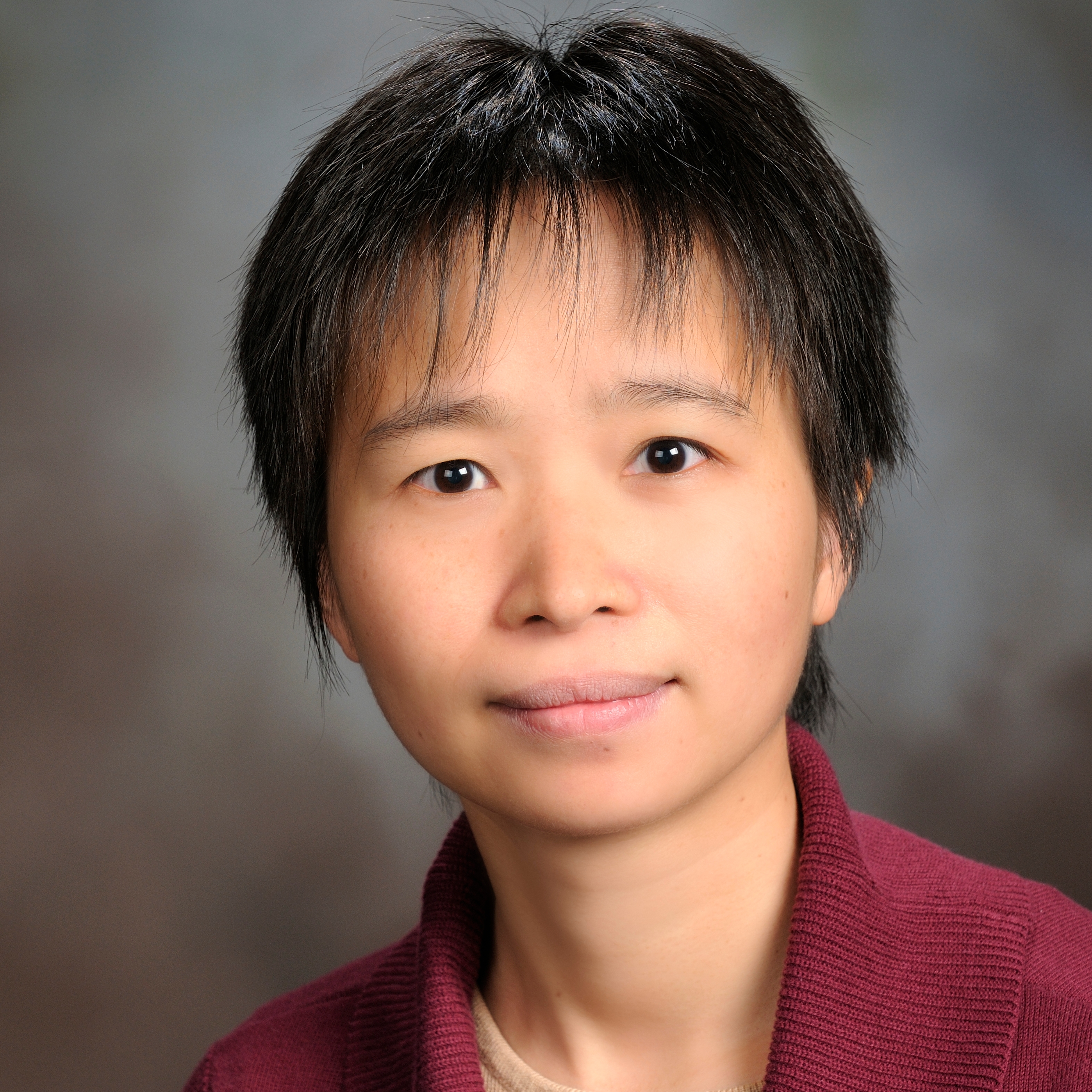
Research Fellow
Jakob Wagner is a Research Fellow at the Technical University of Munich (TUM), affiliated with the School of Computation, Information and Technology and the Department of Mathematics. He works within the Chair of Optimal Control under Prof. Boris Vexler and serves as an Invited Lecturer at Kutaisi International University in Georgia since 2022. His educational background includes a Master's degree in Mathematics from TUM (2019-2020, grade 1.0) and a Bachelor's degree in Mathematics from TUM (2014-2018, grade 1.2). Wagner's research focuses on Optimal Control of fluid dynamics equations, particularly the Navier-Stokes and Stokes systems. He specializes in Finite Element Methods and rigorous Error Estimates for discretizations of partial differential equations. His work addresses time-dependent problems, state constraints, and boundary control mechanisms in computational fluid dynamics, with significant contributions to stream-function formulations and pressure boundary conditions. Analysis of his publication record reveals a concentrated research trajectory in numerical analysis of incompressible flow control. His work consistently advances theoretical foundations for finite element discretizations, emphasizing fully discrete error analysis and pointwise constraints across Stokes and Navier-Stokes frameworks. Key innovations include novel approaches to blood flow modeling and ocean current reconstruction through coupled ODE systems. Wagner actively mentors students, supervising Master's theses by Alexandro Jedaidi (2025, ocean current reconstruction), Chenhong Lin (2025, Stokes equations), and Hendrik Bruhse (2023, parabolic problems), plus Noah An der Lan's Bachelor thesis (2025, Bayesian experiment design). His teaching portfolio spans Analysis, Optimization, and Numerical Methods courses at TUM and Kutaisi International University. He operates within TUM's Chair of Optimal Control research ecosystem, contributing to international collaborations through conference presentations at GAMM Annual Meetings and specialized symposia, while maintaining active involvement in computational mathematics projects including robotic swarm applications for radio imaging.