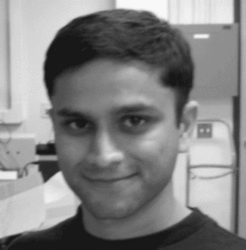
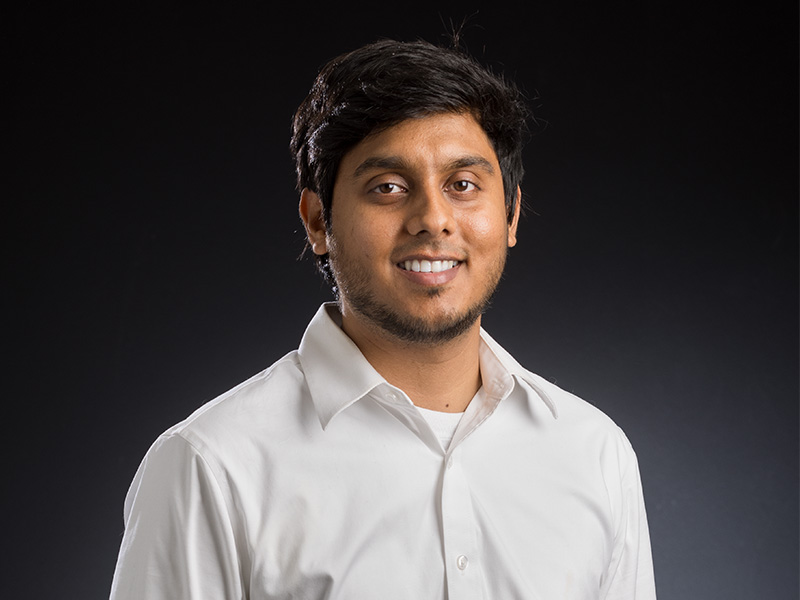
Sachin Shanbhag is an Associate Professor in the Department of Scientific Computing and Department of Chemical & Biomedical Engineering at Florida State University (FSU), affiliated with the FAMU-FSU College of Engineering. His research focuses on polymer rheology, complex fluids, and multiscale modeling with applications in biomedical materials and nanotechnology. He holds a PhD in Chemical Engineering from the University of Michigan and a B.Tech from IIT Bombay. Research interests include polymer dynamics, constitutive modeling, and inverse problems. Notable awards include the NSF Early Career Award (2010) and the Petroleum Research Fund New Faculty Award (2006–2008). His work bridges computational methods with experimental data, advancing understanding of polymer networks and viscoelastic behavior. Education: B.Tech, IIT Bombay (1999); PhD, University of Michigan (2004) Affiliations: FSU-FAMU College of Engineering, Department of Scientific Computing Key Projects: Multiscale modeling for tissue engineering, nanotechnology applications, and polymer dynamics His publications emphasize analytical and numerical approaches to rheological challenges, with contributions to software tools like pyReSpect for relaxation spectrum analysis. Current research trends include nonlinear rheology, surrogate modeling, and data assimilation in polymer systems.
Martin Diehl is a computational materials scientist affiliated with KU Leuven (Departments of Computer Science and Materials Engineering) and the Max-Planck-Institut für Eisenforschung GmbH in Germany. His work focuses on crystal plasticity simulations, computational materials engineering, and multi-physics modeling of metallic systems. Research interests include: Crystal plasticity finite element method (CPFEM) and spectral solvers Microstructure evolution and damage mechanics Machine learning applications in materials design Development of the DAMASK simulation toolkit Multi-phase steel alloys and heterogeneous deformation Integrated computational materials engineering (ICME) Key trends in his publications since 2021 highlight advancements in: Multi-physics DAMASK framework for coupled chemo-mechanical and thermal simulations AI-driven inverse design of steel microstructures Damage modeling in dual-phase steels Collaborative software development for materials science Experimental-simulation integration for stress-strain partitioning High-resolution spectral methods for finite strain analysis He actively collaborates with institutions like Harbin Institute of Technology, University of Oxford, and research groups across Europe and Asia.
Dirk Nuyens is a Senior Lecturer in the Department of Computer Science at the Faculty of Engineering Sciences, KU Leuven, Belgium. He is affiliated with the Numerical Analysis and Applied Mathematics (NUMA) research unit and is a member of the iSi Health Institute for Physics-based Modeling for In Silico Health. He also serves on the Faculty Council of Engineering Sciences and the Programme Committees for Engineering Sciences and Computer Science. Education: While specific degrees are not listed, his expertise and research output indicate advanced training in numerical analysis, computational mathematics, and applied mathematics. Research Interests: His primary research focuses on numerical analysis, computational mathematics, and quasi-Monte Carlo (QMC) methods. Specific areas include high-dimensional integration and approximation, lattice rules, low-discrepancy sequences, uncertainty propagation, and financial engineering. He develops algorithms for efficient sampling, integration, and approximation in high-dimensional spaces, with applications in uncertainty quantification, Bayesian inversion, and PDEs with random coefficients. Research Trends: His recent publications emphasize the construction and analysis of embedded lattice-based algorithms for multivariate function approximation and integration. There is a strong focus on achieving higher-order convergence rates, particularly in Korobov and Sobolev spaces, and on developing randomized lattice rules for improved error bounds. His work bridges theoretical developments in numerical analysis with practical implementations in scientific computing and engineering. Scientific Contributions: He has authored or co-authored numerous influential papers in top-tier journals such as Mathematics of Computation , Journal of Complexity , SIAM Journal on Numerical Analysis , and Journal of Computational Physics . His work on lattice rules, QMC methods, and high-dimensional integration has been widely cited and used in fields ranging from computational finance to theoretical physics. Projects and Funding: He leads or co-leads several ongoing and completed research projects funded by national and international agencies. These include projects on turbulence reconstruction from partial observations, uncertainty quantification for climate control in buildings, computational methods for infinite-dimensional Bayesian inversion, circularity improvements in scrap analysis, and ML-based sensitivity analysis. Software Development: He maintains and contributes to open-source software repositories for QMC point generation, including the Magic Point Shop and QMC4PDE projects. These provide efficient implementations of lattice and digital sequence generators in MATLAB, C++, and Python. Institutional Service: Beyond research, he contributes to academic governance through his roles in faculty and departmental councils, influencing curriculum development and strategic planning in engineering and computer science education at KU Leuven.
Associate Professor Christopher Wensrich is a faculty member in the School of Engineering at the University of Newcastle, Australia, specializing in Mechanical Engineering. He has a strong background in applied mechanics from both computational and experimental perspectives, with significant expertise in granular mechanics, neutron diffraction strain measurement, and Bragg-edge transmission strain tomography. Education: PhD, University of Newcastle Bachelor of Mathematics, University of Newcastle Bachelor of Engineering, University of Newcastle Professor Wensrich's research focuses on several interconnected areas within mechanical engineering and materials science. His primary expertise lies in granular mechanics, spanning from micromechanics and homogenization of granular systems to analytical modeling of granular dynamics (particularly the silo quaking problem) and computational modeling using the Discrete Element Method (DEM). He is also a pioneer in applying neutron diffraction strain scanning techniques to granular systems. In the broader field of applied mechanics, he has made significant contributions to neutron diffraction-based strain measurement, including breakthroughs in Bragg-edge Transmission Strain Tomography, where he demonstrated the world's first practical application outside of simple axisymmetric systems. His publication record demonstrates a consistent focus on developing and applying advanced techniques for strain measurement and reconstruction in granular and composite materials. His recent work has centered on tomographic reconstruction methods using neutron diffraction, with particular emphasis on Bragg-edge techniques for 2D and 3D strain field reconstruction. His research bridges theoretical mathematics, computational methods, and experimental validation, creating a robust framework for non-destructive stress measurement in complex materials. Professional Recognition: President of the Australian Neutron Beam User Group (ANBUG) since December 2022 Member of the ACNS Program Advisory Team at ANSTO (Australian Nuclear Science and Technology Organisation) since March 2019 Visiting Fellow at Clare Hall College, Cambridge University (January-June 2023) Visiting Researcher at Isaac Newton Institute for Mathematical Sciences (January-June 2023) Professor Wensrich has secured substantial research funding, with a total of $5,478,793 across 42 grants. His funding portfolio includes projects from the Australian Research Council (ARC), ANSTO, and international partners like Oakridge National Laboratory and Japan Proton Accelerator Research Complex. He has successfully supervised 11 PhD and Masters students to completion, with research topics spanning granular mechanics, conveyor systems, and neutron strain tomography. His current research involves collaborations with institutions worldwide, focusing on advanced strain measurement techniques and their application to complex material systems.
Professor Nick Birbilis serves as the Executive Dean of the Faculty of Science Engineering and Built Environment at Deakin University. With a distinguished career spanning materials science, corrosion engineering, and machine learning applications, he leads one of Australia's most innovative academic faculties. His research has significantly impacted the fields of materials engineering, particularly in corrosion science, alloy development, and advanced manufacturing techniques. Professor Birbilis's educational background includes a Doctor of Philosophy, Graduate Certificate of Higher Education, and Bachelor of Engineering (with Honours) in Materials Engineering, all from Monash University. His research interests span materials engineering, mechanical engineering, machine learning, metals and alloy materials, electrochemistry, and glass technology. His recent publications demonstrate a strong focus on the intersection of traditional materials science with cutting-edge computational approaches. The research trends show increasing integration of machine learning techniques for alloy design and property prediction, alongside continued fundamental work on corrosion mechanisms in advanced materials including multi-principal element alloys, magnesium alloys, and additively manufactured components. Fellow, ASM International (2022) Fellow, Engineers Australia (2021) Fellow, International Society of Electrochemistry (2020) H.H. Uhlig Award, The Electrochemical Society (2020) Batterham Medal, Academy of Technological Sciences and Engineering (2017) Lee Hsun Award, Chinese Academy of Science (2015) Professor Birbilis currently supervises multiple doctoral students working on cutting-edge projects including sustainable engineering models, 3D printed glass behavior, corrosion-resistant coatings, and biomolecular extraction techniques. His research is supported by significant grants from the Australian Research Council, Department of Education, Office of Naval Research USA, and industry partners including Advanced Alloy Holdings, InfraBuild, and Bluescope Steel. These projects focus on hydrogen economy applications, corrosion-resistant alloys, advanced protective coatings, and steel innovation.
Martin Skovgaard Andersen is an Associate Professor in the Department of Applied Mathematics and Computer Science at the Technical University of Denmark (DTU), where he specializes in Scientific Computing. His research integrates numerical methods, optimization, and machine learning to solve complex computational problems in engineering and data science. Education: Ph.D., University of California, Los Angeles (2006–2011) M.Sc., Aalborg Universitet (2001–2006) Postdoc, Linköping University, Sweden (2011–2012) His research interests include optimization (particularly conic and stochastic programming), numerical algorithms, signal processing, system identification, and fast solvers for integral equations. He works extensively on matrix analysis, regularization, and low-rank approximations, contributing to both theoretical and applied advancements in computational mathematics. The recent publications highlight a strong trend in developing efficient numerical algorithms for large-scale optimization and solving integral equations. His work emphasizes preconditioning, matrix truncation, and Bayesian inversion, with applications in electromagnetics, structural health monitoring, and network identification. There is a consistent focus on improving computational efficiency and scalability of solvers. Scientific Awards: No specific awards mentioned in the provided text. Andersen actively supervises PhD students and leads multiple research projects, including those on non-symmetric conic optimization, data-sparse models, and fast direct solvers. He is the Principal Investigator (PI) on projects related to physics-informed structural health assessment. His collaborative network spans Denmark and international institutions, particularly in computational mathematics and engineering. Labs and Research Teams: He is affiliated with the Scientific Computing section at DTU, which focuses on high-performance computing, numerical algorithms, and mathematical modeling. His work is embedded in a collaborative environment involving researchers in optimization, control theory, and computational electromagnetics.
Fan-Chi Lin is an Associate Professor in the Department of Geology and Geophysics at the University of Utah. With expertise in seismic methods and earth structure analysis, Dr. Lin leads research in seismic interferometry and tomography to understand Earth's structure from shallow to deep. Dr. Lin earned a Ph.D. in Geophysics from the University of Colorado Boulder in 2009. Since then, they have established themselves as a leading researcher in seismic methods development and application. Dr. Lin's research focuses primarily on seismic interferometry and seismic tomography. Seismic interferometry is a method that extracts useful information from diffusive wavefields (like ambient noise and coda wavefields) that were traditionally considered unusable noise. Their work has demonstrated that signals extracted through seismic interferometry provide important new constraints on Earth structure across various scales. This research has applications in studying 3D sedimentary basin structure, regional/continental crust and upper mantle structure, volcano magma bodies, and deeper mantle and core structure. As a member of the University of Utah, Dr. Lin also applies these techniques to model the 3D structure of the Salt Lake Valley and the geometry of the Wasatch fault system to better understand seismic hazards in the area. Analysis of Dr. Lin's recent publications (2021-2025) reveals a strong focus on applying dense seismic arrays and advanced processing techniques to study geological structures. Their work spans multiple geographical areas including Yellowstone National Park, the Wasatch fault system, Taiwan, Hispaniola Island, and the Wyoming Craton. The research demonstrates expertise in Rayleigh wave analysis, ambient noise tomography, and joint inversion techniques. A notable trend is the increasing use of dense linear arrays and double beamforming techniques to achieve higher resolution imaging of subsurface structures. Dr. Lin maintains an active research program with numerous collaborations across institutions. Their work has been featured in high-impact journals including Nature, Science, and Geophysical Research Letters, with several papers receiving media attention from outlets like BBC Science Focus, Discover Magazine, and Phys.org. Dr. Lin leads the "noise.earth.utah.edu" research group, which focuses on developing and applying seismic noise-based methods for Earth structure imaging. The lab utilizes both permanent and temporary seismic arrays to study various geological settings, with particular emphasis on geothermal systems, fault zones, and volcanic regions.
Eliza O'Reilly is an Assistant Professor in the Department of Applied Mathematics & Statistics at Johns Hopkins University. Her research focuses on the intersections of stochastic geometry , convex geometry , high-dimensional probability , and statistical learning theory . Her work explores: Nonconvex and convex regularizers in inverse problems Random tessellations and their machine learning applications Spectrahedral regression for convex function approximation Determinantal point processes for modeling repulsive interactions High-dimensional random convex sets and their asymptotic geometry Her research is supported by the National Science Foundation . Recent publications investigate gradient-based dimension reduction, oblique decision trees, and geometric properties of regularizers. She has received her PhD from the University of Texas at Austin and was a postdoctoral scholar at Caltech.
Andrea Barth is a W3-Professor of Computational Methods for Uncertainty Quantification at the University of Stuttgart, leading the Research Group for Computational Methods for Uncertainty Quantification within the Excellence Cluster for Simulation Technology. She holds a Ph.D. from the University of Oslo (2009) and has held positions at ETH Zürich and the University of Stuttgart. Her work focuses on stochastic partial differential equations, numerical methods for uncertainty quantification, and applications in engineering and natural sciences. Education: Ph.D. in Mathematics, University of Oslo (2006–2009) Lecturer/Postdoc at ETH Zürich (2010–2013) Junior Professor at University of Stuttgart (2013–2017) Research Interests: Stochastic PDEs, uncertainty quantification, Monte Carlo methods, Bayesian inverse problems, and numerical analysis of random fields. Her work bridges stochastic analysis and numerical simulations, addressing challenges in modeling and simulating complex systems with uncertainties. Grants & Funding: Principal Investigator in projects like 'Data-Integrated Simulation Science' (ExC 2075) and 'Quantitative Methods for Visual Computing' (SFB/TRR 161). Her research also explores applications in porous media, carbon dioxide storage, and optical flow analysis. Supervision: Advised PhD students including Oliver König, Fabio Musco, and Robin Merkle. Current students focus on topics like deep learning for stochastic PDEs and continuous level Monte Carlo methods.
Lamine M. Mili is a Professor in the Bradley Department of Electrical and Computer Engineering at Virginia Tech. His expertise spans power systems, signal processing, and robust estimation theory. He holds an IEEE Fellowship (2016) for contributions to robust state estimation in power systems. Mili's research focuses on advancing methodologies for power system reliability, control, and integration of renewable energy sources. His work includes studies on dynamic state estimation, nonlinear dynamics, bifurcation theory, and quantum computing applications. He has contributed extensively to resilience engineering and computational social science in power systems. Mili’s recent articles address challenges in smart grids, quantum circuit error prediction, and multifractal signal analysis in EEG. His research often combines advanced statistical techniques with real-world grid data, emphasizing robustness and adaptability in dynamic environments. Education: Ph.D., University of Liège, 1987 M.S., University of Tunis, 1983 B.S., Swiss Federal Institute of Technology, Lausanne, 1976 Research Interests: Power system stability and control State estimation and robust filtering Quantum computing for power systems Resilience and cyber-physical-social systems Nonlinear dynamics and bifurcation analysis His recent publications reflect a focus on hybrid power systems, probabilistic methods, and data-driven approaches for grid optimization. The 2025 articles highlight advancements in photovoltaic state estimation, quantum error prediction, and robust modulation techniques. Mili’s work often bridges theoretical models with practical grid applications, emphasizing uncertainty quantification and real-time monitoring.
Dr. Srikanthan Ramesh serves as an Assistant Professor in the School of Industrial Engineering and Management within Oklahoma State University's College of Engineering, Architecture and Technology. Since establishing the Advanced Materials and Additive Manufacturing Laboratory in August 2022, he has led interdisciplinary research at the intersection of materials science, physical phenomena, and advanced manufacturing technologies, with applications spanning healthcare, aerospace, and electronics sectors. His educational foundation includes a Ph.D. in Mechanical and Industrial Engineering from Rochester Institute of Technology (2022) and an M.S. in Industrial and Manufacturing Systems Engineering from Iowa State University (2017). This academic background enables his innovative approach to manufacturing science. Dr. Ramesh's research program focuses on biological and micro-scale additive manufacturing (bio-AM), specializing in biomaterial development for tissue engineering and regenerative medicine. His work integrates computational fluid dynamics, machine learning, and real-time process monitoring to achieve precise control over mechanical, biological, and electrical properties of manufactured structures. He develops experimental tools and process frameworks for droplet-based and extrusion-based AM systems, with particular emphasis on wound healing applications and space-compatible microelectronics. Analysis of his 14 publications from 2020-2025 reveals a strong trajectory toward AI-driven manufacturing solutions, with increasing emphasis on multi-objective Bayesian optimization for bioink design, aerosol jet printing process refinement, and bioprinted tissue construct development. His recent work demonstrates sophisticated integration of machine learning with physical manufacturing processes to solve complex biomedical challenges. His scientific recognition includes: Doctoral Dissertation Pitch Competition (Runner-up), IISE, 2021 Best Oral Presentation, Graduate Showcase, Rochester Institute of Technology, 2019 Gilbreth Memorial Fellowship, IISE, 2018-2019 Wakonse College Teaching Fellowship, Iowa State University, 2018-2019 Graduate Research Excellence Award, Iowa State University, 2017 Best Overall Oral Presentation, Nano@IAstate, Iowa State University, 2017 Dr. Ramesh currently leads significant research initiatives including as Principal Investigator for an NSF REU Site on Additive Manufacturing and Cybersecurity ($464,606, 2025-2028) and a NASA EPSCoR Travel Grant for aerosol jet printing in space missions (2024-2025). As Co-PI on an NSF grant for Privacy-aware Collaborative Design in additive biofabrication ($599,981, 2025-2028), he develops frameworks for mass personalization in medical applications while addressing data security challenges. These projects support his lab's mission to advance manufacturing science through rigorous experimentation and computational innovation. The Advanced Materials and Additive Manufacturing Laboratory operates as a collaborative hub where Dr. Ramesh directs research teams in developing novel biomaterials, optimizing printing processes, and creating functional prototypes for wound dressings, liver tissue models, and space-rated microelectronics. The lab's interdisciplinary approach combines expertise in materials characterization, computational modeling, and machine learning to push the boundaries of what's possible in additive manufacturing for critical applications.
Carl R. Brune is a Professor in the Department of Physics and Astronomy at Ohio University, affiliated with the College of Arts and Sciences. He is actively involved in research at the Edwards Accelerator Lab, the Institute of Nuclear & Particle Physics (INPP), and the Astrophysical Institute. Ph.D., California Institute of Technology (1994) B.S., University of California, Santa Barbara (1988) Brune's research focuses on experimental low-energy nuclear physics, particularly nuclear astrophysics—studying nuclear processes from the Big Bang to stellar evolution and supernovae. His work also explores nuclear structure, fundamental interactions, and applications in medical physics and cargo screening. He frequently conducts experiments at Ohio University's Edwards Accelerator Laboratory and national facilities like Oak Ridge and Notre Dame. His recent publications (2023–2025) highlight advancements in quantum physics of stars, machine learning applications in astrophysical reaction measurements, and probabilistic methods in R-matrix analyses. These works span topics such as neutron production, level densities, cross section measurements, and nucleosynthesis processes. Brune has contributed to major collaborative scientific efforts, including white papers on nuclear astrophysics and next-generation gamma-ray sources, reflecting his leadership in the field. Member, Institute of Nuclear and Particle Physics (INPP) Active researcher in nuclear data and reaction modeling Collaborator on large-scale experimental campaigns
Cristian R. Rojas is a Professor at the Division of Decision and Control Systems within the School of Electrical Engineering and Computer Science at Kungliga Tekniska Högskolan (KTH Royal Institute of Technology) in Stockholm, Sweden. He has been affiliated with KTH since October 2008, advancing from his initial position to his current professorship. His academic career focuses on control theory, system identification, and related fields. Dr. Rojas received his M.S. degree in electronics engineering from the Universidad Técnica Federico Santa María in Valparaíso, Chile, in 2004, followed by his Ph.D. in electrical engineering from The University of Newcastle, NSW, Australia, in 2008. Professor Rojas's research spans system identification, signal processing, and machine learning, with particular emphasis on developing methods for optimal input design, sparse system identification, and continuous-time system modeling. His work bridges theoretical foundations with practical applications in control systems engineering, focusing on creating efficient algorithms for system identification that balance computational complexity with estimation accuracy. He has made significant contributions to understanding coherence properties in system identification and developing methods for unstable system identification in closed-loop configurations. An analysis of Professor Rojas's recent publications reveals a strong focus on sparse system identification techniques, continuous-time system modeling, and application-oriented input design. His work consistently addresses the challenge of balancing theoretical rigor with practical implementation constraints, particularly in the areas of coherence minimization, computational efficiency, and closed-loop system identification. The research demonstrates a clear evolution toward increasingly sophisticated methods for handling nonlinear systems and unstable dynamics while maintaining statistical consistency. Associate Editor for IFAC journal Automatica Associate Editor for IEEE Control Systems Letters (L-CSS) Member of IEEE Technical Committee on System Identification and Adaptive Processing (since 2013) Member of IFAC Technical Committee TC1.1. on Modelling, Identification, and Signal Processing (since 2013) As an educator, Professor Rojas supervises numerous degree projects across various specializations including Machine Learning, Systems Control and Robotics, and ICT Innovation. He teaches core courses such as Machine Learning Theory (EL2810) and Modelling of Dynamical Systems (EL2820), demonstrating his commitment to both theoretical foundations and practical applications in control systems education. His academic leadership extends to course development and examination responsibilities across multiple engineering programs. Professor Rojas is embedded within the Division of Decision and Control Systems at KTH, a research environment dedicated to advancing the theoretical and practical aspects of control theory, system identification, and decision-making systems. His collaborative work with researchers like Håkan Hjalmarsson, James S. Welsh, and others has established him as a key contributor to the international control systems community.
Professor Christopher Nemeth of Lancaster University's School Of Mathematical Sciences is a leading researcher in computational statistics and probabilistic machine learning. His work focuses on Markov chain Monte Carlo (MCMC), sequential Monte Carlo (SMC), Gaussian processes, and approximate Bayesian computation, with applications in environmental science, target tracking, and econometrics. He currently holds a UKRI Turing AI Acceleration Fellowship and leads the ProbAI research hub. Research Interests: Development of probabilistic AI algorithms for large-scale learning, state-space modeling, and intersections between sampling and optimization algorithms. Grants: £9M UKRI-EPSRC ProbAI hub (2024-2029), £1.1M Turing AI Acceleration Fellowship (2021-2026), and multiple NERC grants. Academic Roles: Turing University Academic Liaison (2023-present), Associate Editor for ACM Transactions on Probabilistic Machine Learning (2023-present), and leadership roles in the Royal Statistical Society. Supervision: Completed supervision of 7 PhD students with projects on scalable Gaussian processes, Monte Carlo methods, and network modeling.
Ninghui Li is the Samuel D. Conte Professor and Associate Department Head in the Department of Computer Science at Purdue University. He holds a B.S. from the University of Science and Technology of China and a Ph.D. from New York University. His research focuses on information security, privacy, and database systems, with notable contributions to differential privacy and secure data publishing. He has authored over 200 papers, including influential works like the 2007 t-Closeness paper, and has received multiple awards, including being named an ACM and IEEE Fellow. Li’s academic roles include Editor-in-Chief of ACM Transactions on Privacy and Security (TOPS) and leadership in organizations like ACM SIGSAC. He advises over 30 graduate students and has been instrumental in coaching Purdue’s ICPC teams to top global rankings. His current projects include NSF-funded initiatives like the Center for Distributed Confidential Computing (CDCC) and privacy-focused AI research. Key contributions span privacy-preserving data synthesis, federated learning security, and cybersecurity for IoT systems. He actively contributes to conferences as a program chair and through editorial roles, ensuring advancements in both theoretical and applied security domains.