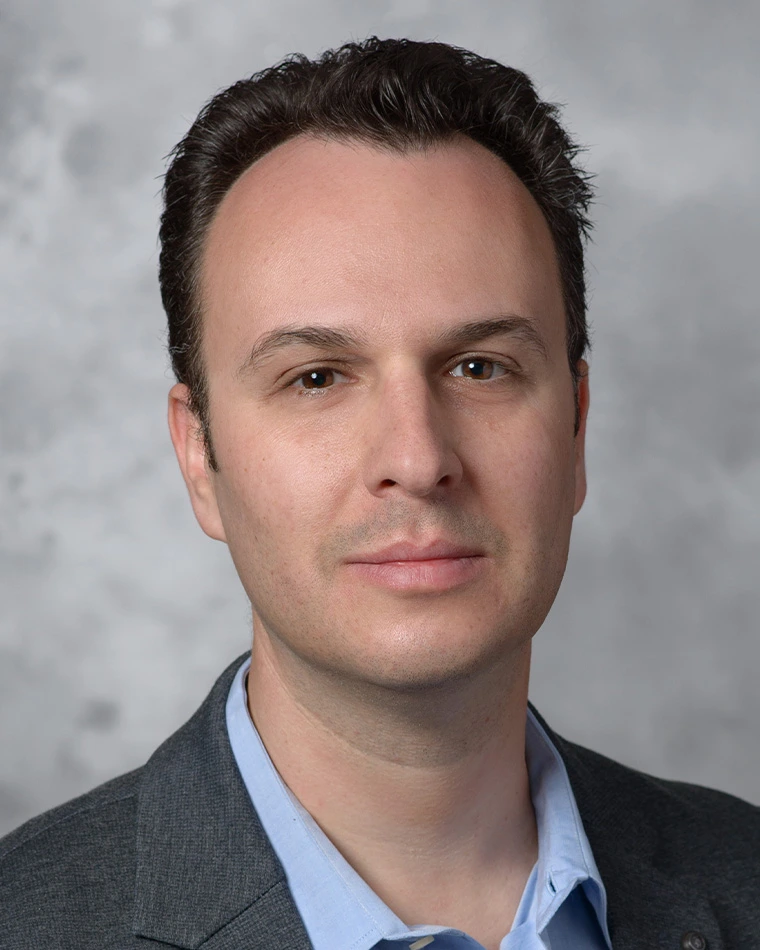
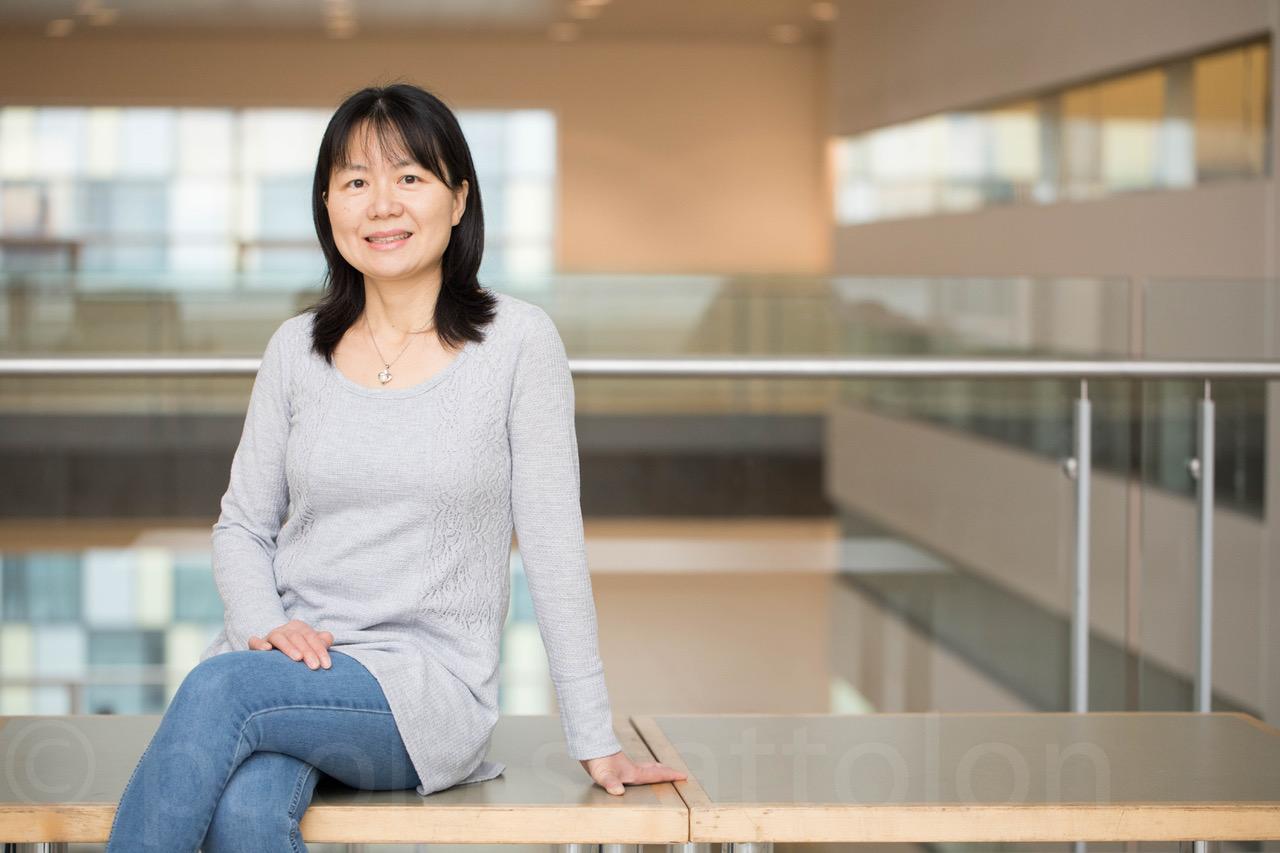
Dr Elliot J. Crowley is a Senior Lecturer in Electronics and Electrical Engineering at the University of Edinburgh, serving as Discipline Programme Manager. He co-leads the Bayesian and Neural Systems research group. His research focuses on simplifying machine learning, automated ML, low-resource deep learning, and engineering applications. He holds an MEng in Engineering Science and a DPhil (PhD) from the University of Oxford, with postdoctoral experience at Edinburgh's School of Informatics. He leads the EPSRC New Investigator Award and participates in the dAIEdge Horizon Network. Notable contributions include foundational work in neural architecture search (NAS), probabilistic methods for model efficiency, and applications in computer vision. His courses, such as the Data Analysis and Machine Learning module, emphasize practical Python-based learning for engineering students. Key awards include an EPSRC grant and recognition through distinguished papers at ASPLOS 2021. His team includes current PhD students (Linus Ericsson, Miguel Espinosa) and former advisees (Chenhongyi Yang at Meta, Jack Turner at Qualcomm). Research spans from NAS algorithms to ethical machine learning practices, with a focus on bridging theoretical advances and real-world engineering challenges.
Dr. Wei Dai is a Senior Lecturer (Associate Professor) in the Department of Electrical and Electronic Engineering at Imperial College London, part of the Faculty of Engineering. He holds affiliations with the EPSRC Centre for Maths of Precision Healthcare and the Communications and Signal Processing group. His research focuses on sparse signal processing, machine learning applications in signal processing, linear and bilinear inverse problems, wireless communications, and random matrix theory. Notably, he contributed to the first compressive sensing DNA microarray prototype and has a highly cited 2009 paper on compressive sensing reconstruction. Dr. Dai's educational background includes a Ph.D. in Electrical and Computer Engineering from the University of Colorado at Boulder (2007) and postdoctoral research at the University of Illinois at Urbana-Champaign (2007-2010). His work bridges theoretical signal processing with practical applications in sensing, communication systems, and biomedical signal analysis. He leads research initiatives in gridless DOA estimation, robust beamforming, and cortico-muscular coupling analysis using advanced optimization techniques. His research outputs span topics like spectral compressed sensing, Bayesian methods for integrated sensing-communication systems, and dictionary learning for causal discovery. Ongoing work emphasizes low-rank matrix recovery, distributed compressed sensing, and mathematical frameworks for super-resolution localization. Dr. Dai collaborates across disciplines, leveraging signal processing innovations for healthcare technology and next-generation wireless systems.
Paolo Santucci de Magistris is a Professor of Econometrics at the Department of Economics and Finance of Luiss University (Rome) since February 2018 and previously served as Head of the Department from 2021 to 2024. He held roles as Associate Professor and Assistant Professor at Aarhus University (Denmark) from 2013 to 2018, with prior postdoctoral research at the University of Padova and CREATES. His education includes a PhD from the University of Pavia and visiting research at Northwestern University’s Kellogg School of Management. His research focuses on time series econometrics, financial econometrics, and energy economics, with emphasis on volatility modeling, liquidity risk, and climate impacts. Notable contributions include work on liquidity coverage in financial markets, cointegration models, and the interplay between wind energy and CO2 emissions. His publications span top journals like the Journal of Financial Economics and Journal of Econometrics , exploring topics ranging from stochastic volatility to climate policy analysis. Ongoing projects include research on option price dynamics, energy market connectedness, and risk-neutral density fitting via the RNDfittool MATLAB application. Prof. Santucci de Magistris collaborates internationally with institutions like CREATES and has contributed to policy-relevant studies on energy transition and financial stability. His methodological innovations include Bayesian econometric techniques and tools for analyzing financial risks embedded in derivatives markets.
Mattias Villani is Professor of Statistics at Stockholm University, specializing in Bayesian statistics and machine learning. He obtained his PhD in Statistics from Stockholm University in 2000 and has held positions at Sveriges Riksbank and Linköping University. Villani develops computationally efficient Bayesian methods for inference, prediction and decision-making with flexible probabilistic models. Research Interests: His work spans Bayesian computation (MCMC, HMC, variational inference), machine learning (Gaussian processes, mixture models), and applications in neuroimaging, transportation, and econometrics. Research focuses on scalable Bayesian methods for large datasets and complex models. Publication Focus: Recent articles concentrate on Bayesian neuroimaging analysis, transportation network modeling, and efficient MCMC algorithms. Methodological innovations in subsampling techniques for large-scale Bayesian computation represent a significant research trend. Student Advising: Supervises PhD students in statistical methodology development and applications. Current research groups focus on spatiotemporal modeling, locally stationary processes, and neuroimaging statistics.
Anirban Mondal is an Associate Professor and Director of Graduate Studies at Case Western Reserve University's Department of Mathematics, Applied Mathematics and Statistics, specializing in Bayesian Inference, Markov Chain Monte Carlo Methods, and Uncertainty Quantification. Holding a Ph.D. in Statistics from Texas A&M University, his research spans spatial statistics, inverse problems, and data mining applications across biomedical, materials science, and public health domains. Education: Ph.D. in Statistics, Texas A&M University His recent publications (2022-2024) demonstrate interdisciplinary applications including heart disease prediction via optimized machine learning, additive manufacturing defect analysis, and pandemic transmission modeling. While primarily focused on Bayesian frameworks and computational statistics, his work extends to geomechanics, remote sensing, and environmental risk assessment. Current research explores advanced sampling algorithms, functional data emulation, and multiscale hierarchical modeling for complex systems. Key trends include uncertainty quantification in machine learning systems (2024), Bayesian calibration methods (2023), and pandemic modeling (2022). His work balances methodological innovation with real-world applications in medical diagnostics, materials science, and climate science. Contact: anirban.mondal@case.edu
James E. Aguirre is an Associate Professor in the Department of Physics and Astronomy at the University of Pennsylvania. His research focuses on understanding galaxy formation, cosmology, and large-scale structure through advanced instrumentation and observational techniques. He leads projects such as HERA (Hydrogen Epoch of Reionization Array) and TIM (Terahertz Intensity Mapper), dedicated to studying the early universe and distant star-forming galaxies. Aguirre’s work involves cutting-edge millimeter-wave and radio instrumentation design, including Z-Spec, PAPER, and MUSTANG. He has contributed to significant discoveries, such as detecting massive water reservoirs around quasars and determining distances to gravitationally lensed galaxies. Supported by NSF grants, his research bridges observational astronomy with cosmological theory. Education: Ph.D. in Astrophysics (thesis work on TopHat balloon-borne telescope). Teaching: ASTR011 Introduction to Astrophysics I. Current Projects: HERA, TIM, Simons Observatory, and PAPER. Grants: NSF Grant No. 0807990 and others. His research group collaborates on instrumentation like the Bolocam Galactic Plane Survey and explores techniques for mitigating calibration errors and improving signal analysis in radio interferometry. Aguirre’s efforts advance both observational methods and our understanding of cosmic evolution from the epoch of reionization to present-day galaxy formation.
Andrew McCormack is an Assistant Professor in the Department of Mathematical and Statistical Sciences at the University of Alberta. His research focuses on mathematical statistics, with a particular emphasis on non-Euclidean data analysis, algebraic statistics, and information geometry. His research interests include: Non-Euclidean Data Analysis: Developing methodologies for data on manifolds and metric spaces. Algebraic Statistics: Applying nonlinear algebra to understand statistical models, especially graphical models. Tensor Decompositions: Exploring low-dimensional representations of high-dimensional data using matrices and tensors. Information Geometry: Studying statistical models through geometric lenses, incorporating ideas from optimal transport. Statistical Decision Theory: Investigating foundational approaches to evaluating statistical methods from both classical and Bayesian perspectives. Mccormack's recent work spans robust statistical methods, information geometry in covariance modeling, and the application of algebraic techniques to statistical problems. His contributions often bridge theory and computation, addressing challenges in high-dimensional and geometric data analysis. No scientific awards listed. No advisees or grants mentioned. Labs or teams are not specified in the provided information.
Anthony Constantinou is a Senior Lecturer at Queen Mary University of London, part of the School of Electronic Engineering and Computer Science. He leads the MInDS Research Group and the Bayesian AI Lab, focusing on causal machine learning for decision-making under uncertainty. His research spans healthcare, defense, sports, economics, and gaming, with a strong emphasis on Bayesian networks and causal inference. Research Interests: Causal machine learning, decision systems, Bayesian networks, uncertainty quantification, and their applications in healthcare, military defense, sports analytics, and economics. He collaborates with academia and industry to advance AI-driven decision-making systems. Grants: Noted for securing funding such as the Engineering and Physical Sciences Research Council grant (EP/S001646/1) for Bayesian AI research. His work emphasizes practical applications in diverse fields through collaborative projects. Labs & Teams: Head of the MInDS Research Group and Bayesian AI Lab, fostering interdisciplinary research in AI and decision systems.
Quan Zhou is an Assistant Professor in the Department of Statistics at Texas A&M University, part of the College of Arts & Sciences. His research focuses on developing advanced sampling methods, particularly Markov chain Monte Carlo (MCMC) algorithms, with applications in Bayesian methodology, variable selection, stochastic optimization, and statistical genetics. He holds a BS from Fudan University and a PhD from Baylor College of Medicine, followed by a postdoctoral fellowship at Rice University. He teaches courses such as Mathematical Probability, Multivariate Analysis, and Advanced Stochastic Processes. Notable contributions include work on informed MCMC samplers, Schrödinger bridge theory, and high-dimensional structure learning. He advises PhD students like Hyunwoong Chang (now at UT Dallas) and Guanxun Li (Beijing Normal University). Active in academic service, he served as President of the Southeastern Texas Chapter of the American Statistical Association (SETCASA).
Seth Sullivant is a Distinguished Professor in the Department of Mathematics at North Carolina State University (NC State), within the College of Sciences. His research focuses on algebraic statistics, computational and combinatorial algebra, and mathematical phylogenetics. He holds a Ph.D. in Mathematics from the University of California, Berkeley (2005). His expertise spans interdisciplinary areas, including algebraic approaches to statistical problems, combinatorial methods in phylogenetics, and the development of algebraic tools for graphical models. He is affiliated with research groups in Algebra and Combinatorics, Mathematical Biology, and Symbolic Computation at NC State. Recent research trends in his publications emphasize the application of algebraic geometry and combinatorics to statistical models, phylogenetic network analysis, and identifiability problems in systems biology. His work bridges abstract mathematical concepts with practical statistical methodologies, addressing challenges in data analysis and model interpretation. No specific scientific awards are listed in the provided texts. His advising and grant activities are not detailed here, though his extensive publication record suggests active research collaborations. He is part of research teams focused on advancing algebraic methods in statistics and computational biology.
Simon Spencer is a Professor of Statistics at the University of Warwick, affiliated with the Zeeman Institute for Systems Biology and Infectious Disease Epidemiology Research (SBIDER) and the Warwick Analytical Sciences Centre (WASC). His research focuses on Bayesian inference applied to epidemiology, stochastic epidemic models, and statistical methods for analytical science. He has held previous positions at the University of Nottingham and Massey University in New Zealand. His teaching includes advanced courses such as CH923: Statistics for Data Analysis , ST925: Graduate Topics in Statistics , and MA4M1/MA6M1: Epidemiology by Example . His research group currently includes PhD students Matthew Adeoye and Richard Haughey, and MSc students Olli Smith and Sangavi Pirabakaran. He collaborates extensively with global health institutions on projects addressing infectious disease modeling and public health policy. Spencer’s work bridges statistical methodology and real-world applications, with a focus on outbreak detection, model comparison, and the integration of geostatistical data with transmission models. His recent contributions include frameworks for lymphatic filariasis elimination projections and analyses of HIV transmission dynamics in Uganda. He actively contributes to interdisciplinary research in systems biology and analytical chemistry, leveraging advanced statistical techniques to address complex health challenges.
Badi H. Baltagi is a Distinguished Professor of Economics and Senior Research Associate at the Center for Policy Research, Maxwell School of Citizenship and Public Affairs, Syracuse University. He previously served as the George Summey, Jr. Professor of Liberal Arts at Texas A&M University (1993–2005) and has held visiting positions at the University of Arizona and the University of California, San Diego. He currently holds a part-time chair position in Economics at the University of Leicester, United Kingdom. Ph.D. in Economics, University of Pennsylvania, 1979 Baltagi’s research focuses on econometrics, particularly panel data, spatial econometrics, health econometrics, and theoretical econometrics. His work has significantly advanced methodologies in fixed and random effects models, spatial dependence, and network effects in panel data. He is renowned for his authoritative textbooks, including Econometric Analysis of Panel Data and Econometrics , which are standard references in graduate econometrics courses worldwide. His recent publications (2021–2025) demonstrate a strong trend toward integrating spatial and network structures into panel data models, with applications in health, labor, and international trade. He frequently publishes in top journals such as Journal of Econometrics , Econometric Reviews , and Economics Letters , emphasizing robust estimation, specification testing, and dynamic modeling. Kuwait Prize for Economics and Social Sciences (2018) Distinguished Achievement Award in Research, Texas A&M University (2002) Multa and Plura Scripsit Awards, Econometric Theory Distinguished Authors Award, Journal of Applied Econometrics Fellow, Journal of Econometrics Fellow, Econometric Reviews Fellow, International Association for Applied Econometrics Fellow, Spatial Econometrics Association Fellow, Society for Economic Measurement Research Fellow, IZA (since 2002) Research Fellow, CESifo (since 2003) Global Labor Organization (GLO) Fellow Lifetime Fellow, Economic Research Forum (MENA region) Baltagi has held major editorial roles, including co-editor of Economics Letters (2011–present), former editor of Empirical Economics (1999–2018), and replication editor for Journal of Applied Econometrics (2003–2018). He is the series editor for Contributions to Economic Analysis (Emerald Publishing) and Advanced Studies in Theoretical and Applied Econometrics (Springer). He has advised numerous Ph.D. students and collaborates extensively with researchers globally, particularly in spatial and health econometrics. He is actively involved in organizing and presenting at major conferences such as the International Panel Data Conference and the International Association of Applied Econometrics. Baltagi is a founding member and former director of the International Association for Applied Econometrics and serves on the board of directors and advisory boards of the Spatial Econometrics Association and the Journal of Spatial Econometrics , respectively. His leadership in establishing and promoting specialized econometric fields underscores his influence in shaping modern econometric research.
Christos Gagatsos is an Assistant Professor in the Department of Electrical and Computer Engineering and a member of the Wyant College of Optical Sciences at the University of Arizona. He joined the university in 2018 as a postdoctoral research associate, was promoted to Assistant Research Professor in 2020, and became an Assistant Professor in ECE in 2023. Prior to this, he was a postdoctoral research fellow at the University of Warwick, UK. His educational background includes: PhD in Engineering Sciences and Technology, Université Libre de Bruxelles and École Polytechnique, Belgium (2014) MSc in Physics of Elementary Particles, University of Athens, Greece (2010) BSc in Physics, University of Athens, Greece (2007) Christos Gagatsos's research lies at the intersection of quantum information, quantum sensing, and quantum communications, with a strong theoretical focus on bosonic systems. His work explores fundamental concepts such as entanglement, non-Gaussianity, and Bayesian estimation in quantum systems. He is particularly interested in pushing the limits of quantum-enhanced sensing, including optical phase and transmissivity estimation, and in developing theoretical frameworks for quantum detection and discrimination. His teaching interests include quantum information, quantum optics, probability theory, and applied mathematics. The recent trend in his publications reflects a deep engagement with Bayesian methods in quantum parameter estimation, quantum change point detection, and the characterization of quantum states through measures like Wigner entropy. His work spans both fundamental quantum theory and practical applications in sensing and communication, often bridging classical and quantum approaches. He advises several graduate students across departments, including Boyu Zhou (Physics), Ali Cox (Physics), Qipeng Qian (Mathematics), and Leo Bia (Optical Sciences). While no formal scientific awards are listed in the provided text, editorial recognition such as an Editor’s Pick in APL Quantum highlights the impact of his research. Christos Gagatsos leads a research group focused on theoretical quantum information, actively collaborating with quantum research groups across the University of Arizona, Arizona State University, and international institutions in the USA and Europe. His lab investigates quantum sensing, communications, and foundational aspects of quantum mechanics using bosonic platforms, fostering a collaborative and interdisciplinary research environment.
Cristian Román-Palacios is an Assistant Professor in the Department of Ecology and Evolutionary Biology at the University of Arizona, where he also serves as Coordinator and Advisor for the Master of Science in Data Science (MSDS) and Master of Science in Information Systems (MSIS) programs. He is a core faculty member in Artificial Intelligence and Machine Learning, Data Management, Analysis and Visualization, and Environmental, Health and Biological Sciences. Education: PhD in Ecology and Evolutionary Biology, University of Arizona (2020) BS in Biology, Universidad del Valle, Colombia (2015) His research lies at the intersection of phylogenetics, biodiversity modeling, and machine learning, focusing on large-scale biodiversity patterns, the impacts of climate change on species survival, and the development of statistical tools for paleoclimatic reconstructions. He employs computational and data-intensive methods to explore evolutionary and ecological questions across diverse taxa. His recent publications (2024–2025) demonstrate a strong trend toward interdisciplinary research, combining computational biology, geochemistry, climate science, and open-source software development. Key themes include biodiversity informatics (e.g., Animal Culture Database), paleoclimatic modeling (e.g., clumped isotope thermometry), reproducibility in science, and tools for collaborative research (e.g., LabOps, SSARP). His work increasingly integrates data science with biological and environmental applications. Scientific Contributions: Published over 25 peer-reviewed papers, many as first author Research featured in Science News, Popular Science, CNN, USA Today Developed open-source tools: phruta , treedata.table , SSARP , LabOps Cristian advises graduate students through the infosci-msadvise@arizona.edu email and Calendly appointments. He was previously a staff researcher at UCLA’s Tripati Lab. He leads initiatives such as the Southwest Center on Resilience for Climate Change and Health and promotes inclusive, collaborative science through online toolkits and leadership ecosystems aimed at addressing climate and social inequities. His lab, the Román-Palacios Lab, and involvement with the Data Diversity Lab reflect his commitment to open, reproducible, and equitable research practices in data-intensive biology.
Xin Gao is a Professor in the Department of Mathematics and Statistics at York University, Toronto. His research focuses on Artificial Intelligence , Machine Learning , and Statistical Genetics , with applications in biomedical data analysis and planetary science. He leads the Artificial Intelligence and Machine Learning Lab , which has developed impactful tools like an online Type 2 Diabetes risk predictor using logistic regression and Mars rock composition analyzers for NASA. His methodological work includes penalized composite likelihood and multi-task feature learning , implemented in R packages FusionLearn and lassoGEE . Scientific Awards NSERC Discovery Acceleration Award ($120,000, 2018-2020) Key Software Contributions FusionLearn : Correlated multi-task feature learning lassoGEE : High-dimensional clustered/longitudinal data analysis Notable Collaborations Vector Institute (AI scholarship mentoring) Fields Institute (committee roles) International genomic data integration projects