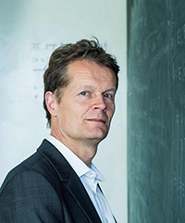
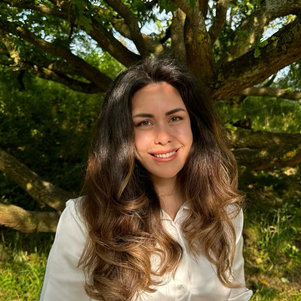
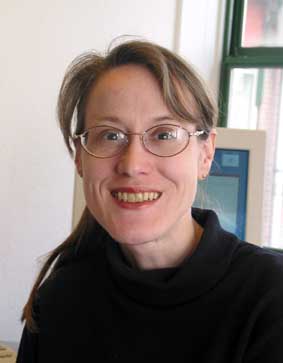
Aad van der Vaart is a Professor of Stochastics at Leiden University's Mathematical Institute. He was awarded the prestigious NWO Spinoza Prize in 2015 for groundbreaking work in mathematical statistics, particularly Bayesian methods applied to medical imaging, genetic data, and complex models. His research bridges pure mathematical theory with applied domains like neuroscience and astronomy. Research Interests : Van der Vaart focuses on infinite-dimensional Bayesian statistics, nonparametric models, and statistical genetics. His work emphasizes rigorous mathematical analysis of prior distributions and their impact on data-driven conclusions. Applications include gene network modeling and PET scan image reconstruction. Key Contributions : Authored influential books on estimation theory; pioneered modern Bayesian approaches to high-dimensional data. His Spinoza Prize funds will support interdisciplinary research and hiring new talent in statistical methods. Awards : NWO Spinoza Prize (2015), recognized as a global leader in statistical theory. Future Directions : Expanding into astronomical data analysis and medical applications, leveraging Bayesian frameworks for big datasets.
Prof. Ronald Meester is a Full Professor of Mathematics at the Faculty of Science, Vrije Universiteit Amsterdam. He specializes in mathematical statistics, probability theory, and their applications in legal and environmental contexts. His current positions include director of Meester Advies (Leiden) and expert for Landelijke Deskundigheidsmakelaar Politie (Apeldoorn). He has supervised 14 PhD theses and contributes to interdisciplinary research bridging statistics with law, epidemiology, and environmental policy. Research focuses on Bayesian reasoning, likelihood ratio analysis, and statistical methodologies for legal evidence evaluation. Recent work addresses nitrogen deposition policy critiques and epidemiological study design limitations. His ancillary activities include authorship (since 2003) and teaching roles at SSR Utrecht. Media engagements include commentaries on scientific integrity and environmental policy. Teaching includes the course 'Mathematical Modelling of Stochastic Systems' (2024-2025 academic year). Active in international collaborations and has produced 111 research outputs spanning articles, books, and encyclopedia entries. His work contributes to UN SDGs related to sustainable development through environmental statistical analysis.
Dr. Peter J.F. Lucas is a Full Professor specializing in Datamanagement & Biometrics with over 35 years of experience in artificial intelligence, probabilistic graphical models, and clinical decision support systems. His research spans intelligent systems, machine learning, and eHealth, with a focus on applying Bayesian networks and probabilistic logic to medical and non-medical domains.
Charles E.H. Berger serves as Professor by Special Appointment in Criminalistics at Leiden University's Institute for Criminal Law and Criminology since November 2011, a position funded by the Stichting Leerstoel Criminalistiek. He concurrently holds a principal scientist position at the Netherlands Forensic Institute (NFI), where he contributes to education, R&D strategy, and research on forensic evidence interpretation. His research program centers on logically sound interpretation of forensic evidence through probability theory and computational methods. Berger specializes in applying Bayesian statistics to forensic anthropology, personal identification, and evidential evaluation. His work emphasizes moving forensic science toward activity-level interpretations while managing contextual information to prevent bias. Berger plays a pivotal international role as member of ISO technical committee TC272, serving as lead editor for Part 4 (Interpretation) of the ISO-21043 Forensic Sciences standard. His scholarly contributions focus on improving forensic reasoning frameworks and establishing objective evaluation methodologies. His publications demonstrate consistent engagement with foundational forensic science challenges, particularly in developing statistically rigorous approaches to evidence interpretation that maintain scientific integrity within legal contexts. Berger actively promotes scientifically sound practices across the criminal justice system, emphasizing the importance of clear communication between forensic scientists, legal professionals, and other stakeholders to ensure proper understanding and application of forensic evidence.
Nezihe Merve Gürel is an Assistant Professor in Computer Science at Delft University of Technology (TU Delft), affiliated with the Pattern Recognition & Bioinformatics Group within the Intelligent Systems Department of the Faculty of Electrical Engineering, Mathematics and Computer Science. Her research focuses on developing robust, reliable, and efficient machine learning methods with enhanced reasoning capabilities, bridging theoretical rigor and practical applications. She emphasizes data-centric approaches to improve ML systems. Education: PhD in Computer Science from ETH Zurich, MSc from EPFL (Switzerland). Research Interests: ML robustness, reliability, reasoning, data-centric ML, federated learning, and explainable AI. Her recent work includes certified robustness for retrieval-augmented models and time-efficient learning algorithms. She has contributed to the Journal of Data-centric Machine Learning Research as an executive editor and served as a reviewer for top ML conferences (NeurIPS, ICML, ICLR). She previously held roles at IBM Research, Stanford University's Human-Centered AI Lab, and Westlake Institute for Advanced Study. Her awards include the Generation Google Scholarship and Cisco Research Funding . Scientific Awards : Generation Google Scholarship (2021) Cisco Research Center University Funding Labs & Teams : She leads research in the Pattern Recognition Laboratory at TU Delft and collaborates with international institutions like Stanford and Westlake Institute for Advanced Study.
Nathan van de Wouw is a Full Professor at the Mechanical Engineering Department of Eindhoven University of Technology (TU/e), affiliated with ICMS, EAISI Mobility, EAISI High Tech Systems, EAISI Foundational, and EIRES. He also holds an adjunct Full Professor position at the University of Minnesota and a part-time Full Professorship at Delft University of Technology. His research focuses on dynamics and control of mechanical systems, including mechatronics, robotics, smart manufacturing, energy systems, and networked control. He has supervised over 150 students and led numerous projects funded by industry partners like ASML, Philips, and Shell. Education: M.Sc. (with Honors) in Mechanical Engineering, TU/e (1994) Ph.D. in Mechanical Engineering, TU/e (1999) Research Interests: Nonlinear systems and control Model reduction and complexity analysis Data-driven and networked control strategies Applications in high-tech systems, autonomous vehicles, and energy systems Awards: IEEE Control Systems Technology Award (2015) for variable-gain control in motion systems Grants & Projects: Lead projects on mechatronic design, lithography systems, and thermodynamic optimization Collaborations with TNO, ASML, and industrial partners Labs & Teams: Member of TU/e’s Dynamics and Control group Affiliated with EAISI (Eindhoven AI Systems Institute)
Rob van Beers is an Assistant Professor at the Faculty of Behavioural and Movement Sciences at Vrije Universiteit Amsterdam, with affiliations to Neurocontrol, IBBA, and AMS - Sports. His research focuses on human motor control, spatial perception, and computational modeling using Bayesian approaches to understand sensory-motor integration under uncertainty. He holds ancillary roles as a Researcher at Radboud University (Nijmegen) since 2015 and serves on the Editorial Board of the Journal of Neurophysiology since 2015. His work contributes to UN Sustainable Development Goals related to health and well-being. Key research interests include motor learning dynamics, sensorimotor adaptation, and the neural basis of spatial orientation. Recent studies explore Alzheimer’s impacts on motor adaptation and Bayesian inference in vestibular path integration. Teaching responsibilities include courses on linear systems dynamics, physical measurement techniques, and motor systems regulation. His work spans 42 peer-reviewed articles, with datasets published on platforms like Dryad and Zenodo.
Prof. Sander Bohte is a part-time full professor of Computational Neuroscience at the University of Amsterdam (Swammerdam Institute of Life Sciences) and an honorary full professor of Bio-inspired Neural Networks at the University of Groningen. He serves as a Scientific Staff Member and Group Leader in the Machine Learning department at CWI, Amsterdam. His work bridges computational neuroscience and machine learning with a focus on continuous-time information processing. Key research interests include: Spiking Neural Networks with predictive coding and multi-compartment models Biologically Plausible Learning in recurrent and deep architectures Working Memory modeling via reinforcement learning Neuromorphic Computing for real-time systems and GPU acceleration His recent publications highlight trends in neural adaptation , predictive coding , and SNN hardware-software co-design . Awards include the Veni Innovational Research Grant (2004) and ERCIM grant (2013) . He actively supervises MSc theses and leads grants like the NWO KIC project 'Selfhealing Neuromorphic Systems' (2024).
Marie-Colette van Lieshout is a Professor of Spatial Stochastics at the Faculty of Electrical Engineering, Mathematics and Computer Science, University of Twente, and a Scientific Staff Member in the Stochastics group at Centrum Wiskunde & Informatica (CWI), Amsterdam. She has been active in research since 1997 and is a leading expert in stochastic geometry, spatial statistics, and image analysis. Her educational and professional background includes positions at the University of Warwick and the Free University Amsterdam. She is currently engaged in advanced research on point processes, random fields, and tessellation models, with applications in seismic hazard, fire risk, and machine learning. Her research interests include: Stochastic Geometry Spatial Statistics Image Analysis Point Process Modeling Seismic Risk Assessment Machine Learning for Spatial Data Her recent publications (2023–2025) focus on spatial intensity estimation, marked point processes, and data-driven risk modeling, showing a strong integration of classical spatial statistics with modern computational and machine learning techniques. Key themes include adaptive kernel smoothing, infill asymptotics, and applications in environmental and public safety domains. She has received significant recognition, including: Elected Fellow, International Statistical Institute (ISI) She has been awarded multiple research grants from NWO and other agencies, including the KLEIN grant for fire risk management and the DeepNL grant for seismicity prediction in Groningen. She has supervised or collaborated with researchers such as C. Lu, Z. Baki, and R. Markwitz. She is also active in academic service, serving on editorial boards (e.g., Methodology and Computing in Applied Probability), advisory boards (InHolland University), and councils of learned societies (Bernoulli Society, KWG). She leads and participates in research clusters such as STAR and contributes to outreach and education through courses and public lectures on earthquake modeling and spatial statistics.
Joris M. Mooij is a Professor of Mathematical Statistics at the Korteweg-De Vries Institute of the University of Amsterdam, Netherlands. His research focuses on causality, spanning causal modeling, discovery, and inference with applications in biology, medicine, fairness, and business analytics. He combines mathematical modeling with statistical and algorithmic approaches in his work. Dr. Mooij received his PhD with honors from Radboud University Nijmegen in 2007, focusing on approximate inference in graphical models. After postdoctoral work at the Max Planck Institute for Biological Cybernetics in Tübingen, Germany, he obtained an NWO VENI grant in 2011 for further postdoctoral research at Radboud University. He became Assistant Professor at the University of Amsterdam's Informatics Institute in 2013, was promoted to Associate Professor in 2017, and became a full Professor of Mathematical Statistics in 2020. Dr. Mooij's research centers on causal inference, with particular expertise in structural causal models, cyclic causal systems, and causal discovery algorithms. His work addresses fundamental questions about when causal relationships can be identified from observational data and how to develop robust causal discovery methods that work in complex real-world settings with latent variables, cycles, and selection bias. He has made significant contributions to understanding the limitations of existing causal discovery approaches and developing new methods that overcome these limitations. His research group organizes the Amsterdam Causality Meeting series and develops theoretical frameworks for causal modeling that encompass both acyclic and cyclic systems. Dr. Mooij has collaborated extensively on applications of causal methods in biological systems, including protein signaling networks and gene expression data. The group's recent work explores performative predictions, causal domain adaptation, and robust causal discovery methods that account for selection bias and missing data. Dr. Mooij has received numerous awards for his research, including: Best paper award at UAI for "Establishing Markov equivalence in cyclic directed graphs" IEEE Geoscience and Remote Sensing Society 2011 Letters Prize Paper Award ICML Test of Time Honorable Mention Best student paper award at UAI 2010 He has secured competitive research funding through an NWO VENI grant, NWO VIDI grant, and an ERC Starting Grant, which supported the establishment of his research group consisting of 3 PhD students and 3 postdocs focused entirely on causality. Dr. Mooij has supervised several PhD students, including Tineke Blom, whose work on "Causality and Independence in Perfectly Adapted Dynamical Systems" significantly influenced his thinking about causality in complex systems. He has co-taught the MasterMath course on Causality and published lecture notes titled "A Mathematical Introduction to Causality." His research continues to push the boundaries of causal inference methodology and its applications across diverse scientific domains.
Ivana Nikoloska is an Assistant Professor at the Department of Electrical Engineering, Eindhoven University of Technology (TU/e). She is affiliated with the Center for Quantum Materials and Technology Eindhoven and BIASlab (Bayesian Intelligence and Stochastic Agents Lab). Her academic career includes prior roles as a Research Associate at King’s College London and a Visiting Researcher at Aalborg University. PhD: Monash University, Australia (2023) MSc & Dipl.-Ing.: University of Ss. Cyril and Methodius, North Macedonia Research Interests span foundational and applied machine learning, quantum computing, and information/communication engineering. Her work focuses on integrating Bayesian inference, variational methods, and quantum technologies for tasks like signal processing, channel estimation, and power control optimization. Quantum Machine Learning Bayesian Simulation-Based Inference Meta-learning for Wireless Systems Hybrid Quantum-Classical Architectures Stochastic Signal Processing Quantum Sensing & Metrology Notable Trends in Publications include quantum recurrent neural networks with adaptive gating, Bayesian frameworks for quantum sensing, and meta-learning applications in communication systems. She explores variational inference for planning and robust algorithms for channel estimation under non-ideal conditions.
Rodrigo González is an Assistant Professor at the Department of Mechanical Engineering, Eindhoven University of Technology, since 2022. His research focuses on data-driven modeling, estimation, and control methods for high-tech precision systems, with applications in motion control and continuous-time system identification. Education: Ph.D. in Electrical Engineering (KTH Royal Institute of Technology, 2022) M.Sc. in Electronic Engineering (Universidad Técnica Federico Santa María, 2016) His work emphasizes continuous-time system identification, state-space modeling, and Bayesian estimation techniques. Key research themes include motion control tuning, multivariable systems, and noise/disturbance modeling in precision engineering applications. Rodrigo has received the Best Electronic Engineering Student Award (2016) and Best Thesis Award from Universidad Técnica Federico Santa María. He has active collaborations with institutions like Universidad Técnica Federico Santa María through visiting researcher appointments. Scientific awards include: Best Electronic Engineering Student Award (2016) Best Thesis Award (Universidad Técnica Federico Santa María)
Erik Quaeghebeur is an Assistant Professor at Eindhoven University of Technology's School of Mathematics and Computer Science, focusing on uncertainty modeling in artificial intelligence. His work spans probabilistic circuits, imprecise probability theory, and wind energy applications. PhD in Applied Mathematics (Ghent University, 2002-2009) Master's in Applied Mathematics (Université catholique de Louvain, 2001-2002) Master's in Physics Engineering (Ghent University, 1998-2001) Research interests include probabilistic modeling under uncertainty, with applications in AI and wind energy systems. His recent work explores tensor factorizations, equivariant graph neural networks, and scalable probabilistic circuits. Scientific contributions include 60 research outputs and 2 datasets . Awards encompass the ERCIM Alain Bensoussan Fellowship (2013), BOF Postdoc (2010), and B.A.E.F. Francqui Fellowship (2009). He serves on committees for the Society for Imprecise Probability and acts as editorial board member for related conferences. Foundations of Artificial Intelligence course (since 2020) Uncertainty Representations and Reasoning course (since 2021)
Raymond H. Cuijpers is an Associate Professor at Eindhoven University of Technology in the Human Technology Interaction group. His research focuses on Cognitive Robotics , Human-Robot Interaction , and Artificial Intelligence for cognitive agents, with applications in healthcare robotics and aging population support. PhD in Physics of Man from Utrecht University (2000) Postdoctoral research at Erasmus MC Rotterdam and Radboud University Nijmegen Key research areas include: Developing socially intelligent robots with proper social cue interpretation Hybrid AI approaches for real-world complexity handling Visual-haptic perception integration in human motor control Service robots for COPD patient assistance (KSERA project) Rescue robotics and tele-operation applications Recent research output (2025) includes studies on: Personalization in human-robot communication Optimal lighting for elderly visual perception Human-robot bonding mechanisms Interactive sensorized platforms for homecare (GUARDIAN) Audiovisual temporal integration in virtual environments He coordinates large-scale European projects like GUARDIAN and previously KSERA, contributes to sustainable development goals through healthcare robotics, and serves on editorial boards of leading journals including International Journal of Social Robotics . His work spans both technical robotics development and human-centric interaction studies.
Prof. Alfred Stein is a Full Professor in Spatial Statistics and Image Analysis at the Department of Earth Observation Science, Faculty ITC, University of Twente. He earned his MSc in Mathematics and Information Science from Eindhoven University of Technology and a PhD in Spatial Statistics from Wageningen University. His career spans roles at Wageningen University (1988–2002), ITC (2002–present), including leadership positions as department head, vice-rector research, and portfolio holder for education. Education: MSc (Eindhoven University of Technology), PhD (Wageningen University) Leadership: Department Head (Earth Observation Science), Vice-Rector Research (2008–2012), Portfolio Holder Education (2012–) His research focuses on Spatial and Spatio-Temporal Statistics , emphasizing Bayesian inference , data quality , image analysis , and fuzzy techniques . Key application domains include agriculture, health, urban land use, coastal systems, hazards, and wildlife. He has mentored over 30 PhD students since 1998, with 11 currently under supervision. Recent research trends highlight AI-driven remote sensing for glacier mapping, urban livability, and disease modeling. Publications span Deep Learning for SAR tomography, Bayesian hierarchical models for health data, and multitemporal SAR analysis for environmental monitoring. Awards include the Best Paper Award (2019) and ISARA Founder's Award (2020) . Scientific Awards Best Paper Award (2019) ISARA Founder's Award (2020) As Editor-in-Chief of Spatial Statistics and associate editor for multiple journals, he leads academic discourse. Collaborations include the University of Cape Town and University of Pretoria as Honorary Professor. His work contributes to UN Sustainable Development Goals, particularly in climate action and sustainable cities.