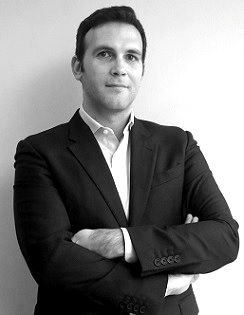
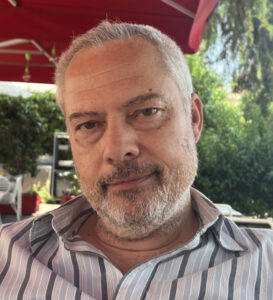
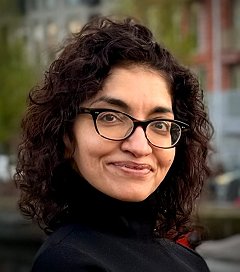
George Arampatzis is an Assistant Professor at the University of Crete, specializing in Bayesian Statistics, Machine Learning for Dynamical Systems, and Computational Mathematics. His research focuses on developing computational methodologies for statistical inference in complex dynamical systems. Contact: Email: georgios.arampatzis@uoc.gr
Prof. Vassilis Digalakis is a Professor at the Technical University of Crete in the Department of Electronic and Computer Engineering, part of the School of Electrical and Computer Engineering. He holds a Ph.D. in Electrical and Systems Engineering from Boston University and has extensive experience in academia, industry, and public service. His roles include former Rector of the Technical University of Crete (2013-2017) and Deputy Minister of Education and Religious Affairs (2020-2021). Education: Ph.D. in Electrical and Systems Engineering, Boston University (1992) M.Sc. in Electrical Engineering, Northeastern University (1988) B.Sc. in Electrical Engineering, National Technical University of Athens (1986) Research Interests: Prof. Digalakis specializes in machine learning, speech recognition, pattern recognition, and dialog systems. His work emphasizes developing advanced algorithms for speech processing, multimodal interfaces, and adaptive systems. Notable contributions include innovations in linear dynamical models for speech synthesis and robust pronunciation evaluation techniques. Awards and Recognition: He has received two IEEE Signal Processing Society Best Paper Awards (1999, 2000) and holds five patents related to speech recognition technologies. His leadership roles include Director of the Telecommunications Systems Institute (2005–2013) and Chair of the ECE Department (2003–2005). Professional Activities: He served as President of the Hellenic Universities Rectors’ Synod (2015) and later as Chairman of the Standing Committee on Cultural and Educational Affairs. His work extends to industry collaborations, including founding contributions to Nuance Communications and Dialogos Speech Communications. Labs and Projects: Associated with the Information and Networks Laboratory at TUC, his research focuses on cutting-edge solutions in telecommunications and AI-driven speech technologies.
Dimitris Vrakas is an Assistant Professor at the Department of Informatics, School of Informatics, Aristotle University of Thessaloniki (AUTh). He holds a PhD in Intelligent Planning Systems and has conducted post-doctoral research focusing on Planning for the Semantic Web. His professional experience includes roles as a Lecturer (per Greek law 407/80), Informatics Instructor in multiple educational institutions, and IT consultant for medium-sized enterprises through the Go-online Project. Education: Bachelor of Science (1995–1999): Informatics, Aristotle University of Thessaloniki PhD (2000–2004): Intelligent Planning Systems, Dept. of Informatics, AUTh Postdoctoral Research (2005–2007): Planning for the Semantic Web, AUTh Research Interests: Automated Planning, Heuristic Functions, Intelligent Autonomous Systems, Machine Learning Applications (Energy Management, NILM), Semantic Web Services, and Smart Environment Technologies. His work bridges theoretical AI advancements with practical implementations in energy systems and emergency response. Publications: Over 45 papers (including 15 journal articles) and 5 book chapters, with a focus on energy disaggregation, evacuation algorithms, and semantic web composition. His work demonstrates expertise in applying advanced techniques like GANs for data generation and reinforcement learning for adaptive planning. Awards: 2025 ACM SIGMOD Test-of-Time Award for contributions to time-series clustering Advising & Grants: Active in guiding PhD candidates (as per recent calls) and coordinating projects like the IRIS RISK PARADIGM for industrial safety. His work involves developing smart university platforms for energy monitoring and collaborating on EU-funded initiatives. Labs & Teams: Member of the Intelligent Systems Lab at AUTh, contributing to projects like the BOnSAI ontology for smart buildings and the IRISPortal for risk management. He also coordinates the Hellenic Artificial Intelligence Society and chairs conferences like SETN 2016.
Dr. Nikolaos Karouzakis is an Associate Professor of Finance at Alba Graduate Business School, The American College of Greece. He holds a PhD in Finance from Cass Business School, City University London. His research focuses on asset/derivatives pricing, term structure models, risk premia dynamics, and Bayesian inference, with publications in top-tier journals like Management Science and Annals of Operations Research . He teaches courses in Investments, Fixed Income Analysis, and Portfolio Management. Prior to his academic career, he worked as a Market Risk Analyst at Marfin Investment Group and has consulted with FinTech firms. His work bridges theoretical finance with practical applications in risk management and economic policy analysis. PhD in Finance: Cass Business School, City University London Postdoctoral Research: London School of Economics (2013-2015) Former Lecturer: University of Sussex Business School (2015- ) His research explores complex financial instruments and market dynamics, often employing advanced statistical methods. Recent work analyzes spillover effects of national security policies on tourism economies and the role of time-varying risk premia in interbank markets. He maintains active collaborations with industry through FinTech consulting.
Iliopoulos Georgios is a Professor and Department Chair at the Department of Statistics and Actuarial Science, School of Finance and Statistics, University of Piraeus. He has held this position since 2015, following his progression from Assistant Professor (2003-2010) to Associate Professor (2010-2015) at the same institution. Education: 1993: B.A. in Mathematics, Department of Mathematics, University of Patras 1999: PhD in Statistics, Department of Mathematics, University of Patras Iliopoulos specializes in statistical theory and methodology, with particular expertise in Markov chain Monte Carlo methods, Statistical Decision Theory, and Scale parameter estimation. His research focuses on accurate inference under censorship and constrained inference arrangement, addressing fundamental challenges in statistical analysis of complex data structures. His work bridges theoretical statistics with practical applications in reliability analysis and survival analysis. His publication record shows consistent contributions to exact statistical inference methods, particularly for censored data and complex distributions like Laplace and Gamma. His research demonstrates expertise in both parametric and semiparametric approaches, with significant work on variance reduction techniques in computational statistics and solutions to the label switching problem in Bayesian mixture models. Iliopoulos teaches undergraduate courses including Linear Algebra, Statistics II: Hypothesis Testing, and Special Topics in Statistics (Bayesian Statistics), as well as the postgraduate course Computational Statistical Techniques for the Master of Science in Applied Statistics.
Kostas Tassis serves as Professor in the Department of Physics at the University of Crete, Greece, having joined in 2012 as Assistant Professor, promoted to Associate Professor in 2018, and to full Professor in 2023. He leads the PASIPHAE project (Polar-Areas Stellar-Imaging in Polarization High-Accuracy Experiment), an ERC Consolidator Grant awarded in 2018, and maintains active affiliations with Skinakas Observatory and the Institute of Theoretical and Computational Physics. His academic background includes: BSc in Physics from the University of Thessaloniki (1999) PhD in Theoretical Astrophysics from the University of Illinois at Urbana Champaign (2005) His research centers on star formation processes, interstellar medium physics, and magnetohydrodynamic simulations, with particular emphasis on cosmic magnetic fields and their role in astrophysical systems. He employs both theoretical modeling and observational polarimetry to investigate phenomena ranging from molecular cloud dynamics to cosmological-scale magnetic field effects. Analysis of his recent publications reveals dominant focus on LiteBIRD mission simulations, interstellar dust polarization, and magnetic field strength estimation techniques. Key thematic clusters include cosmic microwave background polarization analysis, blazar variability studies, and computational approaches to non-ideal magnetohydrodynamics in star-forming regions, demonstrating strong integration of observational data with theoretical modeling. Notable recognitions include: ERC Consolidator Grant for PASIPHAE project (2018) His research program involves extensive international collaboration, particularly through the PASIPHAE survey and LiteBIRD mission consortia. Current work emphasizes polarimetric instrumentation development and large-scale cosmic magnetometry, with significant contributions to understanding magnetic field roles in galaxy evolution and star formation processes. He maintains active involvement with multiple University of Crete research units including the Crete Center for Theoretical Physics (CCTP) and Skinakas Observatory, where observational components of his PASIPHAE work are conducted.
Panagiotis Papastamoulis serves as Assistant Professor at the Department of Statistics within the School of Information Sciences and Technology at Athens University of Economics and Business (AUEB). He joined AUEB in April 2020 after working as an Adjunct Lecturer from 2018-2019 and completing extensive postdoctoral research at prestigious institutions including the University of Manchester (2012-2018) and INRA in France (2011-2012). His educational background includes a BSc in Mathematics from the University of Patras (2003), an MSc in Applied Statistics (2006), and a PhD in Statistics (2010) from the University of Piraeus. His doctoral thesis addressed the label switching problem in Bayesian analysis of mixtures of distributions under the supervision of Professor G. Iliopoulos. Dr. Papastamoulis's research program centers on Bayesian and computational statistics, with particular expertise in finite mixture models, model-based clustering, and bioinformatics applications. His methodological contributions span theoretical developments in label switching solutions, reversible jump MCMC algorithms, and practical implementations for RNA-seq data analysis. His work demonstrates a consistent trajectory from foundational statistical theory to real-world biological applications. Analysis of his publication record reveals a strong focus on developing statistical methodology for complex data structures, with significant contributions to mixture modeling, Bayesian factor analysis, and bioinformatics. His most recent work (2023-2025) extends into cure rate modeling, directional data analysis, and multinomial mixture models for spatial data, showing continued innovation while maintaining connections to his core research themes. As an educator, he teaches undergraduate courses including Linear Models and Bayesian Inference Methods, and graduate courses such as Statistical Genetics-Bioinformatics and High Dimensional Statistics. He has also developed multiple open-source R packages that have become standard tools in the statistical community, including label.switching, BayesBinMix, and fabMix, which address fundamental challenges in mixture model analysis. Dr. Papastamoulis actively contributes to the academic community through organizing research seminars at AUEB and participating in conference committees, including the 22nd European Young Statisticians Meeting in 2021. His research integrates theoretical statistical development with practical computational implementations, creating tools that advance both methodology and application in multiple scientific domains.
Professor Georgios Iliopoulos is a distinguished academic serving as Professor and Department Chair of the Department of Statistics and Actuarial Science at the University of Piraeus. With an extensive academic career spanning over two decades, Professor Iliopoulos has established himself as a leading expert in statistical theory and methodology. His leadership as Department Chair demonstrates his significant contribution to the academic community and his commitment to advancing statistical education and research. Professor Iliopoulos completed his educational journey at the University of Patras, earning his B.A. in Mathematics in 1993 followed by a PhD in Statistics in 1999. His academic career progressed through various institutions before he settled at the University of Piraeus, where he has held positions from Assistant Professor (2003-2010) to Associate Professor (2010-2015) and ultimately to Professor (2015-present). Professor Iliopoulos's research focuses on several key areas of statistical theory, with particular emphasis on Markov chain Monte Carlo methods, Statistical Decision Theory, Scale parameter estimation, Accurate inference under censorship, and Constrained inference arrangement. His work bridges theoretical statistics with practical applications, demonstrating how sophisticated statistical methods can solve real-world problems across various domains. His research has consistently addressed challenging theoretical questions while maintaining relevance to practical statistical challenges faced by researchers and practitioners. Analysis of Professor Iliopoulos's publication record reveals a strong focus on theoretical statistics with applications in reliability analysis, Bayesian inference, and censoring methodologies. His work demonstrates a consistent pattern of advancing statistical theory while maintaining practical relevance, particularly in the areas of parameter estimation, confidence interval construction, and inference with censored data. The interdisciplinary nature of his research is evident in publications spanning journals in statistics, biostatistics, and computational statistics. Professor Iliopoulos is actively involved in teaching both undergraduate and postgraduate courses. At the undergraduate level, he teaches Linear Algebra, Statistics II: Hypothesis Testing, and Special Topics in Statistics (Bayesian Statistics). For postgraduate students, he offers Computational Statistical Techniques as part of the Master of Science in Applied Statistics program. His teaching reflects his research expertise, providing students with both theoretical foundations and practical applications of advanced statistical methods.
Professor Kanas Angelos serves as a Professor of Finance in the Department of Economics at the University of Piraeus' School of Economics, Business and International Studies. His academic leadership spans editorial roles, extensive publication in top finance journals, and significant contributions to economic policy through European Commission and parliamentary engagements. Education: Degree (EXCELLENT) in Economics from ASOEE with annual Chalkiopoulos Foundation scholarships M.Sc in Finance from University of Strathclyde (Bodossakis Foundation full scholarship) Ph.D. in Finance from University of Aston (Hellenic State Scholarships Foundation full scholarship) Research Focus: His work centers on Finance with specialized expertise in International Finance , Systemic Risk , and Data Envelopment Analysis . Recent research explores environmental finance intersections (CO2 emissions and financial stability) and causal networks in US industry portfolios, demonstrating methodological innovation through Bayesian and directional distance function approaches. Publication Trends: His 2019-2025 publications reveal evolving focus from traditional banking risk and dividend policy toward systemic risk modeling, environmental finance, and advanced efficiency analysis. Key journals include Journal of Financial Stability, Journal of Operational Research Society, and Journal of Banking and Finance, with increasing emphasis on sustainability and computational methods. Scientific Recognition: NATO Postdoctoral Fellowship Professional Impact: As Associate Editor for Applied Financial Economics and Empirical Economics, and Board Member for European Journal of Finance, he shapes academic discourse. His refereeing for 25+ journals and contributions to European Economic Forecasts demonstrate policy-relevant scholarship. Teaching includes core undergraduate finance courses with active office hours maintained through 2024-2025.
Vissarion Papadopoulos is a Professor in the Department of Structural Engineering at the School of Civil Engineering, National Technical University of Athens (NTUA). His office is located at the Statics and Aseismic Research Laboratory, with contact details including email vpapado@central.ntua.gr and phone 210 772 4158. He has maintained an active research profile since at least 2016, focusing on advanced computational methods in structural engineering. His primary research domains include: Structural Engineering and Computational Mechanics Stochastic Analysis and Uncertainty Quantification Multiscale Modeling of Composite Materials Machine Learning for Engineering Simulations Optimization of Structural Systems Thermomechanical Behavior of Advanced Materials Analysis of his recent publications reveals a decisive shift toward integrating deep learning frameworks with traditional computational mechanics. His work demonstrates consistent innovation in accelerating solutions for parametric and transient structural problems through transformer networks, Bayesian inference, and physics-informed neural networks. Key application areas include carbon nanotube reinforced composites, sustainable automotive design, and seismic-resistant structures, with emphasis on enhancing computational efficiency while maintaining accuracy. He is affiliated with NTUA's Statics and Aseismic Research Laboratory, which specializes in structural dynamics, earthquake engineering, and advanced computational methodologies for civil infrastructure analysis and design.
Amal Ahmed is a Professor and Associate Dean for Graduate Programs at Khoury College of Computer Sciences, Northeastern University, where she leads research in programming languages and secure compilation. She received her PhD in Computer Science from Princeton University and has established herself as a leading researcher in compiler correctness, language interoperability, and type systems. Her research focuses on correct and secure compilation across the software-hardware stack and safe language interoperability, including design of sound foreign-function interfaces (FFIs) and richly typed compiler intermediate languages. She makes extensive use of semantics and type systems for reasoning about imperative and probabilistic programming languages, multi-language systems, security, concurrency, and provenance. Her work has significantly advanced the understanding of gradual typing, compiler verification, and compositional language interoperability. Dr. Ahmed's publications reveal a research trajectory focused on building solid semantic foundations for language interoperability and secure compilation. Her recent work spans topics from probabilistic separation logic to WebAssembly interoperability, with consistent emphasis on formal verification and semantic techniques. She has developed frameworks for reasoning about multi-language systems that preserve security properties across language boundaries. NSF CAREER Award recipient Editorial Board: Journal of Functional Programming (2017–present) Editorial Board: Mathematical Structures in Computer Science (2016–present) Member: IFIP Working Group 2.8 (Functional Programming, 2014–present) As an educator and mentor, Dr. Ahmed has advised numerous PhD students, postdocs, and undergraduates, many of whom have gone on to successful academic and industry careers. She has organized the Programming Languages Mentoring Workshop and regularly teaches advanced courses in programming languages. She serves on the steering committees of major conferences including POPL, SPLASH, and PLMW, and has chaired program committees for ESOP and POPL.