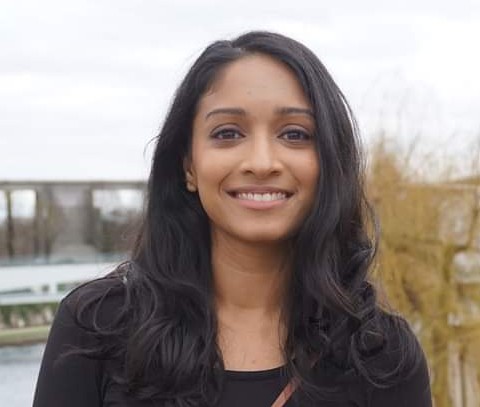
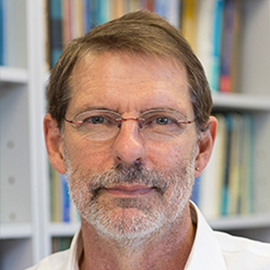
Howard Bondell is a Professor of Statistical Data Science at the School of Mathematics and Statistics, University of Melbourne, since 2018. He serves as Head of School since 2021, Co-Director of the Melbourne Centre for Data Science, and holds an ARC Future Fellowship (2020-2024). Ph.D. in Statistics, Rutgers University (2005) Academic Career: North Carolina State University (2005-2018) His research focuses on model selection , robust estimation , regularisation , Bayesian methods , and uncertainty quantification in statistical and machine learning. His publications emphasize applications in regression analysis, quantile modeling, variable selection for high-dimensional data, and genetic data analysis. Scientific awards include: Fellow of the American Statistical Association (2017) ARC Future Fellow (2020-2024)
Dr. Madhushi Bandara is a Lecturer at the School of Computer Science, University of Technology Sydney (UTS), specializing in knowledge representation, complex system modeling, and data analytics. She leads the data management research stream at the UTS DigiSAS lab and is a core member of the Biomedical Data Science Laboratory within the UTS Australian Artificial Intelligence Institute. Her industry collaborations include Telstra, Cancer Australia, and Capsifi, focusing on AI integration in healthcare and finance. She coordinates the Business Information Systems major in UTS's Master of Information Technology program and convenes the Future Generation Enterprise Architecture Community of Practice. Education PhD in AI Systems Engineering, University of New South Wales (2020) BSc (Hons) in Engineering, University of Moratuwa, Sri Lanka (2015) Research Interests Madhushi's work bridges machine learning, knowledge graphs, and enterprise architecture to address challenges in data governance for SMEs, ESG metric management, and healthcare pathway analysis. Her research emphasizes translating cutting-edge AI into industry solutions through contextual domain knowledge integration. Scientific Awards UNSW-UTS Trustworthy Digital Society Scholarship Teaching & Leadership She teaches enterprise information systems, digital strategy, and AI for enterprises in UTS's online postgraduate programs. Her service roles include co-chairing tracks at the Australasian Conference on Information Systems and reviewing for Expert Systems with Applications.
Professor Dinh Phung is the Head of the Department of Data Science & AI at Monash University. His research focuses on machine learning, deep learning, generative AI, and robust AI systems. He has authored over 250 publications, with applications in NLP, computer vision, digital health, and cybersecurity. Phung holds a PhD and BSc(Hons) in Computer Science from Curtin University. He leads major projects like 'Can Machines Unlearn?' and 'Trustworthy Generative AI', funded by the Australian Research Council and the Department of Defence. Education: Doctor of Philosophy, Computer Science, Curtin University (2005) Bachelor of Science (Honours), Computer Science, Curtin University (2001) Research Interests: Machine learning, deep learning, and generative models Optimal transport and Bayesian methods Robust and trustworthy AI Applications in digital health, cybersecurity, and autism research Key Projects (2023–2029): Can Machines Unlearn? (2025–2029): Safety in AI Trustworthy Generative AI (2024–2026): Foundation models Robust Machine Learning via Optimal Transport (2023–2025) Awards and Grants: Australian Research Council grants for AI safety and robustness Department of Defence funding for robust learning systems Collaborations: Global partnerships in AI ethics, cybersecurity, and healthcare. Active advisory roles, including with the Victorian Parliamentary Library.
Dr. Linh Nghiem is a Lecturer in Statistics at the School of Mathematics & Statistics, University of Sydney. She specializes in both methodological and applied statistical research, focusing on measurement error modeling, dimension reduction, and graphical models. Her applied work involves collaborations with scientists exploring human perception of music and the societal impact of music on social empathy. Her research interests include longitudinal data analysis, privacy in data science, and experimental psychology of music at behavioral and neural levels. She is affiliated with the Sydney Southeast Asia Centre and actively contributes to interdisciplinary projects. Dr. Nghiem has secured grants such as the 2023 'Methodologies for complex datasets' under the Faculty Startup Scheme. She collaborates with institutions globally and maintains an active presence in academic communities through her ORCID profile and personal website.
Dr. Xuhui Fan is a Lecturer in Artificial Intelligence at the School of Computing, Macquarie University. He holds a PhD in Computer Science from the University of Technology Sydney (Australia) and a bachelor's degree in Mathematical Statistics from China. Prior to his current role, he worked as a project engineer at Data61 (formerly NICTA), a postdoc fellow at the University of New South Wales, and a lecturer at the University of Newcastle. His research focuses on Bayesian methods, federated learning, temporal point processes, and neural network architectures. He is affiliated with the Data Horizons Research Centre and the Frontier AI Research Centre at Macquarie University. Key research interests include developing interpretable AI models, advancing federated learning for privacy-sensitive applications, and applying Bayesian techniques to complex data analysis. His work bridges theoretical advancements in machine learning with practical applications in areas such as anomaly detection, generative models, and spatio-temporal data analysis. Dr. Fan’s publications span top-tier conferences like NeurIPS, ICML, and IJCAI, covering topics such as diffusion models, nonstationary processes, and scalable relational models. He has contributed to surveys on Bayesian federated learning and developed novel frameworks for dynamic customer segmentation and network sustainability. His research collaborations span institutions in Australia and internationally, reflecting his expertise in interdisciplinary AI applications. Current projects emphasize ethical AI practices, efficient uncertainty quantification, and scalable inference techniques for large-scale datasets.
Professor Ian Marschner is a leading academic in biostatistics, currently holding the position of Professor of Biostatistics and Co-Director of Biostatistics at the NHMRC Clinical Trials Centre, University of Sydney. He has extensive experience spanning over 30 years, including roles as Professor and Head of the Department of Statistics at Macquarie University, Director of Biometrics at Pfizer, and Associate Professor at Harvard University. His research focuses on biostatistical applications in clinical trials, epidemiology, and public health, with a particular emphasis on adaptive trial designs, meta-analysis, and disease surveillance. Professor Marschner has contributed to major clinical trials in cardiovascular medicine, oncology, HIV/AIDS, neonatal/perinatal care, and COVID-19. He co-authored the book Inference Principles for Biostatisticians and is involved with the Biostatistics Collaboration of Australia (BCA) in developing and teaching the Masters of Biostatistics program. His grants include the NHMRC Centre of Research Excellence (AusTriM) and a National Critical Research Infrastructure Initiative grant totaling over $20 million. Research students under his supervision include Aydin HIBBERT, focusing on generalized joint regression models for longitudinal data. His work addresses methodological challenges such as bias in early-stopped trials, surrogate endpoints, and statistical frameworks for adaptive experiments. Recent contributions include risk modeling for diabetes, cardiovascular mortality prediction, and biomarker analysis in cancer therapies.
Roles & Affiliations: Distinguished Research Professor in Statistical Science at Queensland University of Technology (QUT), Director of QUT Centre for Data Science, and Associate Member of University of Oxford's Department of Statistics. Served as Deputy Director of ARC Centre of Excellence in Mathematical and Statistical Frontiers (2015–2021) and ARC Laureate Fellow (2015–2021). Education: BA (Hons) and PhD in Mathematical Statistics from University of New England, Australia. Completed post-doctoral roles at multiple Australian universities. Research Interests: Specializes in Bayesian statistical modelling, computational methods, and their applications in environmental science, genetics, healthcare, and industry. Leads projects on coral reef recovery, cancer epidemiology (Australian Cancer Atlas), and virtual citizen science platforms like Virtual Reef Diver. Her work emphasizes interdisciplinary collaboration, integrating complex data sources with advanced statistical techniques to address real-world challenges. Publications & Grants: Over 350 refereed journal publications and attracted >30 major grants. Recent focus areas include influenza epidemiology, spatial health disparities, and AI-driven early warning systems for climate-sensitive diseases. Active in developing methodologies for spatial statistics, small-area estimation, and federated learning. Awards & Recognition: 2024 Ruby Payne-Scott Medal (Australian Academy of Science), Pitman Medal (2016), first female recipient of this award in 35 years. Elected Fellow of Australian Academy of Science (2018), Academy of Social Sciences (2018), and Queensland Academy of Arts and Sciences (2018). Holds international roles including Vice-President of International Statistical Institute (2021–2025) and Scientific Council Member at Centre International de Rencontres Mathématiques (France). Supervision & Leadership: Supervised over 36 PhD students and leads teams in >50 collaborative projects. Current supervision includes 5 PhD and 4 Masters students at QUT. Founded the QUT Centre for Data Science and previously led the Collaborative Centre for Data Analysis, Modelling and Computation. Labs & Initiatives: Core contributor to the Australian Cancer Atlas 2.0, Virtual Reef Diver project, and Queensland's Learning Potential Fund. Active in global initiatives like the World of Statistics campaign and UN Big Data Task Teams.
Associate Professor Feng Chen is a faculty member at the School of Mathematics & Statistics, University of New South Wales, specializing in statistical methodology development and applications. His research bridges theoretical statistics and practical implementations across financial modeling, spatiotemporal processes, and public health analysis. PhD in Statistics from University of Hong Kong (2008) MSc in Applied Probability & Statistics from Lanzhou University (2004) BSc in Mathematics from Lanzhou University (2001) Research focuses include: Nonparametric and semiparametric statistical methods Point process modeling with emphasis on Hawkes processes Statistical computing and algorithm development Applications to financial data, earthquake analysis, and public health Recent publications demonstrate methodological advances in: Hawkes process estimation with complex data structures Renewal process applications in seismology GARCH modeling with missing data Spatiotemporal clustering analysis Scientific recognition includes: UNSW Science Staff Impact Award (2023) Professional roles: Director of Research Postgraduate Studies (2023--) Associate Editor for multiple journals Statistics Honours Coordinator (2013-2018) Active participant in statistical societies
Dr. Sahani Pathiraja is a Lecturer (tenure track assistant professor) at UNSW Sydney , specializing in Data Science . Her research bridges mathematical and statistical foundations with practical applications in environmental and biomedical sciences. Research Focus : Sequential Bayesian inference, Monte Carlo methods, stochastic analysis of non-linear filtering, uncertainty quantification, and real-time parameter estimation. Current Projects : Co-investigator in the ARC Industrial Transformation Training Centre: Data Analytics for Resources and Environment (DARE) and the Next Generation Graduate Program (NGGP) in Sports Data Science and AI . Research Supervision : Dr. Pathiraja supervises PhD students in areas including: Bayesian inference Stochastic differential equations Data assimilation Non-linear filtering Scientific Collaborations : Her work intersects with environmental science, biomedical applications, and machine learning. Projects include stochastic hydrology, SDEs, and operator learning for environmental systems. Contact Information : Email: s.pathiraja@unsw.edu.au Phone: +61 2 8065 0836 Office: Room 2070, Level 2, The Red Centre, UNSW Sydney
Dr. Shuvo Bakar is a Senior Lecturer in the Sydney School of Public Health at the University of Sydney, within the Faculty of Medicine and Health. He holds a PhD in Statistics from the University of Southampton, UK, and has prior experience as an Assistant Professor at Yale University, Lecturer at the Australian National University, and Scientist at Data61 (CSIRO). His research focuses on statistical methods applied to public health challenges, including Bayesian hierarchical modeling, machine learning, spatio-temporal analysis, and their applications in epidemiology, clinical trials, and environmental health. Dr. Bakar's research interests span statistical methodologies such as Bayesian adaptive designs, small area estimation, and spatial risk modeling, alongside applications in child health, infectious diseases, and extreme weather impacts on health. He is an active member of academic communities, including the Royal Statistical Society (RSS Fellow), Statistical Society of Australia, and the Australian Trials Methodology Research Network. His work also involves collaborations on grants totaling millions in funding, addressing topics like climate change impacts on health inequity and cardiovascular disease prevention in remote regions. Education: PhD in Statistics (University of Southampton, UK) Key Research Themes: Obesity, Diabetes, Cardiovascular Disease; Reproductive, Maternal & Child Health Grants/Projects: Includes NHMRC-funded trials on respiratory infections in First Nations children and MRFF grants for cardiovascular risk reduction in regional Australia. Dr. Bakar's contributions extend to editorial roles for Nature Scientific Reports and Discover Public Health , and his research has been published in journals like PloS One , Climatic Change , and Journal of the Royal Statistical Society .
Professor Anna Giacomini is a leading academic in Rock Mechanics and Civil Engineering at the University of Newcastle. She holds a PhD from the University of Parma, Italy, and has been at the University of Newcastle since 2005. Her roles include Director of the Priority Research Centre for Geotechnical Science and Engineering and Deputy President of the Academic Senate (Research). She specializes in rockfall hazard analysis, mine geotechnics, and numerical modeling of geomechanical systems. Her research focuses on improving safety in mining and civil environments, with over $7.5M in funding and 140+ publications. Key areas include rockfall trajectory analysis, energy absorption in safety barriers, and drapery systems. She has led 20 major projects through ACARP and pioneered low-cost photogrammetric monitoring systems for rock slopes. Professor Giacomini is also a co-founder of HunterWiSE, promoting women in STEM. She has received prestigious awards such as the 2022 NSW Premier’s Engineering Prize and the 2019 John Booker Medal. Her administrative roles include membership in the ARC College of Experts and leadership in gender equity initiatives. Her technical contributions span experimental and numerical rock mechanics, including advancements in discrete element modeling (DEM) and stochastic approaches for discontinuity shear strength prediction. She collaborates internationally with institutions like the Colorado School of Mines and the University of Bologna.
Professor Dino Sejdinovic is a faculty member in the School of Computer and Mathematical Sciences at the University of Adelaide, part of the Faculty of Sciences, Engineering and Technology. Previously, he held positions as Lecturer and Associate Professor at the University of Oxford's Department of Statistics (2014–2022). His academic qualifications include a PhD in Electrical and Electronic Engineering from the University of Bristol (2009) and a Diplom in Mathematics and Theoretical Computer Science from the University of Sarajevo (2006). His research focuses on the intersection of statistical methodology and machine learning, encompassing large-scale nonparametric methods, robust machine learning, multiresolution data fusion, and measures of dependence. He has contributed to kernel methods, Bayesian inference, causal discovery, and applications in climate science, quantum computing, and social science data analysis. Education: PhD in Electrical and Electronic Engineering, University of Bristol (2009) Diplom in Mathematics and Theoretical Computer Science, University of Sarajevo (2006) Sejdinovic's work emphasizes bridging theoretical foundations with practical applications, such as cloud type classification using vision transformers and machine learning-driven quantum device optimization. His recent publications explore topics like kernel-based causal inference, Bayesian neural networks, and uncertainty quantification in statistical models. Advising and grants: Eligible to supervise Masters and PhD students in machine learning and statistics, though specific grants or student advisees are not explicitly listed in the provided texts.
Noel Cressie is a Distinguished Professor of Statistics at the University of Wollongong (UOW), Australia, affiliated with the School of Mathematics and Applied Statistics and the National Institute for Applied Statistics Research Australia (NIASRA). He is also the Director of the Centre for Environmental Informatics (CEI). His academic journey includes a PhD from Princeton University (1975) and a B.Sc. with First Class Honours from the University of Western Australia (1972). His research focuses on spatial and spatio-temporal statistics, Bayesian methods, environmental informatics, and applications in climate science. Notable projects include work on atmospheric CO2 flux inversion (WOMBAT framework), Antarctic environmental research (SAEF initiative), and statistical remote sensing for NASA. He has secured over $20 million in research funding and authored four influential books, including Statistics for Spatial Data . Cressie has received prestigious awards such as the COPSS R.A. Fisher Award (2009), Pitman Medal (2014), and Fellowship of the Australian Academy of Science (2018). He leads interdisciplinary teams addressing global challenges like carbon cycle dynamics and biodiversity modeling. His contributions to statistical methodology and environmental science have been recognized through international collaborations and advisory roles.
Dr Dee Wu serves as a Senior Lecturer at the School of Civil and Environmental Engineering at the University of Technology Sydney (UTS), specializing in the integration of computational mechanics, machine learning, and engineering design. With a strong research profile focused on structural reliability and safety assessment, Dr Wu develops innovative frameworks that bridge theoretical mechanics with practical engineering applications, particularly in the realm of composite materials and uncertain structural behavior. Dr Wu's research interests center on computational stochastic and non-stochastic mechanics, with particular emphasis on machine-learning-aided engineering safety assessment, nondeterministic methods for isogeometric analysis with polymorphic uncertainties, and AI techniques for composite material design. Their work addresses critical challenges in structural engineering where uncertainty quantification becomes essential for safety evaluation. The research output reveals a clear trajectory toward developing virtual modeling techniques that significantly enhance computational efficiency while maintaining accuracy in structural analysis. Dr Wu's publications demonstrate expertise in phase-field methods, support vector regression variants (including Extended SVR, Capped SVR, and Twin SVR), and uncertainty quantification frameworks that handle both aleatoric and epistemic uncertainties. These techniques have been successfully applied to fracture mechanics, buckling analysis, vibration analysis, and impact assessment problems. Dr Wu actively pursues funded research in three main areas: Digital twin applications in Civil Engineering, Machine learning aided engineering analysis and design, and Safety assessment for Smart City initiatives. Currently, they are a key participant in the ARC Discovery Project 'Assessment of Dynamic Pile Driving Using Machine Learning' (DP230102781), running from June 2023 to May 2026, working alongside researchers Khabbaz M, Fatahi B, and Zhang X. In teaching, Dr Wu delivers courses including Introduction to Civil and Environmental Engineering (48310), Advanced Engineering Computing (48371), and Finite Element Analysis (49047), demonstrating commitment to both foundational and advanced engineering education. Their ORCID identifier is 0000-0002-7284-5024, and they maintain an active Google Scholar profile reflecting their substantial research contributions in computational structural engineering.
Professor Scott Anthony Sisson is a leading academic at the University of New South Wales (UNSW) , holding the position of Professor of Statistics and Data Science in the School of Mathematics and Statistics . He serves as Director of the UNSW Data Science Hub (uDASH) and Deputy Director of the UNSW AI Institute (UNSW.ai) . Previously, he was Deputy Director of the Australian Centre of Excellence for Mathematical and Statistical Frontiers (ACEMS) and held leadership roles in the Australasian Society of Bayesian Analysis and Statistical Society of Australia . PhD in Statistics (Bristol University, 2002) MSc in Environmental Statistics and Systems (Lancaster University, 1997) BSc in Mathematics and Statistics (Lancaster University, 1996) His research focuses on computational statistics and Bayesian inference , with expertise in machine learning , extreme value theory , and high-dimensional data analysis . He develops simulation-based algorithms for complex statistical problems and applies these to diverse scientific challenges like seagrass decline, urban flood modeling, and drug delivery systems. His recent work spans quantum computing for statistics, graphon modeling, and synthetic likelihood methods. Scientific awards include: 2024 Fellow of the International Society of Bayesian Analysis 2023 Fellow of the Institute of Mathematical Statistics 2017 ARC Future Fellowship 2010 Queen Elizabeth II Research Fellowship 2006 John Yu Fellowship His advising team has mentored students in statistical modeling, Bayesian computation, and applied data science. Grants from the Australian Research Council and industry collaborations support his research in government and scientific applications. He contributes as Associate Editor for Journal of Computational and Graphical Statistics and Statistics and Computing .