Ira WassermanView profile
Professor
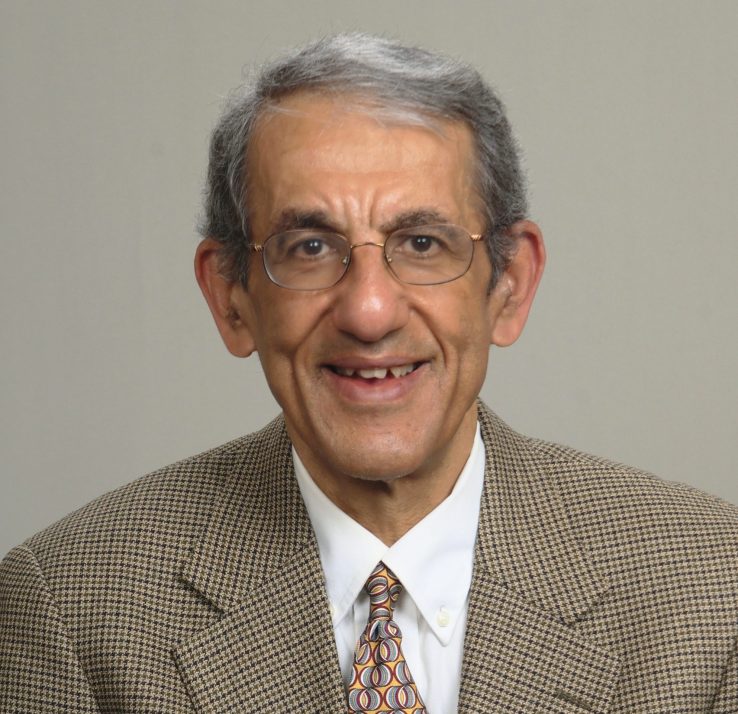
Ira Wasserman is the Kenneth A. Wallace Professor of Astronomy and Professor of Physics at Cornell University, affiliated with the College of Arts and Sciences. He holds dual appointments in the Department of Astronomy and the Department of Physics. His academic journey includes a B.S. from MIT (1974) and a Ph.D. from Harvard University (1978), both in physics. Wasserman's research focuses on relativistic astrophysics, neutron star properties, cosmological inhomogeneities, and cosmic ray origins. He has held roles ranging from postdoctoral fellow to full professor since joining Cornell in 1981. Key research areas include Type II superconducting neutron star cores, r-mode instabilities in neutron stars, dark energy cosmology, and cosmic ray birthplaces. His work integrates theoretical astrophysics with cosmological observations, addressing topics like modified gravity theories and superstring inflation signatures. Wasserman has been recognized with awards such as the NSF Postdoctoral Fellowship, Alfred P. Sloan Foundation Fellowship, and Bok Prize Lecturer honor. His publications span over four decades, addressing magnetar dynamics, cosmological models, and gravitational wave astrophysics. Notable contributions include studies on neutron star r-mode saturation, cosmic string effects on the CMB, and hierarchical Bayesian frameworks for cosmic ray analysis. Wasserman has advised numerous graduate students and contributed to courses in galactic structure and cosmology at Cornell. Education: B.S. MIT (1974), Ph.D. Harvard (1978) Positions Held: Assistant Professor (1981-87), Associate Professor (1987-93), Full Professor (1993-present) Key Collaborations: Worked with researchers like E. E. Flanagan, T. Akgun, and K. Soiaporn on neutron star dynamics and cosmological inhomogeneity Wasserman's research emphasizes interdisciplinary approaches, linking astrophysical phenomena to fundamental physics questions. His current projects explore magnetar crust dynamics, dark energy degeneracy, and cosmic ray source identification through Bayesian clustering methods.