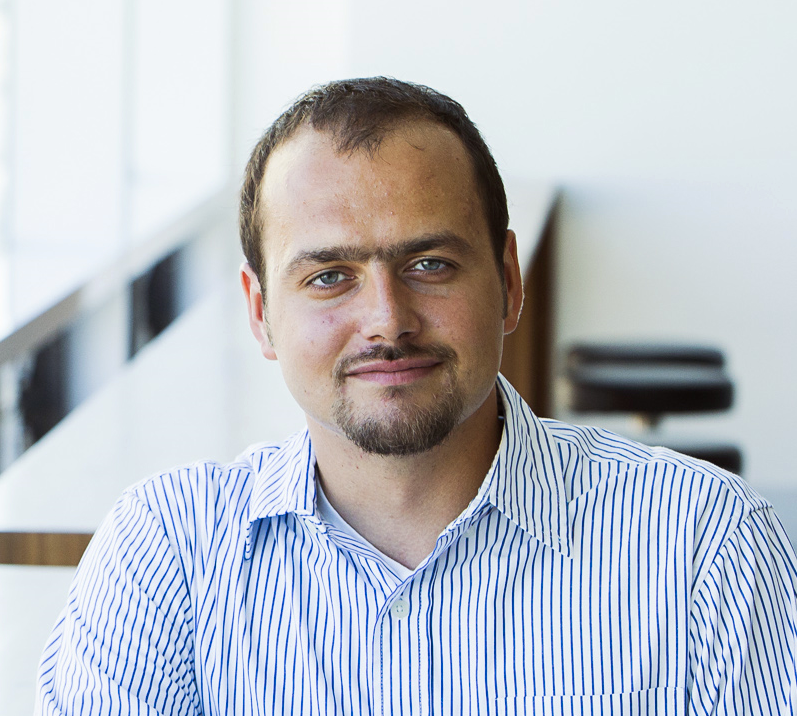
Professor Anton Kolotilin is a faculty member at the University of New South Wales (UNSW), affiliated with the UNSW Business School. His research focuses on Microeconomic Theory and Information Economics, with particular emphasis on strategic communication, persuasion mechanisms, and game-theoretic models. He has contributed significantly to understanding optimal information disclosure strategies, the design of persuasive communication frameworks, and the economic implications of partisan gerrymandering. His work intersects with political economy, experimental design, and network formation models. Professor Kolotilin has an extensive publication record with over 13 journal articles, 3 working papers, and 13 preprints. His recent research explores topics such as the duality of persuasion, censorship as an optimal strategy, and the application of linear programming to information design. He frequently collaborates on interdisciplinary projects, bridging theoretical economics with practical policy analysis. Key research interests include mechanism design, Bayesian persuasion, strategic information transmission, and the analysis of social and economic networks. While no specific grants or awards are listed, his prolific output underscores his contributions to academic discourse in economics and related fields.
Associate Professor Kee Siong Ng is affiliated with the School of Computing at the Australian National University (ANU). His research focuses on privacy-preserving technologies, reinforcement learning, distributed systems, and blockchain applications. He has contributed extensively to areas such as privacy-preserving machine learning, federated learning, entity resolution, and scalable database systems. His work emphasizes balancing computational efficiency with privacy guarantees in data-driven environments. Key research contributions include methodologies for secure data processing in federated learning frameworks, privacy-preserving reinforcement learning for population-level systems, and blockchain-based digital identity solutions. He has led projects like Integrated Graph Analytics and contributed to initiatives involving the Australian Medicare dataset. His research often intersects theoretical foundations with practical implementations, addressing challenges in scalability and real-world applicability. Ng has published over 24 peer-reviewed articles, with notable works appearing in venues like IEEE Transactions on Parallel and Distributed Systems and Transactions on Machine Learning Research . His articles frequently explore cutting-edge topics such as differential privacy, approximation algorithms, and multi-agent systems. Collaborations include industry partnerships and interdisciplinary efforts involving health informatics and financial intelligence. His projects include Integrated Graph Analytics (2018–2021): Focused on scalable graph-based data analysis. Translational Fellowship (2018–2022): Bridging theoretical research with practical applications. Research on Data Sets for Health and Pharmaceutical Schemes (2020): Analyzing Medicare and pharmaceutical data with privacy safeguards. Ng's work prioritizes ethical AI and privacy-by-design principles, with a focus on real-world deployment challenges in distributed and federated systems.
Prof Zhen (Jeff) Luo is a Professor at the School of Mechanical and Mechatronic Engineering at the University of Technology Sydney (UTS). Since 2012, he has led the Advanced Metamaterials & Metastructures (AMM) and Engineering Computation and Optimisation (ECO) research groups, focusing on multi-disciplinary engineering innovations. Expertise : Advanced materials design, topology optimization algorithms, additive manufacturing, and computational mechanics. Education : PhD in Mechanical Engineering from Huazhong University of Science and Technology (2005). His research bridges Mechanical, Structural, Aerospace, and Biomechanical Engineering , developing cutting-edge metamaterials and computational methods. Recent work includes two-scale lattice optimization , stochastic bandgap analysis , and machine learning-aided virtual modeling for structural reliability. Key contributions span 3D-printed heat sinks , frequency-selective surfaces , and hydrogen storage systems . As a World’s Top 2% Scientist (Stanford, 2019–present), he has secured over AUD $7 million in grants, including from the Australian Research Council (ARC) and National Intelligence Discovery Research Grants (NI220100074). Awards : IAAM Scientist Award, IAAM Fellow. Leadership : Editorial roles in Structural and Multidisciplinary Optimization , Frontiers in Bioengineering and Biotechnology , and organizing roles in 21 international conferences.
Andrew Lock is a Research Fellow at the University of Southern Queensland , affiliated with the Institute for Advanced Engineering and Space Sciences. His work focuses on aerospace engineering, thermofluid dynamics, and numerical modeling, particularly in hypersonic aerodynamics, supercritical CO2 power cycles, and trajectory optimization. Education: PhD in Energy Systems at the University of Queensland; BEng (Hons I) in Mechanical Engineering at the University of Tasmania. Research interests include hypersonic vehicle design, aerothermal dynamics, nonlinear optimization, and state estimation using Kalman filters. He collaborates with global organizations like NASA, Northrop Grumman, and JAXA on re-entry and hypersonic rocket projects. Recent publications highlight co-design frameworks for hypersonic vehicles, Bayesian state estimation for aerodynamic measurements, and advancements in sCO2 power cycles. His work integrates open-source tools like Python and Linux for simulation and data analysis. Scientific Awards: Best Paper, AIAA Ground Testing Technical Committee.
Scott McManus is a Lecturer in Spatial Science at Charles Sturt University, affiliated with the School of Agricultural, Environmental and Veterinary Sciences. He is an active academic researcher and educator, contributing to interdisciplinary studies that bridge data science, geostatistics, and Indigenous knowledge systems. PhD in Data Science, Charles Sturt University (2022) Graduate Certificate in Applied Statistics, CSU (2017) Graduate Diploma in Applied Science (Information Science), CSU (2005) Graduate Diploma in Archaeological Heritage, University of New England (2004) B.App.Sci in Applied Geology, CSU (1994) Scott's research focuses on the application of data science and machine learning in environmental and health contexts, with a strong emphasis on ethical AI, digital data sovereignty, and responsible use of data when working with First Nations communities. His work integrates Western scientific methods with Indigenous methodologies, particularly in conservation efforts such as koala habitat protection and mangrove ecosystem recovery. His recent publications and research outputs (23 total) demonstrate a consistent trend in merging geospatial analytics, Bayesian uncertainty modeling, and deep learning with ethical and cultural frameworks. Key areas include fire impact on coastal vegetation, river blockage detection in Southeast Asia, and reconciliation in science through collaborative Indigenous-Western research practices. Faculty Early Career Researcher (ECR) Scheme (2023) Open Access Publishing Scheme (2025) Conference Travel Grant (2018) CSU ILWS Category B Research Support Fund (2020) Executive Deans List (2017) Scott is a registered Professional Geologist (Australian Institute of Geoscientists), member of the International Association for Mathematical Geosciences, and the Aboriginal and Torres Strait Islander Mathematics Alliance. He serves as a Faculty representative on the Indigenous Board of Studies and is a registered supervisor. His work is supported by ongoing grants focused on AI, machine learning, and open-access research dissemination. He actively participates in academic workshops, particularly in digital learning platforms like Brightspace, and contributes to public engagement through media appearances on koala conservation and environmental stewardship. Scott is involved in the Data Science and Engineering Research Unit and the Data Mining Research Group (DaMRG) at CSU, where he contributes to projects on predictive analytics and responsible data use. His collaborative network includes researchers in environmental science, Indigenous studies, and conservation biology, reflecting his commitment to interdisciplinary and culturally responsive research.
Hannah Comiskey is a Research Fellow in the Department of Econometrics and Business Statistics at Monash University, within the Faculty of Business and Economics. Her research focuses on advanced statistical methods applied to global health and demographic data, particularly in reproductive health contexts. Her primary research interests lie in Bayesian hierarchical modeling, statistical demography, and public health analytics. She develops and applies sophisticated statistical models to estimate health indicators, especially related to contraceptive use and healthcare system contributions across countries. The recent publication in the Journal of the Royal Statistical Society Series A demonstrates a strong trend in using flexible Bayesian non-parametric models for health estimation, particularly in low-data settings. Her work integrates survey data from multiple sources to disentangle public and private sector roles in modern contraceptive supply. Hannah has actively contributed to academic discourse through presentations, including at the Annual Meeting of the Population Association of America (2022). While no formal advising or grant information is available, her collaborations with researchers like Leontine Alkema and Niamh Cahill suggest involvement in large-scale demographic estimation projects. She is part of an international research network focused on population health statistics, with external collaborations across multiple countries. Her work contributes to evidence-based policy in reproductive health through rigorous statistical inference.
Professor Christoph Arns is a full Professor at the University of New South Wales (UNSW) School of Engineering, specializing in Mineral and Energy Resources Engineering. He has been at UNSW since 2008 and has held the position of full Professor since 2014. Currently, he leads the Geoenergy and Geostorage discipline within the school. Prior to joining UNSW, he was a research fellow at the Australian National University from 2001-2008. Professor Arns obtained his Dipl. Phys. from RWTH Aachen, Germany in 1996 and his PhD in Petroleum Engineering from UNSW Sydney in 2002. His academic background combines physics and petroleum engineering, creating a unique interdisciplinary perspective for his research. His primary research focus is on Digital Rock Physics, where he has pioneered computational pore-scale physics based on tomographic images. He specializes in integrating 3D tomographic imaging technology with NMR techniques for petrophysical applications, with particular emphasis on heterogeneity analysis. His work spans multiple sub-disciplines including pore-scale modeling, digital core analysis, rock physics, reservoir characterization, and Minkowski functionals for structural analysis. Professor Arns has developed the MPI-parallel software package 'morphy' for computational physics operating on segmented tomographic images, which includes sophisticated NMR response modeling, electrical property calculations, permeability estimation, elastic moduli determination, and morphological property analysis. His research has substantial industry relevance, as evidenced by his role as a founding member of Digital Core Pty Ltd, an ANU/UNSW spin-off that was sold to FEI for $76 million in 2014 and is now part of ThermoFisher. He has received significant research support through three successive Australian Research Council (ARC) fellowships. His scholarly contributions are reflected in numerous publications spanning from 2000 to 2025, with recent work focusing on advanced computational methods, machine learning applications in rock physics, and detailed analysis of fluid-rock interactions at the pore scale. Professor Arns maintains active leadership roles in multiple professional societies including Interpore (lifetime member, former council chair 2016-2019), Society of Core Analysts (Australasia Regional Director since 2016), Society of Petrophysicists & Well Log Analysts, Society of Exploration Geophysicists, and Society of Petroleum Engineers.
Professor Geoff Webb is a world-leading data scientist at Monash University , serving as Director of the Monash University Centre for Data Science within the Faculty of Information Technology . His research focuses on leveraging data science to enable evidence-based decision making and derive actionable insights through artificial intelligence, machine learning, and big data analytics. Core expertise in data mining , bioinformatics , and computational biology Developed Magnum Opus software and contributed to the Weka machine learning workbench Recipient of the Eureka Prize for Excellence in Data Science and leadership roles in major data mining conferences Research Interests Professor Webb's work spans artificial intelligence , machine learning , and data analytics , with a focus on black-box user modelling , interactive data analytics , and statistically-sound pattern discovery . His recent publications highlight advancements in Bayesian networks , time series analysis , and genomic data interpretation , demonstrating his interdisciplinary impact. Scientific Contributions AI in healthcare : EHR-ML framework for clinical records analysis Biological applications : KcatNet for enzyme prediction, PFresGO for protein function Data mining innovations : OPUS search algorithm, proximity forest techniques As a technical adviser to data science company Froomle , he bridges academic research with real-world applications. His work has been recognized through numerous research awards and leadership as Editor-in-Chief of Data Mining and Knowledge Discovery for a decade.
A/Prof Xanthe Spindler serves as Discipline Leader in Forensic Science within the School of Mathematical and Physical Sciences at the University of Technology Sydney (UTS). With over 15 years of dedicated academic service at UTS, she has established herself as a leading researcher in forensic trace evidence analysis and latent fingermark detection. Dr. Spindler's educational journey began with a Bachelor of Science (Forensic)(Honours) from the University of Newcastle (2006), followed by a PhD in Applied Chemistry from the University of Canberra (in collaboration with UTS Centre for Forensic Science). Her academic appointments at UTS include sessional academic (2010-2012), Chancellor's Postdoctoral Research Fellow (2012-2016), and Lecturer (2016-present). Her research program focuses on understanding and improving methods for detecting latent fingermarks on forensic evidence and at crime scenes. She investigates factors affecting detection success rates and develops better methods using new biomolecular and chemical technologies. Dr. Spindler supervises a collaborative research group working on diverse forensic problems spanning fingermark detection, fingerprint identification, criminalistics, and questioned document examination. Her publication record reveals an evolution from fundamental studies of fingermark composition to practical applications of advanced detection techniques. Recent work demonstrates expanding focus to trace evidence beyond fingerprints, including fiber transfer dynamics in assault scenarios, submersion effects on evidence, and bacterial profiling for donor characteristics. She has made significant contributions to forensic science literature, particularly in nanoparticle applications for fingermark detection. Dr. Spindler holds memberships in the International Fingerprint Research Group and the Australian and New Zealand Forensic Science Society. Her research collaborations include Australian Federal Police, NSW Police, Victoria Police, and international universities. She has successfully secured substantial research funding from the Australian Research Council, US National Institute of Justice, and Defence Science and Technology Group for projects including 'Development of next-generation fingermark lifters' and 'Next-generation latent fingermark detection using functional nanomaterials.' Her work bridges academic research with practical forensic applications, directly impacting crime scene investigation methodologies.
Dr. Bin Liang is a Senior Lecturer at the University of Technology Sydney (UTS), working within the Faculty of Engineering and Information Technology and the Data Science Institute. He joined UTS in December 2018 as a Lecturer and was promoted to Senior Lecturer in July 2022, following his postdoctoral fellowship at Data61 (CSIRO). PhD in Computer Vision, Pattern Recognition, and Machine Learning from Charles Sturt University, Australia (2012-2015) Masters in Computer Science from Taiyuan University of Technology, China (2009-2012) BEng in Computer Science from Taiyuan University of Technology, China (2005-2009) Dr. Liang's research spans data mining, machine learning, computer vision, pattern recognition, and survival analysis, with a strong focus on practical applications in critical infrastructure. His work develops sophisticated machine learning frameworks for anomaly detection, failure prediction, and optimization in water infrastructure, flood mapping, and real estate appraisal. He has pioneered approaches that integrate graph neural networks with temporal analysis for pipe failure prediction and has made significant contributions to water quality optimization through data-driven methods. His research consistently bridges theoretical advancements with practical implementation in industry settings. His recent publications demonstrate a clear trajectory toward increasingly sophisticated models that capture complex temporal and spatial relationships in infrastructure data. There's a notable emphasis on multimodal learning approaches and domain generalization techniques that enhance model robustness across diverse application scenarios. His work on anomaly detection frameworks like MLAD shows innovation in grouping sensors by temporal characteristics for more accurate monitoring. 2022 – AWA R&D Excellence Award (NSW) 2022 – UTS Medal for Research Impact 2022 – Finalist for 2021-22 AWA Young Water Professional of the Year Award (NSW) 2020 – Finalist for the Best Paper Award of the ICARCV 2020 2019 – Industrial & Primary Industries Merit at the Victorian iAwards 2018 – Australian Museum Eureka Prize for Excellence in Data Science Dr. Liang actively supervises Masters Research and PhD students, focusing on data science applications for infrastructure management. His research has been supported through industry partnerships with water utilities and other infrastructure organizations, translating academic research into practical solutions that reduce water loss, improve infrastructure reliability, and enhance environmental sustainability. His work on pipe failure prediction and leak detection has directly contributed to operational improvements in water distribution networks. As a core member of the Data Science Institute at UTS, Dr. Liang collaborates with interdisciplinary teams working on data-driven solutions for urban infrastructure challenges. His research group focuses on developing scalable machine learning models that can be deployed in real-world settings, often working directly with industry partners to validate and implement their approaches. This industry-academia collaboration ensures that his research remains grounded in practical challenges while pushing the boundaries of data science methodology.
Christopher Drovandi is a Professor at Queensland University of Technology and a Chief Investigator in the Australian Research Council Centre of Excellence for Mathematical and Statistical Frontiers (ACEMS). His research spans statistical methodology development and applications across diverse fields including ecology, biomedicine, and environmental science. Dr. Drovandi's primary research interests focus on advancing Bayesian statistical methods, particularly in the areas of: Approximate Bayesian Computation (ABC) and likelihood-free inference Synthetic likelihood methods Sequential Monte Carlo algorithms Bayesian experimental design Statistical computing for complex models His recent work demonstrates a strong emphasis on addressing model misspecification in Bayesian inference, developing robust computational methods for intractable likelihoods, and applying advanced statistical techniques to solve real-world problems in ecology, biomedicine, and environmental science. Drovandi has made significant contributions to both the theoretical foundations and practical applications of modern Bayesian statistics. Dr. Drovandi has received research funding through multiple Australian Research Council grants and collaborates extensively with researchers across disciplines. His work has been published in top-tier statistical and interdisciplinary journals including the Journal of the American Statistical Association, Bayesian Analysis, and PLOS Computational Biology.