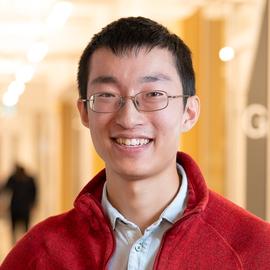
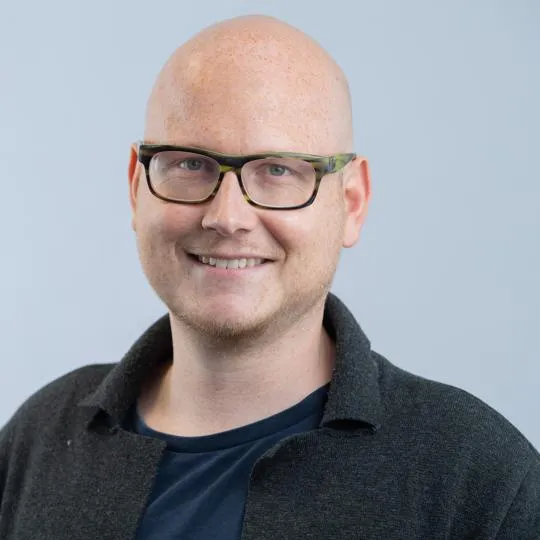
Alex Tong is an incoming Assistant Professor at Duke University (as of 2025) and will join Aithyra in Vienna as a Principal Investigator. Previously, he completed postdoctoral research at Mila under Yoshua Bengio and a visiting postdoc at Oxford with Michael Bronstein. Education : PhD (2021) and MPhil (2020) in Computer Science from Yale University; BS/MS (2017) from Tufts University Research Interests span generative modeling , deep learning , optimal transport , and graph signal processing applied to protein design and single-cell biology . His work bridges mathematical formalism (e.g., SE(3) flows, Wasserstein manifolds) with biological discovery. Publication Trends (2023-2025) focus on diffusion models for protein structure prediction , optimal transport in single-cell analysis , and geometric machine learning for molecular dynamics . Collaborations include labs like Mila, Oxford, and Yale. Awards : Best Paper (Gen Bio @ ICML 2025), Outstanding Paper (DELTA @ ICLR 2025), Best Student Paper (IEEE MLSP 2020)
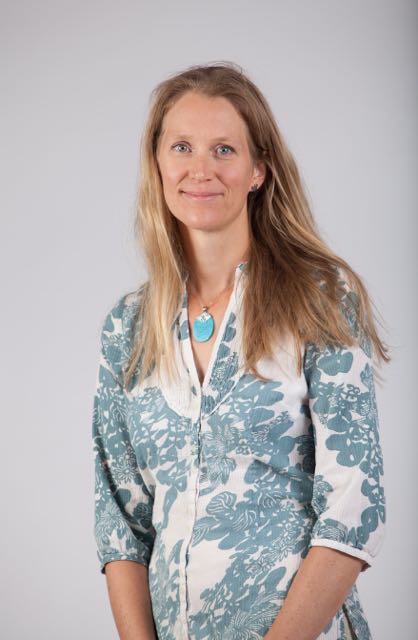
Norbert Pirk is an Associate Professor at the University of Oslo, affiliated with the Department of Physical Geography and Hydrology. His research focuses on ecohydrology in cold environments, land-atmosphere energy and trace gas exchange, and snow-vegetation interactions. He teaches courses including Geophysical Data Science and Fluvial Hydrology, and contributes to arctic climate studies through field campaigns and modeling. His research spans tundra carbon cycling, permafrost dynamics, and machine learning applications in climate modeling. Recent publications highlight advancements in snow data assimilation techniques, greenhouse gas flux monitoring using drones, and deep learning methods for Arctic methane analysis. He actively collaborates within international research networks. Current projects include SvalGaSess (methane monitoring in Svalbard), SnowSub (snow sublimation impacts on hydropower), and EMERALD (terrestrial climate interactions). He contributes to initiatives like FLUXNET2015 and the Land Sites Platform, advancing Arctic observation systems and climate modeling frameworks.
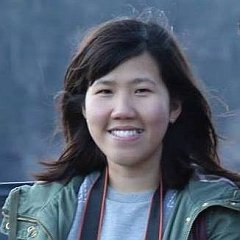
Dimah Dera is an Endowed Assistant Professor at the Chester F. Carlson Center for Imaging Science, College of Science, Rochester Institute of Technology (RIT). She holds a Ph.D. and M.S. in Electrical and Computer Engineering, and an M.A. in Mathematics from Rowan University. Her research focuses on robust and trustworthy machine learning, integrating Bayesian theory and statistical signal processing into modern ML frameworks for healthcare, remote sensing, and surveillance systems. She is an NVIDIA Deep Learning Institute University Ambassador and active in IEEE Signal Processing and ACM SIGHPC. Dr. Dera has received prestigious awards including the NSF CRII Award (2023), NSF REU Supplement (2024), and IEEE Benjamin Franklin Key Award (2021). Her work emphasizes Bayesian uncertainty propagation for robust AI systems, with applications in sequential time-series analysis and medical imaging. Her scholarly contributions span robust image classification, uncertainty-aware neural networks, and Bayesian vision transformers. Teaching includes courses like Mathematical Methods for Imaging and Image Processing & Computer Vision II . She actively mentors students and leads research initiatives funded by NSF and industry collaborations.
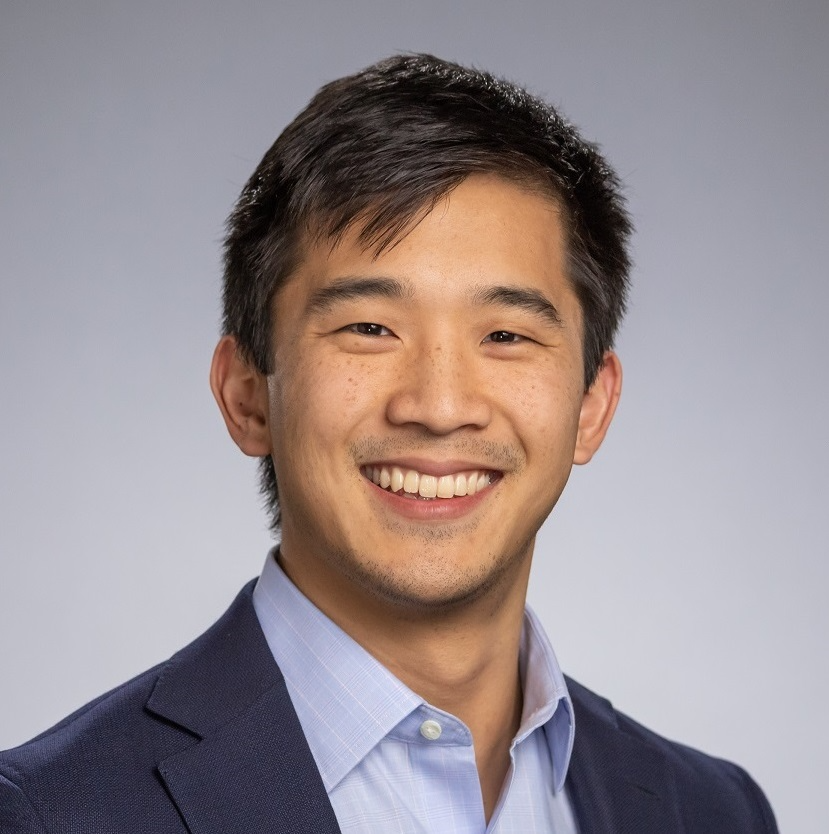
Professor Ahmed H. Elsheikh is a faculty member at Heriot-Watt University's School of Energy, Geoscience, Infrastructure and Society, within the Institute for GeoEnergy Engineering. He holds a Professor title since 2021, previously serving as Associate (2017-2021) and Assistant Professor (2013-2017). His educational background includes a Ph.D. (2010) and MASc (2002) from McMaster University, and a BASc from Al-Azhar University (1999). Research Interests: Fluid control via AI, predictive machine learning, generative modeling, data assimilation, Bayesian uncertainty quantification, and subsurface engineering. His work addresses challenges in reservoir modeling, CO2 sequestration, seismic inversion, and geophysical data analysis. Publications span 2004-2025 with a focus on machine learning applications in energy systems, stochastic field generation, and subsurface flow modeling. Notable contributions include AI-driven seismic inversion, deep learning for reactive transport, and ensemble-based history matching. Key Achievements: Developed novel methodologies for uncertainty quantification, GAN applications in geological modeling, and real-time reservoir monitoring systems. His work contributes to UN Sustainable Development Goals related to climate action (SDG 13) and affordable clean energy (SDG 7).
Karen Eilbeck is Professor of Biomedical Informatics and Adjunct Associate Professor of Human Genetics at the University of Utah , where she directs a bioinformatics research lab focused on precision medicine and genomic data management. Education B.S., University of Salford, United Kingdom Ph.D., University of Manchester, United Kingdom Research Interests The Eilbeck lab leverages computer science and ontology engineering to address contemporary questions in genomics and molecular biology. Central themes include: Development of ontologies such as the Sequence Ontology (SO) and Non-Coding RNA Ontology (NCRO) to standardize and structure biological data. Design of ontology-enabled software tools that enhance data sharing, variant interpretation, and precision medicine workflows. Metagenomic pathogen detection, clinical genome interpretation, and integration of multi-omics datasets to advance personalized healthcare. Publication Trends Recent publications (2023-2025) emphasize AI-driven clinical decision support, standardized genomic terminology, and large-scale infectious-disease risk modeling. Earlier works (2005-2018) established foundational ontologies and data formats (GVF, VCF) now widely adopted by the genomics community. Contact & Resources Email: keilbeck@genetics.utah.edu Lab website: available via University of Utah Department of Biomedical Informatics Full publication list: PubMed search | Google Scholar
Dr. Huong Ha is a tenured Senior Lecturer in Computer Science and Program Manager of the Bachelor of Computer Science at the School of Computing Technologies, RMIT University, Australia. Previously, she worked at the Applied Artificial Intelligence Institute (A2I2), Deakin University, Australia. She received her PhD from the University of Newcastle, Australia in May 2017. Her educational background includes: PhD in Computer Science from the University of Newcastle, Australia (2017) Dr. Ha's research focuses on the intersection of Machine Learning and Software Engineering, specializing in Automated Machine Learning (particularly Bayesian Optimization), Trustworthy Machine Learning, and Data-driven Software Engineering. Her work addresses critical challenges in intelligent incident management of software systems and quality prediction and optimization for software systems. She has made significant contributions to root cause analysis for microservice systems using causal inference and Bayesian optimization techniques. Her publication record shows a strong trend in applying advanced machine learning techniques to software engineering problems, particularly in microservices architecture. Her recent work demonstrates expertise in developing benchmarking frameworks (RCAEval) and optimization methods (MOCA-HESP) that bridge theoretical advancements with practical applications in software systems. Dr. Ha has received numerous awards and recognitions: Top High-volume Course at RMIT (Semester 1, 2025) Outstanding Reviewer of KDD 2025 Research Track Special Commendation for 2024 RMIT STEM College Learning and Teaching Award ACM SIGSOFT Best Artifact Award at FSE 2024 Top Reviewer of NeurIPS 2022-2023 As Program Manager of the Bachelor of Computer Science, Dr. Ha plays a key role in curriculum development and academic leadership. She actively supervises PhD students including Thuan (Solving Mathematical Problems with LLMs) and Thanh (Fraud Detection for Blockchain Networks), and has secured multiple research grants including the OpenAI Researcher Access Grant (10,000 USD) and several RMIT RACE Merit Allocation Scheme grants. Her academic service includes serving on program committees for major conferences in both machine learning (NeurIPS, ICML) and software engineering (ASE, ICSE).
Trung Le is a Lecturer in the Department of Data Science & AI at Monash University. His research focuses on deep generative models, kernel methods, optimization in machine learning, and Bayesian inference, with applications to supervised learning, adversarial learning, and cyber security. He holds a PhD in Computer Science from the University of Canberra (2013). Key projects include the Australian Research Council-funded initiatives such as 'Can Machines Unlearn? Toward Next-Generation Safe Artificial Intelligence' (2025–2029) and 'Trustworthy Generative AI: Towards Safe and Aligned Foundation Models' (2024–2026). His work contributes to UN SDG 4 (Quality Education) through advancements in AI ethics and safety. Education: PhD in Computer Science, University of Canberra (2013) Research Areas: Continual Learning, Diffusion Models, Domain Adaptation, Adversarial Machine Learning Awards: KDD 2023 Best Student Paper Award, Imagine Cup 2010 Australia First Prize Trung has published extensively in top-tier venues like NIPS, ICLR, and JMLR, with over 100 outputs since 2009. His recent work emphasizes robustness in AI systems, including projects on adversarial defense and ethical concept erasure in generative models.
Calvin Tsay is a Lecturer (Assistant Professor) in the Computational Optimisation Group at Imperial College London, holding the BASF/RAEng Senior Research Fellowship in Scale-Bridging Modelling. Education: PhD Chemical Engineering (UT Austin 2020), BS/BA (Rice University 2015). Research develops optimization methods bridging machine learning and process systems engineering. Specializes in mixed-integer programming for neural networks and Bayesian optimization for energy applications. Awards: President's Medal for Early Career Researcher RAEng Senior Research Fellowship CACE Best Paper (2023) COIN-OR Cup (2022) Leads research on AI-driven chemical process optimization. Supervises PhD students in ML optimization and process control. Collaborates with BASF on industrial applications.
Nikolas Nüsken is a Lecturer in Mathematical Data Science and Computational Mathematics at King’s College London’s Department of Mathematics, part of the Faculty of Natural, Mathematical & Engineering Sciences. He holds a PhD from Imperial College London (2018) and previously worked at the Alan Turing Institute and the University of Potsdam’s Collaborative Research Centre 'Scaling Cascades in Complex Systems'. His research focuses on computational Bayesian inference, stochastic analysis, optimal control, and kernel methods. Key interests include interacting particle systems, optimal transport, and partial differential equations (PDEs). His work bridges theoretical mathematics with applications in machine learning and data science. Recent research trends involve advancing Monte Carlo methods, Stein variational gradient descent, and tensor-based discretization schemes for solving complex PDEs and stochastic systems. His studies often intersect with robust filtering, deep learning for boundary value problems, and geometric analysis of optimization algorithms. Nüsken’s contributions include 39 cited publications, with notable work on low-rank maximum likelihood estimation, robust regression for BSDEs, and controlled Monte Carlo diffusions. He collaborates extensively on topics like rough dynamics, ensemble Kalman filtering, and neural Schrödinger–Föllmer flows. He is affiliated with King’s Probability and Statistics research groups, contributing to experimental design, MCMC methods, and probabilistic modeling. His work emphasizes interdisciplinary applications, blending mathematical rigor with computational innovation.
Yuexi Wang is an Assistant Professor in the Department of Statistics at the University of Illinois. Their research focuses on Bayesian methodology, approximate Bayesian computation, and deep learning applications in statistical inference. Key areas include uncertainty quantification, sparse deep learning, and statistical modeling for count data. Education: Not explicitly stated in text. Research interests span Bayesian analysis, with emphasis on developing scalable methods for posterior approximation, adversarial simulation, and generative models. They have contributed to variable selection via Bayesian forests and uncertainty quantification in sparse neural networks. Recent work explores optimal transport-based methods for posterior sampling and Pochhammer priors in count models. Publications emphasize methodological advances in Bayesian deep learning, including data augmentation techniques and adversarial approaches. Articles often bridge theory and application in machine learning and computational statistics. No scientific awards explicitly mentioned. Advising and grants information unavailable in provided text.
Prof. Florian Wellmann is a University Professor at RWTH Aachen University's Chair of Numerical Geosciences, Geothermal Energy and Reservoir Geophysics within the Faculty of Georesources and Materials Engineering. His research focuses on integrating machine learning with geoscience applications, particularly in geothermal energy, structural modeling, and uncertainty quantification. He leads the CG³ research group, developing open-source tools like GemPy and GemGIS for 3D geological modeling. Notably, he received a KI-Campus fellowship for advancing AI in geoscience education. His work includes projects such as the Horizon Europe GeoHEAT initiative, exploring geothermal systems and repurposing idle wells for energy. Education details are not explicitly provided, but his academic roles indicate expertise in numerical geosciences and geothermal engineering. Research interests span physics-based machine learning, subsurface characterization, and probabilistic modeling. His fellowship highlights contributions to digital education, blending AI with geological curricula. Recent publications emphasize sensitivity analysis, fault modeling, and geothermal reservoir optimization. Prof. Wellmann's awards include the KI-Campus fellowship (2021). His grants and advising efforts are reflected in collaborative projects like GeoHEAT and software development. Labs/teams include the CG³ group at RWTH Aachen, equipped with advanced geophysical instruments for field and lab analysis.
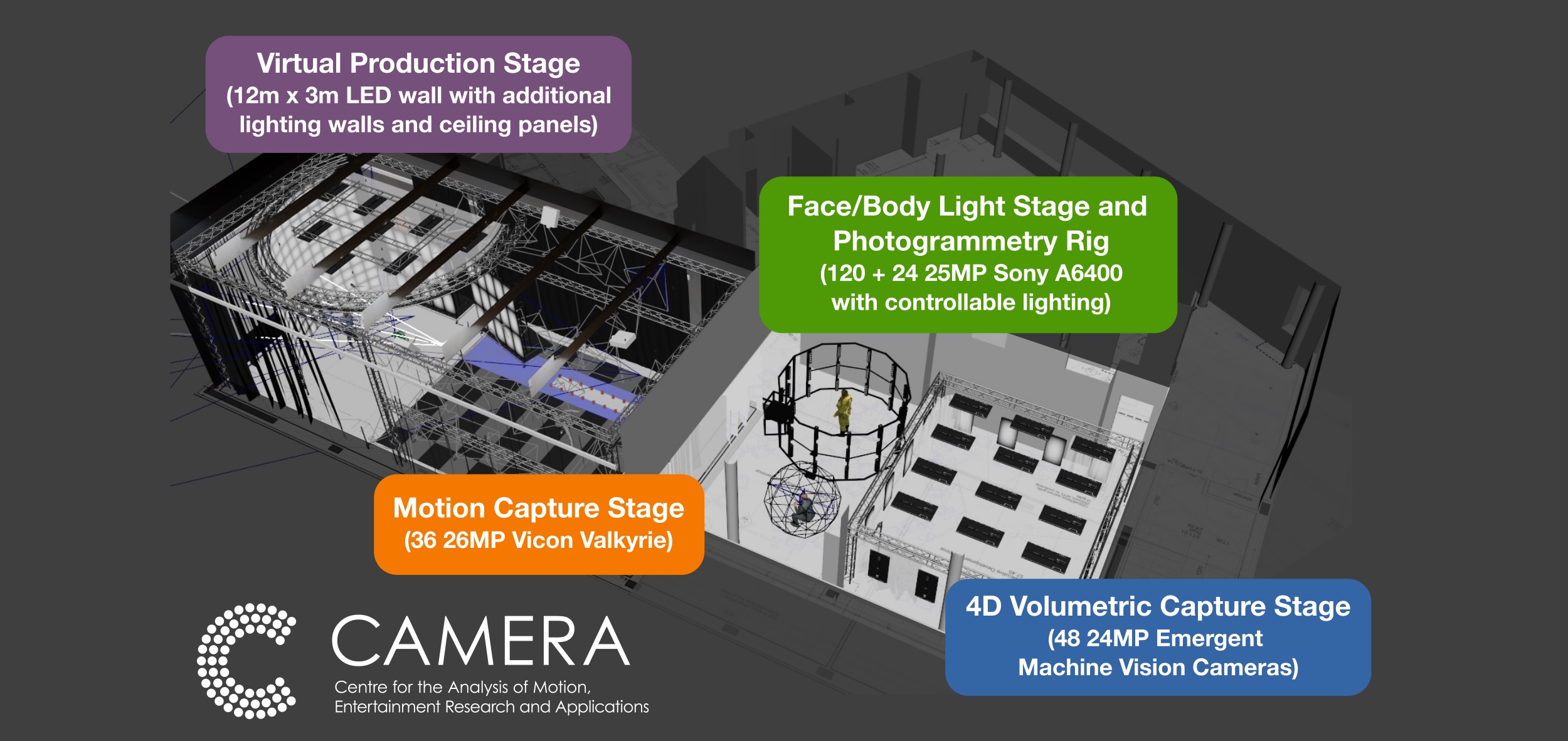
Neill Campbell is a Professor of Visual Computing and Machine Learning in the Department of Computer Science at the University of Bath . He is the Director of the Centre for the Analysis of Motion, Entertainment Research and Applications (CAMERA) and co-director of the Centre for Mathematics and Algorithms for Data (MAD) . He holds an external position as Honorary Associate Professor at University College London and is a Royal Society Industry Fellow. His research spans visual computing, machine learning, and their applications in graphics, vision, and healthcare. His educational background includes a Master of Engineering and a Doctor of Philosophy in Engineering from the University of Cambridge, with his PhD focusing on Automatic 3D Model Acquisition from Uncalibrated Images. Neill Campbell’s research interests lie at the intersection of shape modeling , machine learning , and computer vision . He develops probabilistic and deep learning models to understand and generate visual content, with applications in digital humans, virtual production, biomechanics, and medical imaging. His work emphasizes uncertainty quantification, generative modeling, and alignment learning using Gaussian processes and Bayesian nonparametrics. He leads interdisciplinary projects that bridge computer science and mathematical sciences. The recent publications reflect a strong trend in probabilistic modeling , geometric deep learning , and medical applications . Topics include Gaussian process-based shape modeling, anomaly detection in safety-critical systems, and sparse approximations for geometric representations. His work increasingly integrates theoretical machine learning with real-world applications in health, engineering, and creative industries. Royal Society Industry Fellow Neill Campbell actively supervises PhD students across multiple Centres for Doctoral Training (ART-AI, SAMBa, CDE) and leads significant research grants such as MyWorld (UKRI Strength in Places Fund) and REMODEL (EPSRC). His group collaborates with industry leaders like Rolls-Royce, NVIDIA, Adobe, and DNEG, and he supports student internships and industrial placements. He is also involved in spin-out activities, including contributions to Forceteck Ltd. He leads the Visual Computing Group and is deeply embedded in research centers including CAMERA , MAD , and MyWorld . His team includes postdoctoral researchers and PhD students working on 3D reconstruction, biomechanics, inverse problems, and generative models, fostering a collaborative and interdisciplinary research environment.
Igor V. Pivkin is a full professor at the Institute of Computing within the Faculty of Informatics at the University of Lugano (USI). He holds a B.Sc. and M.Sc. in Mathematics from Novosibirsk State University, followed by an M.Sc. in Computer Science and a Ph.D. in Applied Mathematics from Brown University. Before joining USI, he was a Postdoctoral Associate at MIT's Department of Materials Science and Engineering. His research focuses on multiscale/multiphysics modeling , numerical methods, and large-scale simulations of biological and physical systems. Key areas include biophysics, cellular/molecular biomechanics, stochastic modeling, and coarse-grained molecular simulations. He leverages high-performance computing and particle-based methods to address complex biological phenomena. His work spans diverse applications, including cancer cell dynamics, bioleaching bacterial biofilms, and erythrocyte mechanics in human spleen circulation. He has pioneered computational tools such as the Bayesian recursive global optimizer (BaRGO) and the in-silico lab-on-a-chip framework, enabling petascale simulations of microfluidic systems at cellular resolution. Pivkin collaborates extensively with institutions like the SIB Swiss Institute of Bioinformatics and has contributed to advancing methodologies for multi-model scientific simulations. His research integrates experimental data with computational models to bridge gaps between microscopic and macroscopic biological processes.
Andreas Fender is a researcher at the Visualization Institute of the University of Stuttgart (VISUS), affiliated with the Schmalstieg Working Group. He has held postdoctoral positions at ETH Zurich (Switzerland) and the University of Sussex (England), following his PhD at Aarhus University (Denmark) with an internship at Microsoft Research (USA). His research focuses on Human-Computer Interaction, particularly in Augmented and Virtual Reality (AR/VR) and camera networks. He develops novel input methods for productivity and artistic expression in Mixed Reality environments, creating hybrid physical-digital systems like OptiBasePen, PressurePick, InfinitePaint, and DeltaPen. Recent work includes contributions to Mixed Reality input methods (UIST 2024, CHI 2022) and collaborative systems (Asynchronous Reality). Projects like GuitarPie (UIST 2025) and OptiBasePen (UIST 2024) demonstrate his focus on mobile interaction and ergonomic design. Scientific accolades include the Best paper award at CHI 2022 Best application paper award at ISS 2019 . At VISUS, he collaborates with Dieter Schmalstieg and leads hiring for PhD students and PostDocs exploring physical-digital workflows, artistic tools, and critical AI engagement. His work integrates machine learning, hardware prototyping, and spatial user interfaces to redefine future workplaces.
Angelos Alexopoulos is an Assistant Professor at the Department of Economics , Athens University of Economics and Business . He has held Research Associate positions at the University of Cambridge, University College London, and University of Exeter in the UK. PhD: Athens University of Economics and Business Research Focus: Computational Statistics, Econometrics, Bayesian Analysis, Network Modelling Publications span Bayesian inference, epidemic forecasting, machine learning for fraud detection, and econometric methodology. Key journals include Journal of the Royal Statistical Society , Journal of Computational and Graphical Statistics , and Statistics and Computing . 2024: Gaussian invariance in MCMC 2024: Epidemic nowcasting models 2023: VAT fraud detection with ML Awards include certifications in Deep Learning (Coursera), Blockchain (edX), and Object-Oriented R Programming (DataCamp).