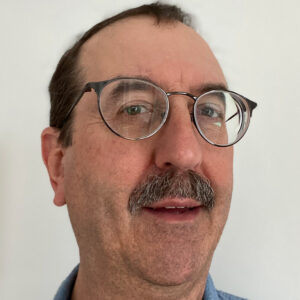
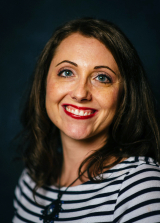
Jason M. LaBelle is a Professor of Anthropology at Colorado State University (CSU), affiliated with the College of Liberal Arts. He serves as Director of the Center for Mountain and Plains Archaeology (CMPA) and Curator of the Archaeological Repository of CSU (AR-CSU). His research focuses on hunter-gatherer societies, particularly in the Intermountain West, emphasizing subsistence, mobility, and pre/post-contact Native American cultures. His work spans environments from the Great Plains to high alpine regions, with specialties in Clovis/Folsom cultures, communal hunting practices, and lithic technology. LaBelle teaches courses in archaeology, lithic technology, and public archaeology. He oversees CMPA projects funded by federal agencies like the National Park Service and the Bureau of Land Management, supporting student training in fieldwork, lab analysis (lithics, faunal studies), and report writing. His lab houses extensive collections from Colorado’s South Platte and Colorado River Basins, including alpine artifacts. He actively engages with tribal partners and the public through outreach, conferences, and NAGPRA coordination. LaBelle’s recent research includes studies on lithic quarries, ice patch archaeology, and Bayesian chronology modeling. His publications address prehistoric mobility, site chronology, and cultural resource management. He values interdisciplinary collaboration and student mentorship, aiming to bridge academic and applied archaeology.
Peter Huybers is a Professor of Earth and Planetary Sciences and Environmental Science and Engineering at Harvard University , where he investigates the climate system and its societal implications, including interactions between volcanism and glaciation , extreme temperature predictability , and climate change impacts on food production . Research interests span climate change attribution , paleoclimate reconstruction , drought dynamics , crop yield modeling , and earth system feedbacks . His work often integrates art-historical analysis with climate science, as seen in studies of 19th-century air pollution through Turner and Monet paintings . Scientific awards include funding from Harvard Data Science Initiative (2023) for projects on climate change and food supply volatility Amazon Web Services (2023) grant His 20+ peer-reviewed articles since 2020 focus on climate proxies , hydrological modeling , solar forcing , and agricultural-climate interactions , with recent work in Nature , PNAS , and Science Advances . Advising : Mentored 10+ PhD students including Parker Liautaud , Duo Chan , and Marena Lin , while leading research teams with current members like Greta Berendes and Caro Park . Former staff include Jon Proctor and Lucas Vargas Zeppetello , the latter now at UC Berkeley (2024).
Adam T. Smith is Distinguished Professor of Arts and Sciences in Anthropology at Cornell University, where he has been faculty since 2011. He is a leading scholar in Eurasian archaeology with a focus on the South Caucasus, particularly Armenia. Smith co-founded Project ArAGATS, a long-term archaeological program in Armenia, and co-directs the Aragats Foundation and Caucasus Heritage Watch, organizations dedicated to heritage preservation in the region. His educational background includes: Ph.D. (1996) in Anthropology from the University of Arizona M.A. (1993) in Anthropology from the University of Arizona M.Phil. (1991) in Social and Political Science from the University of Cambridge B.A. (1990) in Anthropology and Political Science from Brown University Smith's research centers on the role of material culture in political life, examining how objects, landscapes, and built environments shape political procedures and values. His work spans archaeological theory, political anthropology, and heritage studies, with a particular focus on the South Caucasus region. He investigates the long-term social and political dynamics from the Bronze Age to contemporary times, exploring themes of sovereignty, heritage preservation, and the political dimensions of material culture. His approach integrates theoretical frameworks with empirical fieldwork to understand political power through material evidence. His recent publications demonstrate a consistent focus on the archaeology of power and politics in Eurasia, with increasing attention to contemporary heritage issues. Smith's work bridges theoretical frameworks with empirical research, particularly through his long-term fieldwork in Armenia and the Caucasus region. His scholarship shows a progression from studies of ancient political systems to contemporary issues of cultural heritage and political violence, with a strong emphasis on ethical engagement with archaeological practice and heritage management. Smith has received numerous prestigious awards including: 2023-2025 Fellow, Milstein Program in Technology and Humanity, Cornell University 2023 Finalist, Falling Walls Science Breakthrough of the Year, Social Sciences and Humanities 2023 Certificate of Communal Partnership, St. James AME Zion Church, Ithaca NY 2010-2011 John Simon Guggenheim Memorial Foundation Fellow 2010-2011 Fellow, Cornell University Society for the Humanities 2006-2007 Fellow, Howard Foundation Smith has directed multiple field seasons and collaborative research projects in Armenia, involving both American and Armenian scholars. His work with Project ArAGATS has received continuous support over two decades, while Caucasus Heritage Watch represents a newer initiative addressing urgent heritage preservation needs through satellite monitoring. He has supervised numerous graduate students and secured significant research funding for his projects, demonstrating strong leadership in both academic and community-engaged research contexts. Smith leads several research initiatives including Project ArAGATS, the Aragats Foundation, and Caucasus Heritage Watch. His Landscapes and Objects Laboratory at Cornell serves as a hub for material culture studies, while his work with the St. James AME Zion Community Excavations demonstrates his commitment to community-engaged archaeology. These teams bring together interdisciplinary scholars to address complex questions about political power, material culture, and heritage preservation across time, with particular attention to how archaeological practice can engage with contemporary political issues and community needs.
Christopher Bronk Ramsey is Professor in Archaeological Science and Head of the School of Archaeology at the University of Oxford, affiliated with Merton College. As chair of the INTCAL committee, he oversees global radiocarbon calibration. His expertise spans archaeological science, Quaternary environmental research, and nuclear instrumentation development. Research focuses on radiocarbon dating, Bayesian chronological modeling, and AMS techniques. Key areas include Quaternary chronology, human evolution, climate change impacts, and archaeological applications in the eastern Mediterranean, Amazonia, and Anglo-Saxon England. He develops the OxCal software for statistical chronology analysis. Recent publications emphasize radiocarbon calibration advancements, pre-Columbian land-use in Amazonia, European Neolithic chronologies, and high-precision dating methods. His work integrates archaeology, environmental science, and data science to address chronological challenges across diverse temporal and spatial scales. No specific scientific awards were detailed in the source material. He supervises numerous doctoral students on topics ranging from dendrochronology to digital archaeology and Middle Stone Age chronology. Major projects include FeedSax (Anglo-Saxon agriculture) and HERCA (Amazonian human-environment interactions), securing research grants for interdisciplinary teams. Professor Ramsey directs the OxCal project and co-leads IntCal, IntChron, FeedSax, and HERCA initiatives. These teams develop calibration standards, integrate chronological data, and investigate past human adaptations to environmental change, particularly in Amazonia and Europe.
Sudhir Kumar is a Professor and Principal Investigator at Temple University, leading a research laboratory focused on molecular evolution, phylomedicine, and functional genomics. His lab develops mathematical methods, computational algorithms, and software packages for analyzing genomic variation across populations, pathogens, tumors, and species. Key contributions include the widely used MEGA software (www.megasoftware.net) for molecular evolutionary analysis and the TimeTree knowledge-base (www.timetree.org) that synthesizes evolutionary knowledge on species divergence times. Dr. Kumar's research interests center on integrating mathematical and computational techniques into evolutionary biology and biomedicine. His lab pursues a holistic paradigm where evolutionary and genomic patterns are discovered through comparative analysis of big datasets, then used to reveal underlying biological processes and develop predictive models. His work spans phylomedicine of genetic diseases, molecular phylogenomics, and the timetree of life, with recent innovations including Bayesian methods, machine learning algorithms, and statistical approaches for inferring molecular phylogenies, divergence times, and pathogenic mutations. Analysis of his recent publications reveals a strong trend toward applying artificial intelligence and machine learning to evolutionary genetics, with multiple 2025 papers focused on sparse learning techniques, transformer-based models, and AI-assisted analytical protocols. His work increasingly bridges evolutionary biology with cancer genomics and precision medicine applications. His scientific achievements have been recognized with the prestigious 2025 George W. Beadle Award from the Genetics Society of America, which honors his "efforts to democratize evolutionary genetics." Dr. Kumar has mentored numerous doctoral candidates, postdoctoral researchers, and graduate students, many of whom have gone on to faculty positions at institutions including Oakland University and universities in Brazil. His lab includes current doctoral candidates working in bioinformatics and statistical molecular evolution, supported by technical staff including programmers, genome tech specialists, and informatics specialists. The Kumar Laboratory operates as an interdisciplinary research hub with multiple projects including MEGA (Molecular Evolutionary Genetics Analysis), TimeTree, myPEG (web-based evolutionary tools), and FlyExpress (a knowledge base for Drosophila melanogaster embryo images). The lab emphasizes green computing efforts aimed at democratizing scientific practice and making big data analytics more accessible.
Adam T. Smith is Distinguished Professor of Arts and Sciences in Anthropology at Cornell University, specializing in Archaeology, Political Theory, Landscape Studies , and Material Culture . He co-founded Project ArAGATS in Armenia and co-directs the Aragats Foundation , focusing on collaborative archaeological research in the South Caucasus. His work spans from the Bronze Age to contemporary heritage preservation issues. PhD (1996), MA (1993) - University of Arizona, Anthropology MPhil (1991) - University of Cambridge, Social & Political Science BA (1990) - Brown University, Anthropology & Political Science Research interests center on political anthropology through material culture , analyzing how objects shape political systems from ancient to modern contexts. His projects include Caucasus Heritage Watch for satellite monitoring of endangered sites and extensive studies of Late Bronze Age/Early Iron Age fortresses in Armenia. Key contributions involve redefining South Caucasus chronologies using radiocarbon dating and Bayesian modeling. Recent publications focus on 2023: Cultural heritage documentation during Nagorno-Karabakh conflicts 2022: Critiques of Armenian Genocide erasure in archaeological discourse 2018: Revised Bronze/Iron Age timelines for the Caucasus 2015: Sovereignty mechanisms in Urartian landscapes Scientific honors include 2023 Finalist - Falling Walls Science Breakthrough (Social Sciences) 2010-2011 Guggenheim & Cornell Humanities Fellowships 1997-1999 Michigan Society of Fellows He leads the Landscapes and Objects Laboratory and teaches courses like Archaeological Research Design while engaging in public archaeology through initiatives like St. James AME Zion Church excavations in Ithaca, NY.
Dr. Diego Fernandez is a Research Professor in the Department of Geology & Geophysics at the University of Utah, specializing in isotope geochemistry, mineral resource characterization, and environmental dust dynamics. His work spans four decades of academic appointments (2006–present) with expertise in strontium isotope applications for migration tracking, critical mineral assessments, and dust pollution health impacts. PhD in Thermodynamics, University of Buenos Aires (1992) Research Professor (2021–present) Research Associate Professor (2014–2021) Research Assistant Professor (2006–2014) Research focuses include: strontium isotope geochemistry for reconstructing animal migration and geological processes; critical mineral characterization of coal-bearing strata for rare earth element extraction; environmental health impacts of dust from the Great Salt Lake playa; dust source apportionment in urban settings; and magmatic system petrochronology of the Alta Stock region. Recent publications (2024–2025) demonstrate methodological innovations in LA-ICP-MS analysis, Bayesian isotope turnover modeling, and dust-metal contamination frameworks. His studies document elevated health risks from thallium, arsenic, and lead in urban dust, while proposing solutions through dust suppression and international emission reductions. 2024 Distinguished Educator Award, University of Utah College of Science Current grants include USGS-funded terminal lake geochemistry, NSF projects on critical zone dust dynamics, and Bering Sea fisheries baseline studies Teaching activities include directing SRI Research courses (2024) and mentoring interdisciplinary projects on environmental isotopes. Collaborators include institutions across North America and Europe, with fieldwork in Utah, Alaska, Wyoming, and Kenya.
Alan Rooney is an Assistant Professor in the Department of Earth & Planetary Sciences at Yale University, affiliated with the Yale School of Arts and Sciences. He leads the Rooney Geochronology and Geochemistry Group, which is part of the Yale Metal Geochemistry Center. His research integrates radiogenic isotope geochemistry (e.g., Re-Os, Sr, Nd) with field-based methods like sedimentology and stratigraphy to investigate tectonic, climatic, and biologic transitions in Earth history. Current projects include refining Neoproterozoic chronology, studying Mid-Pleistocene ice sheet dynamics, and advancing EARTHTIME’s Re-Os geochronometer standards. His research interests are centered on three main areas: 1) Proterozoic tectonics and eukaryotic diversification, 2) ice sheet dynamics over the last 5 million years using multiple geochemical proxies, and 3) radiogenic isotopes as tracers of crustal-mantle processes. He collaborates with researchers at Dartmouth College, Oxford University, and other institutions to address these topics. The Rooney Lab emphasizes experimental approaches, such as simulating seafloor weathering of mafic rocks, to better understand isotopic fluxes into the sedimentary record. His articles highlight a focus on geochronology and isotopic analysis to unravel climate-tectonic interactions, with recent work emphasizing the Great Oxidation Event, Ediacaran biogeochemical shifts, and Mid-Pleistocene glacial variability. These studies often combine field observations with laboratory experiments to deconvolve complex Earth system processes. Dr. Rooney has no listed scientific awards. He advises three graduate students: Gryphen Goss, Sam Shipman, and Carey Ciaburri. The lab’s NSF-funded involvement in EARTHTIME underscores its commitment to advancing geochronological standards. The Rooney Geochronology Lab operates within ultra-clean facilities equipped with advanced mass spectrometers (e.g., Thermo Fisher Neptune-Plus MC-ICP-MS, Triton-Plus TIMS), adjacent to the Microprobe Facility’s electron microprobe resources, enabling precise geochemical and petrological analyses.
Eythan Levy serves as Senior Assistant in Digital Archaeology at the University of Zurich's Institute of Classical Archaeology within the Faculty of Arts and Social Sciences. Previously, he led an SNSF SPARK project at the University of Bern (2024) and conducted postdoctoral research on stamp seals from the Southern Levant (2022-2023). His research interests focus on computational approaches to archaeological problems, particularly: Computer applications and quantitative methods in archaeology Ancient chronology of the Iron Age Levant Northwest Semitic epigraphy and paleography Archaeology of the Southern Levant Ancient Egyptian archaeology and epigraphy His work bridges computer science and archaeology through innovative methodological frameworks. Levy's publication trends demonstrate consistent interdisciplinary output combining computational methods with archaeological analysis. Recent work focuses on chronological modeling tools, epigraphic analysis of Hebrew seals, multispectral imaging of ostraca, and computational approaches to ceramic typology. His research shows strong emphasis on developing formalized schemes for synchronizing archaeological data and creating specialized software solutions. Levy has developed several significant archaeological software tools : ChronoLog : For computer-assisted chronological modeling Scrypt : Web application for computer-assisted decipherment of ancient inscriptions TPQ Composer : For displaying stratigraphic termini post quem Artifacts Analyzer : For analyzing archaeological artifact datasets These tools represent his commitment to creating practical computational solutions for archaeological challenges. His academic background uniquely combines computer science and archaeology: PhD in Archaeology (Tel Aviv University, 2017-2021) PhD in Computer Science (Université Libre de Bruxelles, 2003-2009) Multiple MA degrees in Archaeology and Ancient Oriental Languages Teaching certificate for higher education This dual expertise enables his innovative approach to digital archaeology.
Bradley S. Singer is a Vilas Distinguished Professor in the Department of Geoscience at the University of Wisconsin-Madison. His research focuses on geochronology to address volcanic evolution, geomagnetic field history, and sedimentary basin chronostratigraphy. He leads the WiscAr Geochronology Laboratory and an international project investigating ice-magma interactions in the Southern Andes. His work integrates field studies, lab-based geochronology, and numerical modeling to understand magmatic processes and their environmental influences. Research interests include volcanic hazards, magma storage dynamics, and the interplay between glacial cycles and volcanic activity. Recent projects explore the Patagonian Ice Sheet's impact on Andean volcanism and the geochemical evolution of igneous systems. Singer teaches courses on petrology, geochronology, and natural disasters. Scientific awards include the Vilas Distinguished Professorship. Current graduate students include Pablo Moreno-Yaeger and Jack Stalla. Collaborative grants focus on ice-forcing mechanisms in magma systems and Cretaceous chronostratigraphy. The WiscAr Lab is a hub for interdisciplinary geochronology research, supporting both internal and external projects.
Lisa Overholtzer is an Associate Professor and William Dawson Scholar in the Department of Anthropology at McGill University. She directs the Household Archaeology Laboratory, focusing on everyday material practices of ordinary people in Postclassic and Colonial Central Mexico. Her current research centers on the community-engaged household archaeology project at Tepeticpac, Tlaxcala, supported by a SSHRC Insight Grant. She previously led an Indigenous archaeology project at Xaltocan, Mexico. Her education includes a Ph.D. from Northwestern University (2012). Her research integrates social theory with scientific methods, emphasizing household production, social identities (gender, race, class), and ethical archaeology practices. She advocates for inclusive archaeology through collaboration with descendant communities. Key awards include the William Dawson Scholar distinction. She actively mentors graduate students in Mesoamerican archaeology and methodological innovation. Her lab work bridges archaeological theory and science, using Bayesian modeling, geochemical analysis, and ceramic studies to explore materiality and social memory. Her projects emphasize decolonizing methodologies and ethical engagement, particularly in Mexico and Canada. She has pioneered collaborative frameworks like the Field Crew Symposium to democratize archaeological practice.
Dylan Rood is an Associate Professor in the Department of Earth Science and Engineering at Imperial College London, within the Faculty of Engineering. He leads research in cosmogenic isotopes and accelerator mass spectrometry (AMS) applied to Earth surface processes, active tectonics, climate change, and earthquake hazards. His affiliations include the CosmIC Laboratory, Dynamic Earth, Earth Observation Network, and the Imperial Centre for Geohazards. He coordinates teaching for four undergraduate courses, including field classes in Spain and Wales. Education: PhD in Geological Sciences from the University of California, Santa Barbara (2010), and BA in Earth and Environmental Science from Wesleyan University (2002). Research funding exceeds £2M since 2008, with notable grants from NERC and NSF. He has published over 113 peer-reviewed papers, including high-impact journals like Nature and Science , with a total of 3,650 citations and an h-index of 35. Research interests focus on glacial dynamics, tectonic processes, and climate interactions. His work combines field and laboratory methods to study ice sheet stability, coastal cliff erosion, and earthquake hazards. Notable findings include insights into Greenland ice sheet behavior and accelerated cliff retreat rates in Great Britain. Scientific awards include the NSF Earth Science Postdoctoral Fellowship (2010) and the Lawrence Scholar Fellowship (2005). He has supervised 4 PhD and 11 MSci students, currently mentoring 3 PhD candidates. His work bridges geology, geophysics, and environmental science, addressing global challenges like sea-level rise and natural hazard mitigation.
Ben Marwick is a Professor of Anthropology at the University of Washington, where he also serves as the Director of the interdisciplinary Minor in Data Science. His affiliations extend across multiple university units including the eScience Institute, the Burke Museum, the Center for Statistics and Social Sciences, the Quaternary Research Center, and the Southeast Asia Center. He is an Associate Editor for the Journal of Archaeological Science, Anthropological and Archaeological Sciences, Advances in Archaeology Practice, Journal of Open Archaeology Data, and Scientific Data. Marwick's research combines evolutionary ecology models with archaeological evidence to investigate past human behavior, with specific interests in hominin dispersals into mainland Southeast Asia, forager technologies and ecology in Australia and Southeast Asia. He is a leading advocate for reproducible research and open science practices in archaeology, with significant contributions to data science applications in the field. His work spans stone artefact technology, geoarchaeology, and the intersection of archaeological science with community engagement. His recent publications reveal strong trends toward integrating computational methods with traditional archaeological analysis, particularly focusing on reproducibility frameworks, lithic technology analysis across Southeast Asia and Australia, and the development of open science practices. His work increasingly bridges archaeology with data science, examining gender dynamics in the field, academic publishing practices, and the philosophical foundations of archaeological science. Outstanding Undergraduate Research Mentor Award (2023) Marwick actively supervises the UW Geoarchaeology Laboratory and has been instrumental in developing the university's interdisciplinary Data Science minor, which uniquely combines technical data skills with critical examination of data ethics and implications. His grant work includes significant international collaborations, particularly in Southeast Asia, and he has led training initiatives in reproducible research methods globally, including workshops in India and Myanmar. His mentoring approach emphasizes student leadership while providing supportive guidance, as evidenced by his 2023 mentorship award. As director of the UW Geoarchaeology Laboratory, Marwick oversees research that integrates geological and archaeological methods to understand site formation processes and human-environment interactions. His work on open science has established him as a leader in promoting transparent research practices within archaeology, influencing how the discipline engages with data sharing, computational reproducibility, and community involvement in research processes.
Marissa Tremblay is an Assistant Professor in the Department of Earth, Atmospheric, and Planetary Sciences at Purdue University. She holds a PhD from the University of California, Berkeley (2017) and a BA from Barnard College, Columbia University (2012). Her research focuses on noble gas geochemistry to study Earth's climate history, tectonic geomorphic interactions, planetary impact histories, and volcanic processes. Key contributions include cosmogenic noble gas paleothermometry and experimental work on noble gas diffusion in minerals. Research Highlights: Quantifies past climate changes through noble gas isotopes in rocks. Explores interactions between tectonics, topography, and erosion. Investigates impact histories of planetary bodies like the Moon and Mars. Develops new methods for thermochronology and diffusion kinetics. Publications Trends: Recent work emphasizes Mars aqueous activity, glacial bedrock temperatures, and magma system dynamics. Methodological advances in cosmogenic noble gas techniques and Bayesian geochronology are prominent. Awards: 2023 Antarctica Service Medal 2022 Sloan Research Fellowship 2020 Marion Milligan Mason Award Advising & Grants: Advises graduate students (e.g., Addison Curtis, Moe Mijjum). Active in NSF-funded projects on ice-forced magmatic systems and Deccan Traps volcanism. Labs/Teams: Leads the T@P lab at Purdue, specializing in noble gas thermochronology. Collaborates internationally on projects like the IF-AMPS volcanic system study.
Cameron A. Petrie is a Professor of South Asian and Iranian Archaeology at the University of Cambridge , Department of Archaeology. He is also the Head of Department , a Fellow of Trinity College , and Director of Studies at Trinity College . His research spans environmental archaeology, material culture, and computational methods. University: University of Cambridge Department: Department of Archaeology Academic Rank: Professor Petrie's research focuses on Material Culture , Environmental Archaeology , and Landscape Studies , with a particular emphasis on South Asia and Iran. His work integrates GIS and Computational Archaeology to analyze prehistoric transitions, including the origins of agriculture and sedentary societies and urbanism . He has contributed extensively to understanding state formation and agricultural intensification in these regions. Recent publications highlight his engagement with palaetocological reconstruction , ceramic analysis , and cultural sequence modeling across Mesopotamia, the Near East, and South Asia. Interests also extend to geoarchaeology , zooarchaeology , and radiocarbon dating , reflecting a multidisciplinary approach. Petrie's affiliations include the McDonald Institute for Archaeological Research , Pitt-Rivers Laboratory for Archaeological Science , and Dorothy Garrod Laboratory for Isotopic Analysis . He contributes to initiatives like the Land, Water and Settlement Project and has led fieldwork in northwest Pakistan and southwestern Iran.