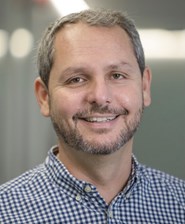
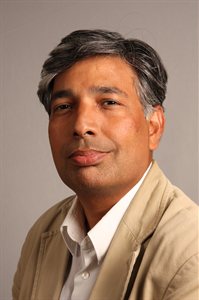
Stephen Yurkovich is the Louis Beecherl Jr. Distinguished Chair Professor and Director of the Center for Control Science and Technology at the Erik Jonsson School of Engineering and Computer Science, University of Texas at Dallas. He holds a PhD in Electrical Engineering from the University of Notre Dame (1984) and a B.S. in Engineering Science from Rockhurst University (1978). His research focuses on system identification, nonlinear control systems, automotive control systems, energy storage, robotics, and aerospace systems. He leads initiatives to advance interdisciplinary engineering education and industry collaboration. Key Roles: Department Head of Systems Engineering, Director of Center for Control Science and Technology. Notable Awards: 2008 John R. Ragazzini Award, IEEE Fellow (2001), Honda Partnership Award (2004). His publications span energy storage systems, automotive engine control, and advanced control methodologies. He has held visiting professorships at institutions like Université Catholique de Louvain and directed programs such as the Honda-OSU Partnership. Current lab affiliations include the Energy Storage Systems Lab, advancing innovations in power systems and control technologies.
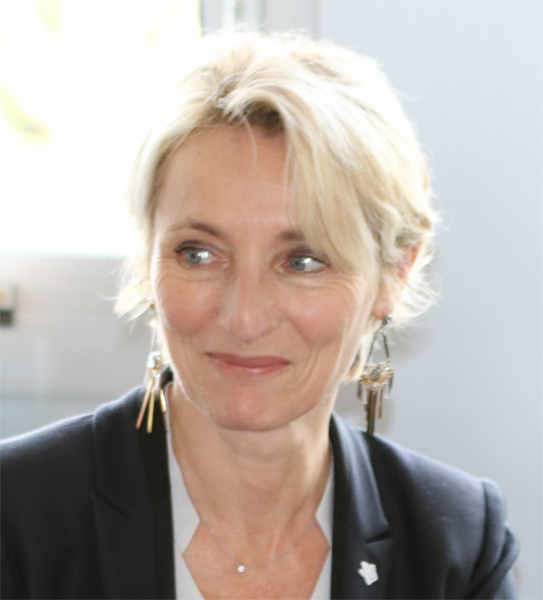
Sylvie Lorente is a Professor at Villanova University (College of Engineering, Department of Mechanical Engineering). She holds concurrent positions as Professor (Exceptional Class) at INSA Toulouse (France), Extraordinary Professor at the University of Pretoria (South Africa), and Adjunct Professor at Duke University (USA). Her academic career includes past roles at Hong Kong Polytechnic University, Shandong Academy of Sciences, and Pontificia Universidad Catolica (Chile). Research Interests: Her work centers on thermal engineering, heat transfer, and the Constructal Law, which governs the design of flow systems in nature and technology. She explores evolutionary design, sustainability, and energy-efficient systems for buildings and urban environments, mass transfer, and applications of dendritic flow networks to thermochemical energy storage, battery thermal management, and bio-based materials. Key Trends in Publications: Recent articles focus on optimizing battery thermal management using constructal canopy-to-canopy designs, phase change materials (PCM) for cooling and energy storage, hierarchical capillary networks for evaporative cooling, and fluid flow architectures in porous media. Her work bridges thermodynamics, materials science, and sustainable design. Scientific Awards: Order 'Chevalier de l’Ordre National du Mérite' (2015, French Government) PROSE Award for 'Design with Constructal Theory' (2009, American Association of Publishers) Order 'Les Palmes Académiques' (2008, France) James P. Hartnett Memorial Award (2007, American Society of Mechanical Engineers) Intelligent Optimal Design Prize (2006, CADLM) Bergles-Rohsenow Young Investigator in Heat Transfer Award (2005, ASME) Edward F. Obert Award (2004, ASME)
Yi-Su Chen is an Associate Professor in the Department of Information and Operations Management at the University of Michigan-Dearborn College of Business. She also serves as an MIDAS affiliated faculty member and holds an MBA degree with dual concentrations in Operations & Logistics Management and Finance. Ph.D. in Operations Management, University of Minnesota Specializes in behavioral operations and supply chain management Her research focuses on supply chain risk management , buyer-supplier relational dynamics , and empirical operations research . By combining longitudinal data analysis and behavioral experiments , she investigates early warning signals in supply chain security and decision-making processes. Her work has been featured in top journals like the Journal of Operations Management and International Journal of Production Economics , with recent trends showing increasing emphasis on network analysis and sustainability in supply chains. Key scientific recognitions include: Distinguished Research Team Award for the DTE E-Challenge Project (2023) DSJ Best Paper Award Finalist (2020) Researcher of the Year Award (2017) JPSM Best Paper Award Finalist (2016) Mid-American Business Deans Association Honorable Mention (2021) Dr. Chen actively mentors students through high-impact classroom projects such as the 4flow Case Study Competition and Network Design for the Detroit Fire Department. She has secured multiple grants—including projects on battery recycling, energy efficiency, and clean water solutions—to support both academic research and community engagement initiatives.
Apostolos Theos is an Associate Professor at Umeå University's Department of Community Medicine and Rehabilitation , where he serves as Head of the Sports Medicine Section. He is also affiliated with the Umeå School of Sport Sciences as Director of its Sport Science Division. PhD in Molecular Exercise Physiology (University of Athens, 2012) Deputy Head of Department since 2022 Director of Studies role His research focuses on: Hormonal and metabolic responses to exercise in children Development of test batteries for athlete performance prediction Muscle physiology and training adaptations Key research trends from his publications include: Pediatric physiological adaptations to resistance training Individualized performance prediction models in alpine skiing Exercise interventions for chronic disease populations Cross-transfer effects of resistance exercise Molecular mechanisms of exercise-induced tissue remodeling Current projects include Hip and groin problems in elite ice hockey players (2024-2029).
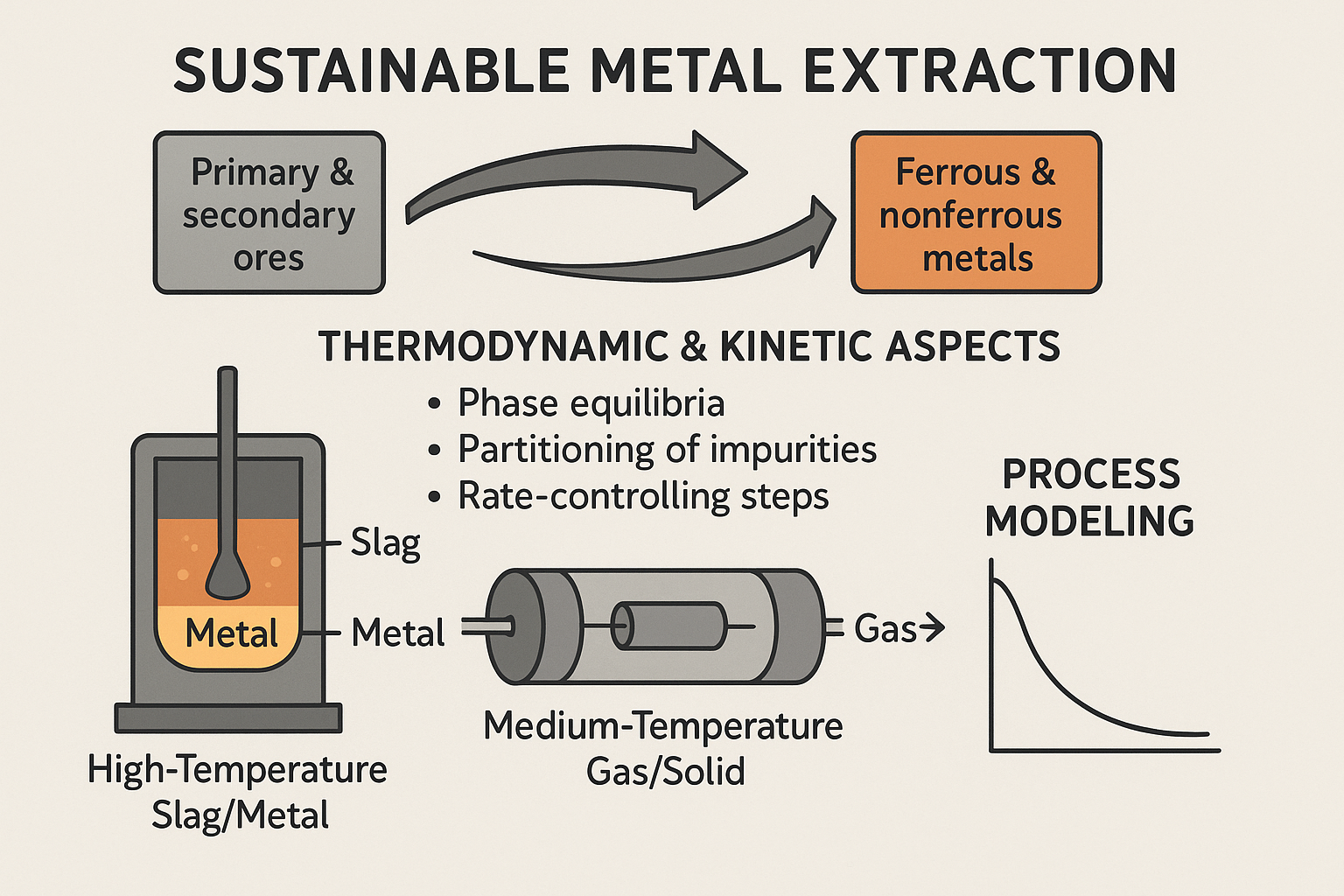
Dr. Jayasree Biswas is an Assistant Professor in the Department of Metallurgical Engineering and Materials Science at the Indian Institute of Technology Bombay, where she has been serving since February 2024. Her research is centered on sustainable metal extraction and green metallurgical processes. Education: Ph.D. in Process Metallurgy, Department of Materials Science and Engineering, McMaster University, Canada (2021) M.Tech. in Process Engineering, Department of Metallurgical Engineering and Materials Science, IIT Bombay, India (2015) B.E. in Metallurgical and Materials Engineering, Jadavpur University, India (2013) Her research interests include sustainable metal extraction, metal recycling from e-waste and batteries, green steelmaking, high-temperature kinetics, metal refining thermodynamics, and process modeling. She employs experimental studies involving slag/metal and gas/solid reactions, along with computational modeling, to understand phase equilibria, impurity partitioning, and rate-controlling steps in metallurgical processes. The recent publications reflect a strong focus on decarburization, dephosphorization, sulfation roasting for battery recycling, and the innovative integration of reinforcement learning for process control in pellet induration. These works span high-temperature reaction kinetics and digital optimization in metallurgical systems. Scientific Awards: No specific awards listed in the provided text. Dr. Biswas advises research through her Laboratory of Sustainable Metal Extraction at IIT Bombay. She is currently leading a post-doctoral project funded by the Ministry of Steel in collaboration with Tata Steel on green steelmaking. While no formal students are listed, she is actively recruiting post-doctoral fellows, indicating the development of her research group. Her prior experience includes a post-doc at Aalto University, Finland, and industry research at TCS TRDDC, Pune.
Hossam H. H. Mousa is a Doctoral Researcher at Aalto University's Department of Electrical Engineering and Automation, School of Electrical Engineering. He also serves as an Assistant Lecturer at South Valley University's Department of Electrical Engineering since 2020. B.Sc. in Electrical Engineering (2017), South Valley University M.Sc. in Electrical Power and Machines Engineering (2020), South Valley University His research focuses on electrical power engineering, including maximum power point tracking (MPPT) for renewable energy, power systems analysis, energy management, and machine learning applications in grid optimization. He has published extensively on topics like hosting capacity estimation, unbalanced microgrids, and hydrogen storage integration. The 15 most recent articles emphasize modern power systems optimization through machine learning (2025), smart inverter applications in renewable integration (2025), and hydrogen storage's role in cold climate energy management (2025). Earlier works include best practice studies on capacitor allocation (2024) and photovoltaic system controls (2024), earning him the 2024 Best Paper Award in the International Journal of Electrical Power & Energy Systems. Best Paper Award (2024), International Journal of Electrical Power & Energy Systems His scholarly activities span energy conversion, microgrid stability, and applied machine learning, contributing to sustainable energy transition solutions. He has collaborated on international research books addressing distribution network hosting capacity (2025) and future energy systems challenges.
Ambuj Varshney is a researcher specializing in low-power wireless communication, visible light networking, and embedded systems. His work explores tunnel diodes for non-contact sensing, backscatter technologies, and edge-based language models. Key contributions include AudioCast for audio-broadcast connectivity, TunnelSense for tunnel diode sensing, and PiXelGen for mixed-reality cameras. Core Research Areas: Wireless Sensor Networks, Backscatter, Tunnel Diodes, IoT, Embedded Systems Recent Trends: Integration of large language models (LLMs) in edge devices, visible light communication, low-power AR networking
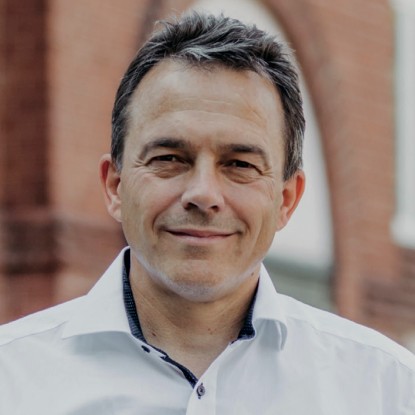
Prof. Sossan Fabrizio is an Associate Professor of Power Systems at HES-SO Valais-Wallis, focusing on energy storage, renewable integration, and smart grid technologies. He holds a PhD from DTU (2014) and has held roles at EPFL, ETHZ, and Mines ParisTech. His research emphasizes optimizing distribution grids, hydropower flexibility, and EV charging infrastructure. He leads projects like STOR-HY (Hybrid Hydropower Control) and STORE (Swiss Renewable Energy Storage). Education: Bachelor's/Master's in Computer Engineering, University of Genova (2010) PhD in Electrical Engineering, Technical University of Denmark (2014) Research Interests: Planning/scheduling/control of distributed energy resources, energy storage systems, and grid dispatchability. Areas include hydropower penstock stress reduction, EV charging infrastructure optimization, and model predictive control. Articles Overview: Over 20 peer-reviewed publications since 2013, focusing on grid integration of storage, renewable curtailment, and frequency control. Recent work includes optimal EV charging station planning (2023) and stress-informed MPC for hydropower plants (2022). Advising/Grants: Supervised PhD students like Stefano Cassano (defended 2023) and Biswarup Mukherjee. Secured grants including Horizon 2020 STOR-HY (2024) and Swiss Innovation Agency projects. Leads the ResiNet initiative on grid resiliency. Labs/Teams: Co-founded ModBESS (2020) for microgrid monitoring systems. Active in experimental facilities like the CIGRE MV network and Waterloo Institute’s hydropower lab.
Dr. Johannes Martin Landesfeind is an Associate Professor at the Department of Engineering Sciences , University of Agder. With extensive experience in lithium-ion battery research from academia (Technical University of Munich, Tokyo University of Science) and industry (Hilti Deutschland AG), he specializes in electrochemical modeling, battery materials, and data-driven optimization. His work bridges academic expertise with industrial applications to advance battery technology. Education: PhD in Technical Electrochemistry (TUM), MSc in Applied and Engineering Physics (TUM), BSc in Physics (TUM) Research Focus: His research spans fundamental electrochemical processes, electrode-level battery analysis, and industrial-scale optimization of high-power battery systems. Key areas include: Electrochemical impedance spectroscopy Lithium-ion battery electrolytes and materials Tortuosity and microstructural characterization Data-driven battery modeling Academic Contributions: His publications focus on improving battery performance through novel reference electrodes, advanced impedance analysis protocols, and transport property characterization. He leads courses like ENE246 - Batteries and ENE422 - Battery Electrochemistry Research , fostering practical and theoretical skills in battery science.
Lale Ergene is a Professor in the Department of Electrical Engineering at Istanbul Technical University (ITU), College of Engineering. Her research focuses on advanced electric machine design and control systems for industrial and automotive applications. She is actively involved in motor drive innovation, particularly in permanent magnet and reluctance motor technologies. Research Interests: Dr. Ergene specializes in electric machines, with emphasis on Permanent Magnet Synchronous Motors (PMSM), Interior Permanent Magnet (IPM) motors, and Permanent Magnet Assisted Synchronous Reluctance Motors (PMaSynRM). Her work spans sensorless control, field weakening techniques, finite element analysis, and motor optimization for electric vehicles and home appliances. She applies intelligent control methods such as neuro-fuzzy systems and real-time diagnostics. Recent Research Trends: Her recent publications (2023–2024) show a strong focus on improving motor efficiency and control robustness, especially in EV traction systems and white goods. Key themes include voltage distortion reduction, flux weakening enhancement, real-time parameter estimation using FFT, and lean sensorless control at zero/low speeds. Her work bridges theoretical modeling with industrial applications. Scientific Awards: Best Poster Paper AWARD (2016) Graduation Design and Project Competition 2nd Prize (2015) ITU 2014 Best Doctoral Thesis Award (2015) Advising and Grants: Dr. Ergene has supervised or is currently supervising 25 theses, indicating a strong mentoring role. She has led multiple funded projects, including TÜBİTAK and ITU BAP grants, focusing on FPGA-based neural network control, three-level inverter design, real-time model diagnostics, and sensorless control for washing machines and EVs. Her projects demonstrate sustained research funding and applied engineering impact. Labs and Research Teams: While specific lab names are not mentioned, her projects imply leadership in a motor control and electric machines research group at ITU, likely involving FPGA, real-time simulation, and embedded control systems. Her collaborations with researchers like A.F. Ergenc, M. Yilmaz, and A. Tap suggest an active, multidisciplinary team focused on next-generation motor drives.
Yiheng Hu is a Lecturer in Electrical Engineering at the Department of Engineering, School of Computing and Engineering, University of Huddersfield. She holds a PhD in Transient Energy Storage Systems, funded by the UK Government Scholarship, and has completed postdoctoral roles at University College Dublin and the University of Manchester. B.Eng. in Mechatronics, Central South University (2012) M.Sc. in Power Systems, University of Manchester (2013) PhD in Transient Energy Storage Systems, University of Huddersfield (2021) Her research focuses on electrochemical energy storage systems, power electronics, and renewable energy integration, with applications in AI-driven battery management systems and grid stability. Recent work includes transient energy storage for fast frequency response and modeling approaches for grid-connected storage technologies. Key trends in her publications include advancements in energy storage materials, AI-optimized grid integration, and real-time simulation tools. Her work bridges power electronics, renewable systems, and sustainable energy frameworks. Scientific awards include recognition in the Top 50 Women in Engineering 2022 (UK) and the UK Government Scholarship for her PhD. She actively mentors through global energy programs. Mentor, Women in Energy Storage Programme (2024-2025) Mentor, Women in Renewable Energy in Africa (2023) Mentor, Women in Energy Storage Programme (2020-2021) She supervises PhD students on distributed energy storage integration, permanent magnet machine design for fuel cell vehicles, and AI-enhanced disaster management systems. She contributes to climate initiatives through the Women’s Engineering Society (WES) Climate Emergency Group.
Professor Ying Liu is a Professor and Chair in Intelligent Manufacturing at the School of Engineering, Cardiff University, UK, a position he has held since August 2021. He leads the High-value Manufacturing research group within the Department of Mechanical Engineering. Prior to this, he served as an Assistant Professor at the National University of Singapore (2010–2013) and the Hong Kong Polytechnic University (2006–2010). PhD, Innovation in Manufacturing Systems and Technology (IMST), Singapore-MIT Alliance (SMA), National University of Singapore (2006) MSc, Singapore-MIT Alliance (SMA), Nanyang Technological University (NTU) MEng & BEng, Mechanical Engineering, Chongqing University, China His research spans engineering informatics, digital and intelligent manufacturing, AI and machine learning in engineering design, and advanced ICT in manufacturing. He has published over 160 scholarly articles and contributed to major journals and conferences in the field. His recent work focuses on knowledge graphs, digital twins, human-robot collaboration, and energy modeling in smart manufacturing, often integrating large language models and advanced deep learning techniques. The most recent publications highlight a strong trend toward integrating AI, particularly large language models and knowledge graphs, into smart manufacturing systems. Themes include predictive maintenance, battery state estimation, human fatigue modeling, and sustainable manufacturing. His work increasingly emphasizes human-centric approaches aligned with Industry 5.0 principles. Best Paper Award 2022, CCF Transactions on Pervasive Computing and Interaction ESI Highly Cited Paper and Hot Paper, Research and Application of Machine Learning for Additive Manufacturing 2020 Reviewer of the Year, ASME Journal of Computing and Information Science in Engineering (JCISE) Professor Liu actively supervises postgraduate students and has advised several successful PhD candidates, including Dr. Chong Chen and Mr. Zhouyang Ding. His research is funded by major agencies such as EPSRC (UK), GRF (Hong Kong), MOE (Singapore), A*STAR, and NSF (China), as well as industrial partners. He serves as Associate Editor for ASME JCISE, IEEE T-ASE, and several other journals, and was recently appointed Senior Editor of the Journal of Engineering Design. He also leads special issues and topical collections on AI in engineering. He leads the High-value Manufacturing research group at Cardiff University, focusing on digital transformation in manufacturing. His team works on projects involving digital twins, knowledge graphs, and AI-driven design innovation, often in collaboration with international institutions.
Prof. Rolf Findeisen is a Professor in the Department of Control and Cyber-Physical Systems (CCPS) at Technische Universität Darmstadt. His work focuses on advancing control theory and its applications in cyber-physical systems, autonomous systems, and energy storage systems. Key areas include model predictive control (MPC), battery management systems, machine learning integration into control frameworks, and optimization of crystallization processes. He leads research on safety-critical systems, data-driven control methods, and interdisciplinary applications in robotics and biotechnology. His research spans theoretical advancements in MPC stability, stochastic control, and Gaussian process modeling, alongside practical implementations in autonomous vehicles, lithium-ion battery systems, and bioprocess optimization. Notable contributions include frameworks like HILO-MPC for integrating machine learning with control systems, and methodologies for safe exploration in autonomous navigation. Prof. Findeisen's publications emphasize energy-efficient trajectory planning, fault detection in battery systems, and real-time optimization of manufacturing processes. His work bridges academic theory with industrial applications, addressing challenges in scalability, safety, and computational efficiency. His lab collaborates on national projects like IN-Fly-Tec and INFLIGHT, focusing on innovative flight control systems and sensor technologies. Current research trends include hybrid intelligent optimization, cybergenetic control of microbial systems, and safe reinforcement learning for control systems.
Professor Shashi Paul is a leading academic in nanoscience and nanotechnology at De Montfort University, affiliated with the School of Engineering and Sustainable Development and the Emerging Technologies Research Centre (EMTERC). He holds a PhD from the Indian Institute of Science, Bangalore, and has previously worked at Cambridge University, Durham University, and Rutgers University. University: De Montfort University School: School of Engineering and Sustainable Development Research Centre: Emerging Technologies Research Centre (EMTERC) Email: spaul@dmu.ac.uk ORCID: 0000-0002-7077-8235 His research focuses on the development and application of nano-materials in energy, electronics, and sensors. Key areas include photovoltaic solar cells , emerging electronic memory devices (including neuromorphic computing), flexible and printed electronics , and low-carbon manufacturing processes . He has pioneered work on nanocomposite memory devices using organic materials, metallic nanoparticles, and graphene oxide, with applications in sustainable and low-cost electronics. The body of his recent publications reveals a consistent trajectory toward next-generation electronic devices and energy-efficient materials . His work spans from fundamental charge storage mechanisms in nanocomposites to scalable fabrication techniques like inkjet printing and Mist CVD. There is a strong emphasis on commercialization and real-world impact , evident in patents and funded projects aimed at reducing carbon footprint and manufacturing costs. Scientific recognition includes: Ribbon award – MRS Fall Meeting 2004, Boston, USA Guest Editor, Philosophical Transactions of the Royal Society A (2009) Reviewer for leading journals in electronic materials Visiting Professor at Alexandru Ioan Cuza University, Romania (2011–2013) Prof. Paul has secured significant research funding from EPSRC, UKRI (ICURe), National Physical Laboratory, and Energy Catalyst programs. He has supervised numerous PhD students and led projects on silicon nanostructures for Li-ion batteries, low-temperature solar cell manufacturing, and commercialization of energy storage technologies. His leadership extends to organizing international conference sessions on smart materials and memory devices. He is an active member of the scientific community, participating in conferences such as IEEE, MRS, and CIMTEC, and contributing to the advancement of nanotechnology through patents, publications, and collaborative research.
Professor Miao Chen is a faculty member in the Department of School of Science at RMIT University, based at the City Campus in Australia. Their research focuses on resources engineering, extractive metallurgy, environmental engineering, and materials engineering. Professor Chen leads projects addressing challenges in mineral processing, bioleaching, and environmental remediation, with a particular emphasis on optimizing low-grade ore beneficiation, heap leaching performance, and sustainable metal recovery from spent Li-ion batteries. Their work integrates advanced analytical techniques like machine learning and electrochemical sensing to enhance process understanding and environmental monitoring. Key research interests include the characterization of high-phosphorus iron ores, arsenic mobility in groundwater, and biotransformation mechanisms of uranium species in mining environments. Professor Chen also explores innovative sensor technologies such as LTCC-based dissolved oxygen sensors and nanostructured glucose biosensors. Their projects often involve collaboration with industry to translate research into practical solutions for resource efficiency and environmental sustainability. Supervision focuses on advancing methodologies for mineral upgrading, in-situ monitoring systems, and corrosion protection in reinforced concrete. Grants and partnerships are directed toward sustainable resource management and clean technology development.