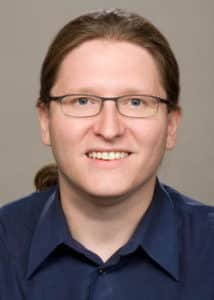
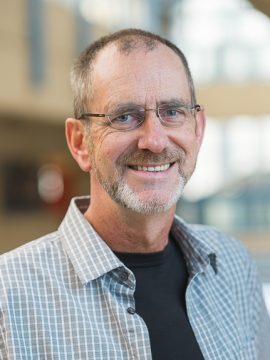
Joe Kable, PhD, serves as the Baird Term Associate Professor of Psychology at the University of Pennsylvania, where his research investigates the neurophysiological basis of human decision-making through integrative approaches from experimental economics, cognitive neuroscience, and judgment psychology. His laboratory specializes in fMRI studies examining how subjective value representations guide choices involving immediate versus delayed rewards. Education: B.S. in Chemistry, Emory University PhD in Neuroscience, University of Pennsylvania Dr. Kable's research program centers on neural mechanisms of temporal discounting, risk assessment, and individual differences in choice behavior. His work demonstrates how socioeconomic status, aging, and clinical conditions modulate decision processes, with particular emphasis on hippocampal-prefrontal interactions during value computation. Recent studies reveal how time perception alterations affect neural activity in reward circuits and how social factors influence trust decisions across the lifespan. Analysis of his 15 most recent publications shows a strong methodological focus on fMRI and lesion studies, with growing clinical translation in depression, addiction, and dementia. Key thematic trends include the neural encoding of effort costs in social contexts, structural brain markers for impulsivity, and the dissociable roles of frontal subregions in persistence behaviors. His work consistently bridges basic decision neuroscience with real-world applications in mental health. Scientific Awards: No scientific awards mentioned in source material Dr. Kable leads an active research laboratory at Penn but the source text provides no details about graduate student advising or specific grant funding. His publications indicate collaboration with clinical researchers at the Penn Memory Center, particularly in aging-related decision studies. The laboratory employs multimodal neuroimaging techniques including resting-state fMRI, TMS, and lesion mapping to investigate decision circuits, with recent work extending to computational modeling of value representation and social cognition mechanisms.
Professor Guy Williams is a leading academic at the University of Cambridge with a focus on imaging science and clinical neurosciences, affiliated with Downing College and the Wolfson Brain Imaging Centre . Holding a PhD in Physics from his initial Natural Sciences degree, he specializes in nuclear magnetic resonance (NMR) and MRI techniques for brain imaging. Education: BA, PhD in Physics His research centers on non-invasive imaging of brain structure and function, particularly in traumatic brain injury (TBI) and dementia. His work involves developing novel MRI pulse sequences and advanced data analysis algorithms, including AI-based diagnostic tools. He leads studies on white matter integrity post-trauma, longitudinal dementia assessment, and applications of MRI in disorders of consciousness and addiction. Recent publications highlight collaborations in traumatic brain injury outcomes, AI-guided dementia prediction, and neuroimaging of post-COVID cognitive deficits. His team's work on ultra-high field laminar fMRI and distortion correction methods has advanced clinical neuroscience applications. Key techniques include diffusion tensor imaging (DTI), 7 Tesla MRI, and positron emission tomography (PET/MR). His research spans from basic NMR physics to clinical translation, with a strong emphasis on multi-site studies and real-world diagnostic implementation.
Suresh Krishna is an Associate Professor in the Department of Physiology at McGill University's Faculty of Medicine. His research focuses on the neurophysiological and computational basis of sensory processing, attention, and eye movements, with applications to brain-machine interfaces and human health. He works with human subjects, non-human primates, and open datasets using in-vivo electrophysiology, eye-tracking, and computational modeling. Research interests include visual attention mechanisms, saccadic eye movement control, neural coding of motion perception, and the interplay between attention and decision-making. His work bridges basic neuroscience with translational applications such as improving neural prosthetics and understanding perceptual disorders. Recent work highlights how neural remapping processes during saccades underlie spatial perception, and how attention modulates neural activity patterns in visual cortex. The lab's publications reveal critical insights into the temporal dynamics of attentional shifts and their neural substrates, particularly in areas MT and MST. Dr. Krishna's team also investigates auditory temporal processing in the inferior colliculus, exploring correlations between neuronal responses to sound modulation. Their findings contribute to understanding how sensory systems encode temporal information across modalities. Research is conducted in the M2B3 Lab (http://m2b3.lab.mcgill.ca), which integrates experimental and computational approaches to study brain mechanisms underlying perception and action. No specific awards are listed, but ongoing work involves major contributions to primate neurophysiology and translational neuroscience.
Michael J. Frank is the Edgar L. Marston Professor of Psychology and Professor of Brain Science at Brown University's School of Cognitive, Linguistic, and Psychological Sciences. He holds academic affiliations with the Carney Institute for Brain Science and specializes in cognitive neuroscience, computational neuroscience, and decision-making processes. Frank earned his Ph.D. in Neuroscience & Psychology from the University of Colorado at Boulder in 2004, and joined Brown University in 2011 after serving as a Professor at the University of Arizona. His research integrates computational modeling and experimental methods to explore neural mechanisms underlying reinforcement learning, decision-making, and cognitive control, with a focus on prefrontal cortex-basal ganglia interactions and dopamine modulation. Frank's honors include the Troland Research Award (2021), Kavli Fellowship (2016), and the Cognitive Neuroscience Society Young Investigator Award (2011). He is an editor for eLife, Behavioral Neuroscience, and the Journal of Neuroscience. His lab, based at http://ski.clps.brown.edu, investigates topics such as neural circuit models of cognitive control, neuropsychological testing, and translational applications of computational models in psychiatry. Frank's research emphasizes interdisciplinary approaches, combining behavioral experiments, neuroimaging (fMRI, EEG), and pharmacological studies to dissect brain-behavior relationships. Key findings include insights into dopamine's role in motivation, decision-making deficits in schizophrenia, and computational phenotyping of mental disorders. His work bridges basic science and clinical applications, aiming to inform therapeutic strategies for neurological and psychiatric conditions.
James T. Enns is a Professor and Distinguished University Scholar in the Department of Psychology within the Faculty of Arts at the University of British Columbia. His research primarily focuses on the role of attention in human vision, with secondary interests in developmental psychology and human-machine interaction. Dr. Enns' research interests span perception, attention, vision, cognition, development, and human-machine interaction. His work explores how the human mind selects information, with particular emphasis on visual attention mechanisms. His laboratory research investigates the fundamental processes of visual perception and how attention modulates these processes across different contexts and developmental stages. Analysis of Dr. Enns' publication record reveals consistent engagement with visual perception, attentional mechanisms, and cognitive processing. His research demonstrates expertise in both theoretical frameworks and experimental methodologies related to visual attention, with applications spanning basic cognitive science to potential implementations in human-computer interaction systems. His work often bridges theoretical cognitive psychology with practical applications. Canadian Society for Brain, Behaviour and Cognitive Science Donald O. Hebb Distinguished Contribution Award (2013) Distinguished University Scholar, UBC (2004) Robert E. Knox Master Teaching Award (2004) Royal Society of Canada Fellow (2002) Killam Faculty Research Prize (1994) Killam Faculty Research Fellowship (1993) Society of Experimental Psychology Fellow Dr. Enns has served as Editor for the Journal of Experimental Psychology: Human Perception and Performance, and as Associate Editor for Psychological Science, Consciousness and Cognition, and Visual Cognition. His research has been supported by grants from NSERC, the Canadian Foundation for Innovation, the Australian Research Council, BC Health, and Nissan. He has authored textbooks on perception, edited research volumes on the Development of Attention, and published numerous scientific articles on vision, attention, and cognitive science. Dr. Enns is currently accepting graduate students and continues to mentor the next generation of cognitive scientists. Dr. Enns leads the UBC Vision Lab, which focuses on how the human mind selects information. The lab conducts research on visual attention, perception, and cognitive processes using a variety of experimental methodologies.
Professor Gavan McNally is a distinguished behavioral neuroscientist at the University of New South Wales, where he serves as a Professor in the School of Psychology. He is actively engaged in research on the fundamental behavioral and brain mechanisms for learning and motivation, with applications to clinical conditions such as addictions, anxiety disorders, and mood disorders. McNally holds several prestigious editorial positions, including Editor-in-Chief of Neurobiology of Learning & Memory and Senior Editor of The Journal of Neuroscience. He also serves as President-Elect of the European Behavioral Pharmacology Society and is a Member of the Australian Research Council College of Experts. McNally's research interests span behavioral neuroscience, focusing on how fundamental brain mechanisms apply to clinical conditions. He employs a systems neuroscience approach, combining well-controlled behavioral approaches with optogenetics, chemogenetics, in vivo calcium imaging, and whole brain circuit mapping in both normal and transgenic animals. His work bridges basic science with clinical applications through collaborations with colleagues at University of Sydney, Sydney Local Health District, Monash University, and Turning Point. McNally's research particularly examines the cellular, circuit, and systems level mechanisms underlying learning, motivation, and their dysregulation in disorders like addiction. His laboratory investigates how these mechanisms translate to human conditions, with a strong emphasis on developing new treatments for psychological disorders. His extensive publication record demonstrates a clear trajectory in understanding punishment learning, addiction mechanisms, and the neural circuits underlying motivated behavior. Recent work has increasingly focused on the cognitive pathways to punishment insensitivity, the role of specific neural circuits in addiction, and translational approaches to understanding maladaptive behaviors. McNally's research bridges animal models with human studies, creating a comprehensive understanding of the neural mechanisms that govern learning and motivation, with particular attention to how these processes go awry in addiction and other psychological disorders. 2008 QEII Fellow, Australian Research Council 2009 Association for Psychological Science, International Rising Star 2010 Fellow, Association for Psychological Science 2010 UNSW Faculty of Science Staff Excellence Award for Research and Training 2011 Pavlovian Research Award, The Pavlovian Society 2012 Future Fellow (Level 3), Australian Research Council 2016 D.G. Marquis Behavioral Neuroscience Award, American Psychological Association 2017 Fellow, American Psychological Association 2019 Fellow of the Academy of Social Sciences in Australia 2021 D.G. Marquis Behavioral Neuroscience Award, American Psychological Association 2022 Ross Day Plenary Lecturer, Australasian Brain and Psychological Sciences 2023 European Behavioural Pharmacology Society Plenary Lecturer 2024 Elspeth McLachlan Plenary Lecturer, Australasian Neuroscience Society 2024 D.G. Marquis Behavioral Neuroscience Award, American Psychological Association Professor McNally actively supervises several students including Bixuan Lin, Si Yin Lui, Hannah Machet, Bart Cooley, Kelly Zhuang, and Alexandra Gregory. His current research is supported by significant funding including an Australian Research Council Discovery Project (2024-2026) on "Risky choices: From cells and circuits to computations and behaviour," another Discovery Project (2025-2028) on "Multimodal mapping of punishment learning," and NHMRC grants including a Synergy Grant on "Linking clinical and basic science discovery to find new treatments for alcohol-use disorder" and an Ideas Grant on "Novel pathways to abstinence from alcohol seeking." These projects reflect his commitment to both fundamental neuroscience and translational applications for treating psychological conditions. His teaching responsibilities include PSYC2081 Learning & Physiological Psychology and PSYC3051 Physiological Psychology. McNally's laboratory employs advanced techniques including optogenetics, chemogenetics, in vivo calcium imaging, and whole brain circuit mapping to investigate the neural mechanisms underlying learning, motivation, and their dysregulation in disorders. His team works at the intersection of basic neuroscience and clinical applications, with strong collaborations across multiple institutions to translate fundamental findings into potential treatments for addiction and other psychological disorders. The lab has made significant contributions to understanding the role of brain regions like the ventral pallidum, paraventricular thalamus, and nucleus accumbens in addiction, fear learning, and punishment sensitivity.
James Warwick Bisley is a Professor of Neurobiology in the School of Medicine at the University of California Los Angeles (UCLA). His research focuses on the neural mechanisms underlying visual attention, eye movement control, and spatial processing in the brain. Dr. Bisley has made significant contributions to understanding how the brain guides attention and eye movements during visual search tasks, particularly through his work on the lateral intraparietal area (LIP) and frontal eye field (FEF). Dr. Bisley earned his PhD in Neuroscience from the University of Melbourne in December 1997. His research has been consistently supported by NIH funding, including R01 grants R01EY027968 (2018-2022) and R01EY019273 (2008-2019), where he served as Principal Investigator investigating neural processing in covert attention and the neural mechanisms underlying the guidance of visual attention. His research interests span visual attention, neural remapping, eye movement control, and the neural basis of spatial cognition. Dr. Bisley's work has demonstrated how brain areas like LIP and FEF contribute to visual attention and eye movement planning through the creation of priority maps. His recent publications show an expansion into haptic feedback applications in robotic surgery, demonstrating the translational potential of basic neuroscience research to improve surgical technologies. Dr. Bisley's publication record from 2016-2022 reveals a dual research focus: approximately half of his work continues to explore fundamental mechanisms of visual attention and neural processing, while the other half applies these principles to enhance robotic surgical systems through improved haptic feedback and tactile sensing. This interdisciplinary approach bridges cognitive neuroscience with biomedical engineering to address practical challenges in medical technology. Neural processing in covert attention (NIH R01EY027968, 2018-2022) The Neural Mechanisms Underlying the Guidance of Visual Attention (NIH R01EY019273, 2008-2019) Dr. Bisley has established himself as a leading researcher in visual neuroscience, with numerous highly cited publications in top journals including Journal of Neuroscience, Cerebral Cortex, and Proceedings of the National Academy of Sciences. His collaborative work spans multiple disciplines, connecting basic neuroscience with engineering applications to create innovative solutions for medical challenges.
Markus Heilig is a Professor of Psychiatry and Head of the Department of Biomedical and Clinical Sciences (BKV) at Linköping University. He serves as Director of the Center for Social and Affective Neuroscience (CSAN), integrating basic and clinical neuroscience to address addictive and affective disorders. His work bridges neuropharmacology, molecular psychiatry, and clinical trials. Linköping University (Current) Center for Social and Affective Neuroscience (CSAN) (Director) Wallenberg Center for Molecular Medicine (Collaborator) His research focuses on alcohol dependence mechanisms, stress-neurotransmitter interactions (e.g., CRF, substance P, endocannabinoids), and personalized medicine approaches. Using animal models and human neuroimaging (fMRI), his lab explores epigenetic changes in frontal lobe and amygdala neurons that drive compulsive alcohol use. Recent publications highlight his work on endocannabinoid modulation for PTSD treatment, neural correlates of reward choices, and pharmacological interventions targeting GABA and opioid receptors. His studies often combine brain imaging, behavioral analysis, and pharmacology. Scientific awards include the 2019 Wallenberg Clinical Scholar grant and 2017 CAN/Nordic Drugs prizes. Heilig's research is supported by Vetenskapsrådet (SEK 57 million center funding) and international donations like the Andrew J. Bock Memorial Fund.
Prof. Torsten Wolfgang Kuhlen serves as a Universitätsprofessor at RWTH Aachen University, leading the Teaching and Research Area for Virtual Reality and Immersive Visualization within the Department of Computer Science. He is affiliated with Chair of Computer Science 12 (High Performance Computing), the Visual Computing Institute, and remains an integral part of the RWTH IT Center where his research group operates one of the world's largest Virtual Reality laboratories including the 30 sqm aixCAVE visualization chamber. The group maintains strong connections with Computational Science & Engineering Division, National High Performance Computing Center for Computational Engineering Science (NHR4CES), and VR in Science and Industry Network NRW e.V. Prof. Kuhlen's research spans virtual reality, immersive visualization, and multimodal 3D user interfaces with applications across simulation science, production technology, neuroscience, and medicine. His work combines basic research on advanced methods and algorithms with interdisciplinary collaborations involving RWTH Aachen institutes, Forschungszentrum Jülich, and industry partners. Recent publications demonstrate strong focus on audiovisual perception, immersive analytics, collaborative virtual environments, and practical VR applications in education and manufacturing. His research group has produced significant work on listening effort in virtual environments, immersive authoring techniques, and VR applications for scientific visualization. Notable projects include VRScenarioBuilder for automated vehicle testing and applications in monitoring additive manufacturing processes. The group actively participates in major conferences including IEEE VIS and EuroVis, with several award-winning contributions. Prof. Kuhlen has advised PhD students including Martin Bellgardt who recently completed his doctoral degree on "Increasing Immersion in Machine Learning Pipelines for Mechanical Engineering". The research group maintains state-of-the-art VR infrastructure including the aixCAVE facility which is open to all RWTH research groups.
Chandan J Vaidya is a Professor in the Department of Psychology at Georgetown University, directing the Developmental Cognitive Neuroscience Laboratory (DCNL). His research focuses on cognitive neuroscience mechanisms underlying adaptive behaviors, particularly implicit learning, executive control, and their dysfunction in ADHD, ASD, and other developmental disorders. Using multidisciplinary methods including fMRI, behavioral testing, and genetic analysis, he investigates how dopamine systems, brain connectivity, and environmental factors influence cognitive processes. Primary appointment: Professor, College of Arts and Sciences - Department of Psychology Education: Ph.D. from Syracuse University Research interests include neurodevelopmental disorders, neuroimaging of cognitive control, and translational neuroscience. Recent work examines striatal connectivity changes in ADHD due to stimulant use, executive dysfunction subtypes in autism, and brain correlates of reward processing in obesity. Key findings highlight hyperconnectivity in ASD, dopamine genotype influences on executive function, and age-related changes in default mode networks. Ongoing studies explore transdiagnostic models of psychopathology and precision medicine approaches in neurodevelopmental disorders. Lab activities focus on translational research bridging basic neuroscience with clinical applications. Collaborations involve pediatric neurology, psychiatry, and computational modeling.
Sonia Mayoral is the Robert J. and Nancy D. Carney Assistant Professor of Neuroscience at Brown University. Her research focuses on studying cell-cell interactions in the brain, particularly the development and function of oligodendrocytes – glial cells critical for myelin formation. She explores how these cells contribute to myelination, remyelination processes, and their roles in neurological disorders like multiple sclerosis. Her work integrates cellular neuroscience, immunology, and drug screening methodologies. Research interests include glial cell biology, neuron-glial interactions, and the molecular mechanisms governing myelin repair. She investigates how environmental cues and signaling pathways regulate oligodendrocyte differentiation and function. Notable projects involve developing high-throughput screening platforms for MS therapeutics and studying sex-specific responses to neurodegenerative challenges. Her lab’s recent work includes clinical trials (Re-WRAP) evaluating Bazedoxifene for remyelination in women, and fundamental studies on regulatory T cell roles in myelin regeneration. She also examines how mechanical stimulation and epigenetic changes influence oligodendrocyte behavior. Her research bridges basic science and translational efforts, aiming to advance treatments for myelin-related disorders. Dr. Mayoral’s lab is active at Brown University, with a dedicated website detailing ongoing projects and collaborations. While no specific grants or students are listed here, her work reflects a strong focus on interdisciplinary approaches to neurodegenerative disease mechanisms.
Professor Christian F. Doeller is a leading cognitive neuroscientist serving as Director of the Department of Psychology at the Max Planck Institute for Human Cognitive and Brain Sciences (MPI CBS) in Leipzig and Vice President of the Max Planck Society (since 2023). His roles include honorary professorships at the University of Leipzig (2019) and TU Dresden (Cognitive Neuroscience of Learning and Memory). He holds a PhD in Psychology from Saarland University (2005) and has held positions at institutions such as UCL (London), Radboud University (Nijmegen), and NTNU (Trondheim). His research focuses on spatial navigation, memory systems, and cognitive mapping in the human brain, leveraging neuroimaging (fMRI, EEG) and computational modeling. Key areas include hippocampal/entorhinal cortical function, grid cells, and the neural basis of spatial and conceptual representations. Recent work explores non-Euclidean spatial cognition, value-based decision making using grid-like maps, and hormonal influences on navigation. His lab combines experimental psychology, neuroimaging, and theoretical neuroscience to understand how brains build predictive models of environments and concepts. Publications emphasize cognitive maps, neural representations of space/value, and memory formation mechanisms. Over 100 journal articles span high-impact journals like Nature Neuroscience , Neuron , and Current Biology . His work bridges basic research and translational applications in neurodegenerative disorders and spatial cognition deficits.
Perry Hinton is a Professor (Teaching Focused) in the Centre for Applied Linguistics at the University of Warwick, part of the Faculty of Social Sciences. He contributes to the interdisciplinary degree in Language, Culture and Communication, drawing on his expertise in psychology and cultural studies. University: University of Warwick School: Faculty of Social Sciences Department: Centre for Applied Linguistics Academic Rank: Professor Email: P.R.Hinton@warwick.ac.uk His research centers on the psychology of interpersonal perception, especially the interplay between cognition and culture. Key areas include stereotyping as a cognitive and cultural phenomenon and Western (particularly British) interpretations of Japanese culture, including media portrayals and anime. He also has a strong commitment to statistical education, having authored multiple textbooks on SPSS and data analysis. The recent publications reflect a consistent focus on cultural psychology, intercultural communication, and social representation. Themes include the construction of identity, media influence, cultural stereotypes, and cognitive biases in person perception. His work often takes a multidisciplinary approach, integrating insights from psychology, linguistics, and media studies. Perry Hinton has authored and co-authored several influential books in his field, particularly on stereotypes and statistical methods. While no formal scientific awards are listed, his sustained publication record in peer-reviewed journals and with major academic publishers (Routledge, Bloomsbury, Palgrave) indicates significant scholarly recognition. He has supervised or co-edited collaborative works, such as the 2023 volume on intercultural relations, suggesting advisory and mentoring roles. His career path includes positions at five British universities, progressing from lecturer to Head of Department, with extensive experience teaching psychology across disciplines including linguistics, education, and media studies. He joined Warwick's Centre for Applied Linguistics at the inception of its Language, Culture and Communication program in 2014. Hinton works within a multidisciplinary academic environment, contributing to a research culture that bridges psychology and applied linguistics. His collaborations, particularly with Troy McConachy, suggest active participation in intercultural research teams and scholarly networks focused on global communication and cultural understanding.
Professor David Dupret is a Professor of Neuroscience and MRC Investigator at the University of Oxford, where he also serves as a Tutorial Fellow in Biomedical Sciences at St Edmund Hall. His work takes place within the MRC Brain Network Dynamics Unit, part of the Nuffield Department of Clinical Neurosciences, and he is affiliated with the Department of Physiology, Anatomy and Genetics. David completed his Ph.D. in Neuroscience at the Institute François Magendie (INSERM, University of Bordeaux, France), receiving the French Neuroscience Association's 2007 Ph.D. Year Prize. He joined the MRC Anatomical Neuropharmacology Unit in 2007 as a Visiting Fellow, funded by the Institute of France and the International Brain Research Organisation. In 2009, he became an MRC postdoctoral scientist and Junior Research Fellow at St Edmund Hall, progressing to MRC Programme Leader Track scientist in 2011 and tenured MRC Programme Leader in 2014. Professor Dupret's research focuses on the circuit-level mechanisms of memory-guided behavior, with particular emphasis on neural dynamics of memory circuits during active waking behavior and sleep. His laboratory employs in vivo multichannel recordings and optogenetic manipulation of neuronal ensembles to investigate how hippocampal networks organize memory processes. His work has revealed fundamental insights into how memory circuits operate during both waking behavior and sleep states, particularly regarding hippocampal ripple activity, dentate spikes, and offline reactivation processes. Analysis of Professor Dupret's recent publications reveals a consistent focus on hippocampal network dynamics and memory processes. His work spans from basic neural circuit mechanisms to applications in neurodegenerative conditions like Alzheimer's disease. A notable trend is the integration of computational approaches with experimental neuroscience to understand how neural assemblies encode and retrieve memories. His team has made significant contributions to understanding how dentate spikes support memory flexibility and how hippocampal ripple diversity organizes neuronal reactivation during offline states. French Neuroscience Association's 2007 Ph.D. Year Prize Foundation Louis D. Research Fellowship (2007) International Brain Research Organisation Fellowship (2008) FENS-Kavli Network of Excellence Scholar (2016) Boehringer Ingelheim-FENS Research Award (2018) Elected to membership of Academia Europaea (2024) Professor Dupret has secured substantial research funding through his MRC Programme Leader position and has mentored numerous researchers who appear as co-authors on his publications. His laboratory, the Dupret Group, operates within the MRC Brain Network Dynamics Unit, collaborating extensively with other research groups including the Sharott Group, Magill Group, and Denison Group. Current research directions include investigating how memory circuits maintain flexibility while resisting extinction, exploring the relationship between neural coactivity patterns and memory organization, and developing computational models of hippocampal function. His team is actively pursuing future work on the mechanisms underlying memory persistence and the neural basis of flexible memory recall.
Emily Cooper is an Associate Professor of Optometry & Vision Science at the Herbert Wertheim School of Optometry & Vision Science, University of California, Berkeley. She serves as the Chair of the Vision Science PhD Program and is a co-Director of the Center for Innovation in Vision & Optics. Additionally, she is a member of the Helen Wills Neuroscience Institute and a Visiting Faculty Researcher at Google. Dr. Cooper's research focuses on 3D vision, perceptual graphics, AR/VR, computational neuroscience, visual encoding, and display system design. Her work investigates how the visual system processes information to create our perception of the 3D world, with applications in computer graphics, virtual reality, and assistive technologies for people with low vision. Analysis of Dr. Cooper's recent publications (2023-2025) reveals a strong focus on the intersection of vision science and emerging technologies, particularly in augmented reality and assistive vision systems. Her work spans fundamental research on visual perception mechanisms to applied research developing practical technologies for low vision rehabilitation. A significant portion of her recent work addresses visual discomfort in XR displays, perceptual guidelines for AR/VR systems, and innovative approaches to assistive vision technologies that enhance mobility and independence for visually impaired individuals. Dr. Cooper leads an active research laboratory at UC Berkeley's 391 Minor Hall, where she mentors students and collaborators in vision science research. Her lab investigates both basic questions about how vision works and translational questions about improving visual technologies. She has developed perceptual guidelines for optimizing field of view in stereoscopic augmented reality displays and created assistive technologies such as an augmented reality sign-reading assistant for users with reduced vision. Dr. Cooper is also involved in professional activities including co-organizing the Computational Neuroscience: Vision summer course at Cold Spring Harbor Laboratory and working with Community Resources For Science to promote science education.