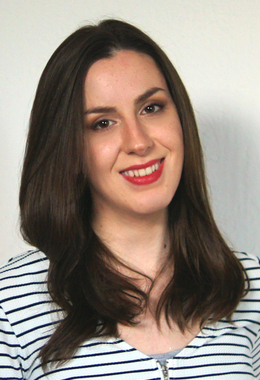
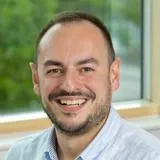
Ana Isabel Reinartz Groba serves as a Doctoral Research Fellow at the Division of Physiology within the Faculty of Medicine at the University of Oslo. Her research focuses on neural mechanisms of memory and brain function through electrophysiological approaches. Her primary research interests include: Neuroscience and Human Neuroscience Electrophysiology and Signal Analysis Memory processes and Brain function Neural System dynamics Cognitive Neurophysiology Dr. Groba is actively involved in the Memory Maps project through the Cognitive Neurophysiology research group, investigating how neural systems encode and retrieve memory information using advanced signal analysis techniques. Her work bridges fundamental physiological mechanisms with cognitive neuroscience applications. She maintains active laboratory work at Domus Medica (Sognsvannsveien 9, Oslo) and collaborates within the Institute of Basic Medical Sciences framework.
Sylvain Caillol serves as a Research Director at CNRS within the Institute Charles Gerhardt (ICGM - UMR5253) at the University of Montpellier. His career spans industrial research at Rhodia Company and academic research focused on sustainable polymer development, establishing him as a leading figure in green materials science. Education: Engineer graduate from the National Graduate School of Chemistry of Montpellier (1998) M.Sc. in Chemistry from the University of Montpellier PhD from the University of Bordeaux (2001) Dr. Caillol's research focuses on developing sustainable alternatives to conventional polymer systems, with particular expertise in biobased materials derived from natural phenols, vegetable oils, and cashew nut shell liquid. His work bridges fundamental chemistry with practical applications, targeting replacements for hazardous chemicals like bisphenol A and developing innovative non-isocyanate polyurethanes. His research group has pioneered advances in vitrimers (reprocessable thermosets) and recycling technologies for polymer materials, creating pathways for more circular economy approaches in materials science. Analysis of his recent publications reveals a strategic evolution from basic biobased polymer synthesis toward multifunctional sustainable materials with specific performance characteristics. His work increasingly integrates life cycle assessment with material development, demonstrating a commitment to genuine environmental sustainability rather than just material substitution. The research shows growing sophistication in creating materials that simultaneously address multiple challenges: recyclability, performance, safety, and environmental impact. Scientific Recognition: Green Materials Prize (2018 and 2020) Pioneering Investigator nomination by the Royal Society of Chemistry (2019) Editor-in-Chief of Green Materials journal As Editor-in-Chief of Green Materials, Dr. Caillol has significantly shaped the discourse around sustainable materials development. His research group has secured numerous competitive grants focused on green chemistry innovation, collaborating with both academic institutions and industry partners across Europe. While specific student names aren't detailed in the source material, his extensive publication record spanning over two decades indicates substantial mentorship of PhD students and postdoctoral researchers in sustainable polymer science. Dr. Caillol leads a dynamic research team within the Chemistry and Macromolecular Materials department that operates at the intersection of organic chemistry, polymer science, and materials engineering. The group maintains strong connections with industry while pursuing fundamental advances in sustainable materials, positioning their work to have tangible impact on reducing the environmental footprint of polymer production and use.
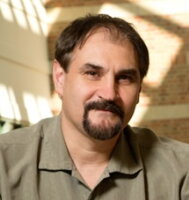
Nicolas Brunel is an Adjunct Professor of Neurobiology at Duke University , where he contributes to the Duke Institute for Brain Sciences (DIBS) and the Center for Cognitive Neuroscience. His research focuses on theoretical models of brain systems, particularly mechanisms of learning and memory at both synaptic and network levels. Education: Pierre and Marie Curie University (France) - Ph.D. in 1993 His work spans neuroscience and computational biology , examining synaptic plasticity, cortical circuits, dendritic nonlinearities, and inhibition stabilization. Using methods from statistical physics, he has shown how network connectivity can reproduce experimentally observed features. Recent publications demonstrate expertise in diverse neuroscience domains, including cortical and cerebellar circuits, memory mechanisms, and neural network modeling. His research has received significant recognition, including the Prime d'excellence scientifique from the National CNRS in 2011. Grants: NIH - Cortical circuit dynamics (2019-2024) NIH - Striatal microcircuits in habit formation (2018-2023) University of Chicago - Multiscale cortical dynamics (2017-2023)
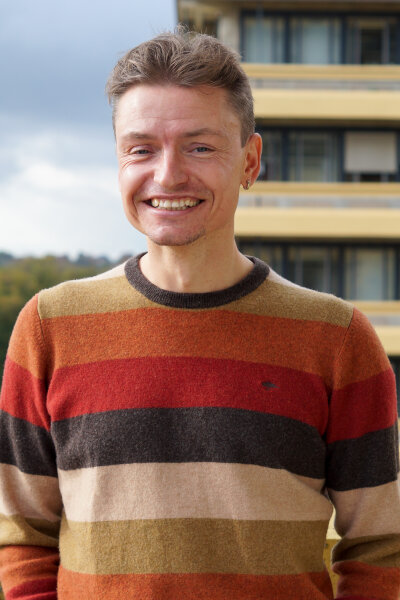
Dr. Thomas Stephan serves as a Researcher at the Department of Neurology, Ludwig Maximilian University of Munich (LMU), working as a Scientist at the German Center for Vertigo and Balance Disorders within Munich University Hospital. He is part of Prof. Dieterich's experimental neurology research group, focusing on advanced neuroimaging techniques and vestibular system analysis. His institutional affiliation places him within one of the world's top 20 neurology clinics as recognized by Newsweek's 2025 ranking. Stephan's research centers on functional neuroimaging, visual-vestibular and visual-auditory interactions, multisensory processing, and specialized statistical analysis of neuroimaging data. His work bridges clinical neuroscience and sensorimotor research, investigating how the brain integrates sensory inputs for spatial orientation and balance. Key areas include vestibular pathway mapping, neural plasticity in response to vestibular loss, and age-related changes in vestibular-cortical networks. His methodologies heavily utilize fMRI, DTI, and galvanic vestibular stimulation to explore fundamental neural mechanisms. Analysis of his publication record (2002-2016) reveals consistent focus on vestibular neuroscience with evolving technical sophistication. Early work established foundational understanding of cerebellar activation during eye movements and methodological artifacts in fMRI, while later research expanded into network-level analysis of vestibular processing, aging effects, and cross-modal sensory integration. His contributions demonstrate progression from basic vestibular physiology to complex systems neuroscience, with particular emphasis on the thalamocortical vestibular network and its interactions with visual and auditory systems. He operates within LMU's Neurological Clinic and Polyclinic, which integrates 350+ professionals across Großhadern and city center campuses. The department's research infrastructure supports his work through the German Center for Vertigo and Balance Disorders and experimental neurology facilities, enabling translational research from basic mechanisms to clinical applications in balance disorders.
Virginia L. Flanagin serves as an Associate Professor (außerordentlich) at Ludwig Maximilian University of Munich's Graduate School of Systemic Neurosciences (GSN) and leads a research group at the German Center for Vertigo and Balance Disorders (DSGZ). Her work integrates computational modeling with cognitive neuroscience to investigate spatial navigation and perception mechanisms. Research Focus: Specializing in Behavioral & Cognitive Neuroscience , she examines how sensory-motor information converts into cognitive spatial maps, emphasizing the vestibular system and hippocampus. Her methodology combines functional MRI, virtual reality, and psychophysics to explore sociocultural influences on spatial behavior, with secondary focus on Theoretical Neuroscience applications. Publication Trends: Her 15 publications (2005-2021) reveal progression from basic motion detection (fly studies) to complex human navigation research. Recent work incorporates deep learning (e.g., DeepVOG for eye tracking) and investigates neural plasticity in response to vestibular loss and specialized training like slacklining. Mentorship: She has guided nine students including: Phillip Graeff Eva Fraedrich (co-mentored) Nadine Hummel Magdalena Wutte Josephine Henke Theresa Raiser Christopher Roppelt Judita Huber Uma Navare Her research group likely operates through institutional funding at DSGZ. Research Environment: Based at DSGZ within LMU Klinikum, her team operates in a multidisciplinary hub integrating neurology, otolaryngology, and neuroscience to advance balance disorder research through clinical-basic science collaborations.
Paul C.J. Taylor is a Research group leader and Associate Senior Researcher at Ludwig-Maximilians-Universität München, affiliated with the Faculty of Philosophy, Philosophy of Science and the Study of Religion. His work is centered on cognitive neuroscience, particularly using combined brain stimulation and recording techniques such as TMS-EEG and tACS-EEG. He is also a regular member of the Munich Center for Neurosciences (MCN) and a former member of the Graduate School of Neuroscience (GSN). Research Interests: His research investigates the neural mechanisms underlying perception, action, attention, and conscious awareness. He employs advanced neuroimaging and neuromodulation tools in both lab and mobile settings, with a growing interest in real-world cognitive neuroscience. Key areas include spatial orientation, self-motion, working memory, and individual differences in cognitive processing. The recent publications highlight a strong trend in using non-invasive brain stimulation (TMS, tACS, rTMS) combined with EEG to explore cortical dynamics during perceptual and cognitive tasks. The work spans clinical and basic neuroscience, often involving patient populations with vestibular or spatial deficits. Topics include lateralization of brain activity, oculomotor control, and neural dissociations during navigation. Scientific Awards: No awards mentioned in the text. Advising and Grants: Dr. Taylor has supervised several doctoral students to completion, including Dr. Francesca Bocca, Dr. Angela Mastropasqua, and Dr. Lina Willacker. While no specific grants are listed, his research output suggests active funding in cognitive and clinical neuroscience. His role as a research group leader implies leadership in project design and team management. Labs and Teams: He leads a research group focused on brain stimulation and mobile neuroscience. He is part of the Munich neuroscience community through MCN and previously GSN, indicating strong collaborative networks in the region.
Mark Edwards is an Associate Professor in Psychology at the Australian National University's School of Medicine and Psychology. His academic career spans over two decades, with a focus on visual cognition, attentional control, and cognitive empathy. Edwards holds a PhD in Psychology from the University of Melbourne, a Psychology degree from ANU, and a Mechanical Engineering degree from the University of Queensland. Edwards' educational background is uniquely interdisciplinary, beginning with a Mechanical Engineering degree from the University of Queensland (1982-1985), followed by a Psychology degree at ANU (1987-1990), and culminating in a PhD in visual psychophysics from the University of Melbourne (1991-1995). After seven years of research at NTT Basic Research Laboratories in Japan and the School of Optometry at the University of California at Berkeley, he returned to ANU in 2001 to take up a faculty position. Edwards' research primarily focuses on visual cognition and attentional control. His work investigates how the human visual system processes information, with particular emphasis on motion processing, face recognition, and stereopsis. He explores how various visual pathways interact at different levels in the brain, including situations where the visual system misinterprets combinations of features, such as in synesthesia. More recently, his research has expanded to examine the implications of attentional control in everyday functioning, particularly in driving contexts, and how it varies across different populations including those with psychopathic traits. Analysis of Edwards' recent publications (2023-2024) reveals a strong focus on individual differences in cognitive processes. His work examines how attentional breadth, working memory, and emotional processing vary across individuals and impact real-world performance. Key themes include the relationship between psychopathic traits and visual attention, cognitive failures in trait anxiety, emotion-induced blindness, and the development of tools like the Cognitive Failures Questionnaire 2.0 to measure subjective cognitive experiences. 2019-2021: Australian Research Council Discovery Grant ($390,000) 2011-2015: Australian Research Council Discovery Grant ($582,074) 2009-2014: Australian Research Council Discovery Grant ($475,000) 2006-2011: Australian Research Council Centre of Excellence in Vision ($10,000,000) Edwards has served as Principal Investigator or Co-Investigator on numerous research projects, including "Investigating cognitive predictors of crash risk in provisional drivers" and "Using a scientific understanding of human cognition to reduce crash risk in older adult drivers." His research has practical applications in understanding and improving driver safety, particularly for vulnerable populations.
Florin Dolcos is a Professor in the Department of Psychology, Neuroscience Program, and Beckman Institute for Advanced Science and Technology at the University of Illinois at Urbana-Champaign. His research focuses on the neural mechanisms of emotion-cognition interactions , combining fMRI and ERP with behavioral and psychophysiological assessments in both healthy and clinical populations. Key interests include individual differences related to age, sex, and personality, as well as emotion regulation and its implications for mood and anxiety disorders. Research Themes : Basic research on emotion's enhancing/impairing effects on cognition Translational research linking neural circuitry to individual differences Emotion-cognition interactions in aging and clinical cohorts Methods : fMRI, ERP, and eye-tracking Psychophysiological measures (e.g., electrodermal responses) Recent publications highlight work on trimodal brain imaging , sex differences in emotional resilience , and opposing effects of arousal on memory binding . His lab collaborates extensively with Duke University's Center for Cognitive Neuroscience and Yale University's Department of Psychology through mentorship networks. Scientific Honors : Laird Cermak Award (Memory Disorders Research Society) Young Investigator Award (NARSAD) NSERC Post-Doctoral Fellowship CPRF Award Advising includes mentoring PhD students like Paul Bogdan (emotion-cognition interactions) and Yuta Katsumi (neural mechanisms of emotional processing). The lab also trains Master's students and postdocs through the D Lab , with former trainees progressing to academic and clinical roles.
Dr. Kyung Hun Jung is a faculty member at Kennesaw State University, affiliated with the Department of Psychology. He teaches courses including Cognitive Psychology, Engineering Psychology, Experimental Design, and Research Methods and Statistics. Ph.D. in Experimental Psychology (University of New Mexico, 2013) M.S. in Experimental Psychology (Korea University, 2006) B.A. in Psychology (Korea University, 2004) His research spans cognitive psychology, human factors, and ergonomics, with recent work focusing on automated vehicle interaction and driver training using moving-base driving simulators and virtual-reality headsets. Earlier research includes studies on attentional mechanisms, facial attractiveness, color perception, and document similarity analysis. Recent publications highlight applications of human factors in transportation technology and usability engineering. Data and code from his studies are publicly shared for replication purposes.
Ellen Peters is the Philip H. Knight Chair and Professor at the University of Oregon, with joint appointments in the School of Journalism and Communication (SOJC) and the Department of Psychology. She directs the Center for Science Communication Research and serves as an associate in the Phil and Penny Knight Campus for Accelerating Scientific Impact. Her research focuses on how numeracy and affect influence decision-making in health, financial, and environmental contexts, particularly across adult aging. Education: PhD and MS in Judgment and Decision Making (University of Oregon); Dual BS in Economics (Wharton School) and Systems Engineering (University of Pennsylvania) Her work bridges basic and translational research, examining how evidence-based communication can improve public understanding of science and technology. She has contributed to climate change health communication, cancer screening policies, and financial decision-making frameworks. Recent publications emphasize climate change health impacts, numeric self-efficacy, and pandemic-related statistical understanding. She holds interdisciplinary affiliations with UO’s Cancer Control Center, federal agencies like the National Cancer Institute, and the Lancet Countdown U.S. Brief Working Group. Scientific Honors: AAAS Fellow, NIH Merit Award (CASPHR Working Group), Jane Beattie Scientific Recognition Award, APA/APS/SESP Fellowships She leads the CAIDe Lab and has advised policy groups including the FDA’s Risk Communication Advisory Committee. Her book Innumeracy in the Wild (Oxford, 2020) explores the societal consequences of numeric misunderstanding.
James Michael Lampinen is a Distinguished Professor and Chair in the Department of Psychology at the University of Arkansas, within the College of Arts and Sciences. He is a leading researcher in memory and face perception, with a strong focus on forensic applications of cognitive psychology. Education: Postdoctoral Fellow, Binghamton University, 1996–1998 Ph.D., Northwestern University, 1996 B.S., Elmhurst College, 1991 His research spans both basic and applied aspects of human memory. He investigates the subjective experience of true and false memories—particularly 'phantom recollections'—and memory editing strategies used to avoid false memories, especially in children. His applied work centers on eyewitness identification, forensic facial recognition, and prospective person memory, including the ability to spot individuals one is on the lookout for, such as missing persons or fugitives. He has also contributed to research on forensic age progression. His recent publications show a consistent focus on eyewitness accuracy under various conditions (lighting, distance, expectations), lineup procedures, ROC analysis, and developmental aspects of memory monitoring. His work bridges cognitive theory with real-world legal and law enforcement applications. Scientific Awards and Honors: Distinguished Professor of Psychological Science, University of Arkansas Master Researcher, Fulbright College of Arts and Sciences Certified Law Enforcement Instructor - State of Arkansas TEDx Talk – Hendrix College Best of CLE, Eyewitness Identification, Arkansas Bar Association Visiting Scholar, University of Chicago Featured Speaker, Memory Development Pre-Conference, Society for Research in Child Development Sixth Annual Goldsmith Speaker in Psychology, Elmhurst College Keynote Speaker, Multi-disciplinary Conference on Human Memory, University of Arkansas at Little Rock Outstanding Mentor, University of Arkansas Lampinen serves as Managing Editor of Psychology, Crime and Law and is a member of the editorial board of Memory Research Activity . He mentors graduate students and teaches courses such as Statistics, Cognitive Psychology, Perception, and Advanced Research. His lab is actively engaged in improving eyewitness procedures and understanding the cognitive limits of human memory in legal contexts. He is affiliated with a research lab focused on experimental psychology and forensic applications, contributing to both theoretical advances and practical reforms in eyewitness science. His ongoing work includes refining lineup procedures, understanding memory development, and enhancing forensic identification accuracy.
Michelle M. Ramey is an Assistant Professor in the Department of Psychology at the University of Arkansas, within the College of Arts & Sciences. She leads the MEM Lab (Memory, Eyetracking, and Methods Laboratory) and is actively recruiting graduate students. Her research focuses on episodic memory, particularly its interactions with semantic knowledge, visual attention, and aging, using eyetracking and computational modeling. Her research interests center on understanding the cognitive mechanisms underlying episodic memory. She investigates how schema knowledge influences memory, especially in older adults, and how visual attention and eye movements reflect memory processes. She develops novel cognitive tasks to probe both conscious and unconscious memory, with a strong methodological emphasis on eyetracking and modeling of behavioral data. Her work bridges cognitive psychology, neuroscience, and aging research. The most recent publications reveal a strong trend in examining memory through the lens of schema interactions, visual attention, and aging. Her work increasingly integrates computational approaches with eyetracking to dissect the contributions of familiarity, recollection, and semantic knowledge. There is a clear focus on both basic cognitive mechanisms and their application to real-world contexts like aging and dietary influences on cognition. NSF SPRF (Postdoctoral Research Fellowship) NIH F32 Postdoctoral Fellowship Dr. Ramey has received competitive funding from the NSF and NIH to investigate schema-memory interactions. She mentors graduate students in the MEM Lab and is currently accepting new PhD applicants. Her collaborative research network includes prominent scholars such as Andrew Yonelinas, John Henderson, Darya Zabelina, James Lampinen, and Grant Shields. She has served on the editorial board of the journal Cognition , reflecting her active engagement in the academic community. She directs the MEM Lab at the University of Arkansas, a research group dedicated to advancing methods and theory in human memory using eyetracking, behavioral experiments, and computational modeling. The lab investigates memory in both young and older adults, with a focus on real-world implications.
Dr. Roman Abel is a Postdoctoral Researcher at the Department of Educational Psychology, Ruhr University Bochum. He is part of the Institute of Educational Science within the Faculty of Philosophy and Educational Research. His academic career includes a Dr. phil. in Psychology from the University of Kassel (2021), an M.Sc. in Educational Psychology from the University of Hildesheim (2014), and dual B.A. degrees in Educational Science and Educational Psychology from Novgorod University and the University of Hildesheim (2009). Abel’s research focuses on desirable difficulties in learning , including the interleaving effect , generation effect , retrieval practice , and multilingual vocabulary acquisition . His work emphasizes cognitive processes during learning with expository texts and the optimization of instructional strategies. His recent publications explore synergies between generative learning and retrieval practice, metastrategic decision-making in interleaving strategies, and cognitive processes in mushroom foraging as a naturalistic learning context. His research also addresses bilingual vocabulary development and socio-economic factors influencing educational outcomes. Abel’s work bridges theoretical cognitive science with practical educational applications, aiming to improve learning efficiency through evidence-based interventions.
Martin Lövdén is a Professor at the Department of Psychology, University of Gothenburg, and serves as Assistant Head of Department. His primary research focuses on cognitive neuroscience, particularly learning, memory, and aging mechanisms. He explores how dopamine systems, neuroinflammation, and physical activity influence cognitive aging, aiming to improve interventions for successful aging. Research highlights include studies on dopamine D2 receptor availability's role in memory decline, interactions between inflammation and striatal function, and longitudinal brain-cognition relationships. His work often integrates neuroimaging, behavioral experiments, and population-level epidemiology. Lövdén leads the Lövden Lab within Life Lab, focusing on neuroplasticity and cognitive aging. His articles consistently analyze mechanisms linking brain structure/function to cognitive outcomes, with recent emphasis on early-life dementia risk factors and dopamine-neuroinflammation interactions. Key affiliations: Department of Psychology, Section of Neuro, Cognition and Developmental Psychology Primary lab: Lövden Lab (part of Life Lab) Research collaborations: Extensive international networks including Max Planck Institute for Human Development (Berlin) Publications span journals like Science , NeuroImage , and Nature Communications , with a focus on translational research bridging basic neuroscience and clinical applications.
Dr. Yannis Paloyelis is a Reader in Neuroscience and Psychology at King's College London, where he directs the BSc Neuroscience and Psychology program. His research focuses on the oxytocin system's role in brain function, particularly in pain perception, social cognition, and neuropsychiatric disorders like schizophrenia and eating disorders. He holds a PhD from King's College London (2010) and has contributed to over 50 peer-reviewed articles. His work emphasizes optimizing oxytocin administration methods and understanding its pharmacodynamics. Dr. Paloyelis has received the Glenn I. Hatton Memorial Award (2013) and leads projects funded by organizations such as the MRC and PARI GmbH. His academic roles include directing educational programs that bridge neuroscience and psychology disciplines. Key collaborations involve institutions like University College London and St George's Hospital. Research interests span translational neuroscience, neuroimaging, and clinical pharmacology, with a focus on mental health disorders. Notable studies include investigations into oxytocin's effects on brain connectivity in psychosis risk populations and its modulation of food-related behavior in eating disorders. His work bridges basic science and clinical applications, aiming to improve therapeutic strategies for neuropsychiatric conditions.