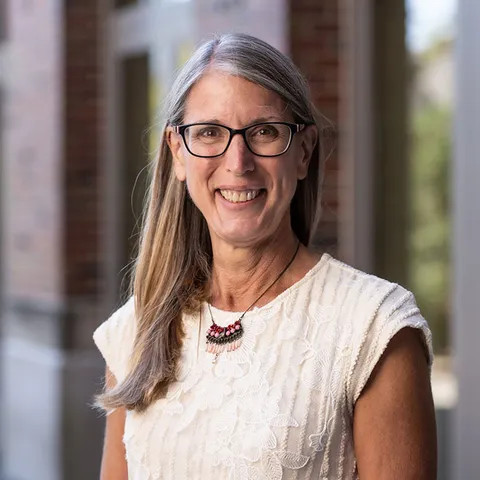
Henning Meyer is an Honorary Professor for Public Policy and Business at Eberhard Karls Universität Tübingen’s Institute of Political Science, part of the Faculty of Economics and Social Sciences. He concurrently serves as Director General and Head of the Minister's Office at the Saarland Ministry of Finance and Science. Previously, he held roles including Fellow at the German Ministry of Finance (Corona Task Force and Fiscal Policy Division), and was seconded to the German Federal Chancellor’s Office. Meyer’s academic affiliations include Research Associate roles at Cambridge University’s Centre for Business Research and Future World Fellow at IE University’s Governance of Change Centre. He has held visiting positions at London School of Economics, Harvard University, and Cornell University. Education: Studied Politics, Economics, and Business at Trier University, various London universities, and the University of Oxford. His research focuses on public policy, economic strategy, digital transformation’s societal impacts, and social democracy. Notable work addresses technological unemployment, EU governance reform, and the intersection of business and politics. Research outputs emphasize policy responses to digitalization, inequality, and globalization. Articles highlight challenges like populism, EU institutional reforms, and the need for adaptive social democratic frameworks in the digital age. Advising and grants are not explicitly detailed, but his policy roles suggest significant professional contributions. Active in the Comparative Public Policy Research Unit, his work bridges academia and public-sector policy-making.
Dr. Francis O'Toole is an Associate Professor of Economics at Trinity College Dublin. His research focuses on competition policy, regulation, taxation, and social welfare, with notable contributions to the analysis of public service broadcasting, universal basic income, and antitrust enforcement. He has authored or co-authored over 38 peer-reviewed publications and book chapters, often collaborating with institutions like Georgetown University and the Economic and Social Research Institute (ESRI). His academic career includes fellowships such as the John M.Olin Fellowship in Law and Economics (Georgetown University, 1991–1992) and a University Fellowship at Georgetown’s Graduate School (1988–1991). His work intersects economics, law, and public policy, addressing issues ranging from fiscal reform to the economic impact of voting systems. Key research themes include the regulatory dynamics of competition in non-internationally traded services, the distributive effects of taxation policies, and the valuation of public goods like broadcasting. His publications frequently engage with Irish and European policy contexts, offering insights into macroeconomic challenges and welfare design. Awards: John M.Olin Fellow, University Fellowship (Georgetown). Grants/Advising: No specific grants or advisee名单 listed.
Professor Sally Holland is a Professor of Social Work at Cardiff University's School of Social Sciences, where she also serves as Director of Equality, Diversity, and Inclusion. Her research focuses on child and family social work, children’s rights, and youth participation in policy-making. She leads the CASCADE Children’s Social Care Research and Development Centre, emphasizing staff wellbeing and development. From 2015–2022, she was Wales’ Children’s Commissioner. Current projects include evaluating the Welsh Government’s Basic Income Pilot for Care Leavers and a Horizon Europe-funded study (SERENA) on services for maltreated children in Wales, France, and Denmark. She teaches on the MA Social Work program and supervises postgraduate students. Her work spans policy evaluation, foster care dynamics, and legal reforms in child protection. Education: While specific academic qualifications are not detailed, her roles imply advanced degrees in Social Work or a related field. PhD in Social Work (implied) MSc in Social Policy (implied) Research Interests: Children’s rights and policy compliance Impact of foster care and care leavers’ transitions Public involvement in social work research Evaluation of social welfare interventions Recent Projects: Leading the Basic Income Pilot for Care Leavers evaluation SERENA study on cross-national child services Sure Start program impact assessment Grants & Awards: While no explicit awards are listed, her roles in high-profile evaluations (e.g., Welsh Government, Horizon Europe) reflect institutional recognition. Labs/Teams: CASCADE Research Centre SERENA International Collaboration Future Work: Expanding research on post-care support systems and refining child protection policies in Wales.
Erik Dietzenbacher is a Full Professor of Interindustry Economics at the University of Groningen's Faculty of Economics and Business. He specializes in input-output analysis, climate change, and regional economics. He holds honorary positions at institutions like the University of the Chinese Academy of Sciences and has been a visiting professor at Rutgers University and UIBE in Beijing. Education: MSc in Econometrics (1982) and PhD in Economics (1991) from the University of Groningen. His academic career spans over three decades, with leadership roles including Chair of the Board of Examiners at FEB and former President of the International Input-Output Association (2013-2018). Research focuses on global value chains, environmental impacts of trade, and structural decomposition analysis. He coordinates large projects like the WIOD (World Input-Output Database), funded by the EU. Notable awards include the Ricardo Torres Gaitán Chair (2023), Officer in the Order of Orange-Nassau (2021), and An Zijie International Trade Research Award (2014). Teaching contributions include pioneering courses on academic writing and research methodology. He has supervised 15 PhD students and developed modular courses on input-output analysis worldwide. His work bridges academia and policy, influencing EU trade and climate policies through frameworks like the FIGARO MRIO database. Leadership roles include Chair of the University Committee for Academic Practice and past Head of the Global Economics and Management department. His research extends to ecological economics and sustainability, with over 100 refereed articles and 15 books, reflecting a H-index of 30 (Web of Science) and 48 (Google Scholar).
Dr. Lindsay Tedds is an Associate Professor in the Department of Economics at the University of Calgary, holding a PhD from McMaster University. Her research focuses on tax policy, public economics, and policy design with a transdisciplinary lens integrating law, public administration, and intersectionality. She has advised government bodies like the Deputy PM’s Task Force for Women and the Economy and co-authored Basic Income and a Just Society (2023), recognized nationally. Her work emphasizes accessible policy engagement through media commentary, technical reports, and cross-sector partnerships. Educational Background: B.A. Political Science (Carleton University) B.A. and M.A. Economics (University of Victoria) Ph.D. Economics (McMaster University) Research Interests: Tax policy, public finance, basic income, gender-based analysis, municipal governance, and tax compliance. Her work bridges academic research with actionable policy solutions, particularly addressing inequality, urban policy challenges, and post-pandemic economic recovery. Key Contributions: Authored/co-authored over 60 publications, including peer-reviewed articles and policy reports. Notable works include analyses of short-term rental market regulation, pandemic impacts on Canadian women, and disability benefit design. She actively participates in expert panels and public discourse via media appearances, podcasts, and non-partisan testimony. Awards & Recognition: 2023: Purvis Prize Honorable Mention (RSA Canada report) 2022: Queen’s Platinum Jubilee Medal 2021: Faculty of Arts Award for Public Engagement Policy Impact: Collaborates with governments to shape tax reforms, income support programs, and gender-equitable policies. Current projects include property tax solutions for housing affordability and intersectional inequality analysis in tax redistribution. Labs/Teams: Engaged with the University of Calgary’s Human Dynamics in a Changing World initiative, focusing on policy innovation and societal resilience.
Dylan Bellisle is an Assistant Professor of Social Work at Dominican University, specializing in public policy impacts on family economic well-being. Previously, he served as a Postdoctoral Research Fellow at the University of Illinois' School of Labor and Employment Relations, focusing on marginalized communities' financial coping mechanisms. PhD in Social Work and Social Welfare from University of Chicago MSW from University of Illinois BA in Psychology from University of South Florida His research critically examines anti-poverty tax policies (EITC, CTC) and their misalignment with lived family realities, particularly for families of color. Key areas include: Structural racism in tax code design EITC/CTC eligibility frameworks Informal social support systems Neoliberal policy impacts on families Publications demonstrate consistent focus on cash transfer policy efficacy, intergenerational care networks, and racialized economic inequality. Teaching philosophy emphasizes critical thinking for social justice advocacy across policy domains.
Katharina Nieswandt serves as Professor of Philosophy at Concordia University and Director of the 'Society' stream at GRIN (Groupe de recherche sur la normativité), focusing on normative structures in social contexts. Her academic leadership spans teaching, research supervision, and editorial contributions to prominent philosophical discourse. Her educational trajectory includes: Postdoctoral Fellowship, Stanford University Center for Ethics in Society (2016) Ph.D. in Philosophy, University of Pittsburgh (2015) Magister Artium in Philosophy, Universität Trier (2009) Diplom in Psychology, Universität Trier (2008) Nieswandt's research synthesizes Meta-ethics, Political Theory, and Philosophy of the Social Sciences with specialized expertise in Hegelian frameworks and Anscombian ethics. She investigates foundational questions about personhood, government legitimacy, and social normativity, arguing in her 2025 monograph that governmental structures are constitutive of human personhood. Her work critically engages with virtue ethics, property rights, and the intersection of moral psychology with social institutions, revealing how normative frameworks shape individual agency and collective life. Analysis of her 15 most recent publications (2017-2025) reveals persistent engagement with three interconnected themes: (1) the metaethical foundations of normativity through Anscombe's lens, (2) political philosophy examining government's role in constituting social reality, and (3) empirical-philosophical investigations of gender dynamics in academia. Her scholarship demonstrates increasing interdisciplinary reach, connecting philosophical theory to contemporary issues like automation's impact on basic income and inverse gender gaps in philosophical engagement. Professor Nieswandt actively supervises Master's students in Concordia's Philosophy program and postdoctoral fellows through GRIN-funded positions. She teaches core courses including Introduction to Ethics and Philosophy of Human Rights, alongside specialized graduate seminars on Hegel's political philosophy, Anscombe's moral theory, and property rights. Her supervision emphasizes bridging theoretical rigor with real-world normative challenges. As Director of GRIN's 'Society' stream, she coordinates a research collective examining how normative frameworks emerge and function within social structures, fostering collaborations across philosophy, political science, and sociology to address contemporary challenges in democratic theory and social justice.
Professor Peter Sloman is a leading scholar in British politics at the Department of Politics and International Studies (POLIS) , University of Cambridge, and a Fellow of Churchill College. His work bridges political ideas, public policy, and electoral dynamics in modern Britain. Current research focuses on tax and spending politics in the UK and Westminster democracies Director of Postgraduate Education at POLIS (2023–2025) Co-editor of Universal Basic Income in Historical Perspective (Palgrave Macmillan, 2021) Research trends in his publications highlight the evolution of redistributive frameworks , from Keynesian-era liberalism to debates over Universal Credit and Universal Basic Income. His work traces how fiscal narratives shape electoral choices and policy legitimacy in Western democracies. Scientific awards include the Pilkington Prize for Teaching Excellence (2021), reflecting his commitment to pedagogy in political studies. He serves as Director of Studies for History and Politics students at Churchill College and contributes to the editorial team of Political Quarterly . As Director of Postgraduate Education at POLIS, Sloman oversees academic training while engaging in comparative studies of welfare systems , technocratic liberalism , and fiscal governance . His recent articles explore the ideological barriers to UBI , the legacy of postwar liberalism , and the interplay between resource extraction and climate policy .
Professor John Quiggin is a prominent Professor of Economics at the University of Queensland's School of Economics within the Faculty of Business, Economics and Law. He holds the position of Professorial Research Fellow and is affiliated with the Centre for Behavioural and Economic Science. With over 1500 publications including six books and more than 200 refereed journal articles, Quiggin is recognized both as a leading research economist and a significant commentator on Australian economic policy. His research spans multiple fields including decision theory, environmental economics, production economics, and economic growth theory. Quiggin's work has particularly focused on climate change economics, micro-economic reform, privatisation, employment policy, and management of the Murray-Darling river system. His influential books include Zombie Economics: How Dead Ideas Still Walk Among Us (translated into eight languages with over 20,000 copies sold) and Economics in Two Lessons: Why Markets Work so Well and Why They Can Fail So Badly (2019). Analysis of his recent publications reveals a strong focus on contemporary economic challenges including climate policy, income support systems, market dynamics, and critiques of neoliberal economic frameworks. His work demonstrates consistent engagement with both theoretical economic questions and practical policy applications, with increasing attention to climate change economics and alternative economic frameworks in recent years. Fellow of the Econometric Society Fellow of the Academy of the Social Sciences in Australia Distinguished Fellowship of the Economics Society of Australia Distinguished Fellowship of the American Agricultural Economics Society Distinguished Alumni awards from University of New England and Australian National University President of the Australian Agricultural and Resource Economics Society Professor Quiggin has supervised numerous PhD students across topics including energy transition, vehicle efficiency, trade models, and climate change impacts. His research has been supported by multiple Australian Research Council grants spanning economic complexity, black swan events, climate adaptation, and sustainable reform of water systems. He has served on the Boards of the Queensland Competition Authority and Climate Change Authority, demonstrating significant policy engagement. Quiggin maintains active public engagement through his influential economics blog, contributions to major international publications, and participation in the Crooked Timber group blog.
Dr. Inge van den Bijgaart is an Associate Professor at Utrecht University School of Economics, specializing in environmental economics with a focus on climate policy. She is affiliated with the Department of Economics within the Law, Economics and Governance faculty at Utrecht University. Her research examines the economic repercussions of climate policy, how policy design affects outcomes, economic justifications for climate policy choices, and appropriate policy mixes for different contexts. Her research interests span environmental economics, climate policy, green innovation, carbon taxation, sustainable development, industrial decarbonization, and firm heterogeneity. Van den Bijgaart has published extensively on climate policy for emission mitigation, green innovation, the economics of meat taxation, health considerations justifying higher fuel taxes, and green industrial policies for basic materials industries. Her recent work includes analyzing how adapting fuel taxes could benefit health by reducing diabetes, dementia, and depression risks, and examining whether wealthier households disproportionately benefit from fuel excise duty reductions. Her publications reveal a strong focus on policy-relevant economic analysis that bridges environmental concerns with economic efficiency and social equity. Key trends include examining consumption-based versus production-based emissions accounting, analyzing distributional effects of climate policies, and exploring the intersection of health and environmental benefits in policy design. NWO Vidi grant (2025-2030) to study firm heterogeneity and climate policy FORMAS grant (Swedish Research Council for Sustainable Development, Dnr: 2020-00174) for research on green industrial policies Van den Bijgaart actively engages with policy debates through media commentary in outlets like Trouw, Nu.nl, RTL News, and international platforms like the Potsdam Institute. She teaches courses on sustainable growth in Intermediate Macroeconomics, economics of climate change in the Climate and Society course, Advanced Macroeconomics for Research Masters, and Environmental Economics and Policy at the MSc level. Prior to joining Utrecht University, she served as an Assistant Professor at the University of Gothenburg, Sweden (2016-2021) and earned her PhD from Tilburg University in 2016.
Edith Littich is an Associate Professor at WU Vienna University of Economics and Business, specializing in Finance, Banking, and Insurance. Her career spans over three decades with significant contributions to nonprofit organization (NPO) financing, corporate governance, and financial education. Key research areas: NPO financial structures, gender differences in finance, agency costs, and corporate governance Prominent publications: Basics of Financing (7th ed.), studies on NPO funding sources, and gender-focused financial education research Collaborated extensively with experts like Geyer, Hanke, and Nettekoven on financial education materials Active in publishing through 2025 with accepted work on gender disparities in financial knowledge Email: edith.littich@wu.ac.at
Damon Jones is an Assistant Professor at the University of Chicago's Harris School of Public Policy, focusing on the intersection of economics and public policy. His research integrates Public Finance, Household Finance, and Behavioral Economics to analyze government taxation, household financial decisions, and deviations from traditional economic models. Education: B.A. in Public Policy from Stanford University (2003); Ph.D. in Economics from the University of California at Berkeley (2009) His work addresses critical topics such as income tax policy, social security, retirement savings, and employer-provided benefits' influence on labor markets. The Alaska Permanent Fund study explores universal cash transfers' labor effects, while the Social Security Earnings Test methodology investigates budget constraint impacts on extensive margin responses. Damon is a member of the Inequality: Measurement, Interpretation, and Policy (MIP) network, contributing to interdisciplinary research on economic disparities and policy design.
Kristin S. Seefeldt is an Associate Professor at the University of Michigan's School of Social Work, where she conducts research on poverty, economic well-being, and welfare policy. Her work focuses on how low-income individuals understand their situations, particularly around issues related to work and economic security. Dr. Seefeldt holds a PhD in Sociology and Public Policy (2010), an MPP in Public Policy (1996), and a BA in American Government (1990) from Georgetown University. Her academic journey has centered on understanding the intersection of social policy and economic mobility. Her primary research interests include poverty, economic well-being, financial coping strategies, recession impacts, recovery policies, and work-life balance. Dr. Seefeldt's work examines how various institutions that once fostered economic security and upward mobility now fail low and moderate income families, particularly families of color. She is currently conducting research on families' financial coping strategies and serves as Principal Investigator of a survey examining the effects of the recession and recovery policies on individuals' well-being. Dr. Seefeldt is the author of "Abandoned Families: Social Isolation in the 21st Century" (Russell Sage Foundation), which explores institutional failures affecting low-income families. She has also written "Working After Welfare" (W.E. Upjohn Institute Press), discussing employment and work-family balance challenges among former welfare recipients, and co-authored "America's Poor and the Great Recession" (Indiana University Press). Honorable Mention - 2018 Society for Social Work and Research Outstanding Social Work Book Award Dr. Seefeldt has secured significant research funding, including grants from the Lilly Endowment for a Financial Incentive Program and the John T. Gorman Foundation to evaluate Children's Savings Account Programs. She has also co-piloted a Summer Youth Employment Program with colleagues at the University of Michigan. Her recent activities include leading Ann Arbor's Guaranteed Basic Income Pilot Program (July 2023), presenting an Income Pilot Program to Ann Arbor City Council (June 2023), and being chosen for the U-M Boost Program (September 2023). She has been frequently cited in media outlets including NPR and WXYZ Detroit for her expertise on poverty, government aid, and food insecurity.
Sarah Gilmore is Professor of Organization Studies and Director of Research Impact at Cardiff Business School, Cardiff University. She also serves as Head of the Management, Employment and Organisation Department. With a distinguished career spanning over two decades, Professor Gilmore brings interdisciplinary expertise that bridges management studies, sport science, and psychoanalytic theory. Professor Gilmore's educational background includes a PhD in Business and Management from the University of Portsmouth (2001), an MSc in Theoretical Psychoanalytic Studies from University College London (2006), a Postgraduate Certificate in Teaching and Learning in Higher Education from the University of Portsmouth (2001), a Postgraduate Diploma in Personnel Management from the University of Portsmouth (1990), and a BA (Hons) in English and European Literature from the University of Essex (1982). Professor Gilmore's research makes significant contributions across three interconnected areas. First, her longitudinal ethnographic studies in elite sport examine the precariousness of sport science professionals, contributing to knowledge about emergent professions within management and organization studies. Second, she explores the emotional labor of sport scientists and the challenges this poses for their professional formation. Third, her work on organizational change and strategic HRM has provided models for how sports clubs can secure high performance outcomes through asset maximization, which has been adopted by several English Premier League and Championship clubs. Her secondary research stream employs psychoanalytical (object relations) theories to examine managerial work in fast-paced environments, particularly focusing on English football managers. This work has evolved to explore the materiality of leadership, collective leadership, and new understandings of socialization. These investigations build upon her earlier papers that used psychoanalytical theory to highlight the role of anxiety in professionally accredited environments. Professor Gilmore's extensive publication record demonstrates her influence across multiple disciplines. Her recent work shows a clear trajectory toward examining precarious work conditions, leadership pathologies (particularly vulnerable narcissism), gender dynamics in organizations, and the intersection of psychoanalytic theory with organizational studies. Her 2023-2025 publications reveal a growing focus on social justice issues, particularly around gender discrimination and resistance in organizational contexts. Best paper award for: Barker, J., Gilmore, S., & Gilson, C. (2013). Rhetorical profiling: Modes of meaning generation in organizational topoi. Canadian Journal of Administrative Science, 30(4), 280-291. Winner of EmeraldLiterati outstanding paper award (2008): Gilmore, S., & Williams, S. (2007). Conceptualizing the 'Personnel Professional': A Critical Analysis of the Chartered Institute of Personnel and Development's Professional Qualification Scheme. Personnel Review, 36(4), 398-414. Professor Gilmore actively supervises PhD students and serves as Series Editor for Dialogues in Critical Management Studies. She is also a valued member of editorial boards for several prestigious journals including Academy of Management Learning & Education, Canadian Journal of Administrative Science, Journal of Organizational Change Management, and Organization. Her commitment to academic service extends to her role as Representative at Large for the Academy of Management CMS Division (2012-2014 & 2015-2017). Professor Gilmore maintains strong connections with professional practice, having worked for not-for-profit organizations and one of the UK's largest public sector trade unions before entering academia. Her current research projects focus on Universal Basic Income impacts on the changing world of work and vulnerable narcissistic leadership, demonstrating her ongoing commitment to addressing contemporary organizational challenges.
Menno Pradhan is a Full Professor of Project and Program Evaluation for International Development at the Department of Economics , Vrije Universiteit Amsterdam (VU) and Universiteit van Amsterdam (UvA) . He has held this position since 2007. Additionally, he serves as a co-academic director of the Amsterdam Institute for International Development and a research fellow at the Tinbergen Institute . His research focuses on basic education, early childhood development, community empowerment, and health , employing empirical methods such as household surveys and impact evaluations. Teaching includes courses on International Trade and Development Economics (BSc) and Microeconomics for Development (MSc). He has supervised 5 PhD theses , though student names are not listed here. Professional Contributions include roles at the World Bank in Indonesia and Washington, and prior academic positions at Cornell University and the VU. He has led projects such as the Innovative Partnership for Universal Sustainable Health and contributed to policy research via datasets like the Health Insurance in Kenya study (2019-2021). Awards & Grants : Received the MFS II Evaluations at Country Level - Indonesia grant (2012). Research Themes : Over 100 publications span topics like education quality, health equity, and poverty measurement. Recent work addresses pandemic impacts, digital health interventions, and rural infrastructure effects.