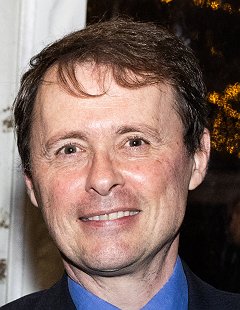
Kadir Can BURÇAK is a full-time Lecturer at the Information Systems and Technologies department within the School of Engineering at Kirsehir Ahi Evran University . His work focuses on Computer Science and Engineering , particularly in the domains of image processing and artificial intelligence. Education : Not explicitly detailed in the provided data. Professional Experience : Lecturer (2015–present), Director of Research and Application Center (2015–present). Research Interests revolve around Artificial Intelligence , Image Processing , and Data Mining , with a strong emphasis on applying deep learning techniques to medical imaging tasks, particularly breast cancer diagnosis. His work explores convolutional neural networks , feature selection algorithms , and optimization methods for improving diagnostic accuracy. Recent Publications highlight his expertise in integrating deep learning with hybrid models for medical imaging analysis, including studies on histopathological image classification and gradient descent optimization in breast cancer detection. His book on ASP.NET Core 3+ demonstrates his technical contributions to software development. Citation Metrics : Google Scholar: 97 citations, h-index 2 UNIS Metrics: 49 citations, h-index 2 WoS: 2 broadcasting, h-index 2
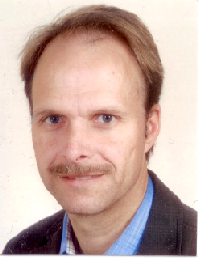
Michel Vedel Howard is an Associate Professor at Aarhus University's Department of Electrical and Computer Engineering within the College of Engineering. He specializes in software development across multiple programming languages including C++, C#, Kotlin, and Java, with expertise in both backend and frontend systems. His work also intersects with mathematics and physics applications. Contact: Email: michel.howard@ece.au.dk Address: Helsingforsgade 10, 8200 Aarhus N, Denmark
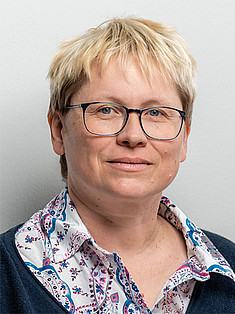
FH-Prof. DI Brigitte Jellinek, MSc is a Senior Lecturer and Head of the Academic Area Web & Mobile at Fachhochschule Salzburg GmbH, Department of Creative Technologies. Based at Campus Urstein (Room Urstein-321), she specializes in web development technologies including JavaScript, Ruby on Rails, PostgreSQL, Git, Test Driven Development, and databases. Teaching: Web programming 1 (IL), Backend Development (IL), Multimedia project 2 (PT), Multimediaprojekt 3: Pre-Production (PT), Applied Programming Paradigms (IL), Project 1: Concept & Pitch (PT), Rapid Prototyping (UB), Web Performance Optimisation (IL)
Stepan Yuriyovych Skrupsky is an Associate Professor at the Department of Computer Systems and Networks, Faculty of Computer Science and Technology, Zaporizhzhya National Technical University (ZNTU). He graduated with honors in 2010 as a Master in Computer Systems and Networks and defended his PhD thesis on "Models and methods of video information compression in distributed computer systems" in 2013 at the Institute of Modeling Problems in Energy. His research focuses on parallel and distributed computing , neural networks , video compression , and artificial intelligence systems . He teaches disciplines such as Computer Architecture, Mobile Application Architecture, and Cloud Technologies. Education : Master in Computer Systems and Networks, ZNTU (2010) PhD Thesis : "Models and methods of video information compression in distributed computer systems" (2013) His scientific works explore parallel computing architectures for AI applications, including neuro-fuzzy models , Internet of Things infrastructure , and rule extraction methods . Publications span topics like big data reduction , medical diagnostics , and software-defined networks . He uses computational intelligence and stochastic optimization for distributed system design. Key trends in his research include parallelization of AI algorithms , resource-efficient distributed systems , and cross-domain applications from medicine to IoT. His articles appear in venues such as Radio Electronics, Computer Science, Control and Automatic Control and Computer Sciences .
Bernhard Markus Hämmerli is a Professor at the Department of Information Security and Communication Technology, Norwegian University of Science and Technology (NTNU). His work focuses on cybersecurity for critical infrastructures , particularly in smart grid systems , operational technology resilience , and policy frameworks . Research Interests: Cybersecurity, Critical Infrastructure Protection, Smart Grid Security, Operational Technology Resilience, Privacy in Information Systems, EU Policy Analysis. Contact: bernhard.hammerli@ntnu.no Recent Publications explore cybersecurity challenges in smart grids, OT-IT integration, and regulatory compliance across countries like China, France, Russia, UK, and USA. His work bridges technical solutions with policy implications. Teaching: Leads courses such as IMT4115 - Introduction to Information Security Management.
Dr. Ewan Barr serves as a Group Leader in the COMPACT Research Group at the Max Planck Institute for Radio Astronomy in Bonn, Germany. His research focuses on the intersection of radio astronomy instrumentation and backend software development, with affiliations in both electronics and computational systems. His work addresses technical challenges in observational astrophysics through engineering solutions. His fields of interest include: Radio Astronomy Electronics Engineering Backend Software Development Instrumentation Signal Processing Computational Astrophysics Contact: ebarr@mpifr-bonn.mpg.de
Prof. Dr. Bernd Klein is a Professor at the University of Applied Sciences Bonn-Rhein-Sieg (H-BRS) and Head of the Department of Digital Signal Processing and Submillimeter Technology at the Max Planck Institute for Radio Astronomy (MPIfR) . He serves as Project Manager for the APEX Telescope in Chile and Co-PI for the GREAT Receiver on NASA/ESA's SOFIA Observatory. 1989–1993: Diplom (FH) in Electrical Engineering, FH Gießen-Friedberg 1993–1996: Supplemental Studies in General Electrical Engineering, University of Siegen 1999–2004: Doctoral Researcher, MPIfR 2005: PhD in Astronomy, University of Bonn His research focuses on digital signal processing , THz/spectrometer development , and radio astronomical instrumentation . He pioneered high-resolution Fast Fourier Transform Spectrometers (FFTS) for telescopes like Effelsberg, APEX, SOFIA, and MeerKAT, with applications in submillimeter astronomy and space debris analysis . Key trends in his 15 most recent publications span terahertz heterodyne systems , quantum cascade laser phase-locking , stellar feedback mechanisms , and atomic oxygen detection in planetary atmospheres. His work bridges instrumentation development and observational astrophysics . 2018 : THz Science and Technology Best Paper Award, IEEE Microwave Theory and Techniques Society He leads instrumentation projects for radio telescopes and contributes to large-scale collaborations like the SFB 1601 (2023–present) on digital signal processing. His technical expertise includes field-programmable gate arrays (FPGAs) , heterogeneous computing architectures , and machine learning for astronomical data .
Dr. Karol Chlasta serves as an Assistant Professor in the Faculty of Management in Networked and Digital Societies at Kozminski University in Warsaw. He earned his doctoral degree in engineering and technical sciences from the Polish-Japanese Academy of Information Technology in 2023, defending his dissertation "Neural Simulation Pipeline for Liquid State Machines" with distinction (summa cum laude). His academic journey includes a Master's degree in Economic Computer Science from the University of Economics in Krakow (2008) and postgraduate studies in Business Analytics at Warsaw University of Technology (2015). Dr. Chlasta's research spans artificial intelligence, particularly neural networks and machine learning, human-computer interaction, and information management. His recent publications demonstrate expertise in AI applications for mental health screening through eye-tracking and speech analysis, sentiment analysis of social media data for migration studies, and innovative virtual reality interaction techniques. He has published consistently from 2020-2024 across multiple high-impact venues, with his work appearing in journals like Frontiers in Psychology, European Psychiatry, and Telematics and Informatics Reports, as well as conferences including ACM DIS and IEEE VR. His scientific contributions form several interconnected research threads: AI-based diagnostic systems for depression, anxiety, and dementia through biometric analysis Computational neuroscience tools including the Neural Simulation Pipeline deployable in cloud environments Sentiment analysis of social media data to understand migrant experiences during the pandemic Novel interaction techniques like VXSlate for virtual reality environments Dr. Chlasta has received notable recognition including the Scholarship of the Minister of National Education and Sport (2006) and the "Outstanding Leader" award from Aviva's global CIO (2017). His interdisciplinary approach bridges technical AI expertise with practical applications in healthcare, migration studies, and human-computer interaction. With over fifteen years of industry experience at major organizations including HP, IBM, and Aviva, Dr. Chlasta brings substantial real-world perspective to his academic work. Since 2022, he has served as Head of Technicus Poland, where he established and manages the Polish branch while developing the company's global IT and cybersecurity functions. He is also a certified specialist across multiple enterprise technologies and a member of several professional organizations including ACM and IEEE. His research approach integrates academic rigor with practical problem-solving, focusing on developing tools that address real-world challenges in mental health screening, migration support, and virtual interaction environments.
Michael Norrish is an Associate Professor at the School of Computing, Australian National University (ANU) , specializing in formal methods, programming language semantics, and interactive theorem proving. His career spans roles at NICTA, Data61, and ANU, with a focus on mechanised mathematics and verified systems. PhD in Computer Science (University of Cambridge, 1999) Undergraduate degree from Victoria University of Wellington His research bridges interactive theorem-proving (ITP) systems like HOL4 with real-world systems verification, particularly in programming languages and compilers. He leads the CakeML project, developing a verified compiler for functional languages. His work intersects formal verification with practical system design, including projects on reproducibility debt in scientific software and verified processors. Recent publications highlight verified compilation techniques, reproducibility challenges, and Kolmogorov complexity formalization. He actively participates in conference program committees (e.g., CPP, PLDI) and promotes trustworthy systems development through tools like HOL4. Current affiliations: ANU, CakeML Project, Trustworthy Systems Research Group (UNSW) Collaborations: Chalmers University (postdoc opportunities), seL4 microkernel ecosystem
Thorsten Riemke-Gurzki is a fulltime Professor for Web Technology, Corporate Portals & Usability at Stuttgart Media University in Stuttgart, Germany, where he has been working since 2008. Prior to his academic career, he worked as a freelance and employed consultant for various companies including SAP Germany. He describes himself as having 'grown up with hardware, CP/M, mailbox systems' and being 'web addicted since 1991,' positioning himself as both a frontend and backend developer and a 'web technology evangelist.' Professor Riemke-Gurzki's research interests span a comprehensive range of web technologies: Frontend and backend web development HTML, CSS, JavaScript and modern frameworks (React, React Native, Vue.js) Server-side technologies including Node.js, Go, Docker, and database systems Microservices architectures and single page applications Web 3D/AR, AI applications for the web, and Internet of Things User experience, usability, and content management systems His recent publications demonstrate a strong focus on practical web development techniques, covering topics from CSS fundamentals to advanced server implementation in Go and exploration of emerging technologies like JavaScript-based microcontrollers. His work bridges academic research with practical industry applications through his website riemke.dev where he shares technical articles and hosts a podcast on web development topics. Professor Riemke-Gurzki maintains an active presence in both academic and developer communities, with educational materials on GitHub and engagement with industry technologies like the Daimler UXLab truck. His approach emphasizes hands-on learning and practical application of web technologies.