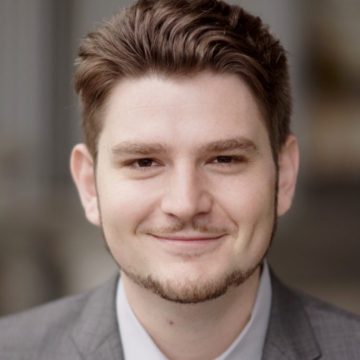
Sebastian F. Ruf is an Experiential AI Postdoctoral Fellow in the Sustainability and Data Sciences Lab at Northeastern University. He holds a PhD in Electrical Engineering from Georgia Institute of Technology, where he specialized in networked dynamical systems. His research focuses on complex systems across multiple disciplines, including neuroscience, climate modeling, and control theory. Current work emphasizes developing climate models to empower stakeholder-driven action against climate change, while past projects explored brain network dynamics in depression and traumatic brain injury. His technical expertise spans complex networks, machine learning, and dynamical systems analysis. Notable research areas include seizure classification using multimodal data fusion, functional connectivity in neurological disorders, and stability analysis of resource consumption networks. His interdisciplinary approach integrates tools from mathematics, engineering, and data science to address real-world challenges. Publications highlight contributions to brain modeling for control systems, sustainable resource networks, and viral adoption dynamics in social networks. While no formal awards or grants are listed, his work demonstrates innovative applications of systems theory to biomedical and environmental domains. Current affiliations include direct involvement with Northeastern's sustainability initiatives and data science collaboratives.
Roles & Affiliations: Martin Kolb is a Professor (W3) at Paderborn University's Institute of Mathematics (Applied Mathematics and Stochastics group leader). He previously held roles including Professor (W2) at Paderborn (2014–2017), Lecturer at University of Reading (2012–2014), and Harrison Early Career Professor at Warwick University (2011–2012). Education: PhD in Mathematics from TU Kaiserslautern (2009), Diploma in Mathematics from Ludwig-Maximilians-University Munich (2005). Studied at University of Copenhagen (2002–2003). Research Interests: Focuses on stochastic processes, probability theory, and mathematical physics. Key topics include quasi-stationary distributions, Fleming-Viot models, spectral asymptotics, and applications in quantum computing (e.g., Photonic Quantum Computing project). His work bridges theoretical mathematics with computational methods and physical systems. Scientific Engagement: Organized major events like the Weierstrass-Lecture series (since 2019) featuring Fields medalists and co-organized workshops such as the Oberwolfach Workshop on Stochastic Processes (2020). Active in conference committees for topics like 'Stochastic Processes under Constraints' (2016). Labs/Teams: Leads research projects including 'PhoQC: Photonic Quantum Computing' and 'Super-Brownian Motion with single point source'.
Dr. Xiaojuan Qi is an Assistant Professor in the Department of Electrical and Electronic Engineering at The University of Hong Kong. Her research focuses on 3D vision, deep learning, and AI applications in medical imaging and science. She holds memberships in IEEE and CCF. Education: PhD, The Chinese University of Hong Kong (2018) BEng, Shanghai Jiao Tong University (2014) Postdoctoral Researcher, University of Oxford (prior to HKU) Research Interests: Dr. Qi develops scalable deep learning algorithms for medical and natural image analysis, 3D scene understanding, and neural network behavior in out-of-distribution scenarios. Her work emphasizes label efficiency, geometric reasoning, and cross-modal integration. Lab Contributions: As head of the Computer Vision and Machine Intelligence Lab (CVMI Lab), she explores open-world intelligence, 3D reconstruction, and AI applications in robotics, autonomous systems, and healthcare. Recent lab highlights include 10+ ICCV/CVPR/NeurIPS papers in 2023-2025. Awards: ImageNet Semantic Parsing Challenge (1st Place) Outstanding Reviewer Awards (ICCV 2017/2019) CVPR Doctoral Consortium Travel Award Advising & Grants: Supervises ~20 PhD students (listed in detail). Active in securing grants for embodied AI, medical imaging, and edge computing hardware. Lab Collaborations: Focuses on interdisciplinary projects with Intel, Oxford, and Toronto groups, emphasizing 3D vision, neuromorphic computing, and AI-driven medical solutions.
Tommy Cheung is a Senior Lecturer and Department Chair in the Department of Aviation, School of Engineering at Swinburne University of Technology, Australia. His research focuses on aviation network development, global airport connectivity, blockchain applications in air travel, and data-driven route planning. He holds a PhD in Computer Engineering from the University of New South Wales, Sydney, and has prior academic experience at Hang Seng University of Hong Kong and the Hong Kong University of Science and Technology. PhD in Computer Engineering, University of New South Wales, Sydney, Australia Former Assistant Professor, Hang Seng University of Hong Kong (2014–2018) Former academic, HKUST, Department of Electrical and Electronic Engineering 12+ years in advanced manufacturing and supply chain management in Hong Kong and Shenzhen Dr. Cheung's research interests span aviation network resilience, airport connectivity indices, smart technologies in air travel, and sustainable aviation. He investigates how global disruptions like pandemics and geopolitical conflicts affect air transport systems. His work integrates machine learning, Bayesian modeling, and spatial econometrics to analyze aviation networks and optimize operations. His recent publications reveal a strong trend in applying data analytics and AI to aviation policy, route planning, and service quality. Topics include flight delay forecasting, blockchain integration, self-connection optimization, and pilot remuneration. His work often involves large-scale datasets and interdisciplinary methods, contributing significantly to air transport policy and network modeling. Dr. Cheung has secured industry research funding, including a major grant from Textron Systems Australia for the Regional AAM Surrogate Trial. He actively supervises PhD and Master’s students on topics such as hydrogen in aviation, pilot fatigue monitoring, and advanced air mobility. His leadership extends to curriculum and departmental strategy as Chair of Aviation. He is involved in several research teams and collaborations, particularly in intelligent transportation systems and aviation innovation. His lab and project work integrate UAVs, IoT, and AI for infrastructure-less environments, contributing to next-generation mobility solutions.
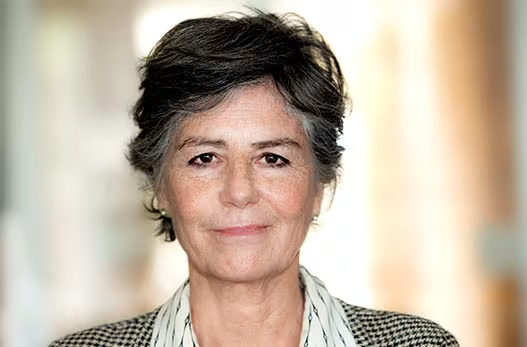
Lucrezia Reichlin is a Professor of Economics at the London Business School and an external fellow at Bruegel (Brussels-based think tank). She chairs the Group of National Schools of Economics and Statistics (GENES) in Paris. Her expertise spans macroeconomics, econometrics, monetary policy, and now-casting (real-time forecasting). She co-founded Now-Casting Limited in 2011 and served as Director General of Research at the European Central Bank from 2005 to 2008. Her accolades include Fellow of the British Academy , Fellow of the Econometric Society , and Trustee of the IFRS Foundation , where she led the creation of the International Sustainability Standards Board . Academic Honors Fellow, British Academy Fellow, Econometric Society Honorary International Fellow, American Economic Association Distinguished Fellow, CEPR Leadership Roles Chair, GENES Trustee, IFRS Foundation Co-founder, Now-Casting Limited Research Focus Dynamic factor models Bayesian vector autoregressions Monetary policy during crises Her work on large-dimensional data and now-casting has influenced central banking practices, particularly in analyzing inflation dynamics and monetary-bank behavior interactions .
Angus Chadwick is a Lecturer in Computational Neuroscience and Artificial Intelligence at the Institute for Adaptive and Neural Computation, School of Informatics, University of Edinburgh. He leads a research group focused on understanding neural circuit computations underlying perception and cognition, combining mathematical modeling, machine learning, and analysis of large-scale neural recordings. His research interests include: Neural dynamics in learning and attention Representation of space in hippocampus and entorhinal cortex Visuo-spatial processing in the brain Development of normative and mechanistic models of neural computation His recent publications demonstrate a strong focus on understanding how cortical and hippocampal circuits adapt during learning and attention, using dynamical systems theory and multivariate statistical modeling. His work bridges experimental neuroscience with artificial intelligence, particularly in modeling neural representations and their transformations during cognitive tasks. Scientific contributions and recognition: Published in top journals including Neuron , Nature Neuroscience , and eLife Co-senior author on high-impact studies in hippocampal coding Equal contribution author on seminal work in cortical interneuron dynamics He actively supervises PhD and Masters students and supports postdoctoral grant applications. His group is involved in international collaborations and develops open-source code. He teaches courses in computational and cognitive neuroscience and organizes training programs for graduate students in neuroinformatics.
Alexey Onatskiy is a Professor of Econometrics at the Faculty of Economics, University of Cambridge , and serves as Theme Coordinator at the Janeway Institute. He also directs the MPhil in Data Science program. His research focuses on econometrics, statistics, factor models, and large random matrices. PhD, Harvard University (2001) Formerly at Columbia University (2001–2010) Current affiliation at Cambridge since 2010 Research Interests encompass high-dimensional statistical inference, factor models, and applications of random matrix theory to econometrics. His work addresses challenges in cointegration, unit root testing, and spectral analysis of large datasets. Article Trends include methodological advancements in factor model validation, asymptotic theory for high-dimensional time series, and spectral distribution analysis. Key themes are econometric theory, statistical robustness, and computational economics. Advising roles include supervision of PhD students Yinfeng Zeng, Christian Tien, and Radu Cristea, with research topics spanning causal inference, factor models, and policy analysis. Collaborations include affiliation with the Janeway Institute and Churchill College.
Prof. Dr. Gernot Müller is a Full Professor of Computational Statistics and Data Analysis at the University of Augsburg since 2013. Previously, he held academic positions at the University of Oldenburg (2013), TU Munich (2006-2013), and Australian National University (2002-2006). His research spans Artificial Intelligence , Bayesian Statistics , Computational Econometrics , and Medical Statistics , with particular focus on energy economics and biostatistical applications . PhD: Technische Universität München (2004) Habilitation: Technische Universität München (2010) Bachelor's: Julius-Maximilians-Universität Würzburg (2000) His research interests include: Bayesian hierarchical modeling for energy markets Stochastic volatility models in financial time series Machine learning applications in medical imaging Epidemiological analysis of pandemic impacts Statistical modeling of renewable energy integration Deep learning for cancer prognosis Recent publications (2024-2025) address: Electricity price forecasting with renewable energy integration Cryptocurrency market dynamics via stable processes Medical imaging analysis for wound healing Lymphocyte subset modeling in cancer patients Neurosurgical outcome assessment tools Stochastic models for photovoltaic power generation Scientific memberships include: Sigma Xi - The Scientific Research Honor Society (2022) International Statistical Institute (ISI) Bernoulli Society German University Association (DHV) He also contributes to public science communication through lectures on data science, climate change, and forensic statistics. His technical expertise covers generalized linear models, machine learning methods, and stochastic energy market modeling.
Andrew Jalil is an Associate Professor in the Department of Economics at Occidental College, with a Ph.D. from UC Berkeley and undergraduate degrees from Brown University. His research bridges macroeconomic history and food policy, focusing on financial crises, monetary/fiscal policy, and sustainable dietary shifts. A.B. and Sc.B., Brown University Ph.D., UC Berkeley His macroeconomic history work examines Germany's anti-inflationary policies, U.S. banking panics, and Great Depression-era monetary interventions. In food policy, he investigates climate-awareness campaigns and meat consumption reduction. Jalil teaches courses on monetary policy, fiscal policy, and macroeconomic theory, emphasizing historical context and contemporary applications. Jalil's publications span financial bubbles, tax/spending multipliers, and behavioral interventions. His work on banking panics during the Great Depression highlights the effectiveness of monetary interventions, while his food policy research demonstrates cost-effective strategies for sustainable consumption. Media coverage includes outlets like The Market Monetarist and Phys.org .
John Hunter is a Senior Lecturer in the Department of Economics and Finance at Brunel University. Holding a PhD in Econometrics from the London School of Economics, he has an extensive academic career spanning institutions including Liverpool University, Birkbeck College, LSE, Southampton, Queen Mary College, and Surrey. His research focuses on arbitrage in financial markets, exchange rate modeling, non-stationary time series analysis, and regulatory econometrics. His scholarly work explores: Cointegrating exogeneity and market efficiency Consumption-based asset pricing models Corporate failure prediction Nonlinear adjustment in financial markets Identification of rational expectations models Policy modeling with time series analysis Recent publications analyze emerging market volatility, gasoline price dynamics, and econometric modeling of financial systems. He has served as an editor for Quantitative and Qualitative Analysis in the Social Sciences and external examiner at Durham University and David Game College. Research grants include: Modelling Non-Stationary Economic Time Series (2009-2012) Consumption-Based Asset Pricing Models (2008-2013) Equilibrium Price Targetting (2007-2011) Supervising PhD candidates since 2009, his advisees have completed work on topics spanning: Gulf State financial markets Exchange rate dynamics Corporate investment behavior Institutional development in finance UK stock performance analysis
Dr Anamaria Diana Sova is a Lecturer in Economics at the Department of Economics and Finance, College of Business, Arts and Social Sciences, Brunel University London. Her research focuses on international trade, financial development, environmental economics, and panel econometrics, with a regional emphasis on Europe and emerging economies. PhD in Economics, Université Paris1-Panthéon Sorbonne, France MSc in Economics, Université Paris1-Panthéon Sorbonne, France Her research interests include International Trade and Competitiveness , Environmental Economics , Financial Development , and Panel Econometrics . She applies advanced econometric methods to study trade dynamics, financial integration, and policy impacts on economic growth, particularly in the context of European integration and developing economies. The most recent publications highlight trends in analyzing the effects of global shocks—especially the COVID-19 pandemic—on European trade patterns using dynamic panel models and sectoral data. Her work frequently explores the interplay between trade openness, financial development, and economic growth, often employing threshold and asymmetric adjustment models to capture nonlinearities in economic behavior. Dr Sova has received research funding from the British Academy for her project The impact of the Covid-19 pandemic on trade flows and pattern: evidence from Europe (October 2021 – September 2022). While no formal scientific awards are listed, her consistent publication record in high-quality journals reflects scholarly recognition. Co-investigator: Trade flows and the pandemic: evidence from Europe Funded by: British Academy Duration: October 2021 – September 2022 She contributes to academic collaboration through her co-author network, prominently with Prof. Guglielmo Maria Caporale, and maintains an active research profile via her ORCID (0000-0003-3410-6543). Though specific students are not named, she supports graduate research within her domain. She teaches undergraduate modules including Foundations of Economics (AF1601) and Further Econometrics (EC3608) .
Dr. Alexander M. Tahk is Associate Professor of Political Science at the University of Wisconsin–Madison, with additional affiliations as Faculty Affiliate at the University of Wisconsin Law School and Honorary Fellow at the Institute for Legal Studies. He serves as Director of the Tommy G. Thompson Center on Public Leadership and participates in various university committees including the Faculty Senate. Ph.D., Political Science, Stanford University (2010) M.S., Statistics, Stanford University (2006) S.B., Mathematics and Political Science, MIT (2002) His research focuses on political methodology, statistical modeling of roll-call votes and judicial citations, and applications of machine learning to public health policy. Key contributions include developing the MONOCAR model for handling complex time-series data in political science, particularly polling and events data. Selected scientific contributions include the 2002 MIT award for outstanding undergraduate political science thesis He has advised numerous PhD students in political science including Sarah Bouchat, Marc Ratkovic, Chris Krewson, and Zachary Barnett-Howell, many of whom now hold positions at prestigious institutions like Princeton, Yale, and Pew Research Center. Dr. Tahk created several R packages including npideal for nonparametric ideal-point estimation bucky for social science data analysis CARMAgeddon for continuous-time autoregression modeling pscl for Bayesian analysis of roll-call data
Rui Wu is an Associate Professor in the Department of Computer Science at East Carolina University , where she has taught since August 2018. Her academic background includes a Ph.D. and Master's in Computer Science and Engineering from the University of Nevada, Reno, and a Bachelor's in Computer Science from Jilin University (2013). Academic Appointments East Carolina University (2018–present): Teaching courses in Discrete Structures, Machine Learning, Data Mining, and Web Application development University of Nevada, Reno (2018): Co-teaching GPU Parallel Computing Her research focuses on Machine Learning , Data Mining , and Big Data Visualization , particularly in environmental science and medical applications. She specializes in Virtual Reality (VR)/Augmented Reality (AR) visualization , model accuracy improvement , and interdisciplinary applications of machine learning. Her publications (2012–2025) demonstrate expertise in multivariate time series forecasting (GRU networks, Transformer models), VR/AR systems for education and medical visualization, and data preprocessing techniques. Key trends include environmental modeling, health data analysis, and GPU-accelerated computational frameworks. Current research grants include: 2022–2025 : Collaborative Research: IUSE Grant ($295,916 total, $320,214 from UNR, ECU lead) for personalized robotics education 2021–2023 : NIH Grant ($377,500) on brain activation during cognitive tasks 2020–2022 : NC Sea Grant ($179,437) for stormwater flooding mitigation 2019–2020 : CARERC Pilot Funding ($15,000) on COPD worker health risks 2018–2022 : NSF IUSE Grants ($2M total) for robotics education and geoscience VR field experiences She has developed tools like vFirelib for GPU-accelerated fire simulation and VR-AET for evaluating virtual reality learning experiences. Her work bridges computer science with geoscience, healthcare, and robotics education.
Linda Zhao is a Professor of Statistics and Data Science at the Wharton School of the University of Pennsylvania. She has been a faculty member at Wharton since 1994, bringing extensive expertise in statistical methodology and data science applications. Her work bridges theoretical statistics with practical applications across diverse domains including business, healthcare, and public policy. Linda Zhao obtained her BS degree from the Mathematics department of Nankai University, China, followed by a Ph.D. in Mathematics/Statistics from Cornell University. After completing her doctoral studies, she taught at UCLA for one year before joining the Wharton School in 1994. BS in Mathematics, Nankai University, China Ph.D. in Mathematics/Statistics, Cornell University One year teaching position at UCLA Professor Zhao's research spans a broad range of statistical methodology and applications. Her primary interests include statistical machine learning, data-driven decision-making, bandits, reinforcement learning, crowdsourcing, post-selection inference, network analysis, nonparametric Bayes, revenue management, equity ownership, and education in data science. She is particularly known for her work on statistical inference after model selection and applications of statistical methods to business and economic problems. Current ongoing projects focus on equity networks, inference for high-dimensional data, data with measurement errors, and post-model selection inferences. Her research often involves collaborations across disciplines, addressing complex real-world problems with sophisticated statistical approaches. Professor Zhao's publications demonstrate a consistent focus on advancing statistical methodology while addressing practical applications. Her early work focused on theoretical aspects of nonparametric statistics and Bayesian methods, while more recent publications emphasize post-selection inference, statistical learning, and applications to business and economic problems. A notable trend is her increasing focus on high-dimensional data analysis and network structures, particularly in the context of Chinese state ownership and equity networks. Her collaborative work, often with prominent statisticians like Lawrence Brown, Richard Berk, and Andreas Buja, has significantly contributed to the development of valid post-selection inference methods. Additionally, her applied work spans diverse areas including call center analysis, medical diagnosis, and reinforcement learning applications. Professor Zhao's contributions to statistics and data science have been recognized with several prestigious honors: Wharton MBA Teaching Excellence Award, 2021 Fellow, Institute of Mathematical Statistics, 2017 While specific details about Professor Zhao's advising and grant history aren't explicitly provided in the text, her extensive publication record suggests significant mentorship of graduate students and postdoctoral researchers. Her involvement in multiple collaborative research projects indicates successful grant funding from various sources to support her research agenda. Professor Zhao's teaching portfolio includes advanced courses in data mining and statistical methodology, suggesting she plays an important role in training the next generation of data scientists. Though specific laboratory affiliations aren't mentioned in the provided text, Professor Zhao appears to be actively involved in multiple research collaborations. Her work on Chinese equity networks suggests collaboration with economists and business researchers, while her statistical methodology work involves collaborations with leading theoretical statisticians. She may be affiliated with research centers at Wharton focused on data science and business analytics.
Hairong Song is a faculty member in the Department of Psychology at the University of Oklahoma , affiliated with the Dodge Family College of Arts and Sciences . Their research focuses on advanced quantitative methods, including intensive longitudinal data analysis, dynamical systems, and psychometric evaluation using Frequentist and Bayesian approaches. Current substantive work examines substance use and mental health outcomes across developmental stages from childhood to adulthood. Dr. Song is actively seeking graduate students for the 2025-2026 academic year. Key trends in their publications reflect expertise in statistical modeling (e.g., dynamic factor models, VAR, Bayesian SEM) measurement invariance and psychometric validation substance use dynamics and public health applications machine learning approaches to treatment prediction Contact: hsong@ou.edu , Office: Dale Hall Tower 815C.