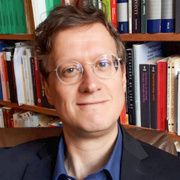
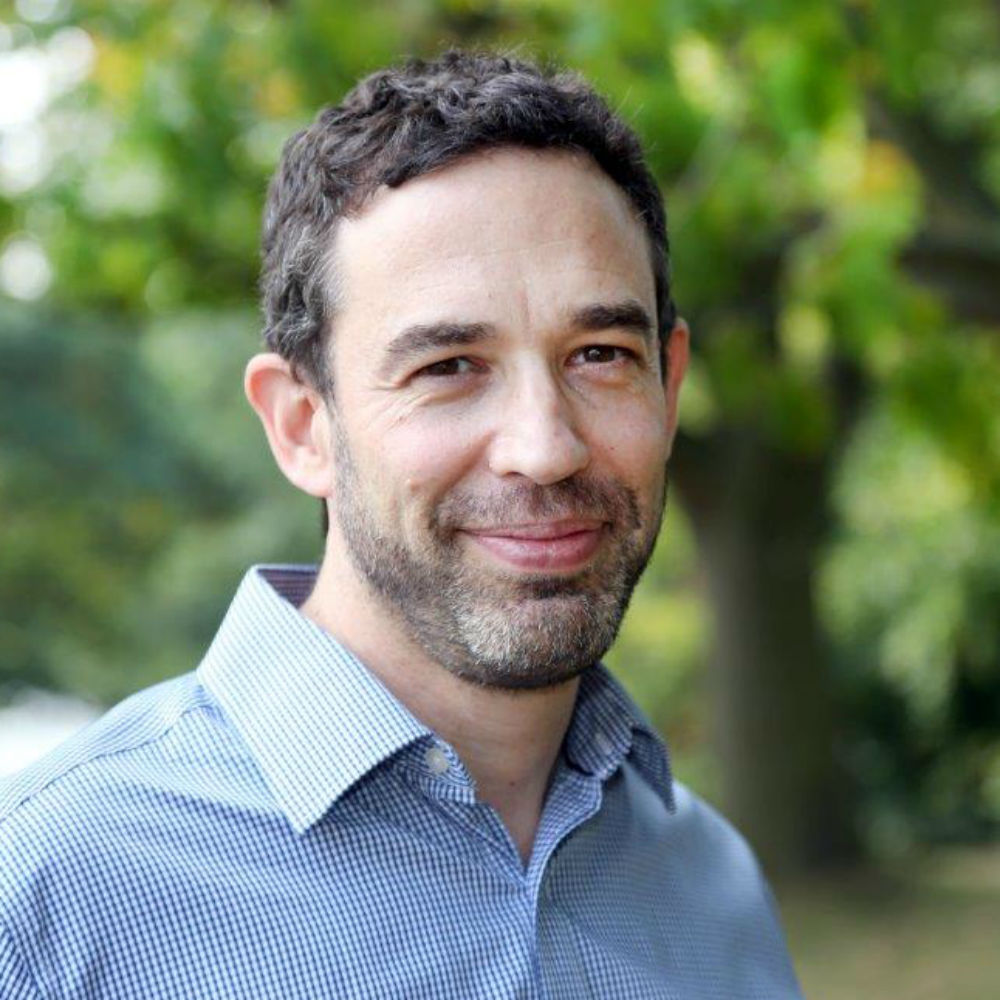
Dr Rod Thornton is a Senior Lecturer in Russian Defence and Security Studies at King’s College London, affiliated with the Defence Studies Department and School of Security Studies. He specializes in the Russian military's kinetic and sub-threshold warfare, with a focus on cyber capabilities, space warfare, and UK homeland resilience. His research includes recent British Academy-funded work on UK civil defense capacity during the pandemic, advocating for dedicated civil defense organizations. He has published extensively on Russian military tactics in Ukraine, AI-cyber integration, and space-based deterrence. Russian military cyber operations Space warfare dynamics UK resilience capacity gaps Scientific awards include a British Academy grant (2020). His students focus on asymmetric warfare, AI, cyber, and regional security issues. He teaches at the UK Defence Academy and has collaborated with institutions in Finland, South Korea, and the Freeman Air and Space Institute.
Dr. Herb Lin is the Hank J. Holland Fellow in Cyber Policy and Security at the Hoover Institution and Senior Research Scholar for Cyber Policy and Security at the Center for International Security and Cooperation (CISAC), both at Stanford University. He also serves as Chief Scientist, Emeritus for the Computer Science and Telecommunications Board of the National Academies, where he worked from 1990 to 2014, and as Adjunct Senior Research Scholar and Senior Fellow in Cybersecurity at Columbia University's Saltzman Institute for War and Peace Studies. Dr. Lin received his doctorate in physics from MIT, providing him with a strong technical foundation that informs his policy work at the intersection of technology and national security. His academic background bridges the gap between deep technical understanding and policy application in the cybersecurity domain. Dr. Lin's research focuses on the policy dimensions of cybersecurity and cyberspace, with particular emphasis on offensive cyber operations as instruments of national policy, information warfare, and influence operations affecting national security. His work addresses critical challenges at the intersection of emerging technologies like artificial intelligence, quantum computing, and their implications for nuclear security, election integrity, and democratic processes. He has been instrumental in analyzing how cyber capabilities are transforming traditional security paradigms and how policy frameworks must adapt to these changes. His extensive publication record reveals a consistent focus on the evolving relationship between cyber capabilities and national security strategy. Lin's work demonstrates increasing attention to the implications of artificial intelligence for warfare, the vulnerabilities created by quantum computing for current cryptographic systems, and the growing threat of cyber-enabled information warfare to democratic institutions. His research trajectory shows a progression from traditional cybersecurity issues toward the broader implications of digital technologies for national and international security. Member of Science and Security Board of Bulletin of the Atomic Scientists Served on President Obama's Commission on Enhancing National Cybersecurity (2016) Regular congressional testimony on cybersecurity matters Contributor to Stanford Emerging Technology Review As a mentor and collaborator, Dr. Lin works extensively with policymakers, military officials, and technology experts to translate complex cybersecurity concepts into actionable policy recommendations. His approach emphasizes practical solutions to emerging threats while recognizing the technical limitations and policy constraints that shape real-world security outcomes. Dr. Lin is associated with multiple research initiatives including Stanford's Center for International Security and Cooperation and the Stanford Emerging Technology Review, which aim to connect technological advances with policy considerations for national security decision-makers.
Professor Beatrice Heuser is a distinguished academic in the Department of Politics within the School of Social & Political Sciences at the University of Glasgow. Her career spans multiple prestigious institutions across Europe, including King's College London, University of Reading, and visiting professorships at Sciences Po Paris, Bundeswehr University Munich, and MGIMO. She maintains significant affiliations with major strategic research institutes including Chatham House, RUSI, IFRI, and IRSEM. Education: BA from Bedford College London, MA from LSE, DPhil from Oxford (St Antony's/St John's), Habilitation from University of Marburg Professional Experience: Former Director of Studies at German Bundeswehr's military history research office, NATO Headquarters consultant, and extensive teaching across European institutions Her research centers on strategic studies with particular focus on the cultural dimensions of warfare, nuclear strategy, and the historical evolution of strategic thought. Key research areas include strategic culture, military exercises as political instruments, laws of war development, and European defense policy. Her work bridges historical analysis with contemporary security challenges, examining how cultural narratives shape strategic decision-making from antiquity to the nuclear age. Professor Heuser's recent publications demonstrate consistent scholarly output across strategic theory, military history, and contemporary security issues. Her work shows particular emphasis on the conceptual foundations of strategic culture, historical analysis of warfare evolution, and practical applications to modern security challenges including nuclear deterrence and asymmetric warfare. The interdisciplinary nature of her research connects political theory, historical analysis, and security studies. She actively supervises graduate students in strategic theory, nuclear strategy, insurgency studies, and defense policy-making within NATO/EU contexts. Her teaching portfolio includes War and International Relations, Defense Policy, and Strategic Theory courses.
Prof. Dr. Oliver Müller is a Professor at the Department of Philosophy, University of Freiburg, and serves as Vice Dean of the Faculty of Philosophy. His academic journey includes a doctorate from Humboldt University Berlin (2005) and a habilitation in Philosophy (2012). Müller leads research on Philosophical Anthropology, Philosophy of Technology, and Ethics, with a focus on human-machine interactions and Anthropocene ethics. He supervises doctoral and postdoctoral researchers across projects like livMatS and BrainLinks-BrainTools. Research interests span neuroethics, transhumanism, and socio-technological systems, emphasizing ethical frameworks for emerging technologies. Publications explore AI ethics, drone warfare, and phenomenological embodiment, reflecting interdisciplinary engagement with neuroscience and environmental philosophy. Honors include the MTZ Bioethics Award and Heisenberg Fellowship. Müller directs participatory discourse initiatives bridging art and science, fostering public engagement with technological ethics. His work advances critical dialogues on human enhancement and ecological responsibility in the digital age.
Jonathan P. Wong is a Senior Policy Researcher at the RAND Corporation and Professor of Policy Analysis at the RAND School of Public Policy. His work bridges academic research and defense policy, focusing on military strategy, acquisition, force planning, and the integration of emerging technologies into military operations. Education: Ph.D. and M.Phil. in Policy Analysis (Pardee RAND Graduate School), M.A. in Security Studies (Georgetown University), B.A. in Political Science (UC San Diego) Professional Experience: U.S. Marine Corps infantry officer (2001–2011), Consultant at Boston Consulting Group, current RAND researcher and professor Wong’s research interests center on defense innovation, military logistics, artificial intelligence in warfare, space capabilities, and the human dimension of military operations. He has led studies on human-machine teaming, non-lethal weapons, defense acquisition reform, and U.S. military posture in the Indo-Pacific. His work emphasizes practical, policy-relevant insights grounded in operational experience. The trends in his recent publications reveal a deep engagement with modern defense challenges: integrating commercial technologies into military systems, improving acquisition agility, enhancing battlefield awareness, and ensuring that defense innovation serves warfighter needs. His research spans strategic, operational, and tactical levels, often focusing on the U.S. Army and Marine Corps. Wong has not received public recognition in the form of listed awards in the provided texts, but his leadership in congressionally mandated studies and high-impact policy research suggests significant influence in defense circles. Advising & Grants: Co-led major projects such as the Long Range Precision Fires study and research on integrating women into Marine Corps infantry. His work is frequently funded by the Department of Defense and other federal entities, though specific grant details are not listed. Wong is affiliated with RAND’s defense and national security research teams, contributing to strategic analysis and policy development. He is not associated with a formal lab but works within RAND’s collaborative research environment, often partnering with other veterans and defense experts to produce actionable insights for military leaders and policymakers.
Kamal Sarabandi is the Rufus S. Teesdale and Fawwaz T. Ulaby Distinguished University Professor of Electrical Engineering and Computer Science at the University of Michigan. He leads the Radiation Laboratory, renowned for research in applied electromagnetics, radar remote sensing, and antenna technology. His academic rank is Professor, and he holds affiliations with the College of Engineering. His research spans radar systems for environmental monitoring (e.g., soil moisture, snowpack), automotive radar for autonomous vehicles, metamaterials for antenna miniaturization, and security applications like concealed weapons detection. He has advised over 60 PhD students, many of whom hold academic or industry leadership roles globally. Awards and Recognition: National Academy of Engineering member, IEEE Picard Medal, Humboldt Award, Ellis Island Medal of Honor, and Stephen S. Attwood Award. His work bridges fundamental science with practical innovations, including NASA collaborations and military/defense applications. Labs and Teams: Directs the Radiation Laboratory, a hub for applied electromagnetics and radar innovation. Collaborates with industry (e.g., Qualcomm, SAIC) and government agencies (NASA, Army Research Lab) on projects like the COMBAT center for autonomous systems. Education: Earned his PhD in Electrical Engineering from the University of Michigan (1989). Alumni of his lab include professors at UW-Madison, Purdue, and international institutions.
Carol R Kuntz serves as an Adjunct Professor in the Science, Technology and International Affairs (STIA) program at Georgetown University, teaching courses on artificial intelligence policy implications. She concurrently holds an adjunct fellowship at the Center for Strategic and International Studies (CSIS) in the Strategic Technologies Program. With over 30 years of U.S. Department of Defense experience, she specializes in adapting national security frameworks to technological disruptions. Her academic credentials include: Ph.D. in Political Science from the Massachusetts Institute of Technology MPA from Princeton University B.A. with Honors from Cornell University Dr. Kuntz's research bridges defense strategy and emerging technologies, focusing on AI governance in military contexts and biotechnological threats. Her work analyzes autonomous weapons ethics, genome editing risks, and WMD defense systems through interdisciplinary lenses spanning computer science, political theory, and public health policy. Recent publications examine AI integration in warfare and genome manipulation governance, revealing consistent themes of proactive policy design for technological existential risks. These studies highlight her strategic approach to anticipating security vulnerabilities before crises emerge. Her accolades include: Secretary of Defense Medal for Meritorious Civilian Service (awarded twice) Dr. Kuntz's government leadership encompassed directing Project Bioshield and the Domestic Nuclear Detection Office, demonstrating extensive grant management and interagency coordination expertise. Her academic mentorship leverages decades of high-stakes policy implementation experience. At CSIS, she contributes to strategic technology assessments while maintaining active academic roles. Her career trajectory—from Cold War defense planning to AI policy—exemplifies continuous adaptation to evolving security paradigms through institutional collaboration.
Anthony King is a Professor of War Studies (Security and Defence) at the University of Exeter and Director of the Strategy and Security Institute (SSI), established in 2010. He leads SSI’s flagship MA in Applied Strategy, focusing on practical strategy training through simulations and fieldwork. His research bridges sociology and anthropology, emphasizing social transformation in military and civilian contexts. He holds a Leverhulme Major Research Fellowship (2021–24) and has secured five ESRC grants. Education: BA Archaeology & Anthropology (University of Cambridge), MA Political Science (University of Michigan, 1991), PhD Sociology (University of Salford, 1995). Academic roles include Professor of Sociology at Liverpool University (1997–2006), Professor of War Studies at the University of Warwick (2016–2023), and return to Exeter in 2023. Research Focus: Military sociology, AI in warfare, urban conflict, command structures, gender in armed forces, and counter-insurgency. Recent work includes Urban Warfare in the Twenty-First Century (2025) and AI, Automation, and War (2025). Media Engagement: Regular contributor to BBC Radio, The Times, and The Economist, with over 100 media appearances since 2022 on issues like Ukraine and AI’s military implications. Advisory Roles: Advised NATO, British Army, and Royal Marines. Conducted audits on military culture post-Atherton Report. Currently recruiting PhD students in military sociology, security studies, and AI/military decision-making. Labs/Teams: Director of SSI, leading research on AI, security, and military-tech complexes. Collaborates with defense institutions globally.
Professor Noam Lubell is a leading academic in International Law of Armed Conflict at the University of Essex, where he also serves as Director of the Essex Armed Conflict and Crisis Hub (since 2017). He previously held the Swiss Chair of International Humanitarian Law at The Geneva Academy (2013–2019) and was Head of the Law School at Essex (2014–2017). His roles include Rapporteur of the International Law Association's Committee on the Use of Force (2010–2018) and Senior Research Fellow at Johns Hopkins University Applied Physics Laboratory (US), focusing on legal aspects of new military technologies. Lubell has collaborated with the ICRC on IHL investigations and works extensively with governments, UN bodies, and NGOs on issues like occupation law, self-defense, and autonomous weapons systems. Education: Ph.D. in Law LL.M. B.A. in Philosophy Research Interests: International Humanitarian Law (IHL) Human Rights Law in Armed Conflict Legal Frameworks for Use of Force Cyber Warfare and Emerging Technologies Occupation Law and Transnational Conflicts Accountability Mechanisms for Violations of IHL His work analyzes modern warfare challenges, including the application of proportionality, fragmented conflicts, and the impact of AI and cyber capabilities on legal boundaries. He advocates for ethical and lawful military practices while engaging with interdisciplinary topics like neuroscience in warfare. Publications highlight trends in cyber warfare, autonomous systems, and IHL's evolving role in contemporary conflicts. His research bridges traditional legal principles with modern technological and strategic realities, emphasizing accountability and human rights protections. Scientific Awards: None explicitly listed, though his work has received widespread academic and professional recognition. Advising & Grants: Principal Investigator on a project addressing cumulative civilian harm and proportionality (2024–present) Co-led ICRC partnership producing IHL investigation guidelines (2013–2019) Consultancies with military, governments, and media organizations Member of expert groups on occupation law, autonomous weapons, and battlefield scope No formal advisees (PhD/Master’s students) are listed in the provided texts. Labs & Teams: Essex Armed Conflict and Crisis Hub Johns Hopkins University Applied Physics Laboratory (Senior Research Fellow) International Law Amicus Curiae Clinic (Co-Director at Concord Research Centre)
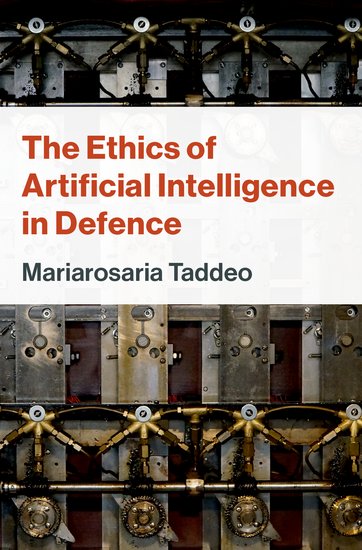
Mariarosaria Taddeo is Professor of Digital Ethics and Defence Technologies at the Oxford Internet Institute (University of Oxford) , where she also serves as DPhil Programme Director for Information, Communication and the Social Sciences. She is a Senior Research Fellow at the Alan Turing Institute and holds advisory roles at institutions including the Ministry of Defence (UK) Ethics Advisory Panel , the BRAID Programme , and the Leonardo Foundation . Education PhD (Doctor Europeus) in Philosophy from University of Padua Mariarosaria Taddeo’s research spans Digital Ethics, Philosophy of Technology, Cybersecurity Ethics, and AI Governance , with a focus on national defence applications. Her work addresses trust in AI , cyber conflict regulation , and ethical frameworks for autonomous weapons . She has published extensively in journals like Nature , Science , and Minds and Machines , including studies on data philanthropy , digital well-being , and quantum technology ethics . Scientific Awards 2010 Simon Award for Outstanding Research in Computing and Philosophy 2016 World Technology Award for Ethics 2018 InspiringFifty: Top 50 Italian women in technology ORBIT listings (2018, 2020) of top 100 women in AI Ethics 2020 Women’s Forum for Economy and Society: Outstanding Rising Talents ComputerWeekly Top 100 Influential Women in UK Technology (2020, 2023) Her projects include the UK MOD-funded AI Ethics Principles initiative, the NATO Cooperative Cyber Defence Centre of Excellence ethical guidance project, and contributions to the PETRAS IoT Research Hub . She advocates for ethical AI implementation in defence and digital governance, influencing EU policy through the CEPS Task Force on AI and Cybersecurity .
Abraham L. Newman is a Professor at the Edmund A. Walsh School of Foreign Service and the Government Department at Georgetown University, where he also serves as Director of the BMW Center for German and European Studies. His work bridges political science, international relations, and global regulatory studies, with a focus on the intersection of economic interdependence and political power. PhD in Political Science – University of California, Berkeley MA in Political Science – University of California, Berkeley MA in International Relations – Stanford University BA in International Relations – Stanford University His research centers on globalization, data privacy, financial regulation, and weaponized interdependence . He investigates how transnational networks, particularly in finance and digital infrastructure, are leveraged for geopolitical advantage. His work emphasizes the evolving role of private actors, regulatory institutions, and technological change in shaping international order. Analysis of his recent publications reveals a strong focus on economic statecraft, digital sovereignty, AI governance, and transatlantic regulatory dynamics . Themes such as financial sanctions, data privacy enforcement, and the weaponization of global networks recur across his scholarship, reflecting a cohesive research agenda on power in an interconnected world. While no specific scientific awards are listed in the provided text, his publications in top journals like Science , Nature , International Organization , and World Politics indicate significant scholarly recognition. He has advised or collaborated on major research projects related to transnational regulation, GDPR implementation, and global financial governance . Although no specific grants are listed, his leadership of the BMW Center suggests involvement in externally funded research initiatives. He has also edited or contributed to collaborative academic volumes across institutions such as Princeton and Rice Universities. His leadership of the BMW Center for German and European Studies places him at the center of a research team focused on transatlantic relations, EU policy, and comparative political economy. This center likely supports a network of scholars, students, and visiting researchers engaged in European and global governance studies.
Professor Kieran Tranter is Chair of Law, Technology, and Future at Queensland University of Technology (QUT), School of Law. He leads the Law, Technology and Humans journal and directs the Human Technology Law Centre. His research explores law’s intersection with technology, focusing on cultural narratives and future-oriented legal frameworks. Prior roles include Associate Professor at Griffith University and HDR Convenor. Key areas include law and technology in the Global South, First Nations justice, and automation’s societal impact. Education PhD (Griffith University) Research Interests Tranter’s work bridges law with cultural studies, science fiction, and socio-technical systems. He examines how technology shapes legal frameworks and vice versa, with a focus on: Automated vehicles and regulatory challenges Transport justice for Indigenous communities Legal semiotics in media and popular culture Awards Research Supervision Award (Griffith University, 2017) Group Teaching Citation (Griffith University, 2011) Academic Excellence Award (Griffith University, 2010) Advising & Grants Tranter supervises PhD candidates on topics like lethal autonomous weapons systems, AI governance, and First Nations transport equity. He advocates for decolonizing road safety policies and has advised on regulatory frameworks for automated vehicles. Labs/Teams Co-leads the Technologies of Justice stream at QUT’s Centre for Justice and coordinates the Datafication and Automation research stream.
Mikolaj Firlej is a Lecturer in AI Law and Regulation at the University of Surrey's Surrey Institute for People-Centred Artificial Intelligence (PAI). He holds a D.Phil. and M.Phil. from the University of Oxford's Faculty of Law, an MPP from the Oxford School of Government, and degrees from the University of Warsaw. His research focuses on AI ethics, human control over autonomous systems, and defense sector innovation. He co-founded the Expeditions Fund, a dual-use venture capital firm, and serves as Director of the Law and Tech Hub. Research interests include AI security, global policy challenges for emerging technologies, and the intersection of AI with defense and intelligence sectors. His work emphasizes practical legal frameworks for regulating autonomous systems while fostering innovation. Firlej teaches AI and Law, Intellectual Property Law, and Law, AI & Technology courses. He supervises PhD students in AI security at Surrey's PAI. His publications span AI governance in defense, ethical frameworks for autonomous weapons, and regulatory approaches to complex adaptive systems. He actively engages with policy through expert testimony on UK AI defense capacity and international AI weaponization debates. Outside academia, he co-leads a family investment firm and explores geopolitics, literature, and sport.
Nabil Aouf is a Professor of Robotics and Autonomous Systems in the Department of Electrical and Electronic Engineering at City, University of London, a position he has held since January 2019. Previously, from 2006 to 2018, he was Professor of Autonomous Systems at Cranfield University’s Defence and Security campus, where he also served as Head of the System and Autonomy Group and Research Lead of the Centre of Electronic Warfare, Information and Cyber. He earned his PhD in Electrical Engineering from McGill University Faculty of Engineering between 1999 and 2002. His research focuses on Robotics, Autonomous Systems, UAV Navigation, Computer Vision, and Fault-Tolerant Control . Key areas include visual odometry, sensor fusion (vision/IMU, RGBD, thermal-visible), robust control for UAVs, fault diagnosis in inertial systems, 3D perception, and autonomous landing. His work integrates theoretical control methods with real-time implementation in aerospace and defense contexts. His recent publications reflect a strong emphasis on robust optimization, multispectral vision, and real-time autonomous navigation. Trends indicate a focus on enhancing autonomy under uncertainty—through illumination-invariant stereo matching, L∞ optimization, and robust feature matching—particularly for UAVs operating in challenging environments. Nabil Aouf has collaborated extensively with researchers such as M. Richardson, O. Araar, T. Mouats, and M. Boulekchour across numerous projects in UAV control, sensor fusion, and autonomy. While no scientific awards are listed in the provided text, his leadership roles and sustained publication record in high-impact journals and conferences underscore his academic contributions. He has supervised or collaborated with several advisees including S.H. Almutairi, L. Chermak, I. Vitanov, and D. Nam, contributing to both theoretical developments and practical implementations in autonomous systems. His work has applications in aerospace, defense, planetary exploration, and critical infrastructure inspection.
Dr. Elisabeth Hoffberger-Pippan is a Senior Researcher at the Peace Research Institute Frankfurt (PRIF), specializing in international security with a focus on verification mechanisms for biological/chemical weapons norms and the ethical implications of AI in military contexts. She holds affiliations with CBWNet and iPRAW initiatives, addressing arms control and autonomous weapons regulation. Her academic background includes postdoctoral research and lecturing at Johannes Kepler University Linz (2015–2022). She has contributed to policy dialogues, including a keynote speech in the Austrian Parliament, and serves on editorial boards for journals like Jahrbuch Digitalisierung und Recht . Key awards include the Ernst-Otto Czempiel Award and Hessian Peace Prize. Her work spans publications on UN compliance procedures, AI ethics, and legal frameworks for emerging technologies. Recent policy engagement includes analyses of Gaza conflict arms exports and Dutch court rulings on Israel’s military actions. Education: PhD in International Law (university details implicit in professional trajectory). Key Projects: Lead roles in iPRAW (autonomous weapons regulation) and CBWNet (biological/chemical weapons compliance). Publications emphasize interdisciplinary approaches to arms control, human rights in technology, and legal responses to modern warfare. She actively contributes to policy blogs (e.g., PRIF Blog) and edited volumes on digitalization and international law.