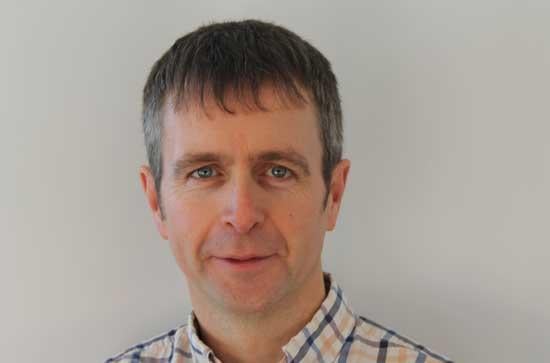
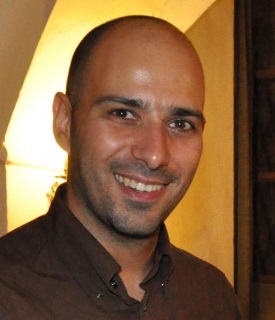
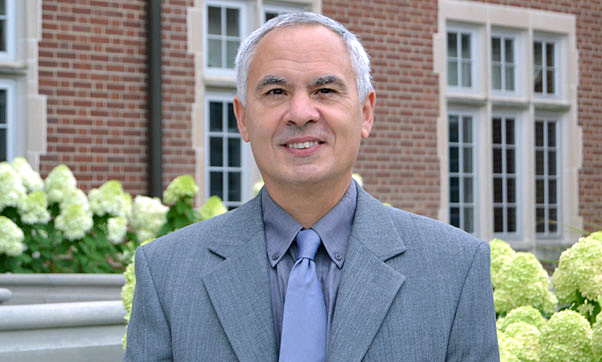
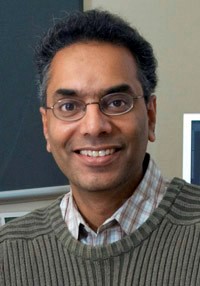
Diarmuid O'Donoghue is an Assistant Professor in the Faculty of Science & Engineering at Maynooth University, specializing in Computational Creativity and Analogical Reasoning . His research explores topological similarities between text and source code to develop cognitively inspired systems for problem-solving and bias detection. Co-PI of the Modelling implicit bias project (€21/FFP-P/10118) Senior Scientific Coordinator for the €2.6M EU-funded Dr Inventor project Key research areas include: Latent homomorphism detection in lexical data Comparative analysis of LLMs and analogical systems Formal specification generation from code/text His work has shaped undergraduate project frameworks with ethical GenAI integration . Publications span ICCC , GECCO , and journals like Artificial Intelligence Review .
Peter Gjøl Jensen is an Associate Professor in the Department of Computer Science at Aalborg University's Technical Faculty of IT and Design. His research spans formal methods, artificial intelligence, and practical applications in energy systems. He is affiliated with multiple research groups including Distributed, Embedded and Intelligent Systems, AI for the People, and Artificial Intelligence and Machine Learning. His research interests focus on Model Checking , Formal Verification , Reinforcement Learning , and applications to Cyber-physical Systems . He has developed expertise in applying theoretical computer science to solve real-world problems, particularly in energy optimization and heat pump control systems. His work bridges the gap between formal methods and practical engineering applications. His recent publications show a clear trend toward applying AI and formal verification techniques to energy systems and cyber-physical applications. The research spans theoretical foundations of model checking and reaches into practical implementations for heat pump control, autonomous systems, and environmental management. His work often involves the UPPAAL and Stratego frameworks for verification and synthesis. Dr. Jensen actively supervises PhD students, including Andreas Holck Hoeg-Petersen on the "Explainable and Causally Enforced Reinforcement Learning" project. His research has attracted media attention, particularly for intelligent heat pump control systems that provide significant energy savings. He is involved in multiple research projects including "Explainable and Causally Enforced Reinforcement Learning" (ongoing) and "BEO-COVID: Decision Support for Evaluation and Optimization in UPPAAL" (completed in 2020).
Mohammad Hamad is a leading researcher in the field of Automotive and IoT Cybersecurity at the Technical University of Munich (TUM) within the Department of Computer Engineering. He holds a PhD in Computer Engineering (Dr.-Ing.) from TU Braunschweig (2020) and serves as Group Leader for the "Security for IoT and Autonomous Systems" research group under Prof. Sebastian Steinhorst. Education : PhD in Computer Engineering (TU Braunschweig, 2020) Current Role : Research Group Leader (TUM) Hamad's research focuses on cybersecurity for connected and autonomous vehicles , addressing challenges in intrusion detection, secure communication, and real-time threat mitigation. His work bridges theoretical security models with practical implementations in embedded systems, including time-sensitive networking and decentralized identity management. His recent publications highlight trends in automotive threat modeling , secure MQTT communication , and gamified cybersecurity education through capture-the-flag competitions. He has supervised 25+ student theses on topics spanning attack simulation frameworks, intrusion detection systems, and secure data models. Scientific Contributions: Organized First Workshop on Real-Time Autonomous Systems Security (2024) Co-chaired Security Program Committees for DATE, NordSec, and RTCSA Key projects include EU-funded CyberSecDome (Co-PI) and PANDORA initiatives, alongside tool development like the Simutack attack simulation framework and SEEMQTT secure communication protocol.
Laura Lützow is a Researcher at the Technical University of Munich (TUM), affiliated with the Faculty of Informatics and the Cyber Physical Systems group. She earned her bachelor's degree in Mechatronics from TU Ilmenau (2020) and a master's degree in Robotics, Cognition, and Intelligence from TUM (2022). Her work focuses on enhancing the safety and reliability of autonomous systems through set-based system identification, uncertainty quantification, and conformance checking. B.Sc. in Mechatronics, TU Ilmenau (2020) M.Sc. in Robotics, Cognition, and Intelligence, TUM (2022) Laura's research emphasizes formal methods for analyzing and improving the safety of autonomous systems. Her work includes developing mathematical frameworks for reachability analysis and uncertainty quantification, particularly in dynamic environments with complex constraints. Laura's publications highlight advancements in reachability analysis, system identification, and uncertainty quantification. Key themes include conformal prediction for autonomous systems, zonotope reduction techniques, and motion planning under dynamic obstacles. Her work bridges theoretical control systems research with practical applications in robotics and AI safety. She has taught courses on verification, controller synthesis, formal methods, and fundamentals of artificial intelligence at TUM. Additionally, she was a visiting researcher at Stanford University's Intelligent Systems Laboratory (January-July 2025).
Saikat Chatterjee is a Professor in the Department of Information Science and Engineering at the School of Electrical Engineering and Computer Science, Royal Institute of Technology (KTH). He is also a Fellow of Digital Futures and maintains visiting researcher positions at Karolinska Institute, Karolinska Hospital (specializing in 'AI for Health Care'), and Oslo University Hospital in Norway. His primary research interests span Signal Processing and Machine Learning, with specific focus on signal modeling (sparsity, compressive sensing, dynamical systems), statistical signal processing, statistical machine learning, deep learning, speech/audio/image processing, medical data analytics, life science data analysis, perception for autonomous systems, distributed machine learning, and explainable AI (XAI). He particularly emphasizes explainable machine learning, having a strong background in signal processing and statistical machine learning, with growing passion for medical data analysis due to its societal importance. SSF - Swedish Foundation for Strategic Research Region Stockholm European Union Digital Futures Vinnova WASP Companies: Ericsson, Scania, Saab Professor Chatterjee is actively involved in teaching, serving as examiner and course responsible for various degree projects and courses including Machine Learning and Data Science, Pattern Recognition and Machine Learning, and Speech and Audio Processing. His research group has produced significant work across multiple domains, with notable publications in Bioinformatics and smart city applications, demonstrating the breadth of his research impact from healthcare to urban systems.
Paolo Romano is a Senior Researcher at the Distributed Systems Group, INESC-ID, and an Associate Professor at the Department of Computer Engineering, Instituto Superior Técnico (IST), Universidade Técnica de Lisboa, Portugal. He holds a PhD in Computer Engineering (2007) and has contributed extensively to research in distributed systems, transactional memory, and autonomic computing. PhD in Computer Engineering, Sapienza Rome University (2007) Master Degree in Computer Engineering, University of Rome Tor Vergata (2002), Summa Cum Laude Certificate of Advanced English, Cambridge University (1997) His research interests span: Dependable Distributed Systems: Fault-tolerance in multi-tier systems, formal verification of distributed protocols, and reliable AI systems. Parallel/Distributed/High-Performance Computing: Transactional memory, GPU programming, and efficient AI/ML systems. Autonomic Systems: Self-optimization of complex systems and adaptive concurrency control schemes. Performance Modeling: Machine-learning-based prediction for complex systems and QoS in cloud platforms. Scientific accolades include: Best Paper Award at ICAC 2014, ICDCS 2012, and NETYS 2013 Best Paper Awards at IEEE Symposium on NCA 2008 and 2007 Best INESC-ID Young Researcher (2011) Distinguished Member, INSTICC He has supervised numerous PhD and MSc students, including current advisees Maria Casimiro, Daniel Castro, and Shady Alaa. Former students include Shady Issa (PostDoc at INESC-ID), Nuno Diegues (Software Engineer at Feedzai), and Diego Didona (PostDoc at EPFL). His research is supported by projects like ARISTOS, Cloud-TM, and Euro-TM, with total funding exceeding 2.4 million euros. Paolo Romano is affiliated with the Distributed Systems Group at INESC-ID, a research laboratory associated with IST, Universidade Técnica de Lisboa.
Christopher Nugent is a Professor of Biomedical Engineering and Head of the School of Computing at Ulster University. He received his BEng in Electronic Systems and PhD in Biomedical Engineering from Ulster University. Since joining in 1999, he has held roles including Research Fellow, Lecturer, Senior Lecturer, and Reader before becoming a Professor in 2008. Biomedical Engineering Smart Environments Human Activity Recognition His research focuses on ambient assisted living through smart environments , with applications in mobile-based reminding solutions , behavior modeling , and technology adoption modeling . Recent work includes formal verification in stochastic environments, attention-based neural networks, and few-shot learning for activity recognition. His 2025 publications highlight trends in sensor-based human activity recognition , data fusion , and transformer models for biomedical applications. Awards include the Senior Distinguished Research Fellowship (2016) and multiple best paper awards (2020-2022). Senior Distinguished Research Fellowship (2016) Best Research Paper Award - Ulster University (2022) CCF TPCI Best Paper Award (2021) Digital Innovation of the Year (2020) Emerald Literati Network Awards for Excellence (2015) Outstanding Research Partnership of the Year (2019) As Director of the Pervasive Computing Research Centre and co-Principal Investigator of the Connected Health Innovation Centre , he leads projects funded by national and international bodies, including the iMPAKT App: Second Generation (2023-2025) and Adaptive Modeling Method for Deep Belief Rule Base (2025-2028).
Riccardo Lazzeretti serves as Associate Professor at Sapienza University of Rome since September 2022, following progression from Assistant Professor roles (RTD-A/B) at the same institution from 2017-2022. His academic trajectory includes post-doctoral research at the University of Siena's VIPP group, a research grant at the University of Padua, and industry experience at Italian startup Cynny s.p.a. His educational foundation comprises: MSc in Computer Science Engineering, University of Siena (2007) PhD in Information Engineering, University of Siena (2012) Lazzeretti's research centers on privacy-preserving technologies with emphasis on Secure Multi-Party Computation for encrypted signal processing. His work spans biometric security (including multi-biometric authentication), IoT security protocols, blockchain applications in healthcare, and social network misinformation detection. Recent publications demonstrate deep integration of cryptographic techniques with machine learning for resource-constrained devices and critical infrastructure protection. Analysis of his 15 most recent publications reveals dominant trends in IoT/drone security (32% of works), browser/API vulnerabilities (13%), and privacy-preserving architectures (27%). His research consistently bridges theoretical cryptography with practical system implementations, particularly for emerging technologies like NDN and programmable data planes. His scholarly recognition includes: SIGMM Test of Time Paper Honourable Mention (2021) for Multimedia Security contributions IET Biometrics Premium Best Paper Award (2021) Lazzeretti has supervised graduate students at the University of Siena and secured research funding through collaborations with NATO's CMRE, Digital Catapult (UK), and IMT Lucca. Current projects include privacy-preserving consensus algorithms for IoT and blockchain-based health applications. He maintains active partnerships with European research entities including Centre for Maritime Research and Experimentation and Digital Catapult. His laboratory affiliations encompass the VIPP research group at University of Siena and ongoing collaborations with Sapienza's cybersecurity initiatives, focusing on cross-disciplinary teams integrating signal processing, cryptography, and machine learning expertise.
Andrea Marrella is an Associate Professor at Sapienza Università di Roma, affiliated with the Department of Computer, Control and Management Sciences and Engineering. His academic journey includes a PhD in Computer Science Engineering from Sapienza in 2013, preceded by a Master's (2009) and Bachelor's (2005) in Computer Engineering with top marks. Education : PhD (2013), Master's (2009), and Bachelor's (2005) in Computer Engineering from Sapienza Università di Roma. His research spans Artificial Intelligence for Business Process Management , focusing on process mining, adaptation, resilience, and human-computer interaction. Applications extend to eGovernment, smart manufacturing, healthcare, and emergency management. Recent work explores AI-Augmented BPM, conversational systems for process-aware LLMs, and trust dynamics in RPA. Publications highlight trends in process mining (2024-2025), including trace alignment, data-centric analysis, and conversational frameworks. Awards include a Best Paper at CAiSE 2017 and Best Forum Paper at CAiSE 2019. Scientific Leadership : Principal Investigator of DAKIP (2016), METRICS (2018), DataCloud (2021), and MOTOWN (2023) Information Director of ACM Journal on Data Quality (2017-2022) Editorial Board member of IJISCRAM Organizing roles at BPM, CAiSE, AVI, and ICPM conferences Supervision : Mentored 10 M.Sc. and 2 B.Sc. students in Computer Science, plus 1 M.Sc. and 27 B.Sc. in Management Science at Sapienza. Co-supervised 2 M.Sc. theses at University of Tartu (Estonia). Professional Engagements : Reviewer for ACM Transactions on CHI, IEEE Transactions, and top journals/conferences Keynote/Panel speaker at PMAI 2024, AI Forum 2023, and BPAI’17
Carlos Manuel José Alves Serôdio is an Associate Professor with Habilitation at the Engineering Department of the School of Sciences and Technology, University of Trás-os-Montes and Alto Douro. He is a Senior Researcher and member of the Embedded Systems Research Group (ESRG) and Industrial Electronics R&D Group at ALGORITMI Center (University of Minho). Previously, he collaborated with CITAB from Fev. 2016 to Dec. 2023. His research expertise spans Wireless Sensor Networks, Precision Agriculture, Smart Cities, and Indoor Localization . Recent publications highlight work in Cybersecurity for Connected Vehicles, Edge AI for Anomaly Detection, and Sustainable Irrigation Systems , reflecting interdisciplinary applications of IoT, 6G, and Blockchain technologies. With an h-index of 12 and 81 citations , Serôdio has supervised 60 MSc and 5 PhD students. He has contributed to program committees of international conferences and served as a reviewer for journals. His lab affiliations include ESRG (ALGORITMI) and CITAB (UTAD) .
Remi Drai is Professor of Mathematics at Grove City College, Pennsylvania. His primary appointment resides within the Department of Mathematics, where he teaches and conducts research in applied mathematics with a strong emphasis on guidance, navigation, and control (GNC) systems for aerospace applications. Prof. Drai's research portfolio, as evidenced by more than two-dozen peer-reviewed publications between 1997 and 2014, centers on the mathematical foundations of spacecraft navigation and control. His interests span vision-based landing algorithms for lunar and planetary missions, robust multi-objective control synthesis via convex optimization, and autonomous guidance schemes for near-Earth asteroid rendezvous. A recurring theme is the fusion of inertial sensors with vision/GNSS data to achieve pinpoint landing accuracy under stringent mission constraints. Across his publications, Drai addresses both theoretical contributions—such as dissipative control theory and linear matrix inequality (LMI) methods—and practical validation through laboratory demonstrations and flight testing. This dual focus highlights a commitment to bridging rigorous mathematical analysis with real-world aerospace engineering challenges. Laboratory & Collaborations: While explicit laboratory names are not provided, the breadth of flight-test campaigns (e.g., precision landing GNC facility tests, ExoMars EDL demonstrator) indicates extensive collaboration with European space agencies and industry partners. Contact: Email: DraiR@gcc.edu Phone: 724-458-2105
Professor Suresh Jagannathan is a leading researcher in programming languages and formal verification. His work focuses on semantics of high-level languages, type theory, program analysis, and compiler design, with a particular emphasis on concurrent and distributed systems. He explores formal methods for certified compilation, memory model consistency, and verification techniques enabling safe program optimizations. Core research areas: programming language semantics, formal verification, type theory, compiler design Key applications: concurrent/distributed systems, certified compilation, safe neural network verification Recent publications highlight his contributions to automated verification of concurrent data structures, type-guided repair of input generators, and differentiable logic specifications for AI planning systems. His work combines theoretical rigor with practical implementations like ECOOP best papers and tool developments. Professor Jagannathan has received multiple scientific awards (not specified in available data) and maintains active collaborations with researchers in formal methods and systems verification communities.
Hassan Sartaj serves as a Postdoctoral Fellow within the Department of Engineering Complex Software Systems at Simula Research Laboratory. His research bridges advanced software engineering methodologies with critical healthcare applications, focusing on medical device safety and reliability through innovative digital twin frameworks. His research profile centers on AI-driven software engineering for healthcare systems , with core expertise in digital twin creation , uncertainty-aware simulation , and LLM-enhanced testing . Key contributions include developing meta-learning approaches for medical device digital twins (MeDeT) and quantum extreme learning machines for practical software testing. His work consistently addresses real-world challenges in healthcare IoT, particularly in medicine dispensers and cancer registry systems, emphasizing safety-critical validation. Analysis of his 15 most recent publications reveals a dominant trend toward integrating foundation models with cyber-physical systems engineering . Over 70% of his 2024-2025 output explores LLMs for uncertainty identification in self-adaptive robotics, differential testing of medical rule engines, and environment simulation for digital twins. This reflects a strategic pivot toward leveraging generative AI for validating safety-critical healthcare software, with strong emphasis on practical DevOps implementation in evolving healthcare applications.
Dr. Yi Dong is a faculty member actively engaged in research and teaching. His work spans interdisciplinary applications in computer science, robotics, and cyber-physical systems, with a focus on AI safety, privacy-preserving technologies, and distributed control systems. Research interests include: Robustness in LLM-driven systems Game theory for multi-agent equilibrium Optimization algorithms for industrial systems Reliability verification in autonomous robotics Privacy-preserving distributed learning Recent article trends show expertise in applying AI to cyber-physical systems, enhancing LLM security, and developing verification frameworks for robotics. Publications in IEEE Robotics and Automation Letters and Neurocomputing highlight cross-domain collaborations.
Igor Potapov is a Professor at the University of Liverpool , leading the Algorithms, Complexity Theory and Optimisation (ACTO) Group within the Department of Computer Science. His career includes progressive academic roles from Lecturer (2002) to Professor (current), with a focus on theoretical computer science and formal verification. Research Themes : Reachability problems in matrix semigroups, robot scheduling, broadcasting automata, and computational complexity. Grants & Awards : EPSRC grant (£459K, 2014-2018) on reachability problems NATO Collaborative Linkage Grant (€15,000, 2008-2010) Royal Society International Joint Projects and Travel Grants Nuffield Foundation Grant (£5,000, 2003-2005) Royal Academy of Engineering Fellowship (£3,940, 2008-2009) Recent Work Trends : Focus on geometric coverage algorithms (2025) Collision-free scheduling for robotic systems (2024-2025) Advances in matrix semigroup decidability (2024) Applications to programmable matter and crystal structure prediction (2022-2023) Contact : potapov@liverpool.ac.uk