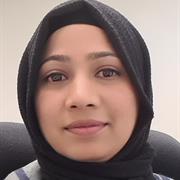
Dr. Neelofar Neelofar is a Lecturer at RMIT University's School of Computing Technologies , specializing in Automated Software Engineering and AI systems testing. She holds a PhD from the University of Melbourne and has held academic positions at Monash University since 2021. Current Role: Lecturer, RMIT University (City Campus, Australia) Research Focus: Automated Software Engineering, Autonomous Vehicle Testing, and Responsible AI Her research addresses critical challenges in: Safety validation of AI-based systems Search-based testing methodologies Quality assessment of Large Language Models Algorithmic fairness and benchmarking Notable contributions include developing: Instance Space Analysis for test scenario evaluation Position-based adversarial testing frameworks for autonomous vehicles Hybrid fault localization techniques combining static and dynamic analysis
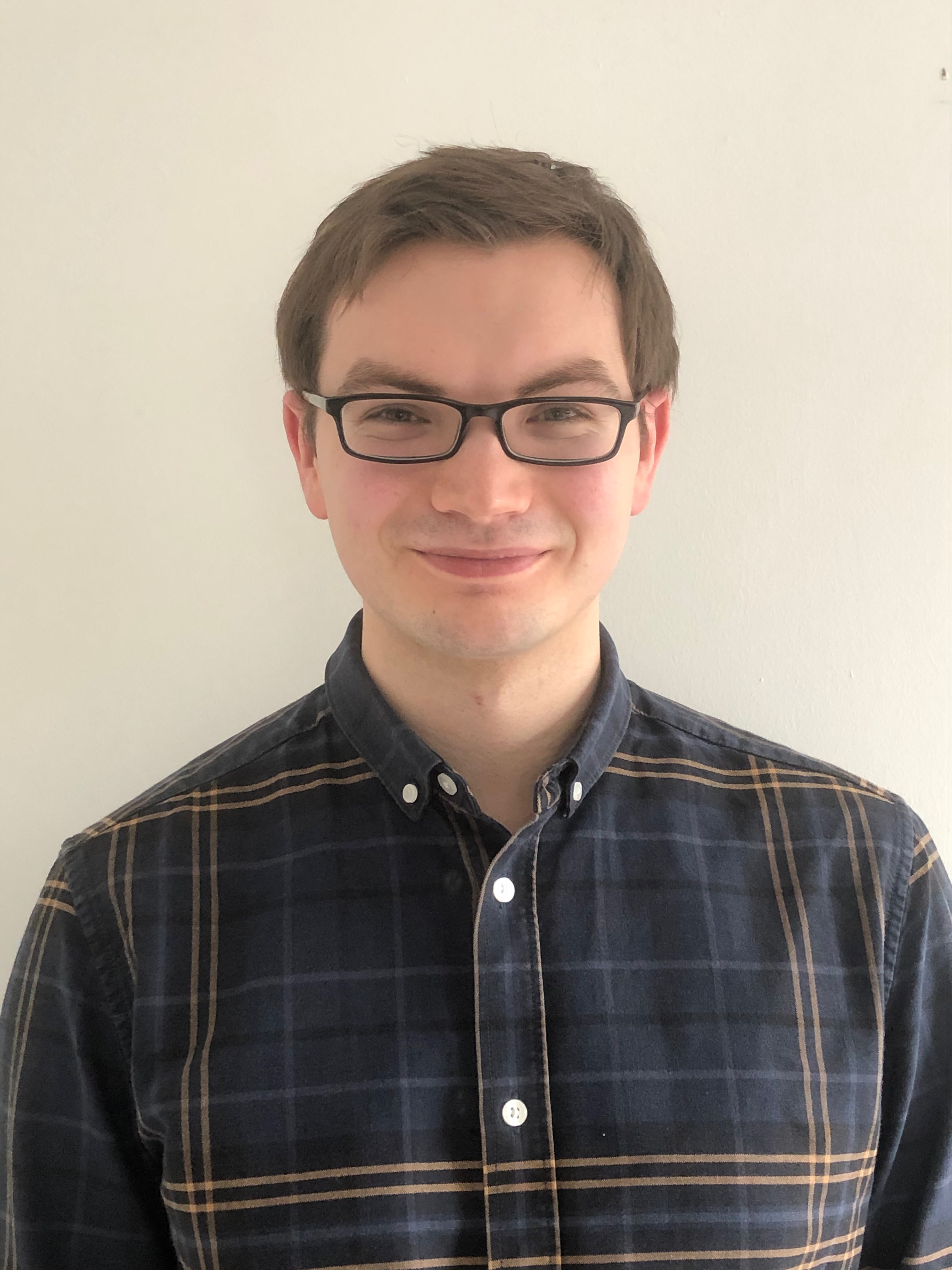
Michalis Famelis is an Assistant Professor at the Department of Computer Science and Operations Research , affiliated with the Faculty of Arts and Sciences at Université de Montréal . He leads research in the GEODES Software Engineering Research Group , focusing on formal yet practical methods for software development. His work integrates formal verification, model-driven engineering, and empirical methods to address challenges in software design and uncertainty management. Educated at the University of Toronto (PhD 2016, MSc 2010) and the National Technical University of Athens (DiplEng 2008), he completed a postdoctoral fellowship at the University of British Columbia . He teaches courses such as IFT1025 Programming 2 and IFT6755 Software Analysis . His research projects include a Wellcome Trust-funded platform for climate-sensitive disease modeling and CRSNG grants for formal software design support. He has supervised 6 master’s students, focusing on topics like design uncertainty, API usage verification, and software product lines. Notable collaborations involve Climate-Sensitive Infectious Disease Modelling and Formal Support for Software Design . His work emphasizes improving developer workflows through tool development and empirical studies.
Dr. Blair Archibald is a Lecturer in the School of Computing Science at the University of Glasgow. He holds a PhD in Computing Science from the same institution (2018). Previously, he was a Research Associate on the Science of Sensor Systems (S4) project. He is a member of the Systems, PLUG, and FATA research groups and a Software Sustainability Institute Fellow since 2017. His research focuses on computational modeling of complex systems using formal methods like Milner's Bigraphs and probabilistic model checking. He also investigates parallel and distributed computing, programming languages, and functional programming. His work emphasizes making formal methods accessible to non-experts through graphical techniques and tools such as BigraphER. Archibald has contributed to frameworks like YewPar, a C++ library for parallel combinatorial search, and has explored applications in transport systems resilience and human-swarm interaction. His interdisciplinary approach aims to apply formal methods to real-world challenges, such as decarbonizing transport through digital twinning. Key awards include the Software Sustainability Institute Fellowship (2017). His current research interests span BDI agent verification, probabilistic bigraphs, and scalable parallel algorithms. He is actively involved in supervising PhD students in these areas. Lab/Team Affiliations: Systems Research Group, PLUG (Programming Languages and User Interfaces Group), and FATA (Formal Analysis, Theory and Algorithms) at the University of Glasgow.
Suresh Perinpanayagam is Professor of Engineering at the University of York, where he leads transformative research in digital/data-centric engineering, digital twins, and AI. His work aims to revolutionize system design by leveraging data and high-performance computing to provide a more realistic and synergistic approach to complex future systems. He is affiliated with the School of Physics, Engineering and Technology at the University of York, where he has established the Data-Centric Engineering and Digital Twinning Synergy (DACEDITS) research group. Professor Perinpanayagam holds a Bachelor's and Master's degree in Aeronautical Engineering from Imperial College, London, and a PhD in Mechanical Engineering from Imperial College, London (Rolls-Royce Vibration University Technology Centre). His research focuses on harnessing digital technologies to revolutionize engineering design, control, development, and through-life supportability within aerospace, transport, energy and built infrastructure domains. Digital twins form a cornerstone of his work, creating virtual replicas of physical systems that are continually updated with real-time data for remote monitoring and predictive analytics. His team combines advanced modeling and simulation with data analytics and machine learning algorithms to gain actionable intelligence from real-time data, facilitating predictive maintenance and fault detection. Key application areas include fusion energy systems, electric/hydrogen aircraft, and autonomous transport vehicles, where the goal is to minimize extensive testing and validation while addressing global challenges in energy, electrification, circular economy practices, and net-zero emissions goals. Analysis of Professor Perinpanayagam's recent publications reveals a strong focus on applying digital twin technology and machine learning to critical engineering systems. His research spans aerospace applications (particularly for more electric aircraft), railway systems, and power electronics reliability. A notable trend is the increasing emphasis on explainable AI for safety-critical systems in aerospace, addressing certification challenges while maintaining high reliability standards. His work consistently bridges theoretical advancements with practical industrial applications, particularly in collaboration with major aerospace companies. Professor Perinpanayagam has secured research grants exceeding £5 million throughout his career. He has cultivated extensive industrial collaborations with leading companies including Boeing, Rolls-Royce, BAE Systems, Thales, Airbus Group, Safran, Meggitt, UKAEA, Heathrow Airport, Assystem, Awaretag and Chitendai Ltd. He has served as Principal Investigator for significant projects such as the Future Landing Gear Phase 2 project (£2 million) and the LAND One project with Airbus, as well as a £1 million project from Safran/ATI for the OLLGA project. As an educator and mentor, Professor Perinpanayagam has been the principal supervisor for seven PhD candidates and one Master's by Research student, all of whom have successfully completed their degrees. He has also supervised Individual Research Projects for thirty-five Master's students. His teaching encompasses data-centric engineering for intelligent systems, covering machine learning, digital twin technology, intelligent transport systems, IoT/sensory systems, predictive analytics, asset management, resilience engineering, project management, and system availability and maintainability. Professor Perinpanayagam leads the Data-Centric Engineering and Digital Twinning Synergy (DACEDITS) research group at the University of York, which pioneers the integration of digital and data technologies to revolutionize engineering design and support. His team brings together cross-disciplinary expertise in advanced modeling and simulation, data analytics, and artificial intelligence to develop next-generation engineering systems that are highly efficient, reliable, and economically viable. The group maintains strong industry partnerships that facilitate the translation of research into practical applications.
Dr Colin Paterson is a Senior Lecturer in Machine Learning Safety at the University of York's Department of Computer Science, working within the Institute for Safe Autonomy (ISA). His research focuses on ensuring safety in autonomous systems, particularly addressing uncertainties in deployed systems. He holds a PhD in Computer Science (2018, York) and a prior PhD in Control Systems Engineering (1993, Coventry), alongside qualifications in education and business. Education: PhD: Computer Science, University of York (2018) PhD: Control Systems Engineering, Coventry University (1993) PGCE: Secondary Education, Leeds Trinity University (2012) BA: Business, Finance, Mathematics, Open University (2011) BEng: Computer & Control Systems Engineering, Coventry University (1990) His research interests span autonomous systems engineering, machine learning assurance, ethical AI design, and verification methodologies. He contributes to the development of safety frameworks for self-adaptive systems and has published extensively on topics like runtime safety monitors, hazard mitigation in autonomous vehicles, and transfer assurance in machine learning. Dr Paterson currently serves as GTA Coordinator and Training Officer within the department. His work emphasizes bridging theoretical safety models with practical implementation in real-world autonomous systems.
Dr. Dimitar Petrov is an Associate Professor in Computer Science at Ca’ Foscari University of Venice, specializing in static analysis and cybersecurity. He is affiliated with ETH Zürich's Institute of Pharmaceutical Sciences (IPW) as staff under Tit.-Prof. Jörg Scheuermann. His research focuses on applying abstract interpretation-based methods to detect security vulnerabilities in systems ranging from blockchain smart contracts to IoT devices. Education details are not explicitly provided in the text, but his extensive publication history indicates advanced expertise in formal methods. His research interests include software verification, privacy enforcement, and the application of static analysis tools like LiSA across diverse domains such as robotics, microservices, and mobile applications. Key research trends in his articles emphasize blockchain security (smart contract vulnerabilities, consensus protocols), IoT/IoMT security (device interactions, privacy policies), and the integration of machine learning with program analysis. His work bridges academic research with industry challenges, addressing compliance with regulations like GDPR and the EU Data Act. Prior to his current roles, he has contributed to open-source frameworks like LiSA and collaborated on projects involving automated policy extraction, cross-language analysis, and vulnerability detection in automotive systems. His research group at Ca’ Foscari actively engages in both theoretical advancements and practical tool development. Labs/Teams: Part of the Software and System Verification group at Ca’ Foscari, and collaborates with ETH Zürich's Institute of Pharmaceutical Sciences on interdisciplinary projects combining formal methods with healthcare technology.
Dr. Gethin Norman is a Senior Lecturer in the School of Computing Science at the University of Glasgow, where he serves as Deputy Head of School and Senior Adviser. He holds a BSc in Mathematics from the University of Oxford and a PhD in Computer Science from the University of Birmingham. His research focuses on formal verification, quantitative methods, and probabilistic systems, with applications in software security, systems biology, and game theory. A key contribution is his work on the PRISM probabilistic model checker, which received the 2016 HVC Award for its impact in formal verification. He also leads the Formal Methods research group under the Formal Analysis, Theory and Algorithms section. Education: BSc Mathematics, University of Oxford PhD Computer Science, University of Birmingham Research Interests: Formal verification of real-time and probabilistic systems Algorithmic game theory and equilibrium analysis Development of tools like PRISM and PRISM-games Applications in security protocols, robotics, and biological systems Teaching: Coordinates undergraduate courses: Algorithmic Foundations 2 (COMPSCI2003) and Algorithmics I (H) (COMPSCI4009) Awards: 2016 HVC Award for PRISM probabilistic model checker. Labs/Teams: Core contributor to the PRISM model checking tool, leading research in formal methods and stochastic game verification.
Ivaylo Valkov is a Lecturer in the School of Computing Science at the University of Glasgow, having joined the academic staff in June 2024. He completed his PhD in Computing Science at the University of Glasgow in 2024 under Prof. Alice Miller, focusing on formal analysis of wireless sensor systems. Prior to this, he earned a Master's degree in Computing Science and Mathematics from the same university in 2018. His research emphasizes rigorous mathematical analysis of software and hardware systems, particularly through model checking techniques. Key areas include system verification, sensor networks, combinatorial problems, and probabilistic model checking. Valkov has contributed to advancements in overtaking planning algorithms, symmetry reduction methods, and optimization of scheduling problems like the social golfer problem. His publications (6 items) span peer-reviewed journals like Science of Computer Programming and Symmetry , as well as conferences such as SPIN 2024 and FMAS 2021. While no specific awards are listed, his work reflects sustained engagement with formal methods and their applications in real-world systems. Valkov teaches Algorithms and Data Structures at the Master's level and co-teaches Software Engineering and Research Methods courses. His teaching aligns with his research focus on logical problem-solving and systematic analysis.
Ulrik Nyman is an Associate Professor in the Department of Computer Science at Aalborg University's Technical Faculty of IT and Design. His research focuses on formal verification, real-time systems, embedded software, and cyber-physical systems. He is affiliated with the CISS - Center for Embedded Software Systems and has contributed to projects like Digital Technologies for Industry 4.0 and compositional verification of real-time systems. Research Interests: Formal Methods and Verification Real-Time and Embedded Systems Cyber-Physical Systems Power Electronics Control Modal Transition Systems Interface Theories Projects: Digital Technologies for Industry 4.0 (2019–2021): Focused on industrial automation and predictive models. Compositional Verification of Real-Time Multi-Core Safety-Critical Systems (2017–2021): Addressed safety-critical avionics and multicore schedulability. CRAFTERS: Framework for Tailoring Embedded Real-Time Systems (2012–2015): Developed application-driven middleware. Publications: Nyman’s recent work explores statistical model checking in power electronics, falsification testing for cyber-physical systems, and formal verification of OS-based software. His research bridges theoretical formal methods with practical applications in embedded systems. Labs/Teams: Active in the CISS Center, collaborating on embedded software systems and real-time frameworks.
Professor d'Avila Garcez at City University London's Department of Computing is a leading researcher in Neurosymbolic AI , combining symbolic reasoning with neural learning. His work addresses explainability, knowledge extraction, and hybrid architectures. Key Contributions : 3rd-wave Neurosymbolic AI, semantic frameworks for knowledge encoding, and interactive medical imaging systems. Affiliations : Department of Computing, City University London; collaborations with institutions in healthcare, finance, and neuroscience. Research Interests : Formalizing neurosymbolic computation Explainable AI for clinical decision-making Knowledge distillation from CNNs Time-series interpretability Relational learning with hypergraphs Consistency/coherence in representation learning Article Trends : Focus on AI transparency , medical applications (stroke recovery, radiology), and symbolic-numeric integration . Techniques include logic tensor networks, counterfactual explanations, and modular architectures. Grants & Collaborations : Extensive international collaborations in healthcare, finance, and AI ethics. Key projects involve stroke recovery prediction, medical imaging, and neurosymbolic frameworks.
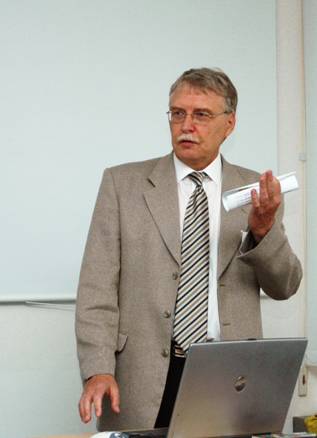
Jiri Wiedermann is a Professor of Computer Science at Charles University and has served as Director of the Institute of Computer Science at the Academy of Sciences of the Czech Republic since 2000. His academic journey includes an Assoc. Prof. position at Charles University (2000) and degrees from Comenius University (RNDr., M.Sc.) and Czechoslovak Academy of Sciences (CSc., DrSc.). Education : DrSc. in Computer Science (Comenius University, Bratislava, 1993) CSc. (equiv. to PhD) in Computer Science (Czechoslovak Academy of Sciences, Prague, 1980) RNDr. and M.Sc. in Computer Science (Comenius University, Bratislava, 1974) His research spans Theoretical Computer Science , focusing on computational complexity, neurocomputing, and non-standard computing. He explores embodied cognition, mirror neurons, and autopoietic automata, bridging neural models with algorithmic frameworks. The 15 most recent publications highlight his work on interactive computation, fuzzy Turing machines, evolving artificial living systems, and cognitive architectures. Key trends include machine learning inspired by biological systems , computational limits of cognition , and formal models of neural processes . Scientific Awards : Member of Academia Europaea (since 2006) Member of the Czech Learned Society (since 2003) Board of Directors, ERCIM (since 1997) Leadership roles in EATCS (Vicepresident 1997-2002)
Sofiène Tahar is a Professor at Concordia University's Department of Electrical and Computer Engineering, affiliated with the Faculty of Engineering and Computer Science. His research focuses on formal verification, theorem proving, and their applications in cyber-physical systems, circuit design, and reliability engineering. He has authored over 300 publications in top-tier conferences and journals, including DATE, ICFEM, and FMCAD. Key research areas include formal methods for analog/digital circuits, approximate computing, stochastic systems, and safety-critical systems. His work bridges theoretical foundations (e.g., theorem proving in HOL) with practical engineering problems like circuit reliability and autonomous systems verification. Recent projects involve formal analysis of vehicular systems, energy-efficient approximators, and machine learning integration with formal verification frameworks. Tahar collaborates extensively with industry partners and holds leadership roles in international conferences, including co-chairing ICFEM 2023.
Professor Andry Rakotonirainy is a renowned expert in road safety and Intelligent Transport Systems (ITS) at QUT's Faculty of Health, School of Psychology & Counselling. He holds a PhD in Computer Science from Sorbonne University and INRIA, France. His research focuses on human factors in ITS, leveraging computer science, engineering, and psychology to improve road safety. He leads the ITS human factors program at CARRS-Q and the Centre for Future Mobility, with over $76M in research grants. Key roles include ARC College of Experts membership and EU project advisory roles. Research Interests: Connected and Automated Vehicles (CAVs) Eco-safe driving systems Human-Machine Interaction Driver Behavior Analysis Transportation Policy Projects: EU-funded LEVITATE (€6.4M) studying societal impacts of CAVs Queensland CAVI-iMOVE CRC initiative ARC grants on AI explainability and AV safety Achievements: Over 300 publications, h-index 45, and 14 ARC grants. Established ICCAM with Université Gustave Eiffel. Advising & Grants: Supervised 6 doctoral and 2 master's students. Active in government/industry committees and grant reviews. Labs/Teams: CARRS-Q, Centre for Future Mobility, and ICCAM collaboration.
Roman Isaenkov serves as a Research Fellow at Curtin University's School of Earth and Planetary Sciences within the Faculty of Science and Engineering. His work focuses on advanced geophysical monitoring techniques for carbon capture and storage projects. His research interests center on seismic monitoring , distributed acoustic sensing (DAS) , and CO2 geosequestration verification . Key areas include fiber-optic sensing applications, 4D seismic imaging for reservoir characterization, and multiwell monitoring systems for carbon storage projects. His technical expertise spans data processing workflows for DAS VSP (Vertical Seismic Profiling), source positioning accuracy, and time-lapse monitoring of CO2 plumes. Isaenkov's publication record demonstrates consistent contributions to carbon storage monitoring through the CO2CRC Otway Project. His work shows a clear progression from methodological development (source positioning effects, wavefield decomposition) to field implementation (Gorgon CCS case study, Pilbara mineral exploration). Key collaborations include researchers from CO2CRC, with frequent co-authorship with R. Pevzner, K. Tertyshnikov, and A. Yurikov. His technical focus includes: Permanent reservoir monitoring systems using fiber-optic technology Automated processing of continuous DAS data streams CO2 plume evolution tracking through multiwell seismic arrays Repurposing abandoned wells for geophysical surveillance Isaenkov has contributed significantly to the Stage 3 Otway Project, developing monitoring systems for small-scale CO2 injections and investigating nonlinear seismic effects in subsurface environments. His work bridges theoretical geophysics with practical field applications in carbon management.
Daniel Duberg is a Researcher and PhD candidate at the Division of Robotics, Perception and Learning (RPL) within the School of Electrical Engineering and Computer Science at Kungliga Tekniska Högskolan (KTH). His research focuses on autonomous exploration and real-time 3D mapping using unmanned aerial vehicles (UAVs), emphasizing onboard processing for indoor environments. He has contributed to frameworks like UFOMap, which address dynamic environments and efficient data structures. His work integrates probabilistic modeling, sensor fusion, and real-time algorithms to enhance UAV navigation and decision-making. Notable projects include dynamic-aware mapping (DUFOMap) and exploration strategies guided by formal methods like Signal Temporal Logic. Duberg teaches engineering courses in robotics and collaborates on open-source tools for autonomous systems. His research trends emphasize scalability, robustness in uncertain conditions, and adaptive planning for long-term autonomy. He has published widely on exploration algorithms, volumetric mapping, and UAV navigation challenges, with applications in both static and dynamic environments. Duberg’s academic contributions span over a decade, with early work on tele-operation safety and recent advancements in semantic mapping and multi-sensor fusion. His research bridges theoretical foundations with practical implementations for deployable robotic systems.