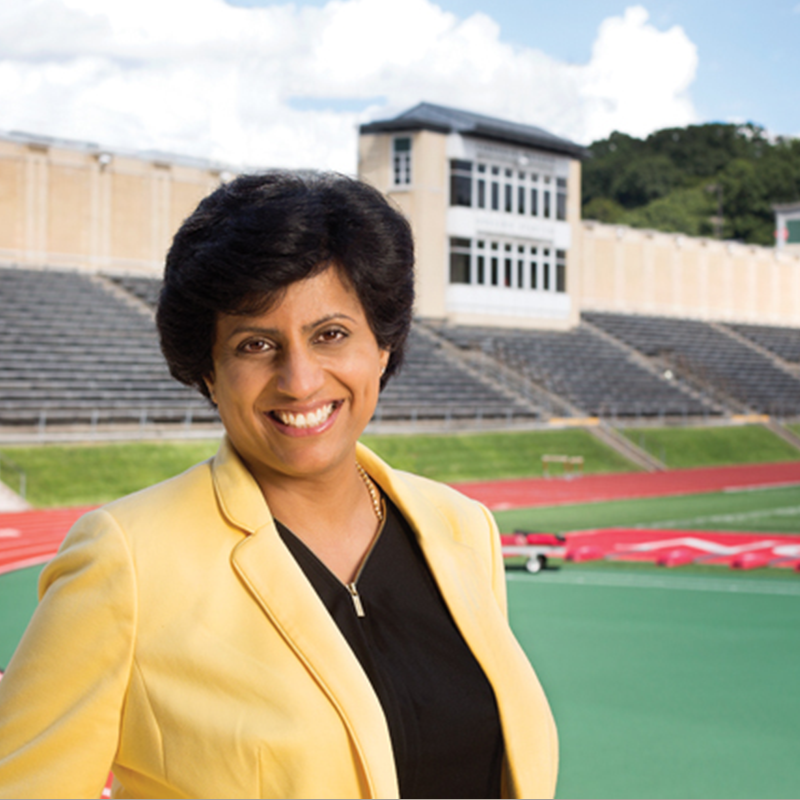
Priya Narasimhan is a Professor of Electrical & Computer Engineering at Carnegie Mellon University (CMU), affiliated with the College of Engineering. Her research focuses on dependable distributed systems, fault-tolerance, embedded systems, mobile systems, and sports technology. She leads the Intel Science and Technology Center in Embedded Computing (ISTC-EC) and founded YinzCam, a CMU spin-off providing mobile live streaming to sports venues. She holds multiple awards, including the Sloan Fellowship and NSF CAREER Award. Education: Ph.D. and M.S. in Electrical & Computer Engineering from UC Santa Barbara. Notable roles include former CTO of Eternal Systems, Director of Intel Labs Pittsburgh, and Director of CMU's CyLab Mobility Research Center. Research spans failure diagnosis in distributed systems, live upgrades, mobile cloud computing, football technology, assistive tech for the blind (Trinetra), and civic tech (iBurgh). Over 30+ students advised across Ph.D., M.S., and undergraduate programs. Active in entrepreneurship, teaching (courses like 18-349 Embedded Systems), and industry collaborations.
Ali Khazaei is a Professor in the Department of Mechanical Engineering at Kennesaw State University. He has held academic roles since 1988, including Assistant Professor at Southern Polytechnic State University (SPSU) starting in 2008 and previous adjunct roles. His research focuses on renewable energy, MEMS systems, vehicle dynamics, thermal analysis, and nonlinear dynamics. He holds a Ph.D. in Mechanical Engineering from Tehran Azad University (1998), an MSc from the University of Tehran (1987), and a BSc from the same institution (1982). Education: Ph.D., Mechanical Engineering, Tehran Azad University (1998) MSc, Mechanical Engineering (Heat & Fluids), University of Tehran (1987) BSc, Mechanical Engineering, University of Tehran (1982) Research Interests: Dr. Khazaei’s work spans renewable energy technologies, MEMS thermal behavior, autonomous vehicle dynamics, and interdisciplinary strategies to enhance engineering education. His research emphasizes practical applications in sustainability, thermal modeling, and vibration isolation systems. Publications Overview: His recent work includes studies on tire models for autonomous vehicles, MEMS thermal dynamics, and suspension systems. Earlier contributions addressed nonlinear dynamics, microresonator analysis, and interdisciplinary education strategies. Advising & Grants: No formal advisee名单 or grant details provided. His professional experience includes roles as a design engineer and consultant in Iran, focusing on construction and mechanical systems.
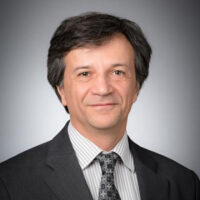
Pavlos S. Georgilakis is a Professor at the School of Electrical and Computer Engineering, National Technical University of Athens (NTUA), specializing in modern techniques for power system analysis, optimization, and renewable energy integration. He holds a Diploma (1990) and PhD (2000) in Electrical Engineering from NTUA. His career includes roles as Lecturer (2009) and Associate Professor (2018–2023) at NTUA, and Assistant Professor at the Technical University of Crete (2004–2009). Research focuses on power transmission/distribution systems, transformer design, and applying AI/optimization for grid efficiency. He led 10 research projects, including Horizon 2020 initiatives SHAR-Q, WiseGRID, and NobelGrid. He authored 3 books and over 230 publications (SCOPUS citations: >5,500). Editor of IET Smart Grid, Energies, and Electricity journals; senior IEEE member. He supervised 4 doctoral, 9 master’s, and 76 diploma theses. Awards include the 2013 Best Reviewer Award from Electric Power Systems Research. Active in energy storage, smart grids, and decentralized energy resource integration.
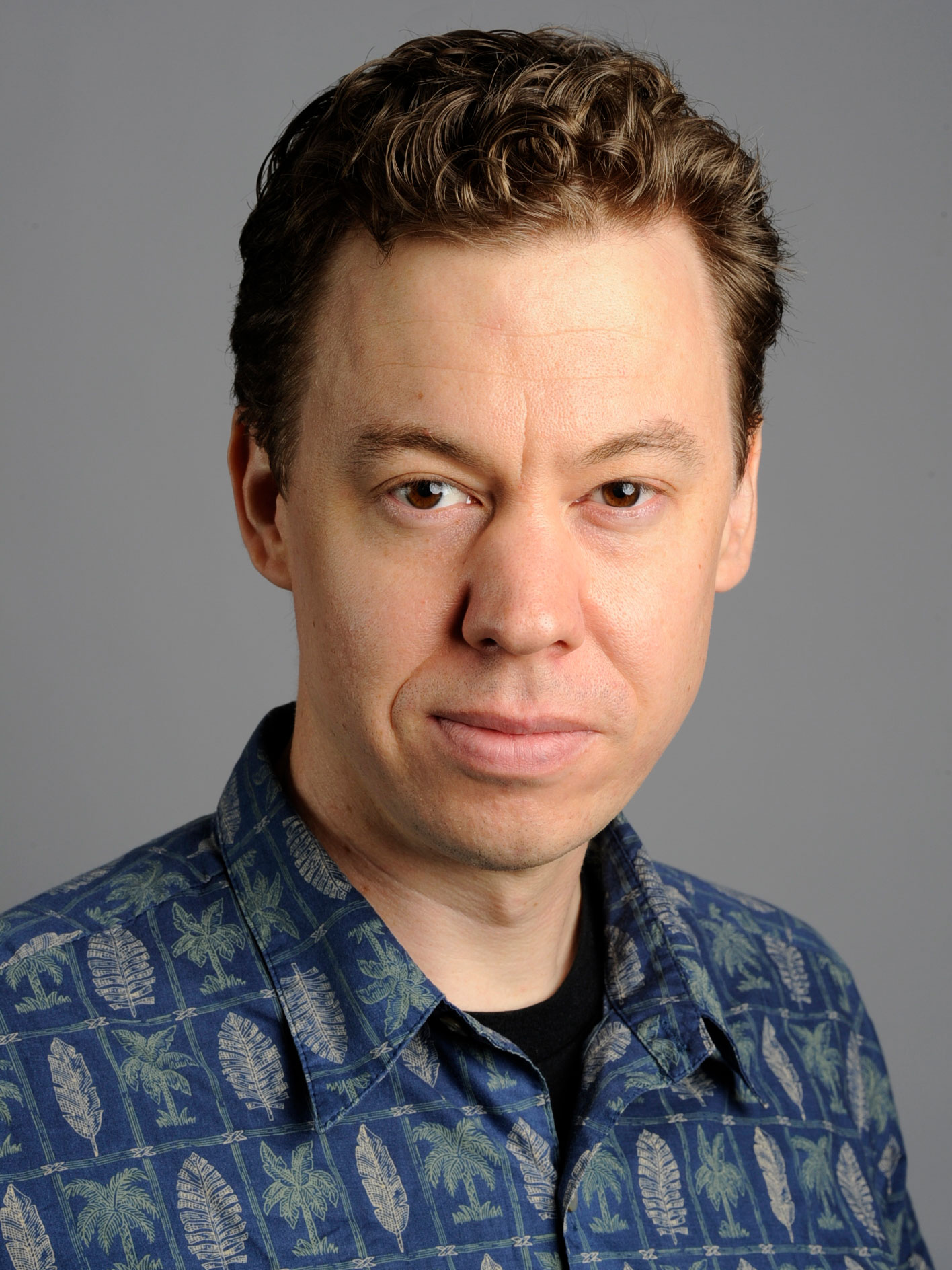
Dr. Shahram Shirani is a Professor and holds the L.R. Wilson/Bell Canada Chair in Data Communications in the Department of Electrical & Computer Engineering at McMaster University. He also serves as Acting Chair of the department. His research focuses on multimedia communications, image/video processing, medical imaging, and hardware architectures. He teaches courses like Image Processing (COMPENG 4TN4) and 3D Image Processing and Computer Vision (ECE 736). Shirani earned his B.Sc. from Isfahan University of Technology (1989), M.Sc. from Amirkabir University of Technology (1994), and Ph.D. from the University of British Columbia (2000). His achievements include the Faculty of Engineering Leadership Fellowship (2014–15) and leadership roles in editorial boards for IEEE Transactions on Multimedia and Circuits and Systems for Video Technology. Research interests include video quality assessment, biomedical signal processing, and edge computing for traffic monitoring. His lab develops algorithms for multimedia representation, compression, and hardware implementation. Recent work includes AI-driven medical sound datasets, real-time noise removal in MRI, and efficient CNN pruning techniques. He advises over 15 graduate students and collaborates on projects like the HLS-CMDS dataset and cardiac segmentation reviews. His lab’s contributions span biomedical engineering, autonomous systems, and smart sensor technologies.
Alex Durkin is a Researcher and Research Associate at the Sargent Centre for Process Systems Engineering within the Department of Chemical Engineering at Imperial College London. His academic background includes both an MEng and PhD from Imperial College London's Department of Chemical Engineering. Alex specializes in applying machine learning and optimization techniques to design autonomous industrial systems, with a focus on sustainable resource recovery and emission reduction in wastewater and industrial processes. Education: MEng, Chemical Engineering, Imperial College London PhD, Chemical Engineering, Imperial College London His research interests span chemical engineering, environmental engineering, and sustainability, particularly in developing methodologies for circular economy frameworks, process system optimization, and resource recovery from organic waste. Alex also explores stochastic and bilevel optimization frameworks for industrial applications, alongside Gaussian processes and surrogate modeling for robust design. His publications highlight trends in wastewater valorization, carbon capture technologies, and closed-loop systems for sustainable resource management. Notable work includes frameworks for food processing waste sustainability and bio-based protein production solutions for food security challenges. Alex is affiliated with the Sargent Centre for Process Systems Engineering, focusing on interdisciplinary approaches to industrial sustainability challenges. His research bridges computational methods with practical engineering solutions to address global environmental and industrial needs.
Julie Legrand is an Assistant Professor in the Mechanical Engineering department at Eindhoven University of Technology , affiliated with the Group Van de Molengraft. Her work focuses on soft robotics , self-healing materials , and medical robotics applications . She designs actuators and sensors for adaptive robotic systems, emphasizing resilience through self-healing mechanisms and embodied intelligence. She teaches courses including Control of a Flexible Robot System , Haptics and Soft Robotics , and Robot-Arm , reflecting her expertise in both theoretical and applied robotics. Her research spans actuator design , material science integration , and minimally invasive surgical robotics , with notable contributions to self-healing actuator validation and continuum robot end-effectors for surgical applications. Legrand collaborates internationally on topics like shape memory alloys and anisotropic materials , and her work has been featured in media for breakthroughs in self-healing polymer limitations in soft robots. She actively contributes to the Medical Robotics research theme at TU/e, advancing interdisciplinary approaches to robotic systems in healthcare.
Ljiljana Trajkovic is a Professor in the Department of Engineering Science at Simon Fraser University's Faculty of Applied Sciences. She holds a Ph.D. from the University of California, Los Angeles (1986), M.Sc. from Syracuse University (1979), and Dipl.Ing. from the University of Pristina (1974). Her research focuses on communication networks, nonlinear circuits, and machine learning applications for network security. She actively contributes to IEEE initiatives, including roles as conference committee chair and editorial board member. Education highlights include a strong foundation in electrical engineering and advanced studies in circuit theory and systems science. Her work bridges theoretical analysis with practical applications, such as anomaly detection in communication networks using machine learning. She teaches courses like ENSC 220 D100 Electric Circuits I, integrating research insights into education. Research interests emphasize network security, traffic analysis, and distributed systems. Recent articles explore BGP anomaly classification, ransomware detection, and virtual network embedding. She collaborates on tools like VNE-Sim and Anonym for network analysis. Awards and recognitions are highlighted through her leadership roles in IEEE and academic contributions. Advising and grants involve mentoring graduate students in cybersecurity and networking projects. She leads research teams exploring complex networks and their applications in autonomous systems. Her lab focuses on interdisciplinary projects merging electronics engineering with AI-driven network solutions.
John Whitney is an Associate Professor in the Department of Mechanical and Industrial Engineering at Northeastern University's College of Engineering. He joined the university in January 2016. His research focuses on human-safe robotics, medical robotics, soft robotics, MEMS, microrobotics, and bio-inspired design, with a particular emphasis on flapping aerodynamics and insect flight mechanisms. He has led major research initiatives including the National Science Foundation-funded 'Controllable Compliance' robotic arm project and Office of Naval Research projects on haptic manipulators for explosive ordnance disposal. Whitney holds a PhD in Engineering Sciences from Harvard University (2012) and an SM in Aeronautics and Astronautics from MIT (2006). He is affiliated with Northeastern's Institute for Experiential Robotics and has contributed to advanced systems like the ANA Avatar XPRIZE robotic avatar. His work integrates interdisciplinary approaches combining mechanical engineering, control systems, and biomedical applications. Education: PhD in Engineering Sciences, Harvard University, 2012 SM in Aeronautics and Astronautics, MIT, 2006 Awards: 2023 Impact Award Finalist, International Conference on Robotics and Automation 2022-2023 College of Engineering Faculty Award Recipient His research spans teleoperation systems, haptic feedback mechanisms, and soft material manufacturing. Notable projects include a MR-safe haptic system for prostate biopsies and a novel robotic arm for contact-rich environments. His lab's work on flapping-wing microrobots draws inspiration from insect flight dynamics to improve micro air vehicle (MAV) performance. Whitney advises teams like the Northeastern Mars Rover Team and ANA Avatar XPRIZE finalists, demonstrating his commitment to hands-on student engagement. His publications emphasize practical robotics solutions for medical, industrial, and exploratory applications.
Yintong Huo is a tenure-track Assistant Professor in the Department of Computer Science at Singapore Management University (SMU), School of Computing and Information Systems. He joined SMU in early 2024 after completing his PhD at The Chinese University of Hong Kong (CUHK) under Prof. Michael R. Lyu. His academic journey includes a Bachelor's degree from the University of Electronic Science and Technology of China. Education: PhD in Computer Science and Engineering, The Chinese University of Hong Kong (2024) Bachelor's degree, University of Electronic Science and Technology of China Huo's research focuses on intelligent software engineering , particularly empowering AI models (especially LLMs) for software development, testing, and operations. His work spans AI4SE, LLM4SE, AIOps, code intelligence, and multimodal software engineering . Two flagship projects define his current research: LogPAI - an open-source AI platform for automated log analysis adopted by leading tech companies, and WebPAI - a multimodal intelligence project for automatic webpage development. His research addresses critical challenges in software reliability, log analysis, and UI code generation through innovative applications of AI. His recent publications reveal a strong trend toward multimodal approaches in software engineering , combining vision and language models for UI code generation, and increasingly sophisticated applications of LLMs for log analysis and software reliability. Huo's work demonstrates exceptional impact, with multiple papers accepted at top-tier venues including ASE, ICSE, and FSE with high acceptance rates (e.g., 9.5% for ASE'25). Scientific Awards: ICSE Distinguished Reviewer Award (2025) ISSRE Distinguished Reviewer Award (2024) IEEE Open Software Services Award (2022, for LogPAI with 3k+ GitHub stars and 70k+ downloads) ACM SIGSOFT CAPS Travel Grants (ASE'23, ICSE'24, FSE'24) Nomination for Best Teaching Assistant Award (2022) National Scholarship (2019) Huo actively mentors students at multiple levels, currently supervising PhD students Shi Ying Chang and Dan Huang (co-supervised with Prof. David Lo), research engineer Minxing Wang, and visiting students including Shiwen Shan. His undergraduate mentee Truong Hai Dang will intern at Apple Inc. He maintains strong industry connections, with his LogPAI project adopted by world-leading tech companies. Huo serves on program committees for major conferences including ASE'25, ICSE'26, and FSE'26, and is recruiting fully-funded PhD students and research assistants for projects in AI4SE and multimodal software engineering. Huo leads the LogPAI and WebPAI research initiatives, which have evolved into substantial open-source projects with significant industry adoption. His team focuses on practical applications of AI in software engineering, with particular emphasis on reliability and usability in real-world systems. The research environment benefits from SMU's strong position in software engineering research, where the university ranks No. 2 globally in Software Engineering according to CSRankings (2020-2025).
Professor John D. Kubiatowicz is a faculty member at the University of California at Berkeley in the Department of Electrical Engineering and Computer Sciences since 1998. He holds a PhD in Electrical Engineering and Computer Science (minor in Physics) from MIT (1998), an M.S. in EECS (1993), and a double B.S. in Electrical Engineering and Physics (1987) from MIT. His research interests span Quantum Computing Architectures Distributed Systems and Storage Network Security and Peer-to-Peer Protocols Introspective and Manycore Operating Systems Edge and Fog Computing Hardware-Assisted Security He has pioneered systems like OceanStore , a global-scale distributed file system, and Tessellation , a manycore OS with continuous adaptation. The scientific awards he has received include Presidential Early Career Award (PECASE, 2000) Scientific American 50 (2002) Diane S. McEntyre Teaching Award (2003) IEEE ICRA Best Paper (2025) George M. Sprowls Award for MIT PhD thesis (1998) Okawa Research Grant (1998) Best Paper at International Conference on Supercomputing (1993) His recent publications focus on Quantum Circuit Design and Optimization Edge/Fog Computing Architectures Secure Runtime Systems Distributed Garbage Collection Manycore OS Innovations Hardware-Assisted Security Mechanisms He leads the Quantum Architecture Research Center and co-founded the SWARM Lab at Berkeley, advancing a vision of self-adapting, secure systems from the chip level to internet scale.
Dr. Mike Seymour is a Senior Lecturer at the University of Sydney Business School, specializing in Human-Computer Interaction (HCI), Digital Humans, and AI ethics. He holds a BSc, MBA, and PhD from the University of Sydney. His research focuses on photorealistic digital faces for immersive interfaces, blockchain socio-technical systems, and agile project management in creative industries. Dr. Seymour is a member of the Sydney Nano Institute and leads the Motus Lab. He has published in top journals like *Harvard Business Review*, *Communications of the ACM*, and *Information Systems Research*. His current projects include ARC-funded research on digital humans for anti-racism initiatives and adaptive AI for brain injury patients. He has received awards such as the SOAR Prize and ECR Researcher of the Year. His teaching spans CX, UX, and project management courses (e.g., INFS2040, INFS3080). Media engagements include ABC News, Sky News, and *The Australian Financial Review* for commentary on AI ethics and film industry trends. Education: BSc (University of Sydney) MBA (University of Sydney) PhD (University of Sydney) Research Themes: Real-time photorealistic avatars Deepfake ethics Agile methodologies in VFX Grants: A$450K ARC DP25 grant for anti-racism digital humans Earned $200K in industry partnerships (e.g., Epic Games) Labs/Teams: Leads the Motus Lab and collaborates with the Digital Human Research Group.
Daniel Quinn is an Associate Professor at the University of Virginia, jointly affiliated with the Department of Mechanical and Aerospace Engineering and the Department of Electrical and Computer Engineering. He is a member of the Link Lab, focusing on Cyber-Physical Systems, particularly autonomous vehicles and bio-inspired robotics. His roles include teaching courses like Aerodynamics I and Fluid Mechanics. Education: BS in Aerospace Engineering (University of Virginia), PhD in Mechanical & Aerospace Engineering (Princeton University). Postdoctoral research at Stanford University and visiting fellowships at Harvard University's Museum of Comparative Zoology. Research focuses on Fluid-Structure Interactions, Biomechanics, Bio-Inspired Robotics, Energy-Harvesting, and Cyber-Physical Systems. Key projects include studying ground effects on propulsion, fish schooling dynamics, and self-powered breath sensors. Notable awards include the NSF Career Award (2020), Pi Tau Sigma Outstanding Faculty Award (2021–2023), and the Hartfield Excellence in Teaching Award (2024–2025). His work bridges experimental optimization, computational modeling, and interdisciplinary collaboration. Grants include DURIP support for advanced research facilities. Lab locations include Olsson Hall and 122 Engineer’s Way. Active in media, featured in articles on teaching excellence and UAV design innovations.
ZHANG Zhiyuan is a Full-time Assistant Professor of Computer Science (Practice) at the School of Computing and Information Systems (SCIS) at Singapore Management University. His research focuses on Artificial Intelligence, Machine Learning, and Data Science, with specialties in 3D object detection, neural networks, and computer vision. He holds a PhD from the National University of Singapore (2015). Key research areas include developing efficient neural architectures (e.g., binarized vision transformers, hybrid diffusion models), multimodal human pose estimation, and medical imaging applications like dental biometrics. His work spans theoretical advancements and practical applications in autonomous systems, LiDAR fusion, and low-light image enhancement. Teaching expertise includes Data Structures & Algorithms, Programming Fundamentals II, and Object-Oriented Programming. No grants or awards are explicitly listed in the provided materials.
Qijia Shao is an Assistant Professor at The Hong Kong University of Science and Technology (HKUST), specializing in Mobile Computing, Human-Computer Interaction (HCI), and Ubiquitous Computing. He earned his Ph.D. in Computer Science from Columbia University (2024), advised by Prof. Xia Zhou and Prof. Fred Jiang, with prior degrees from Dartmouth College (M.Sc.) and UESTC (B.Sc.). His research focuses on developing unobtrusive systems for human physical/physiological signal sensing, integrating machine learning, signal processing, and hardware design to address societal challenges in healthcare, education, and human-computer interaction. Educational Background: Ph.D., Computer Science, Columbia University (2024) M.Sc., Dartmouth College B.Sc., UESTC Visiting Student, National Chiao Tung University (EECS) Research Assistant, Missouri S&T Research Interests: Deployable systems for human state analysis via physical/physiological signals (e.g., ECG, movement) Generalizable AI algorithms for low-overhead data interpretation Hardware-software co-design for imperceptible sensing Applications in healthcare (e.g., Kangaroo Mother Care monitoring), education, and consumer electronics Awards & Recognition: MobiSys 2024 Best Paper and Demo Awards NSF Funding & Rising Stars Honors ACM UbiComp Gaetano Borriello Award Finalist Editorial Board Member (ACM IMWUT, since 2024) Lab & Collaborations: Director of the Ubiquitous X Lab at HKUST Industry partnerships with Samsung, Snap, and Philips Research International conference TPC roles (MobiSys, SenSys) and keynote speaking engagements
Dr Mahdi Davoodianidalik is a researcher in the Department of Nuclear Physics & Accelerator Applications at the Australian National University (ANU). He is affiliated with the Space plasma power and propulsion group and the Physics of fluids group, focusing on interdisciplinary research at the intersection of plasma physics, fluid dynamics, and space propulsion technologies. His research interests include Turbulence and wave-driven flows Plasma thrusters and electrothermal propulsion Fluctuation-induced forces and interactions Fluid-structure dynamics Thermal engineering of micro-thrusters Nonlinear phenomena in fluids Recent publications highlight his work on analogs of the Casimir effect in turbulent flows, passive propulsion mechanisms, and advanced propulsion systems using solid hydrocarbon propellants. He has contributed to understanding turbulence in both fundamental and applied contexts, with a focus on energy transfer and chaotic flow phenomena. His collaborations span ANU colleagues including Nicolas Francois and Michael Shats, with a strong emphasis on experimental and computational fluid dynamics.