Norwegian University of Science and TechnologyNorway
Professor Ingrid Bouwer Utne is a faculty member at the Department of Marine Engineering, Norwegian University of Science and Technology (NTNU). Her primary research focuses on risk analyses of ships, marine systems, and autonomy, with emphasis on operational safety, maintenance management, and risk control in autonomous maritime technologies. Key Projects: Leader of the Risk Group at NTNU, involved in the SFI Autoship initiative and ERC AdG BREACH project addressing risk-based rationality in autonomous systems. Research Interests: Autonomous systems design, probabilistic risk assessment, safety engineering, and risk-informed decision-making for marine operations. Grants & Funding: Secured funding from the Research Council of Norway, MAROFF, and industry partners for projects like ORCAS (Online Risk Management for Autonomous Ships) and UNLOCK (Supervisory Risk Control). She supervises numerous PhD students and postdocs, focusing on topics such as autonomous vessel navigation, risk modeling for underwater robotics, and decarbonization of maritime systems. Her work bridges theoretical risk analysis with practical applications in marine autonomy and safety systems.
Norwegian University of Science And TechnologyNorway
Børge Rokseth is an Associate Professor at the Department of Engineering Cybernetics, Norwegian University of Science and Technology (NTNU). His work focuses on maritime systems, autonomous vessel control, and safety verification. He actively supervises Master's students and contributes to research on risk-informed control systems, hybrid power systems, and systems-theoretic process analysis (STPA). Research Interests: Rokseth's research spans autonomous ship systems, dynamic risk assessment, and safety verification. He explores risk-based decision-making for maritime autonomy, hazard identification in hybrid propulsion systems, and control function allocation in dynamic positioning. His work integrates systems theory, machine learning, and regulatory compliance (e.g., COLREGS) to enhance safety and environmental performance in marine operations. Publications: His recent work includes probabilistic trajectory prediction frameworks for autonomous ships, STPA-based safety analyses, and studies on decarbonization barriers in the maritime industry. These publications emphasize risk modeling, systems-theoretic approaches, and simulation-based verification. Teaching: Rokseth teaches courses such as TTK4130 - Modelling and Simulation, contributing to the education of future engineers and researchers in cybernetics and maritime systems.
Norwegian University of Science and TechnologyNorway
Amir R. Nejad is a Professor at the Department of Marine Technology, NTNU, and leads the Marine Energy Systems and Autonomics (MESA) research group. He chairs the EAWE WindEurope Scientific Track Committee and co-founded the Drivetrain Technical Committee at the European Academy of Wind Energy (EAWE). He is also involved in ISO committees, editorial boards of journals like Wind Energy Science , and contributes to standards for offshore wind energy. Education: Ph.D. in Marine Technology, NTNU (top 10% international ranking) M.Sc. Subsea Engineering, University of Aberdeen (Distinction) B.Sc. Mechanical Engineering, Tehran University (Honors) Research Interests: Focus on stochastic and reliability-based design, dynamic modeling of electro-mechanical systems, fault detection, and condition monitoring in marine and offshore renewable energy applications. Key areas include wind turbine drivetrains, floating offshore systems, and digital twin technology. Awards: 2x Best Lecturer, NTNU (2015-2016, 2019-2020) Best Poster Award, Torque Conference 2016 Nowitech Ph.D. Fellowship, 2012-2015 Advising & Grants: Supervises Ph.D. students in drivetrain design and offshore systems. Leads projects on marine system dynamics and vibration through the MD Lab. Collaborates with industry on drivetrain testing and reliability. Labs & Teams: Director of the Marine System Dynamics and Vibration Lab (MD Lab), fostering innovation in offshore renewable energy systems and digital twin applications.
Tae Eun Kim is an Associate Professor in Maritime Safety Management at UiT The Arctic University of Norway, working within the Department of Technology and Security. Her research, teaching, and industrial collaboration focus on maritime safety and human factors, with particular expertise in maritime safety management, accident analysis, Maritime Autonomous Surface Ships (MASS), and human factors in maritime operations. Dr. Kim's research spans four interconnected domains: maritime safety management and leadership, maritime accident and casualty analysis, Maritime Autonomous Surface Ships (MASS), and human factors in maritime operations. She has developed assessment instruments like the Safety Leadership Self-Efficacy Scale (SLSES) and conducted STAMP-based causal analyses of maritime accidents. Her work on MASS addresses safety challenges in mixed navigational environments and examines leadership competencies for autonomous shipping operations. Her human factors research explores how technological advancements impact navigators' performance, crew dynamics, and safety outcomes, including gender parity issues in the maritime industry. Dr. Kim's publication record reveals a strong focus on the intersection of maritime safety, technology, and human performance. Her recent work increasingly addresses autonomous shipping technologies, with numerous publications on AI decision transparency, learning analytics in maritime simulator training, and multi-modal data analysis for nautical skill development. She has conducted systematic reviews on simulator training approaches and scenario design, contributing significantly to methodology development in maritime education and training. Her research demonstrates a clear trajectory toward integrating emerging technologies with traditional maritime safety practices as the industry transitions toward greater automation. Dr. Kim is actively involved in several significant research projects, including the i-MASTER EU Horizon Europe Research and Innovation Project, the REFRAME project, and the SPRICE project (Multidisciplinary approach for spray icing modelling). She is a member of both the Advanced Maritime Ship Operations research group and the Maritime Safety Science (MARSCI) Research Group, demonstrating her commitment to collaborative research in maritime safety science. Dr. Kim teaches several specialized courses at UiT, including SVF-3206 Safety Management and Accident Investigation, TEK-3014 Navigation Technology, MFA-2100 Maritime Digitalization, MFA-8010 Maritime HTO (Human-Technology-Organisation) and Innovation, and MFA-2018 Maritime Administration and Leadership. Her teaching portfolio reflects the interdisciplinary nature of her expertise, bridging engineering, safety science, and organizational behavior in maritime contexts.
Lokukaluge Prasad Perera is a Professor in Maritime Technology at UiT The Arctic University of Norway and a Senior Research Scientist in Smart Data at SINTEF Digital . He holds a BSc in Mechanical Engineering from Oklahoma State University (1999), MSc in Systems & Controls from the same institution (2001), and a PhD in Naval Architecture and Marine Engineering from Technical University of Lisbon (2012). His research focuses on Maritime and Offshore Systems , Advanced Data Analytics , Autonomous Navigation , Energy Efficiency , and Digital Twin Applications . He has published over 100 peer-reviewed papers and was recognized in the World's Top 2% Scientists (2021-2022) by Stanford University. Key professional experiences include roles at SINTEF Ocean (2014–2017), Center for Marine Technology and Engineering in Portugal (2008–2012), and Wärtsilä Finland (2012–2014). He has also held academic positions at Naval & Maritime Academy and Ocean University of Sri Lanka . His work addresses challenges in emission reduction , renewable energy integration , and safety-critical systems for maritime operations. Current projects emphasize trustworthiness of autonomous ships and data-driven decision frameworks for energy efficiency.
Norwegian University of Science and TechnologyNorway
Sebastien Nicolas Gros is a Professor at the Department of Engineering Cybernetics, Norwegian University of Science and Technology (NTNU). His research focuses on safe reinforcement learning (RL) and data-driven model predictive control (MPC), with applications in energy systems, biomedical engineering, and autonomous vehicles. Institution: Norwegian University of Science and Technology Department: Engineering Cybernetics His work emphasizes AI-driven optimization for domestic energy storage, battery integration, and smart building management. Collaborations include Equinor, DNV, Kongsberg, Volvo, and CorPower Ocean. Key themes in his publications include: Control theory for renewable energy systems (wave energy converters, buildings) Biomedical applications (artificial pancreas, glucose monitoring) Transportation systems (electric vehicles, autonomous ships) Machine learning integration with physical models He supervises 6 PhD students and co-supervises projects on multi-rotor wind turbines and industrial PhD collaborations. The articles demonstrate a convergence of RL, MPC, and uncertainty quantification across energy, biomedical, and transportation domains.
Norwegian University of Science and TechnologyNorway
Børge Rokseth is an Associate Professor at the Department of Engineering Cybernetics , Norwegian University of Science and Technology (NTNU). His work focuses on integrating advanced methodologies for safety and risk control in autonomous maritime systems. He has held academic positions since at least 2014, with a consistent record of research collaboration and publication. Research Areas: Maritime risk analysis, autonomous ship systems, safety engineering, dynamic positioning systems, systems-theoretic process analysis (STPA) Key Publications: 15 most recent articles cover topics like trajectory prediction for autonomous vessels, hybrid power systems safety, machine learning in risk assessment, and dynamic positioning system reliability His publications (2014-2025) emphasize safety-critical systems in marine environments. Common themes include: Application of STPA for hazard analysis in autonomous shipping Development of risk-informed control systems Integration of machine learning with engineering risk assessment Comparative studies of different ship autonomy levels As a supervisor, Rokseth has guided master's students including Ane Joramo Stokke and Ludvig Vik Løite. His work has been presented at international conferences such as the European STAMP Workshop, International Conference on Conceptual Modeling, and the International Seminar on Safety and Security of Autonomous Vessels.
Norwegian University of Science And TechnologyNorway
Hans Petter Hildre is Head of Department at the Department of Ocean Operations and Civil Engineering , part of the Faculty of Engineering at the Norwegian University of Science and Technology (NTNU). His work focuses on maritime engineering, digital twin technology, and marine operations. Research interests include: Digital Twin Applications in Maritime Industry Offshore Operations and Wind Turbine Installation Marine Robotics and Autonomous Systems Wave Field Estimation and Environmental Load Analysis Human-Machine Interaction in Maritime Contexts Co-simulation and Real-time Monitoring Recent publications highlight trends in: Wave shielding effects for offshore vessels Knowledge transfer from automotive/aviation to maritime Crane path planning using digital twins Visual attention zone recognition systems Hydrodynamic modeling and sensitivity analysis Smart city-maritime integration Scientific collaborations span institutions including: European Commission (Future Skills Reports) Royal Institution of Naval Architects The American Society of Mechanical Engineers (ASME) IEEE Transactions on multiple domains Springer Publishing
Norwegian University of Science and TechnologyNorway
Kristin Y. Pettersen is a Professor at the Department of Technical Cybernetics, Norwegian University of Science and Technology (NTNU), and a Professor II at the Norwegian Defence Research Institute (FFI). She is a co-founder of Eelume AS, a company specializing in underwater robotics solutions. Education: Civil Engineering and PhD in Technical Cybernetics from NTNU Her research focuses on advanced control systems for marine and underwater vehicles, particularly snake robots and autonomous underwater vehicles (AUVs). Key areas include formation control, path following, adaptive guidance algorithms, and safety-critical control in dynamic environments. Recent work explores machine learning integration and energy-shaping techniques for robust locomotion. Publications highlight trends in Model Predictive Control (MPC) , Collision Avoidance , and Task-Priority Operational Space Control for redundant and underactuated systems. Her work bridges theoretical control theory with practical applications in marine robotics, including autonomous inspections and cooperative transport. Labs/Teams: Collaborates with NTNU's Faculty of Information Technology and Electrical Engineering and co-founded Eelume AS, advancing subsea robotic manipulation technologies.
Norwegian University of Science And TechnologyNorway
Amir R. Nejad is a Professor in the Department of Marine Technology at NTNU, leading the Marine Energy Systems and Autonomics (MESA) research group. He holds roles such as Chair of the EAWE WindEurope Scientific Track Committee and co-chair of the Drivetrain Technical Committee at the European Academy of Wind Energy (EAWE). His research focuses on stochastic design, reliability-based operation, dynamic modeling, and fault detection in marine and offshore renewable systems. Nejad is an editorial board member for journals like Wind Energy Science and Ocean Engineering , and a member of ISO committees on drivetrain health monitoring. Education: PhD in Marine Technology, NTNU (2015) MSc Subsea Engineering, University of Aberdeen (2012) BSc Mechanical Engineering, Tehran University (2009) His research interests emphasize offshore wind drivetrain reliability, condition monitoring, and digital twin applications. Recent work includes studies on blade bearing fatigue estimation, SCADA-based lifetime extension of drivetrains, and wake steering techniques in floating wind farms. Key awards include multiple 'Best Lecturer' honors at NTNU and international conference recognitions. His research has been supported by grants such as the Nowitech Fellowship and DNV Education Fund. Key Projects: Marine System Dynamics and Vibration Lab (MD Lab) oversees projects on wind turbine drivetrains, floating offshore systems, and digital twin integration. Lab/Teams: MD Lab focuses on advancing marine energy systems through experimental and computational studies.
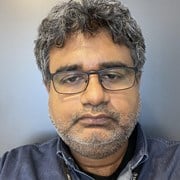
Georgios Kavallieratos is an Associate Professor at the University of Oslo's Institute of Transport Economics, specializing in the Section for Autonomous Systems and Sensor Technologies. His research focuses on cybersecurity in maritime systems, cyber-physical systems, and risk management. He actively contributes to the DESSI project on energy system security infrastructure. His research interests include maritime cybersecurity, cyber-physical system security, and the intersection of safety and security in autonomous systems. His work addresses threats to navigation systems, smart farming, and satellite communications, with a focus on developing risk assessment frameworks and robust cybersecurity controls. Recent publications emphasize maritime cybersecurity trends, integrated navigation system protection, and threat analysis in emerging technologies like Dairy Farming 4.0. He co-authored foundational papers on cyberattack defenses for autonomous ships and cybersecurity requirements for Shipping 4.0. Current projects involve enhancing societal awareness of cybersecurity risks and improving incident response strategies for critical infrastructure. His work bridges theoretical cybersecurity principles with practical applications in transportation and industrial systems.
Norwegian University of Science And TechnologyNorway
Annette Stahl is a Professor at the Department of Engineering Cybernetics, NTNU, and an Onsager Fellow. She leads the Robot Vision Group and oversees the AILARON project, funded by the Research Council of Norway. Her expertise spans robotic vision, control theory, and autonomous systems. She holds a PhD in Applied Mathematics (Computer Vision) from Heidelberg University. Her research focuses on underwater robotics, autonomous vehicles, and aquaculture monitoring, with applications in fish health analysis and marine environmental sensing. Stahl has supervised numerous PhD and master’s students, including projects on autonomous ships (SFI AutoShip), underwater SLAM (AROS), and plankton identification. She collaborates with industry partners like Zebop AS and SINTEF Ocean. Notable projects include the robotic microplankton sniffer-dog and AI-driven fish welfare monitoring. Her work is published in top journals/conferences like IEEE Access and MIC Journal. She actively contributes to datasets like the VAROS Synthetic Underwater Data Set.
Norwegian University of Science and TechnologyNorway
Thor Inge Fossen is a Professor of Navigation and Marine Craft Control at the Department of Engineering Cybernetics, Faculty of Information Technology and Electrical Engineering at the Norwegian University of Science and Technology (NTNU). He is a key scientist at the Norwegian Centre for Embodied AI (NCEI) and internationally recognized for his work in navigation systems, guidance systems, and control of marine vessels, aircraft, and drones. Professor Fossen holds a PhD in Engineering Cybernetics and an MSc in Marine Technology. His academic journey has led him to become a Fellow of AAIA, IEEE, and IFAC, reflecting his significant contributions to the field. His research spans several critical areas in marine and aerospace systems: Marine craft hydrodynamics and motion control Navigation, guidance, and control systems for marine craft, aircraft, and drones Cybersecurity of autonomous vehicles Sea-state estimation and wave analysis Attitude control and estimation Fossen's marine craft model, which is widely used in the industry Professor Fossen's publication record demonstrates a strong focus on adaptive control systems, particularly Line-of-Sight (LOS) guidance laws, with numerous papers on 3D path following for marine and aerial vehicles. His recent work (2023-2025) shows increasing integration of machine learning techniques with traditional control systems, particularly in areas like constrained control allocation using deep neural networks. There's also a growing emphasis on cybersecurity aspects of autonomous vehicle guidance systems. His scientific recognition includes: Fellow of the American Institute of Aeronautics and Astronautics (AAIA) Fellow of the Institute of Electrical and Electronics Engineers (IEEE) Fellow of the International Federation of Automatic Control (IFAC) Professor Fossen has been actively involved in advising graduate students, with numerous PhD and MSc graduates. He has led significant research projects including the Marine Systems Simulator (MSS) and the Python Vehicle Simulator, which are widely used tools in the field. His current appointments include being a Study Program Coordinator for the Master's program in Cybernetics and Robotics at NTNU and a Key Scientist at the Norwegian Centre for Embodied AI. He leads research teams focused on embodied AI applications for marine systems, with particular emphasis on safe and secure autonomous operations in complex maritime environments. His work bridges theoretical control systems with practical marine applications, making significant contributions to both academic research and industry implementation.
Norwegian University of Science And TechnologyNorway
Roger Skjetne is a Professor in Marine Control Engineering at the Norwegian University of Science and Technology (NTNU), affiliated with the Department of Marine Technology under the Faculty of Engineering. His research focuses on autonomous ships, dynamic positioning systems, energy and power management for hybrid-electric vessels, Arctic stationkeeping, and ice management systems. He leads the SFI Autoship research center, which aims to advance autonomous ship technology for safe and sustainable operations in Arctic and maritime environments. Key projects include DigitalSeaIce (multiscale sea ice observation), ENDURE (safety solutions for autonomous ships), and ZEVS (zero-emission passenger vessel systems). His work integrates control systems, robotics, and environmental monitoring to address challenges in marine autonomy and energy efficiency. Skjetne’s research has produced over 150 publications since 2020, with a focus on hybrid control barrier functions, energy optimization, and autonomous navigation. He collaborates with industry partners to translate academic findings into practical maritime solutions.
Norwegian University of Science And TechnologyNorway
Edmund Førland Brekke is a Full Professor at NTNU's Department of Engineering Cybernetics, specializing in autonomous maritime systems. He leads major projects like Autosea, Autosit, Autosight, and SFI Autoship. His research focuses on estimation theory, target tracking, SLAM, and collision avoidance for autonomous ships. He has held roles including Project Manager for key initiatives and was a Research Fellow at NUS's Acoustic Research Lab. Brekke teaches courses on sensor fusion and nonlinear state estimation. PhD: NTNU (2010), MSc: NTNU (2005) Research interests include sensor fusion, maritime navigation, and autonomous system safety. He supervises over 20 PhD students in topics like radar tracking, SLAM, and digital twins. His publications span collision avoidance algorithms, multi-sensor integration, and autonomous vessel control. He co-founded Zeabuz and collaborates on projects like Autoferry and AutoBarge. Recent work emphasizes maritime target tracking, scenario-based collision risk assessment, and sensor fusion for autonomous ferries. His contributions advance autonomous vessel autonomy and regulatory compliance with COLREGs.

/georgkav/georg.jpg)
