James Keller is a Curators Professor and R. L. Tatum Professor in the Electrical Engineering and Computer Science Department at the University of Missouri. His research in computational intelligence develops innovative applications across diverse domains including eldercare technology, bioinformatics, geospatial intelligence, and landmine detection. Keller's recent work focuses on explainable AI systems, autonomous drone navigation, advanced materials characterization, and biomedical signal processing. His laboratory employs cutting-edge techniques in deep learning, fuzzy logic, and computer vision to solve complex real-world problems. The research portfolio demonstrates strong interdisciplinary collaboration across engineering, materials science, and healthcare domains.
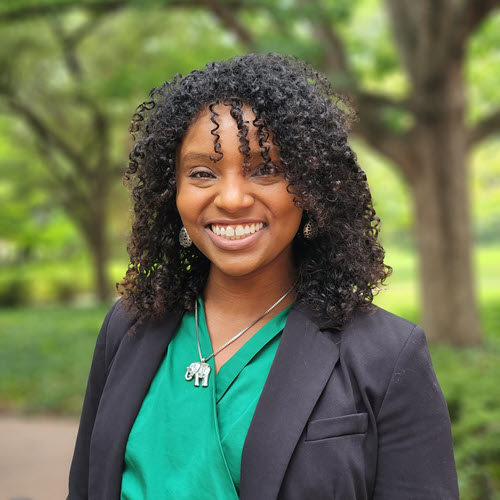
Michelle Brown is an Assistant Professor in the Department of Psychology at the University of South Carolina's McCausland College of Arts and Sciences. She holds a Ph.D. in Child Psychology from the University of Minnesota and completed postdoctoral training at Penn State Hershey Medical Center. Her research employs developmental psychopathology frameworks to understand how interpersonal relationships influence outcomes for victimized youth, with particular focus on: 1) Friendship impacts on maltreated adolescents' psychopathology risk, 2) Biopsychosocial factors affecting trauma therapy outcomes, and 3) Trauma from adverse police interactions in Black youth. Her work incorporates multi-method approaches including psychophysiological measures. Recent publications demonstrate strong focus on trauma intervention efficacy, developmental pathways from childhood maltreatment, and ethnic disparities in neuropathic outcomes. Her NIH-funded research program examines friendship dynamics in high-risk adolescent populations. Brown has received significant recognition including the NICHD Pathway to Independence Award and APA's Early Career Award in Trauma Psychology. She directs the STARR Lab and mentors doctoral students in clinical-community psychology.
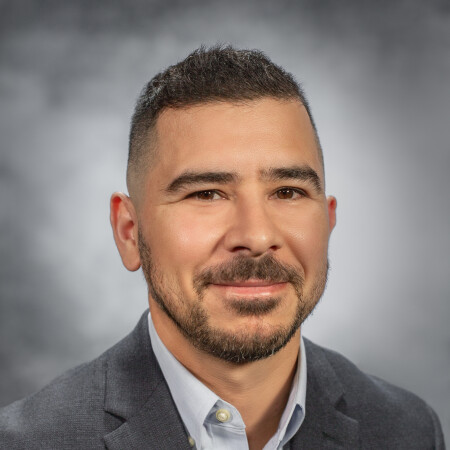
Fabiano Rodrigues is the Eugene McDermott Professor and Associate Professor of Physics at The University of Texas at Dallas. He directs the Upper Atmosphere Remote Sensing Lab within the William B. Hanson Center for Space Sciences, holding a Ph.D. in Electrical and Computer Engineering from Cornell University. His research focuses on ionospheric physics, space weather, and remote sensing techniques. Current investigations examine ionospheric irregularities, GNSS signal scintillation, and equatorial plasma bubbles using ground-based radar systems and satellite data. He develops novel instrumentation for space weather monitoring and distributed observation networks. Recent publications demonstrate significant contributions to understanding ionospheric scintillation mechanisms and developing low-cost monitoring solutions. His work integrates satellite observations with numerical modeling to advance space weather prediction capabilities. Professor Rodrigues secured a $2.8 million NSF MRI grant to enhance the Jicamarca Radio Observatory in Peru, developing new radar receiving stations for advanced atmospheric studies. This represents the largest expansion of the facility since its 1960s establishment. His research has been recognized with an NSF CAREER award and AFOSR Young Investigator award. Current projects include developing student-built space weather monitors and analyzing solar radio burst impacts on GNSS signals.
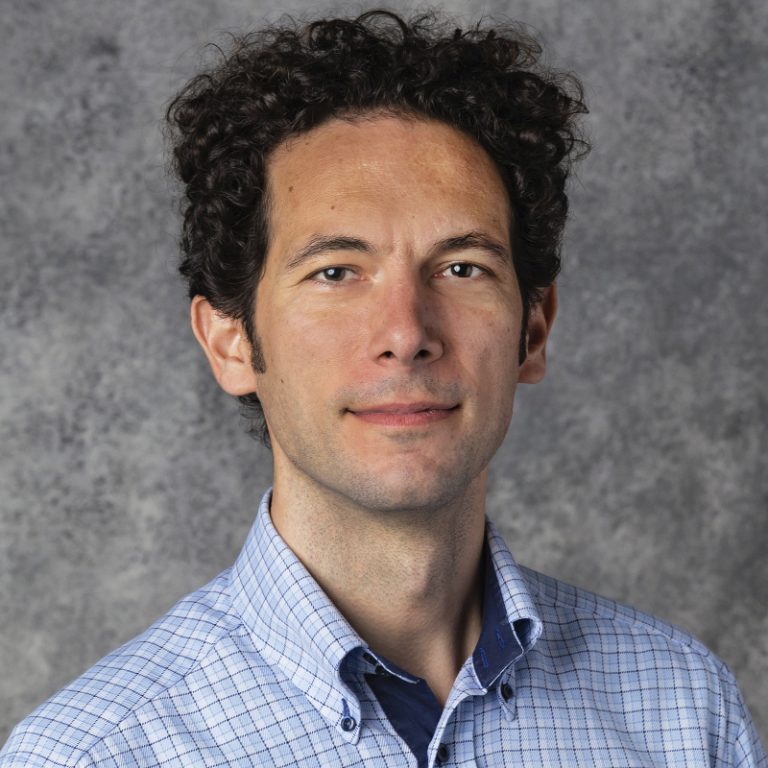
Timothy Havens is a Professor at Michigan Technological University in the Department of Computer Science within the College of Computing. He holds the William and Gloria Jackson Professorship and serves as Executive Director of both the Great Lakes Research Center and the Institute of Computing and Cybersystems. Dr. Havens also directs the PRIME Lab and has been recognized for both teaching and research excellence, including the 2014-15 Professor of the Year award from IEEE Eta Kappa Nu and Best Paper Awards at FUZZ-IEEE 2012 and IEEE SMC 2011. Dr. Havens received his Ph.D. in Electrical and Computer Engineering from the University of Missouri, Columbia in 2010. Prior to joining Michigan Tech, he was an NSF/CRA Computing Innovation Postdoctoral Fellow at Michigan State University under Dr. Anil Jain. Before his Ph.D. work, he was an Associate Technical Staff member at MIT Lincoln Laboratory. His educational background includes an M.S. in Electrical Engineering (2000) and a B.S. in Electrical Engineering (1999), both from Michigan Technological University. His research focuses on pattern recognition and machine learning, signal processing, and sensor fusion, with specific expertise in fuzzy integrals, Choquet integration, community detection in networks, and heterogeneous data mining. Dr. Havens has made significant contributions to explainable AI, particularly through the application of fuzzy integrals to deep learning systems. His recent publications demonstrate strong activity in developing novel regularization techniques for fuzzy Choquet integrals, efficient algorithms for community detection, and similarity measures for interval data. Dr. Havens' research has been consistently funded by prestigious organizations including DARPA, NSF, US Navy, Office of Naval Research, National Geospatial-Intelligence Agency, Ford Motor Company, MIT Lincoln Laboratory, and numerous other government and industry partners. His current projects include significant grants for radar systems in the Great Lakes, generative modeling of satellite imagery, and algorithms for autonomous robot systems. Scientific Awards: 2014-15 Professor of the Year by IEEE Eta Kappa Nu, Beta Gamma Chapter Best Paper Award at FUZZ-IEEE 2012 Best Paper Award at IEEE SMC 2011 Best Student Paper Award Finalist (2018) IEEE Franklin V. Taylor Memorial Best Paper Award (2011) Dr. Havens has successfully mentored numerous graduate students, many of whom appear as co-authors on his publications. His research grants demonstrate strong leadership in coordinating multi-institutional collaborations with substantial funding. Beyond his academic work, Dr. Havens is also an active musician, playing bass in several bands including MUFJAC, FLOTUS, Defenestra, Skills of Ortega, Psylocubik, Triptych, Wheels of Fire, and Odibil libidO.
Dr. Peggy Keller is Associate Professor in Developmental, Social, and Health Psychology at the University of Kentucky. Her research examines developmental psychopathology pathways, focusing on how family stress (particularly parental problem drinking) impacts child emotional and behavioral adjustment. Her work integrates physiological measures of stress reactivity with observational and longitudinal methods to identify risk and resilience mechanisms. Current projects investigate neurobehavioral consequences of prenatal alcohol exposure, intergenerational transmission of drinking behaviors, and family processes affecting emotion regulation development. Her lab employs diverse methodologies including autonomic nervous system monitoring, behavioral observation, and longitudinal cohort studies. Recent publications explore pandemic impacts on family relationships, parenting practices in context of grandparent caregiving, and neurodevelopmental outcomes of substance exposure, demonstrating consistent focus on family stress pathways to child psychopathology.
Dr. Oscar De Silva is an Assistant Professor in the Department of Mechanical Engineering at Memorial University of Newfoundland. He holds a B.Sc. from the University of Moratuwa, Sri Lanka, and a PhD from Memorial University. His expertise spans instrumentation, controls, mechatronics, and robotics, with a focus on sensor design, state estimation, and navigation systems. Dr. De Silva's research interests include state estimation, control systems, nonlinear dynamics, navigation systems, sensor design, localization, mapping, and intelligent prosthetics. He has contributed to projects such as ice detection systems for marine safety and computer vision for robotics applications. Before his current role, he worked as a research fellow at the American Bureau of Shipping-Harsh Environment Technology Centre and taught at Memorial University as a sessional instructor. His work emphasizes practical applications in autonomous systems, industrial inspection, and environmental monitoring. Notable achievements include the IMechE UK Award for Outstanding Achievement and a Gold Medal in Mechanical Engineering. His research trends focus on integrating AI, LiDAR, and radar technologies for navigation and safety systems in robotics and marine environments. Awards: IMechE UK Award for Outstanding Achievement Gold Medal in Mechanical Engineering (University of Moratuwa) Fellow of Graduate Studies (Memorial University) Advising and Grants: While no specific student names are listed, his role as an Assistant Professor involves academic supervision. His grants and collaborations likely align with his research in robotics and sensor systems, though specific details are not provided here. Labs: He is associated with the Intelligent Systems Lab at Memorial University and previously contributed to the ABS HETC. His work often involves multidisciplinary teams focused on real-world engineering challenges.
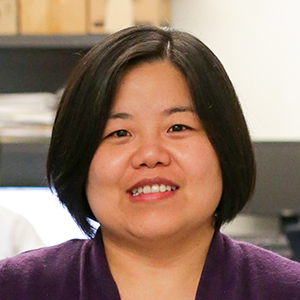
Taige Wang is an Associate Professor of Mathematics and Statistics at the University of Cincinnati, affiliated with the Department of Mathematical Sciences within the College of Arts and Sciences. He holds a Ph.D. in Mathematics from Virginia Tech (2016), an M.S. in Statistics from Virginia Tech (2016), and an M.S. in Applied Mathematics from Donghua University, Shanghai (2011). Teaching Focus: Mathematics and Statistics education, including courses like Calculus I/II, Probability & Statistics I/II, and Dynamical Systems. Research Interests: Partial differential equations in fluid mechanics, dynamical systems, and math/stat education. His research explores topics such as Navier-Stokes equations, thixotropic fluid models, and forced oscillation in viscous systems. He has received multiple grants from the UC Faculty Development Fund (2018–2025) and Taft Educator Travel Awards (2022, 2024). His work has been published in journals like Discrete and Continuous Dynamical Systems (DCDS-B) , Journal of Non-Newtonian Fluid Mechanics , and Zeitschrift für Angewandte Mathematik und Physik (ZAMP) . Wang has presented at conferences such as the International Symposium on Multi-Modal Sensing (2020), University of Kentucky (2018–2022), and Clemson University (2025). He is an active member of professional societies including AMS, ASA, and SIAM.
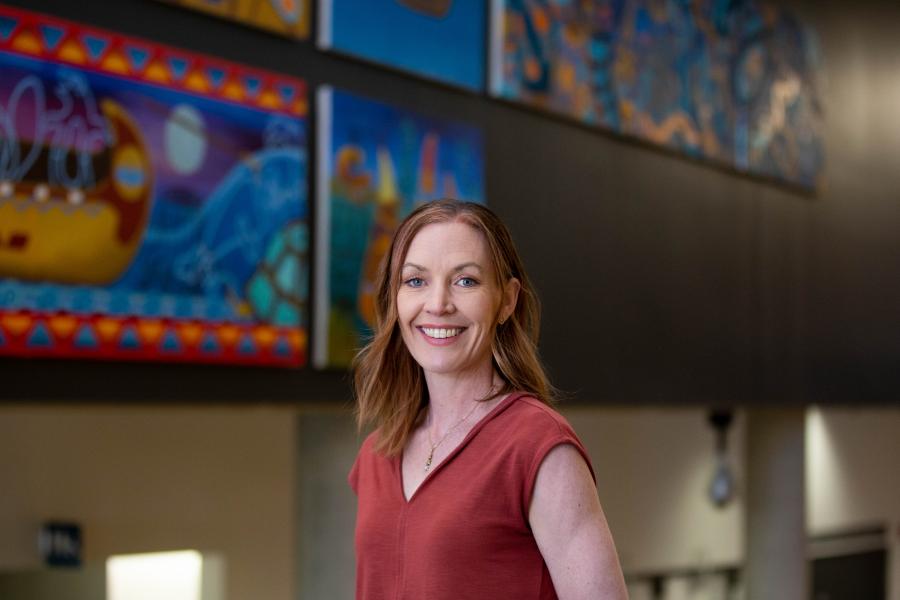
Dr. Cheryl Glazebrook is a Professor at the University of Manitoba's Faculty of Kinesiology and Recreation Management. Her research focuses on multisensory integration and motor control, particularly in clinical populations such as those with autism spectrum disorders or neurological injuries. She investigates how sensory input (visual, auditory, somatosensory) influences movement precision and learning. Dr. Glazebrook holds a PhD in Kinesiology from McMaster University (2007), an M.Sc. in Physical Therapy (University of Toronto, 2009), and completed a postdoctoral fellowship at the University of Toronto's Action & Attention Lab (2009-2010). Her work bridges theoretical neuroscience and applied rehabilitation, aiming to improve motor skill interventions through technological and methodological innovations. Research Interests : Multisensory-motor integration in health and disease Motor skill assessment in neurodevelopmental and neurological disorders Effects of rhythmic auditory cues on movement performance Design of rehabilitation technologies for sensory feedback Her Perceptual Motor Integration Lab develops interventions that leverage multisensory principles to enhance motor performance across the lifespan, with applications in clinical rehabilitation and inclusive dance programs for individuals with disabilities. Key collaborations include Indigenous communities in northern Manitoba to address musculoskeletal health disparities and participatory design of accessible dance initiatives. Her work emphasizes interdisciplinary approaches, combining kinesiology, neuroscience, and engineering.
Howard M. Schwartz is a Professor at the Department of Systems and Computer Engineering, Carleton University, within the Faculty of Engineering and Design. He holds a Ph.D. from MIT and specializes in adaptive control systems, multi-robot learning, and reinforcement learning applications in autonomous systems. His work integrates machine learning with robotics, focusing on cooperative control, swarm intelligence, and real-time systems. Education: Ph.D. in Engineering, Massachusetts Institute of Technology (MIT) Research Interests: Adaptive and Learning Systems Multi-Robot Learning and Cooperation Reinforcement Learning for Autonomous Vehicles Control of Robot Manipulators Cooperative Multi-Agent Systems Advising & Research: Supervised over 40 graduate students, with notable projects in drone navigation, swarm robotics, and game-theoretic control. Collaborates with Ericsson on 5G-enabled autonomous systems in the Ericsson Carleton Partnership Program. Labs & Facilities: Ericsson 5G Autonomous Control Laboratory for multi-vehicle research. Swarm robotics experimentation facilities focusing on decentralized control and adaptive algorithms.
Kimberley Davies is an Associate Professor in the Biological Sciences department at the University of New Brunswick (Saint John campus). Her lab focuses on Conservation Oceanography and Marine Technology, emphasizing the application of drones, gliders, and acoustic monitoring to study marine mammals and oceanographic processes. She holds a PhD in Oceanography from Dalhousie University and a BSc in Biology from the University of Victoria. Her research explores North Atlantic right whale foraging ecology, climate-driven habitat shifts, and conservation strategies. She leads a multidisciplinary team addressing threats like vessel strikes and climate change impacts. Education: PhD in Oceanography (Dalhousie University), BSc in Biology (University of Victoria). Research interests include drone-based thermal imaging of whales, glider technology for real-time monitoring, biophysical drivers of zooplankton dynamics, and satellite detection of marine mammals. Her team develops tools like autonomous plankton imaging systems and passive acoustic detection frameworks. Recipient of the Liber Ero Fellowship (2014) and Murphy Family Foundation Postdoctoral Fellowship. Advises PhD/MSc students and postdocs on projects involving whale habitat modeling, acoustic monitoring, and satellite imagery analysis. Collaborates on Transport Canada-funded projects to mitigate vessel-whale collisions using gliders. Labs/Teams: Davies Lab, a dynamic group working on ocean technology and conservation science. Current projects include satellite-based whale detection and glider-based ecosystem sentinels.
Xiaoli Zhang serves as Associate Professor in the Department of Mechanical Engineering at Colorado School of Mines, where she leads cutting-edge research in human-robot cooperation, intelligent control systems, and teleoperation with applications spanning healthcare, surgery, additive manufacturing, and underground construction. Her work focuses on enhancing robot adaptability and robustness through optimal control, machine learning, and cognitive science principles, supported by facilities like the Intelligent Robotics and Systems Lab. Dr. Zhang's research integrates artificial intelligence with robotics to solve complex engineering challenges, particularly in smart human-machine interaction and shared autonomy systems. Key areas include natural-language-based robot control, gaze-driven assistance interfaces, and physics-informed machine learning for additive manufacturing processes. Her methodologies emphasize real-world applicability in medical robotics and industrial automation, where systems must dynamically adapt to environmental changes and human collaborators. Analysis of her recent publications reveals dominant trends in machine learning-enhanced robotics, with significant contributions to additive manufacturing quality control, dexterous manipulation, and safety-conscious teleoperation systems. Her work consistently bridges theoretical AI advancements with practical engineering applications, particularly in laser-based manufacturing and assistive robotics where human-robot synergy is critical. Scientific recognition includes: NSF CAREER award for pioneering research in robotics and intelligent systems Dr. Zhang directs the Intelligent Robotics and Systems Lab, which develops advanced control frameworks for human-robot teams while securing competitive funding like the NSF CAREER grant. Her educational impact extends through courses such as MEGN 545 Advanced Robot Control and MEGN 441 Introduction to Robotics, training next-generation engineers in autonomous systems design. The lab maintains strong industry partnerships for translating research into surgical robotics and manufacturing applications. The Intelligent Robotics and Systems Lab operates as a multidisciplinary hub where computer vision, machine learning, and mechanical engineering converge to solve real-world problems. Current projects focus on gaze-based control systems for surgical assistance, transfer learning for multi-platform additive manufacturing, and adaptive shared autonomy frameworks that maintain safety during human-robot collaboration in dynamic environments.
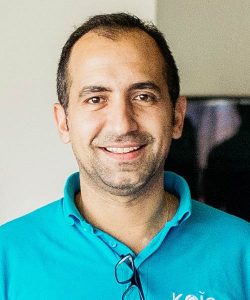
Panayiotis Kolios is an Assistant Professor at the Department of Computer Science, University of Cyprus. He holds a PhD and BEng in Telecommunications Engineering from King's College London. His research focuses on networked intelligent systems, including autonomous UAVs, cyber-physical systems, and AI-driven emergency management. Key roles include coordinating the KIOS CoE's security and emergency response group, developing the SafeCY emergency app, and leading the AIDERS project for real-time disaster response using drones and machine learning. Education: BEng (King's College London, 2008), PhD (King's College London, 2012) Affiliations: KIOS Research and Innovation Centre of Excellence, University of Cyprus Projects: AIDERS, SWIFTERS, PREDICATE (EU-funded), SafeCY app, Cyprus Civil Defence Aerial Observation Unit Grants: Over 40M€ in EU and industrial funding Research emphasizes AI algorithms for emergency response, including drone-based situational awareness, wildfire monitoring, and rogue UAV detection. He co-organized the Exchange of Experts training program and led the team that won the Cooperative Aerial Robots Inspection Challenge (CDC 2023). Notable Achievements: ETEK Engineering Award Honorable Mention (2021) First Prize in CDC 2023 Cooperative Aerial Robots Challenge Development of the Cyprus Civil Defence Aerial Observation Unit Active in both academic and applied research, Kolios bridges theoretical advancements with real-world emergency management solutions.
Dr. Gwenn Flowers is a Professor in the Department of Earth Sciences at Simon Fraser University, leading the SFU Glaciology Group. Her research focuses on glaciology, climate science, and geophysics, with an emphasis on understanding glacier dynamics, climate interactions, and cryospheric processes. She holds a B.A. (Summa Cum Laude) in Physics from the University of Colorado and a Ph.D. in Earth and Ocean Sciences from the University of British Columbia. Dr. Flowers' work integrates field-based observations and numerical modeling to study glacier behavior, including surging mechanisms, subglacial hydrology, and glacier-climate feedbacks. Her team investigates Arctic glaciers, glacier-dammed lakes, and the impacts of climate change on glacial systems. Notable contributions include studies on the Kaskawulsh Glacier and collaborations with international researchers. Her educational background and professional roles underscore her expertise in geophysical analysis, hydrology, and environmental science. She advises numerous graduate students and postdoctoral researchers, fostering advancements in glaciological research. Dr. Flowers also engages in public outreach and interdisciplinary collaborations, contributing to the broader understanding of Earth's cryosphere.
Dr. Marco Ciarcià is an Associate Teaching Professor at Colorado State University's Department of Mechanical Engineering, part of the Walter Scott, Jr. College of Engineering. Previously, he served as an Assistant Professor at South Dakota State University (2016–2023) and as a Research Associate at the Naval Postgraduate School's Spacecraft Robotics Laboratory (until 2015). He is also the CTO and co-founder of AeroFly LLC, specializing in UAV design and development. His research focuses on robotics, mechatronics, UAV design, control systems, spacecraft guidance, and small satellites. Education: Ph.D. in Mechanical Engineering, Rice University (2008) M.S. in Aerospace Engineering, Università degli Studi di Palermo (2001, magna cum laude) Research Interests: Dr. Ciarcià’s work spans robotics, mechatronics, UAV design, nonlinear control, spacecraft navigation, and satellite technology. He emphasizes practical applications, including autonomous systems, human-robot collaboration, and aerospace engineering challenges like Mars drone configurations and thermal simulation of CubeSats. Notable Contributions: His research includes advancements in attitude control systems for satellites, UAV-based structural monitoring, and optimization algorithms for multi-UAV path planning. He has also developed low-cost satellite testbeds and contributed to thermal simulation studies for CubeSats. Awards: U.S. National Research Council Fellowship (2010–2015) Teaching and Advising: Dr. Ciarcià teaches courses in Aircraft Design, Spacecraft Guidance, Optimal Control, and Robotics. His academic leadership includes mentoring students in mechanical engineering and aerospace systems. He actively contributes to the AIAA Guidance, Navigation, and Control Technical Committee. Labs and Teams: His involvement includes the Spacecraft Robotics Laboratory (Naval Postgraduate School) and collaborations with AeroFly LLC, focusing on UAV innovation and commercial applications.
Christopher Amato is Associate Professor in the Khoury College of Computer Sciences at Northeastern University. His research develops principled methods for multi-agent systems operating under uncertainty with limited communication, with applications in multi-robot coordination, autonomous systems, and artificial intelligence. He directs research on reinforcement learning approaches for decentralized control in complex environments. His work integrates techniques from reinforcement learning, game theory, and probabilistic reasoning to enable efficient coordination in applications including disaster response, surveillance, and networked systems. Recent projects address cooperative multi-agent reinforcement learning (MARL) under partial observability, asynchronous learning frameworks, and robust multi-robot coordination. He co-organized the COMARL symposium on challenges in multi-agent reinforcement learning. Dr. Amato earned his PhD from UMass Amherst under Shlomo Zilberstein, with postdoctoral research at MIT working with Leslie Kaelbling and Jonathan How. His publications include foundational work on decentralized partially observable Markov decision processes (Dec-POMDPs) and multi-agent reinforcement learning. He currently advises seven PhD students working on MARL theory and applications. Research Areas: Partially observable reinforcement learning Multi-agent/robot systems Decision-making under uncertainty Scalable coordination algorithms