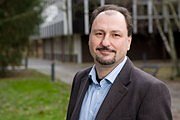
Dr. Anwar Ali is a Lecturer in the Department of Electronic and Electrical Engineering at Swansea University's Bay Campus, affiliated with the School of Aerospace, Civil, Electrical and Mechanical Engineering. He holds an M.S. in Electronic Engineering (2010) and a Ph.D. in Electronic and Communication Engineering (2014) from Politecnico di Torino, Italy. His research focuses on: Power electronic converters and conditioning systems Embedded systems for aerospace applications Analog/mixed-signal circuit design Satellite technologies including power management Attitude determination and control systems Thermal modeling of aerospace systems Dr. Ali has authored over 50 publications with recent works concentrated in satellite power systems, thermal analysis of spacecraft, machine learning applications in healthcare/robotics, and energy harvesting techniques. His research demonstrates consistent innovation in small satellite technologies and cross-disciplinary applications of electrical engineering principles. He currently supervises PhD projects on: Wireless power transfer for implantable medical devices Integrated power and attitude control optimization for small spacecraft and teaches modules including Analogue Design, Software Engineering, Embedded System Design, and Integrated Circuit Design.
Professor Emil Lupu is a Professor of Computer Systems at the Department of Computing , Imperial College London. He leads the Resilient Information Systems Security Group and serves as Co-Director of the National Research Institute in Trustworthy Inter-Connected Cyber-Physical Systems (RITICS) . As a Security Science Fellow at Imperial’s Institute for Security Science and Technology, his work bridges academic research with real-world security challenges. Education: PhD in Computing, Imperial College London (1994–1998) His research focuses on security and resilience of cyber-physical systems (CPS) , with emphasis on defending against data spoofing attacks , adversarial machine learning , and IoT vulnerabilities . He pioneered the Ponder policy systems for access control and the Self-Managed Cell framework for autonomic computing, and developed Bayesian Attack Graphs for scalable risk assessment in CPS. Recent publications highlight trends in adversarial robustness (2025–2022), including LIDAR spoofing defense for autonomous vehicles, LLM security , and attack graph analysis for IoT. His work explores the intersection of safety and security , applying model-checking to identify adversarial threats in train control, microgrids, and aviation systems. Scientific Awards: Security Science Fellowship, Imperial College London (2011–present) As co-founder of the PETRAS National Centre of Excellence in IoT Cybersecurity (2016–2021), he advanced security methodologies for interconnected systems. His collaborations with institutions like the Cyber Security Body of Knowledge (CyBoK) demonstrate his leadership in shaping cybersecurity research standards. Current projects include the RITICS Institute , focusing on trustworthy cyber-physical systems, and exploring generative AI for security poisoning with practical defenses against adversarial ML.
Jennifer Spindel is an Assistant Professor in the Political Science Department at the University of New Hampshire , where she directs the International Affairs Program . Her research focuses on international security , arms trade dynamics , and civil-military relations , analyzing how weapons transfers function as strategic signals and shape global power structures. She contributes policy analysis to Foreign Affairs , War on the Rocks , and Defense One , and holds a non-resident fellowship at the Institute for Future Conflict (US Air Force Academy, 2024–2025). Education: Ph.D. in Political Science (University of Minnesota), BA in Peace and Conflict Studies (Colgate University) Research Themes: Arms trade as political signaling, diffuse power structures, public attitudes toward military diversity, civil-military relationship dynamics Policy Engagement: Regularly contributes to national/international media, addressing defense strategy and arms trade implications. 2025 work explores mid-tier weapons’ strategic importance through Ukraine’s conflict experience. Collaborates with Stanton Foundation , Lyndon B. Johnson Foundation , and Global Racial and Social Inequality Lab . Scientific Awards: 2019 Kenneth Waltz Prize (Best Dissertation in International Security) Course Development Grant (Stanton Foundation, 2021–2022) Advocacy: Breast cancer survivor and volunteer Patient Advocate with Dana Farber/Harvard Cancer Center
Zhenyu Yang is a Lecturer and Postdoctoral Researcher at École Polytechnique Fédérale de Lausanne (EPFL), affiliated with the College of Engineering through the Department of Civil Engineering and the Urban Transport Systems Laboratory (LUTS) . He holds a PhD in Industrial System Engineering from the National University of Singapore (2022), an M.Eng from Beijing Jiaotong University, and a Diploma in Transportation Engineering from Huazhong University of Science and Technology. PhD, Industrial System Engineering, National University of Singapore (2022) M.Eng, Beijing Jiaotong University Diploma, Transportation Engineering, Huazhong University of Science and Technology His research focuses on urban transportation network modeling , travel demand management , and traffic information provision , with a strong emphasis on handling uncertainty and optimizing shared mobility systems. Recent work explores reinforcement learning applications, vehicle-drone cooperative delivery , and dynamic incident-responsive traffic systems . His publications highlight advancements in ridesourcing algorithms , congestion pricing , and multi-modal transport regulation . As a lecturer, he teaches Transportation Economics , covering demand-supply dynamics, welfare analysis, and environmental policy in transport systems. He is affiliated with EPFL's Urban Transport Systems Laboratory (LUTS) and contributes to the SGC-ENS teaching unit.
Ozgur S. Oguz is an Assistant Professor at Bilkent University , Faculty of Computer Engineering, and the lead of the Learning for Intelligent Robotic Agents (LiRA) Lab . His research focuses on enhancing autonomous agents' capabilities in learning, reasoning, and planning, particularly for robotics applications. Education : PhD in Computer Science from TU Munich , studies at University of British Columbia (UBC) and Koç University , postdoctoral work at University of Stuttgart and Max Planck Institute for Intelligent Systems . His research explores algorithms for autonomous decision-making, with emphasis on deep learning , reinforcement learning , and robotics . Recent work includes diffusion-based reinforcement learning , hindsight experience prioritization , and hybrid manipulation planning , often addressing challenges in sequential task execution and tactile-based control. Key trends in his publications revolve around robotic manipulation , motion planning , and human-robot interaction . He has contributed to conferences like NeurIPS , ICRA , IROS , and journals such as IEEE TRO and Scientific Reports .
Valerio Pascucci is a Professor at the University of Utah's School of Computing and a DOE Laboratory Fellow at Pacific Northwest National Laboratory. He directs the Center for Extreme Data Management Analysis and Visualization (CEDMAV) and previously led projects at Lawrence Livermore National Laboratory and University of Texas at Austin. PhD in Computer Science (Purdue University, 2000) MSc in Electrical Engineering (University 'La Sapienza', Rome, 1993) As a pioneer in Big Data Management , Scientific Visualization , and Computational Topology , his work connects topological methods with progressive algorithms to enable interactive exploration of petascale datasets. His research spans climate modeling , neuroscience , materials science , and precision agriculture , focusing on multi-resolution techniques and geometric compression . Recent publications show specialization in web-based visualization and AI-driven analytics for climate data, with emphasis on equity in data access and FAIR data principles . His ViSUS project enables real-time data streaming from supercomputers to desktops, while NAPA explores GPU-based architectures for streaming algorithms. Scientific Awards : Best Paper Award, IEEE Pacific Visualization 2011 Best Application Paper Award, IEEE VIS 2006 DOE Laboratory Fellow He advises numerous graduate students and leads collaborations across national laboratories , universities , and industry . Funded by NSF Grant #2127548 , he develops technologies for exascale computing and geospatial intelligence .
Adriano Jorge Cardoso Moreira is an Associate Professor with Habilitation at the Department of Information Systems, School of Engineering, Universidade do Minho, Portugal. He is also a Senior Researcher at the Algoritmi Research Centre and Scientific Coordinator of the Urban and Mobile Computing department at Centro de Computação Gráfica. His research focuses on indoor positioning , mobile and context-aware computing , urban computing , and simulation of wireless networks . Research Interests : Indoor Positioning, Mobile Computing, Urban Mobility, Sensor Networks, Wi-Fi and UWB Localization, Smart Cities. Leadership : Coordinated the Computer Communications and Pervasive Media Group (2008-2016), Scientific Committee member (Director of MAP-tele PhD program in multiple terms), and leads the Master in Telecommunications and Informatics since 2021. Publications : Over 100 papers, including IEEE Transactions and Sensors journal articles, with an h-index of 23 and 2136 citations. Awards : First and second prizes in EvAAL-ETRI Indoor Localization Competitions (2015, 2016, 2017).
Carina Hanashima is a Professor at the Faculty of Education and Integrated Arts and Sciences , Waseda University, Japan. Her research focuses on neuroscience , developmental biology , and molecular mechanisms underlying cortical development . She has held academic positions at Kobe University (2014.04-2018.03), RIKEN (2008.10-2017.03), Osaka University (2012.04-2015.03), and Nara Women's University (2007.09-2014.11). Research Interests Neuronal specification and cortical circuit formation Role of transcription factors (e.g., Foxg1, Robo1) in brain development Gene regulatory networks in neurogenesis Evolutionary origins of the neocortex Recent Trends in Publications : Her work explores transcriptional repression , axon guidance signaling , and developmental clock mechanisms in mammalian and non-mammalian models (chicks, mice). Key themes include neurodevelopmental disorders (e.g., autism, schizophrenia), angiogenesis , and cell migration . Scientific Awards : Poster Award, Asia-Pacific Developmental Biology Conference APDBC (2012.10) Grants and Projects : Japan Society for the Promotion of Science Grants-in-Aid (2016.06-2021.03, 2021.04-2022.03) RIKEN Joint Retreat Organizer (2011-2017) Labs and Collaborations : She leads the Hanashima Lab at Waseda University, focusing on spatiotemporal control in neuronal identity and neurovascular coupling . Her lab employs genetic lineage tracing , in situ hybridization , and in utero electroporation techniques.
Zhibin Chen is an Assistant Professor of Engineering at NYU Shanghai and concurrently a Global Network Assistant Professor within the broader New York University system. Since January 2019 he has led research and teaching activities at the Division of Engineering and Computer Science in Shanghai, while maintaining university-wide collaborations through his Global Network appointment. Education Ph.D. in Transportation Engineering, University of Florida (2017) Research Interests Dr. Chen’s scholarship centres on Transportation Network Modeling and Optimization , Intelligent Transportation Systems , and Discrete Optimization . He integrates operations research, data science, and engineering to address emerging challenges in electric mobility, autonomous vehicles, and large-scale urban networks. Recent thrusts include: Data-driven analytics of electric-vehicle charging behaviour under usage heterogeneity. Optimization of charging and swapping infrastructure for electric buses and trucks. Network-level deployment and control strategies for connected and automated vehicles. Day-to-day traffic dynamics and equilibrium models with elastic demand. Pricing, policy, and incentive design for sustainable transportation systems. Scientific Awards Stella Dafermos Best Paper Award – awarded at the 95th Transportation Research Board Annual Meeting. Ryuichi Kitamura Paper Award – also conferred at the 95th TRB Annual Meeting. Editorial & Professional Service Dr. Chen currently serves on the Editorial Advisory Board of Transportation Research Part C: Emerging Technologies , shaping the editorial direction of the leading journal in his field. Grants & Collaborations While specific grant identifiers are not disclosed in the provided text, Dr. Chen’s extensive publication record in top-tier journals ( Transportation Science , Transportation Research Parts B, C, D , IEEE ITS , Applied Energy ) and his editorial role indicate sustained research funding and active collaboration with international partners across North America and China. Laboratories & Teams Operating within the Division of Engineering and Computer Science at NYU Shanghai , Dr. Chen leads a research group focused on next-generation mobility analytics, leveraging the university’s interdisciplinary ecosystem and NYU’s Global Network resources to advance smart and sustainable transportation.
Lionel C. Briand is a Professor of Software Engineering with shared appointments at the University of Luxembourg's SnT Centre for Security, Reliability, and Trust and the School of Electrical Engineering and Computer Science at the University of Ottawa. He holds a Canada Research Chair (Tier 1) in Intelligent Software Dependability and Compliance and serves as Director of Lero, Ireland's national software research center. His academic leadership spans over 25 years of collaborative research with industry partners across automotive, aerospace, energy, financial, and legal domains. Professor Briand's research focuses on software verification and validation, trustworthy AI systems, model-driven engineering, and empirical software engineering methodologies. His work bridges theoretical foundations with industrial applications, particularly in cyber-physical systems where machine learning components interact with safety-critical control systems. He has pioneered techniques for testing AI-enabled systems, GDPR compliance automation, and mutation analysis for space systems. His publication portfolio demonstrates consistent innovation in software testing, with recent emphasis on large language models for test generation, automated compliance checking, and safety analysis of deep neural networks. Key trends include black-box testing methodologies, metamorphic testing for security, and search-based approaches for DNN validation. IEEE Fellow and ACM Fellow IEEE Computer Society Harlan Mills Award (2012) ACM SIGSOFT Outstanding Research Award (2022) IEEE Reliability Society Engineer-of-the-Year Award (2013) ERC Advanced Grant recipient (2016) Fellow of the Academy of Science, Royal Society of Canada (2023) ICSE 2011 Most Influential Paper Award As Director of Lero and holder of a Canada Research Chair, Professor Briand leads major research initiatives including an ERC Advanced Grant on cyber-physical system modeling and testing. His industrial collaborations generate substantial grant funding, particularly in automotive safety validation and regulatory compliance automation. He mentors numerous researchers through his dual appointments and serves on program committees for top software engineering conferences. Professor Briand directs research activities at the SnT Centre's SVV department, focusing on software verification and validation. His team develops practical tools like MASS for space system mutation analysis and COREQQA for compliance requirements understanding, with strong industry adoption in automotive and aerospace sectors.
Sebastien Nicolas Gros is a Professor at the Department of Engineering Cybernetics, Norwegian University of Science and Technology (NTNU). His research focuses on safe reinforcement learning (RL) and data-driven model predictive control (MPC), with applications in energy systems, biomedical engineering, and autonomous vehicles. Institution: Norwegian University of Science and Technology Department: Engineering Cybernetics His work emphasizes AI-driven optimization for domestic energy storage, battery integration, and smart building management. Collaborations include Equinor, DNV, Kongsberg, Volvo, and CorPower Ocean. Key themes in his publications include: Control theory for renewable energy systems (wave energy converters, buildings) Biomedical applications (artificial pancreas, glucose monitoring) Transportation systems (electric vehicles, autonomous ships) Machine learning integration with physical models He supervises 6 PhD students and co-supervises projects on multi-rotor wind turbines and industrial PhD collaborations. The articles demonstrate a convergence of RL, MPC, and uncertainty quantification across energy, biomedical, and transportation domains.
Bihuan Chen is an Associate Professor at the College of Computer Science and Artificial Intelligence, Fudan University, specializing in software engineering with focus on software supply chain security and trustworthy AI systems. His research spans multiple programming languages including JavaScript, Python, Java, and C/C++ across application and AI domains. Dr. Chen earned his B.Sc. and Ph.D. in Computer Science from Fudan University in 2009 and 2014 respectively, followed by postdoctoral research at Nanyang Technological University (2014-2017). His research interests include software supply chain risk assessment, trustworthy AI systems, and program analysis. His recent publications demonstrate strong focus on malicious package detection in NPM/PyPI ecosystems, vulnerability patch porting using LLMs, and safety verification for autonomous driving systems. The work shows increasing integration of machine learning techniques with traditional program analysis approaches, particularly evident in the 2024-2025 publications that leverage LLMs for vulnerability detection and code refinement. ACM SIGSOFT Distinguished Paper Award (FSE 2016, ASE 2018, ASE 2022, FSE 2025) IEEE TCSE Distinguished Paper Award (ICSME 2020, SANER 2023) CCF Prototype Competition Awards (2nd and 3rd Prizes) Dr. Chen has advised over 50 students including current PhD candidates and notable alumni now at Huawei, ByteDance, and other leading tech firms. His fuxi platform assesses security, legal, and maintenance risks across the software engineering lifecycle. He serves on program committees for major conferences including ICSE, FSE, ASE, and ISSTA, and as Associate Editor for the Journal of Software: Evolution and Process.
Jie M. Zhang is an Assistant Professor in the Department of Informatics at King's College London, specializing in the intersection of software engineering and artificial intelligence. Her research focuses on two main directions: AI for Software Engineering (leveraging AI technologies to automate software tasks) and Software Engineering for AI (applying SE principles to enhance AI system trustworthiness). Her educational background includes a PhD in Computer Science from Peking University, where she was supervised by Professors Lu Zhang and Dan Hao. Prior to joining King's College London, she was a Research Fellow at University College London working with Professor Mark Harman and Professor Federica Sarro. Dr. Zhang's research interests center on software testing, machine learning trustworthiness, fairness testing, bias mitigation in AI systems, and program analysis. Her work particularly examines how large language models can be utilized for code generation, test case creation, and program repair, while also developing techniques to detect and fix issues within AI models. Her recent publications demonstrate strong trends in evaluating and enhancing the trustworthiness of AI-generated code, with specific emphasis on fairness testing across various domains including autonomous driving systems, machine translation, and decision-making software. Her research increasingly focuses on the efficiency of generated code and detecting hallucinations in large language models. 2025 ACM Sigsoft Early Career Researcher Award for pioneering contributions to software engineering for AI IEEE TSE 2024 Best Paper Award for 'Stealthy Backdoor Attack for Code Models' FSE 2025 Distinguished Paper Award Royal Society International Exchange Grant recipient NMES Enterprise & Engagement Partnerships Fund recipient Dr. Zhang has served in numerous leadership roles across major software engineering conferences including as General Chair for AIware 2025, Area Chair for ASE 2025, and Steering Committee Member for ICST. She has advised multiple PhD students and received significant research funding for her work on LLMs and software engineering. Her research group collaborates with industry partners including Huawei and Facebook, and she leads projects such as ITEA GENIUS and ITEA GreenCode. She is actively involved with King's College London research hubs including the Trusted Autonomous Systems Hub, Security Hub, and Software Systems group, where her work contributes to developing trustworthy AI systems across multiple domains.
Katrina Choe serves as Assistant Professor in the Department of Psychology, Neuroscience & Behaviour at McMaster University and holds a Tier 2 Canada Research Chair in Neurobiology of Social Behaviour. Her research program investigates the multi-level neurobiological mechanisms underlying psychiatric disorders, with primary focus on autism spectrum disorders (ASD) and oxytocin signaling pathways. Her academic training includes: PhD in Neuroscience from McGill University (2013) Honours BSc in Zoology from University of Toronto (2002-2006) Postdoctoral Fellowship at UCLA (2013-2020) Dr. Choe's research employs an integrative approach spanning molecular, cellular, circuit, and network levels to examine how ASD-associated gene mutations disrupt social behavior. Current work centers on oxytocin signaling mechanisms in ASD, convergent neurobiological pathways across psychiatric disorders, and the role of glial cells in neural circuit function. Her lab utilizes advanced techniques including optogenetic fMRI, single-cell RNA sequencing, and multi-level behavioral assays in genetic mouse models. Analysis of her 15 most recent publications reveals a clear research trajectory: early work (2015-2020) established foundational knowledge in vasopressin neuron regulation and salt homeostasis, while recent publications (2022-2025) demonstrate a focused shift toward ASD mechanisms, oxytocin signaling, and social circuit dysfunction using the Cntnap2 knockout model. This evolution reflects her transition from postdoctoral training to independent research leadership. Her scientific recognition includes: Tier 2 Canada Research Chair in Neurobiology of Social Behaviour (2022) NIMH K99/R00 Award CIHR Postdoctoral Fellowship Dr. Choe actively mentors six graduate students across PhD and MSc programs while leading a dynamic research team comprising postdoctoral fellows, laboratory technicians, and undergraduate researchers. Her program receives substantial support from major grants including a 5-year CIHR Project Grant and NSERC Discovery Grant focused on 'The role of CASPR2 in central oxytocin system development.' The Choe Lab maintains active collaborations with leading neuroscience groups including the Bourque, Prager-Khoutorsky, and Cunningham labs, as evidenced by participation in the 4th 1000 Islands/Gananoque Meeting on Hypothalamic Mechanisms. Her laboratory, established in 2020, operates as a multidisciplinary hub utilizing molecular biology (qPCR, RNA-seq), advanced imaging (lightsheet, confocal), electrophysiology (in vitro and in vivo), and behavioral neuroscience approaches to investigate social behavior mechanisms. Current projects examine microglia-astrocyte-neuron interactions in social circuit function and the therapeutic potential of oxytocin for ASD-related social deficits.
Hans Tompits is an Associate Professor in the Department of Knowledge-Based Systems at Technische Universität Wien (Vienna University of Technology). His research focuses on computational logic, declarative logic programming, and formal methods, with a particular emphasis on Answer-Set Programming (ASP). He coordinates the Master's program in Logic and Computation and leads projects in areas such as formal methods for optimization, fault-tolerant autonomous systems, and algorithmic composition. His work bridges theoretical advancements with practical applications, including tools like SeaLion (an ASP IDE with debugging support) and dlvhex (an ASP-based semantic web reasoner). He has contributed to foundational topics like program equivalence, debugging techniques, and integration of ASP with external systems. His recent projects address challenges in autonomous vehicle architectures, music composition algorithms, and safety-critical system design. Tompits has published extensively on topics ranging from nonmonotonic reasoning and modal logics to the development of declarative programming tools. His interdisciplinary approach spans computer science, mathematics, and AI, with applications in both academic and industrial contexts.