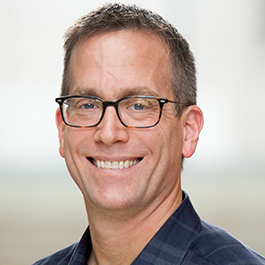
Professor Marios C. Angelides is a full-time faculty member at Brunel University London , serving as Professor of Computing and Divisional Lead within the College of Engineering, Design and Physical Sciences . He leads the Creative Computing Research Group under the Institute of Digital Futures and contributes to the Digital Media department at Brunel Design School. BSc (First Class Honours) and PhD in Computing from the London School of Economics (LSE) Chartered Engineer (CEng) and Chartered Fellow of the British Computer Society (FBCS CITP) His research focuses on Creative Computing , specifically applying Machine Learning , Serious Gaming , and Cognitive Modeling to develop Smart IoT Applications . His work spans autonomous drone fleets for environmental monitoring, cybersecurity middleware for Android systems, wearable technology for lifestyle recommendations, and historical analysis of Alan Turing’s legacy in modern AI. Recent publications highlight trends in deploying Machine Learning for: IoT systems optimization Autonomous aerial/underwater vehicle coordination Deepfake detection using Turing’s Imitation Game Energy allocation in CubeSats via gaming mechanics Scientific recognition includes being Deputy Editor of The Computer Journal and runner-up for the 2016 Oxford University Press Wilkes Award . He has supervised PhD students in topics like Smart Android Middleware for Cybersecurity and Wearable Recommendation Systems , with active involvement in editorial boards and international conferences.
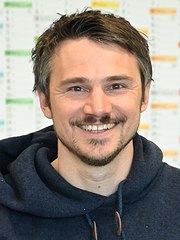
Prof. Dr. Janick Edinger is a Professor of Distributed Operating Systems at the Department of Informatics, Faculty of Mathematics, Informatics and Natural Sciences, University of Hamburg, Germany. He leads a research group focused on distributed, context-aware, and adaptive computing systems, with a strong emphasis on edge computing, computation offloading, and assistive technologies. Education: PhD in Computer Science, University of Mannheim Studies at National Taiwan University Studies at University of Alberta, Canada Research stays at University of British Columbia, Hong Kong Polytechnic University, and Georgia State University, USA His research explores how edge computing and computation offloading can enable efficient, privacy-preserving processing of sensor and video data close to their sources, particularly in dynamic environments. He investigates the integration of autonomous and heterogeneous systems—such as drone fleets and mobile devices—into scalable middleware platforms for real-time monitoring and decision-making in logistics and industrial operations. His work also emphasizes societal impact, contributing to accessible routing, adaptive interfaces, and crowd-sourced mapping. The recent publications reflect a strong trend in edge computing, federated learning, privacy-preserving analytics, and assistive technologies. Topics include WebAssembly-based offloading, emotion prediction via eye tracking, real-time traffic detection, and predictive maintenance in Industry 4.0, showcasing a blend of foundational systems research and applied human-centered computing. Scientific Awards: PerCom 2021 Mark Weiser Best Paper Award Best Paper Award at IEEE PerCom 2021 for 'Voltaire: Precise Energy-Aware Code Offloading Decisions with Machine Learning' Prof. Edinger actively advises students and leads research projects involving grants and collaborations. His team includes PhD candidates and researchers working on middleware, edge systems, and context-aware applications. He has served on conference program committees, such as shadow PC member for EuroSys 2021, and publishes in top venues including IPDPS, PerCom, CHIIR, and COMPSAC. Labs and Teams: He leads the Distributed Operating Systems research group at the University of Hamburg, where he mentors students and collaborates on projects involving edge computing, IoT, and adaptive systems.
Dr. Todd D. Murphey is a Professor of Mechanical Engineering at Northwestern University's Robert R. McCormick School of Engineering and Applied Science. He serves as Director of Transformative Research and Director of the Master of Science in Robotics Program at Northwestern, leading initiatives in computational dynamics, control systems, and robotics. His work bridges engineering, neuroscience, and biomedical applications, with a focus on developing systems that interact effectively with humans and their environments. Dr. Murphey received his Ph.D. in Control and Dynamical Systems from the California Institute of Technology in 2002, with a thesis titled "Control of Multiple Model Systems." Prior to that, he earned a B.S. in Mathematics, summa cum laude, from the University of Arizona in 1997. Dr. Murphey's research centers on computational methods in dynamics and control, with applications spanning neuroscience, health science, robotics, and automation. His work in the Interactive & Emergent Autonomy Lab focuses on computational models of embedded control, biomechanical simulation, dynamic exploration, and hybrid control. The group develops mathematical approaches that lead to orders of magnitude improvement in computational efficiency for real-time implementation. Key application areas include assistive exoskeleton control, stabilization of energy networks, bio-inspired active sensing, entertainment robots, robotic exploration, and software-enabled stroke rehabilitation. Analysis of Dr. Murphey's recent publications reveals a strong emphasis on human-swarm interaction, algorithmic matter, and control of cyber-physical systems in uncertain environments. His work increasingly integrates information theory with physical systems, exploring how both autonomous and biological systems interact with environments to learn and improve behaviors. Recent trends show growing applications in rehabilitation technology, with particular focus on human-machine interaction in biomedical devices and embodied intelligence. Dr. Murphey has received numerous honors and awards for his contributions to robotics and engineering: Named Director of Transformative Research at Northwestern University (2025) Appointed IEEE Robotics and Automation Society Vice President of Publication Activities (2022) Co-recipient of Best Paper Award for IEEE Transactions on Robotics (2020) Appointed to Air Force Scientific Advisory Board (2019) Recipient of ABB Best Student Paper Award for CPL-SLAM research (2019) Cole-Higgins Award from Northwestern Engineering (2015) Dr. Murphey has supervised numerous graduate students including Taosha Fan, Giorgos Mamakoukas, and Ian Abraham, with research spanning robotic exploration using electrosense and mechanical contact, human-in-the-loop control, and shared control for rehabilitation devices. His lab has secured significant funding from the National Science Foundation, DARPA, and industry partners including Siemens and Ekso Bionics, supporting research in algorithmic matter, emergent behavior, and human-swarm collaboration. The Interactive & Emergent Autonomy Lab, led by Dr. Murphey, investigates how both autonomous systems and biological systems interact with their environments to learn and improve behaviors. Current projects include active learning and data-driven control, active perception in human-swarm collaboration, algorithmic matter and emergent computation, control for nonlinear and hybrid systems, cyber physical systems in uncertain environments, harmonious navigation in human crowds, information maximizing clinical diagnostics, reactive learning in underwater exploration, robot-assisted rehabilitation, and software-enabled biomedical devices. The lab collaborates with researchers across Northwestern and institutions including Georgia Tech, MIT, and industry partners.
Herman Bruyninckx is a Part-Time Full Professor at Eindhoven University of Technology (TU/e) in the Mechanical Engineering department, specifically within the Control Systems Technology group and EAISI High Tech Systems initiative. He also serves as a professor (Hoogleraar) at KU Leuven in Belgium. Academic focus on robotics, control systems, and multi-agent coordination Active research in model predictive control , semantic mapping , and dynamic constraint algorithms Recent publications address industrial automation , agro-food robotics , and haptic technology Research Highlights : Developed hybrid decision-making frameworks for multi-agent navigation Innovated swing-free control methods for robotic pick-and-place operations Formulated constrained dynamics algorithms with LQR-Gauss principle integration Created ExoTen-Glove for haptic feedback in virtual environments Collaborative Projects : Coordinated with researchers like René van de Molengraft , Elena Torta , and Koen de Vos Contributed to NWO/TTW FlexCRAFT project for cognitive robotics in agro-food technology
Felix Gomez Marmol is an Associate Professor at the University of Murcia's Faculty of Informatics, Department of Information and Communication Engineering. His research focuses on cybersecurity, artificial intelligence, network security, and IoT security. He holds a PhD in Computer Science from the University of Murcia (2010), supervised by Dr. Gregorio Martínez Pérez. Key research interests include adaptive intrusion detection systems, dark web analysis, and AI-driven cybersecurity frameworks. He leads the Intelligent Systems and Telematics research group and previously contributed to the Sistemas Inteligentes group. His work emphasizes practical applications such as the SCORPION Cyber Range platform for cybersecurity training and gamification. Recent projects involve detecting hate networks on social media, optimizing malware defense using transfer learning, and developing SIEM systems for IoT environments. His contributions span technical papers on cybersecurity education, ethical hacking fundamentals, and blockchain-based security solutions. Prof. Gomez Marmol has collaborated on initiatives like the COBRA framework for simulating advanced persistent threats (APTs) and the COnVIDa dashboard for pandemic-related data analysis. His research bridges theoretical advancements with real-world cybersecurity challenges.
Nabil Aouf is a Professor of Robotics and Autonomous Systems in the Department of Electrical and Electronic Engineering at City, University of London, a position he has held since January 2019. Previously, from 2006 to 2018, he was Professor of Autonomous Systems at Cranfield University’s Defence and Security campus, where he also served as Head of the System and Autonomy Group and Research Lead of the Centre of Electronic Warfare, Information and Cyber. He earned his PhD in Electrical Engineering from McGill University Faculty of Engineering between 1999 and 2002. His research focuses on Robotics, Autonomous Systems, UAV Navigation, Computer Vision, and Fault-Tolerant Control . Key areas include visual odometry, sensor fusion (vision/IMU, RGBD, thermal-visible), robust control for UAVs, fault diagnosis in inertial systems, 3D perception, and autonomous landing. His work integrates theoretical control methods with real-time implementation in aerospace and defense contexts. His recent publications reflect a strong emphasis on robust optimization, multispectral vision, and real-time autonomous navigation. Trends indicate a focus on enhancing autonomy under uncertainty—through illumination-invariant stereo matching, L∞ optimization, and robust feature matching—particularly for UAVs operating in challenging environments. Nabil Aouf has collaborated extensively with researchers such as M. Richardson, O. Araar, T. Mouats, and M. Boulekchour across numerous projects in UAV control, sensor fusion, and autonomy. While no scientific awards are listed in the provided text, his leadership roles and sustained publication record in high-impact journals and conferences underscore his academic contributions. He has supervised or collaborated with several advisees including S.H. Almutairi, L. Chermak, I. Vitanov, and D. Nam, contributing to both theoretical developments and practical implementations in autonomous systems. His work has applications in aerospace, defense, planetary exploration, and critical infrastructure inspection.
Dr. Sam Ferguson is a Senior Lecturer at the School of Computer Science, University of Technology Sydney (UTS), with a multidisciplinary background in music performance, cognitive science, and psycho-acoustics. His research explores the intersection of sound, music, and human experience through creative coding, machine learning, and interactive systems. Key Research Areas: Sound and Music Computing, Human-Computer Interaction, Creative Coding, Cognitive Science, Installation Art, and Acoustics. Current Projects: ARC Linkage project on creative coding and multiplicitous media; industry collaborations on IoT-based audiovisual systems. Recent Publications: Focus on spatial audio complexity, gestural interaction with networked sound, music emotion recognition frameworks, and robotic performance through genre-based cultural platforms. Leadership Roles: Director of Teaching & Learning Engagement; former Deputy Head of School (Teaching and Learning); active in ACM Creativity and Cognition Steering Committee. Teaching: Courses like Digital Media Studio , Prototyping Physical Interaction , and Data Processing using R within UTS's interdisciplinary Software Development Studio.
David Hästbacka is an Associate Professor (tenure track) at the Department of Computing Sciences, Faculty of Information Technology and Communication Sciences at Tampere University. His research focuses on software engineering, industrial automation, and energy systems, emphasizing system architecture, interoperability frameworks, and dependable IoT solutions. He leads a research group exploring edge and cloud computing, semantic integration, and smart energy systems. Education & Professional Background : While specific educational details are not provided, his academic career includes roles such as Postdoctoral Researcher in the SEMIS project (2017-2020) and extensive involvement in EU-funded initiatives like COCOP (EU H2020) and Horizon Europe projects. Research Projects : Active in high-impact projects like Hedge-IoT (Horizon Europe, 2024-2027), TwinfFlow (Business Finland), and TRINEFLEX (Horizon Europe), with a focus on industrial automation, distributed systems, and energy grids. Past projects include FEMMa (Business Finland), DisMa (Academy of Finland), and Arrowhead (ECSEL). Teaching & Supervision : Specializes in Web/Cloud architectures, IoT systems, and dependable automation technologies. Supervises students in topics like edge computing frameworks and MLOps pipelines. Technical Contributions : Develops frameworks for industrial interoperability (e.g., OPC UA PubSub integration), edge-cloud toolchains, and MLOps methodologies. His work addresses challenges in microservices, Kubernetes distributions, and semantic data integration. Labs & Teams : Leads a research group advancing automation technologies through interdisciplinary collaboration, with partnerships in industry and academia to bridge theory and practice in smart systems.
Deepak R Mishra is the Merle C. Prunty, Jr. Professor of Geography at the University of Georgia, where he serves as Professor and Head of the Department of Geography. He directs both the Center for Geospatial Research (CGR) and the UGA Small Satellite Research Laboratory (SSRL), demonstrating leadership across multiple significant research initiatives. His academic career spans geospatial science, remote sensing applications, and environmental monitoring with particular focus on coastal ecosystems. Dr. Mishra earned his PhD in Natural Resources from the University of Nebraska, Lincoln in 2006 and completed his M. Tech in Civil Engineering at the Indian Institute of Technology, Kanpur in 2002. His research focuses on combining field-based remote sensing with satellite technologies to monitor and study coastal and inland water resources. His work addresses critical environmental challenges including harmful algal blooms, salt marsh conservation, carbon sequestration in tidal wetlands, and sea level rise impacts. Dr. Mishra's research portfolio reveals strong trends in geospatial analytics for environmental monitoring, with increasing integration of artificial intelligence and small satellite technologies. His recent publications show a growing emphasis on climate change impacts on coastal ecosystems, particularly salt marsh vulnerability and carbon sequestration capacity. The work demonstrates innovative applications of remote sensing for tracking cyanobacterial blooms and developing early warning systems through platforms like CyanoTRACKER. Outstanding Service Award, SEDAAG 2019 Creative Research Medal, University of Georgia, 2017 Best Poster Award, TROPMET 2016, India Article ranked #4 in Altmetric Attention Score in Nature Climate Change 2016 Mississippi State University Faculty Research Award (2012) GRI Academic Faculty of the year (2011) Dr. Mishra has secured substantial research funding, including a $7.5 million NSF LTER grant and a $4.7 million Army Research Lab grant for autonomous navigation systems. His lab actively mentors graduate students including Tyler Lynn, Lishen Mao, and Chintan Maniyar, who contribute to projects spanning coastal monitoring, small satellite development, and AI applications. The Small Satellite Research Laboratory recently achieved a historic milestone with the launch of SPOC satellite to the International Space Station, marking UGA's first satellite deployment.
Professor Clinton Fookes is a faculty member at the Queensland University of Technology (QUT) within the School of Electrical Engineering & Robotics . His research focuses on leveraging computer vision and artificial intelligence to develop automated systems that understand, anticipate, and interact with human behaviors, with applications in medical diagnostics, autonomous vehicles, defense, and industrial efficiency . Research areas include AI adaptability, multimodal biosignal analysis, and human-machine interaction Collaborates with CSIRO Data61, Defence Science and Technology Group, Orica, Airbus, and Sentient Vision Systems Develops systems for human action detection, infrastructure monitoring, and stress response prediction His work addresses critical challenges in AI deployment, such as environmental adaptability and reducing diagnostic errors in medical and autonomous systems. Recent publications highlight trends in self-supervised learning, zero-shot knowledge transfer, multimodal integration , and 3D reconstruction for healthcare , while exploring ethical AI use in sectors like mining and defense . Professor Fookes emphasizes interdisciplinary collaboration, bridging engineering, medicine, and social sciences to advance AI systems capable of real-world impact. His research agenda includes improving AI memory capabilities and explainability for safer, more reliable automation.
Professor Bruce N. Walker holds a joint appointment in the School of Psychology and School of Interactive Computing at Georgia Institute of Technology, within the College of Sciences. His research focuses on human-centered technology design, emphasizing accessibility, auditory displays, and human-AI interaction. He leads the Sonification Lab, pioneering multimodal interfaces and inclusive technology solutions. He earned his Ph.D. in Human Factors and Human-Computer Interaction from Rice University in 2001. Research Interests: Trust in technology, accessible interfaces, sonification, AI-human collaboration, and HCI in non-traditional environments. Current projects include the AccessCORPS VIP initiative to enhance course accessibility and studies on automated vehicle interaction. Awards: Best Paper Award at AudioMostly 2014 for auditory weather reports research. Active in professional organizations like the International Community for Auditory Display and Human Factors and Ergonomics Society. Teaching: Courses include Research Methods for Human Factors, Sensation and Perception, and HCI Foundations. Supervises interdisciplinary teams in the Sonification Lab R&D Studio and AccessCORPS VIP. Labs/Teams: Sonification Lab (multimodal data exploration) and AccessCORPS (disability-inclusive course design). Collaborates on international projects like the Mwangaza initiative for learners with vision impairment in Kenya.
Bernadette Bucher is an Assistant Professor in the Robotics Department (primary) and Computer Science and Engineering Department at the University of Michigan. Her research focuses on embodied AI, vision-language grounding, and mobile manipulation, with an emphasis on interpretable visual representations and uncertainty estimation for robotics tasks. She previously worked at Boston Dynamics AI Institute, NVIDIA Research, and Lockheed Martin Corporation. Her academic background includes a PhD in Computer Science from the University of Pennsylvania (GRASP Lab) under advisors Kostas Daniilidis and Nikolai Matni, alongside MA degrees in Mathematics and Economics from the University of Alabama (2014). Research interests include robotics, computer vision, and machine learning intersections, particularly autonomous mobile manipulation. Her work emphasizes uncertainty-aware systems and deployable learning-based methods. Notable achievements include the Best Paper in Cognitive Robotics at ICRA 2024. Her research spans projects like EVORA for off-road autonomy and ASHiTA for hierarchical task analysis. She has contributed to open-source projects like RoboNet and actively publishes in top conferences (CVPR, CoRL, ICRA). Key projects: EVORA, ASHiTA, Vision-Language Frontier Maps (VLFM) Grants and funding: Honda Research Institute (Curious Minded Machines project) Labs/Teams: Active participation in robotics labs at University of Michigan and prior collaborations with industry partners
Julien Diogo serves as Adjunct Professor at Polytechnic Institute of Viseu's School of Education of Viseu since 2020, teaching Market Analysis, Consumer Behavior, Strategic Communication, and Innovation/Creativity courses. He concurrently holds Visiting Professor positions at ISAG (Higher Institute of Administration and Management) since 2018 for Executive MBA programs and was Professor of Organizational Communication at ISCA-UA (2022-2023). His academic roles extend to Visiting Facilitator positions at Brazil's Personal Branding Academy and ISLA's Postgraduate Program in Innovation. His educational background includes: PhD in Communication Sciences (in progress, 2023-2026) at University of Coimbra Specialization in Teacher and Trainer Training (2022-2023) from Employment and Training Institute of Braga Marketing Specialist title (2019) from Polytechnic Institute of Viseu Master's in Communication and Marketing (2010-2012) from Polytechnic Institute of Viseu (Final Grade: 17/20) Bachelor's in Social Communication (2005-2008) from Polytechnic Institute of Viseu (Grade: 17/20) Diogo's research integrates neuromarketing with consumer behavior analysis, focusing on emotional responses in digital environments, Generation Z consumption patterns, and neuroscience applications in place branding. His work examines how cognitive processes influence purchasing decisions through physiological measurements and behavioral experiments, particularly investigating caffeine's neuropharmacological effects on consumer arousal and shop window design's attentional impact. He bridges theoretical neuroscience with practical marketing strategy development. His publication trajectory reveals increasing focus on digital-emotional consumer interfaces, with recent work analyzing pandemic-era behavior shifts and Gen Z's narrative processing. Key thematic clusters include neuromarketing validation in retail architecture, emotional sustainability in e-marketplaces, and neuroscientific foundations of territorial branding, demonstrating consistent application of cognitive neuroscience to contemporary marketing challenges. Scientific recognition includes: 2008 Academic Merit Award for Best Social Communication Student (Polytechnic Institute of Viseu) 2021 Nomination for Global Teacher Prize Portugal Diogo actively supervises master's research including thesis on territorial brand communication (2024), language informality in digital contexts (2024), and Apple's Lovemarks strategy for Generation Z (2024). He contributes to research projects like INOV C+ Intelligent Innovation Ecosystem (2024-present) and co-orientated neuromarketing studies on advertising reception decoding (2020). His academic service includes peer review for IGI Global and International Journal of Marketing. Through his dual leadership as CCO of ICN Agency (neuromarketing consultancy), co-director of PsicoSoma (publishing/training), and expertMind (LMS platform), Diogo maintains robust industry-academia integration, developing neuromarketing frameworks applied across retail, urban planning, and digital experience design contexts.
Nicola Capodieci is an Associate Professor at the Department of Physical, Computer and Mathematical Sciences at the University of Modena and Reggio Emilia, specializing in Information Processing Systems (IINF-05/A). He actively teaches multiple courses including Object-Oriented Programming, Web Technologies, and General Computer Science across Computer Science and Mathematics degree programs. His research interests focus on GPU acceleration for embedded systems, autonomous vehicles, and real-time computing. Dr. Capodieci's work addresses critical challenges in heterogeneous computing platforms, particularly for automotive applications and smart city infrastructure. His research bridges theoretical computer science with practical applications in autonomous driving and urban mobility systems. Analysis of his recent publications reveals a strong focus on optimizing GPU performance for latency-sensitive applications, particularly in autonomous vehicles. His work spans path planning algorithms, memory interference management, and real-time scheduling on heterogeneous platforms. A significant portion of his research addresses practical implementation challenges in embedded systems where computational resources are constrained but timing predictability is critical. Dr. Capodieci's teaching portfolio demonstrates expertise in both foundational programming concepts and advanced topics in web technologies. His courses emphasize practical implementation skills while covering theoretical foundations of object-oriented programming, web development frameworks, and computational thinking.
Michael Skinnider serves as Assistant Professor at Princeton University's Lewis-Sigler Institute for Integrative Genomics and Assistant Member of the Ludwig Princeton Branch. His research develops AI-driven computational methods to identify unknown small molecules in mass spectrometry data, with applications in cancer biology and forensic drug detection. His educational background includes: BArtsSc from McMaster University (2015) PhD from University of British Columbia (2021) MD from University of British Columbia (2023) Skinnider's work centers on illuminating the "metabolomic dark matter" —unidentified chemical entities in mass spectrometry data. His lab pioneers machine learning approaches for metabolite identification, focusing on connections between unknown metabolites, cancer risk, and the microbiome. Recent innovations include chemical language models that transform mass spectrometry outputs into chemical structures, with applications spanning cancer diagnostics to forensic analysis of designer drugs. His research bridges computational biology, chemistry, and clinical medicine through low-data learning techniques. Publication trends reveal three dominant themes: (1) AI-driven metabolite identification (25% of recent work), (2) single-cell/spatial data analysis (40%), and (3) molecular interaction networks (35%). His 2024 Nature Machine Intelligence paper demonstrated that invalid SMILES strings enhance chemical language models , overturning previous assumptions. Articles consistently apply computational methods to biological discovery, with growing emphasis on cancer metabolism and translational applications. Major recognitions include: Forbes 30 Under 30 (2022) International Birnstiel Award (2022) Dan David Prize Borealis AI Fellowship NIH Award C&EN's Talented Twelve (2023) Young Explorer Award Grand Prize Skinnider leads the Skinnider Research Lab at Princeton's Carl Icahn Laboratory, which collaborates with forensic laboratories and Ludwig cancer researchers. The lab specializes in transforming mass spectrometry data into biological insights through innovative algorithms. During his undergraduate studies, he co-founded Adapsyn Bioscience to translate natural product discovery research into commercial applications. Current projects include developing metabolome-wide identification tools and exploring diet-derived metabolites that modulate cancer progression.